
30–512 MHzRF Power Amplifiers
Factory-direct 30–512 MHz RF power amplifiers from 30W to 200W, built on a 28VDC architecture with conduction-cooled design, documented RF validation, and engineering support for VHF/UHF system integration and lab evaluation.
- 30–512 MHz broadband coverage
- 30W / 50W / 100W / 200W standard models
- 28VDC native architecture
- Conduction-cooled mechanical design
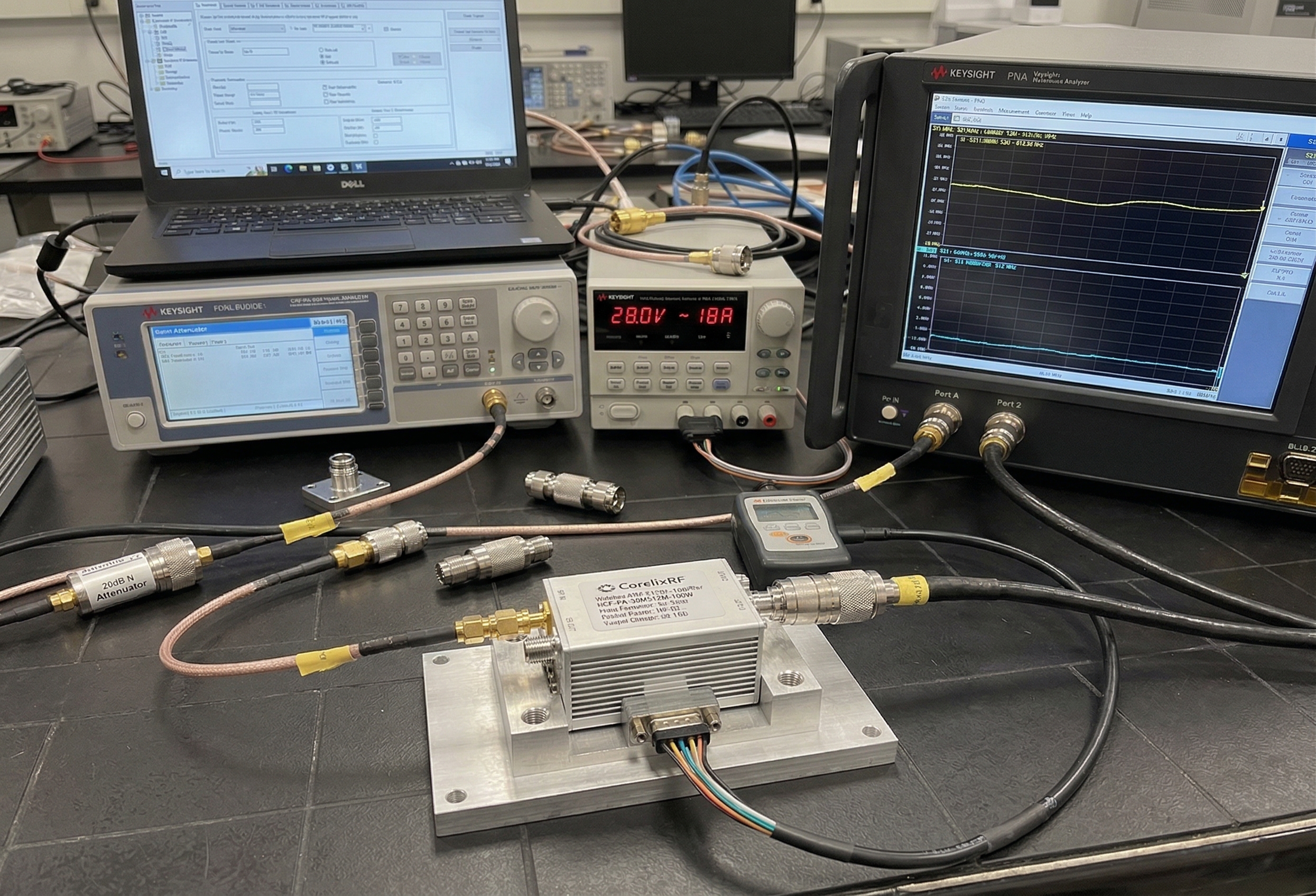
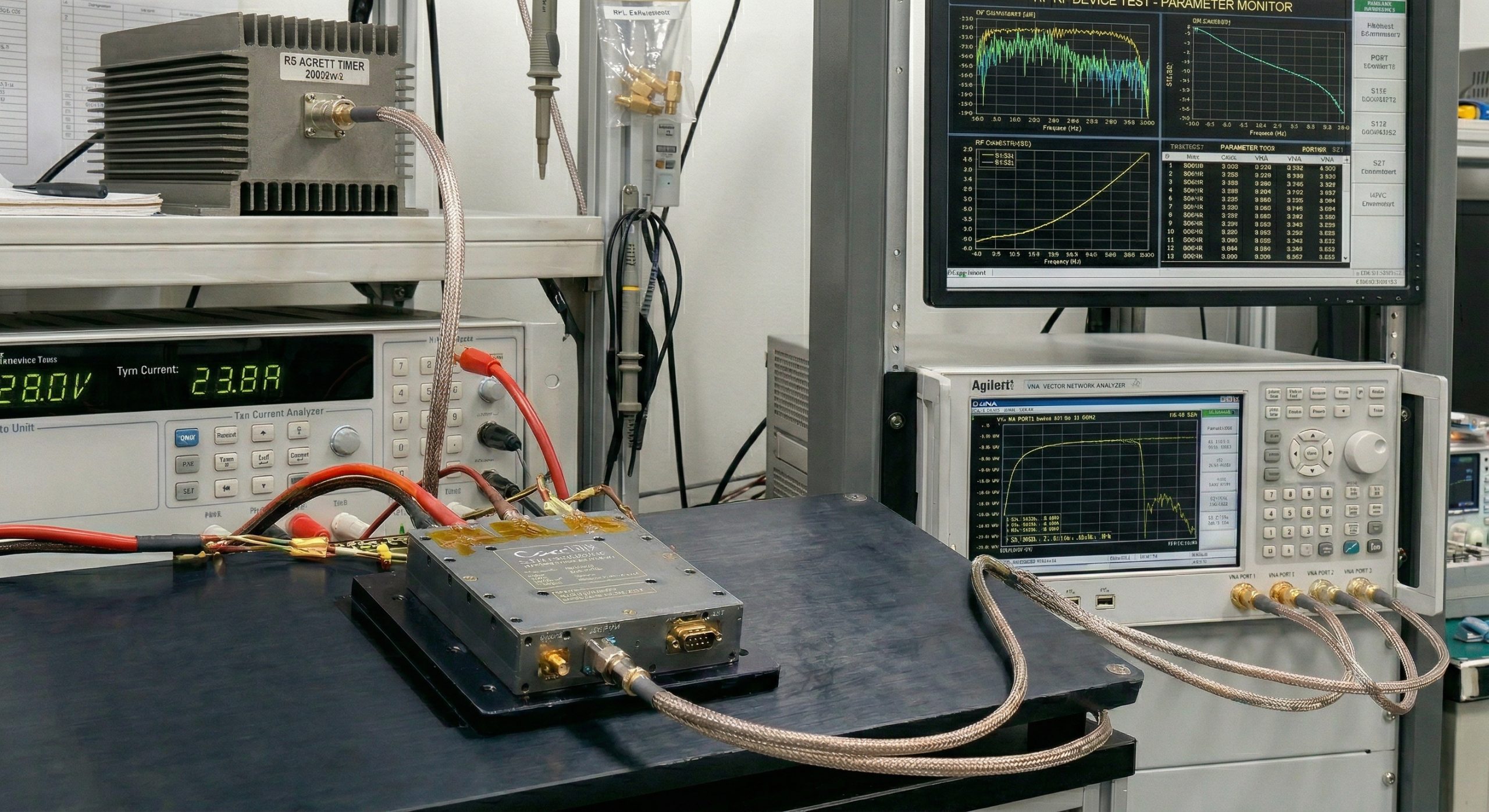
- Unit-level RF validation available
- Custom sub-band review supported
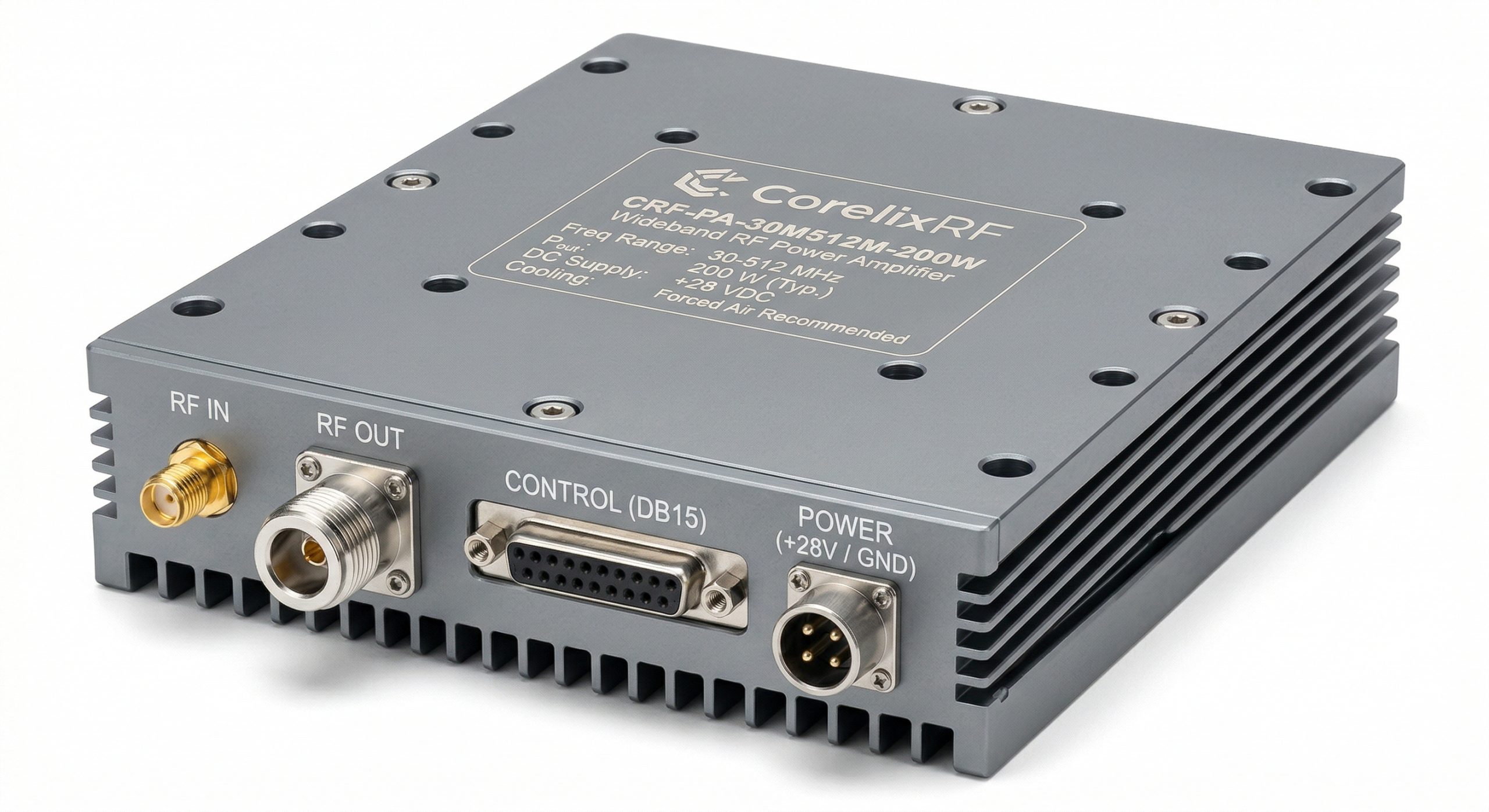
Why CorelixRF for 30–512 MHz VHF/UHF Projects
This series is built for buyers who need more than nominal output power. CorelixRF supports practical VHF/UHF deployment with standard wideband models, documented RF validation, and engineering review before quotation.
Factory-Direct Engineering Communication
You communicate directly with the team responsible for product design, validation, and production — reducing delay between technical review and quotation.
28VDC-Native Wideband Architecture
The platform is designed around a 28VDC rail commonly used in industrial and vehicle-based environments, simplifying system-side power planning.
Documented RF Validation
Unit-level RF verification and supporting documentation are available based on model scope and project requirements, helping reduce procurement uncertainty.
Custom Band & Integration Review
Where application performance requires narrower band optimization, connector changes, or system-side matching review, engineering feasibility feedback is available before commitment.
Reducing Integration Uncertainty Before Deployment
Wideband VHF/UHF procurement often fails at the integration stage, not at the quotation stage. This platform is designed to reduce ambiguity before hardware enters your system.
COMMON PROCUREMENT RISKS
- Ambiguous CW versus pulse power definitions
- No unit-level validation data before shipment
- Unclear thermal path under sustained load
- Insufficient supply current visibility at full output
HOW CORELIXRF ADDRESSES THEM
- Defined CW operating reference for sustained use
- Validation documentation available by model and project scope
- Conduction-cooled baseplate design for practical thermal integration
- Transparent current budgeting for PSU planning and system review
30–512 MHz Model Selection Guide
Use the matrix below to compare standard models by output class, gain, current demand, interface, and integration fit. Send your project inputs for a direct engineering recommendation.
| Model | Frequency Range | Output Power | Gain @ 512 MHz | Max Current | Supply | Connector | Best Fit / Typical Use | Action |
|---|---|---|---|---|---|---|---|---|
| HZ30512-30 | 30–512 MHz | 30W CW | 45 ±1.5 dB | ≤4 A | 28 VDC | SMA / N-Type | Compact lab evaluation and lower-power VHF/UHF integration | |
| HZ30512-50 | 30–512 MHz | 50W CW | 47 ±1.5 dB | ≤9 A | 28 VDC | SMA / N-Type | Entry wideband deployment with moderate current budget | |
| HZ30512-100 | 30–512 MHz | 100W CW | 50 ±1.5 dB | ≤18 A | 28 VDC | N-Type (Default) | Balanced standard platform for most integration projects | |
| HZ30512-200 | 30–512 MHz | 200W CW | 53 ±1.5 dB | ≤30 A | 28 VDC | N-Type (Default) | High-power broadband transmit chain and demanding field deployment | |
| CUSTOM OEM | Sub-band / Define | Define Watts | Optimized | TBD | 28 VDC | Custom Config | Sub-band optimization, improved flatness, or project-specific configuration | Custom Review |
Published values are standard model reference figures. Final selection should be confirmed against operation mode, supply budget, thermal conditions, and project-specific frequency requirements.
Mechanical and Thermal Integration Reference
For VHF/UHF projects, thermal path and power architecture are as important as RF output. This platform is designed for practical system-side integration review before quotation.
28VDC Platform
Native 28VDC design supports easier integration into industrial, mobile, and vehicle-side power environments without additional conversion stages.
Conduction-Cooled Baseplate
The baseplate is designed for direct thermal interface with the customer-side chassis or cold plate, supporting more predictable heat transfer under sustained load.
Connector Reference
Standard RF interface and control-side arrangements are available for review before order confirmation. Custom connector configurations can be discussed during engineering intake.
Drawing Support
Mechanical drawings and integration reference materials can be requested during project evaluation to support layout planning and chassis design.
Typical Project Scenarios
This platform is intended for projects that need broadband VHF/UHF power without the complexity of multiple narrowband amplifier stages.
Communication Test Platforms
Supports broadband lab evaluation and frequency-agile bench setups where documented gain and predictable current draw matter during system planning.
OEM System Integration
A practical wideband power stage for projects using 28VDC architecture and conduction-based mechanical mounting in industrial and mobile platforms.
Laboratory RF Evaluation
Useful for EMC pre-compliance, antenna evaluation, and RF subsystem testing where repeatable unit-level data improves comparison and documentation.
VHF/UHF Transmit Chain Integration
Serves as the high-power stage in broadband transmit-side development where a single wideband architecture reduces switching complexity and system overhead.
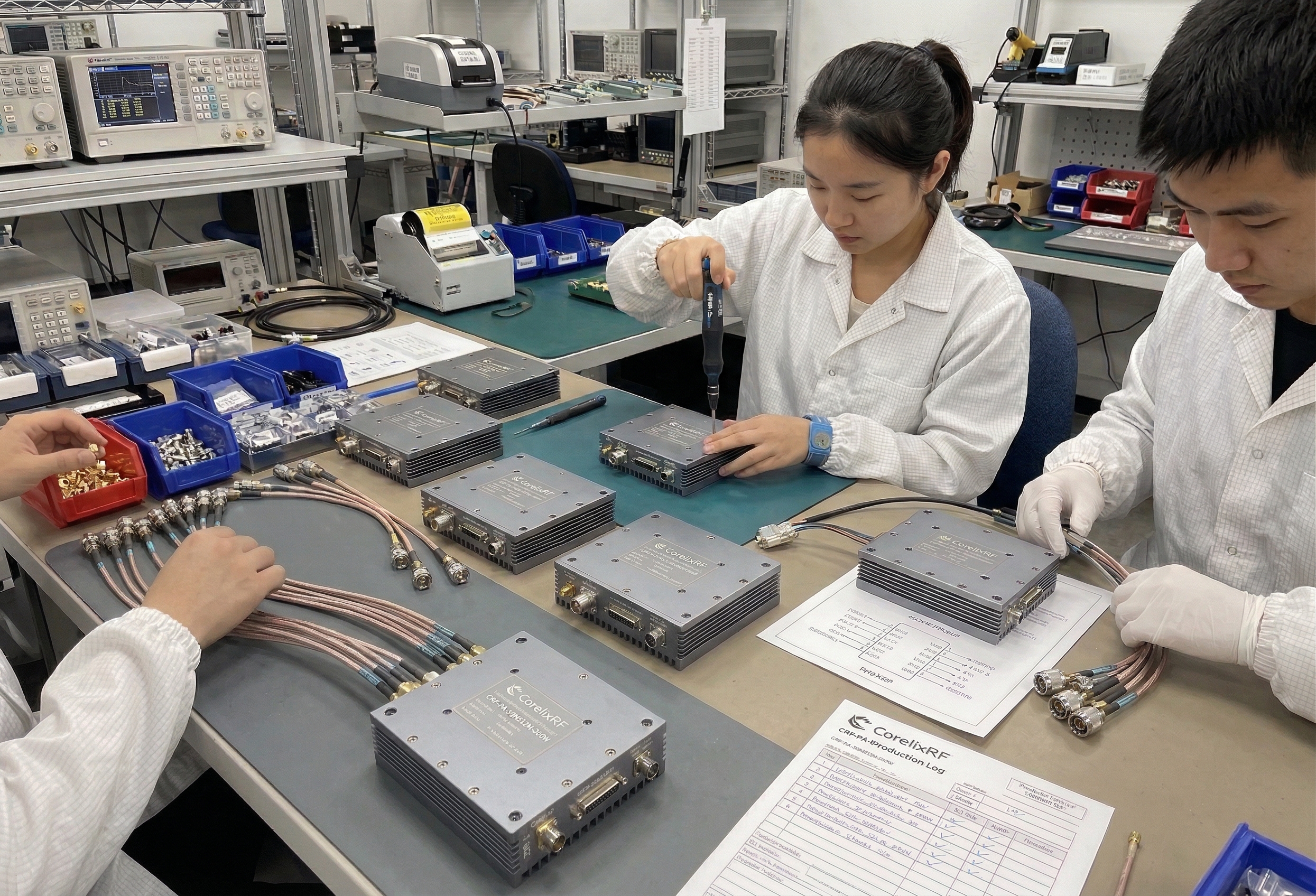
Manufacturing Evidence Behind the Platform
This series is supported by in-house validation, production control, and delivery documentation intended for engineering-led procurement.
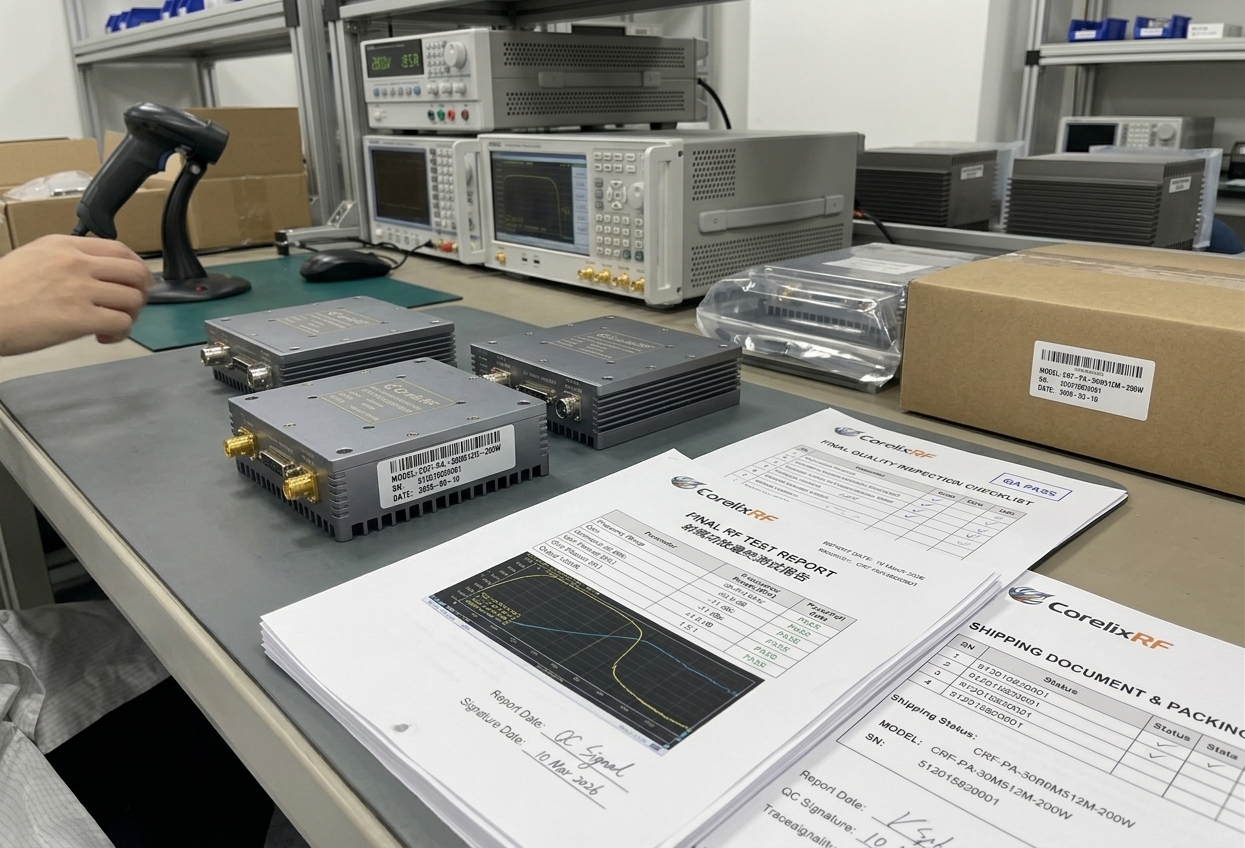
Documentation and Data Support
Technical review often starts with documentation. This series can be supported with model-specific datasheets, sample report formats, and integration reference materials.
Project and Procurement FAQ
Technical Questions
We generally recommend sizing the power supply with appropriate headroom above maximum current demand so the voltage rail remains stable under load. Final guidance depends on model and operation mode. Please include your supply configuration in the engineering review request.
Yes. Narrower band definition may allow better gain flatness or application-specific performance, depending on project requirements. Engineering feasibility feedback is available before commitment.
Model suitability depends on operation mode, thermal path, and installation conditions. Share your duty cycle and cooling setup for technical confirmation. CW-rated models are defined for sustained operation under proper thermal interface.
Hardware-level sensors monitor reflected power. If VSWR exceeds safe levels, drive power is automatically reduced to prevent device damage. Specific protection logic can be reviewed during the engineering intake.
Procurement Questions
Yes. Unit-level RF verification and supporting documentation are available based on model scope and project requirements. Please request this during RFQ review so we can confirm scope and format.
Yes. A sample report format can be shared during the RFQ stage so your team can review the data structure and acceptance logic before committing to procurement.
Please provide your target frequency range, power level, operating mode (CW / pulse), available supply voltage, thermal interface conditions, quantity, and delivery expectation. This allows us to give a relevant technical response.
Lead time depends on model, quantity, and customization scope. Include your timing requirement in the RFQ for an accurate response. Engineering review does not affect standard delivery scheduling.
Yes. Sample evaluation can be discussed during engineering review based on model availability, validation scope, and project stage. Please indicate your sample requirement in the intake form.
Yes. Mechanical and integration reference materials can be shared during technical review to support system-side layout and thermal planning before any order commitment.
Start Your 30–512 MHzEngineering Review
Send your target band, power requirement, operation mode, supply conditions, and thermal interface details. Our engineering team will review feasibility and recommend a suitable standard model or customization path.
- Standard and custom review available
- Sample report and document support
- Technical feasibility before quotation
- OEM / sub-band optimization support
- Engineering response within 48 hours