CorelixRF | RF Systems Solutions
Directional Antenna Manufacturer | High-Gain OEM Antennas for UAV & RF Systems | CorelixRF
Factory-Direct RF Antenna Manufacturer

Directional Antenna Manufacturer for UAV, RF Transmission & OEM System Integration

CorelixRF designs and manufactures high-gain directional antennas — horn antennas, wideband models, and custom-band configurations — for UAV links, RF transmission projects, counter-UAS systems, and OEM system integration. Factory-direct supply with engineering support from sample to batch production.
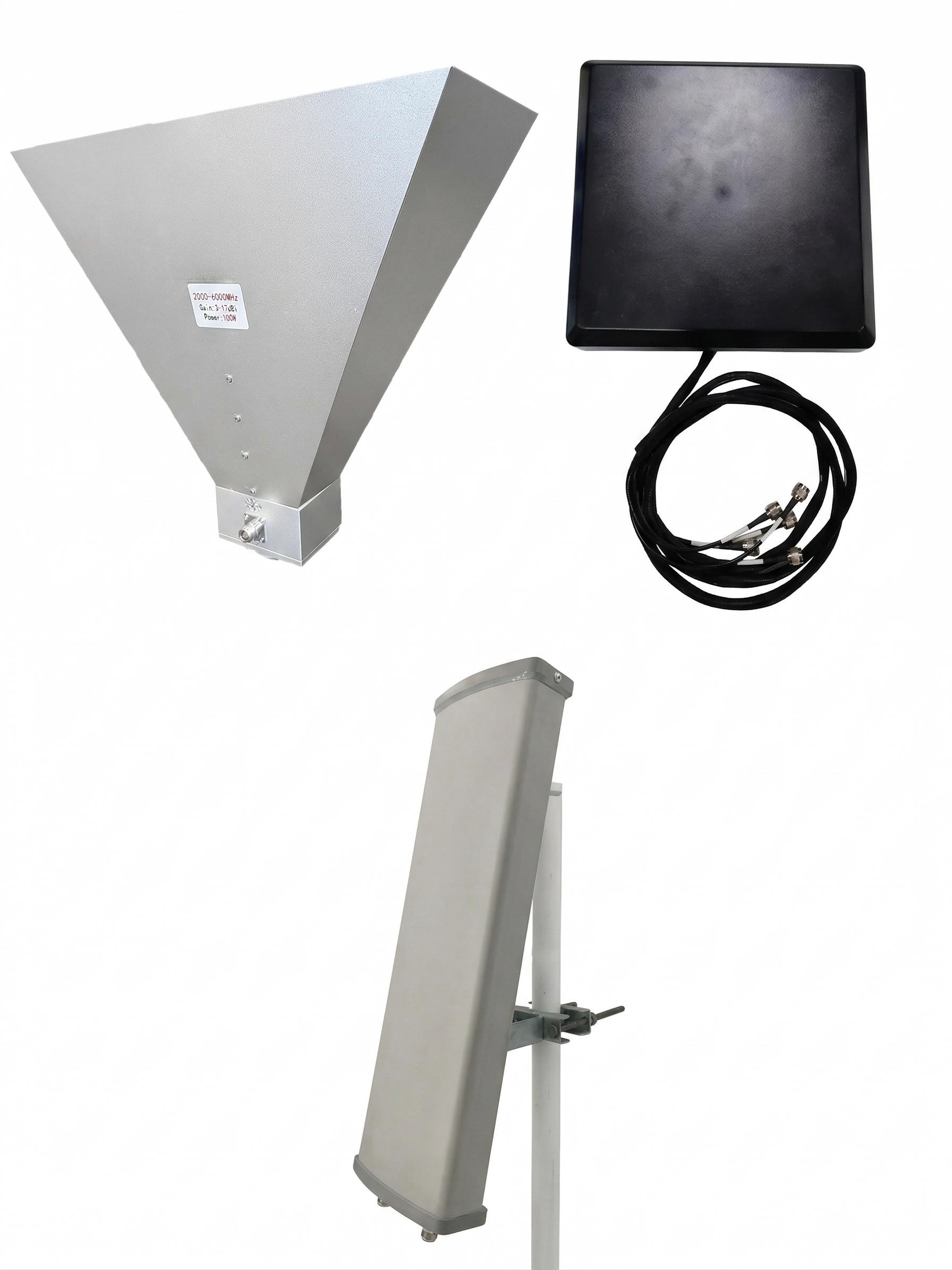
High-gain directional antennas
Wideband & custom-band options
RF chain matching support
Sample to batch production
OEM / ODM project support
Export documentation ready
Factory-Direct Manufacturer OEM / ODM Support 2–6 GHz Wideband High Gain Directional RF System Integration Ready
30+
Years RF Manufacturing
400
Engineering Staff
24h
Engineering Response
Directional Antenna
CorelixRF
DIRECTIONAL COVERAGE HIGH-GAIN FOCUSED BEAM WIDEBAND 2~6 GHz
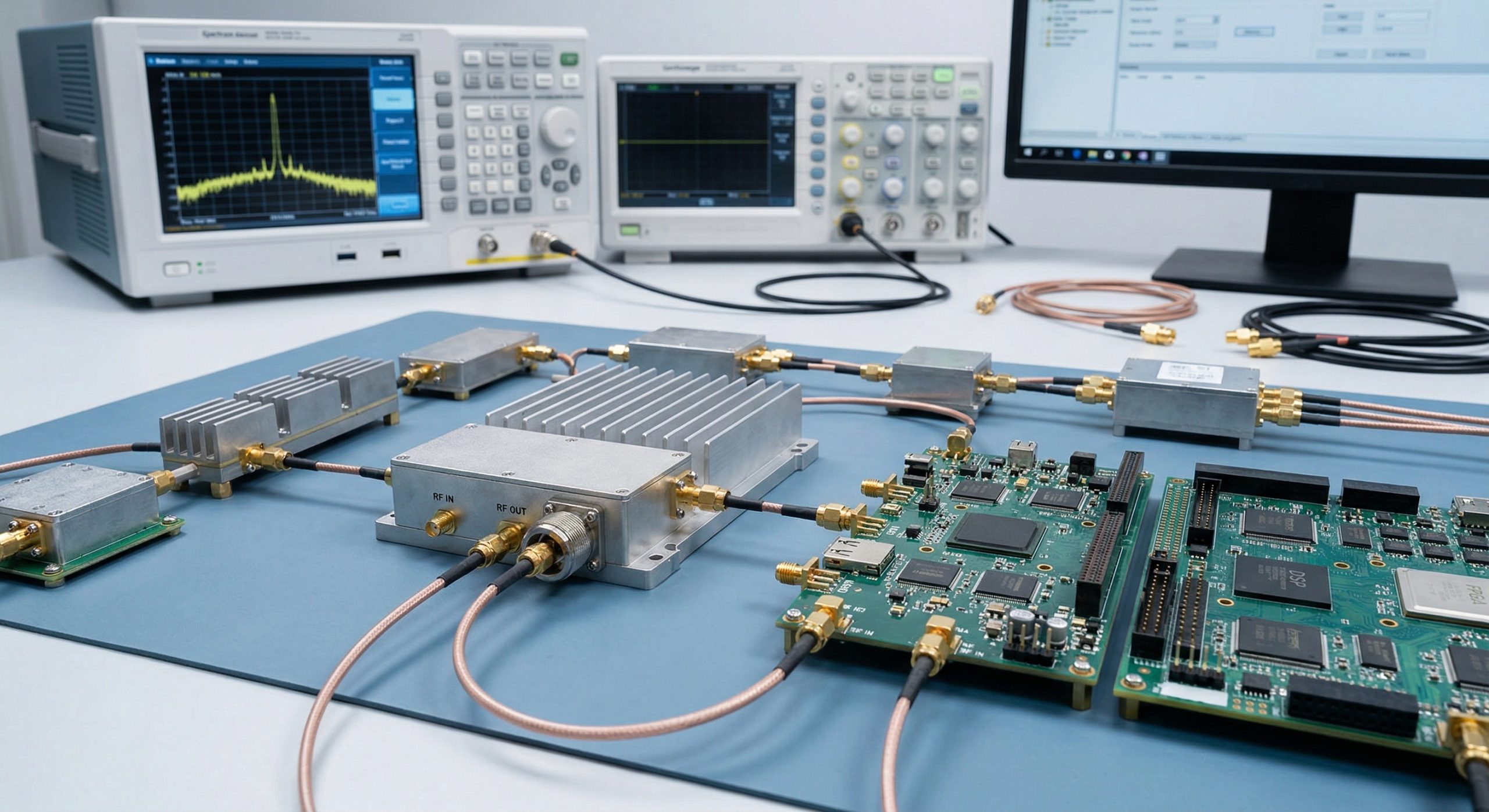
RF electronics engineering lab setup
Directional Antenna
Real RF Manufacturer
OEM / ODM Project Support
Custom Band / Mounting Support
Export Delivery Support
Real RF Manufacturer30+ years factory-direct
Test Data AvailableVSWR & pattern verified
Custom Band / MountingOEM / ODM supported
24h Engineering ResponseDirect technical access
Export Delivery SupportDocumentation & shipment
Buyer Challenges

Common Challenges in Sourcing Directional Antennas

For UAV links, RF transmission, and system integration projects, sourcing a directional antenna goes beyond comparing gain numbers. Buyers regularly encounter issues that affect integration quality, project timelines, and procurement risk.

01
Real Manufacturer or Trading Company?
Hard to verify whether the supplier actually designs and manufactures antennas, or simply relabels products from other factories with no engineering depth.
02
Missing Integration Details
Specifications may appear acceptable on paper, but critical integration details — beamwidth, radiation pattern data, connector placement, mounting dimensions — are often absent or unverified.
03
Standard Models Don't Fit the Project
Catalog models may not match the required frequency band, polarization, power handling, connector type, or mechanical form factor for your specific deployment.
04
No RF Chain Matching Support
Suppliers cannot confirm amplifier compatibility, system impedance matching (50Ω), or provide PA + antenna integration guidance for the full transmit chain.
05
No Test Data or Production Proof
Factory testing capability and batch production consistency are often unclear. Without measured VSWR, gain, and pattern data, verifying claimed performance is impossible.
06
Unreliable Export & Documentation
Lead time, export documentation, and technical drawing support are inconsistent — causing delays and compliance issues for international procurement teams.
Our Approach

From Procurement Problems to Engineering Solutions

CorelixRF does not only supply directional antennas. We help customers move from requirement confirmation through product matching, beamwidth and radiation pattern verification, custom development, and delivery support.

Hard to confirm whether the supplier is a real manufacturer
Factory-direct supply with direct engineering and commercial communication — no intermediaries
Missing beamwidth, radiation pattern, or connector placement details
Measured VSWR, gain, and radiation pattern data available; connector location and mounting interface confirmed
Standard models don't match frequency, polarization, or form factor
OEM / ODM customization for band, gain, connector, bracket, polarization, and mechanical fit
Concern about amplifier or 50Ω RF chain compatibility
PA matching support, SDR module compatibility guidance, and complete transmit chain integration advice
No test data — cannot verify published specifications
Test data package including VSWR, gain, and pattern reports; every production unit tested before shipment
Slow response during project evaluation stage
Engineering proposals and technical feedback typically within 24 hours on business days
Product Range

Directional Antenna Product Range

Compare directional antenna models by frequency range, gain, beamwidth, power handling, connector, and application fit. Standard platforms available for evaluation and batch supply; custom configurations on request.
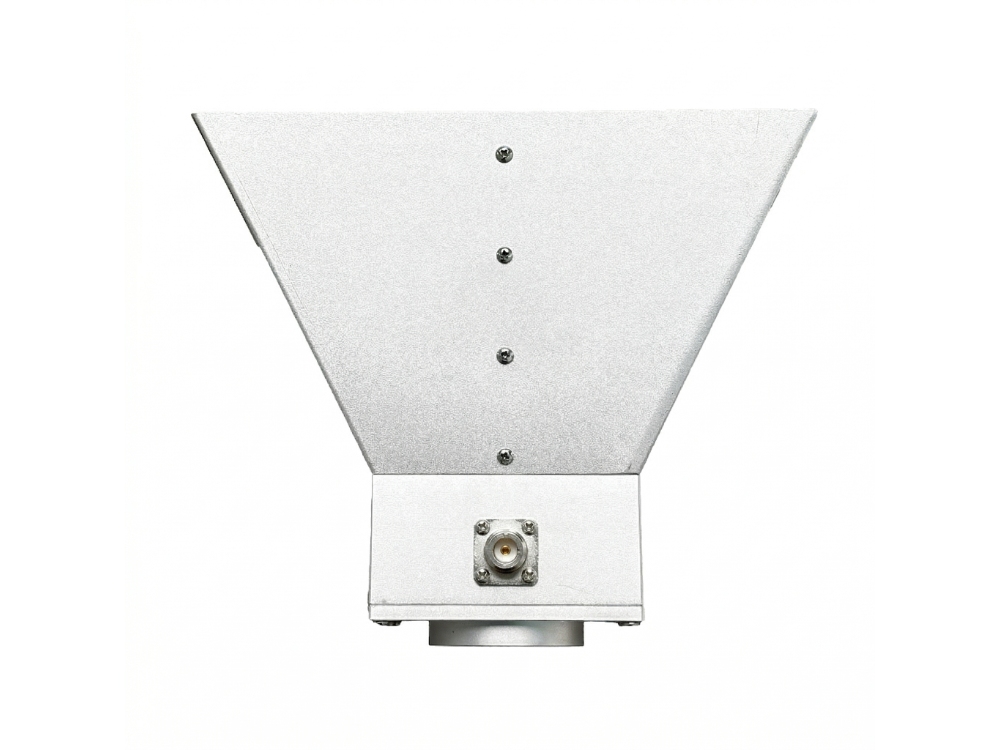
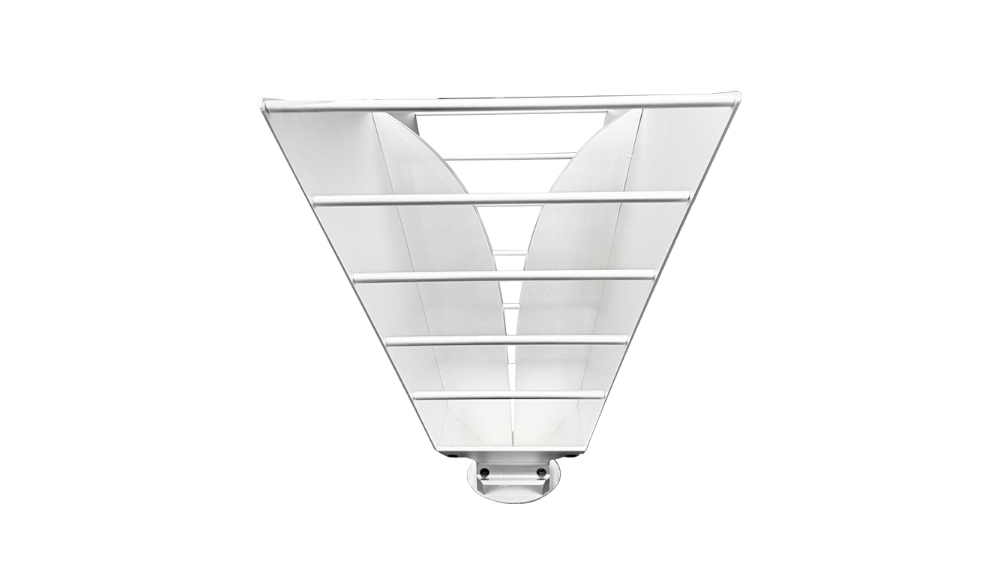
Directional Horn Antenna — Front View
Horn Antenna — Side / Angle View
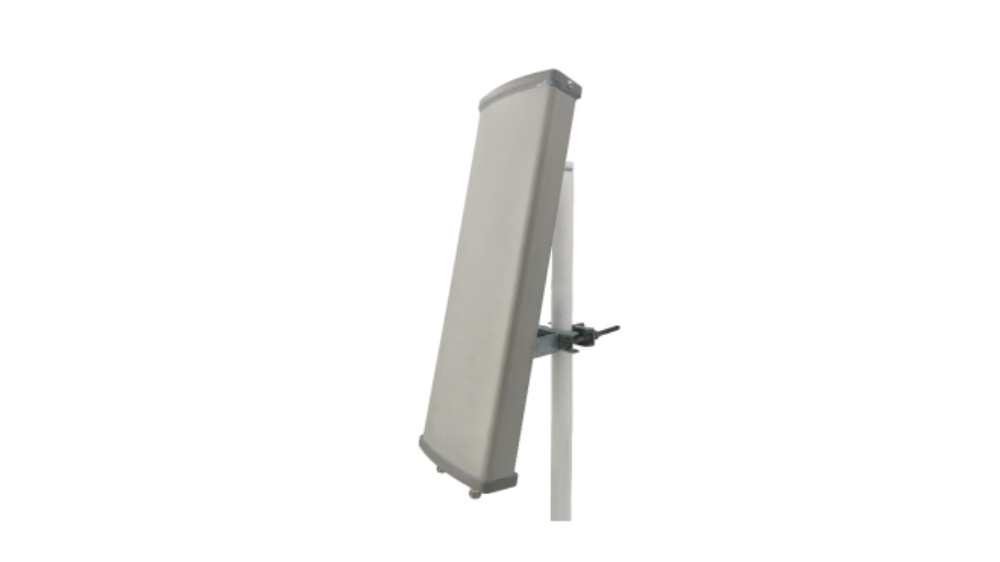
Antenna — Side / Angle View
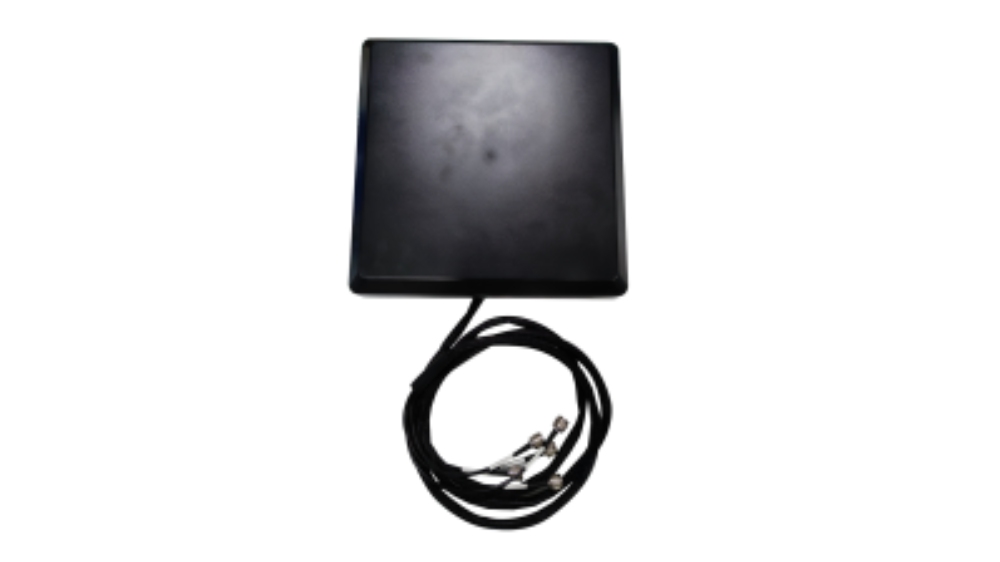
Antenna Mounted / Integration View
Mounted / Integration View
Filter:
Model Type Frequency Gain (dBi) Beamwidth H/E VSWR Max Power Connector Application Get Quote
HZA20006000-DD1 Horn 2000–6000 MHz 13–19 dBi 75° / 60° < 2.0 100 W N-type UAV / RF TX / C-UAS RFQ
HZA4900-DD1 Horn 4900–5900 MHz 16–22 dBi 60° / 50° < 1.8 100 W N-type 5 GHz UAV / PtP RFQ
HZA2400-DD1 Horn 2400–2500 MHz 14–18 dBi 70° / 60° < 1.8 100 W N-type / SMA 2.4 GHz RF TX / UAV RFQ
HZA900-DD1 Horn 800–960 MHz 10–15 dBi 90° / 75° < 2.0 50 W N-type Long Range RF RFQ
Custom Band Horn Horn / Custom On Request Custom target Custom Custom Up to 200W SMA / N / TNC OEM Project Discuss
Custom Polarization Custom On Request Custom Custom Custom Custom Customer Spec Dual-pol / RHCP Discuss

Need a specific frequency band, gain target, or mechanical form factor? → Submit your project requirements for a custom engineering proposal within 24 hours.

Custom Directional Antenna Options

All custom parameters are available on a project basis. Tell us what your project needs — we will confirm feasibility and provide engineering feedback.

Custom Frequency Band
Any specific operating frequency or sub-band within 0.4–18 GHz. Confirm with project RF requirements.
Custom Gain Target
Higher or lower gain optimized for your specific link budget and coverage angle requirements.
Custom Beamwidth
Narrower or wider beam pattern in H/E plane to match your coverage geometry and scanning requirements.
Custom Connector Type & Location
SMA, N-type, TNC, or customer-specified connector. Bottom, rear, or side placement available.
Custom Bracket / Mounting
Vehicle-mount, mast-mount, chassis-mount, or equipment-integration bracket. Mechanical drawing support available.
Custom Polarization
Vertical, horizontal, dual-polarization, or RHCP/LHCP circular polarization configurations.
Custom Mechanical Size
Modified aperture dimensions or compact configurations to match space-constrained integration environments.
Custom Radome / Housing
Weather protection radome, specific surface finish, or color/marking for OEM branding requirements.

How to Select the Right Directional Antenna

Match your application to the most suitable configuration:

For UAV Ground Link
2–6 GHz Wideband Horn
HZA20006000-DD1 or custom band. High gain for extended UAV range. Wide frequency coverage for multi-band systems.
For Directional RF Transmission
High-Gain Directional Horn
Select based on target frequency and required link budget. Pair with wideband RF amplifier for longer range.
For Counter-UAS / C-UAS
Wideband Horn, 100W+
High power handling and wideband coverage. 2–6 GHz models cover most commercial UAV frequency bands.
For System Integration
50Ω, N-type Interface
Standard 50Ω impedance and N-type connector for direct integration with amplifiers, SDR modules, and RF systems.
For Lab Testing & Validation
Standard Model + Test Data
Order a standard model with measured test data package for R&D evaluation before committing to a custom design.
For OEM Integration
Custom PA + Antenna System
We also manufacture wideband RF power amplifiers. Complete transmit chain (PA + antenna) integration packages available.
Key Advantages

Why Choose Our High-Gain Directional Antennas

For engineering-based procurement, the real value of a directional antenna lies in how well it supports system integration, project deployment, and long-term operational reliability.
Directional antenna structure and connector detail
Product Photo — Antenna Structure & Connector Detail
RF system integration – antenna with amplifier chain
System Photo — Antenna Integrated with Amplifier / RF Chain
High-Gain Directional Coverage
Focused radiation pattern and higher gain improve effective RF range and front-end signal concentration. Better link budget for the same transmit power compared to omnidirectional antennas.
→ Longer effective range per transmit watt
Wideband Directional Antenna Options
Single aperture covering the full 2–6 GHz operating band. Reduces system complexity and eliminates the need for frequency-specific antenna changes during multi-band operation.
→ One antenna across your entire band
Custom Connector and Mounting Support
Connector type, gender, location, bracket, and mechanical dimensions customized to your integration constraints. OEM / ODM design available for project-specific requirements.
→ Drop-in fit for your integration
50 Ω RF System Compatibility
Designed for standard 50Ω RF systems. Compatible with wideband power amplifiers, SDR modules, and RF front-ends. VSWR-matched for real system integration, not just standalone use.
→ Works directly with your RF chain
Directional Antennas for Fixed and Integrated Deployment
Suitable for fixed ground station installation, vehicle-mounted setups, and equipment-level chassis integration. Multiple mounting interface options confirm fit before production.
→ Verified for your deployment environment
From Sample Evaluation to Batch Supply
Supports single-unit sample orders for technical evaluation, followed by batch procurement with consistent manufacturing quality. Standard and custom models both available in quantity.
→ Reduce risk before committing to volume
Application Scenarios

Where High-Gain Directional Antennas Are Used

Directional antennas are used in RF projects that require focused coverage, extended range, point-to-point links, or controlled signal direction. Below are the most common deployment scenarios.
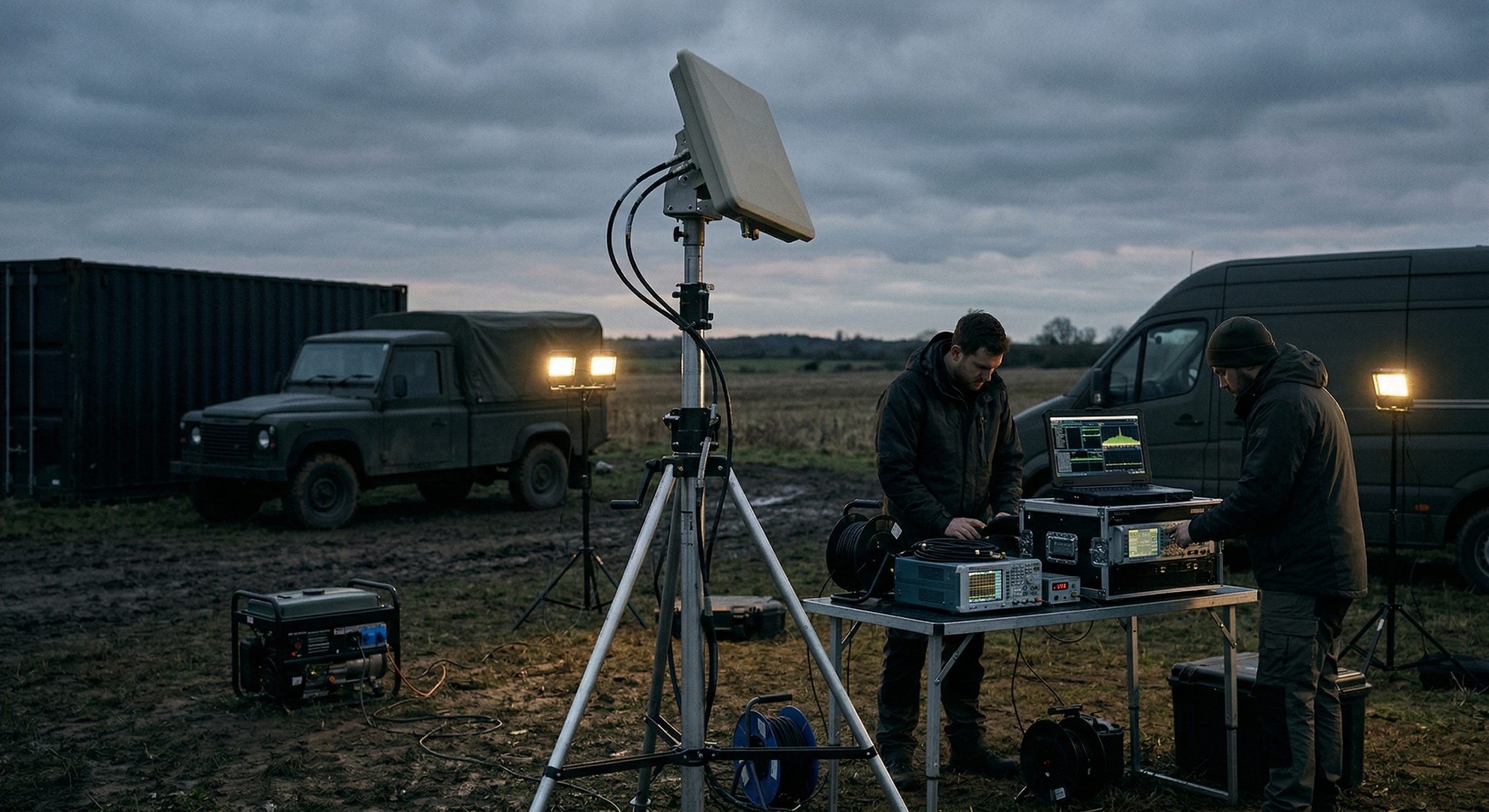
UAV drone flying – RF ground control system
UAV-Related RF Systems
Focused RF coverage for UAV ground control stations, uplink / downlink antenna systems, and long-range UAV communication links requiring high-gain directional beam patterns.
Recommended: 2–6 GHz, 13–19 dBi, N-type
Discuss UAV antenna requirements
Counter-UAS directional RF equipment system
Counter-UAS & Directional RF
Forward RF energy concentration for counter-UAS applications. Wideband horn antennas covering multiple UAV operating bands in a single aperture, with high power handling for equipment-level integration.
Recommended: Wideband Horn, 100W+
Discuss C-UAS configuration
RF transmission – industrial communication facility
RF Transmission & Long Range
Directional RF transmission projects requiring stronger signal concentration, extended operating range, and improved front-end efficiency for wireless data links and command channels.
Recommended: High-Gain Directional Horn
Discuss RF transmission requirements
System integration – RF electronics engineering
System Integration Equipment
Direct integration with wideband RF power amplifiers, SDR modules, signal processing equipment, and complete RF assemblies. 50Ω matched for standard RF chain compatibility.
Recommended: 50Ω, N-type Interface
Discuss system integration
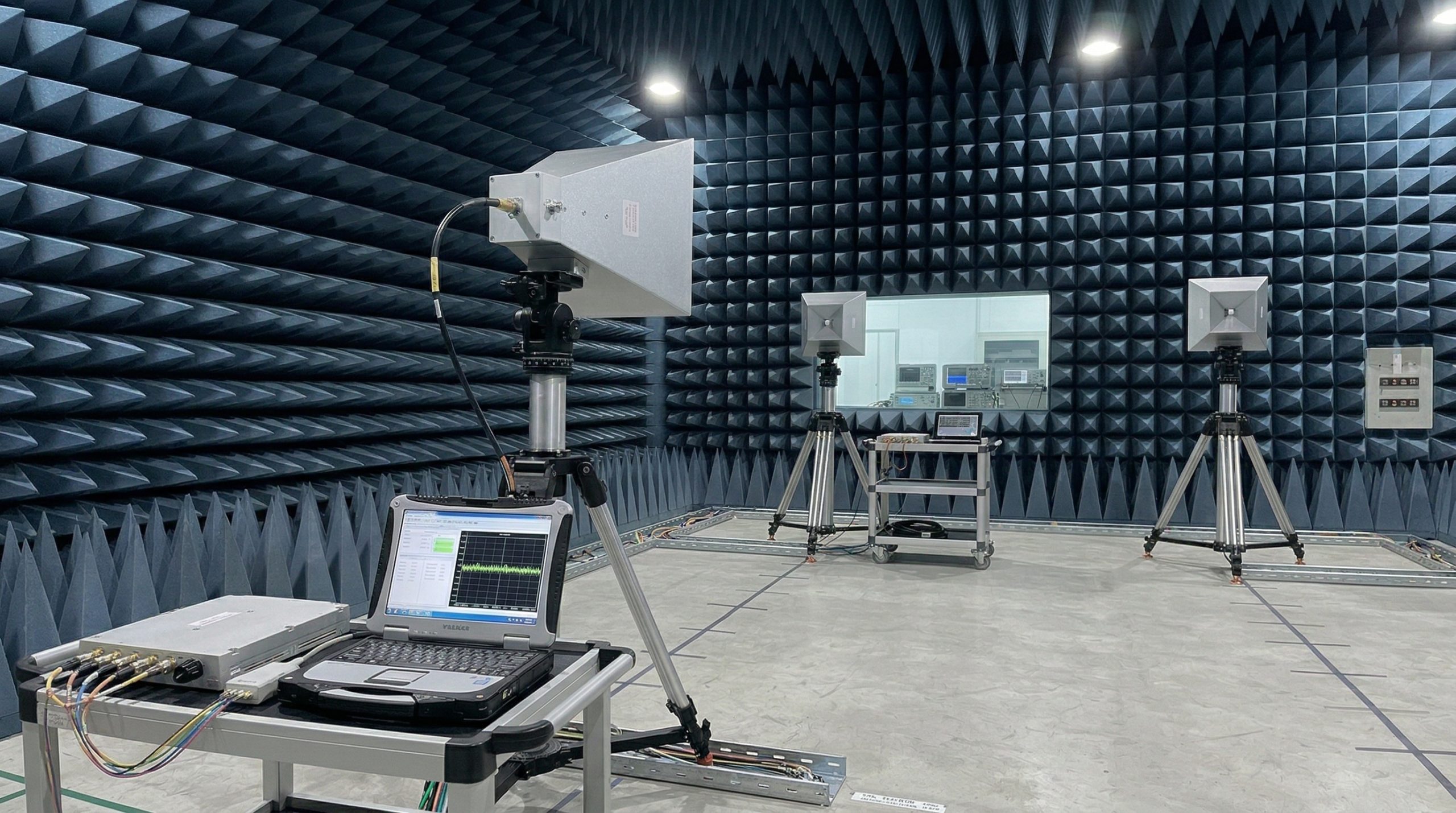
Laboratory RF testing and validation
Laboratory Testing & Validation
RF performance testing, directional antenna characterization, and development-stage validation in controlled environments. Test data package available for engineering evaluation records.
Recommended: Standard Model + Test Report
Request sample for evaluation
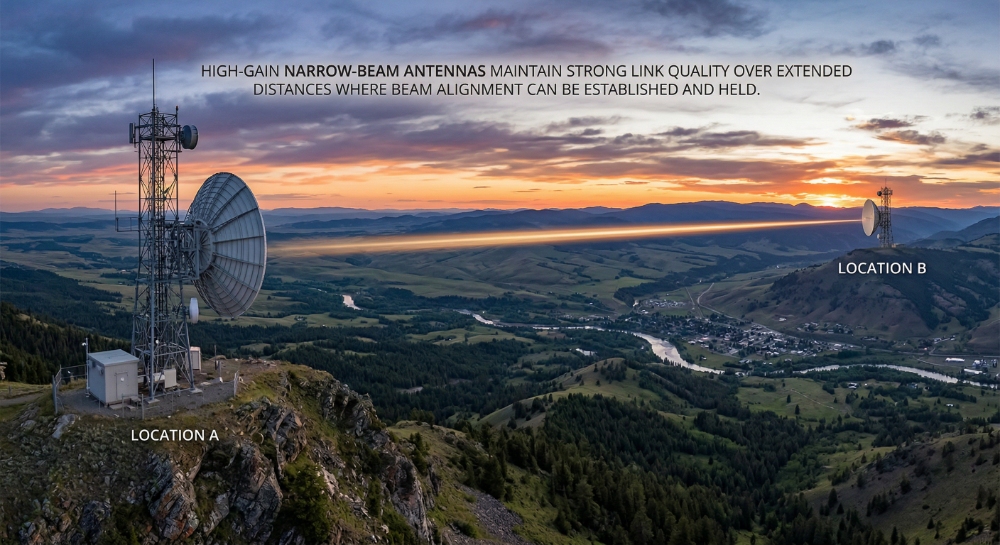
Point-to-point fixed directional RF coverage
Point-to-Point Fixed Coverage
Fixed-direction RF coverage between known locations. High-gain narrow-beam antennas maintain strong link quality over extended distances where beam alignment can be established and held.
Recommended: Narrow Beam, High Gain
Discuss point-to-point application
Buying Guide

What to Verify Before Buying a Directional Antenna

Directional antenna procurement should not be based only on a gain number or a nominal frequency range. These are the questions buyers should confirm before placing an order — and what to ask your supplier.

01
Frequency Range Verification
Whether the frequency range is truly usable across the band, not only at the nominal center frequency. Performance at band edges matters for wideband systems.
Ask for measured VSWR and gain data at band edges
02
Gain: Peak vs. Band-Average
Whether the published gain figure is peak gain at a single frequency, or the average gain across the operating band. This significantly affects link budget calculations.
Request gain vs. frequency sweep data across the band
03
Beamwidth — Measured, Not Simulated
Whether H-plane and E-plane beamwidth figures are based on actual antenna range measurements or simulation only. These values differ and affect system coverage planning.
Ask for measured radiation pattern reports, not only simulation
04
Connector Compatibility
Whether the connector type, gender, and physical location on the antenna body matches the existing RF chain. Confirm whether adapters will be required and how they affect performance.
Confirm connector gender, interface type, and adapter requirements
05
Power Rating: CW vs. Pulse
Whether the power handling specification is based on continuous wave (CW) or pulsed operation. CW ratings are more conservative and relevant for PA matching and thermal safety margins.
Clarify CW vs. pulse power rating before connecting to a PA
06
Mounting Interface & Dimensions
Whether the mounting method, aperture size, and overall dimensions fit the deployment environment. Confirm mechanical interface and drawing availability before prototype stage.
Request mechanical drawing and confirm dimensions before ordering
07
Test Data & Engineering Support
Whether VSWR, gain, and pattern test data are available for the specific model you are evaluating. Whether the supplier can answer technical integration questions with engineering-level answers.
Ask for a sample test report before placing a bulk order
08
Customization & Batch Capability
Whether the supplier can support later-stage customization if the project evolves — and whether batch production quality is consistent with the sample units evaluated during development.
Confirm sample-to-batch process and QC consistency before committing to volume
Factory Evidence

Manufacturing & Quality Control That Reduces Procurement Risk

For project-based buyers, real manufacturing and testing capability directly affects delivery consistency, technical reliability, and procurement risk. Here is how CorelixRF controls quality at each production stage.


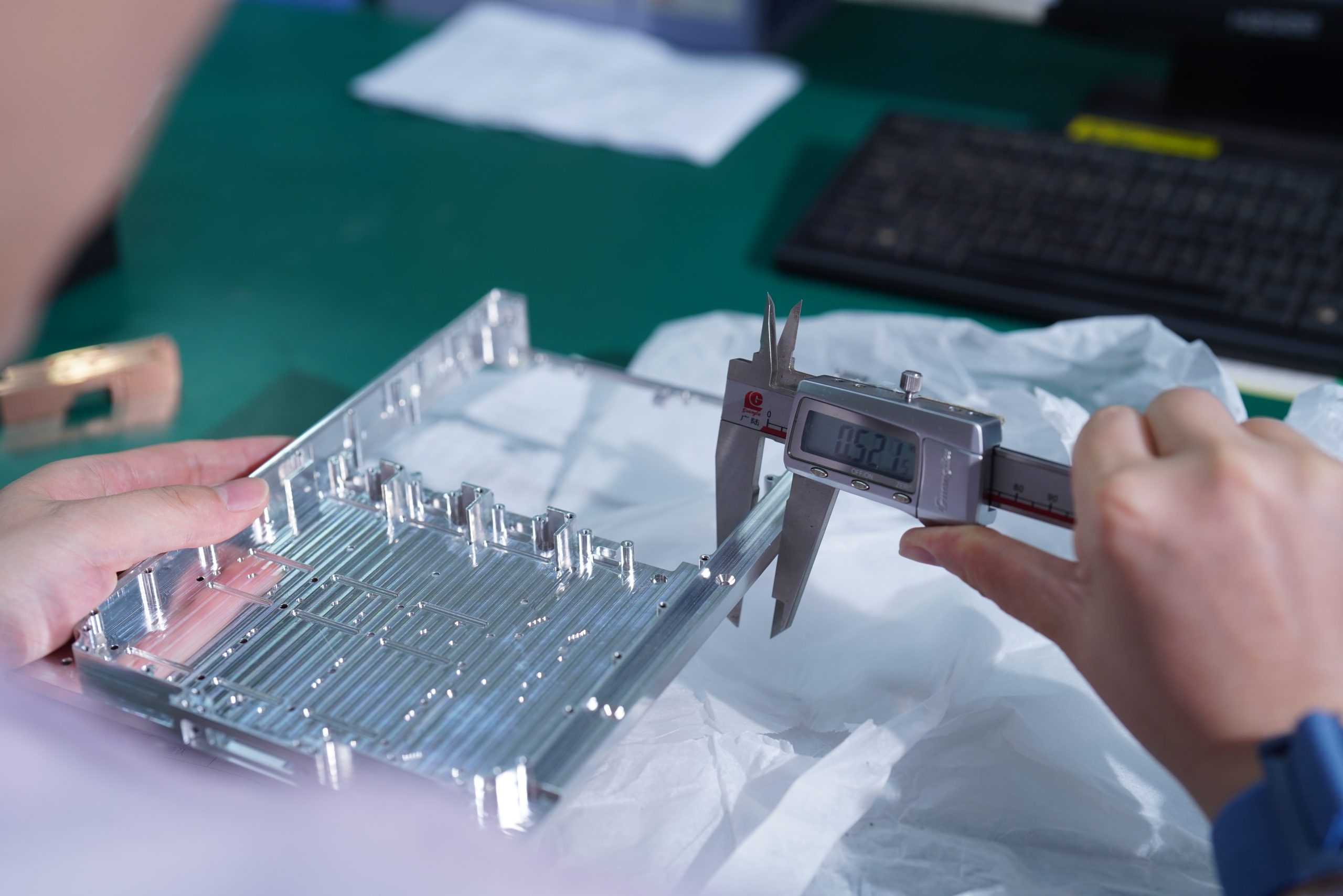
Metal structure fabrication – aluminum machining
Metal Fabrication
Antenna assembly – waveguide and connector installation
Antenna Assembly
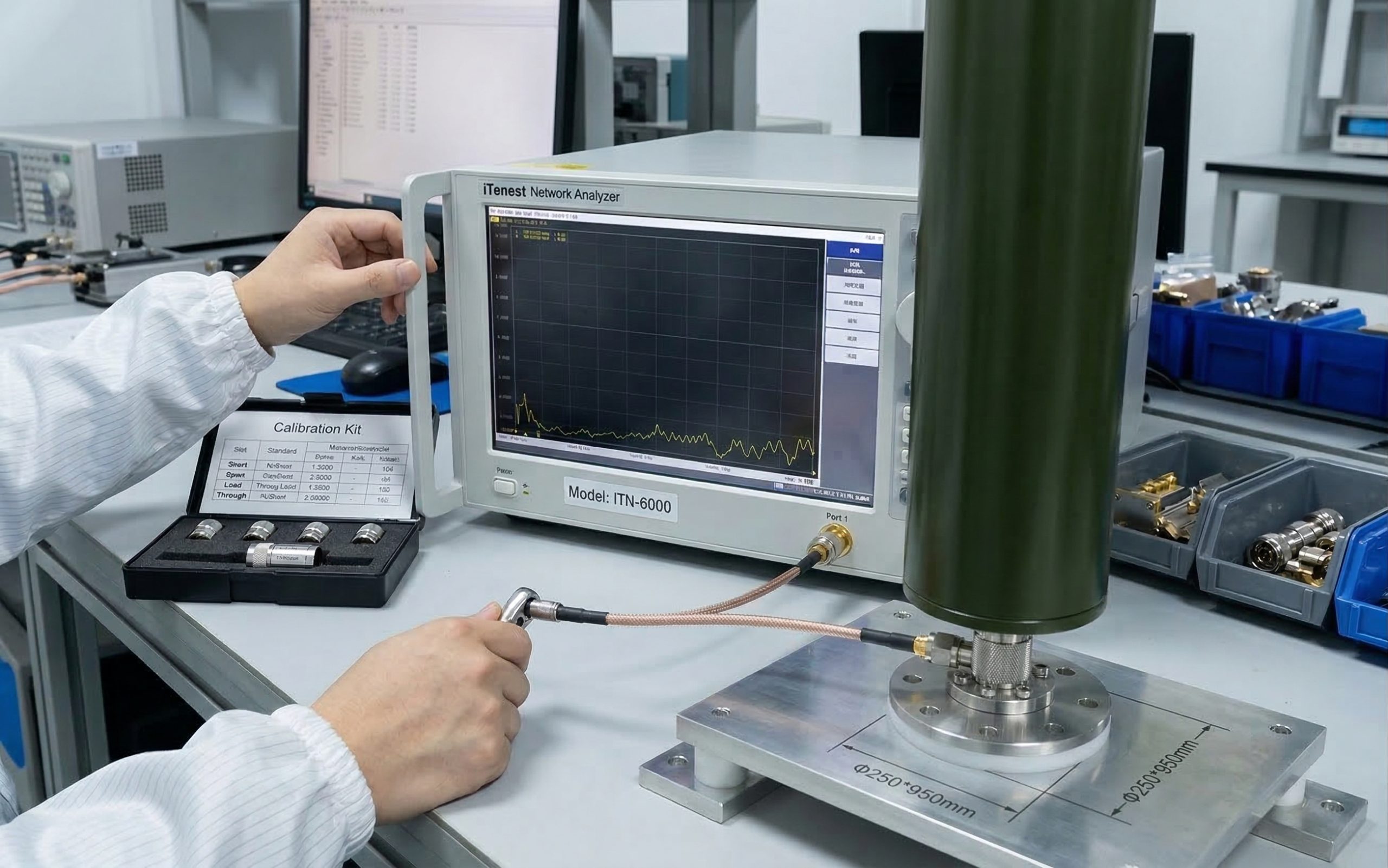
RF tuning and test – VSWR gain pattern verification
RF Test Lab
Packing and shipment – export packaging
Packing & Shipment
Metal Structure Fabrication
In-house aluminum machining and horn geometry fabrication with controlled dimensional tolerances. Aperture geometry directly affects gain and beamwidth consistency.
→ Helps buyers reduce performance variation across batches
Antenna Assembly
Complete antenna assembly capability including waveguide feed structure, connector installation, and mechanical integration. Connector alignment verified during assembly.
→ Consistent connector interface for direct system integration
RF Tuning & Testing
VSWR, gain, and radiation pattern verification performed at the antenna test facility. Every production unit is tested before shipment — not sampled.
→ Reduces performance mismatch risk at system integration
Final Inspection
Final quality inspection process covering electrical performance, mechanical fit, connector integrity, visual quality, and packaging readiness before outgoing shipment.
→ Consistent unit quality from first sample to production batch
Packing & Shipment
Controlled packaging process optimized for safe international shipping. Export documentation, commercial invoice, packing list, and technical documentation prepared per project requirements.
→ Reduces customs and logistics risk for international buyers
Test Data & Documentation Package
Test data package including VSWR sweep, gain vs. frequency, and radiation pattern reports available for your engineering records. Sample test reports available prior to order for project evaluation.
→ Data available for your QC records and project documentation
Why CorelixRF

How Buyers Reduce Project Risk with CorelixRF

We do not simply supply directional antennas. We help project buyers shorten model selection cycles, reduce integration risk, and maintain better control over quality, lead time, and customization — from the first engineering discussion to production delivery.
Factory-Direct Communication
Fewer intermediate steps between you and the engineering team. Direct access to technical and commercial decision makers — no trading company layer.
Faster Engineering Response
More direct technical and commercial response — engineering proposals and specification confirmations typically within 24 hours on business days.
Engineering-Based Customization
Frequency, gain, beamwidth, connector, mounting bracket, polarization, and mechanical form factor — confirmed by engineering, not promised by sales.
Quality & Lead Time Control
Better control over quality consistency and lead time through direct factory relationship and established RF manufacturing processes. Every unit tested before shipment.
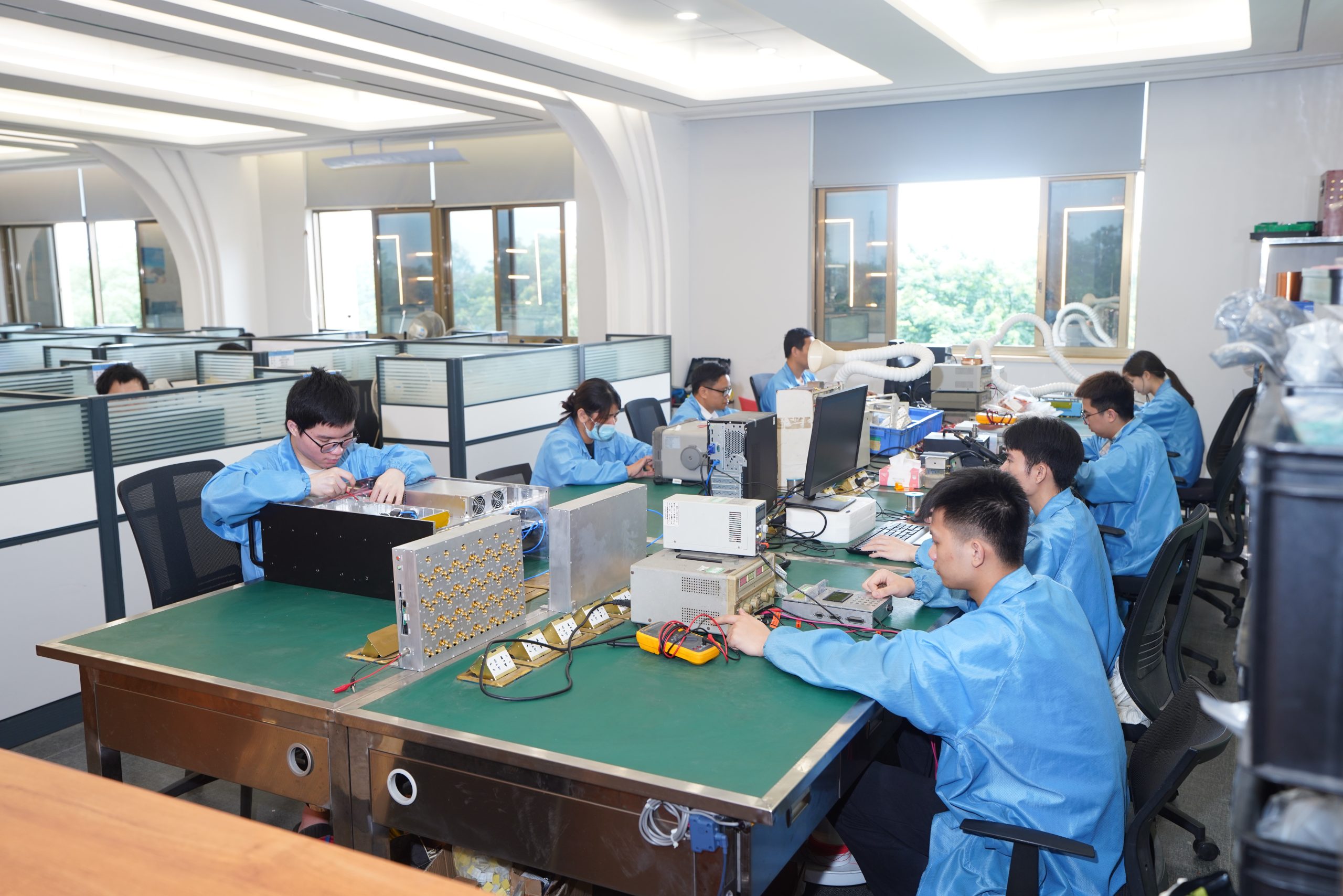
Engineering team working in RF test environment
Photo — Engineering Team / RF Test Environment
30
Years RF Manufacturing
RF & Microwave
400
Engineering Staff
On-site
3
Product Lines
PA · SDR · Antenna
24h
Engineering Response
Business days
Trust & Compliance

Quality System, Compliance & Frequently Asked Questions

Quality System & Compliance

ISO Quality System
CE Compliance
RoHS Compliance
REACH Compliance

Quality Control Flow

Incoming Material Inspection → Machining & Fabrication → Antenna Assembly → RF Tuning → VSWR / Gain / Pattern Test → Final Inspection → Packing → Outgoing Quality Check

Product / Export Compliance

RoHS, CE, and export-related compliance documentation available depending on model and destination. Product compliance details confirmed per project and target market. Contact us for specific compliance requirements.

Frequently Asked Questions

What is the difference between a directional antenna and an omnidirectional antenna?+
A directional antenna concentrates RF energy toward a specific direction, providing higher gain and longer effective range in that direction. An omnidirectional antenna radiates equally in all directions in the horizontal plane. Directional antennas are used when focused coverage, point-to-point links, or interference reduction is required.
How do I choose the right beamwidth for my RF project?+
Beamwidth determines the angular coverage of the antenna. Narrower beamwidth provides higher gain but requires more precise alignment. Wider beamwidth is more forgiving for tracking or scanning applications. Share your coverage geometry and link requirements — we can suggest a suitable beamwidth configuration.
Can you support custom frequency bands?+
Yes. We support customization based on project requirements including frequency band, gain target, connector, bracket, polarization, and other antenna parameters. Custom designs are handled on an OEM / ODM project basis.
Can you provide measured radiation pattern reports?+
Yes. Measured radiation pattern data including H-plane and E-plane patterns are available for standard models. Sample test reports can be provided for project evaluation prior to ordering. Every production unit is tested for VSWR and gain before shipment.
Can the connector type and location be customized?+
Yes. We support SMA, N-type, TNC, and other connector types in various genders and physical locations (bottom, rear, side). Connector customization is confirmed during the OEM project design stage.
Can the mounting bracket or mechanical form factor be customized?+
Yes. Bracket, mounting hole pattern, aperture size, and overall dimensions can be customized for vehicle-mount, mast-mount, or equipment chassis integration. Mechanical drawings are provided for customer review and approval before production.
Are these antennas compatible with 100W RF power amplifiers?+
Yes. Our 100W-rated directional antennas are designed to work with wideband RF power amplifiers at continuous wave (CW) operation. We can provide basic PA matching guidance and also manufacture wideband RF power amplifiers — complete transmit chain packages are available.
Do you support OEM / ODM projects?+
Yes. We support OEM / ODM directional antenna design, development, and batch production for project customers. This includes branding, custom mechanical design, and documentation packages tailored to the customer's requirements.
Do you offer custom polarization options?+
Yes. Vertical, horizontal, dual-polarization, and circular polarization (RHCP/LHCP) configurations are available on a custom project basis. Polarization selection depends on frequency band and application requirements.
What are your MOQ and lead time?+
MOQ and lead time depend on whether the request is for a standard model or a customized design. Standard models can ship from stock or within 1–2 weeks. Custom OEM designs require a development and sample stage before batch production. Contact us with your project timeline for a specific confirmation.
Which directional antenna is suitable for 2–6 GHz UAV links?+
The HZA20006000-DD1 wideband horn antenna covers 2–6 GHz in a single aperture with 13–19 dBi gain, making it suitable for wideband UAV RF links that cover multiple frequency bands. For narrow-band UAV systems, we can recommend or customize a model matched to your specific frequency.
Do you support export shipment and documentation?+
Yes. We support international shipments and related export documentation including commercial invoice, packing list, technical specification sheets, and test data packages. Specific documentation requirements can be discussed per project and destination country.
Can you support complete transmit chain integration (PA + antenna)?+
Yes. CorelixRF also manufactures wideband RF power amplifiers and SDR source modules. We can provide PA + antenna system packages with impedance matching and integration guidance for complete RF transmit chain projects.
How do I confirm batch production quality is consistent with the sample?+
Every production unit undergoes VSWR, gain, and visual inspection testing before shipment — not just sampling. Test data packages from batch production can be provided for your QC records. Consistency between sample and batch is a standard part of our production process.
Project Inquiry

Send Your Directional Antenna Requirements

Tell us your target frequency range, gain requirement, application scenario, connector type, and mounting constraints. We will recommend a suitable model or propose a custom directional antenna solution within 24 hours.

Engineering response within 24 hours (business days)
Confidential — project details not shared with third parties
Measured test data available for all production units
OEM / ODM custom directional antenna project support

Contact directly:

✉ sales@corelixrf.com

📞 +86 158 8974 7408

💬 WhatsApp: +86 150 5974 7408

Directional Antenna Project Inquiry Response < 24h

Project details handled confidentially. CorelixRF does not share inquiry information with third parties.