
Factory-Direct RF Power Amplifiers by Output Power
Compare 30W to 200W GaN solid-state modules across 30 MHz–6 GHz. Engineered for high-demand transmit chains, wireless testing, and project-based integration.
We are the source manufacturer — not a distributor. This means faster power/band confirmation, direct engineering access, and tighter sample-to-batch consistency for your project.
Why Sourcing Directly from the RF Factory Matters for Your Project
Every day between your requirement and a confirmed spec costs project time. Working directly with the manufacturer shortens that path — from power selection to thermal confirmation to sample delivery.
Skip the distributor relay. Talk directly to the factory engineering team to confirm output power, frequency band, and supply voltage in one conversation — not three emails back and forth through a sales layer.
→ Shorter selection cycleBefore you place the purchase order, factory engineers can review your duty cycle, VDC rail, and cooling plan — catching supply voltage mismatches or heatsink conflicts before they cost you integration time.
→ Problems caught before they shipProduction and QC are under the same roof. The sample you validate goes through the same 46-step process as the batch you order. No spec drift, no re-qualification between prototype and volume delivery.
→ Fewer integration surprisesEvery unit ships with a full RF test report and 48-hour burn-in already completed. From single evaluation units to multi-batch project orders — factory-managed, export-documented, and ready for field integration.
→ Verified output before it reaches youWhy Output Power Is the First Filter — and Where Most Buyers Get Stuck
Output power is not just a performance number. It defines your supply voltage requirement, thermal load, and chassis constraints from day one.
Model Screening
Output power immediately eliminates most unsuitable models. Starting here narrows a 40-model catalog to 3–4 candidates that actually fit your system architecture.
System Planning
The power tier you choose sets your VDC rail, current budget, and cooling requirements. Confirm these at the start — not after you've already integrated the wrong module.
Efficient Evaluation
When power tier is locked first, lab validation has a clear scope. Engineers test against real deployment conditions — not against a generic datasheet that may not reflect CW performance.
Standard off-the-shelf catalogs often don't cover the exact power level a project needs. Buyers end up over-specifying to 200W or under-specifying to 100W, both of which create downstream thermal or budget problems.
Rated output power and actual sustained CW performance under full thermal load are often different. Buyers discover this after integration — when there's no time to re-qualify a different model.
Supply voltage, current draw limits, and heatsink constraints should be locked before procurement. When they're confirmed after delivery, late-stage conflicts delay deployment by weeks.
Most RF distributors can deliver a module, but can't help you select the right power tier, review your duty cycle, or advise on cooling architecture. The technical gap falls on your team.
How CorelixRF Addresses Each of These Challenges
Each problem above has a direct answer in how we operate as a source manufacturer.
Our platform covers 30W, 50W, 100W, 150W, and 200W across four frequency bands. If none of the standard tiers fit precisely, factory engineering can advise on the closest match or explore custom configurations.
→ Standardized tiers reduce fit uncertaintyEvery unit goes through RF performance verification and high-temperature burn-in before shipping. Test reports are included with delivery — so you know what you're getting before you integrate it.
→ Verified performance, not just rated specsBefore you confirm a power tier, our team can review your duty cycle, supply voltage, allowable current draw, and available thermal space. Conflicts are surfaced before procurement — not after delivery.
→ Engineering review before you commitYou communicate with the engineers who designed and built the modules — not a sales layer. Technical questions about frequency response, power scaling, or interface adaptation get answered by the team that knows the product.
→ Technical alignment from day oneRF Power Amplifier Matrix by Output Power
Select a power tier to review specifications, frequency bands, and available models.
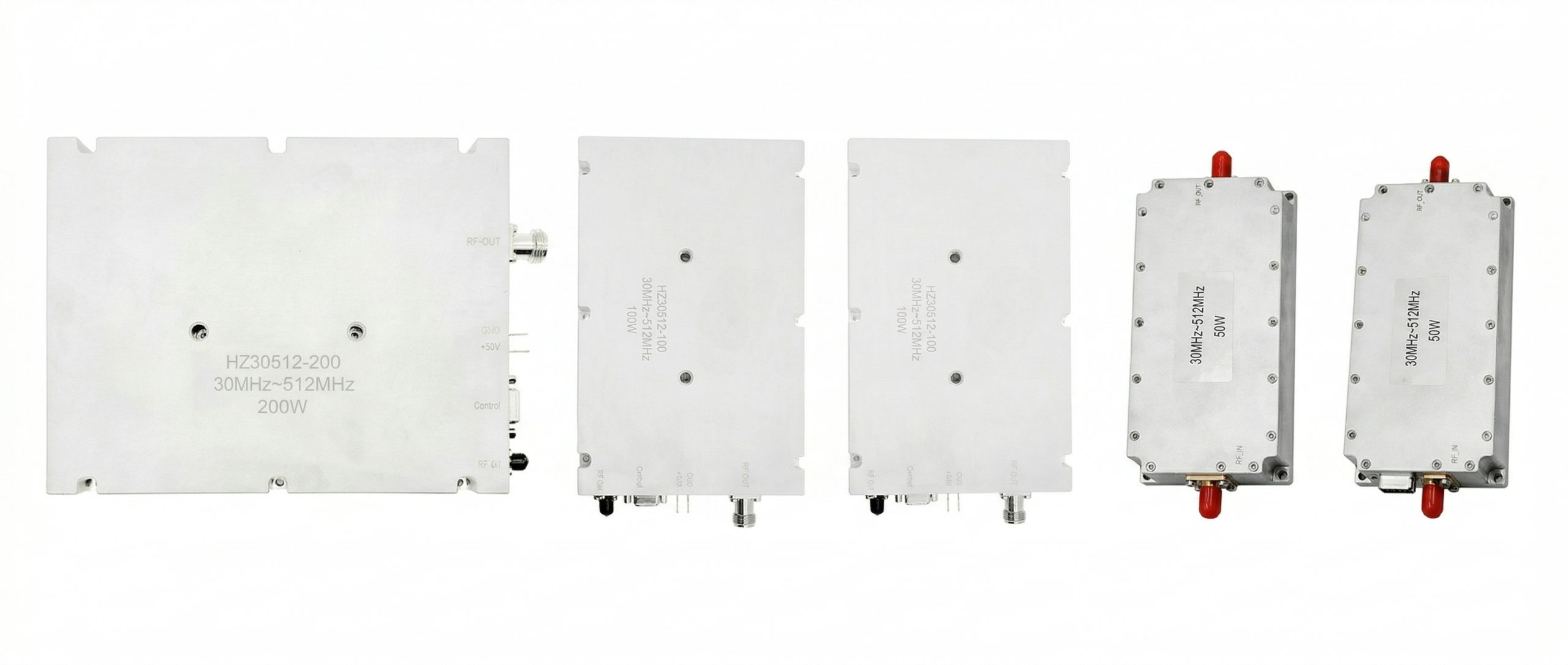
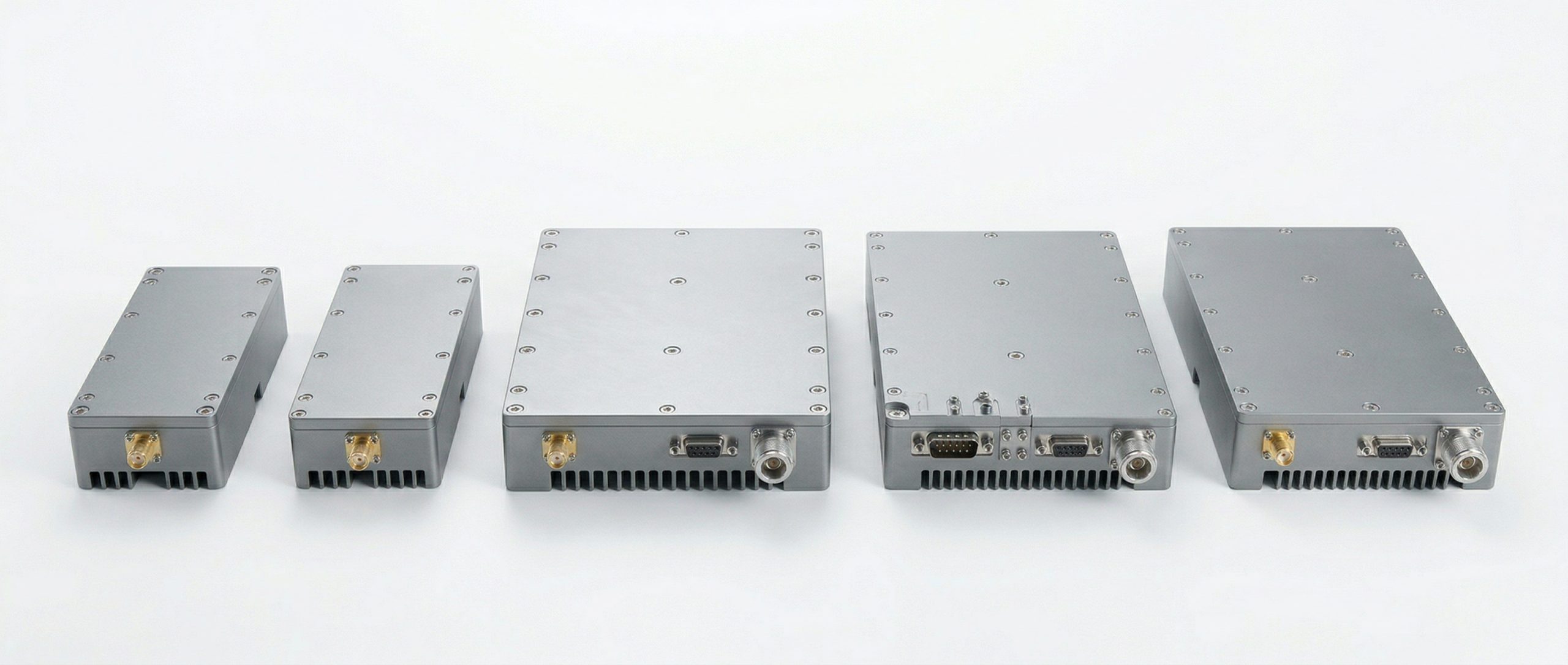
CorelixRF standard platform — 30W to 200W · 125mm & 200mm chassis · 30 MHz–6 GHz
Entry-level power tier for space-constrained RF subsystems with limited thermal budgets. Best suited for laboratory evaluation, prototype validation, and compact embedded transmitters. Low current draw (≤4A at 28V) simplifies power supply integration and reduces cooling complexity.
Request 30W Quote| Model | Frequency | Pout (dBm) | Pin | VDC | Max I | Size (mm) | Actions |
|---|---|---|---|---|---|---|---|
| HZ30512-30 | 30–512 MHz | 45±1 | 0–8 dBm | 28V | ≤4A | 125×59×21.5 | DatasheetRFQ |
| HZ3001700-30 | 300–1700 MHz | 45±1 | 0–8 dBm | 28V | ≤3A | 125×59×21.5 | DatasheetRFQ |
| HZ3002700-30 | 300–2700 MHz | 45±1 | 0–8 dBm | 28V | ≤4A | 125×59×21.5 | DatasheetRFQ |
| HZ20006000-30 | 2–6 GHz | 45±1 | 0–8 dBm | 36–46V | ≤4A | 125×59×21.5 | DatasheetRFQ |
Mid-power tier offering meaningful output headroom over 30W without the thermal planning required at 100W. Best for medium-range RF links, repeater feeds, and test environments that need sustained transmit capability. Compatible with standard 28V supplies for most bands, keeping integration straightforward for existing chassis designs.
Request 50W Quote| Model | Frequency | Pout (dBm) | Pin | VDC | Max I | Size (mm) | Actions |
|---|---|---|---|---|---|---|---|
| HZ30512-50 | 30–512 MHz | 47±1 | 0–8 | 28V | ≤9A | 125×59×21.5 | DatasheetRFQ |
| HZ3001700-50 | 300–1700 MHz | 47±1 | 0–8 | 28V | ≤7A | 125×59×21.5 | DatasheetRFQ |
| HZ3002700-50 | 300–2700 MHz | 47±1 | 0–8 | 28V | ≤9A | 125×59×21.5 | DatasheetRFQ |
| HZ20006000-50 | 2–6 GHz | 47±1 | -10–6 | 40–58V | ≤12A | 200×158×25 | DatasheetRFQ |
The most widely specified power tier for broadband RF integration, offering the strongest balance between output level, cooling requirements, and mechanical footprint. Best for first-stage field deployment, system prototyping, and projects that need production-ready performance from day one. Current draw remains manageable at 28V for lower bands, while 2–6 GHz models use 41–51V to maintain efficiency at higher frequencies.
Request 100W Quote| Model | Frequency | Pout (dBm) | Pin | VDC | Max I | Size (mm) | Actions |
|---|---|---|---|---|---|---|---|
| HZ30512-100 | 30–512 MHz | 50±1 | 0–8 | 28V | ≤18A | 200×158×25 | DatasheetRFQ |
| HZ3001700-100 | 300–1700 MHz | 50±1 | 0–8 | 28V | ≤14A | 200×158×25 | DatasheetRFQ |
| HZ3002700-100 | 300–2700 MHz | 50±1 | 0–8 | 28V | ≤18A | 200×158×25 | DatasheetRFQ |
| HZ20006000-100 | 2–6 GHz | 50±1 | -7–6 | 41–51V | ≤24A | 200×158×25 | DatasheetRFQ |
High-performance tier for projects where 100W leaves insufficient link margin but full 200W electrical load is unnecessary. Best for extended-range field targets, high-duty-cycle transmit chains, and systems requiring consistent output under demanding thermal conditions. Shares the same 200mm mechanical platform as the 100W series, so upgrades require minimal re-integration effort.
Request 150W Quote| Model | Frequency | Pout (dBm) | Pin | VDC | Max I | Size (mm) | Actions |
|---|---|---|---|---|---|---|---|
| HZ30512-150 | 30–512 MHz | 52±1 | 0–8 dBm | 28V | ≤20A | 200×158×25 | DatasheetRFQ |
| HZ3001700-150 | 300–1700 MHz | 52±1 | 0–8 | 28V | ≤22A | 200×158×25 | DatasheetRFQ |
| HZ3002700-150 | 300–2700 MHz | 52±1 | 0–8 | 28V | ≤20A | 200×158×25 | DatasheetRFQ |
| HZ20006000-150 | 2–6 GHz | 52±1 | 0–8 | 43–58V | ≤27A | 200×158×25 | DatasheetRFQ |
Maximum standard output tier for mission-critical transmit chains requiring the longest achievable range. Best for long-distance coverage, high-power signal applications, and scenarios where link budget calculations demand every available dB. Higher current draw (up to 36A) requires dedicated thermal management and appropriately rated DC supply infrastructure.
Request 200W Quote| Model | Frequency | Pout (dBm) | Pin | VDC | Max I | Size (mm) | Actions |
|---|---|---|---|---|---|---|---|
| HZ30512-200 | 30–512 MHz | 53±1 | 0–8 | 28V | ≤30A | 200×158×25 | DatasheetRFQ |
| HZ3001700-200 | 300–1700 MHz | 53±1 | 0–8 | 28V | ≤29A | 200×158×25 | DatasheetRFQ |
| HZ3002700-200 | 300–2700 MHz | 53±1 | 0–8 | 28V | ≤36A | 200×158×25 | DatasheetRFQ |
| HZ20006000-200 | 2–6 GHz | 53±1 | 0–8 | 44–54V | ≤36A | 200×158×25 | DatasheetRFQ |
How the Power Tiers Compare — and How to Choose
Compact / Evaluation
Low Current · 125mmBalanced mid-power
Standard Supply · 125mmEngineering baseline
Most Practical · 200mmHigh-output transmit
Extended Range · 200mmMaximum standard power
Max Output · 200mmLab evaluation, prototype validation, embedded low-power transmitters, compact chassis with tight thermal budgets.
Avoid if you need field-range output or plan to operate at high duty cycles.
Medium-range RF links, repeater feeds, test benches needing more headroom than 30W without full thermal infrastructure.
Avoid if your link budget requires more than modest range margin.
Most common starting point. First-stage field deployment, broadband integration, system prototyping. Shared 200mm platform enables upgrade to 150W/200W without chassis redesign.
Run a link budget first if your environment has difficult propagation.
Extended-range field applications, high-duty-cycle chains where 100W shows insufficient margin. Same chassis as 100W — minimal re-integration.
Verify your DC supply and cooling can support increased current before specifying.
Maximum range requirement, mission-critical coverage, applications where every dB of link margin counts.
Requires dedicated thermal management and high-current DC supply. Plan infrastructure before procurement.
What Procurement Teams Value About CorelixRF Modules
30W, 50W, 100W, 150W, and 200W are all maintained as standard production tiers — not custom variants. Shorter lead time, consistent specs, and predictable batch availability.
Each tier covers four discrete bands: 30–512 MHz, 300–1700 MHz, 300–2700 MHz, and 2–6 GHz. Frequency performance is tested and documented — not extrapolated.
VDC, maximum current draw, and mechanical dimensions are provided per model — not estimated. Plan your power supply and chassis before procurement, not after delivery.
Direct access to factory engineers for thermal review, interface adaptation, and integration support. Technical questions reach the people who built the product — not a distributor relay.
Sample units and production batches follow the same manufacturing and QC process. Performance validated on samples translates directly to batch deliveries.
Every unit ships with a verified RF test report. Burn-in, performance verification, and documentation are factory-standard — not optional add-ons at extra cost.
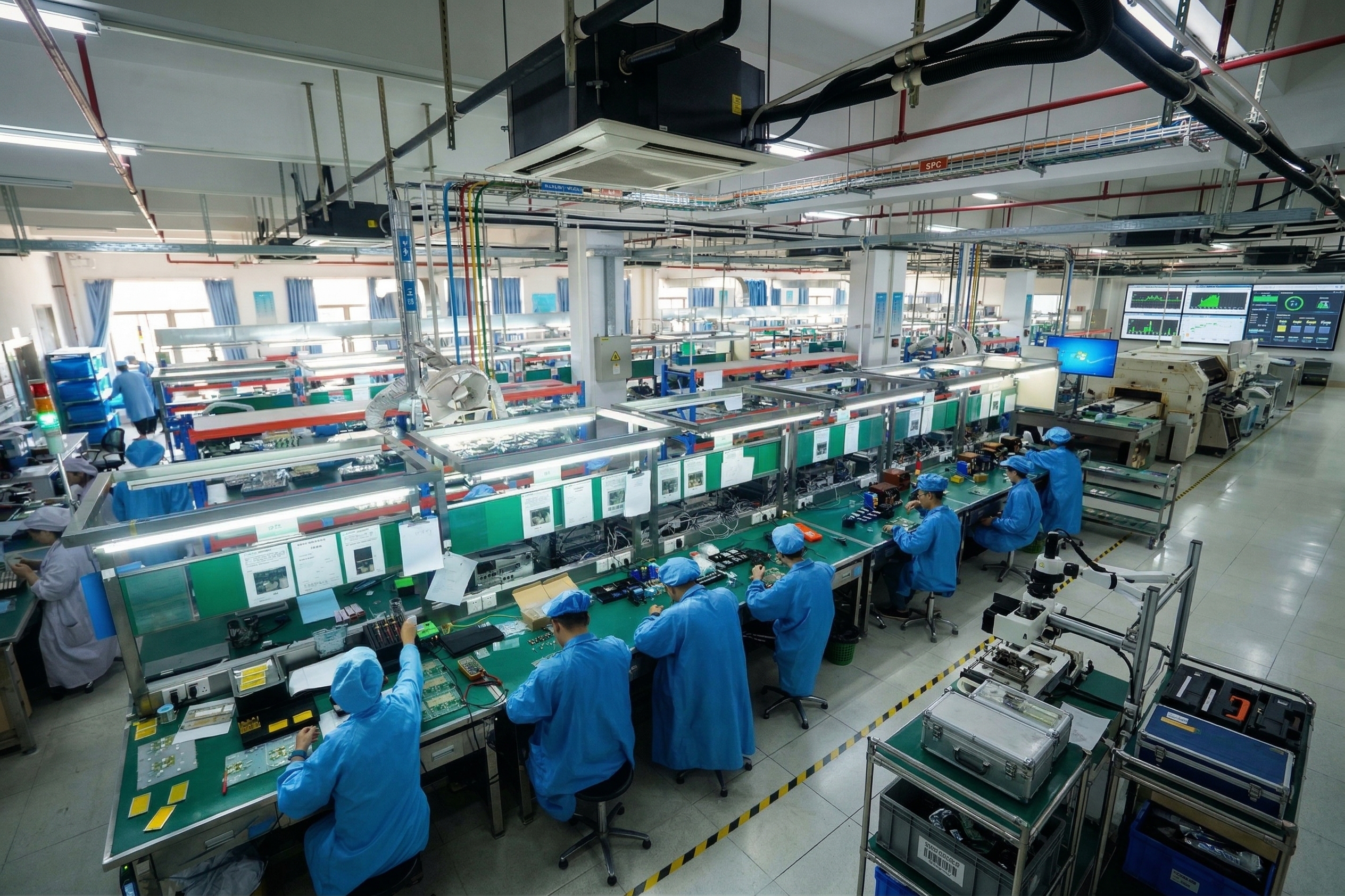
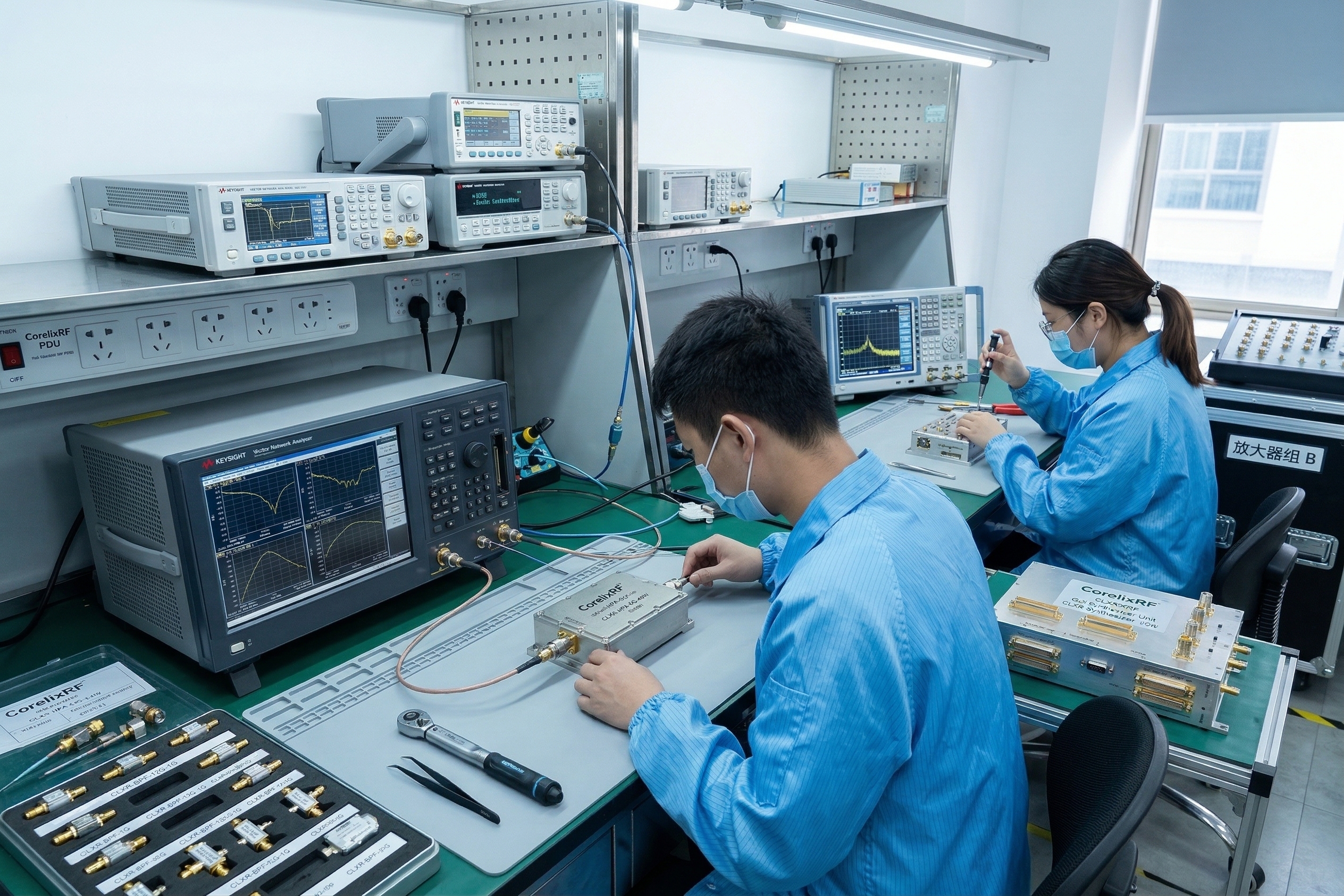
Left: SMT assembly & solder control · Right: RF output verification per unit
Manufacturing & Validation Process That Supports Stable Delivery
Repeatable output starts with a repeatable process. CorelixRF's manufacturing and QC workflow is designed to deliver consistent performance from first sample to final batch.
Typical Use Cases by Power Tier
Different output power levels serve different deployment contexts. Here is where each tier is most commonly specified.
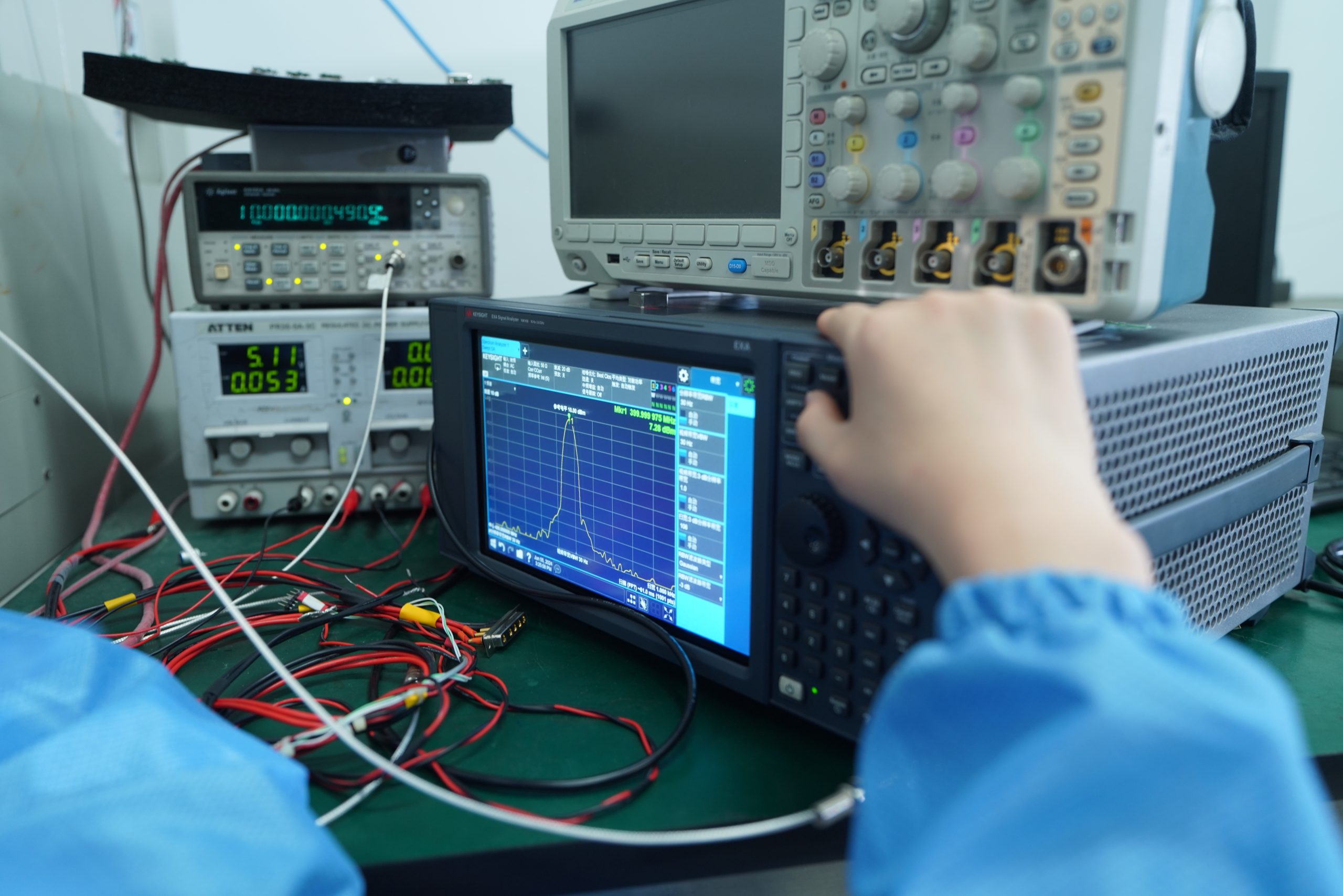
Evaluation of RF link performance in controlled environments. Bench testing of receiver sensitivity, modulation schemes, and interference scenarios. Low thermal overhead suits lab setups without dedicated cooling infrastructure.
Automated test equipment (ATE) TX chains, EMC test setups, and conducted signal simulation rigs. 100W is the most common choice for production test systems requiring repeatable, calibrated output.
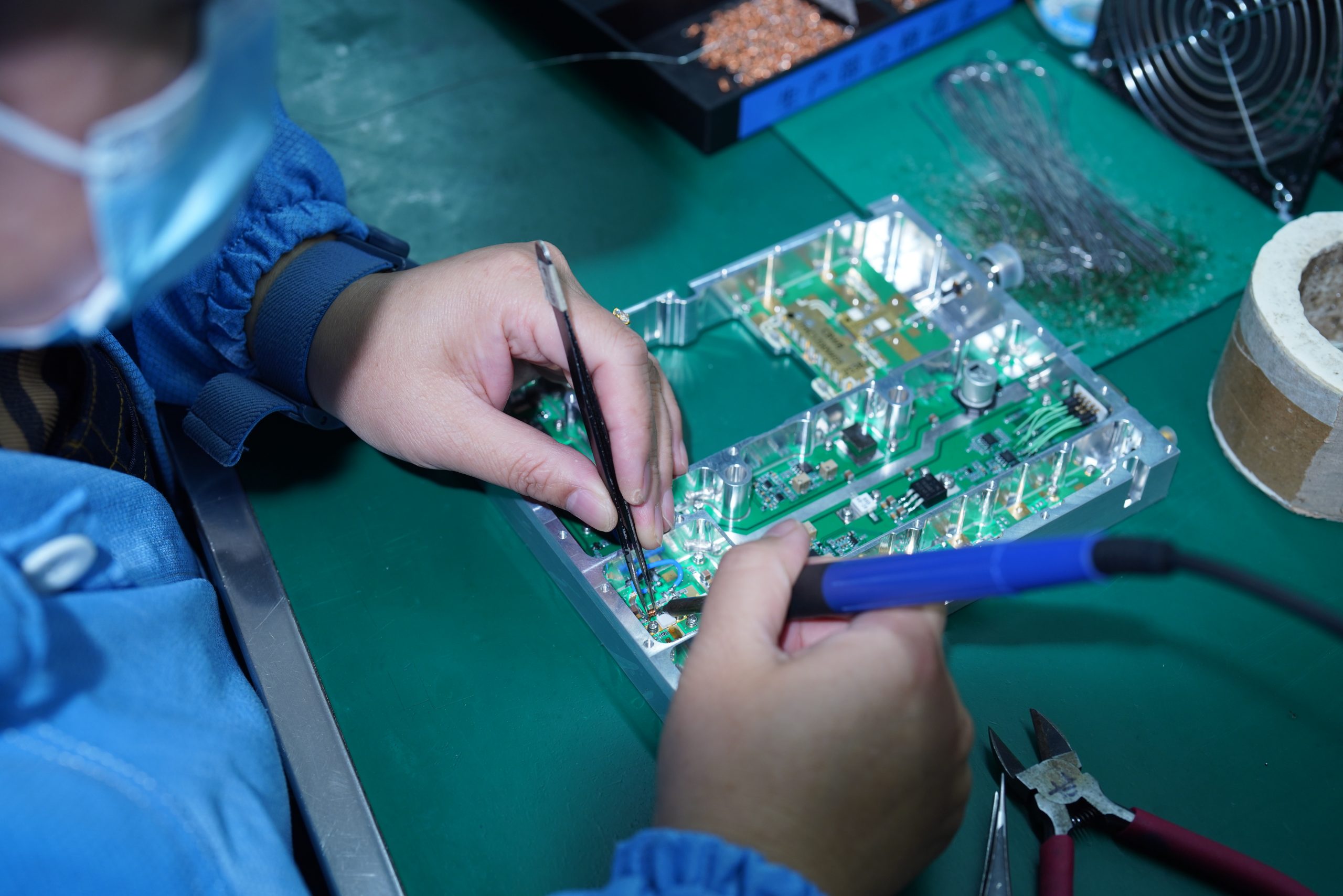
Urban and peri-urban range coverage, tactical communication links, and initial system integration at project scale. The 200mm shared platform simplifies future upgrades to 150W or 200W if field testing shows insufficient margin.
Platform integration for larger transmit chain assemblies where the amplifier is one component among many. Factory engineering support helps align supply voltage, cooling path, and connector interfaces with surrounding system architecture.
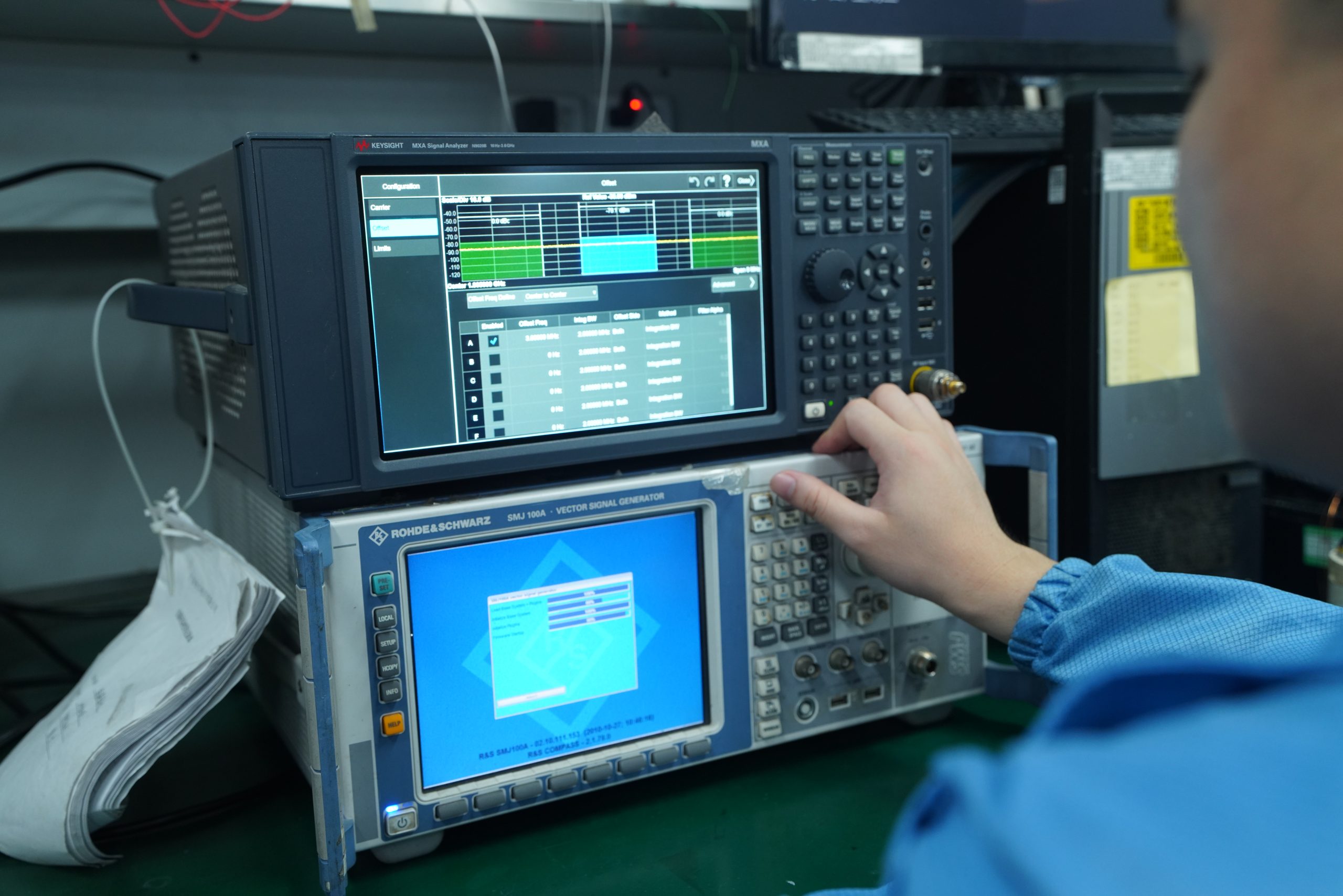
Long-distance signal propagation scenarios, high-attenuation frequency bands, and platforms where link budget margins are critical. Requires dedicated thermal management planning and verified DC supply headroom.
Applications where every available dB of transmit power is required by the link budget. Specified from the design phase — not retrofitted. Factory thermal and supply review recommended before procurement.
Common Procurement Mistakes When Buying RF Power Amplifiers
These are the patterns we see most often cause integration delays or field performance shortfalls. Knowing them in advance saves significant project time.
Rated output power is measured under specific duty cycle and temperature conditions. A module specified at 100W CW will behave very differently at 50% duty cycle — confirm both before specifying.
Datasheet values represent lab conditions. Request actual test reports and ask the supplier to confirm performance under your specific duty cycle and thermal environment before procurement.
Supply voltage, maximum current draw, and cooling method must be locked before the purchase order. Late discovery of supply rail mismatches delays deployment by weeks — sometimes months.
The lowest-price module that doesn't match your power tier, frequency, or interface requirements costs more in re-qualification time than the price difference. Ask for engineering review before committing.
What Our Factory Background Means for Your Project
CorelixRF is the manufacturer — not a distributor or reseller. The practical implications of that distinction show up at four specific points in every procurement cycle:
Engineering-to-engineering communication — your technical requirements reach the design team directly. No translation layer, no spec drift between what you ask for and what gets built.
Accelerated sample-to-production path — R&D and production share the same facility. Performance validated on a sample transfers directly into your production batch without re-qualification risk.
Front-end technical review at no cost — before a purchase order is placed, factory engineers can review your duty cycle, VDC rail, cooling path, and connector requirements. Conflicts get caught early, not after delivery.
Export-ready documentation as standard — CE, RoHS, ISO 9001, per-unit RF test reports, and commercial invoicing for international shipment are part of every delivery, not optional extras.
What "direct factory" means in practice
Selection → confirmed faster
Power tier, frequency band, and supply requirements can be locked in a single technical conversation — not over three rounds of email with a sales team.
Sample → batch with no surprises
The module you test is made the same way as the batch you order. Same process, same QC steps, same test protocol.
Scaling → without chassis redesign
100W, 150W, and 200W share the same 200mm mechanical platform. Upgrading power tier doesn't require a new mechanical integration.
Problems → surface before they ship
48-hour burn-in and full RF verification per unit means field failures caused by factory defects are rare. If something fails burn-in, it never ships.
Factory Delivery Evidence & Customer Trust Signals
Dedicated RF amplifier module development — same engineering team, same production facility
Active project deliveries across Asia-Pacific, Europe, Americas, and the Middle East
From single evaluation units to multi-batch production orders — all through the same 46-step QC process
Project teams returning for follow-on orders — the most reliable performance signal we can show
Workshop & Packing Video Evidence
Production line footage, RF test bench operation, and export packing documentation — showing what happens to each unit before it ships.
Who Buys From CorelixRF — Customer Profile
RF System Integrators
Teams building multi-component RF chains who need a reliable amplifier source with technical alignment at the component level. Common use: 100W–150W for field platform integration.
Defense & Tactical Communication Teams
Project procurement for platforms requiring verified output performance, consistent batch quality, and full test documentation. Common use: 100W–200W across 30–3000 MHz.
Test & Measurement Engineers
ATE developers and EMC test facility builders who need predictable, stable RF output at known power levels for repeatable test conditions. Common use: 30W–100W evaluation and production test.
Representative Project Scenarios
Europe · RF System Integrator · 100W · HZ3002700-100
Platform integration, 300–2700 MHz, 40-unit batch
The team needed a broadband amplifier covering the full 300–2700 MHz range for a mobile platform. Their initial concern was whether 100W would hold rated output across the full band under 30% duty cycle at 45°C ambient. Factory provided pre-purchase thermal review and CW vs. pulsed performance data under those conditions. Sample of 3 units validated against their link budget in-house. Batch of 40 units followed 6 weeks later with no spec changes between sample and production. No re-qualification cycle needed.
Asia-Pacific · ATE Manufacturer · 50W · HZ30512-50
Production test bench, 30–512 MHz, ongoing supply
Building automated test equipment for a government electronics supplier. Required consistent 47 dBm at 30–512 MHz in CW mode with ≤±0.5 dB flatness across the band — tighter than the standard datasheet spec. Factory confirmed this tolerance from measured production data before order placement. First order of 8 units; now in third purchase cycle (12 units each) with no changes to acceptance criteria across cycles.
Middle East · Defense Procurement · 200W · HZ3001700-200
Long-range coverage platform, 300–1700 MHz, 48VDC supply
Project required maximum achievable output at 300–1700 MHz with a 48VDC supply bus and forced-air cooling limited to a 25mm chassis depth. The 200W tier was specified from the start based on link budget calculations — no room to step up later. Factory reviewed the 48VDC rail compatibility and current draw (≤29A at rated output) before PO. Delivered with per-unit RF test reports, CE documentation, and commercial export invoice. First delivery 18 units; second batch of 24 units placed 4 months later.
North America · RF Engineering Lab · 30W → 100W · HZ20006000 Series
Lab characterization to system integration, 2–6 GHz
Started with 2 units of HZ20006000-30 for bench-level signal chain characterization at 2–6 GHz. The lab needed to verify gain flatness and noise contribution before committing to a system-level power tier. After validation confirmed the platform met their requirements, they stepped up to HZ20006000-100 for the integration phase — 6 units. The shared form factor between 30W and 100W models (same connector positions, same footprint) meant no mechanical redesign between the two phases.
Compliance & Quality Certifications
Expand the RF Signal Chain
RF power amplifiers work as part of a larger transmit chain. CorelixRF also supplies complementary RF building blocks for integrated projects.
SDR Signal Sources
Software-defined radio signal generation for broadband transmit chains and test setups.
View SDR Category →Broadband Antennas
Wideband antennas matched to the frequency bands covered by CorelixRF power amplifier platforms.
View Antenna Category →Custom RF Solutions
Project-specific RF module configurations for frequency ranges, power levels, or form factors outside standard tiers.
View Custom Solutions →Also Browse By
RF Power Amplifiers by Frequency Band
If frequency band is your primary constraint — rather than output power — browse directly by band to see all available models and power tiers within that range.
Jump To
Find the Right Series for Your Scenario
Not sure which power tier fits? These scenario-based links go directly to the model groups most commonly specified for each use case.
Frequently Asked Questions
Get a Recommended RF Power Tier for Your Project