
Requirement
30–512 MHz
Lower-band / UHF platform
For lower-band communication, UHF transmission, SDR chains, and EMC-related test setups.
Explore 30–512 MHz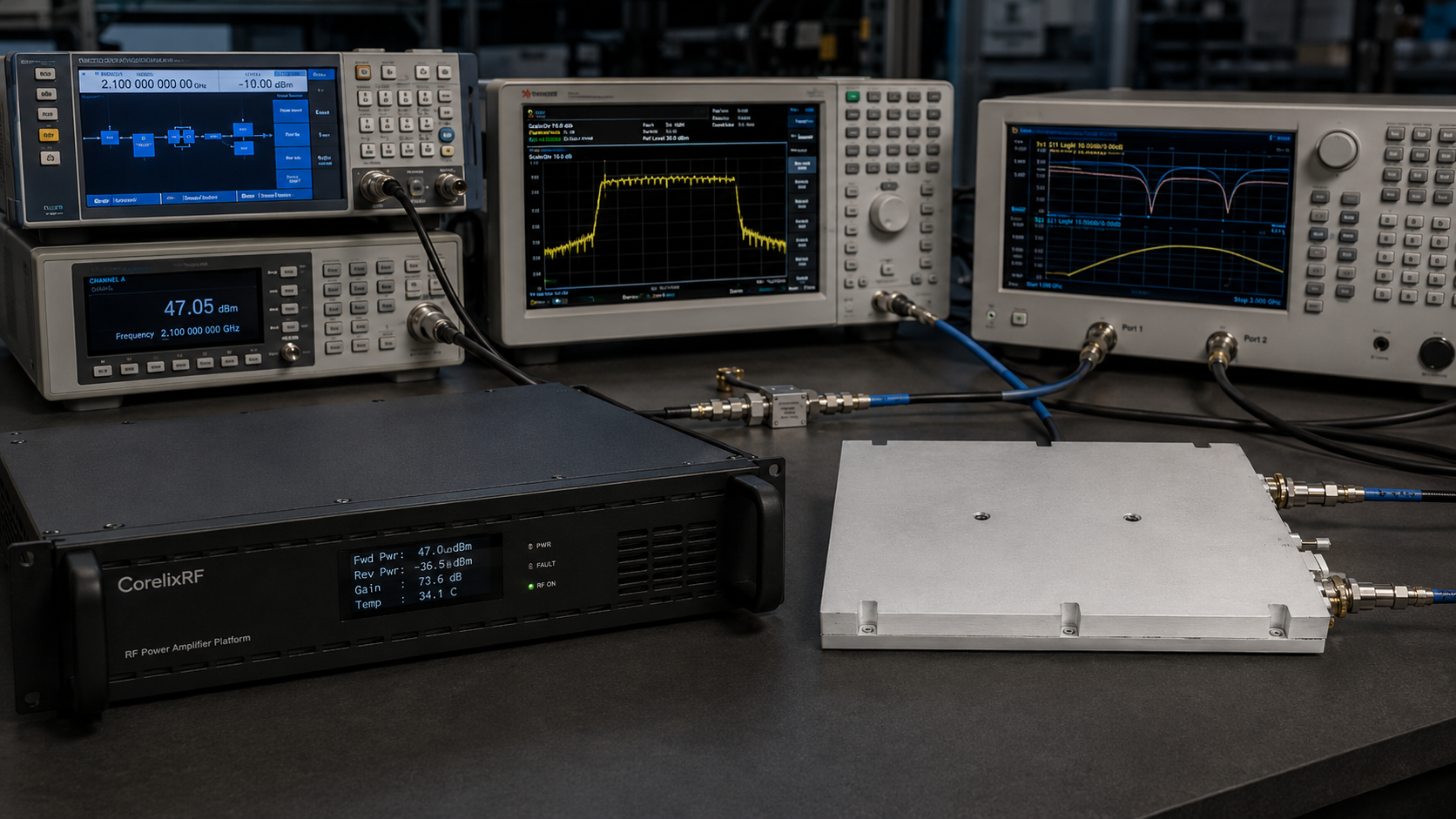
Compare four standard RF amplifier platform families by frequency, output power, operating mode, cooling, control interface, and datasheet availability.
CorelixRF platforms cover 30–512 MHz, 300–1700 MHz, 300–2700 MHz, and 2–6 GHz. Across the portfolio, available output configurations include 30 W, 50 W, 100 W, 150 W, and 200 W. Exact frequency, power, and operating-mode combinations depend on the selected model.
Start with the frequency direction first. Then review power level, mode, connector, and integration details with CorelixRF before final selection.
For lower-band communication, UHF transmission, SDR chains, and EMC-related test setups.
Explore 30–512 MHzFor mid-band RF transmission, conducted tests, antenna validation, and system integration.
Explore 300–1700 MHzFor multi-band systems that benefit from one wideband amplifier path instead of several separate platforms.
Explore 300–2700 MHzFor S/C-band RF testing, signal transmission, and higher-band subsystem integration.
Compare 2–6 GHz ModelsUse frequency, power, and application filters before sending a formal RFQ.
Open ToolIf a standard CorelixRF platform matches your frequency and power requirements, the project can move directly to technical review. We will confirm the operating mode, interfaces, and installation conditions before recommending a model.
Buyers often know the operating band but not which amplifier family is the best starting point.
Catalog listings may show headline power but miss connector, control, thermal, and integration details.
Engineering buyers need test conditions, output curves, and real review support before choosing a platform.
A standard platform with minor review may solve the requirement faster than a fully custom build.
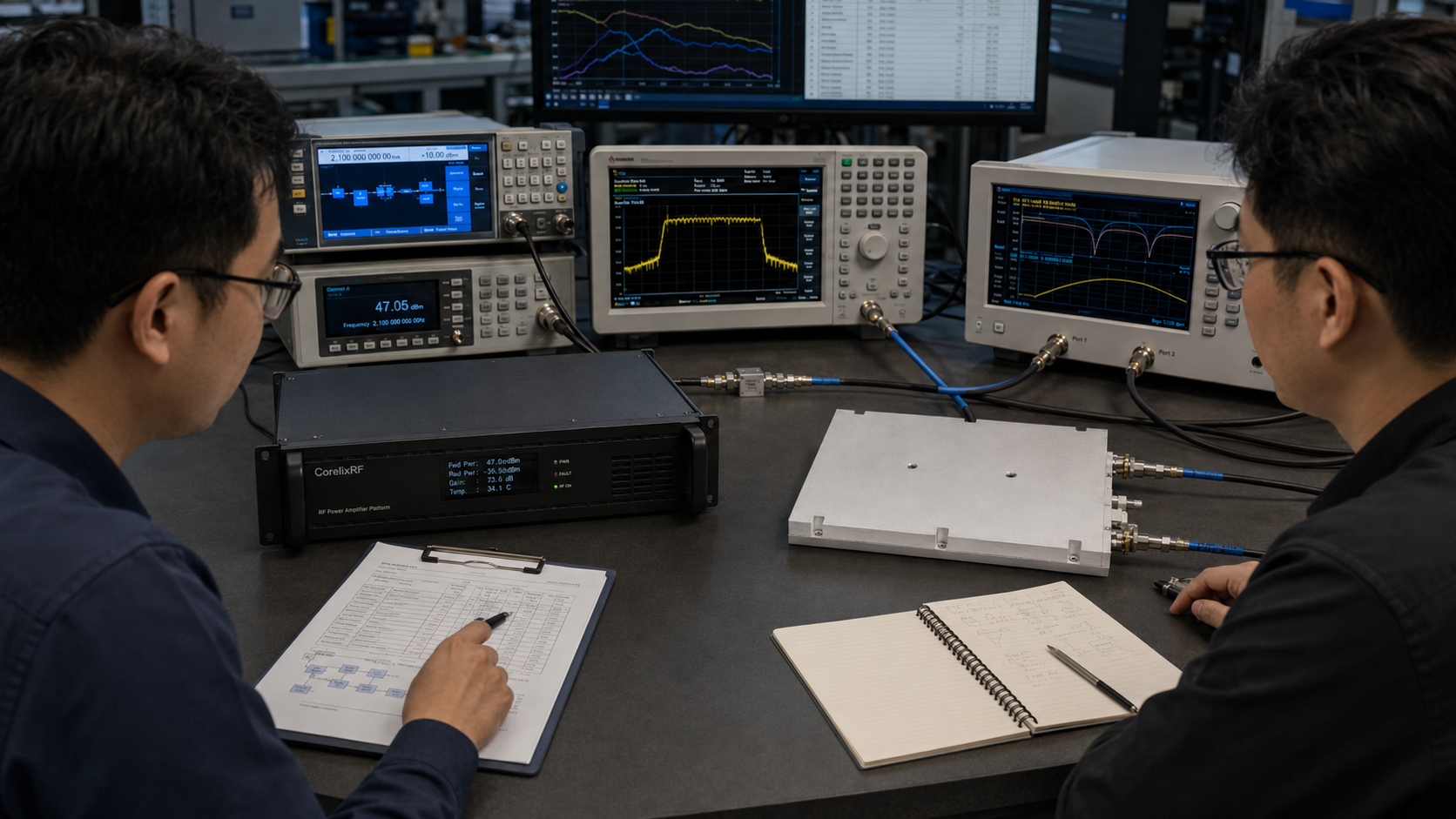
CorelixRF reviews the frequency range, output power, operating mode, connectors, control interface, and application before recommending a platform. We only propose custom development when a standard configuration cannot meet the requirement.
Frequency, power, CW/pulsed mode, connectors, interface, and application context are reviewed first.
The requirement is matched against the four standard platform families before custom work is proposed.
Datasheets, test conditions, gain curves, connector details, or key measured data can be reviewed before order.
If the platform fits, quotation follows. If not, CorelixRF evaluates a platform modification or custom build path.
Each family gives buyers a clear frequency path, practical power options, and a direct route to datasheet review, test data discussion, or RFQ.
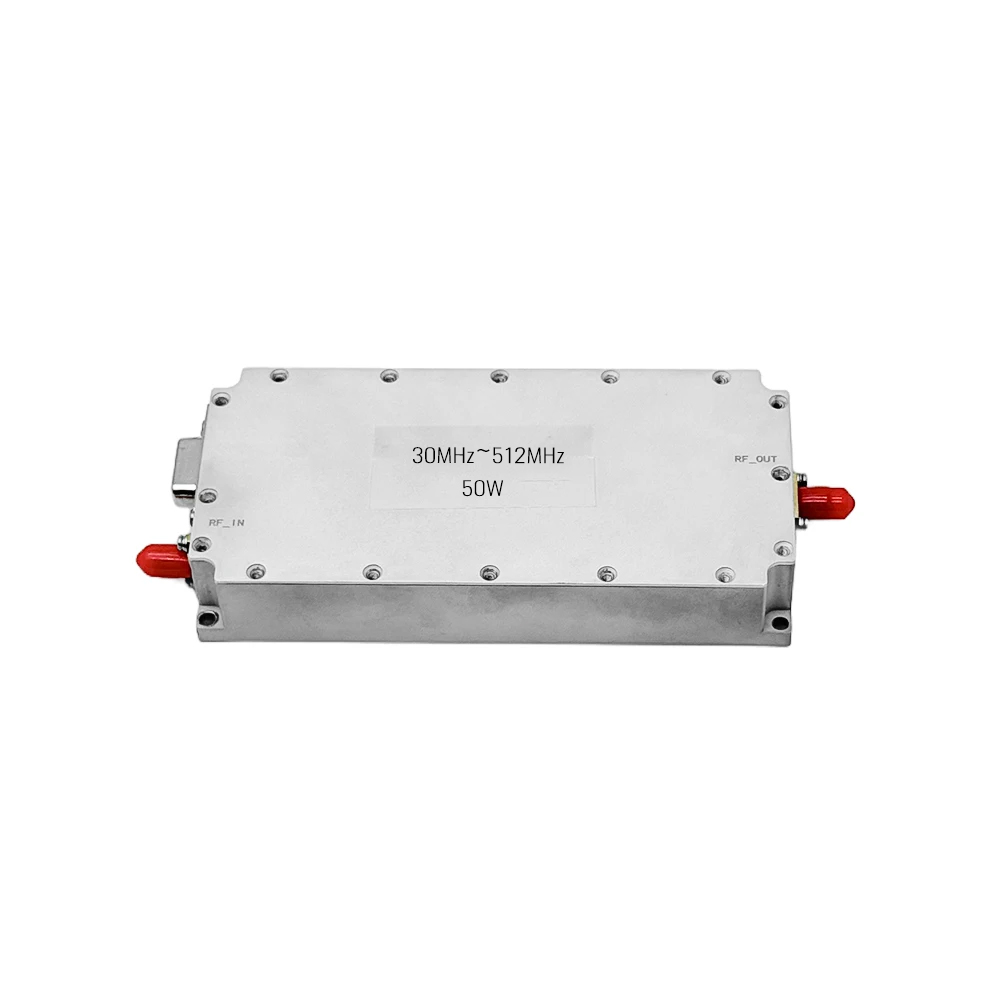 30–512 MHzStandard Platform
This VHF RF power amplifier family supports lower-UHF requirements, including 433 MHz amplifier applications, SDR chains, communication systems, and EMC-related testing.
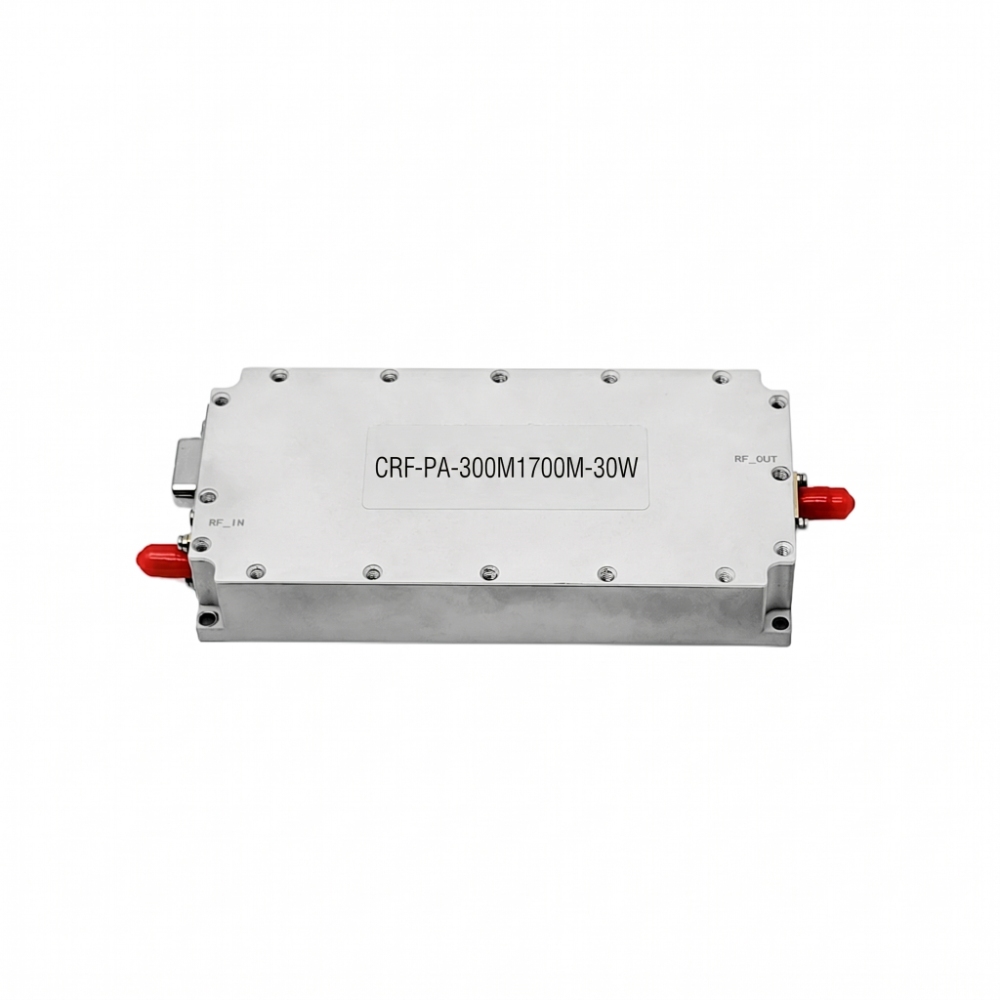 300–1700 MHzStandard Platform
Designed for UHF RF amplifier and 915 MHz amplifier requirements, including transmission, antenna validation, laboratory testing, and RF system integration.
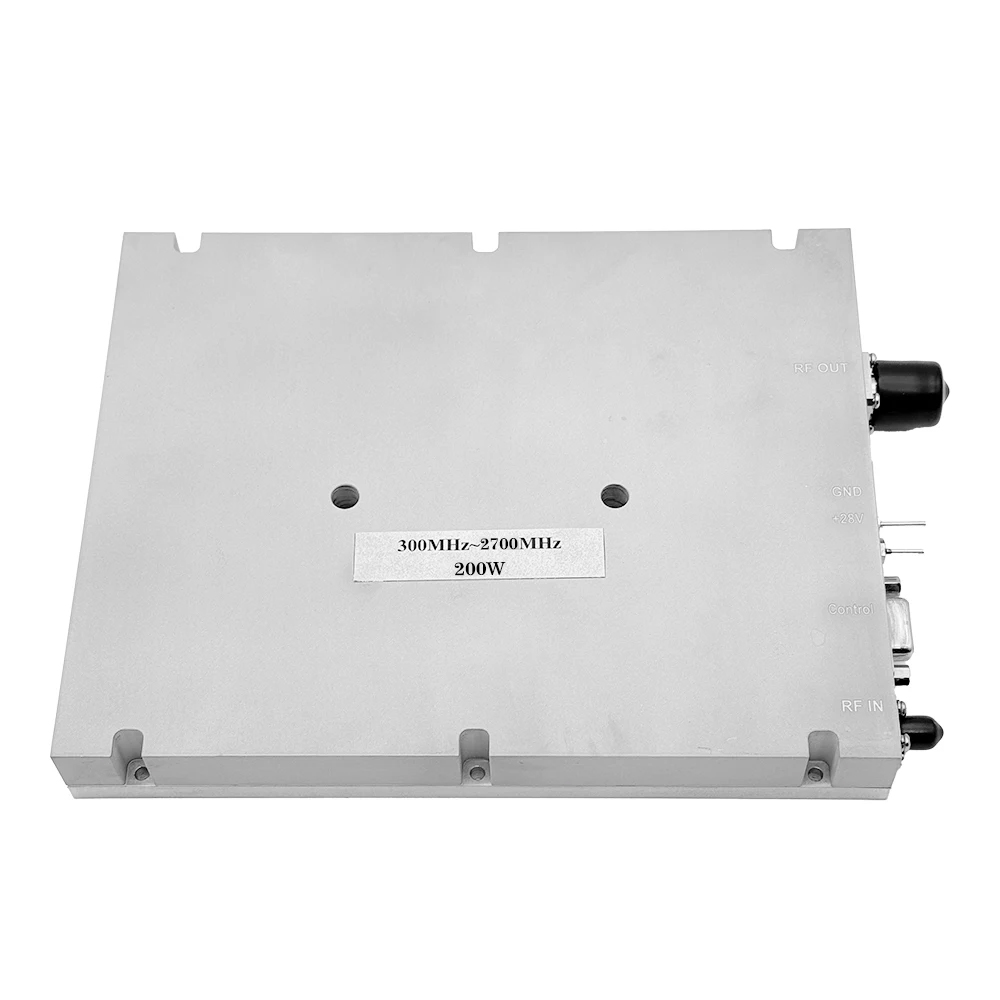 300–2700 MHzStandard Platform
Suitable for multi-band systems and 2.4 GHz RF power amplifier requirements where one continuous amplifier path can simplify integration through 2.7 GHz.
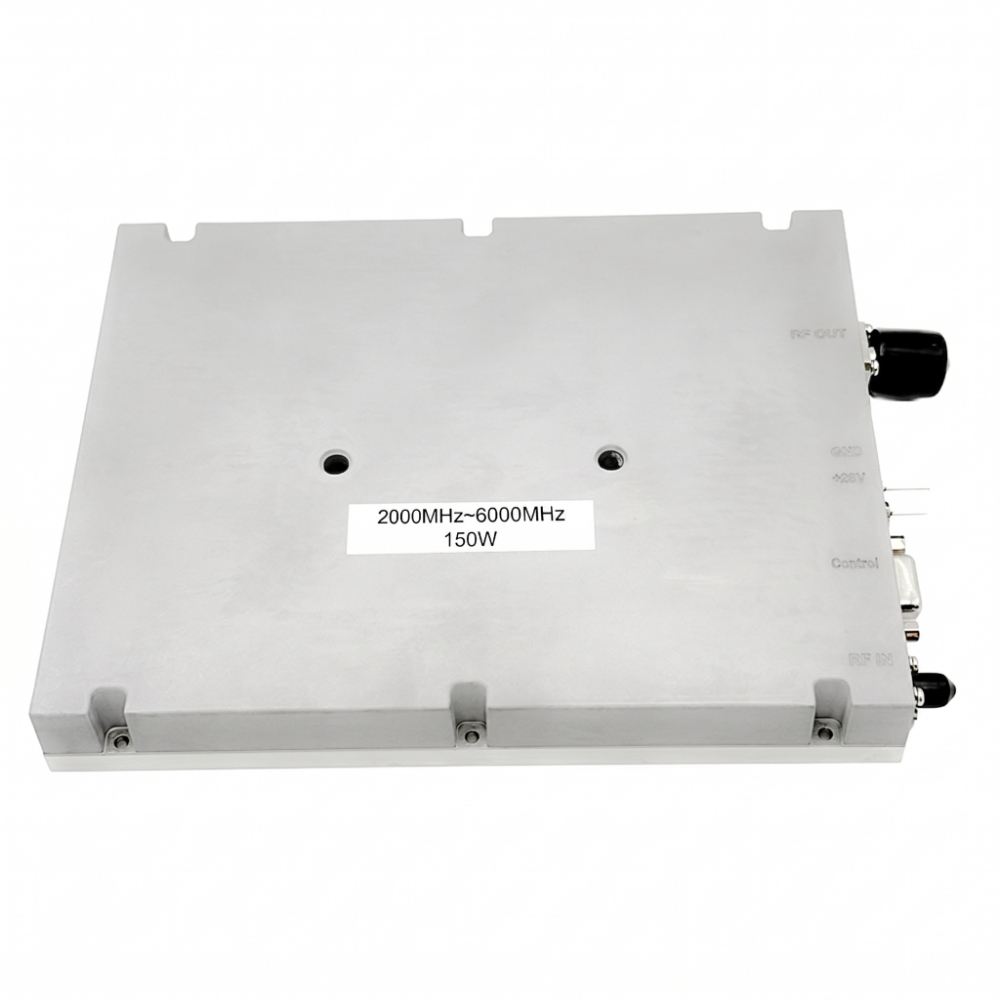 2–6 GHzStandard Platform
For RF testing, signal transmission, validation, and subsystem integration across S-band and lower C-band frequencies within the 2–6 GHz operating range.
Not sure which platform fits? Use the RF Configurator to narrow the options by frequency, output power, and application, then send the result for engineering review.
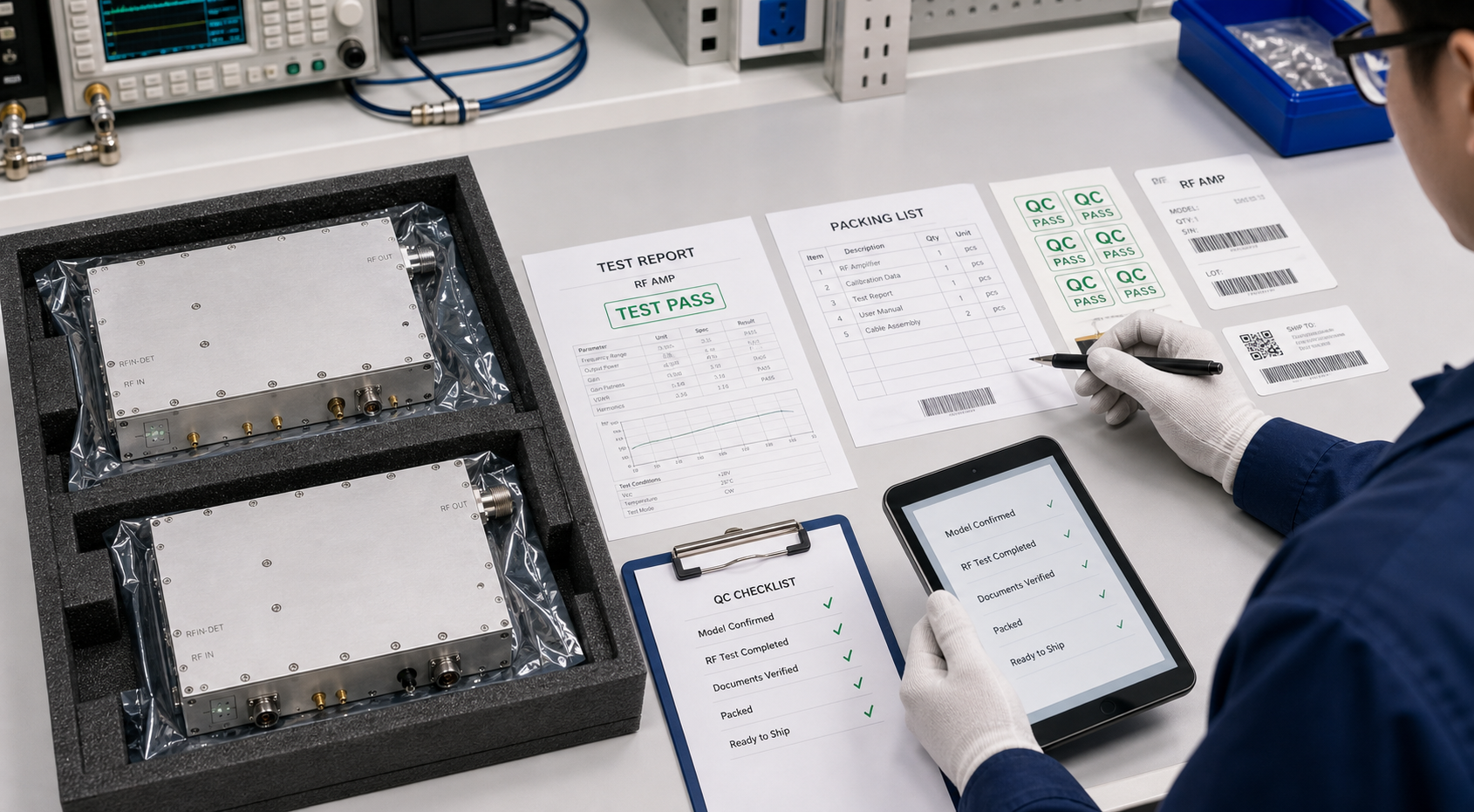
CorelixRF tests each standard platform in house and can provide available test conditions, measured data, unit documentation, and integration details before order. Quality checks and export packing are included in the production process.
Frequency response, output power, gain, VSWR, and stability are reviewed under defined test conditions.
ISO 9001 and GJB 9001C positioning supports engineering buyers who need supplier credibility.
Datasheets, test records, and connector details can support pre-order engineering review.
ESD protection, shock-resistant packing, labeling, and shipment checks reduce delivery risk.
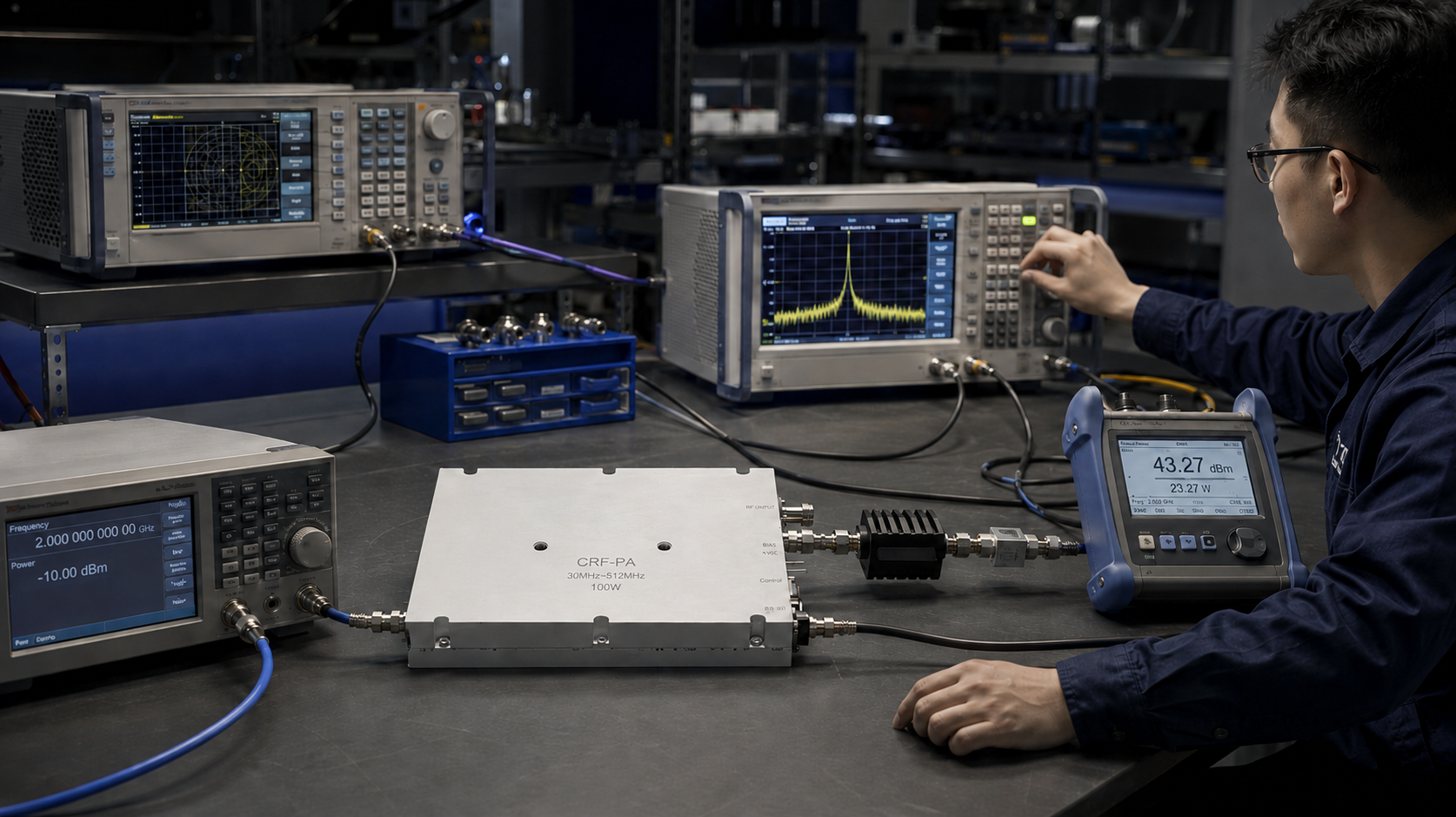
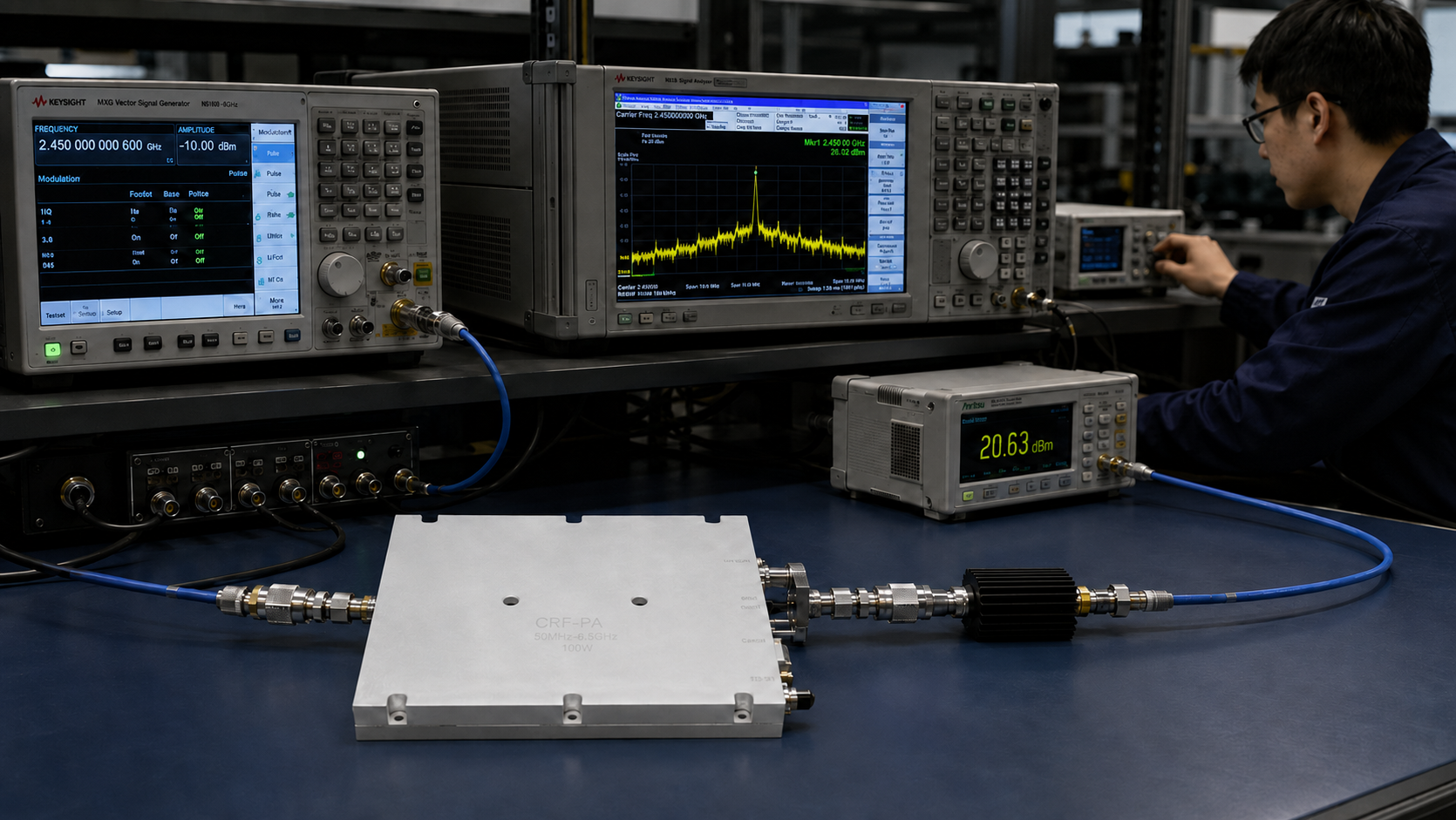
These platforms are used in RF communication, laboratory testing, SDR signal chains, EMC systems, UAV-related equipment, and OEM subsystems. Choose the closest frequency family or send us the application details for review.
Broadband transmit and test chains where a stable standard platform shortens engineering selection.
CommunicationRF hardware paths where frequency coverage, power, and integration format need early review.
UAV / C-UASLab and system-level tests that require known output behavior across a defined band.
RF TestingApplications where SDR sources, power amplifiers, and antennas need a compatible RF path.
RF ChainPre-compliance or internal testing setups where repeatable amplifier performance matters.
Lab / EMCProject-based integration that may start from a standard platform and move to custom review if needed.
OEM IntegrationFrequency range and rated power are only the starting points. Confirm the operating mode, duty cycle, cooling method, connectors, control interface, and test conditions before choosing a platform.
Power, mode, cooling, connector, and integration limits also affect platform suitability.
The same headline power can involve different thermal and test assumptions.
SMA, N-type, control interface, and power supply expectations should be clarified early.
Review measured data, frequency points, gain flatness, and thermal conditions, not only “100 W”.
If the standard range is close but not exact, a platform modification may be faster than a new design.
Access standard platform datasheets first, then request measured test data or engineering review when your frequency, power, or integration requirement needs confirmation.
The answers below cover platform selection, RFQ requirements, datasheet access, system matching, customization, and available output power.
Ask an EngineerIf you already know your frequency range, start with the relevant standard platform. If you are unsure, use the configurator or send your requirement for review.
CorelixRF can confirm whether a standard platform is sufficient or whether your project should move to a custom RF amplifier review.