
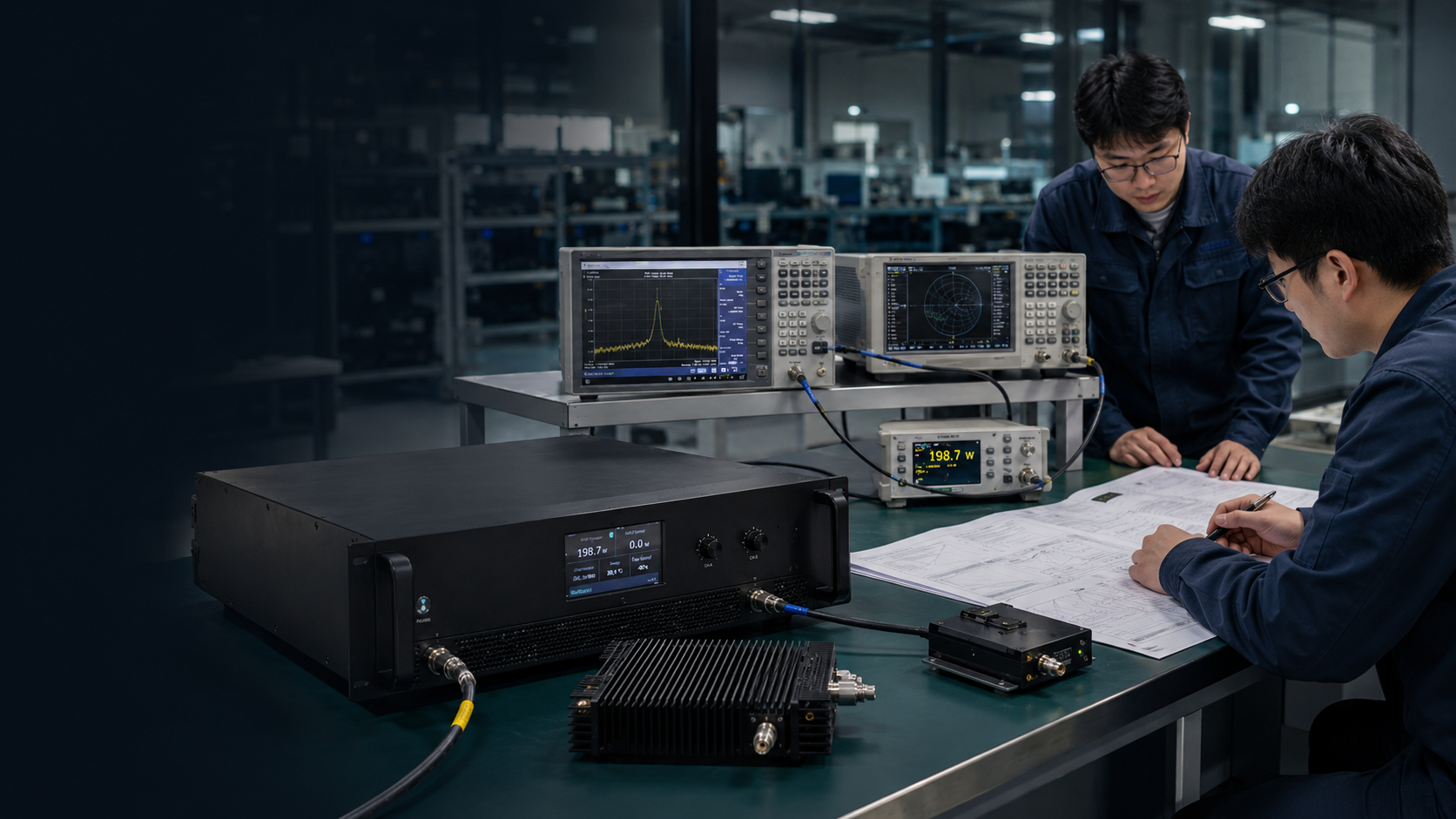
RF Engineering · Manufacturing · Factory Testing
Engineering & Manufacturing for RF Amplifiers, SDR Modules and Antenna Systems
CorelixRF supports RF projects from requirement review and platform matching to controlled manufacturing, RF tuning, factory testing, documentation, and shipment review.
Built for engineering buyers who need measurable RF performance, process discipline, integration support, and factory-controlled delivery for RF amplifiers, SDR source modules, antennas, and custom RF front-end systems.
Engineering-to-shipment workflow
Frequency, power, mode, duty cycle, antenna/load condition and system constraints.
RF feasibility, thermal path, mechanical space, interface and documentation needs.
Standard amplifier, SDR, antenna or custom RF platform path is selected.
Material control, PCBA process, RF module assembly and rack integration.
Static current, gain, output power, protection and frequency response tuning.
RF test, burn-in, thermal or environmental records are prepared by project need.
Final inspection, packing confirmation and documentation handover.
Engineering Review Before RF Manufacturing Starts
Before manufacturing starts, CorelixRF reviews the RF requirement from an engineering, thermal, mechanical and system-integration perspective.
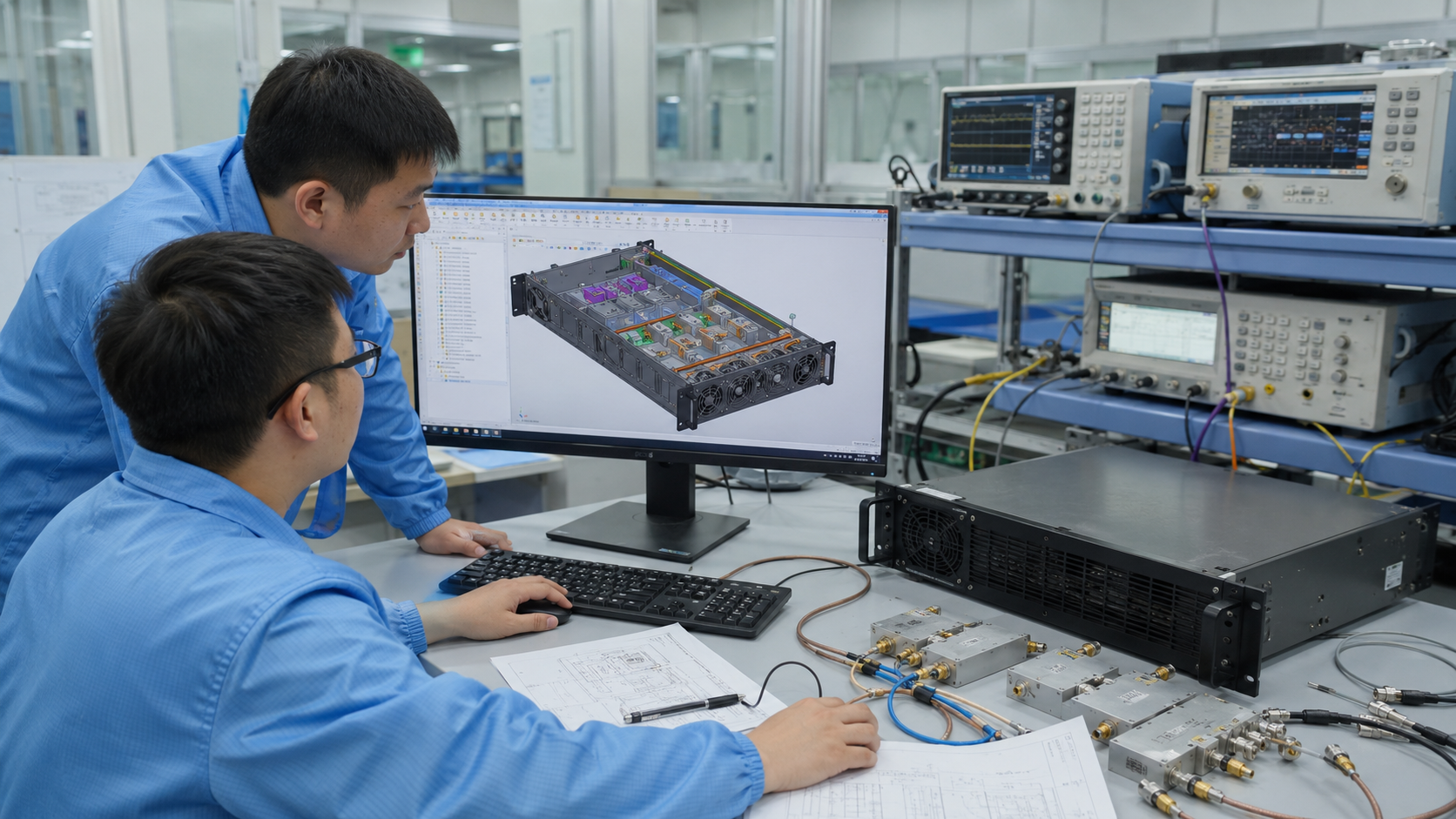
46-Step Manufacturing and Validation Methodology
CorelixRF’s RF manufacturing workflow is organized into 7 controlled phases. The redesigned process board makes each stage easier to scan, from engineering review and material control to RF tuning, reliability validation, documentation, and shipment review.
Steps 01–04
Engineering & DFM Review
Confirm manufacturability, RF feasibility, mechanical constraints and platform path before production starts.
Steps 05–10
Incoming Material Control
Review PCB substrates, RF power devices, connectors, cables and mechanical parts before assembly.
Steps 11–19
SMT / PCBA Process
Control solder paste preparation, SMT placement, vacuum reflow, AOI / X-Ray inspection, cleaning and baking.
Steps 20–29
RF Module Assembly
Assemble RF power devices, copper base, thermal interface, connectors, cables and control circuits.
Steps 30–36
Electrical & RF Tuning
Tune static current, protection logic, small-signal response and full-power large-signal performance.
Steps 37–43
Reliability Validation
Review product stability through cleaning, coating, full-load burn-in, temperature, vibration and inspection.
Steps 44–46
Final Inspection & Shipment
Complete final RF performance review, shipment documentation, packing inspection and delivery confirmation.
Manufacturing Control Points Behind RF Products
The manufacturing floor is presented as three RF production control areas: PCBA and component control, RF module assembly, and rack-mount system integration.
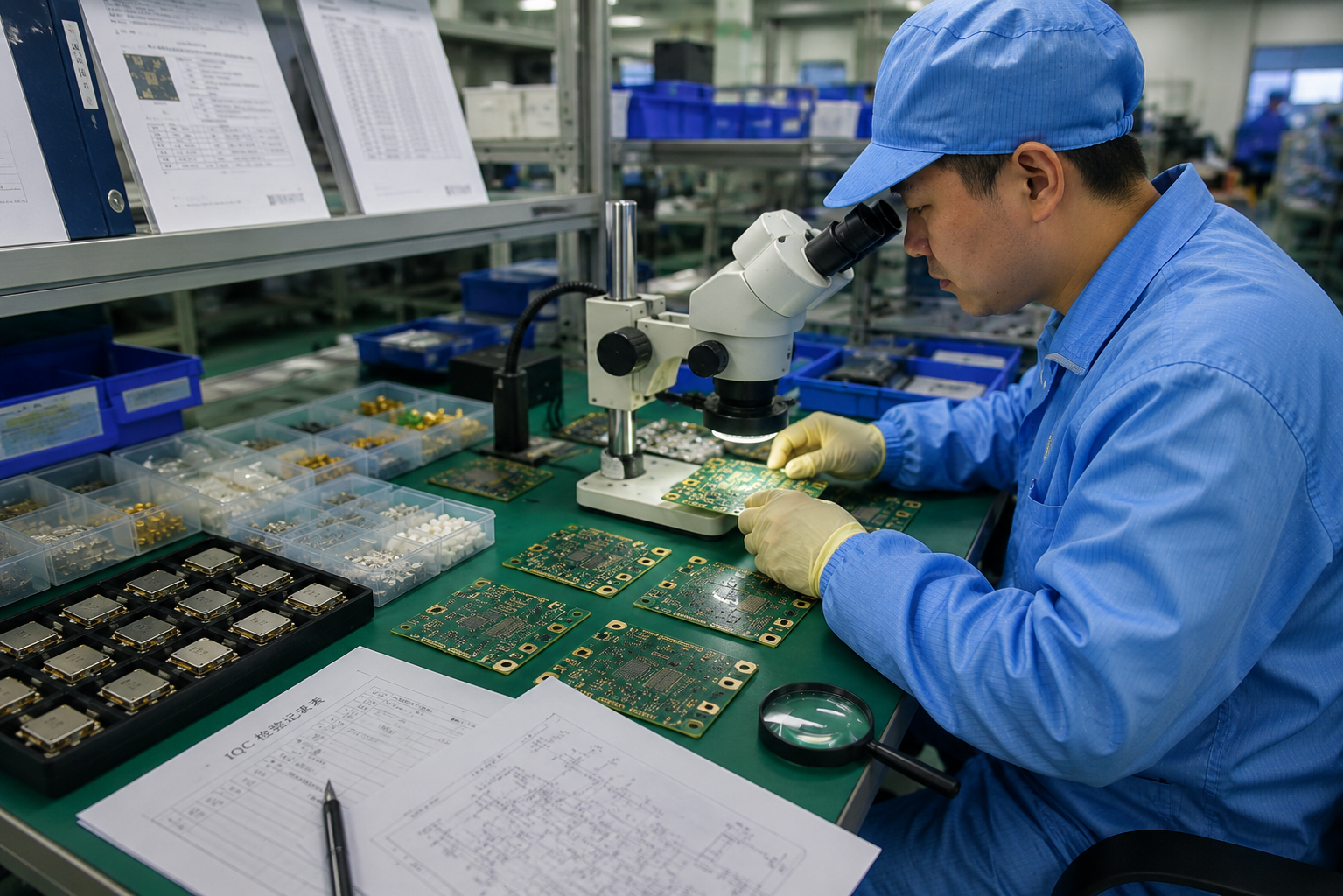
PCBA and Component Control
PCB substrate inspection, component screening, SMT, X-Ray, cleaning and process review reduce variation before RF assembly begins.
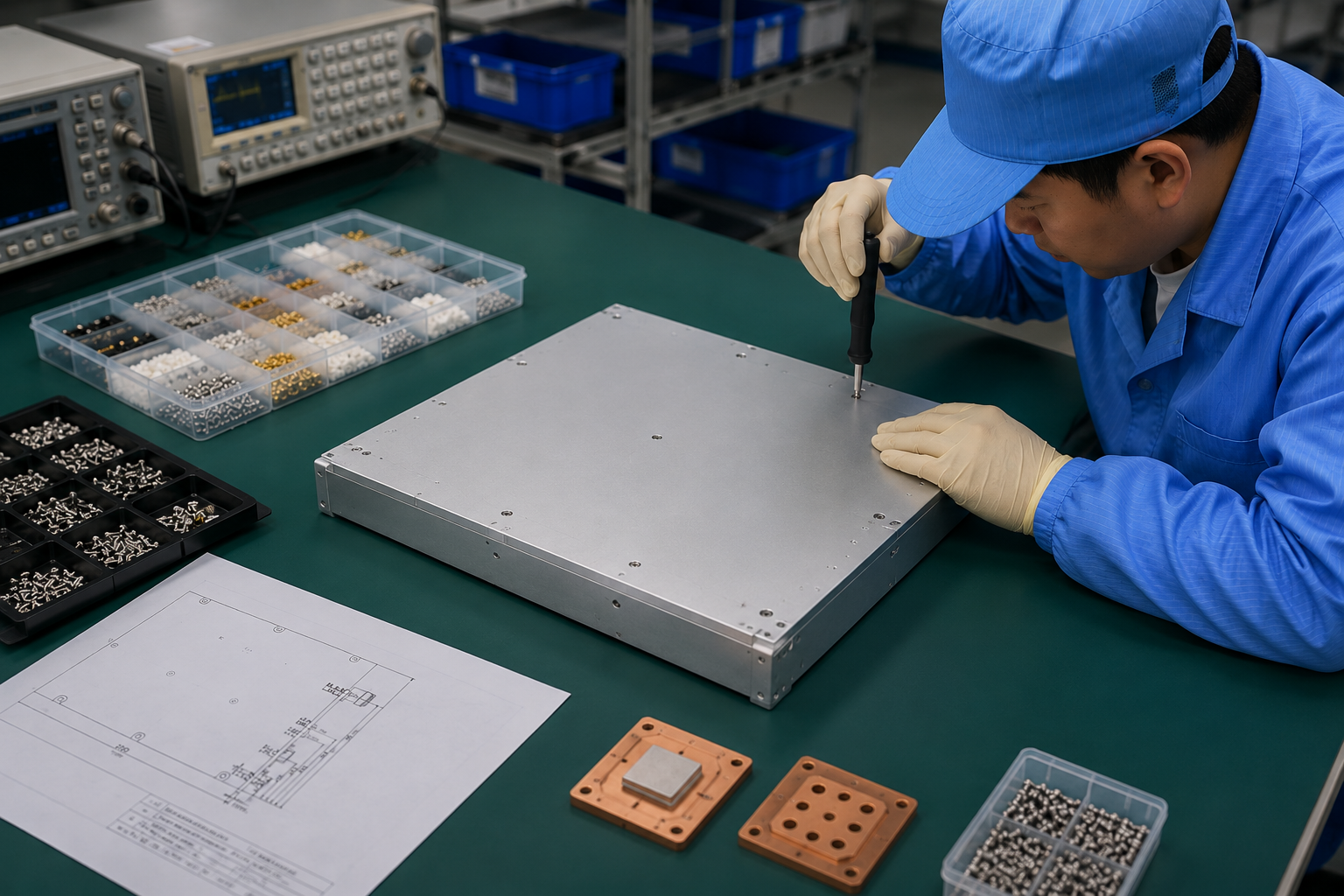
RF Module Assembly
Power devices, thermal structures, connectors and cables are assembled for stable RF output.
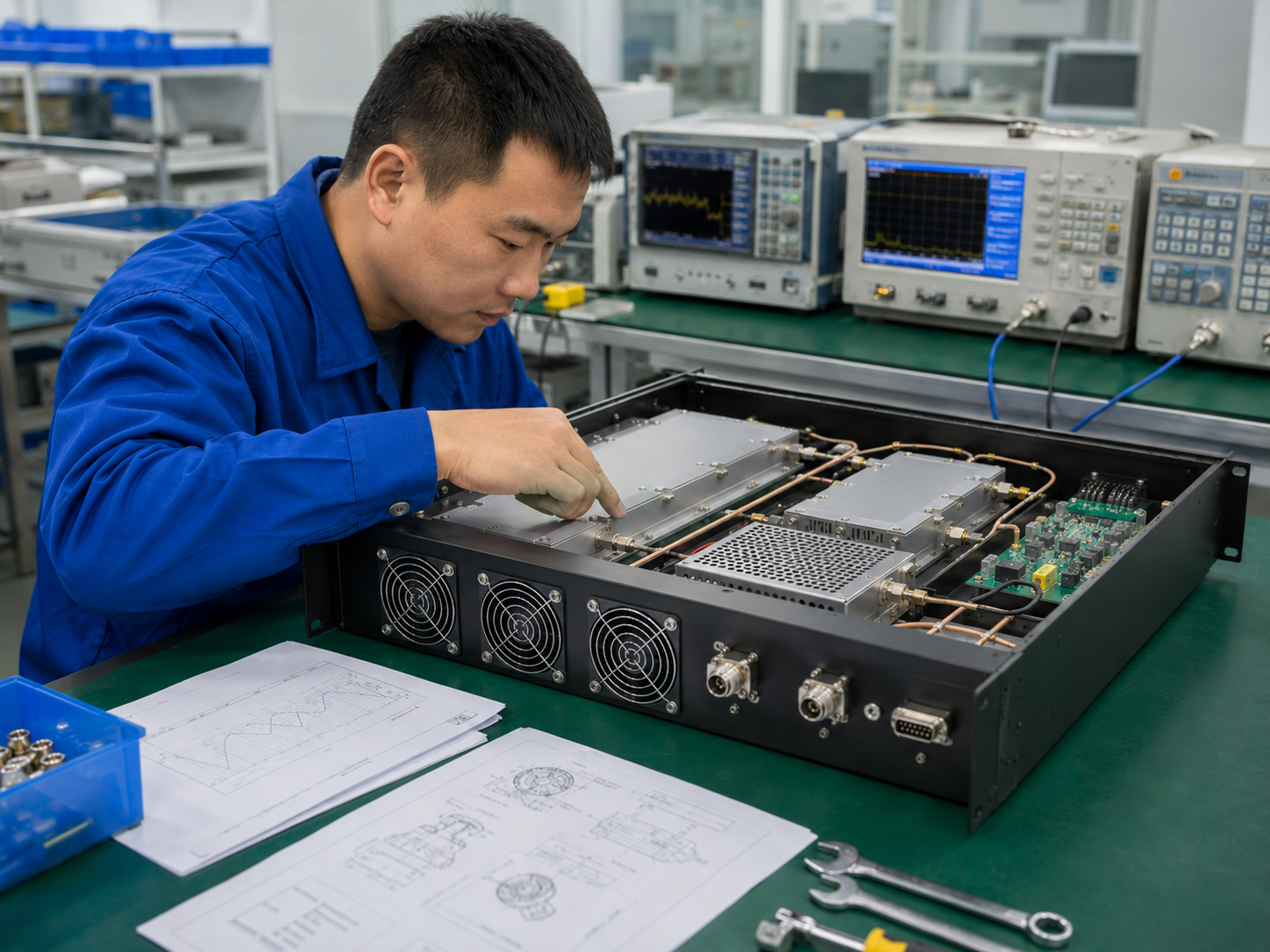
Rack-Mount System Integration
Rack systems are reviewed for airflow, interface layout, internal RF chain and shipment readiness.
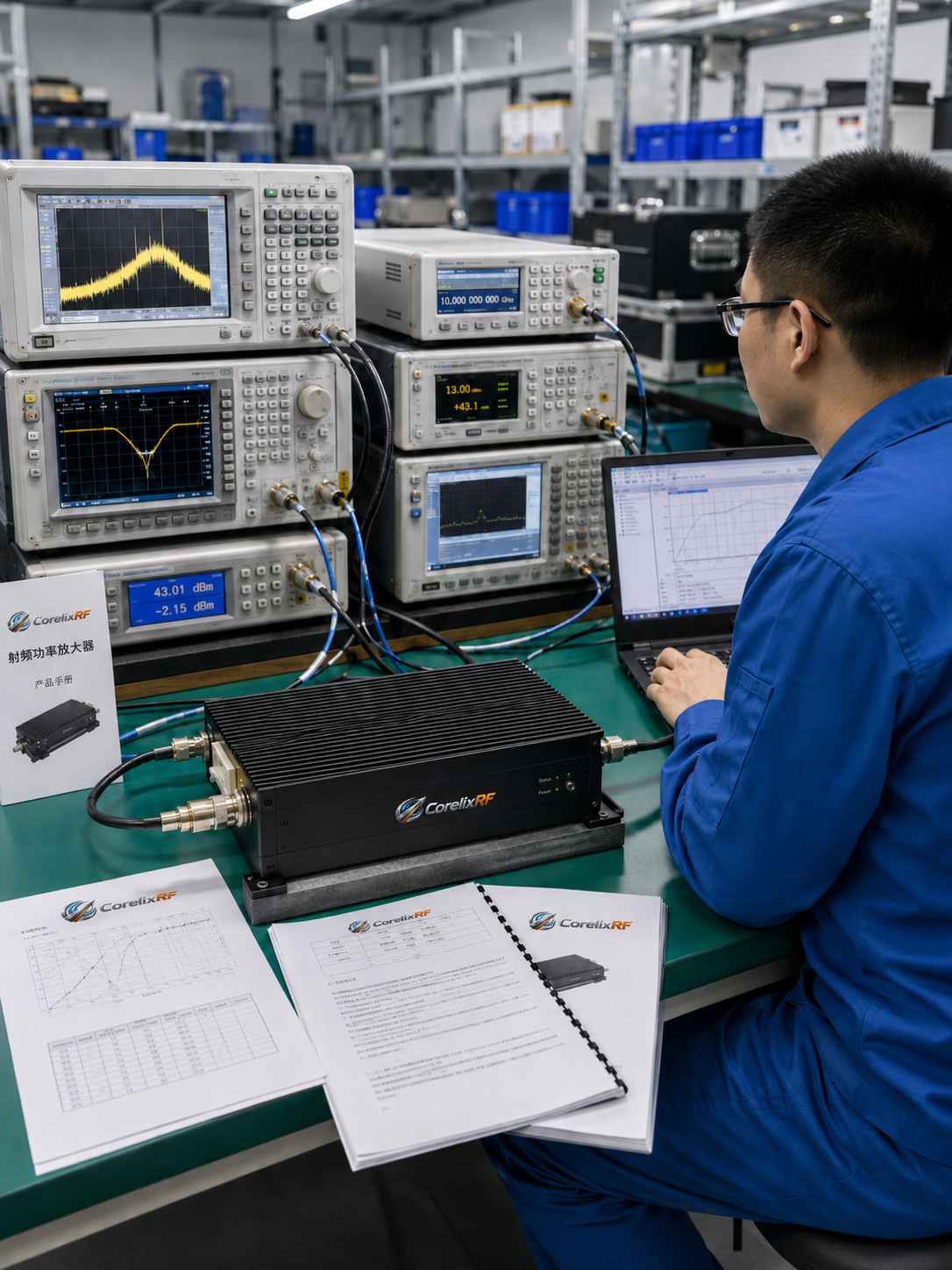
Factory RF Testing & Validation Records
Testing is positioned as a factory validation record, not just a quality checklist. Each key item supports technical review before shipment.
Verify output power across target frequency and load condition.
Check gain consistency and full-band response.
Review reflection, RF port condition and matching behavior.
Review harmonics, spurious output and abnormal RF behavior.
Full-load operation helps screen early component risk.
Environmental and mechanical reliability checks can be reviewed by project need.
RF Product Platforms Built Through This Manufacturing Flow
This process supports the main CorelixRF product families, while still allowing project-specific engineering review and custom RF configuration.
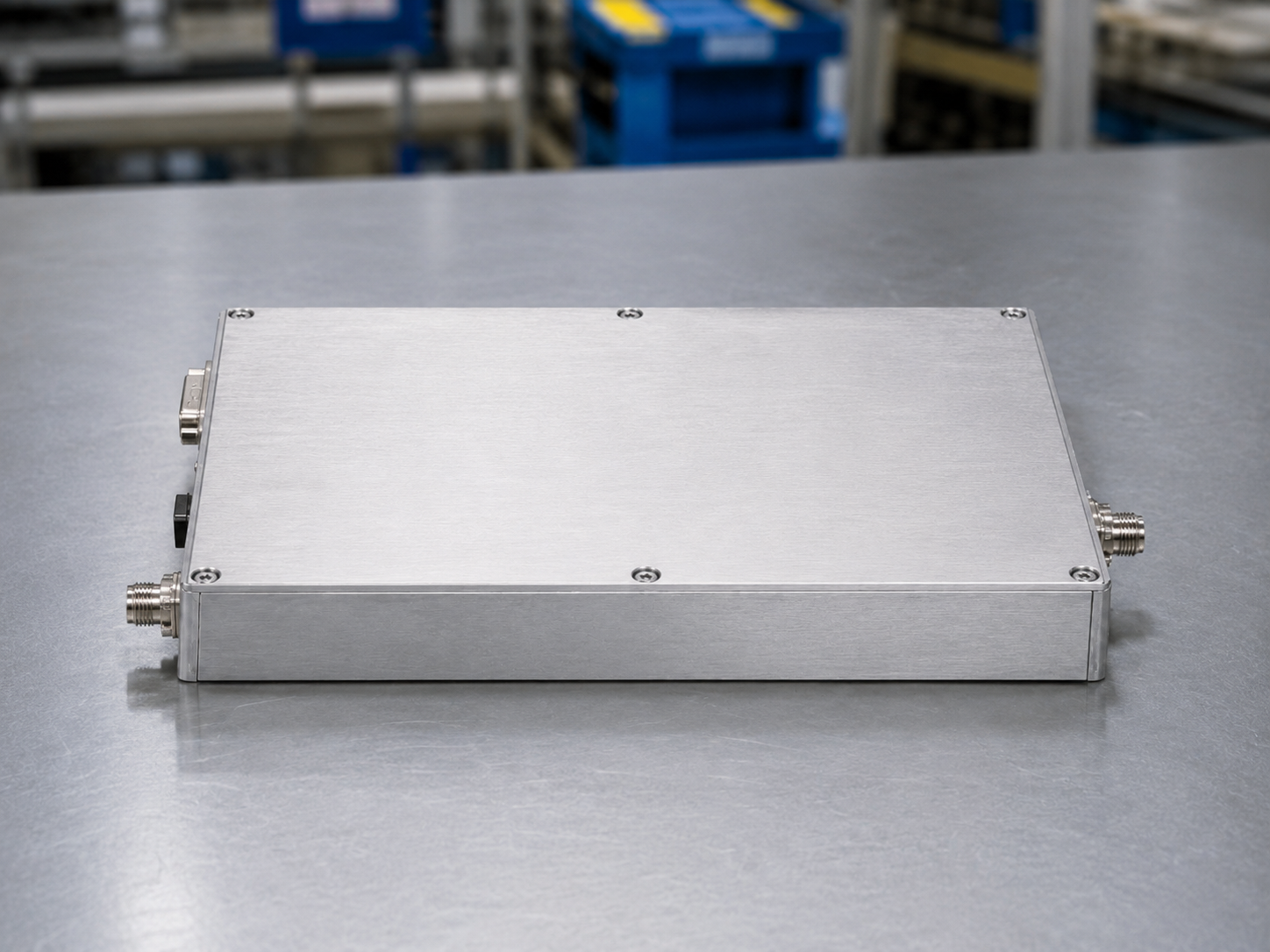
RF Power Amplifiers
Wideband, narrowband, CW, pulsed, EMC, high-power and custom RF amplifier platforms.
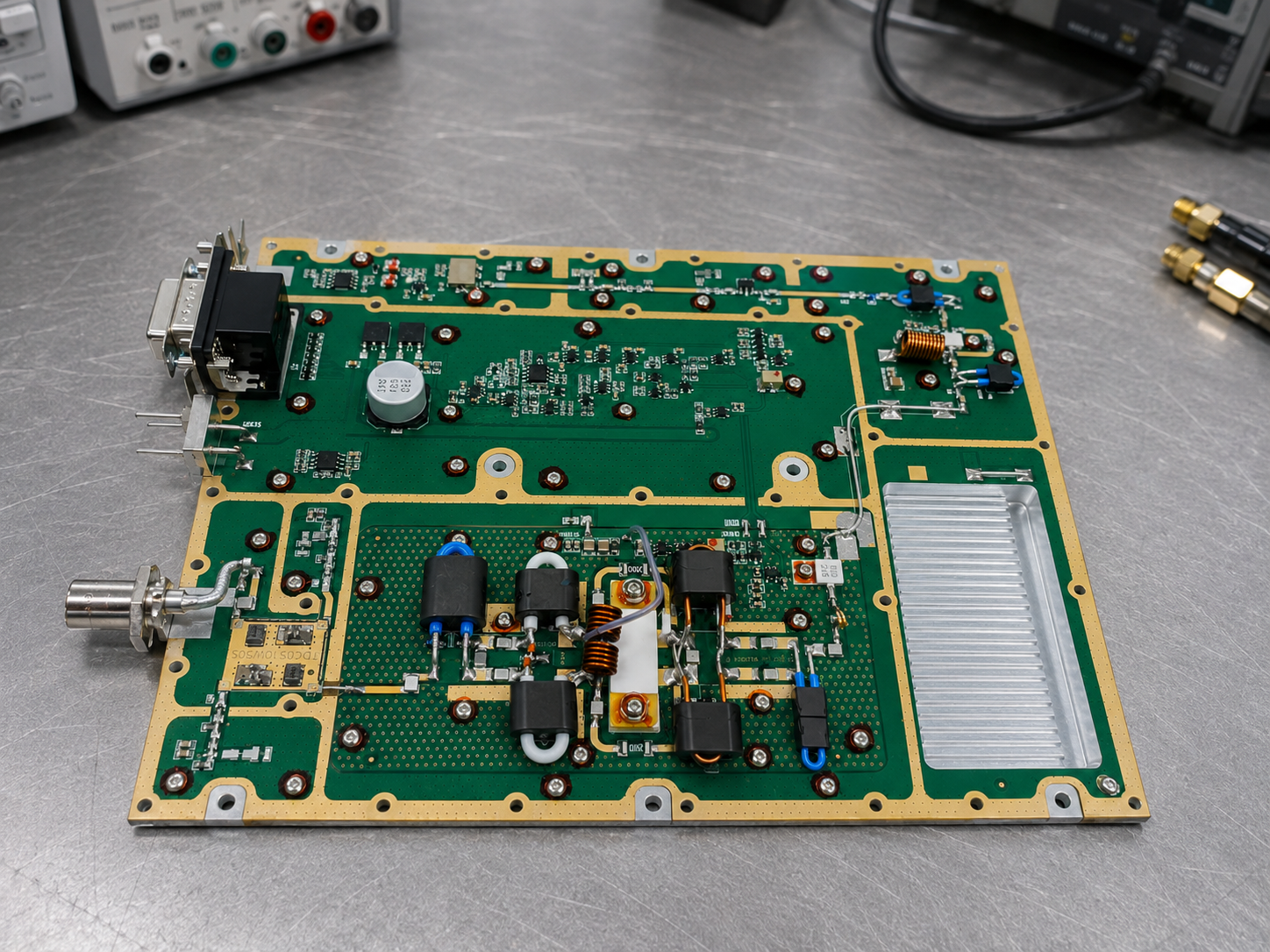
SDR Digital RF Source Modules
Board-level SDR source modules for signal generation, OEM integration, and RF system development.
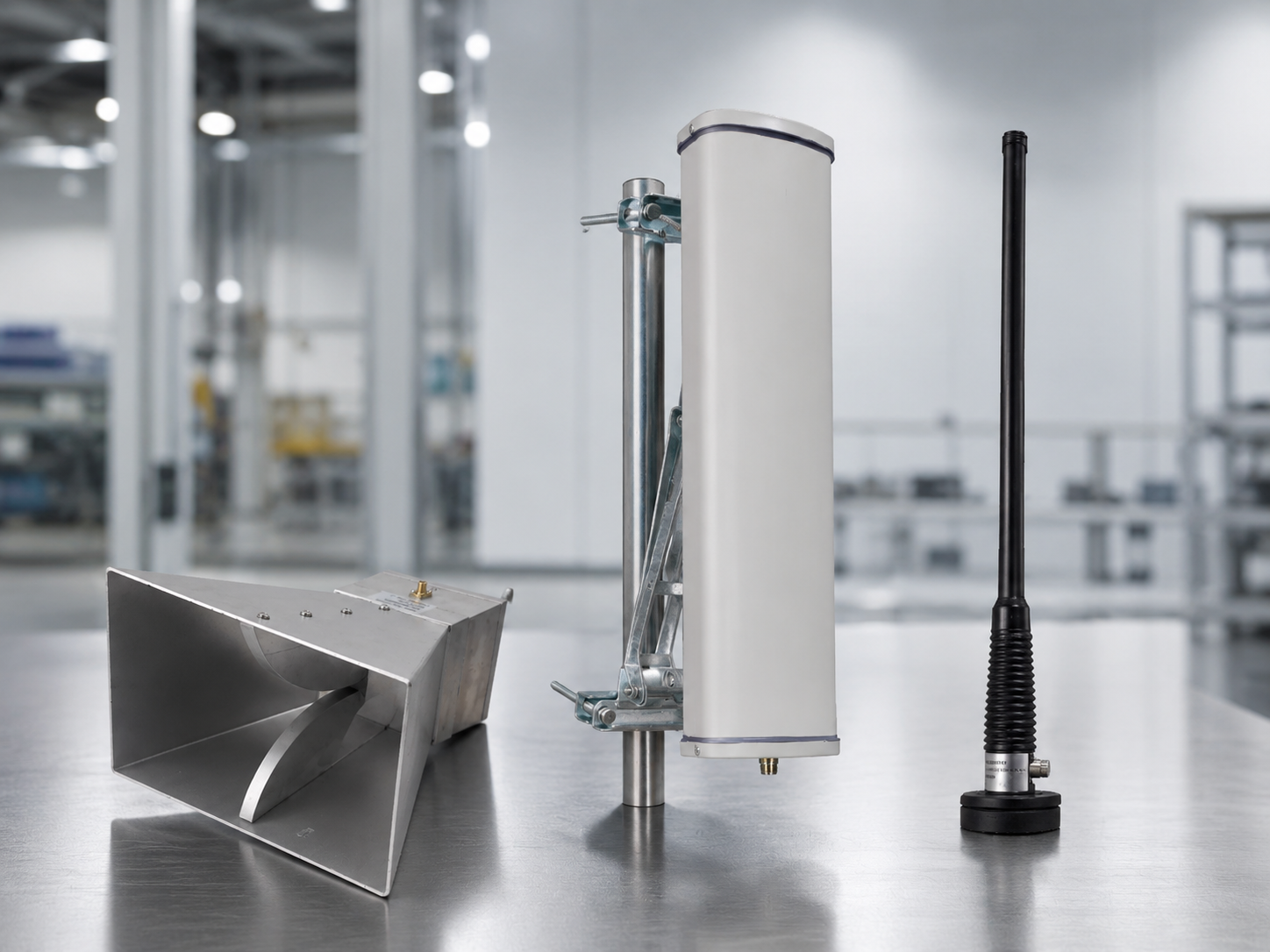
Antenna Platforms
Omnidirectional, directional, broadband, narrowband and custom antenna platforms for RF system matching.
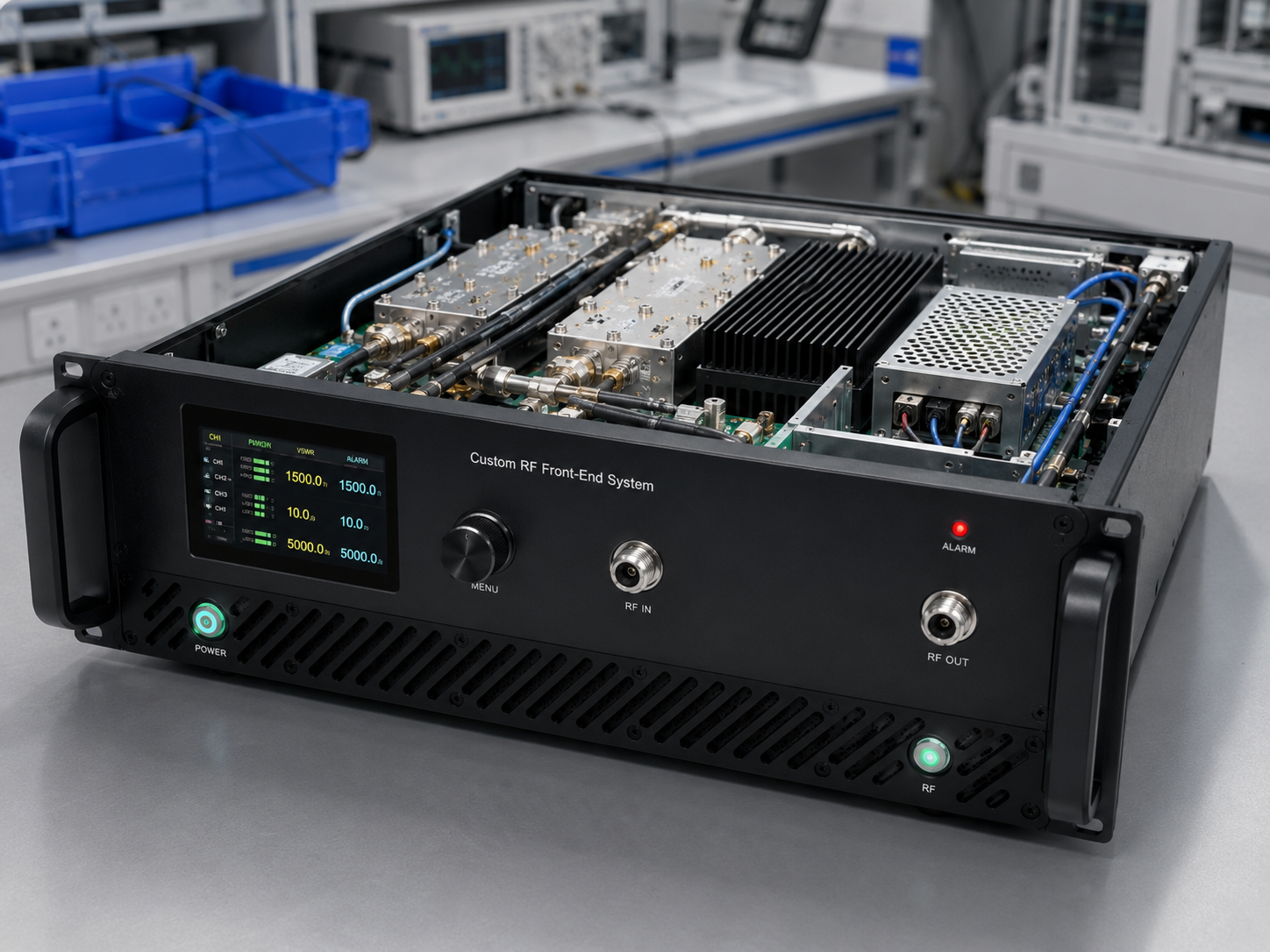
Custom RF Front-End Systems
Amplifier + SDR + antenna + control interface + enclosure-level integration review for project-specific RF chains.
How CorelixRF Reduces RF Procurement Risk
For RF buyers, manufacturing capability matters because product mismatch, unstable output, thermal failure or missing test records can delay the whole system project.
Common Buyer Risk
CorelixRF Control Method
Documentation Support for Engineering Buyers
Documentation can be prepared according to project requirement, especially for engineering evaluation, internal purchasing review, or system-level integration records.
Factory Capability Behind the RF Manufacturing Flow
CorelixRF combines RF engineering review, controlled production, in-house testing and documentation support to help engineering buyers move from specification to validated delivery.
Move from Manufacturing Capability to Product Selection
After reviewing CorelixRF’s manufacturing and validation capability, continue to the RF platform that matches your project path.
Questions Buyers Ask Before Factory Review
Does CorelixRF manufacture RF amplifiers in-house?
CorelixRF supports RF amplifier projects through engineering review, controlled manufacturing, RF tuning, factory testing and shipment documentation. Standard and project-specific configurations can be reviewed before production.
Can CorelixRF support custom RF amplifier requirements?
Yes. CorelixRF can review frequency range, output power, operating mode, connector, control interface, thermal structure, enclosure limits and documentation requirements to define a standard or custom RF path.
What RF tests can be provided before shipment?
Typical review items include output power, gain flatness, VSWR / matching, spectrum behavior, burn-in / aging, and project-specific thermal or vibration checks where required.
Can you provide unit-level test data?
Measured records can be prepared according to project requirement, including RF performance data, inspection records, burn-in information, packing review and shipment confirmation.
Do you support SDR + amplifier + antenna system review?
Yes. CorelixRF can review SDR source, amplifier frequency range, output power, antenna matching, load condition, connector path and integration constraints as part of RF chain review.
What information should I provide before engineering review?
Please provide target frequency range, output power, operating mode, duty cycle, antenna or load condition, input signal level, available DC power, enclosure limit, connector preference and documentation requirements.
Need Factory Review for an RF Amplifier, SDR Source or Antenna System?
Send your target frequency, output power, operating mode, antenna/load condition, enclosure limits, and documentation needs. CorelixRF will review whether a standard platform or custom RF manufacturing path is more suitable.
Engineering and manufacturing proof
Connect RF engineering, manufacturing and factory acceptance evidence
Engineering and manufacturing pages should help buyers understand how CorelixRF turns requirements into platform selection, design review, assembly, testing, documentation and delivery support.
Frequency band, output power, waveform, antenna/load condition, control interface and mechanical limits.
Platform selection, custom engineering, assembly, thermal review, protection logic and quality checkpoints.
Datasheet, measured data, FAT checklist, inspection notes, packing records and delivery documentation.