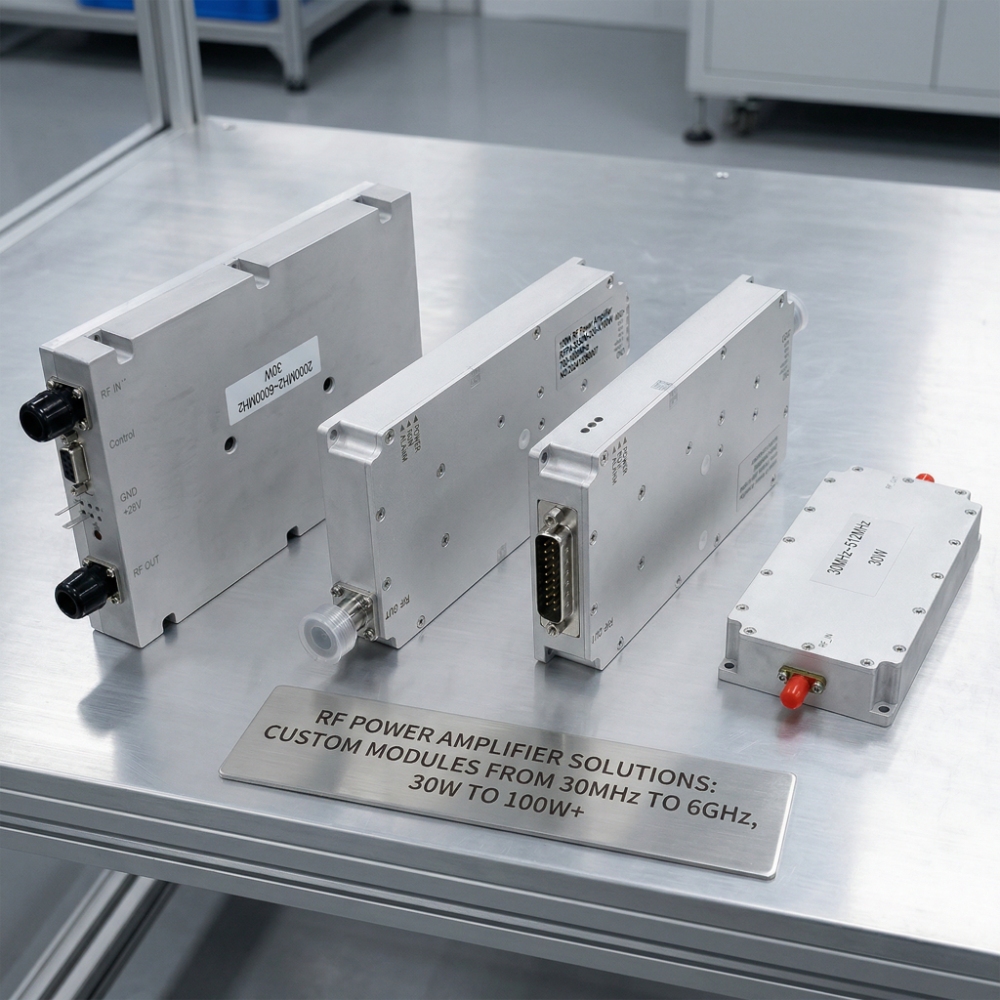
Factory-Direct RF Amplifier Manufacturer

RF & Solid-State Power Amplifiers

by Frequency and Output Power

Explore CorelixRF RF power amplifiers and solid-state power amplifier options for RF testing, communications and OEM integration. Compare standard RF amplifier modules by frequency and output power, or review microwave, millimeter-wave, EMC, pulsed and custom configurations. Check the model-specific datasheet and operating conditions before selection.

RF Amplifier Selection

Compare RF Amplifier Requirements

Start with the operating band, output definition and integration conditions. Then compare a suitable standard family or specialist amplifier configuration. The engineering guide How to Select an RF Power Amplifier for a Real System Requirement develops the selection and interface questions in more detail.

02 // OUTPUT

Continuous, Linear or Peak Output

Define continuous, linear or peak output power, signal conditions, duty cycle and cooling. For a linear RF amplifier, specify signal bandwidth and acceptable distortion, including P1dB, IMD or EVM where applicable. Before preparing the enquiry, use Buying a 100 W RF Amplifier: Check Output Before You Order to organize the decision inputs.

03 // INTEGRATION

Solid-State Power Amplifier Selection

For a solid-state RF amplifier, check semiconductor architecture, CW or pulsed operation, input drive, DC supply, RF and control interfaces, dimensions and cooling in the exact model/version datasheet. Match the configuration to your signal and thermal requirements. The engineering guide RF Power Amplifier Classes: How to Choose the Best develops the selection and interface questions in more detail.

Standard Amplifier Modules

Standard RF Power Amplifier Module Families

Choose a frequency family that covers your operating band, then compare the available RF power amplifier modules. Open the series page for model-specific specifications or compare the standard models in one table.

Four separate frequency families. Each lists 30, 50, 100, 150 and 200 W options. Confirm the full operating band and power specification for your selected model.

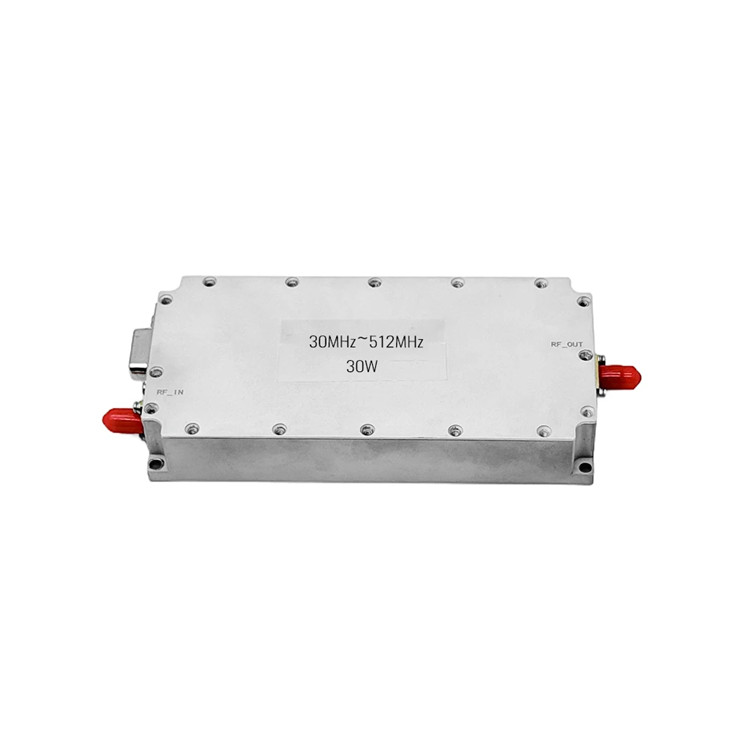
30–512 MHz CorelixRF amplifier VHF / UHF

30–512 MHz RF Amplifier Modules

30 / 50 / 100 / 150 / 200 W

Compare five catalog models for requirements within the 30–512 MHz frequency range. VHF RF amplifier selection and UHF requirements that fall within this range.

View Models
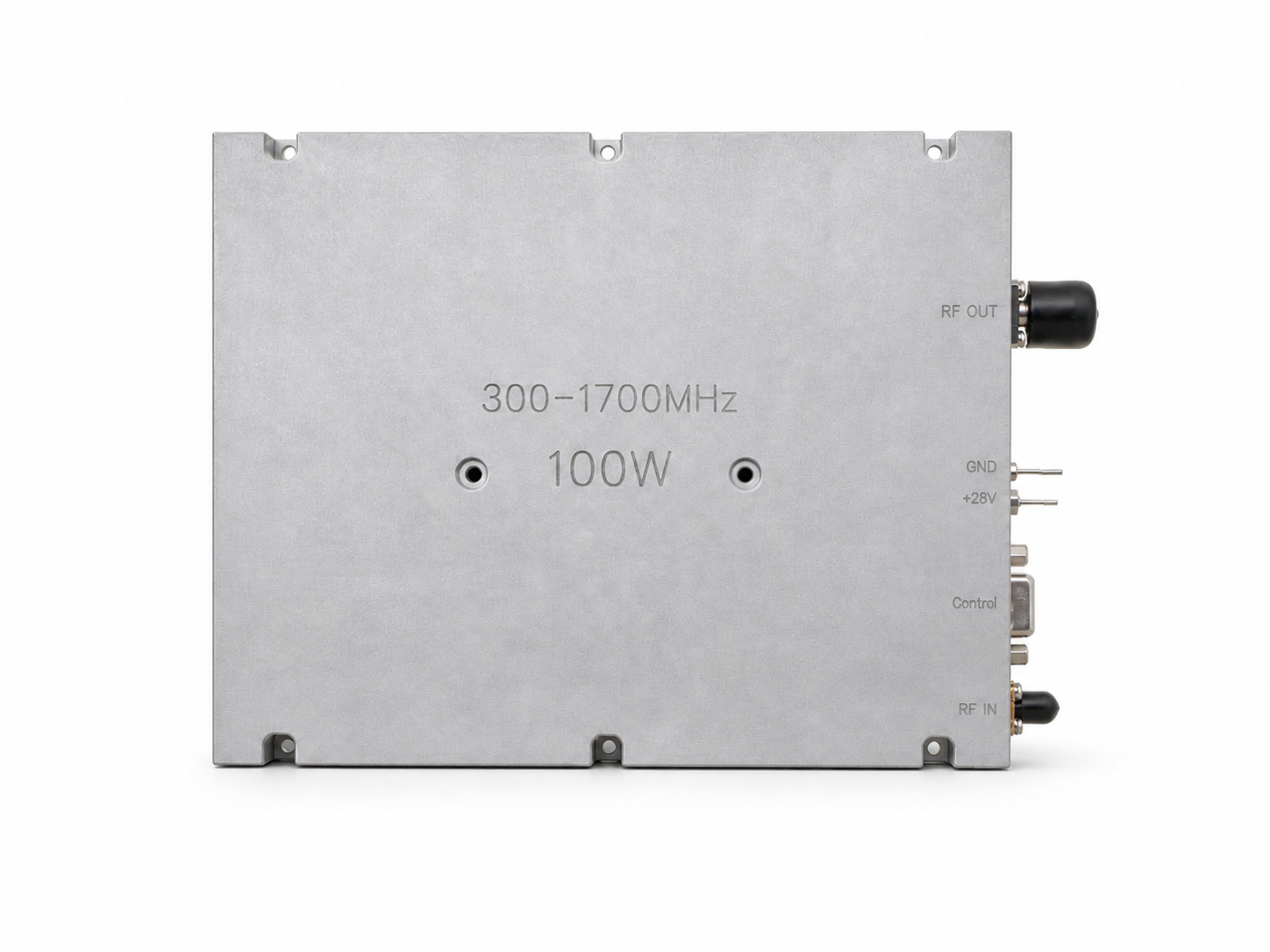
300–1700 MHz CorelixRF amplifier MID-BAND

300–1700 MHz RF Amplifier Modules

30 / 50 / 100 / 150 / 200 W

Compare five catalog models for requirements within the 300–1700 MHz frequency range. UHF RF amplifier selection and L-band requirements that fall within this range.

View Models
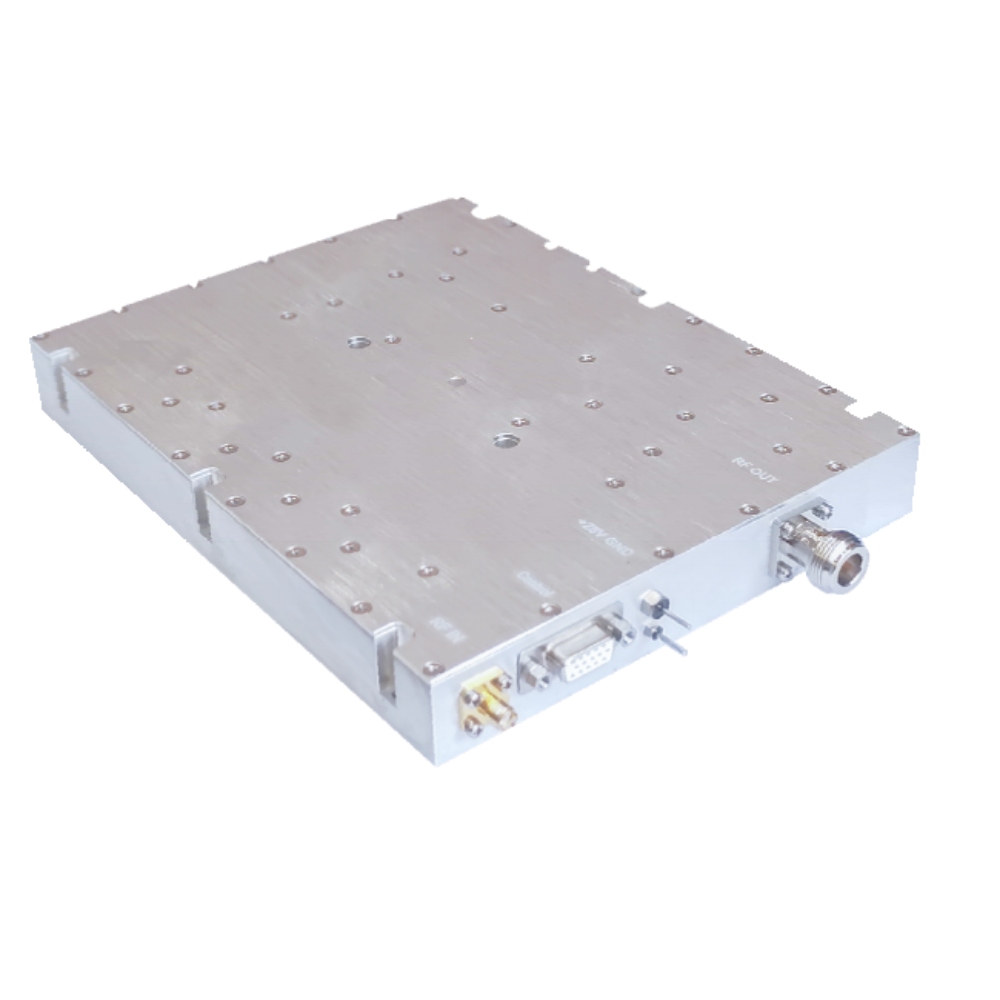
300–2700 MHz CorelixRF amplifier EXTENDED MID

300–2700 MHz RF Amplifier Modules

30 / 50 / 100 / 150 / 200 W

Compare five catalog models for requirements within the 300–2700 MHz frequency range. Wideband UHF amplifier selection and 2.4 GHz amplifier requirements within this range.

View Models
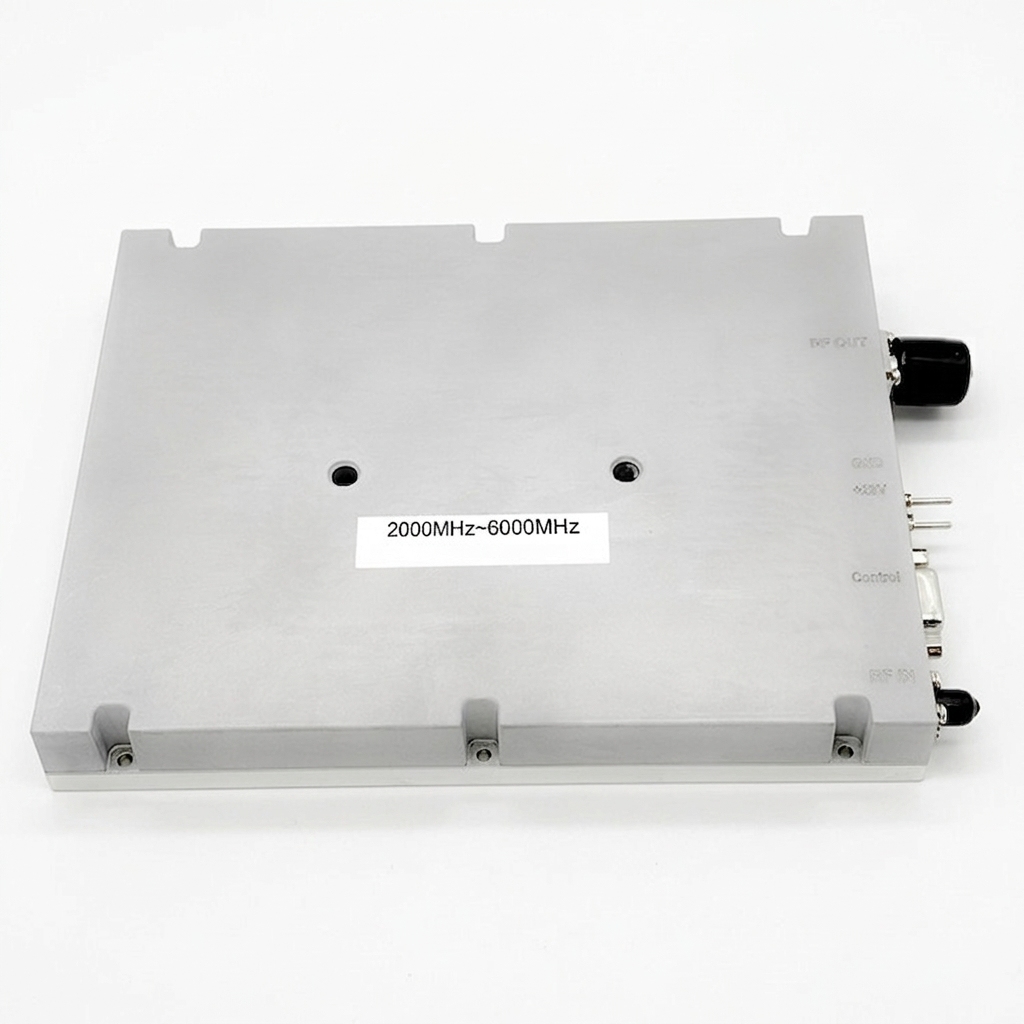
CorelixRF 2–6 GHz RF power amplifier platform 2–6 GHz

2–6 GHz RF Amplifier Modules

30 / 50 / 100 / 150 / 200 W

Compare five catalog models for requirements within the 2–6 GHz frequency range. Broadband RF power amplifier selection for in-range S-band and 5.8 GHz requirements.

View Models

CW or pulsed operation, linear output capability, RF interfaces and cooling requirements must be confirmed for the selected model.

Specialist Amplifier Options

Microwave, Millimeter-Wave, EMC & Pulsed RF Amplifiers

Compare the amplifier type with your signal and application conditions. Follow the relevant product path for detailed requirements and configuration review.

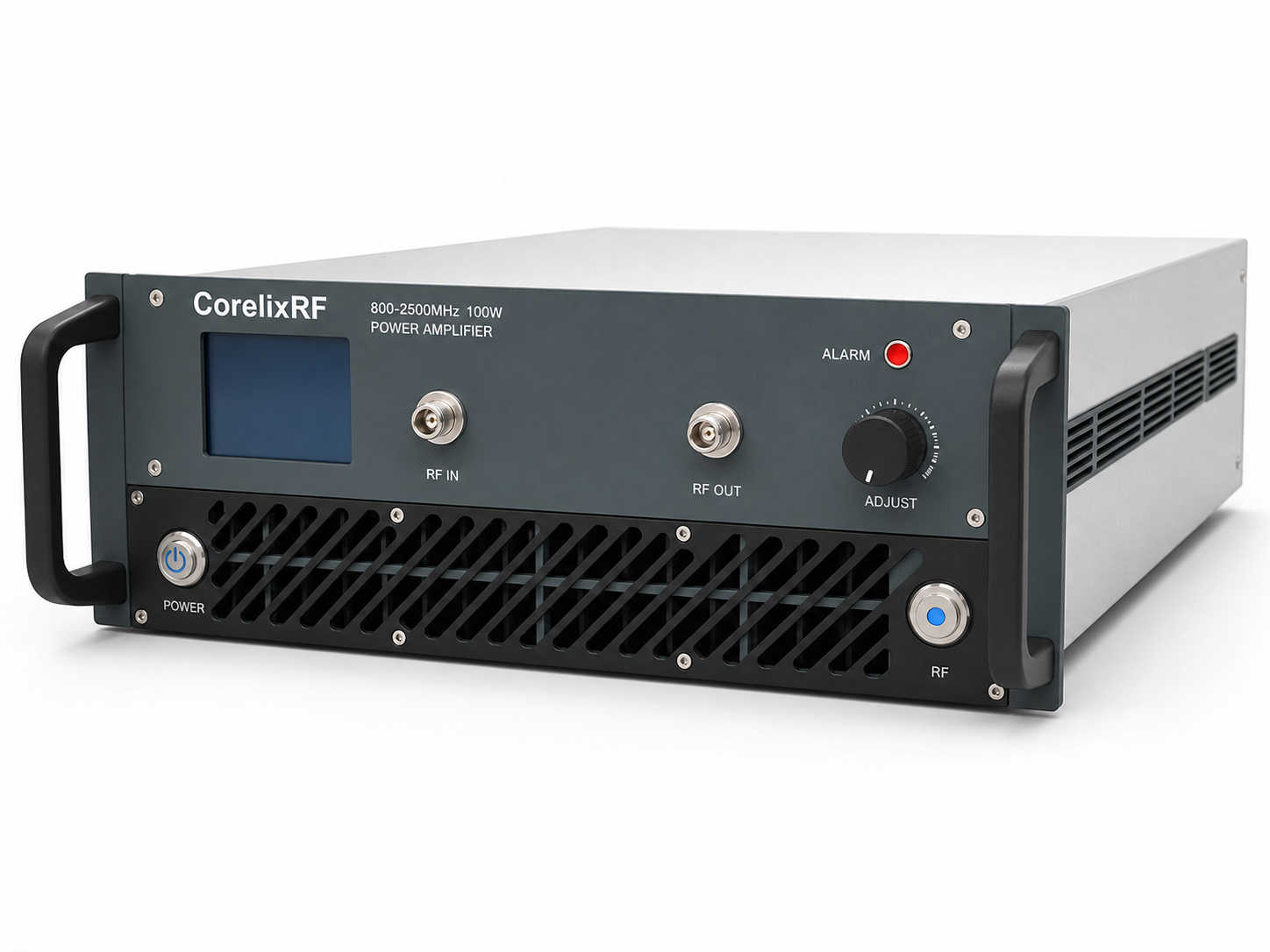
CorelixRF microwave RF amplifier test platform

MICROWAVE

Microwave Power Amplifiers

Review microwave amplifier options by frequency window, required output and integration conditions. Use the dedicated frequency pages to narrow the configuration. For a solid-state microwave amplifier requirement, check the architecture, output definition and operating conditions of the specific model. For a configuration-specific engineering example, see 4–8 GHz 200 W C-Band GaN RF Amplifier for Radar and Communications Testing.

Explore Microwave Amplifiers
CorelixRF millimeter-wave amplifier engineering review

MILLIMETER-WAVE

Millimeter-Wave Amplifiers

Specify the millimeter-wave frequency window, output requirement, RF interface and available cooling arrangement for a model or project review.

Explore Millimeter-Wave Amplifiers
CorelixRF RF amplifier in an EMC test laboratory

EMC TESTING

EMC Amplifiers

Describe the test frequency range, required output, modulation and load conditions. Include the applicable test standard and setup for an EMC amplifier review.

Explore EMC Amplifiers
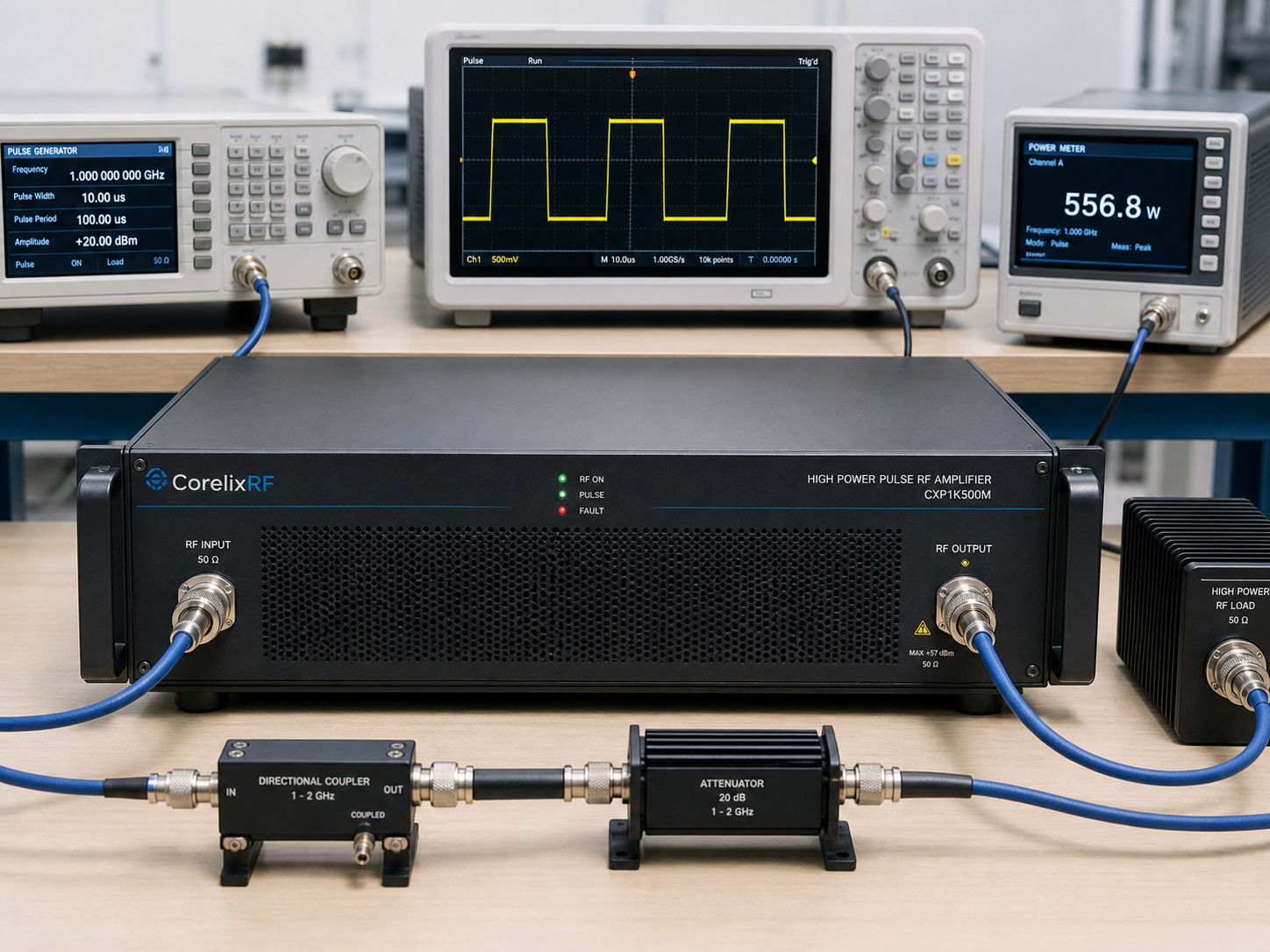
CorelixRF pulsed RF amplifier test setup

PULSED OPERATION

Pulsed RF Amplifiers

Specify operating frequency, peak output power, pulse width, repetition rate and duty cycle. Include average power and thermal conditions when selecting a pulsed RF amplifier.

Explore Pulsed RF Amplifiers
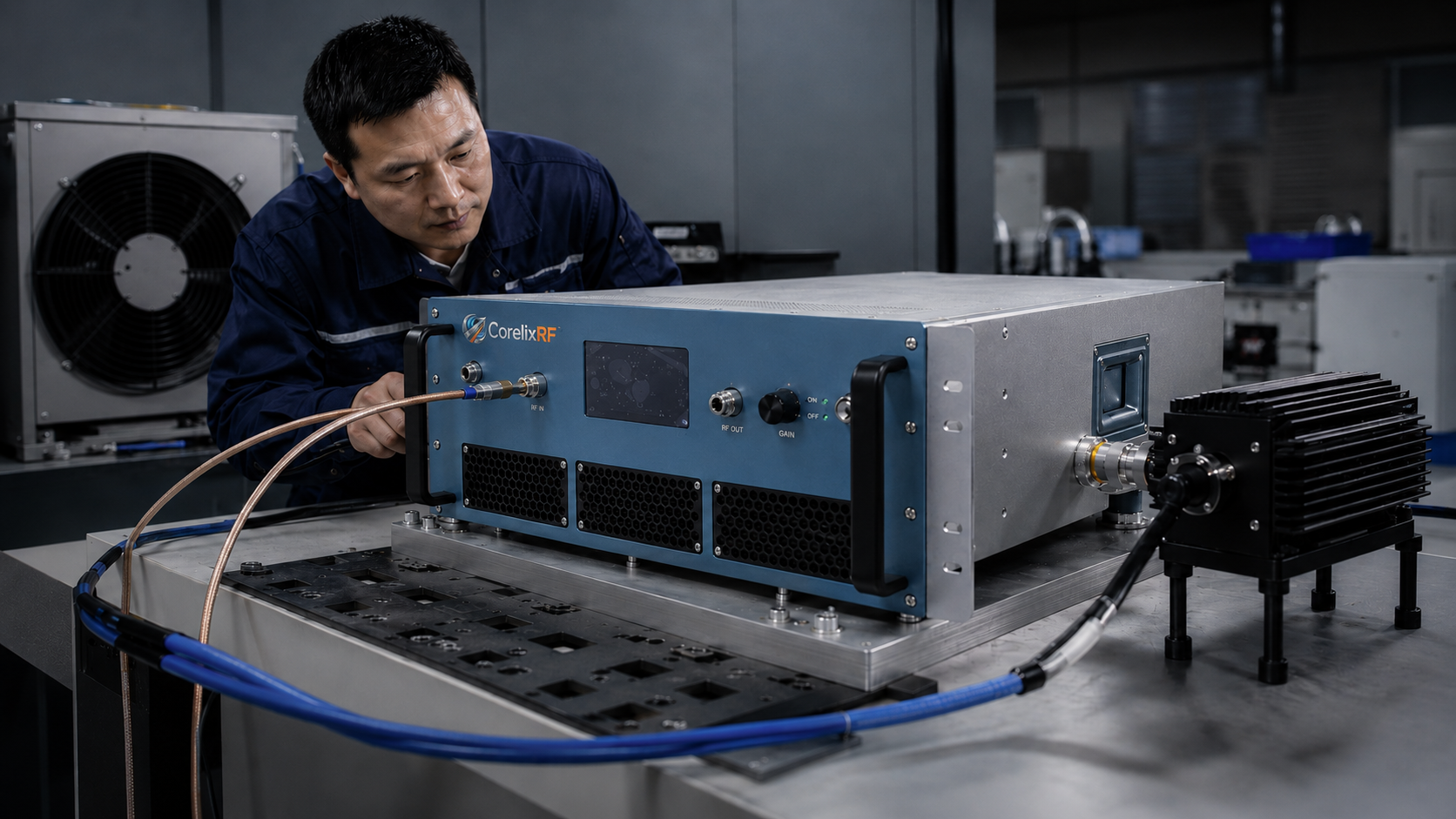
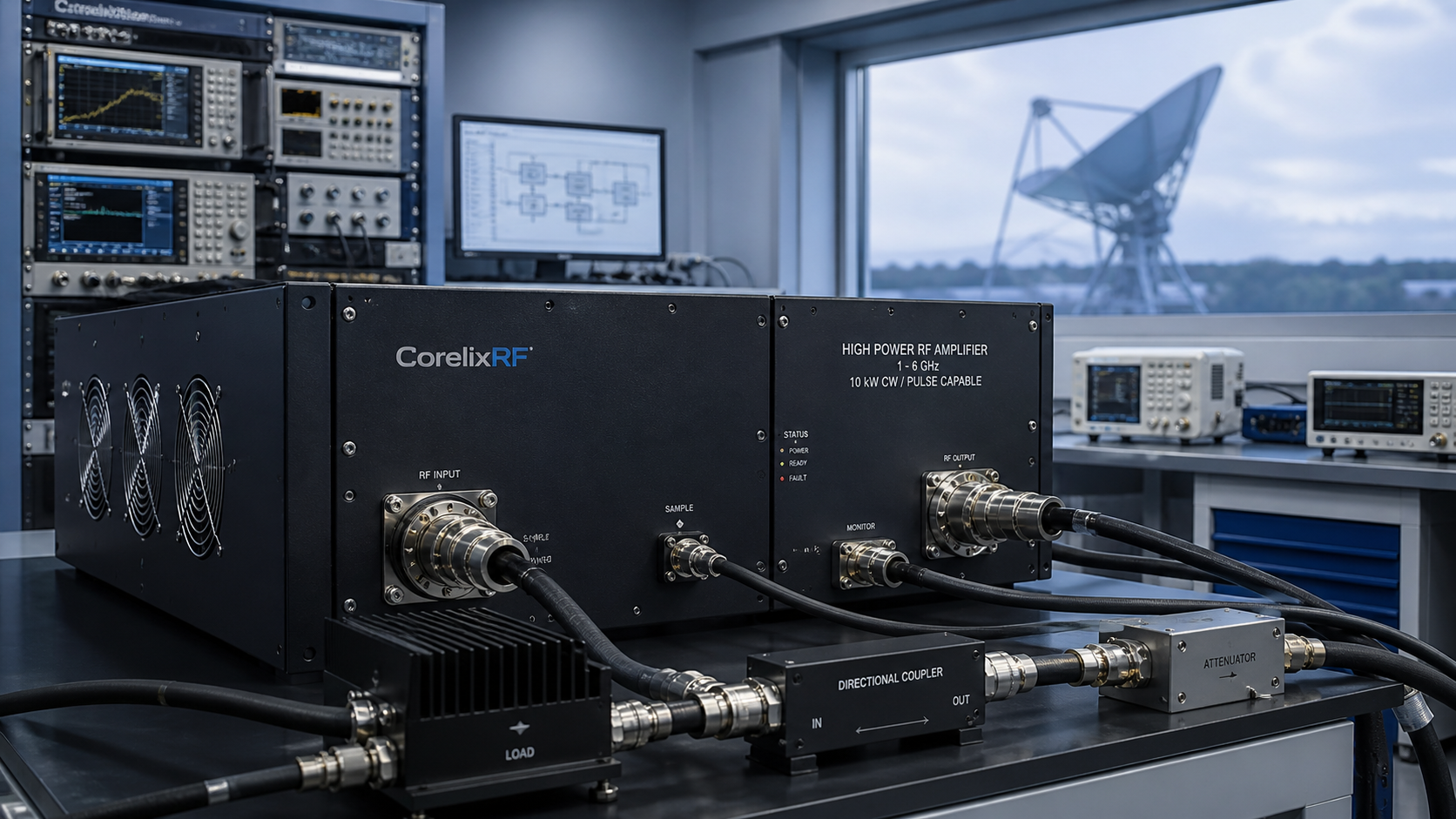
CorelixRF high-power RF amplifier system integration

HIGH-POWER REQUIREMENTS

High-Power RF Amplifier Requirements

Define the required frequency coverage and continuous, linear or peak output. A high-power RF amplifier configuration also depends on cooling, installation constraints and load conditions. For a solid-state high power amplifier requirement, review the selected configuration and its model-specific operating limits. For a configuration-specific engineering example, see Integrating a 2-4 GHz 1000 W RF Power Amplifier for S-Band Testing.

Request High-Power Amplifier Review

Custom & Project-Based RF Amplifier Inquiry

Custom RF Amplifier Integration

Review a standard platform adaptation or a custom RF power amplifier configuration for your RF and control interfaces, mechanical envelope, DC supply and cooling requirements. Include your frequency band, output requirement and project specifications.

01 //

Operating Frequency Range

Specify the full operating band, including fixed-band or multi-band requirements.

02 //

Required Output Power

Define rated, linear or peak output, frequency coverage and thermal conditions.

03 //

Operating and Test Conditions

Include pulse width, duty cycle and repetition rate for pulsed operation, or the test standard and load conditions for EMC.

04 //

Mechanical & Interface Adaptation

Describe RF connections, dimensions, DC supply, cooling and monitoring or control requirements.

05 //

OEM / ODM Project Support

Share specifications or drawings for feasibility review and module-to-system integration planning.

Include electrical, mechanical, thermal and acceptance requirements with your inquiry.

Project Engineering Review
Factory Direct

Model-Specific Test Evidence

RF Testing and Documentation

Review the RF measurements, operating conditions and documentation required for your selected amplifier. Agree the applicable test scope and acceptance records for the configuration.

01 // RF PERFORMANCE

Frequency, Gain & Output Power

Define frequency points, input conditions and the required output rating. Review gain flatness, linearity or spectral measurements where applicable.

02 // TEST CONDITIONS

Load, Cooling & Operating Mode

Confirm the load, supply and cooling arrangement. Include duty cycle, test duration and applicable protection checks.

03 // DOCUMENTATION

Drawings & Inspection Records

Agree available RF test data, interface drawings and inspection records for the selected model and acceptance requirements.

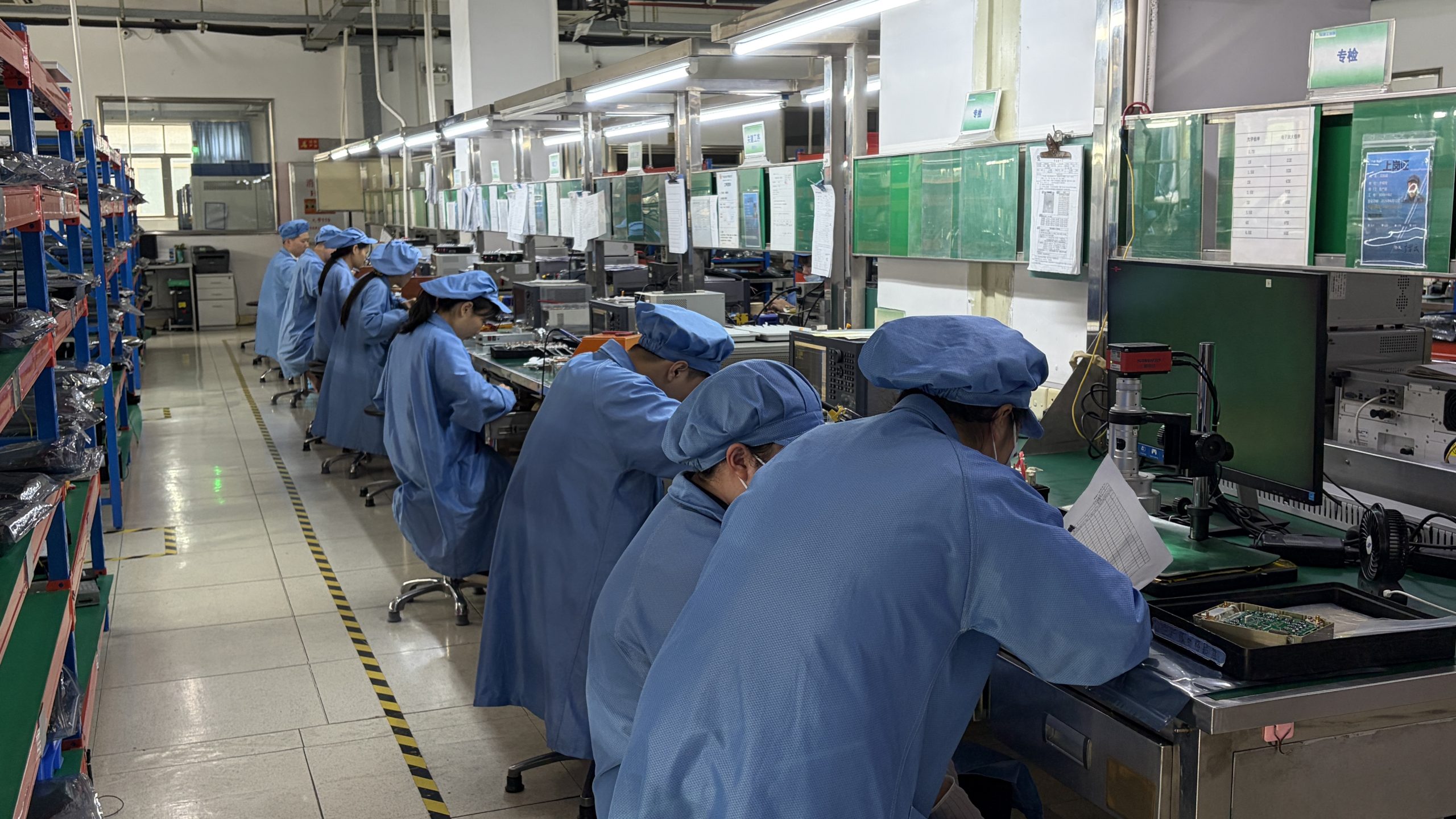
CorelixRF Production Floor Production Floor
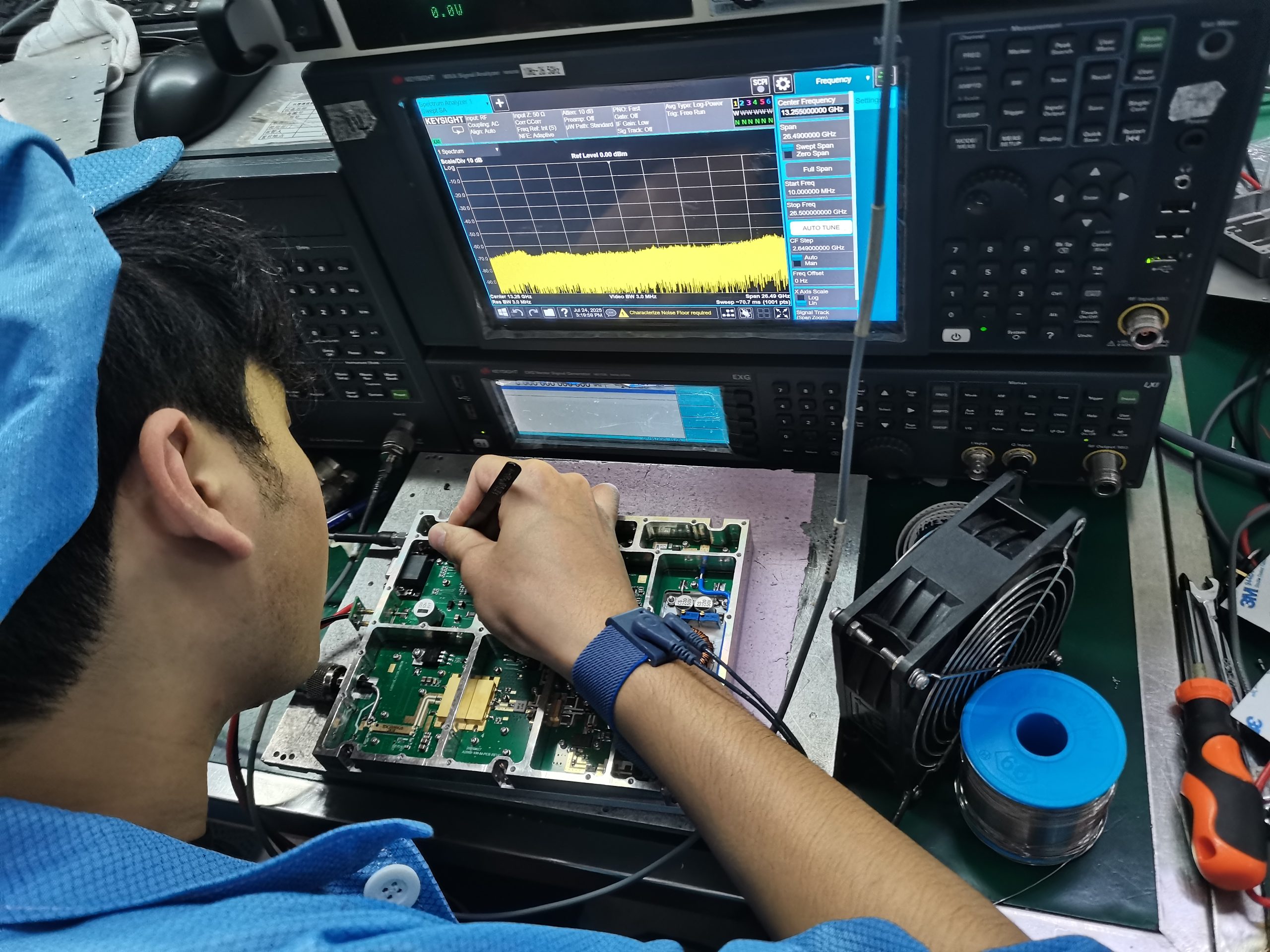
CorelixRF Micro-Assembly Micro-Assembly
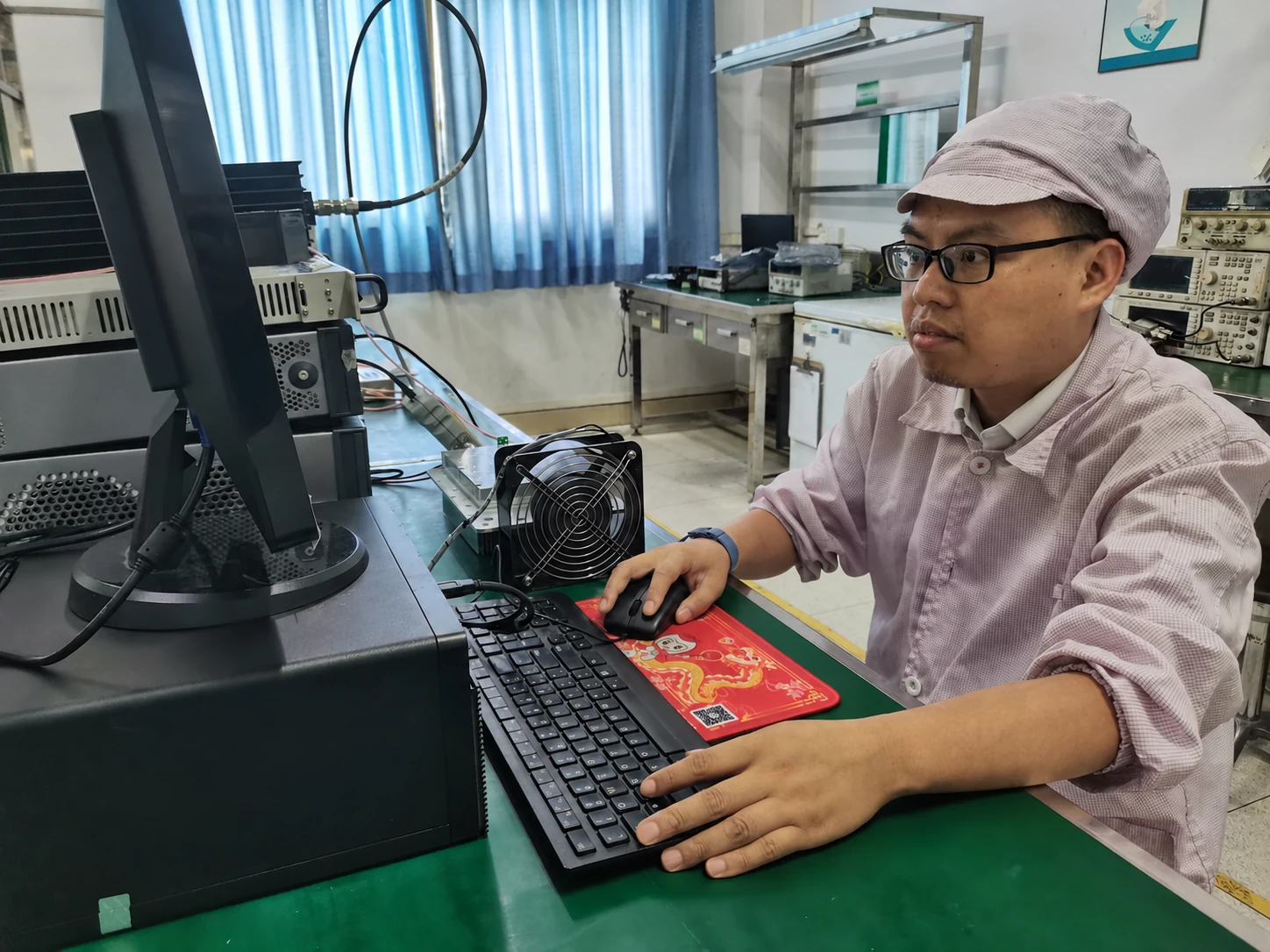
CorelixRF RF Test Lab RF Test Lab
CorelixRF Quality Validation Quality Validation

Selection Questions

RF Power Amplifier FAQ

Answers to common questions about bandwidth, operating modes, pricing and quotation requirements.

Start with the full operating frequency range and the required output power. Then specify the input signal, gain or drive requirement, operating mode, linearity, supply and cooling conditions. Select the relevant frequency family and review the exact model specifications before choosing a configuration.
Match the full operating frequency range to the specified band of each broadband RF amplifier. Compare gain flatness and available output across the band under the stated test conditions. For a wideband RF amplifier, also review input drive, linearity, load and cooling requirements for the intended signal.
Choose according to the signal and operating conditions. For continuous operation, specify the required continuous output and thermal conditions. For pulsed operation, provide peak power, pulse width, repetition rate and duty cycle. A listed output power alone does not establish that a model supports your required operating mode.
RF amplifier price depends on frequency coverage, output power, operating mode, linearity, quantity and the required configuration. Mechanical design, control functions and testing or documentation requirements may also affect the quotation. Send your specifications or a model reference to request pricing for a defined configuration.
Send your operating band, required continuous, linear or peak output power, signal conditions, quantity and model reference if available. Include supply, RF interfaces, control and mechanical requirements. For pulsed operation, add pulse width, repetition rate and duty cycle. Attach the specification or drawing and list any required testing or documentation.
SSPA means solid-state power amplifier. It describes an amplifier architecture, not a single frequency range or power rating. Match the operating band, continuous, linear or peak output requirement and integration format to the selected model. Use the model-specific datasheet to confirm operating conditions, supply, RF interfaces and cooling requirements.
No. Solid-state RF amplifiers can use different semiconductor technologies. Do not infer GaN technology from the term solid-state or SSPA alone. Check the semiconductor technology and amplifier architecture in the datasheet for the exact model and version, together with its operating conditions.

RF Amplifier Inquiry

Request RF Amplifier Selection or a Quote

Send your operating band, required output power, signal conditions and quantity. Include a model reference or specification file so our team can review the appropriate amplifier configuration.

Standard Modules Frequency range, output power, model reference and quantity.
Pulse / EMC / Custom Operating mode, duty cycle, application and integration requirements.
Include frequency, power, operating conditions and quantity
ISO 9001 · GJB 9001C Certified
Factory Direct · In-House Engineering
NDA Available on Request

RF Amplifier Inquiry Form

    Send Your RF Amplifier Inquiry