CorelixRF — Header Component (Enhanced + Fixed)
30–512 MHz RF Power Amplifiers | 30W–200W VHF/UHF Factory-Direct Modules | CorelixRF

Factory-Direct VHF/UHF RF Power Amplifier Manufacturer

30–512 MHzRF Power Amplifiers

Factory-direct 30W to 200W VHF/UHF RF power amplifier modules for OEM integration, laboratory evaluation, and custom broadband projects.

  • 30–512 MHz broadband coverage
  • 30W / 50W / 100W / 150W / 200W standard models
  • 28 VDC native architecture
  • Air cooling design
  • Unit-level RF validation available
  • OEM / custom sub-band review supported
PRODUCTION-READY PLATFORM
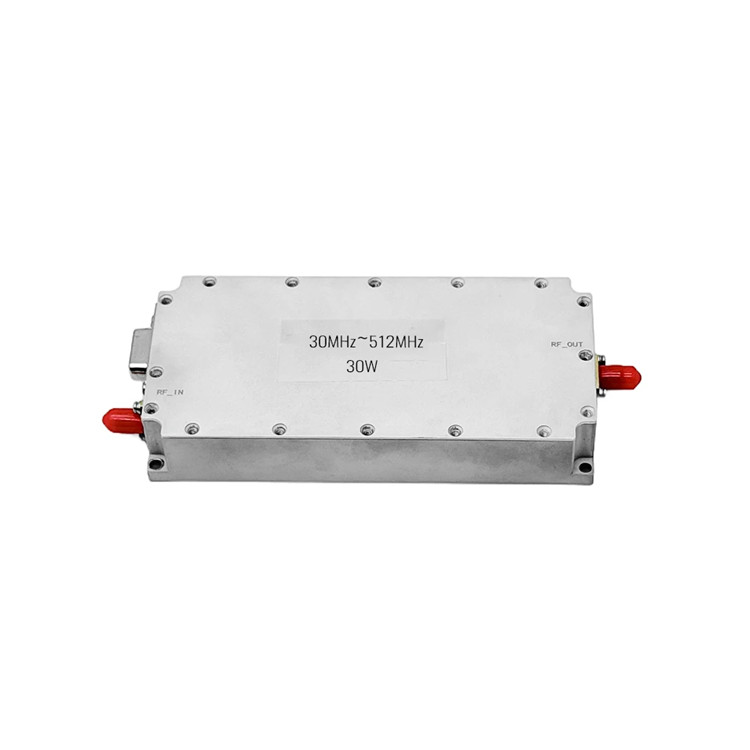
CorelixRF 30–512MHz CRF-PA-30M512M Series RF Power Amplifier
MANUFACTURERFactory-Direct RF Production
VALIDATIONUnit-Level RF Test Data
ARCHITECTURENative 28 VDC Platform
THERMALAir Cooling Design
CUSTOMIZATIONOEM / Sub-Band Review
RESPONSEEngineering Feedback Within 24–48 Hours

Who This Is For

Who This 30–512 MHz Series Is For

This page is built for technical buyers who need a broadband VHF/UHF amplifier platform with clearer integration visibility before quotation and before deployment.

01 // OEM INTEGRATORS

OEM System Integrators

For teams integrating RF power stages into mobile, industrial, or vehicle-based platforms where supply planning, thermal path, and mechanical fit must be reviewed early.

02 // RF LABORATORIES

RF Laboratories & Test Teams

For engineers who need broadband output capability, repeatable unit-level data, and practical amplifier platforms for bench validation and subsystem evaluation.

03 // DEFENSE & INDUSTRIAL

Defense & Industrial Development

For projects requiring VHF/UHF amplifier modules with stable architecture, documented validation support, and a direct manufacturer communication path.

04 // STANDARD VS CUSTOM

Buyers Comparing Standard vs Custom

For customers deciding whether a standard 30W / 50W / 100W / 150W / 200W platform is sufficient or whether a narrower custom band is the better fit for the application.

Why CorelixRF

Why CorelixRF for 30–512 MHz VHF/UHF Projects

Choosing a VHF/UHF broadband amplifier is not only about power output. It is also about whether the supplier can support integration, thermal planning, documentation, and customization before you commit.

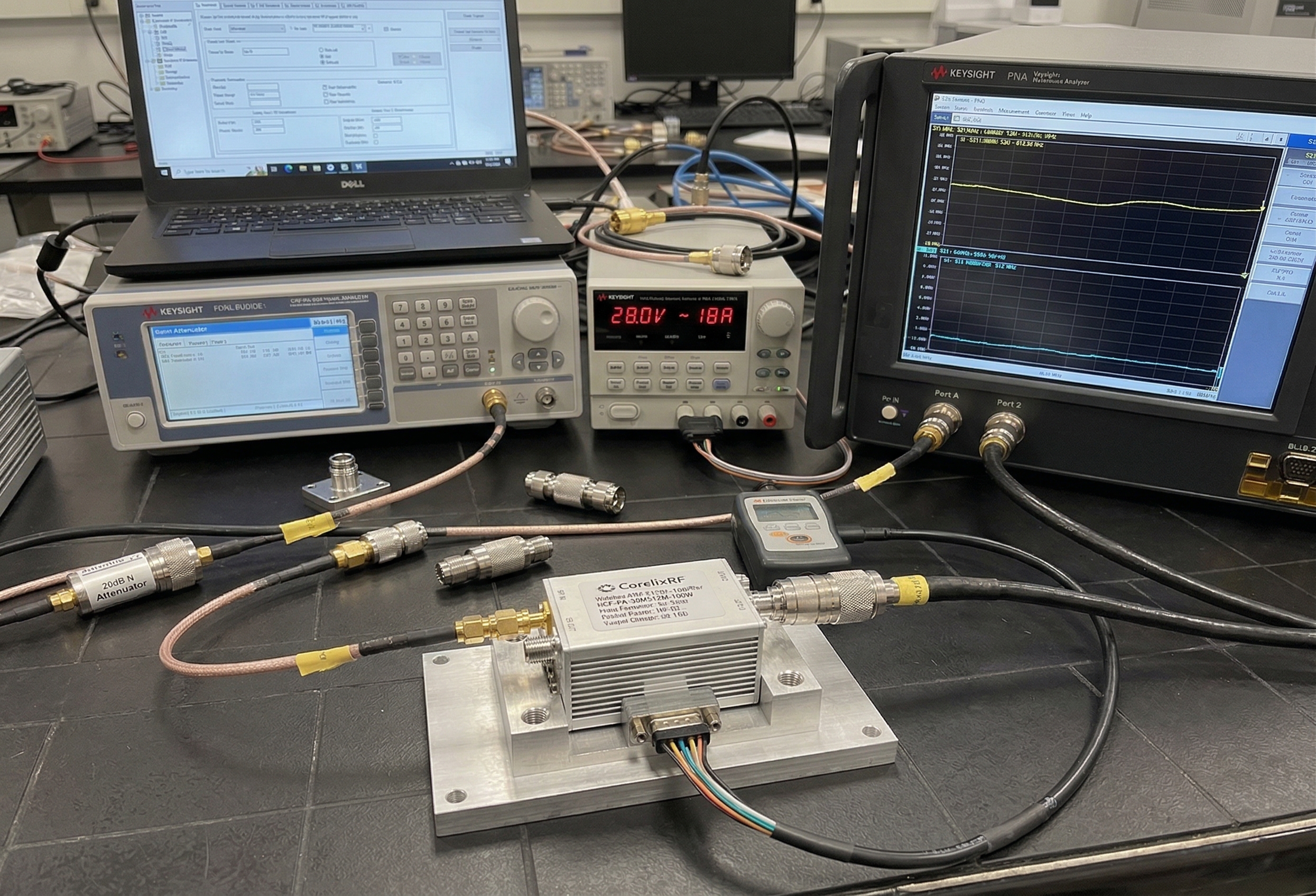
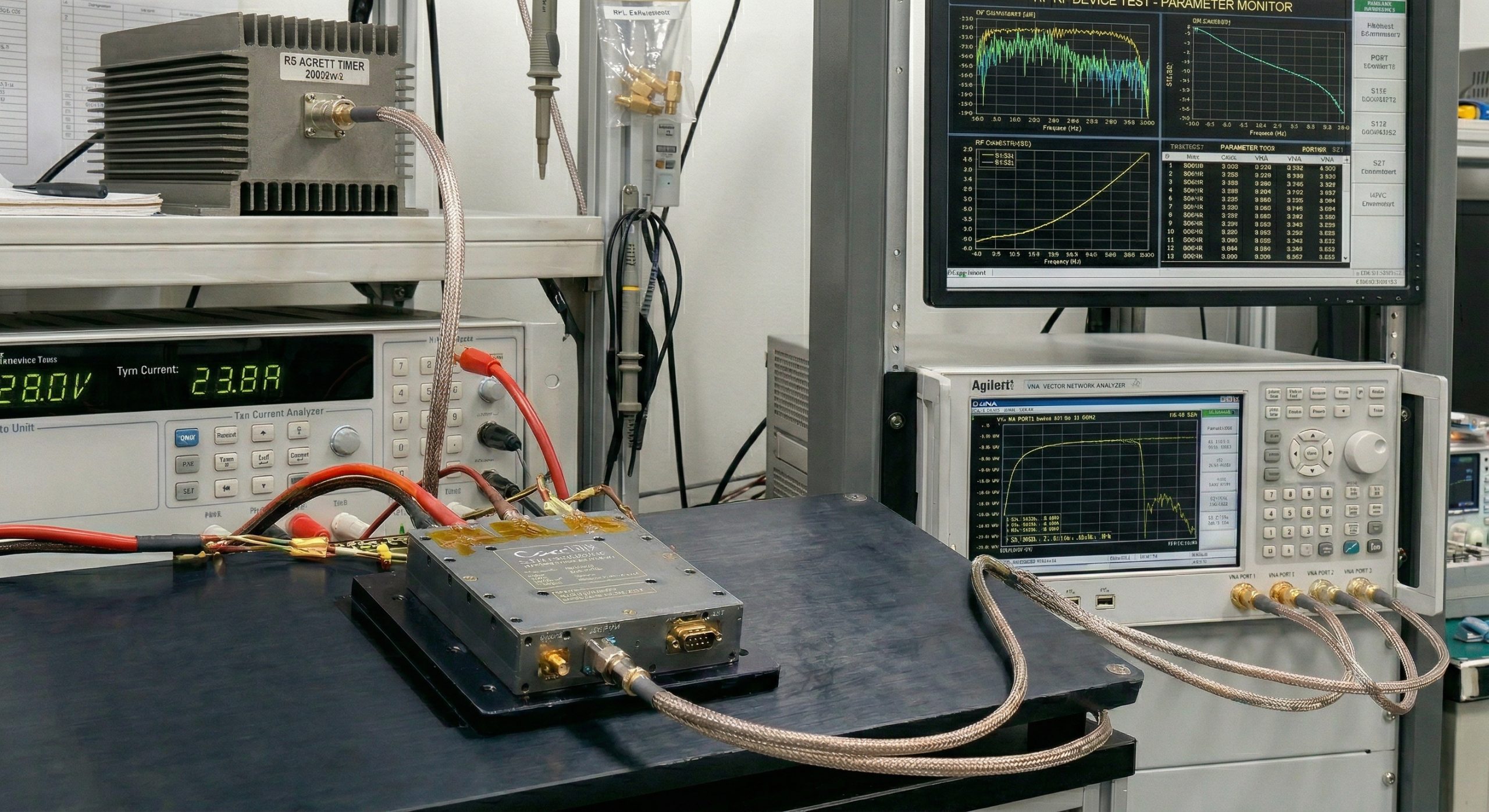
CorelixRF RF test bench verification

RF Engineering & Bench Verification — CorelixRF

01 // DIRECT

Factory-Direct Technical Communication

You communicate directly with the team involved in product review, validation, and production — reducing delays between requirement discussion and quotation.

02 // ARCHITECTURE

28 VDC Platform for Practical Integration

This series is based on a 28 VDC architecture commonly used in industrial and mobile platforms, helping simplify system-side power planning without conversion stages.

03 // VALIDATION

Unit-Level RF Validation Support

Model-based RF verification data and sample documentation formats can be provided to reduce procurement uncertainty and support internal technical review.

04 // CUSTOM

Custom Band & Integration Review

Where a full wideband amplifier is not the best fit, CorelixRF can review sub-band optimization, connector adjustments, and project-specific integration requirements before commitment.

Integration Risk Reduction

Common Procurement Risks in Wideband VHF/UHF Amplifier Projects

Many amplifier procurement problems appear after delivery, not during quotation. The real risks usually come from unclear operating conditions, incomplete documentation, and insufficient integration review.

WHAT TYPICALLY GOES WRONG

  • Output power is quoted without clearly defining CW or pulse operation
  • Current consumption is not disclosed clearly at full output load
  • Thermal requirements are not explained before system integration begins
  • Mechanical drawings are unavailable until after order confirmation
  • "Wideband" performance is claimed without usable validation detail
  • The supplier cannot review system-side constraints before quotation

HOW CORELIXRF ADDRESSES THEM

  • CW operating reference is defined for sustained-use review and planning
  • Maximum current figures are provided to support PSU sizing
  • Air-cooled structure with clear thermal guidance for chassis integration
  • Mechanical drawing support can be requested during technical review
  • Validation information is available based on model scope and project stage
  • Factory-direct engineering communication reduces integration mismatch before order

Model Selection

30–512 MHz Standard Model Selection Guide

Compare standard output classes before requesting engineering review or datasheet access. Final selection should be confirmed against operation mode, cooling method, and supply conditions.

Standard Platform Reference

Choose a standard power class first, then confirm integration details with CorelixRF.

The table below keeps the buying path simple: request a quotation for engineering confirmation, or open the datasheet access popup before entering the datasheet library. This keeps technical documents connected to real project demand instead of uncontrolled downloads.

Request Engineering Review

Data Sheet opens a short access form first, then redirects to /datasheet-library/ after successful CF7 submission.

Swipe left to compare all model parameters on mobile.

Model Frequency Range Output Power Gain (Typ) Max Current Supply Dimensions Connector Typical Use Action
CRF-PA-30M512M-30W 30–512 MHz 30W CW 45 dB (44–46) ≤4 A 28 VDC 125×59×21.5 mm SMA-F / N-F Compact lab evaluation and lower-power VHF/UHF integration
Request Quote
CRF-PA-30M512M-50W 30–512 MHz 50W CW 47 dB (46–48) ≤9 A 28 VDC 125×59×21.5 mm SMA-F / N-F Entry wideband deployment with moderate current budget
Request Quote
CRF-PA-30M512M-100W 30–512 MHz 100W CW 50 dB (49–51) ≤18 A 28 VDC 200×158×25 mm SMA-F / N-F Balanced standard platform for most integration projects
Request Quote
CRF-PA-30M512M-150W 30–512 MHz 150W CW 52 dB (51–53) ≤20 A 28 VDC 200×158×25 mm SMA-F / N-F High-power stage for demanding VHF/UHF system integration
Request Quote
CRF-PA-30M512M-200W 30–512 MHz 200W CW 53 dB (52–54) ≤30 A 28 VDC 200×158×25 mm SMA-F / N-F High-power broadband transmit chain and demanding field deployment
Request Quote
CUSTOM OEM Sub-band / Define Define Watts Optimized TBD 28 VDC Custom Config Connector / interface can be reviewed Sub-band optimization, improved flatness, or project-specific configuration Request Custom Review

Selection Note

Published values are standard model reference figures and should be confirmed against actual RF chain conditions.

Datasheet Access

Standard model Data Sheet buttons open the CF7 access popup first, then redirect to the datasheet library after submission. Custom OEM uses the original RFQ popup.

Engineering Review

For custom bands, cooling constraints, or special integration, request a factory engineering review before selection.

Final selection should be confirmed against operation mode, supply budget, thermal conditions, and project-specific frequency requirements.

Customization

Need a Custom Band Instead of Full 30–512 MHz Coverage?

Not every project benefits from the widest possible frequency range. In many applications, a narrower custom band may provide a better balance of gain flatness, efficiency, thermal behavior, or integration suitability.

Sub-Band Optimization

If your real operating band is narrower than 30–512 MHz, we can review whether a defined sub-band is more appropriate for your application.

Power Class Adjustment

Where standard 30W / 50W / 100W / 150W / 200W models do not match, custom output targets can be discussed during engineering intake.

Interface & Connector Review

RF connectors, control interface details, and project-specific mechanical requirements can be reviewed during the technical intake stage.

OEM Project Support

For customers building their own RF subsystem, CorelixRF can support early-stage review for standard-based customization or project-specific adaptation.

OEM RF amplifier system integration in chassis

OEM Integration Reference — CorelixRF

Engineering feasibility feedback is available before any commitment. Send your target band, output requirement, and integration conditions for a direct technical assessment.

28 VDC Integration Reference

The native 28 VDC platform simplifies integration into industrial and vehicle-side power systems where additional conversion stages are not preferred.

🔧

Air Cooling Design

All models in this series use air cooling. For sustained high-power operation, adequate airflow over the module housing should be confirmed during system integration planning.

📊

Current & Power Planning

Different output classes have very different current requirements. PSU headroom and cable planning should be confirmed during model selection review.

📐

Drawing & Layout Review

Mechanical drawings and interface references can be requested during technical evaluation to support chassis design and layout planning before commitment.

System Integration

Mechanical and Thermal Integration Reference

In VHF/UHF amplifier projects, thermal management and mounting method are important considerations alongside RF output. All models use air cooling — adequate airflow must be ensured in the installation environment.

For continuous-duty or higher-power use, customers should share their enclosure airflow conditions and mounting details during engineering review.

RF amplifier air cooling integration reference

Air Cooling Integration — CorelixRF

Use Cases

Typical Application Scenarios

This amplifier series is used where broadband VHF/UHF coverage is needed without adding unnecessary switching complexity across multiple narrowband stages.

01 // TESTING

VHF/UHF Communication System Testing

For broadband system validation, bench testing, and RF chain evaluation where repeatable output and documented reference matter. Stable gain consistency across 30–512 MHz.

Lab validation — frequency-agile bench setups

02 // OEM

OEM RF Subsystem Integration

A practical wideband power stage for projects using 28 VDC architecture and air cooling in industrial and mobile platforms.

Vehicle-mounted — industrial — embedded RF

03 // LABORATORY

Laboratory RF Evaluation & Development

For engineering teams comparing antennas, subsystems, and front-end performance in controlled test environments where repeatable per-unit data improves documentation quality.

EMC pre-compliance — antenna evaluation

04 // TRANSMIT CHAIN

Custom Broadband Transmit Chains

Serves as the high-power stage in broadband transmit-side development where a single wideband architecture reduces switching complexity. Low harmonic output.

Broadband transmit chain — RF power stages
RF lab bench evaluation setup with test instruments

Lab / Test Bench Evaluation Environment

OEM RF amplifier system integration in industrial enclosure

OEM Integration / System Enclosure Environment

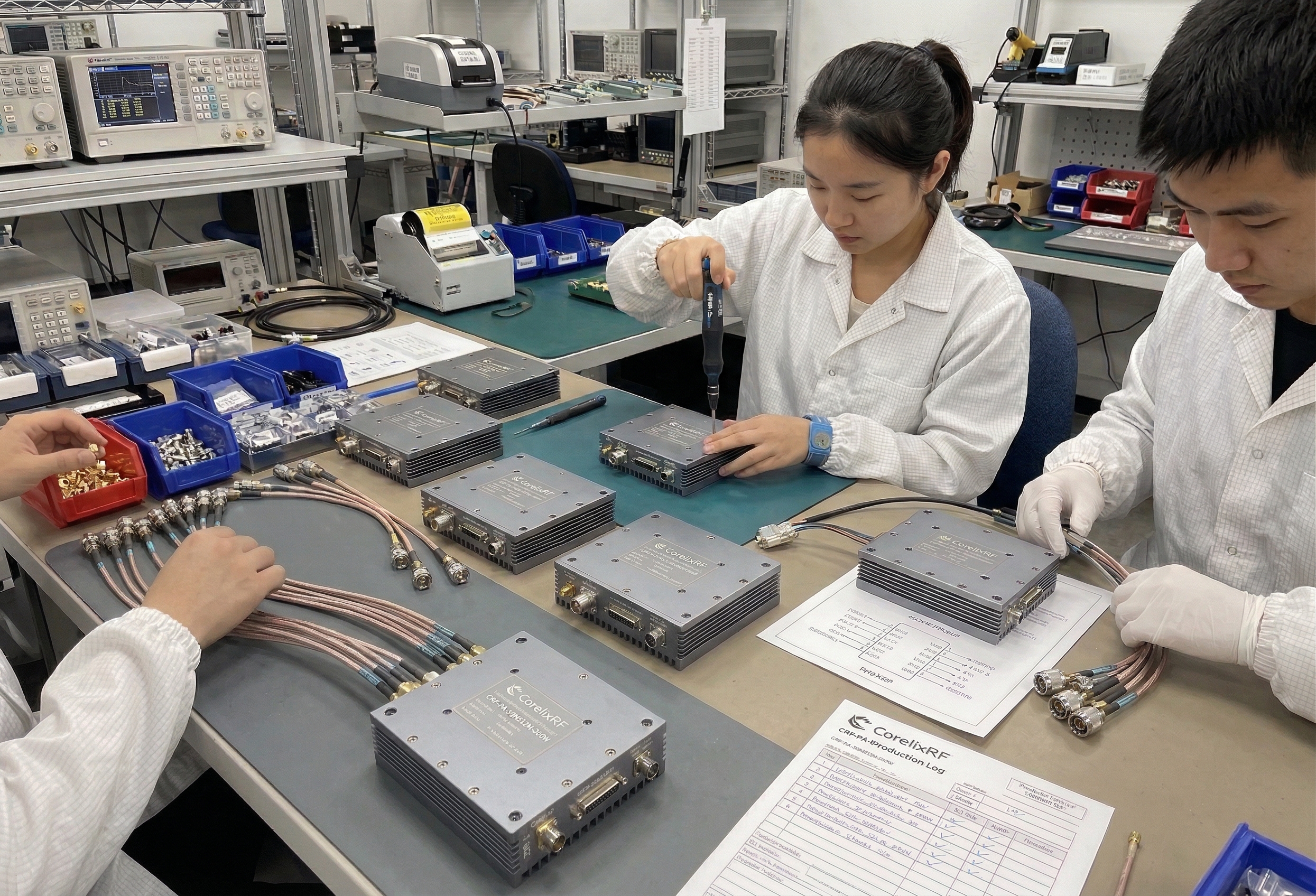
Manufacturing Evidence

Manufacturing and Validation Evidence

For engineering-led procurement, buyers need more than a generic product description. They need confidence that the supplier can validate, document, and deliver consistently.

Data Support

Documentation and Technical Support Available on Request

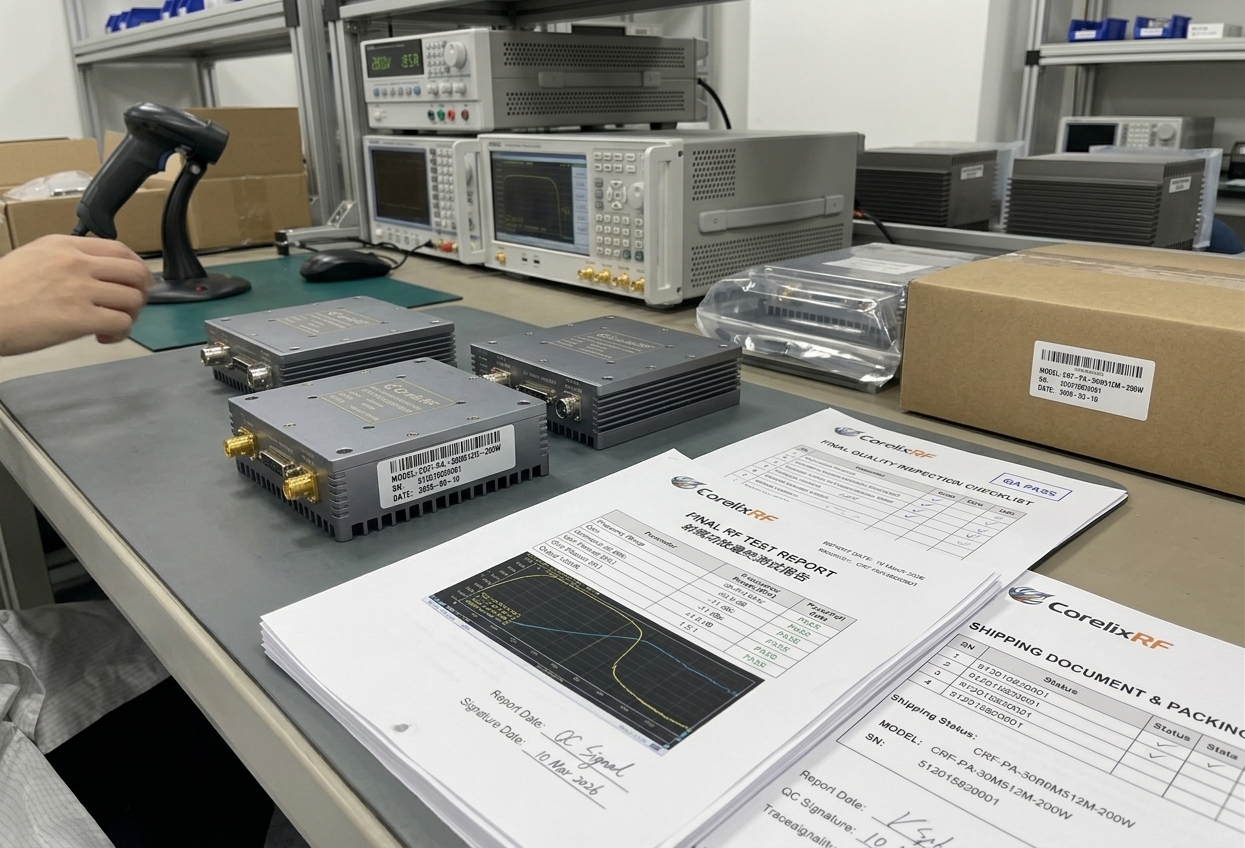
Technical review often starts with documentation. CorelixRF can provide model-based document packages according to project stage and requirement scope.

Need more than a standard datasheet? Include your frequency target, output requirement, operation mode (CW / pulse), and evaluation purpose in the enquiry form for a more relevant document package.
RF amplifier test report and documentation package

Technical Documentation Package — CorelixRF

Documentation packages include model-specific datasheets, unit-level test report formats, mechanical reference drawings, and validation scope information — available on request.

FAQ

30–512 MHz RF Power Amplifier FAQ

Technical Questions

CW power refers to continuous output under sustained operating conditions, while pulse power refers to short-duration output under defined duty-cycle conditions. For procurement and integration review, always confirm whether quoted output is CW or pulse — the same watt figure means very different things depending on operation mode.

Yes. If your real operating range is narrower than the full 30–512 MHz span, CorelixRF can review whether a defined sub-band design is more suitable for gain flatness, efficiency, or thermal performance requirements.

The standard platform is based on 28 VDC architecture, commonly used in industrial, vehicle-mounted, and RF subsystem environments. This avoids the need for additional conversion stages in most target applications.

That depends on output level, duty cycle, thermal interface, and installation condition. CW-rated models are defined for sustained operation under proper thermal interface. Share your cooling setup and duty cycle during engineering review for a direct technical assessment.

Hardware-level sensors monitor reflected power. If VSWR exceeds safe levels, drive power is automatically reduced to prevent device damage. Specific protection behavior can be reviewed during engineering intake.

Procurement Questions

Yes. Unit-level RF validation support and sample report format information can be provided according to model scope and project requirements. Request this during the RFQ stage so scope and format can be confirmed early.

Yes. A sample report format can be shared during the RFQ stage so your team can review the data structure and acceptance logic before committing to procurement.

Please provide your target frequency range, required output power, CW or pulse operation, available supply voltage, cooling condition, quantity, and expected delivery timeline. This allows us to give a relevant technical response.

Yes. Mechanical and layout reference materials can be reviewed during the technical discussion stage to support chassis design and integration planning before any order commitment.

Yes. Sample evaluation can be discussed during engineering review based on model availability, validation scope, and project stage. Please indicate your sample requirement in the intake form.

Yes. CorelixRF supports standard-based customization and project-specific technical review for suitable applications. Feasibility feedback is available before any commitment or quotation.

Engineering Intake

Start Your 30–512 MHzEngineering Review

Send your target frequency range, output requirement, operation mode, supply condition, and cooling method. CorelixRF will review whether a standard platform or a custom frequency solution is the better fit.

  • Standard model recommendation available
  • Custom band review supported
  • Datasheet and drawing support available on request
  • Sample evaluation can be discussed
  • Engineering response within 24–48 hours
To speed up evaluation, please share Target band · Required output power (CW / pulse) · Available supply voltage · Cooling method · Quantity · Delivery expectation · Any integration constraints

CTA Inquiry Path

Send Your Requirement Through the Engineering Popup

The final inquiry area now uses CTA buttons instead of an embedded form. Customers can open your existing CorelixRF RFQ popup for engineering review, or request datasheet access through the short CF7 datasheet popup.

01 // RF REQUIREMENT

Frequency & Power Target

Share full 30–512 MHz coverage or your required sub-band, plus CW / pulse output power target.

02 // INTEGRATION

Supply, Cooling & Space

Tell us your 28 VDC supply condition, cooling method, mounting space, and connector preference.

03 // PROCUREMENT

Quantity & Timeline

Sample evaluation, batch demand, target delivery window, and required documentation can be reviewed together.

04 // FACTORY RESPONSE

Standard or Custom Path

CorelixRF will recommend a standard model or review a custom OEM configuration based on your project constraints.

Request Engineering Review opens your original footer RFQ popup. Data Sheet opens the CF7 datasheet access popup first, then redirects to /datasheet-library/ after successful submission.