CorelixRF — Header Component (Enhanced + Fixed)
6–18 GHz RF Power Amplifiers | 10W–1000W GaN Broadband Amplifiers | CorelixRF
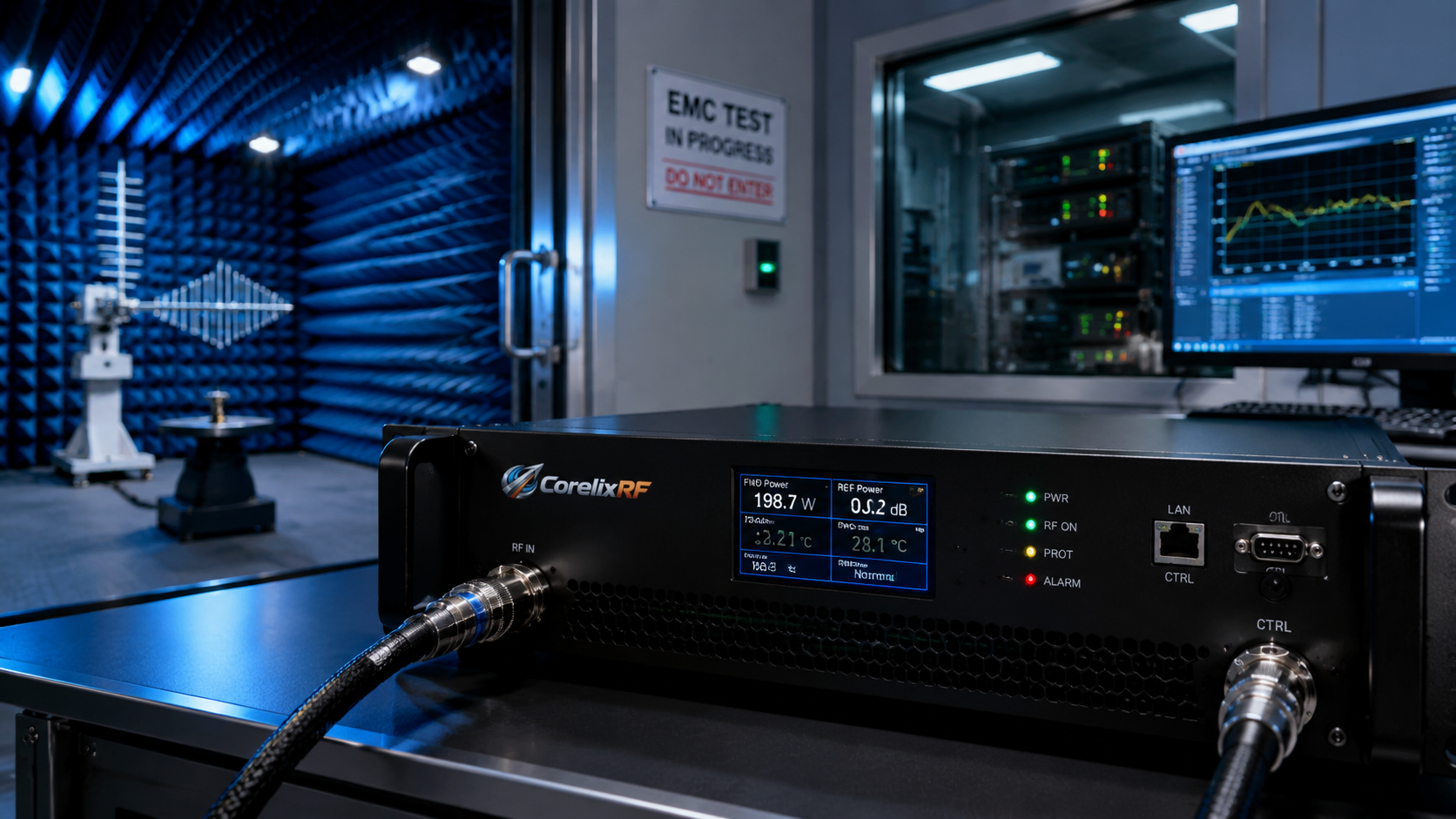
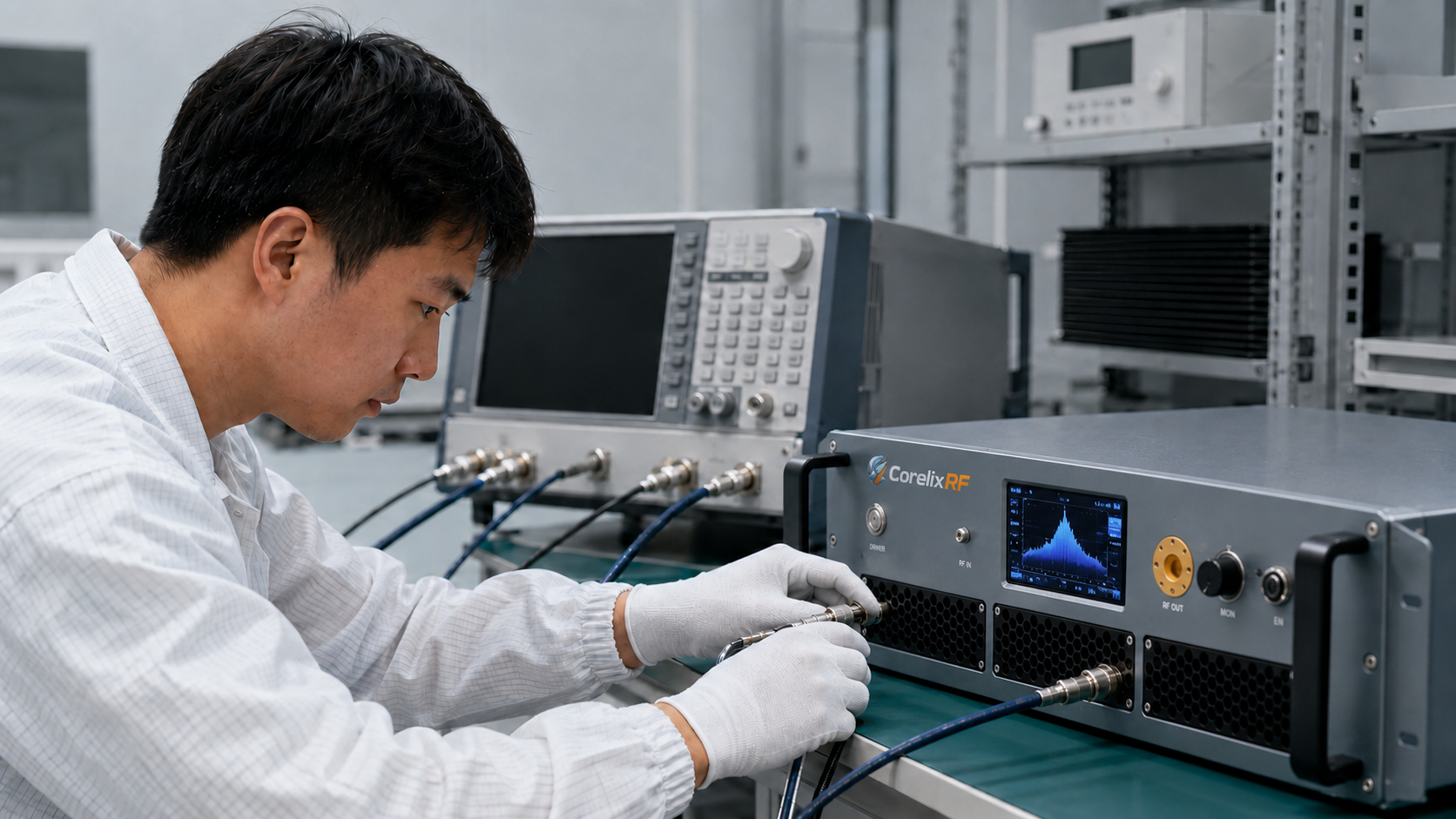
CorelixRF RF amplifier engineering lab
CorelixRF · RF Power Amplifiers · Factory-Direct

6–18 GHz Broadband RF Power Amplifiers

10W–1000W Datasheet-Supported GaN Amplifier Series

Factory-built 6–18 GHz GaN RF amplifier series covering datasheet-supported power classes from 10W to 1000W, with SMA, N-type or WRD650 output options, RS485 / LAN control, air-cooled rack or compact chassis formats, and project-based customization support.

6–18 GHz Full-Band Coverage 10W–1000W Power Classes GaN Solid-State Design RS485 / LAN Control Factory Test Data Available Custom Integration Review
View Model Range
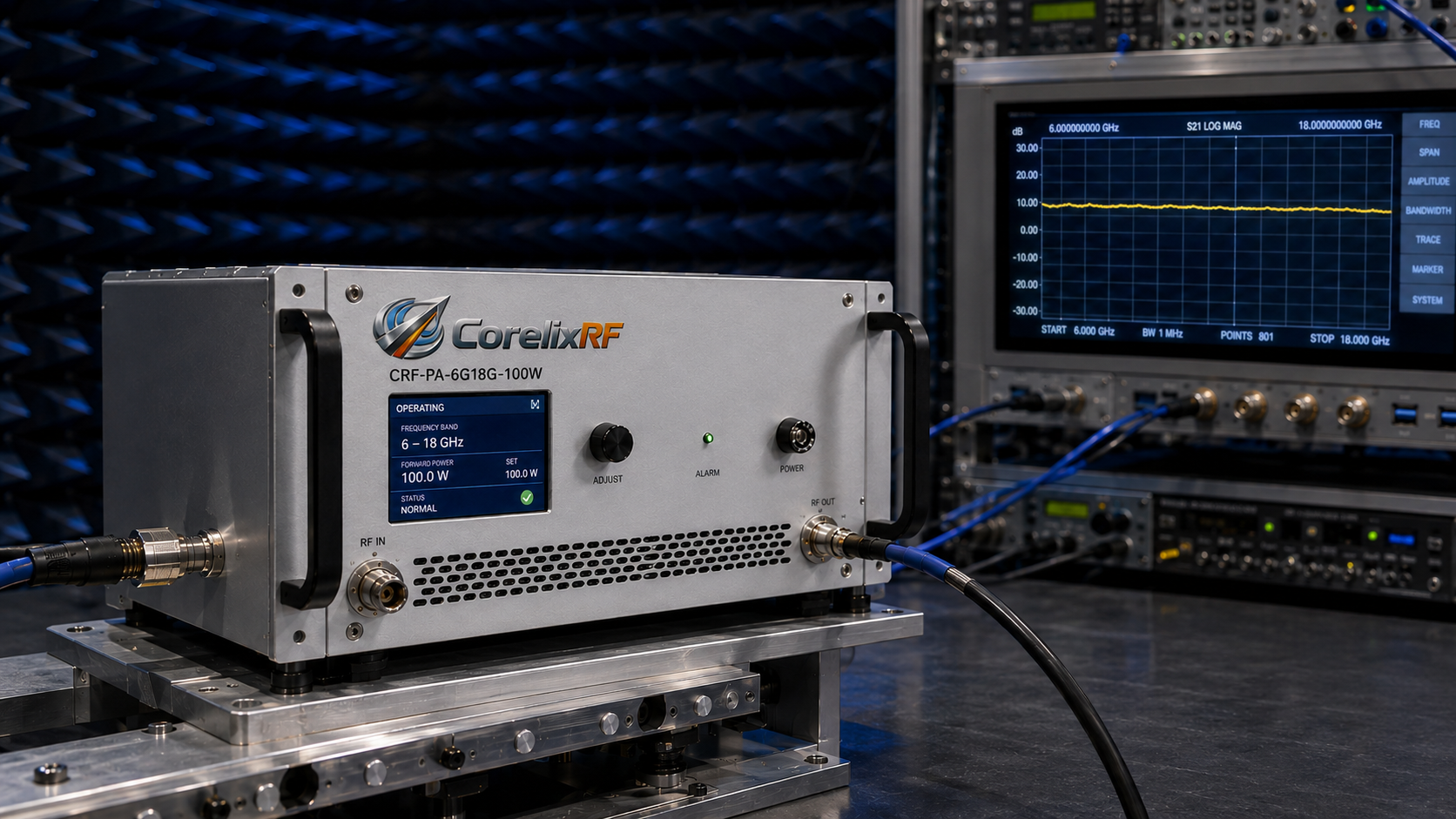
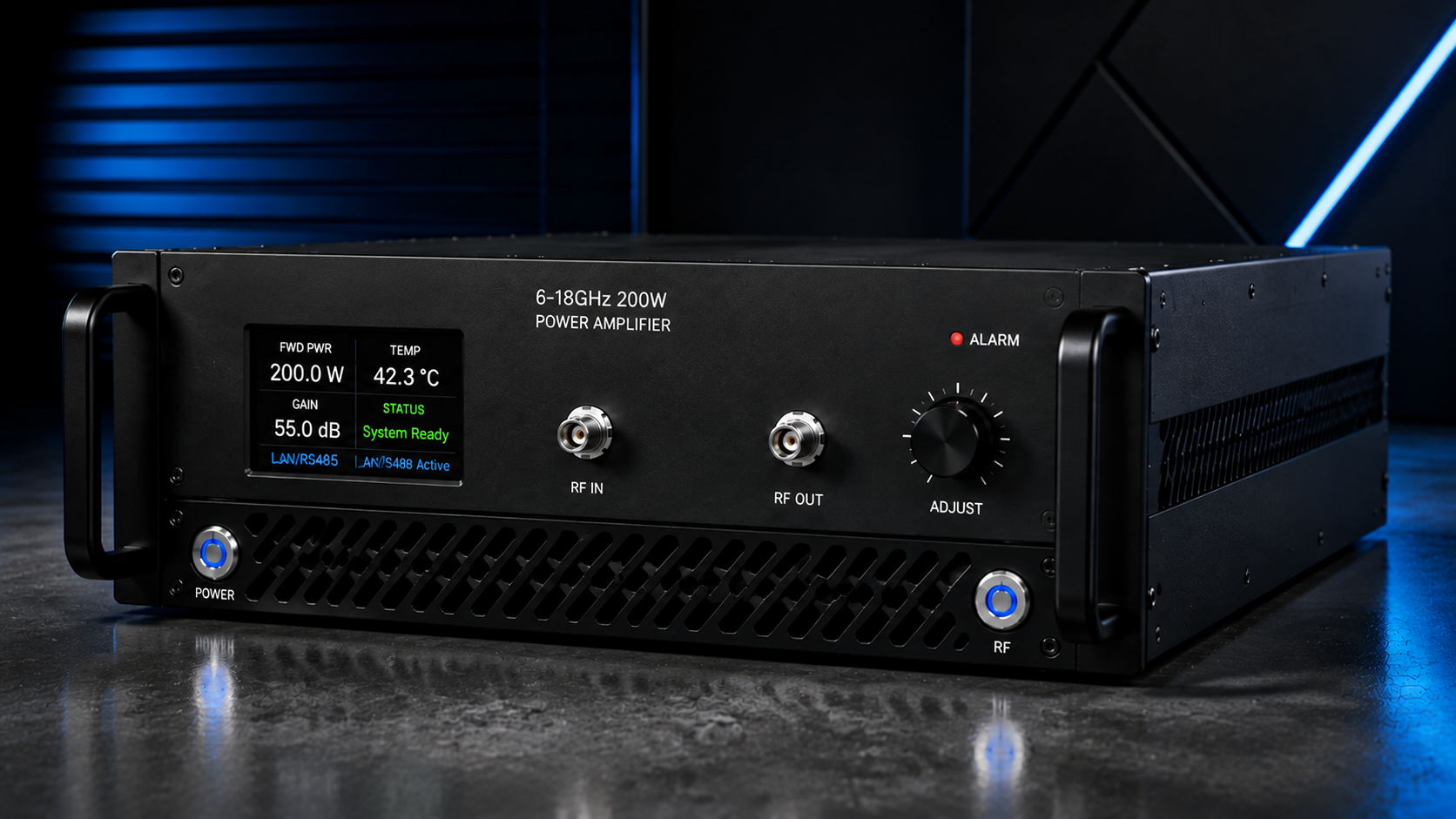
RF Power Amplifier Unit — CRF-PA-6000M18000M Series
6–18
GHz Coverage
1000W
Max Output
±4–6 dB
Gain Flatness
12 GHz
Instantaneous Bandwidth
6–18 GHz Full Coverage
15
Datasheet-Supported
Power Classes
GaN
Semiconductor Platform
High Efficiency RF Design
RS485/LAN
Remote Control Options
System Integration Ready
10-Step
Factory Test Process
Before Every Shipment
// Selection Guide

Before You Select a 6–18 GHz RF Power Amplifier

Output power is only one part of the decision. Connector type, gain flatness, cooling, control interface and measured data all affect whether the amplifier can be integrated into a real RF system.

Use this guide before RFQ to reduce mismatch risk between the datasheet line item and your actual test bench, rack system or RF front-end integration conditions.
Selection Risk
What to Confirm Before RFQ
01 — Full-Band Power
Rated power may not represent full-band behavior.
A single rated output value does not show how the amplifier behaves at both edges of the 6–18 GHz band.
Confirm
Ask for output power and gain behavior across 6–18 GHz.
Request datasheet curves or measured data where available before final model confirmation.
02 — Gain Flatness
Gain variation affects calibration and link budget.
Broadband systems need predictable gain behavior across 12 GHz of bandwidth, not only at the center frequency.
Confirm
Confirm gain flatness by power class.
The series includes ±4 dB, ±5 dB and ±6 dB flatness classes depending on model and power level.
03 — RF Interface
Connector choice changes integration design.
SMA-F, N-F and WRD650 configurations are used across different power classes.
Confirm
Check input/output connector by model.
Confirm cable loss, transition design, rack layout and load condition early in the review.
04 — Cooling & Chassis
High-power models need thermal and mechanical review.
200W and above configurations may require rack-level airflow, chassis space and installation review.
Confirm
Confirm chassis, cooling and airflow before quotation.
High-power configurations should be reviewed against duty cycle, ambient temperature and installation method.
05 — Control Method
Remote operation may differ by power class.
Some models use RS485, while many rack configurations support RS485 / LAN control.
Confirm
Check RS485, LAN or optional control requirements.
Review command, monitoring and automation requirements before integration.
06 — Supplier Risk
Datasheet values alone are not enough for projects.
A reseller can list a model, but cannot always support production test data, mechanical review or customization.
Confirm
Request measured data and factory engineering review.
Work directly with the manufacturer when connector, cooling, monitoring or documentation matters.
CorelixRF factory production — RF amplifier manufacturing
10W–1000W
Power Classes
Compact–Rack
Chassis Range
SMA / N / WRD650
Connector Paths
RS485 / LAN
Control Options
// Platform Coverage

Platform Coverage and Custom Engineering Support

CorelixRF provides the CRF-PA-6000M18000M series as a datasheet-supported 6–18 GHz amplifier family, covering compact low-power units, rack-mount mid-power systems and project-configured high-power platforms. Custom review is available when connector, chassis, monitoring, power supply or control requirements differ from the standard datasheet.

Platform coverage: datasheet-supported 10W–1000W power classes across the 6–18 GHz band.
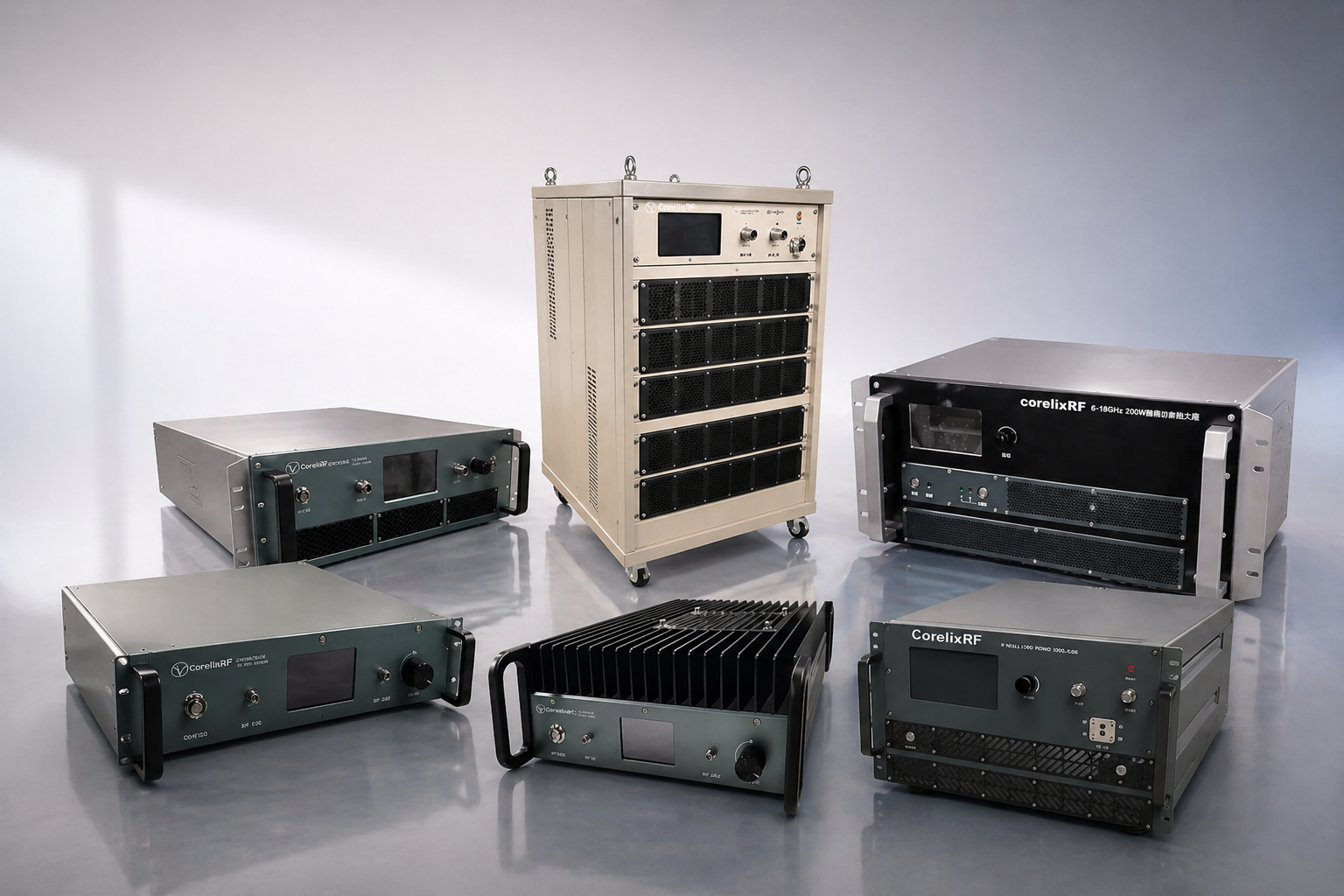
Integration formats: mini chassis, compact enclosure, 19-inch rack and project-configured high-power chassis.
Custom engineering: connector arrangement, cooling layout, power supply, monitoring and control interface can be reviewed by project.
Documentation support: datasheet specifications, connector references, mechanical outlines and factory test data are available where applicable.
Review Key Specifications
// Key Specifications

Key Specifications for the CRF-PA-6000M18000M Series

Use this summary to quickly confirm whether the 6–18 GHz series matches your frequency band, output power class, connector, control and integration requirements before reviewing the full model table.

Important: final output power, gain flatness, RF connector, supply voltage, cooling method and chassis format vary by power class. High-power configurations should be confirmed through engineering review before quotation.
Frequency Range
6–18 GHz
Full-band 6,000–18,000 MHz broadband coverage.
Output Power Classes
10W–1000W
Datasheet-supported classes include 10W, 16W, 25W, 30W, 40W, 50W, 80W, 120W, 160W, 200W, 250W, 300W, 400W, 500W and 1000W.
Gain Range
40–60 dB
Gain varies by power class and chassis configuration.
Gain Flatness
±4 / ±5 / ±6 dB
Typical flatness class depends on the selected output power level.
RF Connectors
SMA-F / N-F / WRD650
Connector selection depends on power class and integration structure.
Control Interface
RS485 / LAN
RS485 is common across the series; RS485 / LAN is available for many rack-mount models.
Supply Options
DC 28V / AC 220V / AC 380V
Supply configuration is selected according to power class and system format.
Cooling & Protection
Air Cooling + Built-In Protection
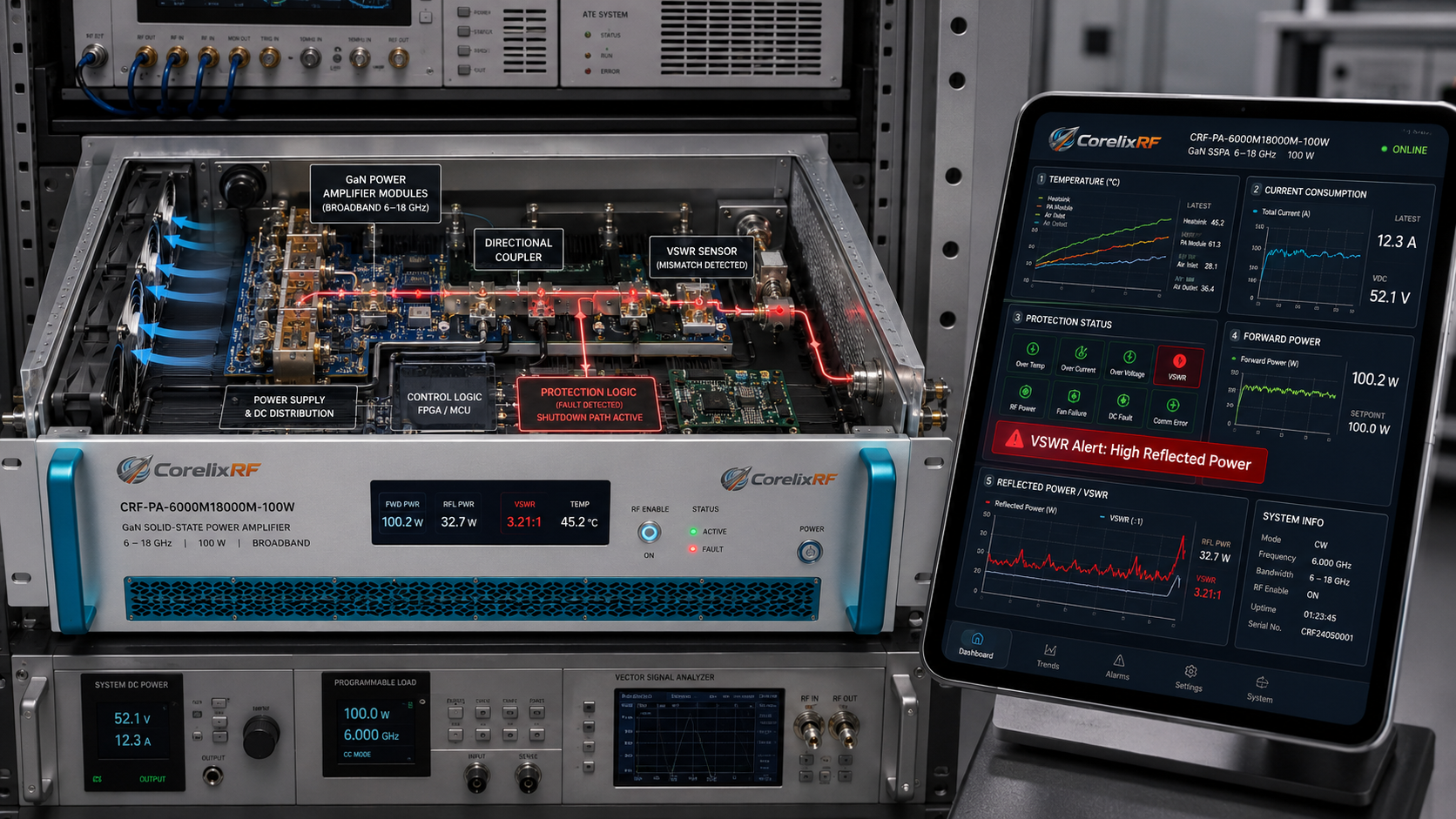
Protection review can include over-voltage, over-temperature, over-drive and VSWR protection.
Customization Is Available for Project Integration
CorelixRF can review custom output power class, connector arrangement, chassis format, power supply method, cooling layout, control interface, monitoring functions and OEM front-end integration based on your operating conditions.
Connector Review Cooling Layout RS485 / LAN / GPIB Forward / Reverse Monitoring Mechanical Integration
Compare Models
// Full Model Range

6–18 GHz RF Amplifier Model Range

Swipe or scroll horizontally to compare frequency, power, gain, connector, control and package options.

Model Number Frequency Output Power Gain Gain Flatness Tech Connector (In/Out) Control Recommended Use Package Data Request
CRF-PA-6000M18000M-10W 6–18 GHz 10W 40 dB ±4 dB GaN SMA-F / SMA-F RS485 Compact RF testing / small-signal amplification Mini Chassis
CRF-PA-6000M18000M-16W 6–18 GHz 16W 42 dB ±4 dB GaN SMA-F / SMA-F RS485 Compact RF testing / small-signal amplification Mini Chassis
CRF-PA-6000M18000M-25W 6–18 GHz 25W 45 dB ±4 dB GaN N-F / N-F RS485 / LAN Lab validation / communication testing 19", 3U
CRF-PA-6000M18000M-30W 6–18 GHz 30W 45 dB ±4 dB GaN N-F / N-F RS485 / LAN Lab validation / communication testing 19", 3U
CRF-PA-6000M18000M-40W 6–18 GHz 40W 46 dB ±4 dB GaN N-F / N-F RS485 / LAN Lab validation / communication testing 19", 3U
CRF-PA-6000M18000M-50W Popular 6–18 GHz 50W 50 dB ±4 dB GaN SMA-F / N-F RS485 Lab validation / communication testing 330×200×60 mm
CRF-PA-6000M18000M-80W 6–18 GHz 80W 50 dB ±5 dB GaN N-F / N-F RS485 / LAN Lab validation / communication testing 19", 3U
CRF-PA-6000M18000M-120W 6–18 GHz 120W 50 dB ±5 dB GaN N-F / N-F RS485 / LAN High-power test / interference platforms 19", 4U
CRF-PA-6000M18000M-160W 6–18 GHz 160W 50 dB ±5 dB GaN N-F / N-F RS485 / LAN High-power test / interference platforms 19", 4U
CRF-PA-6000M18000M-200W High Power 6–18 GHz 200W 53 dB ±5 dB GaN N-F / WRD650 RS485 / LAN High-power test / interference platforms 19", 6U
CRF-PA-6000M18000M-250W 6–18 GHz 250W 54 dB ±5 dB GaN N-F / WRD650 RS485 / LAN High-power test / interference platforms 19", 6U
CRF-PA-6000M18000M-300W 6–18 GHz 300W 54 dB ±6 dB GaN N-F / WRD650 RS485 / LAN High-power test / interference platforms 19", 6U
CRF-PA-6000M18000M-400W Engineering Review 6–18 GHz 400W 56 dB ±6 dB GaN N-F / WRD650 RS485 / LAN Project-driven high-power RF systems TBD / Custom
CRF-PA-6000M18000M-500W High Power Engineering Review 6–18 GHz 500W 57 dB ±6 dB GaN N-F / WRD650 RS485 / LAN Project-driven high-power RF systems TBD / Custom
CRF-PA-6000M18000M-1000W Engineering Review 6–18 GHz 1000W 60 dB ±6 dB GaN N-F / WRD650 RS485 / LAN Project-driven high-power RF systems TBD / Custom
// Listed values are based on available CorelixRF datasheets. Final output power, connector, cooling method, chassis size and control interface should be confirmed during engineering review, especially for 400W–1000W high-power configurations. Each Data Request sends the relevant datasheet or measured RF data to your project email.
// Power Selection Guide

Select by Power Level and System Requirement

Choose the amplifier tier that matches your system's RF output requirement, cooling environment, and integration complexity.

// Tier 01 — Low Power
10W – 16W
Compact Platforms
RF signal amplification in lab environments
Compact RF system integration
SDR front-end low-power validation
Portable or space-constrained deployments
// Tier 02 — Medium Power
25W – 80W
19" Rack Platforms
Communication test systems
Broadband RF validation platforms
General RF laboratory instrumentation
Small-scale link testing and interference platforms
// Tier 03 — High Power
120W – 300W
High-Power Rack Systems
High-power RF test systems
Interference and countermeasure platforms
Aviation control RF applications
Frequency hopping signal amplification
// Tier 04 — Ultra-High Power
400W – 1000W
Project-Driven Systems
Project-driven broadband RF systems
High-power rack-level integration
Custom power, cooling, and control configurations
System-level RF front-end platforms
View Full Model Table
// Factory Testing & Engineering Evidence

Factory Testing Evidence for 6–18 GHz RF Amplifier Review

Instead of separating test photos, test steps and datasheet documents into disconnected blocks, this section shows one review path: what is checked, what evidence can be supplied, and what high-power configurations must confirm before quotation.

RF Performance
Output Power vs. Frequency

Review rated output behavior across the 6–18 GHz operating band where measured curves are available.

Flatness & Match
Gain / VSWR Reference

Confirm gain flatness class, input match and system-level integration risk before model selection.

Integration
Connector & Mechanical Details

Review SMA, N-type or WRD650 interface requirements, chassis format and installation references.

High-Power Review
Cooling / Supply Confirmation

High-power models require review of airflow, load condition, AC supply, chassis space and output interface.

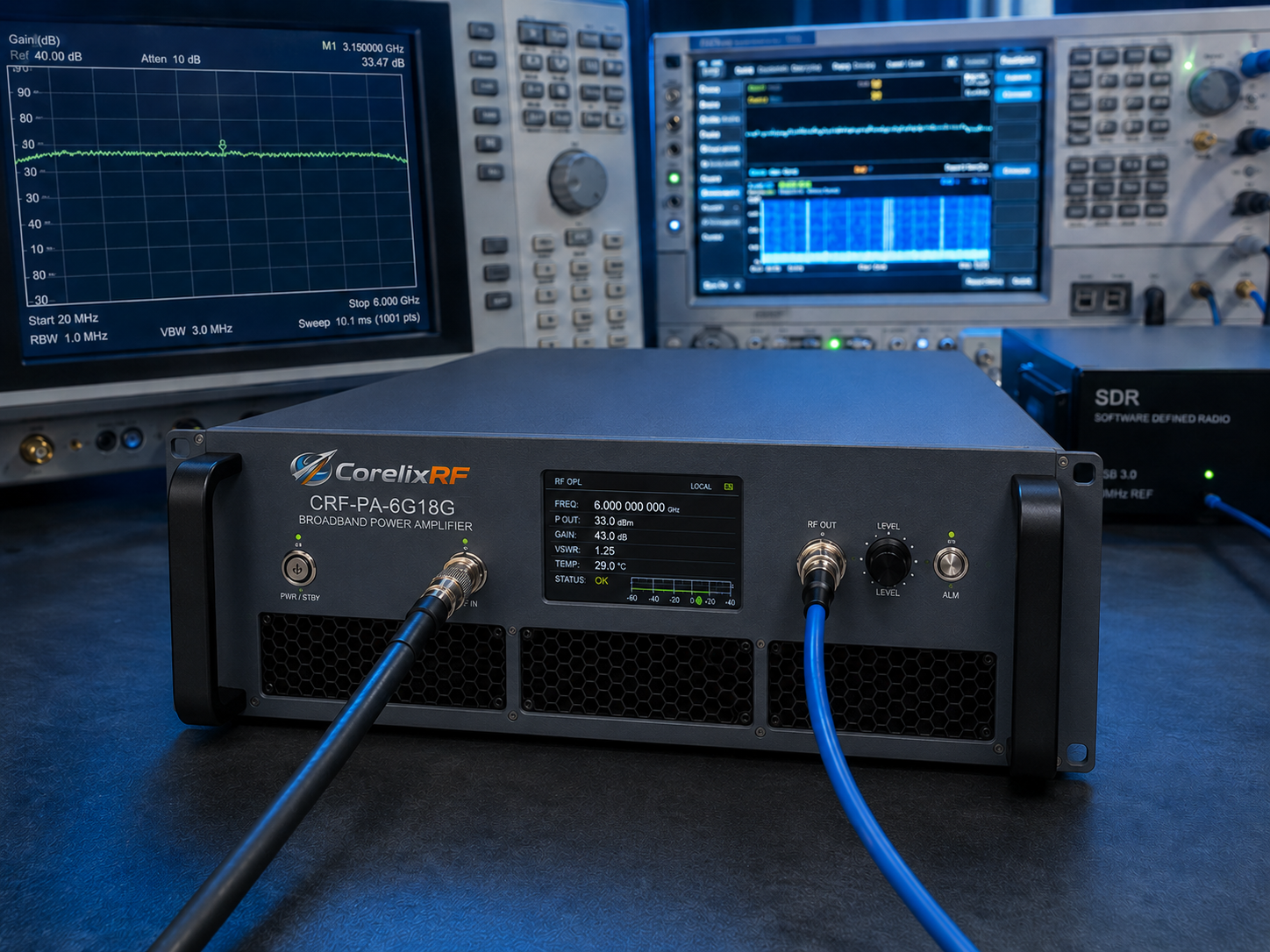
CRF-PA 6-18 GHz high-power rack-mount RF amplifier front panel reference
// Product + Test Evidence
Real amplifier hardware, measured curves and mechanical references for engineering review.
Output power versus frequency curve for 6-18 GHz RF amplifier Output Power Curve
Gain and VSWR measurement reference for 6-18 GHz RF amplifier Gain / VSWR Reference
Mechanical outline and connector installation reference Mechanical Outline
Traceable Factory Test Path
6 Steps
01
RF Assembly & Connector Review
RF path, connector configuration and chassis interface are checked before final test.
02
Gain / Flatness Verification
Full-band gain behavior is reviewed against the selected flatness class.
03
Output Power Across 6–18 GHz
Rated output behavior is checked across the operating range where applicable.
04
VSWR / Protection Review
Input VSWR and protection functions are reviewed according to model configuration.
05
Thermal & Load Condition Review
Cooling, airflow, load condition and high-power operation are reviewed where applicable.
06
Documentation & Packing Check
Datasheet notes, mechanical references, test evidence and packing checks are prepared before shipment.
RF Performance Evidence
Output power curve where available
Gain flatness reference by power class
VSWR and protection review notes
Integration Documents
Connector and control interface details
Mechanical outline and installation notes
Supply voltage and cooling information
Project Confirmation
High-power chassis review
Output interface and load condition check
Engineering confirmation before quotation
Final dimensions, cooling method, output connector and high-power chassis details should be confirmed against the production unit and project requirement. Measured curves and mechanical references are supplied where available for engineering review.
Need measured data before model selection? Share your target power class, connector requirement and application condition so CorelixRF can match the right review package.
// Configuration Options

Configuration and Integration Options

This section does not repeat the core RF specifications. It defines what can be reviewed or customized when the amplifier enters a real rack, test bench or OEM RF front-end system.

// Optional Review Items
GPIB control interface or custom command review
Input power detection and monitoring
Forward / reverse power monitoring
Temperature monitoring output
Mechanical outline and rack integration support
Subsystem-level RF front-end integration review
Connector ReviewCooling LayoutControl InterfaceMonitoringChassis FormatPower Supply
Connector arrangement: SMA-F, N-F or WRD650 path reviewed according to output power and installation layout.
Control interface: RS485, RS485 / LAN or optional GPIB reviewed for automated test or remote operation.
Monitoring options: forward / reverse power, input detection and temperature outputs can be reviewed where applicable.
Chassis format: mini chassis, compact enclosure, 19-inch rack and project-configured high-power structures.
Power supply: DC 28V, AC 220V or AC 380V depends on model and power class.
Cooling layout: air cooling or forced-air cooling reviewed against duty cycle, airflow and chassis space.
// Trusted in RF System Applications

Trusted in RF System Applications

CorelixRF 6–18 GHz amplifier platforms are used in project-driven RF systems where broadband power, control interface, thermal stability, and integration support matter.

RF test system broadband lab
// 01
RF Test Systems
For broadband lab validation, automated RF test benches, and power verification setups requiring full 6–18 GHz coverage.
Communication lab broadband signal amplification
// 02
Communication Labs
For communication link testing, broadband signal amplification, and system-level RF evaluation platforms.
UAV vehicle RF payload front-end integration
// 03
UAV / Vehicle RF Payloads
For compact or rack-level RF front-end integration where size, cooling, and control interface must be matched to platform constraints.
Defense electronics broadband RF countermeasure interference
// 04
Defense Electronics Projects
For interference, aviation control, frequency hopping signal amplification, and broadband RF countermeasure platform development.
// Applications

Applications for 6–18 GHz RF Power Amplifiers

RF test and measurement lab
01 — Test & Measurement
RF Test & Lab Systems
Broadband RF power amplification for laboratory validation, automated test systems, and full-band RF performance verification from 6 to 18 GHz. Gain control and LAN integration support test automation workflows.
Lab Validation · Automated Test
Communication systems broadband RF
02 — Communications
Communication Systems
RF signal amplification for broadband communication link testing, signal chain verification, and system-level RF performance validation. Supports both CW and modulated broadband signal amplification across the 6–18 GHz range.
Link Testing · Signal Chain
Interference countermeasure RF platform
03 — RF Environment Testing
Broadband RF Environment Test Platforms
High-power broadband amplifier configurations for controlled RF environment testing, signal exposure simulation, and broadband power validation. Continuous 6–18 GHz coverage with output power options from 80W to 1000W for demanding test conditions.
RF Environment Test · High-Power RF
Aviation control telemetry RF systems
04 — Aviation Control
Aviation Control & Telemetry
6–18 GHz amplifier platforms for aviation-related RF control, telemetry amplification, and high-frequency signal chain support. Rack-mount configurations with LAN and RS485 control for system-level integration.
Avionics RF · Telemetry
Frequency hopping wideband RF signal
05 — Frequency Hopping
Frequency Hopping Signal Amplification
Amplifier configurations for broadband frequency-hopping signal chains. Continuous 6–18 GHz coverage without band transitions ensures consistent amplification regardless of instantaneous operating frequency within the band.
FHSS · Wideband RF
SDR software defined radio RF front-end integration
06 — SDR Integration
SDR + Amplifier + Antenna Front-End
Front-end platform integration combining SDR signal generation, GaN power amplification, and antenna interface. CorelixRF supports complete RF front-end engineering including mechanical integration and RF chain optimization.
SDR · RF Front-End
Radar sensing RF power amplification
07 — Radar & Sensing
Radar & Sensing Applications
Wideband 6–18 GHz power amplification for radar transmitter chains, active sensing systems, and broadband pulsed or CW signal amplification applications requiring consistent power across the full operating band.
Radar TX · Sensing
Custom RF system project engineering
08 — Custom RF Projects
Custom RF System Projects
Project-driven RF system platforms where standard configurations do not meet mechanical, electrical, or environmental requirements. CorelixRF supports full project customization from design review through production and shipment.
ODM · Custom Projects
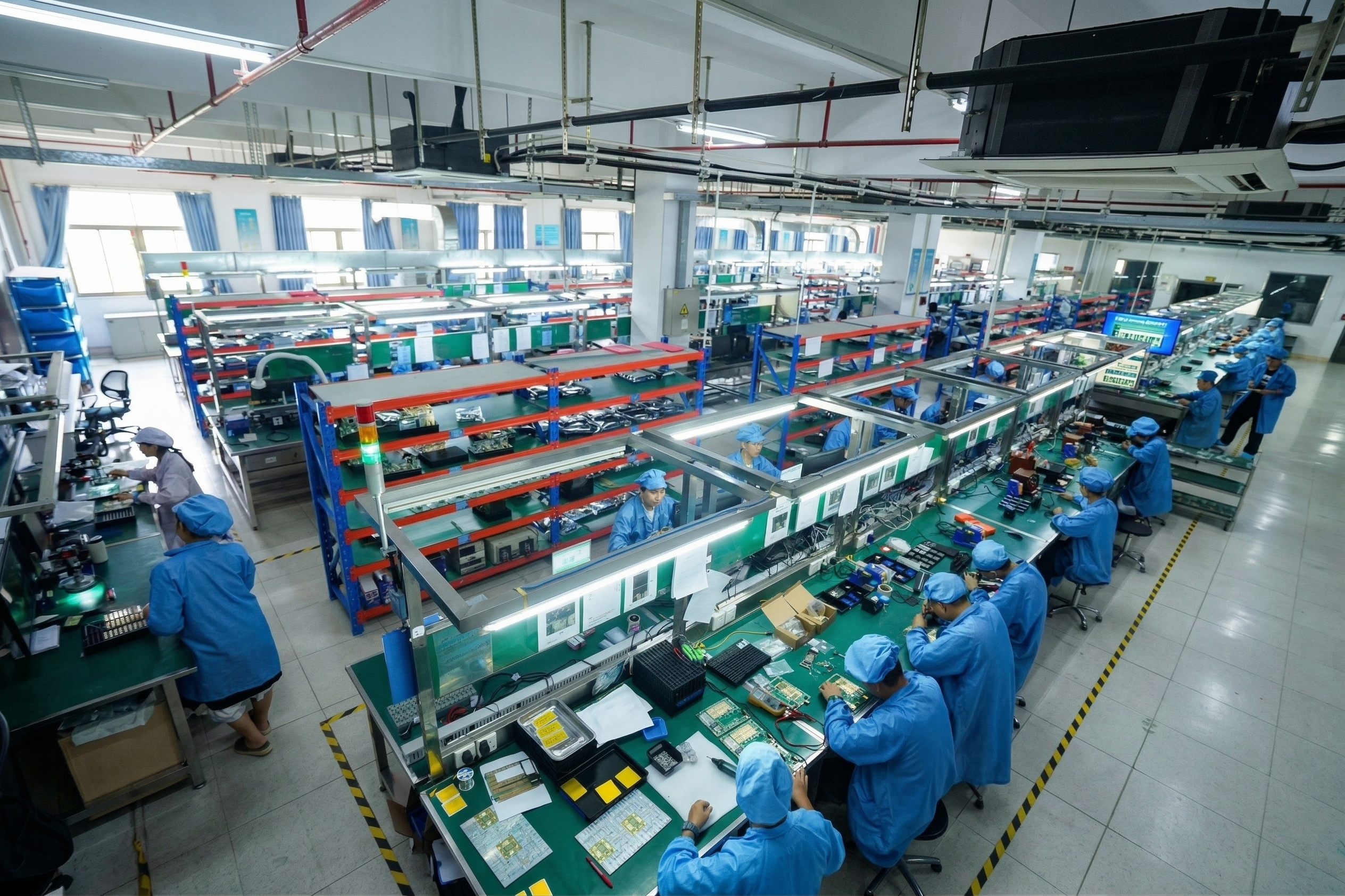
CorelixRF manufacturing facility — RF amplifier production and test lab
// Factory Strength

Built by CorelixRF, an RF Amplifier Source Factory

CorelixRF supports RF amplifier projects from design, prototyping, RF testing, mechanical integration, production, and final shipment. For 6–18 GHz amplifier platforms, our engineering and production teams can support standard model selection, project customization, and system-level integration review.

33,995 m²
Plant Area
64,146 m²
Building Area
330+
Employees
168
R&D Engineers
1,400+
R&D / Test Instruments
8
Laboratories
RF R&D Capability
In-house design and simulation for GaN-based broadband amplifier architectures. Frequency coverage from VHF through Ka-band with dedicated engineering resources per product family.
Production & Assembly
Controlled RF assembly environment with soldering, connector installation, mechanical integration, and EMC shielding capability. Production runs from prototype through volume delivery.
In-House RF Testing
Vector network analyzers, spectrum analyzers, power meters, and signal generators available in-house for full parametric testing. All production units are individually tested before shipment.
Mechanical Integration Support
19" rack panel fabrication, custom chassis design, front panel layout, and connector positioning all handled internally. Integration reference drawings available for system-level planning.
Export Documentation Support
Technical datasheets, mechanical drawings, test reports, compliance documentation, and shipping documentation prepared for international B2B customers.
// Quality & Compliance

Quality Framework for RF Amplifier Production

ISO 9001
Quality Management System
GJB 9001C
Defense Quality Standard
RoHS
Hazardous Substance Compliant
CE / FCC
EMC & Safety Certification
// Factory test data available for project engineering review. Mechanical drawings provided for system integration reference. Final unit dimensions subject to production confirmation.
// Procurement Checklist

What to Confirm Before Buying a 6–18 GHz RF Amplifier

Use this checklist to evaluate any 6–18 GHz amplifier supplier — whether evaluating CorelixRF or any alternative platform.

01
Confirm full-band output power, not only peak or center-frequency power. Request a power vs. frequency plot across the complete 6–18 GHz range.
02
Check gain flatness across the full 6–18 GHz range. ±dB specifications should be confirmed with actual measurement data, not simulation or calculated values.
03
Confirm input and output connector type — SMA, N-Type, or WRD650 waveguide. Connector mismatch creates insertion loss and mechanical compatibility issues during integration.
04
Check whether waveguide output is required for your frequency range. High-power 6–18 GHz applications above 200W typically use WRD650 waveguide output for thermal and power handling reasons.
05
Confirm cooling method and operating temperature range. Forced-air cooling specifications should be confirmed for continuous duty at rated power in your deployment environment.
06
Confirm RS485 / LAN / GPIB control requirements before procurement. Protocol and command set documentation should be available from the supplier before order placement.
07
Ask for output power and gain test data from an actual production unit — not the datasheet specification alone. Factory test curves confirm production consistency.
08
Confirm mechanical dimensions before committing to a system integration design. Rack unit dimensions, connector positions, and depth affect panel layout and cabling.
09
Check whether monitoring and protection functions are required — forward/reverse power readout, over-temperature shutdown, and VSWR protection availability varies by platform and supplier.
10
Verify that the supplier is a manufacturer, not a reseller. Source factories can provide engineering documentation, production test data, and customization support that resellers cannot.
Compare Model Table
// FAQ

Frequently Asked Questions

What output power levels are available for 6–18 GHz RF amplifiers?+
CorelixRF offers 15 standard models from 10W to 1000W within the 6–18 GHz CRF-PA series. Low-power compact modules start at 10W and 16W. Medium-power rack platforms cover 25W through 80W. High-power rack systems cover 120W through 300W. Ultra-high-power project-configured platforms cover 400W, 500W, and 1000W. All models operate across the full 6–18 GHz band without frequency gaps.
Can CorelixRF customize a 6–18 GHz amplifier for a specific project?+
Yes. Customization options include output power level, gain and gain flatness, RF connector type, waveguide output interface, mechanical enclosure, power supply method, 19" rack configuration, cooling design, and control interface (RS485, LAN, GPIB). Forward and reverse power monitoring, input power detection, temperature monitoring, and SDR + amplifier + antenna front-end integration are also available as project-specific options.
What control interfaces are available?+
Standard control interfaces include RS485 (available on all models) and LAN / Ethernet (available on 25W and above). Optional GPIB interface is available on request. Control functions typically include gain adjustment, output power monitoring, protection status readout, and unit enable/disable. Full command set documentation is provided for automated test environment integration.
Do you provide test data before shipment?+
Yes. Every production unit undergoes a 10-step factory test process before shipment. For project orders, test data including output power vs. frequency plots, gain flatness curves, VSWR measurements, and protection function verification can be provided as part of the engineering documentation package. Test data is available for project review upon request — before order placement if required for evaluation.
What connector options are available?+
Low-power models (10W–16W) use SMA-F for both input and output. Medium-power models (25W–80W) use N-F connectors. The 50W model uses SMA-F input with N-F output. High-power models from 200W upward use N-F input with WRD650 waveguide output. Custom connector configurations — including alternative waveguide interfaces — can be specified for project orders.
Can the amplifier be integrated with SDR and antennas?+
Yes. CorelixRF supports SDR + amplifier + antenna RF front-end integration covering RF chain design, power level matching, connector interface, mechanical packaging, and system-level engineering. Contact us with your SDR platform, required frequency range, output power target, and antenna interface details for a front-end integration evaluation and configuration recommendation.
What cooling methods are available?+
Low-power compact models use natural convection air cooling. Medium and high-power rack platforms use forced-air cooling with internal fans. Ultra-high-power configurations (400W–1000W) use enhanced forced-air cooling as standard, with liquid cooling available as a custom option for specific deployment environments or continuous duty applications at elevated ambient temperature.
How do I request a datasheet or pricing?+
Use the "Get Datasheet & Pricing" button on this page. Submit your required output power, frequency range, application, and any connector or control interface preferences. The CorelixRF engineering team will respond with the relevant model datasheet, configuration recommendation, and project quotation within 24–48 hours. No account or registration is required.
// Start Your RF Project

Need a 6–18 GHz Amplifier for Your RF System?

Send your frequency range, required output power, control interface preference, cooling requirement, and application context. CorelixRF will recommend a suitable 6–18 GHz amplifier configuration and provide a project datasheet and quotation within 24–48 hours.

Compare Model Table