
2–6 GHz RF Power
Amplifier Modules
30W–200W Factory-Direct Broadband RF PA Platforms
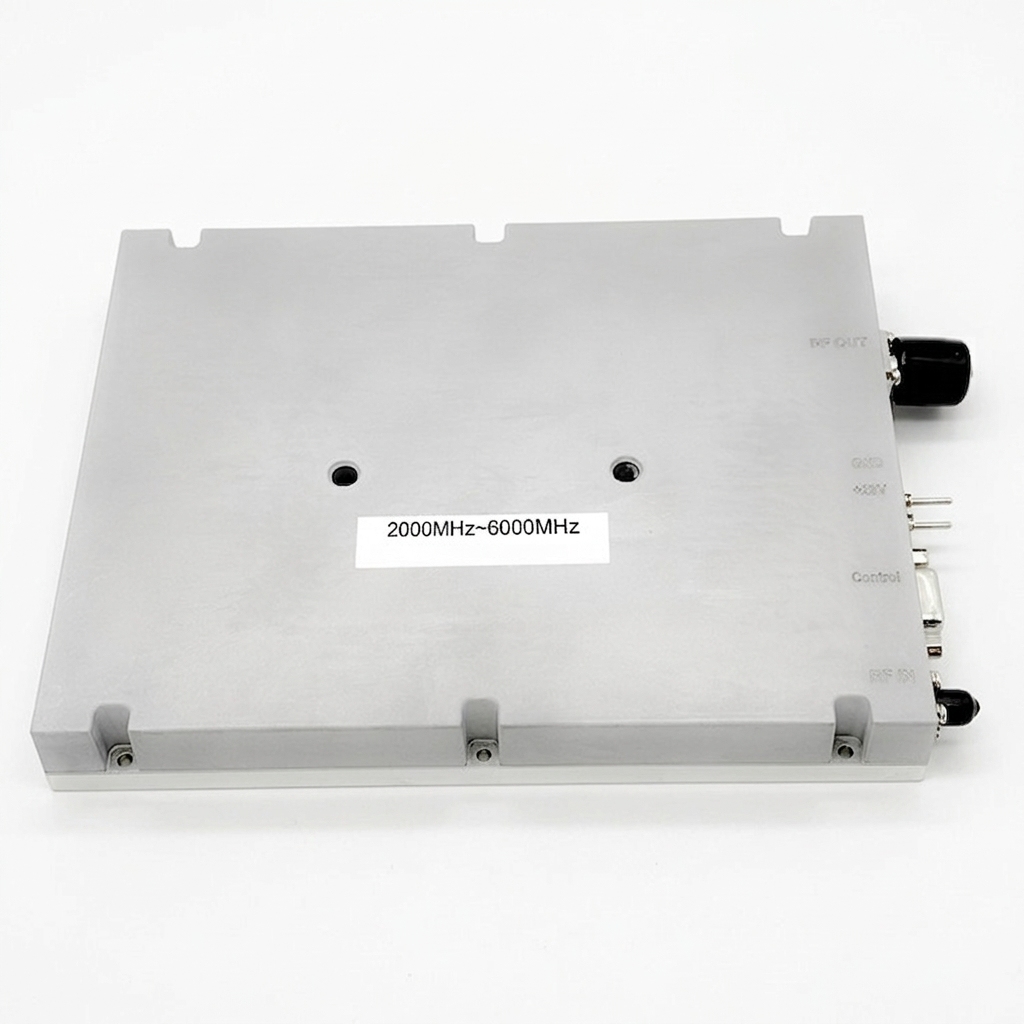
Compare CorelixRF 2–6 GHz RF power amplifier modules with 30, 50, 100, 150 and 200 W options. For a microwave power amplifier requirement, confirm the operating band, output conditions, RF interface and cooling arrangement for the selected model.
- 30W / 50W / 100W / 150W / 200W standard models
- Datasheets, drawings & curve data available
- SMA input / N-female output / DB9 control
- Standard platform + OEM customization support
Model Selection
Compare 2–6 GHz Amplifier Models
Compare the listed models by output power and integration requirements. For a 50W RF amplifier or 100W RF power amplifier requirement, confirm model-specific output, gain, supply and cooling conditions.
Need a different sub-band, connector, control interface, supply range, cooling path, or mechanical envelope?
Detailed 2–6 GHz Model Comparison
All standard models cover 2,000–6,000 MHz. Detailed supply voltage, current consumption, input drive, VSWR, harmonics, spurious, and mechanical drawings are available in the datasheet package.
| Model | Power | Typical Gain | Size (mm) | Best Fit | Data | Action |
|---|---|---|---|---|---|---|
| CRF-PA-2G6G-30W | 30 W | 44–46 dB | 125 × 59 × 21.5 | Compact driver stage / limited-space bench setup | RFQ | |
| CRF-PA-2G6G-50W | 50 W | 46–48 dB | 200 × 158 × 25 | Standard lab testing and SDR output chain | RFQ | |
| CRF-PA-2G6G-100W | 100 W | 49–51 dB | 200 × 158 × 25 | Common starting point for system integration | RFQ | |
| CRF-PA-2G6G-150W | 150 W | 51–53 dB | 200 × 158 × 25 | Higher output broadband test requirement | RFQ | |
| CRF-PA-2G6G-200W | 200 W | 52–54 dB | 200 × 158 × 25 | Highest standard platform output in this series | RFQ |
CRF-PA-2G6G-30W
Compact driver stage / limited-space bench setup.
CRF-PA-2G6G-50W
Standard lab testing and SDR output chain.
CRF-PA-2G6G-100W
Common starting point for system integration.
CRF-PA-2G6G-150W
Higher output broadband test requirement.
CRF-PA-2G6G-200W
Highest standard platform output in this series.
Project-Specific Custom Review
Use this path when the standard 30W–200W platform needs connector, control, supply, cooling, or mechanical changes.
Standard models cover the most common 2–6 GHz power levels. If the required sub-band, interface, connector, cooling, control, or mechanical format is different, CorelixRF can review a project-specific customization path before quotation.
Not sure which 2–6 GHz model fits your system?
Send frequency range, output power, duty cycle, input level, supply voltage, connector preference, and application. CorelixRF will recommend a standard model or customization path.
Application Fit
Common 2–6 GHz RF Amplifier Applications
For an RF microwave amplifier requirement, specify the complete operating band, signal, output target and integration environment. Use the following applications as starting points for model review.
RF Test Bench Amplifier
For broadband RF output validation, component testing, and laboratory measurement setups.
View Application Fit →SDR Output Chain
For SDR source + driver amplifier + RF PA + filter + antenna/load integration.
View Application Fit →Communication Systems
For broadband communication links requiring stable RF output across 2–6 GHz.
View Application Fit →EMC / Immunity Support
For selected RF immunity, pre-compliance, or shielded test environments where project review is required.
View Application Fit →Radar / Pulse Evaluation
For projects requiring pulse-capable amplifier review under defined duty cycle and timing conditions.
View Application Fit →OEM Custom RF Platform
For connector, control interface, cooling, and mechanical integration changes beyond catalog format.
View Application Fit →Technical Snapshot
Microwave Power Amplifier Selection
Broadband 2–6 GHz Coverage
All standard models cover 2,000–6,000 MHz, simplifying model selection for teams working across broad S/C-band-related frequency requirements.
30W to 200W Output Options
The platform spans 30W, 50W, 100W, 150W, and 200W, allowing project teams to choose by output target without switching product families.
Controlled Gain & Flatness
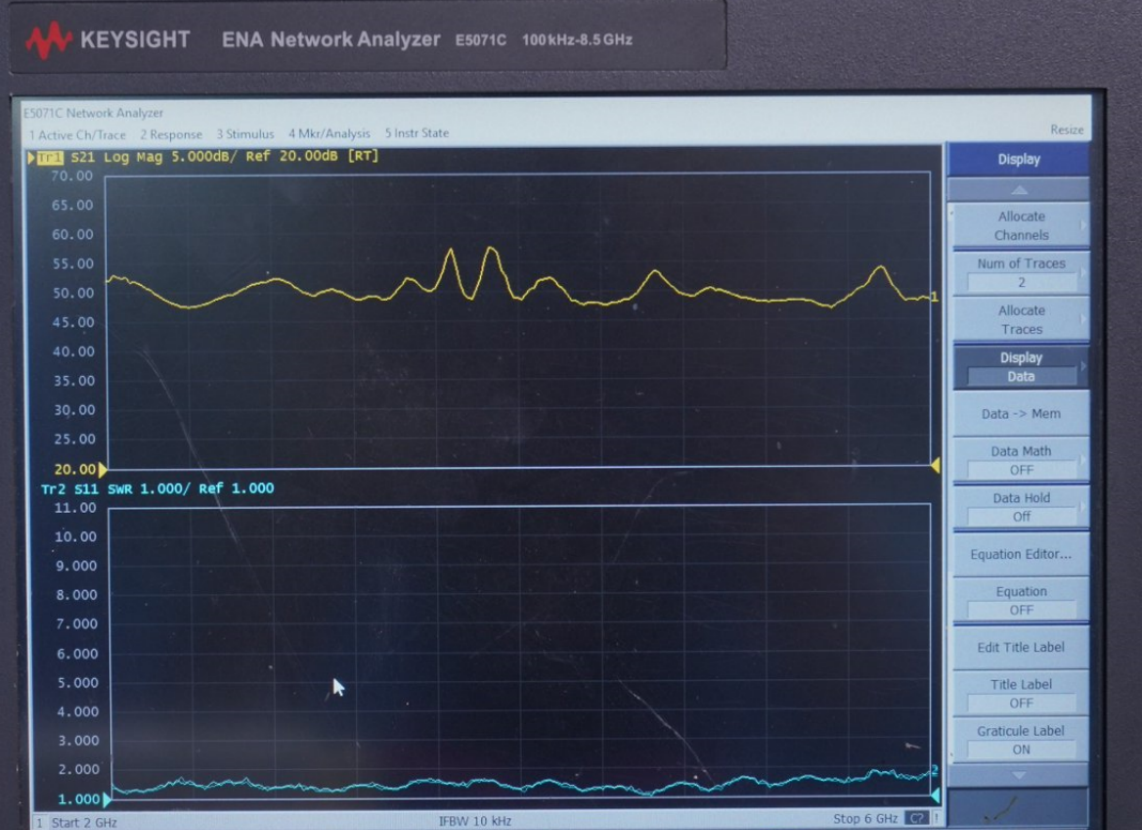
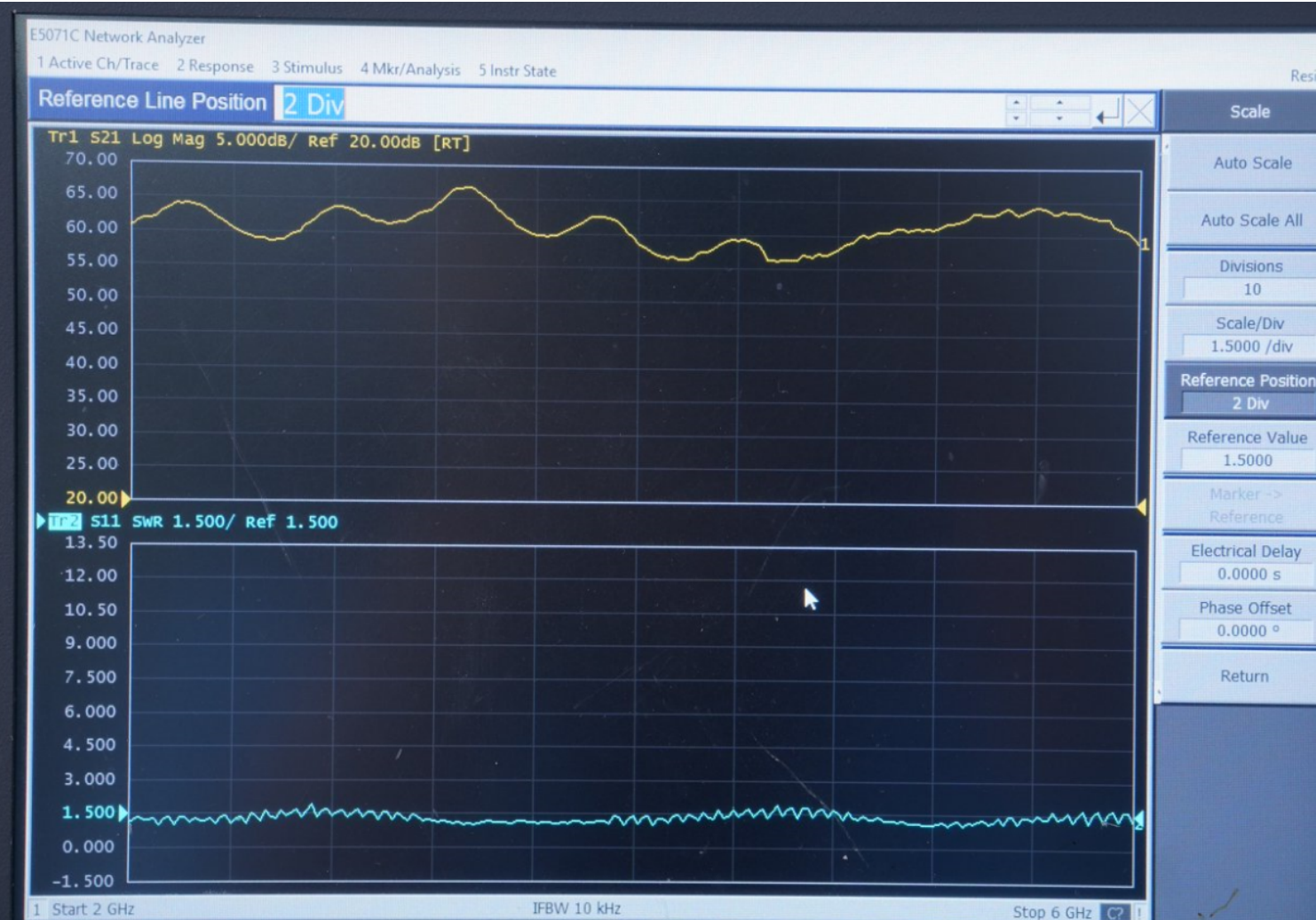
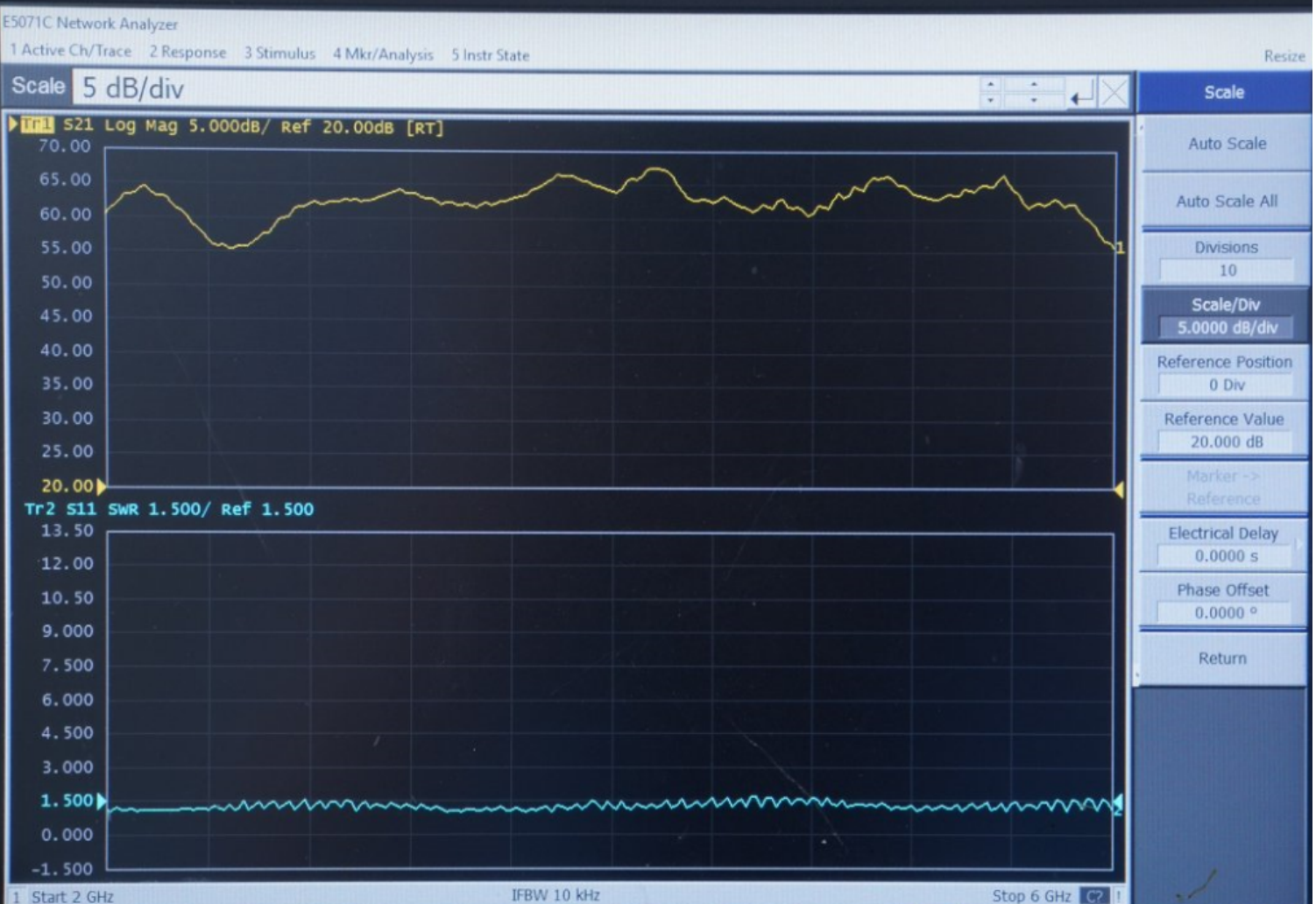
Typical gain ranges from ~45 dB to 53 dB by model. Gain flatness is specified at ≤ 1.8 dB across the entire 2–6 GHz series.
Standard RF & Control Interfaces
SMA at RF input, N-female at RF output, DB9 for control — a consistent interface reference across all power levels. Custom interfaces available.
Air-Cooled Industrial Format
All listed models use air cooling in a clearly documented mechanical envelope, intended for practical hardware deployment and integration review.
Performance Data
Performance Data Available for Engineering Review
Review the representative swept measurements with the corresponding model and test conditions. Tr1 corresponds to gain (S21, dB). Tr2 corresponds to input match / SWR (S11). Full curve files and project-specific validation records can be requested with application context.
30W — CRF-PA-2G6G-30W
50W — CRF-PA-2G6G-50W
100W — CRF-PA-2G6G-100W
150W — CRF-PA-2G6G-150W
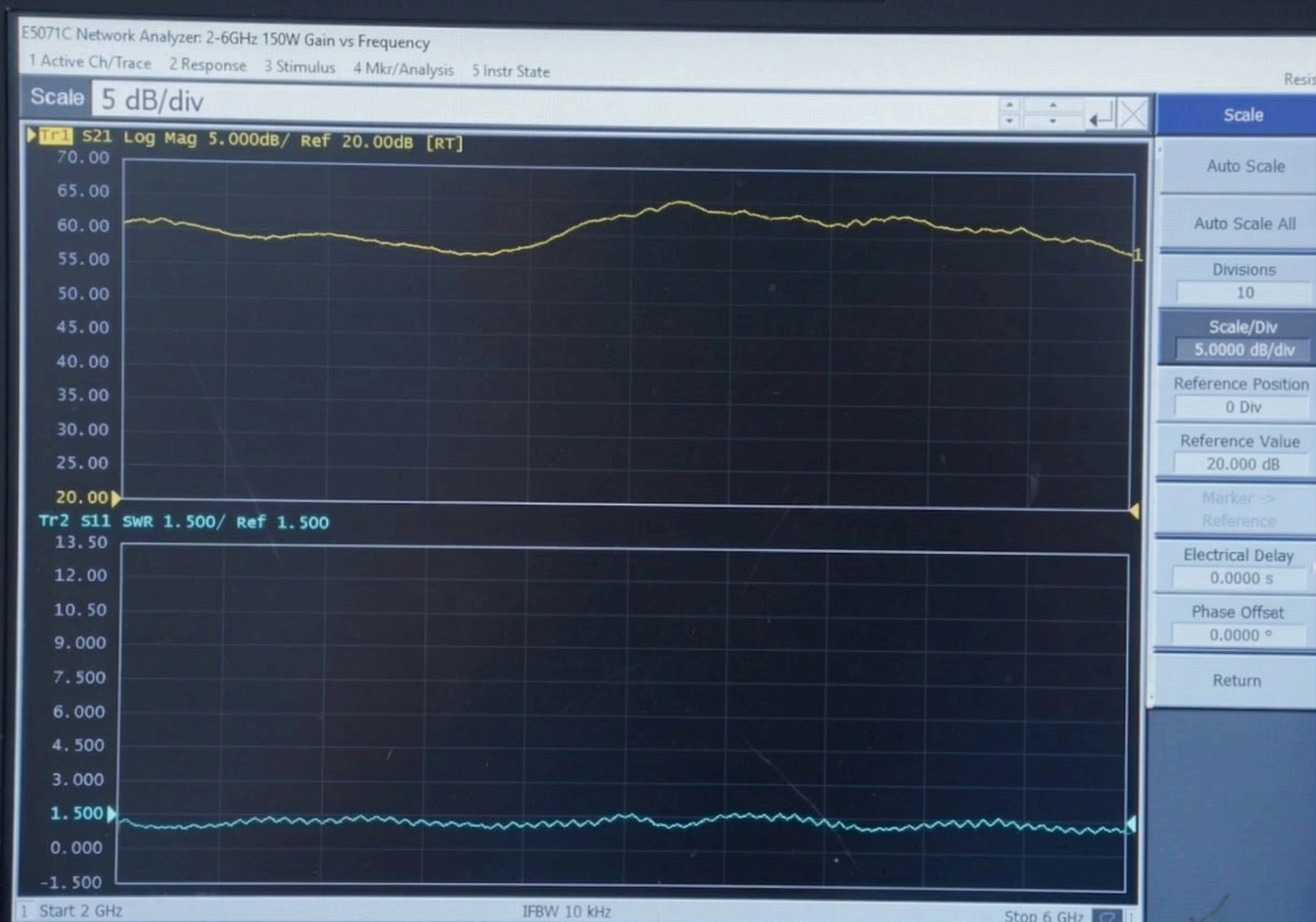
200W — CRF-PA-2G6G-200W
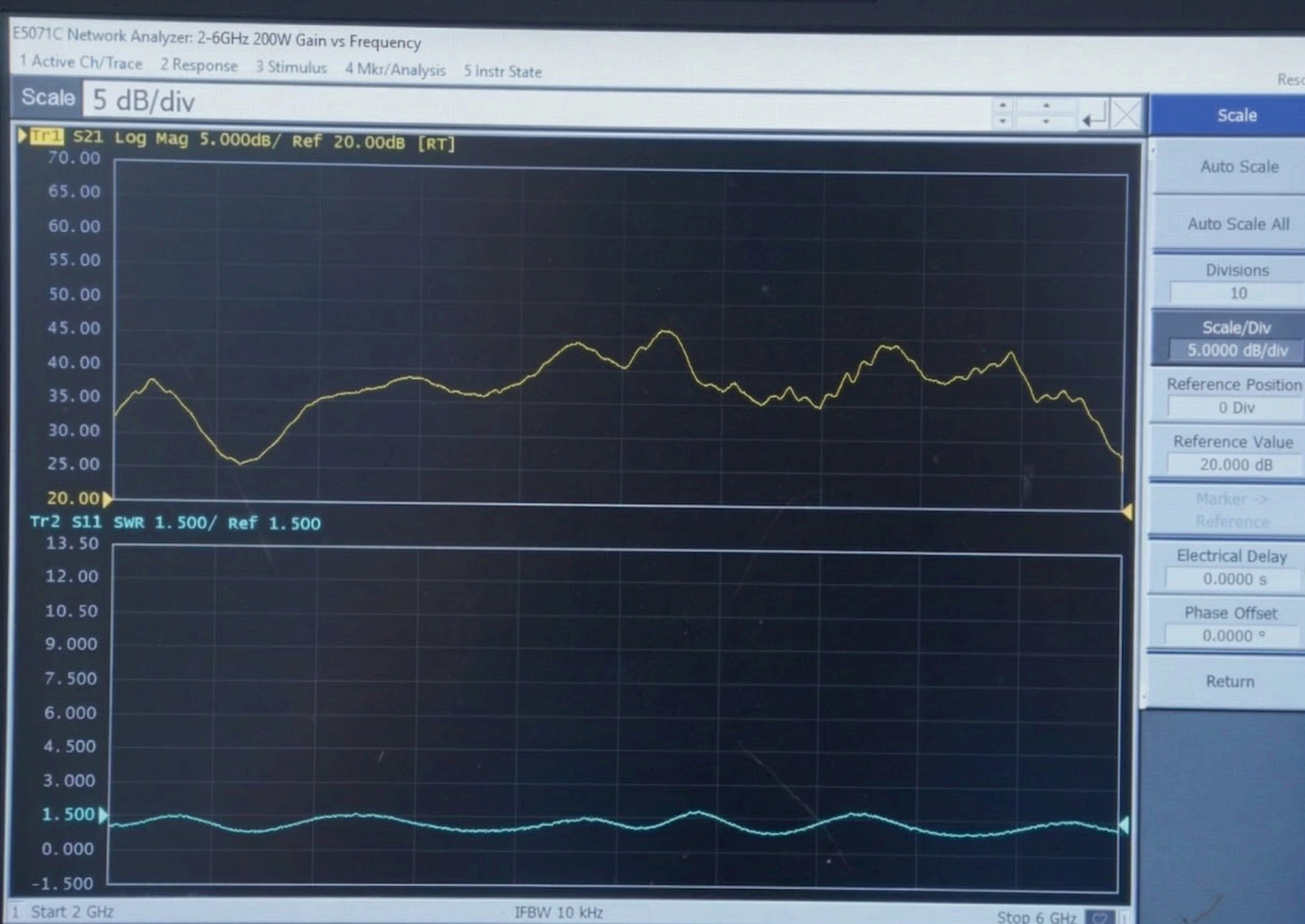
Need full curve files, S-parameter data, or project-specific validation data? Include target frequency range, output power, operating mode, duty cycle, supply voltage, connector preference, and expected quantity.
Integration Reference
Mechanical Outline & Connector Reference
For integration buyers, mechanical fit is as important as RF performance. Each datasheet includes a dedicated mechanical outline page for dimensional review and connector location confirmation. Drawings are available before order confirmation.
Compact 30W Format
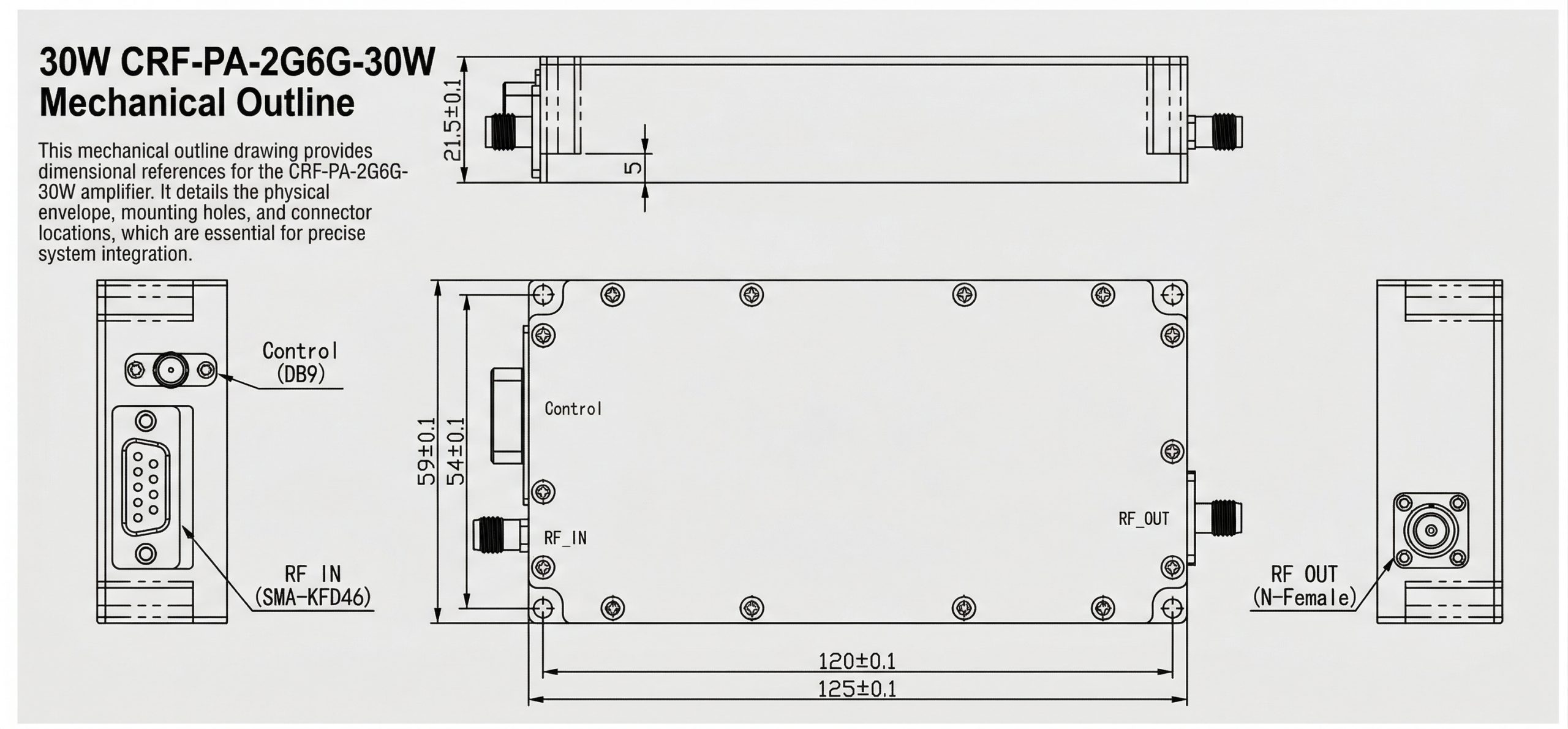
Compact format suitable for bench setups and space-constrained integration environments.
High-Power 50W–200W Platform
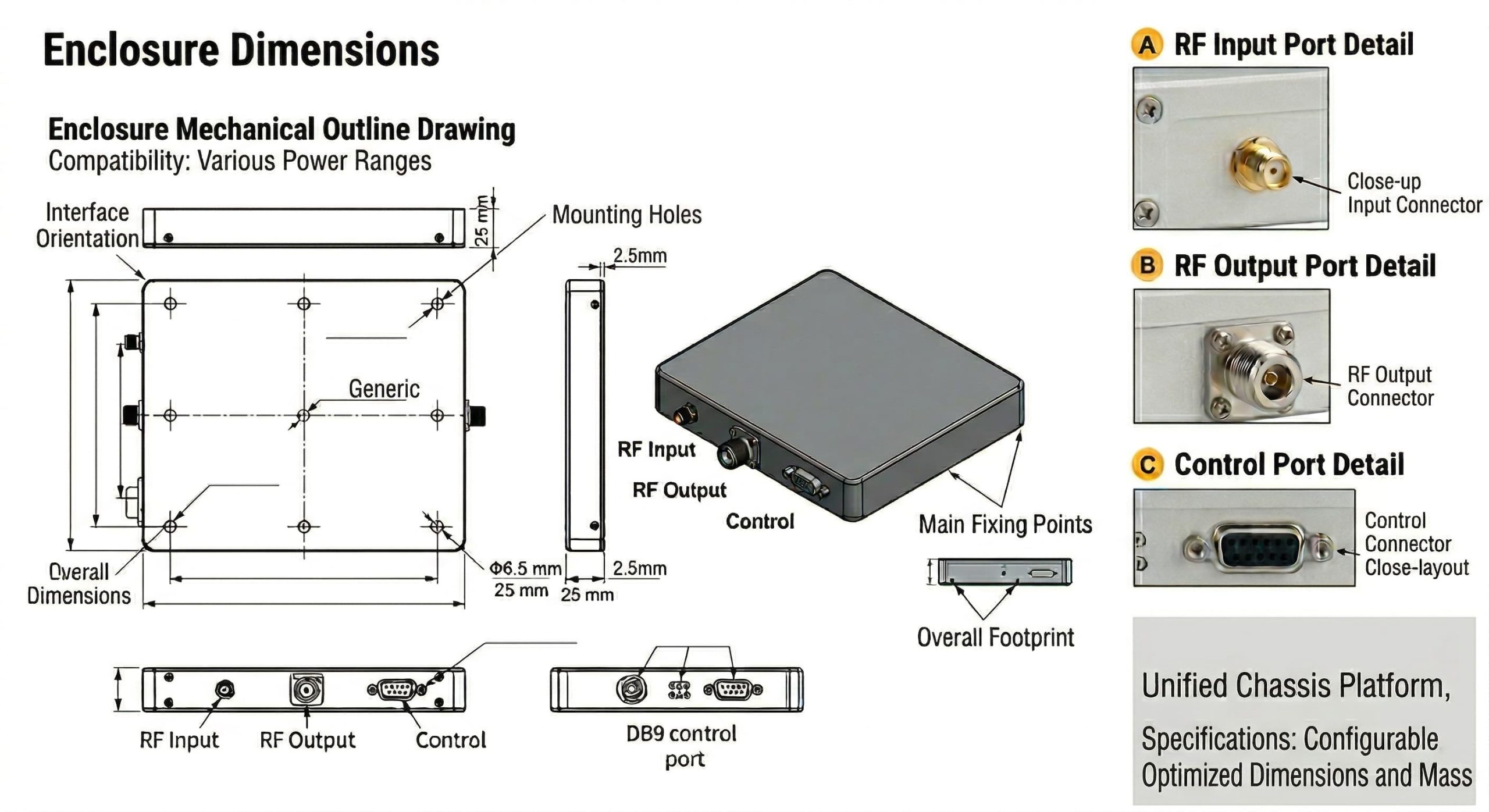
Shared mechanical platform for 50W, 100W, 150W, and 200W. Supply voltage and current consumption vary by output class. Dimensional drawings available before order confirmation.
Shipment Confidence
Engineering Evidence Before Shipment
Request the model-specific test records, mechanical references and acceptance documentation needed for your project.
RF Validation
Output power and gain verification using calibrated RF laboratory instruments.
Curve Review
Typical gain, flatness, and power behavior data available by project scope.
Protection Review
VSWR, reflected power, thermal, and current protection can be reviewed for system integration.
Mechanical Check
Connector, mounting, and dimensional reference can be checked before order confirmation.
Shipment Records
Unit-level records and acceptance documentation available based on model and program needs.
Need test evidence before order confirmation?
Request datasheet, curve reference, mechanical drawing, or a project-specific validation data package.
Customization
Need a Different Connector, Interface, or Sub-Band?
Standard models cover many common project requirements. CorelixRF also supports customization where platform constraints go beyond a catalog configuration. Engineering feasibility review is available within 48 hours — before any volume commitment.
Frequency Adaptation
Request review for a narrower operating window or application-driven band definition outside the standard 2–6 GHz span.
Connector Changes
Connector type and physical interface details can be reviewed for project-specific compatibility and system integration requirements.
Control Interface Adjustment
Control logic and interface requirements can be aligned to customer-side system architecture where feasible.
Mechanical Integration Review
Dimensional and packaging constraints can be discussed before quotation to reduce redesign risk and integration delays.
Send your target frequency, output requirement, duty cycle, supply range, and dimensional constraints for engineering feedback. Feasibility review is available within 48 hours — no volume commitment required to start the conversation.
Documents
Technical Documents & Data Package Requests
Each model in this series is supported by a dedicated datasheet covering electrical characteristics, typical performance curves, and mechanical outline reference. Click any row to request the matching datasheet through the enquiry form — our team will respond within 48 hours.
Need curve files, dimensional drawings, or project-specific validation data? Include your project context in the RFQ form for a more accurate technical review.
Click any row to access the datasheet library →
Support FAQ
Project & Procurement Questions
Answers to common questions about 2–6 GHz amplifier selection, model specifications and integration.
Is Built For
Engineering Intake
Request a 2–6 GHz Amplifier Quote
Send your target frequency, output power, duty cycle, supply range, and expected quantity. Engineering will review feasibility and recommend a suitable standard model or customization path. Sharing connector preferences, dimensional limits, and integration notes up front helps reduce back-and-forth during quotation.
What You Receive After Submission
- Recommended standard model or customization path
- Datasheet, curve, and drawing availability
- Connector, mechanical, and cooling review
- Quotation and lead time feedback
- NDA support when required