
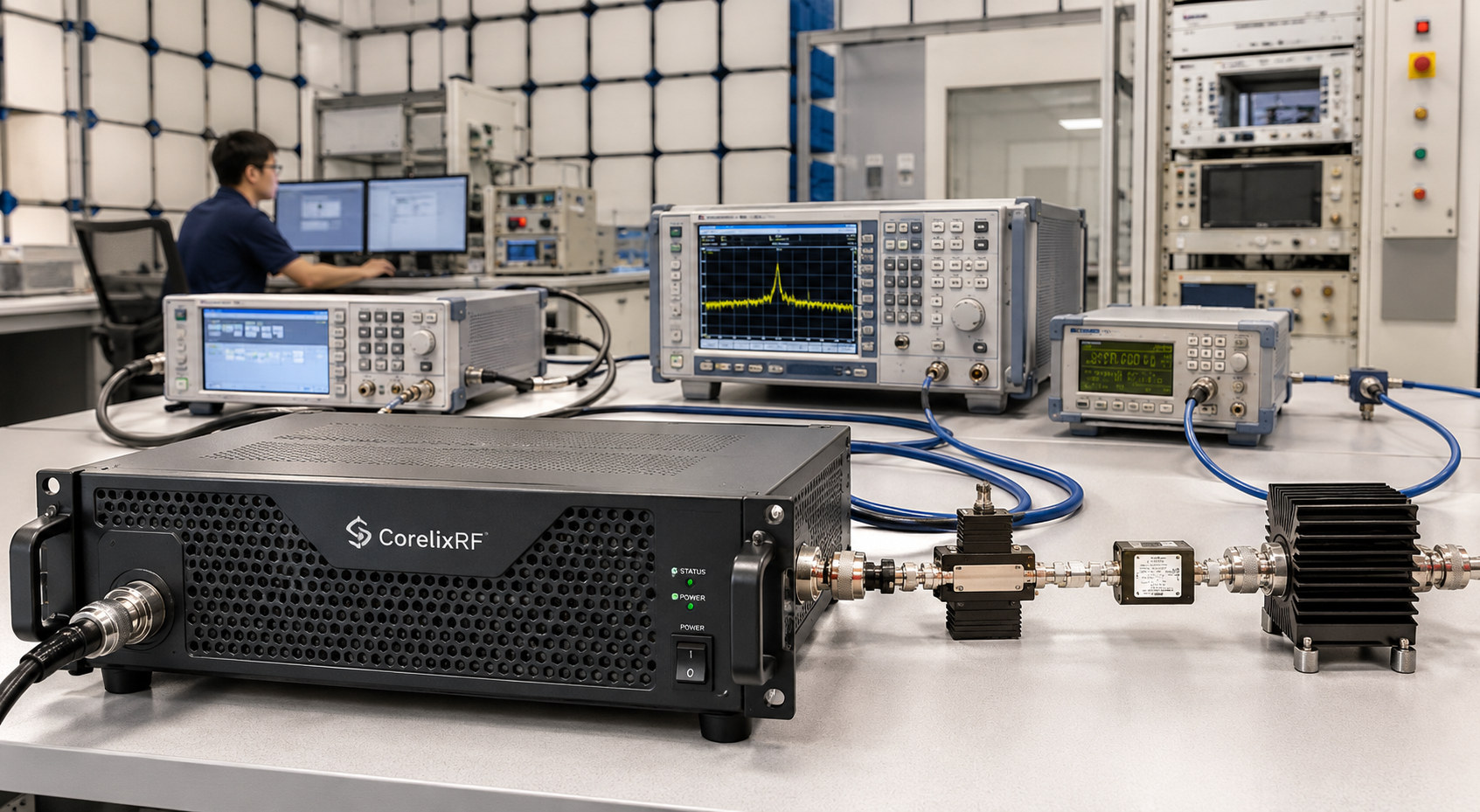
01 / FULL BAND
Full-band output power is not always guaranteed
EMC testing cannot rely on one peak data point. Output power must be reviewed across the required frequency range and under realistic load conditions.
CorelixRF supplies EMC RF amplifier platforms for conducted immunity, radiated immunity, compliance labs and custom RF immunity systems. Share frequency range, target power, load condition, CW/pulse requirement and documentation needs for engineering review.
In EMC-related test environments, amplifier selection is affected by full-band output power, reflected power risk, thermal stability, duty cycle and system-level integration details.
EMC testing cannot rely on one peak data point. Output power must be reviewed across the required frequency range and under realistic load conditions.
Chamber, antenna and fixture changes can create mismatch conditions. Protection logic and RF margin should be confirmed before platform selection.
High-power EMC runs require cooling structure, airflow, over-temperature protection and duty-cycle review instead of only checking nominal power.
RF connectors, control interface, rack size, power supply, mechanical layout and required test documentation should be confirmed early.
CorelixRF does not only provide a fixed amplifier model. We review the required EMC test conditions and configure the platform around frequency, output power, cooling, control, protection and validation data.
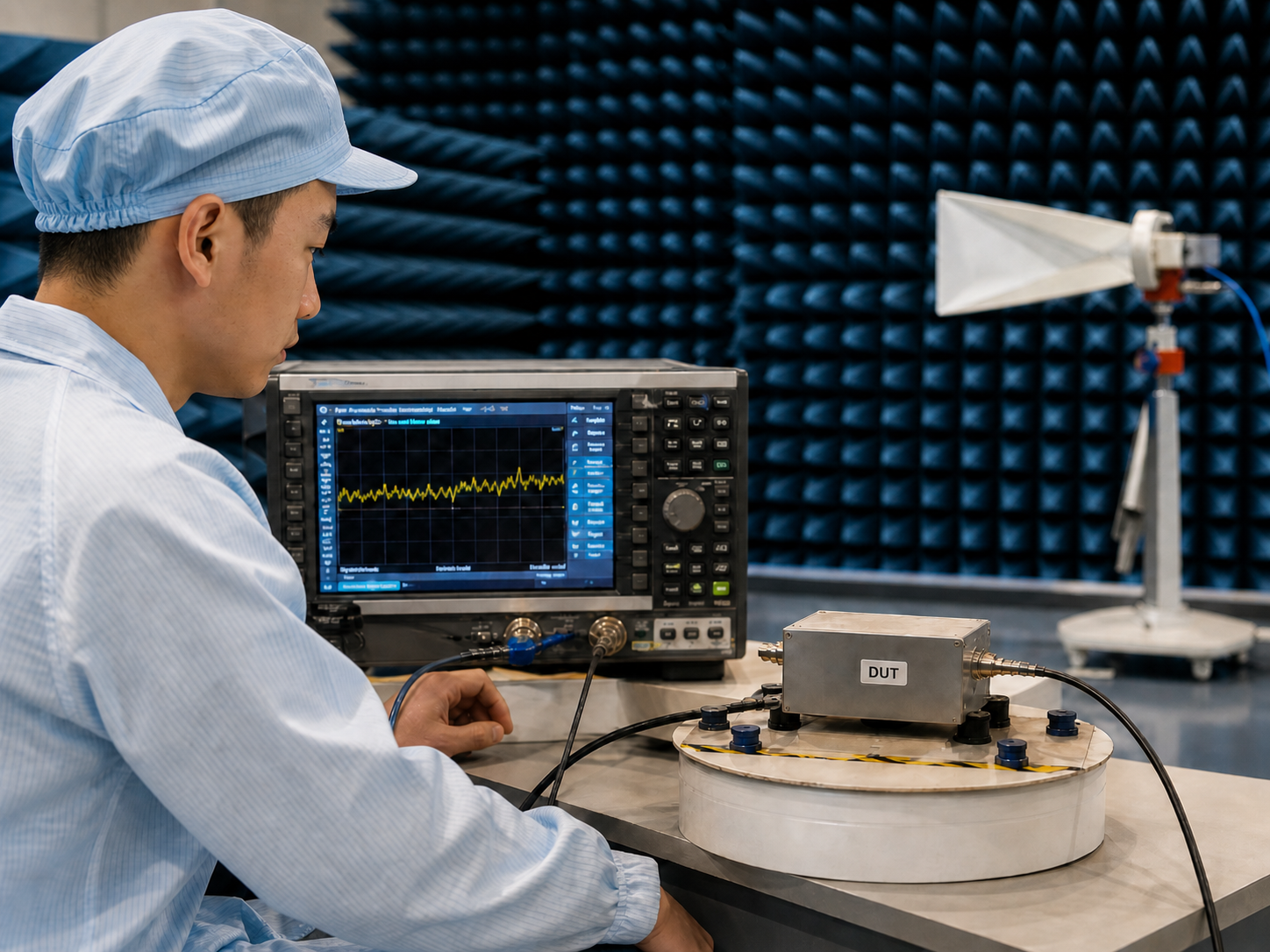 Engineering review before recommendation
Configure low-frequency, UHF, broadband GHz and microwave amplifier platforms based on required band, output level and test environment.
Review CW or pulse requirements, pulse width, duty cycle, timing behavior and thermal margin before selecting or customizing a platform.
Support air cooling, rack airflow, heat dissipation structure, VSWR protection, over-temperature protection and system-level protection review.
Measured RF data can include output power, gain flatness, harmonics, spurious performance and thermal behavior before shipment.
Use the test method and complete RF path as the starting point. Final platform selection depends on the required level, modulation, antenna or injection path, cable loss, load condition and engineering margin.
| Test Method | Typical Frequency Window | Engineering Inputs | Suggested CRF Platform |
|---|---|---|---|
| IEC 61000-4-6 Conducted Immunity | 150 kHz–80/230 MHz | Test level, CDN / EM Clamp / BCI path, modulation and load condition | CRF-PA-9K100M / CRF-PA-9K250M |
| IEC 61000-4-3 Radiated Immunity | 80 MHz–6 GHz | Target field strength, antenna gain, test distance, cable and coupler loss | CRF-PA-80M1000M / CRF-PA-600M6000M |
| Automotive BCI | Project-dependent | Current target, injection probe, harness condition, modulation and dwell time | Engineering review |
| Microwave Immunity Testing | 1–18 GHz | Field target, antenna path, dwell time, connector and test evidence | CRF-PA-700M18000M / CRF-PA-2000M18000M |
| Custom Wideband RF Testing | Up to 50 GHz | Frequency span, required output, gain, connector, control and documentation | CRF-PA-10M50G / project review |
Final amplifier power must be reviewed from the complete RF path, including cable and coupler loss, antenna gain, test distance, load mismatch and required engineering margin. The suggested platforms are starting points, not declarations of test compliance.
From kHz-range low-frequency EMC platforms to GHz broadband and microwave RF test systems, CorelixRF supports platform-based configuration instead of forcing customers into a single fixed model window.
| Test Application | Frequency Window | Recommended CRF Series | Representative Power Range | Review Notes |
|---|---|---|---|---|
| Conducted immunity | 9 kHz–250 MHz | CRF-PA-9K100M / CRF-PA-9K250M / CRF-PA-9K400M | 50 W–3.5 kW class | Review CDN, BCI, load condition, modulation and required test evidence. |
| Radiated immunity | 80 MHz–1 GHz | CRF-PA-80M1000M / CRF-PA-400M1000M | 100 W–2 kW class | Review antenna path, cable loss, field strength target and chamber setup. |
| Broadband EMC testing | 350 MHz–6 GHz / 600 MHz–6 GHz | CRF-PA-600M6000M | 16 W–1.5 kW class | Review bandwidth, duty cycle, cooling margin and rack integration. |
| Microwave immunity | 700 MHz–18 GHz / 2–18 GHz / 6–18 GHz | CRF-PA-700M18000M / CRF-PA-2000M18000M / CRF-PA-6000M18000M | 3 W–1 kW class | Review gain flatness, RF path loss, connector interface and test data needs. |
| Custom EMC platform | 10 MHz–50 GHz | CRF-PA-10M50G / project review | Project-based | Review custom frequency span, mechanical format, control interface and documentation package. |
The examples below show typical platform directions. Frequency range, output power, cooling, control interface, connector type and mechanical format can be reviewed for customization.
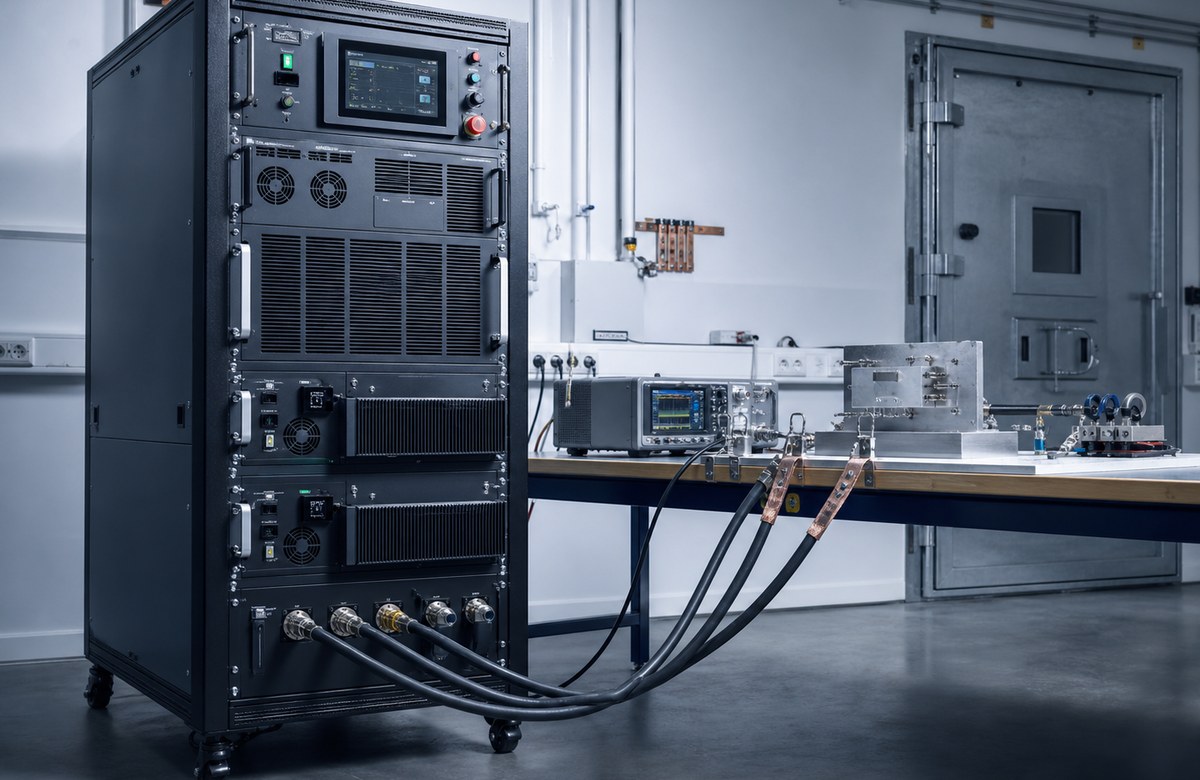
Representative models: CRF-PA-9K100M-1000W / CRF-PA-9K100M-3500W
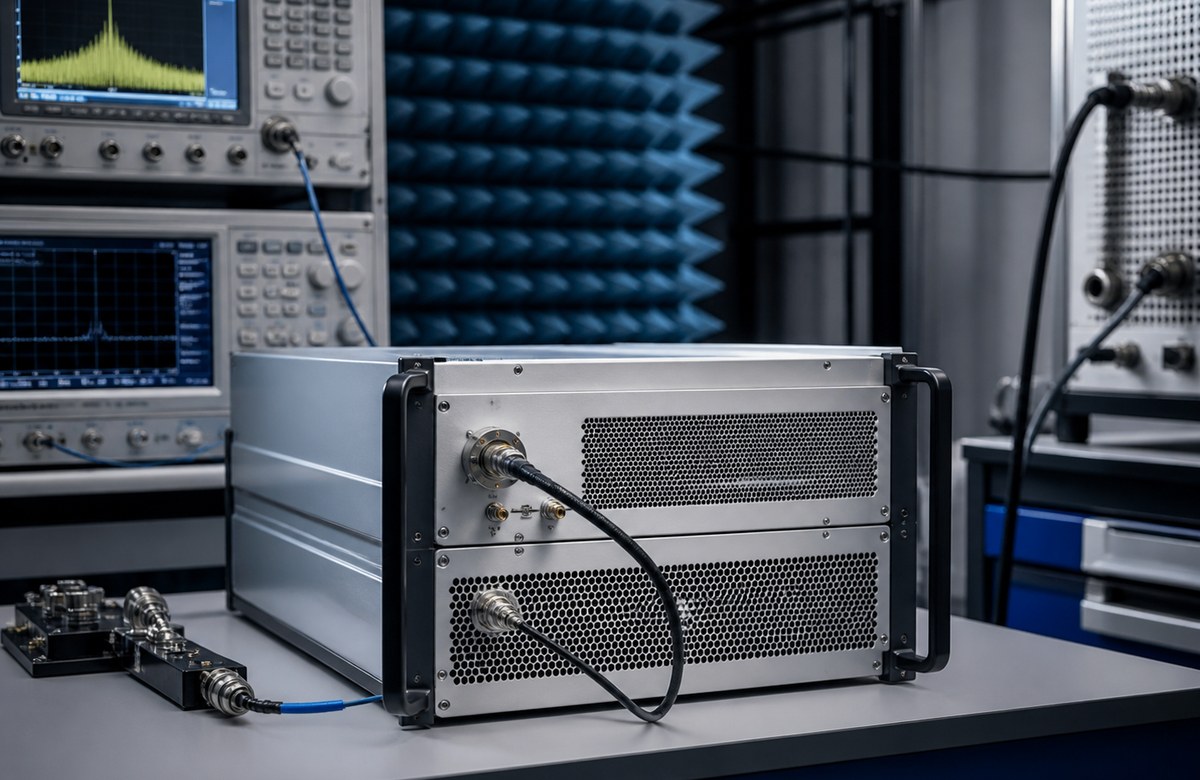
Representative models: CRF-PA-9K250M-100W / CRF-PA-9K250M-400W
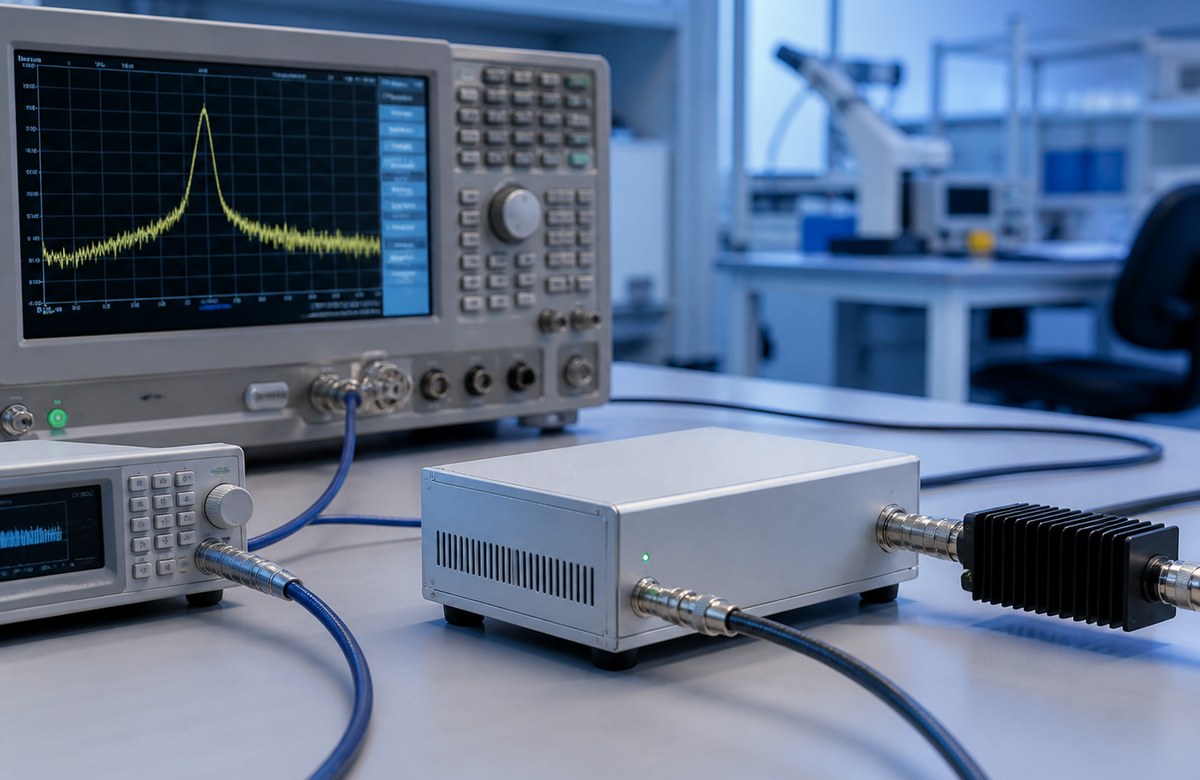
Representative models: CRF-PA-20M1000M-100W
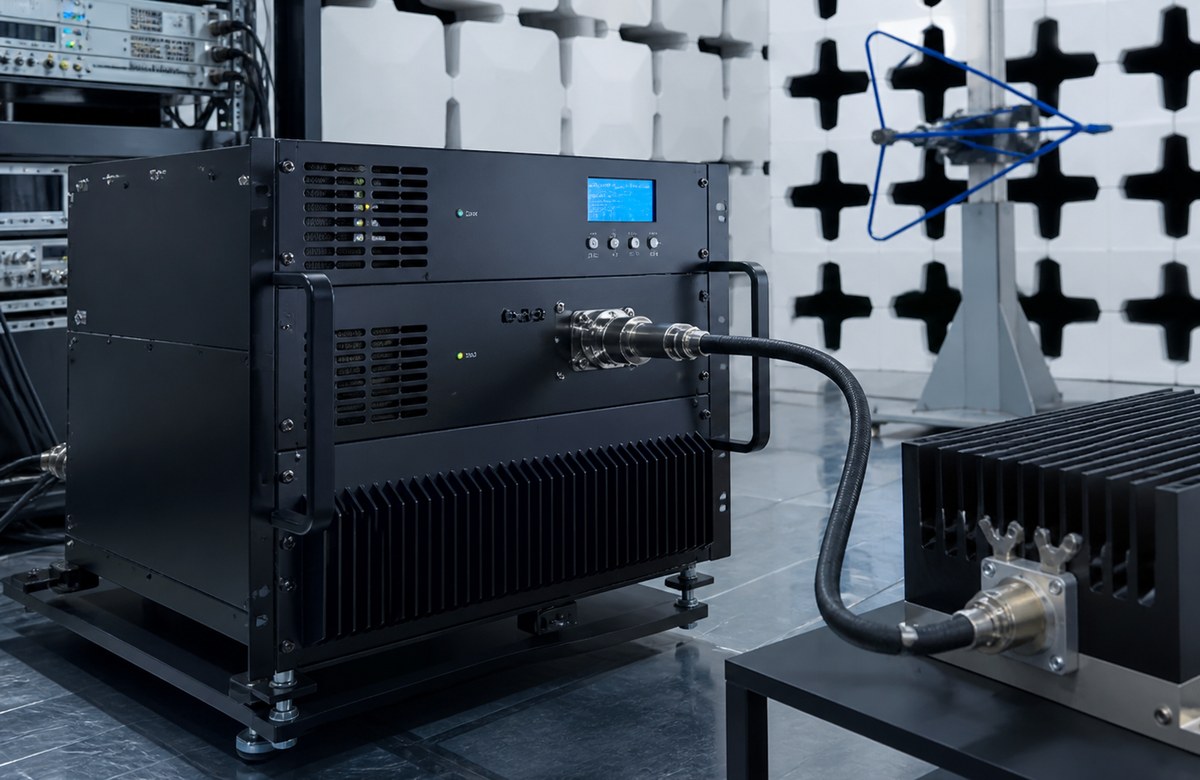
Representative models: CRF-PA-80M1000M-1000W / CRF-PA-80M1000M-2000W
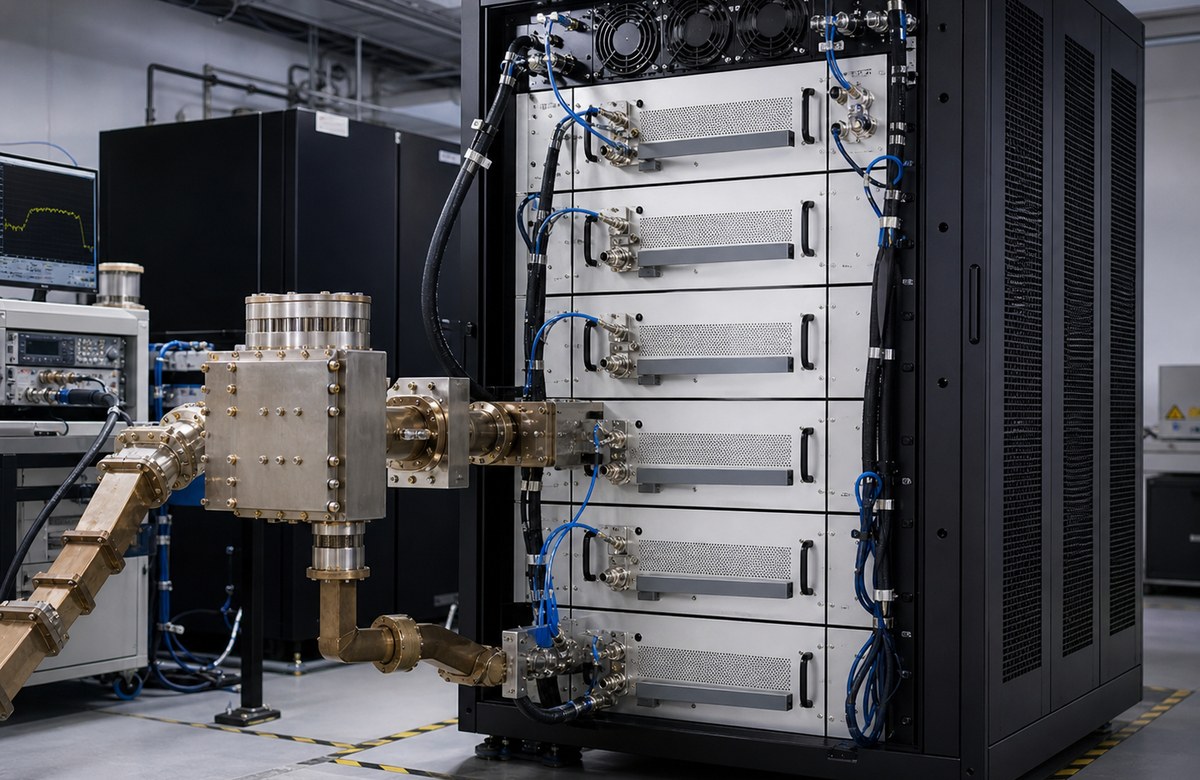
Representative models: CRF-PA-400M1000M-1500W
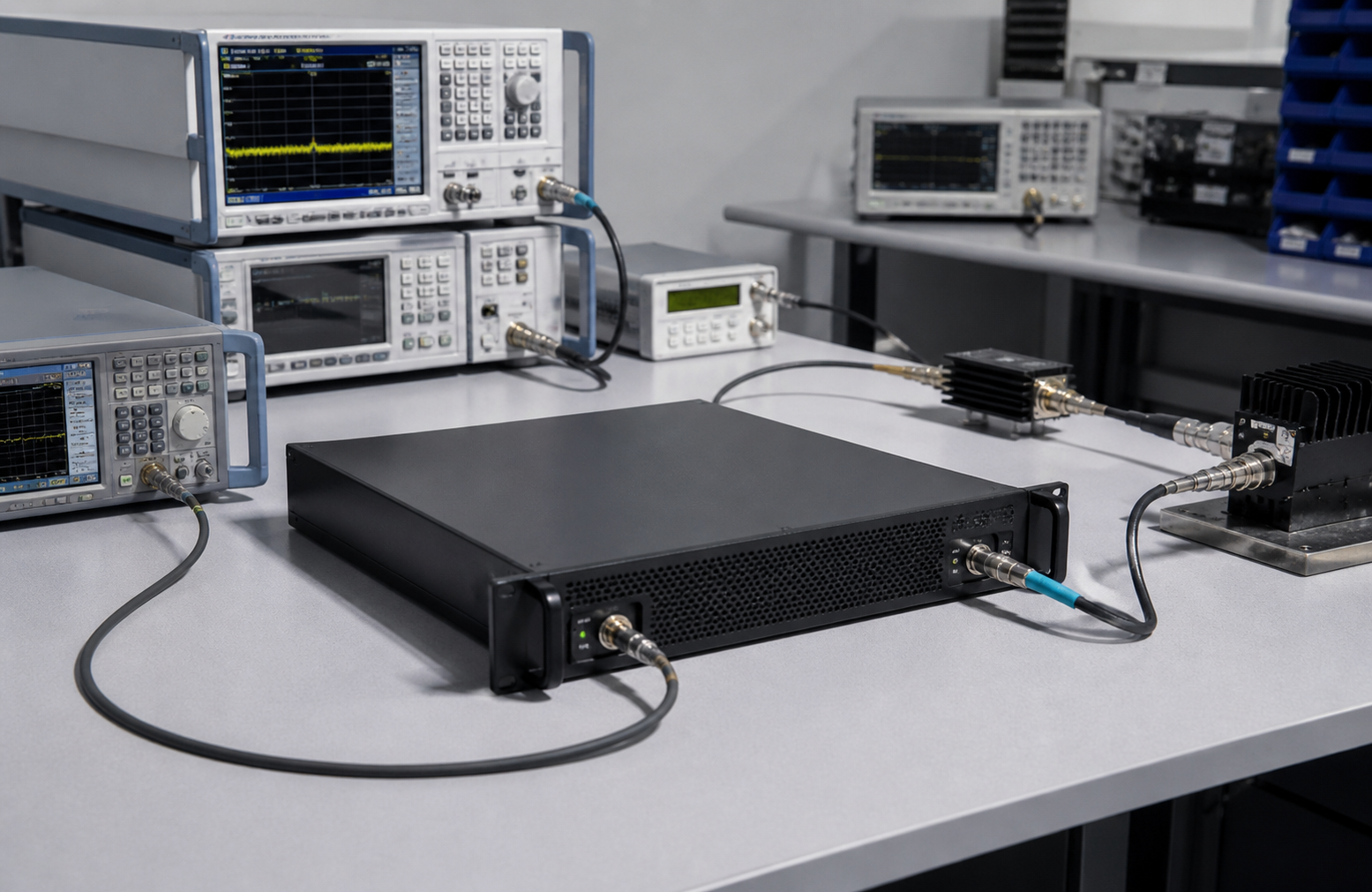
Representative models: CRF-PA-600M6000M-500W / CRF-PA-600M6000M-1200W
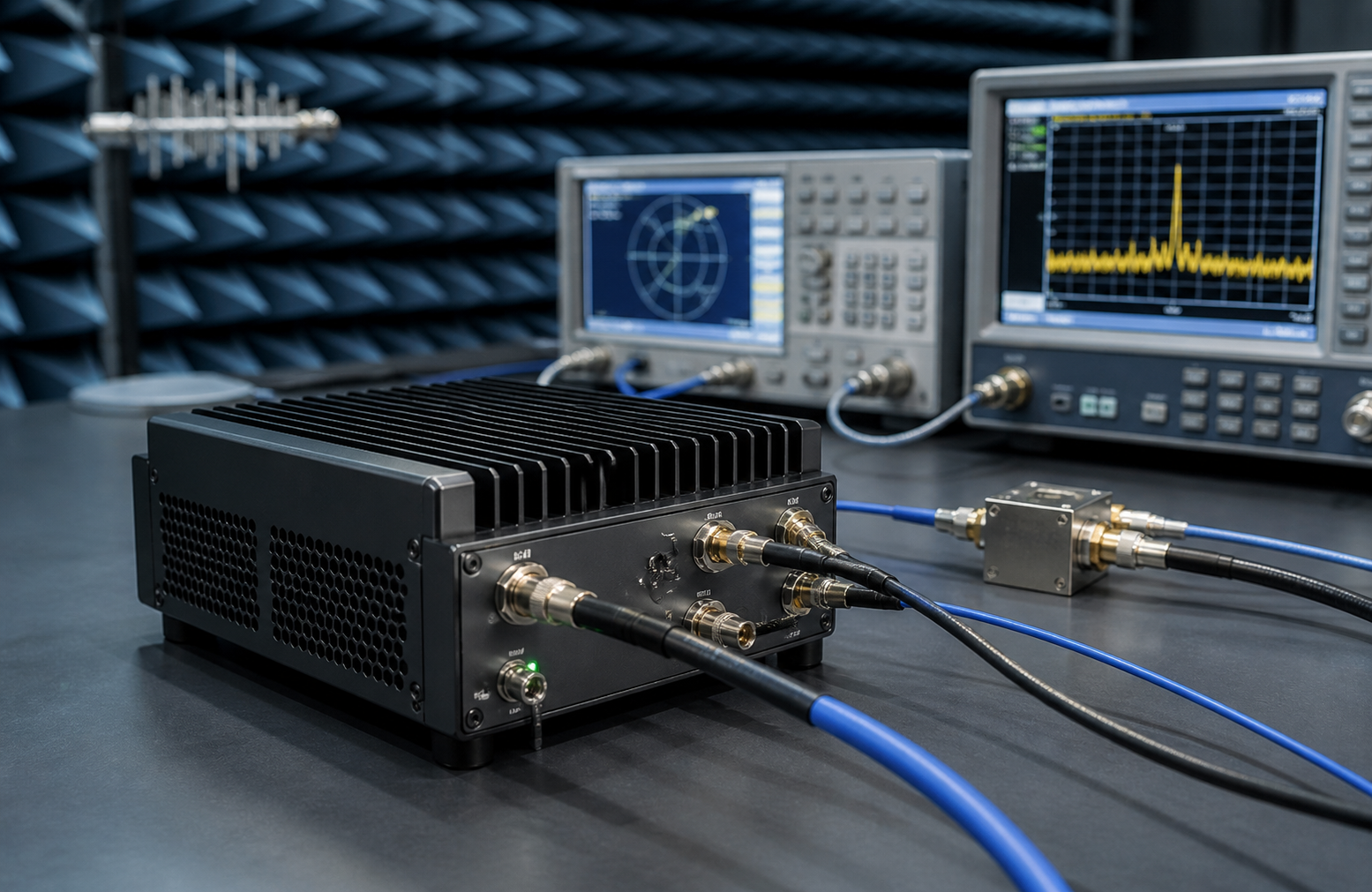
Representative models: CRF-PA-700M18000M-3W / CRF-PA-700M18000M-6W / CRF-PA-700M18000M-11W
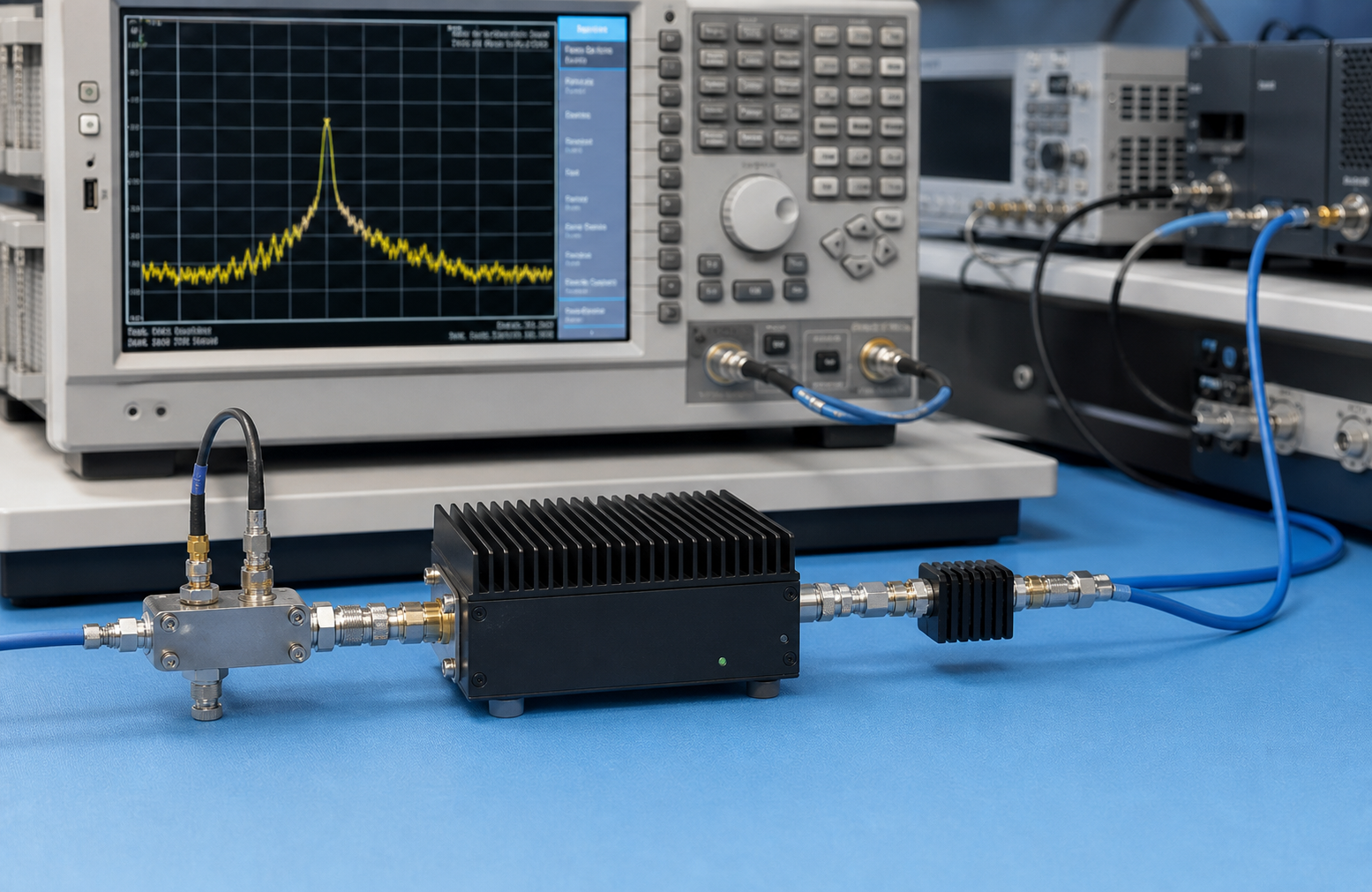
Representative models: CRF-PA-2000M18000M-20W / CRF-PA-2000M18000M-100W
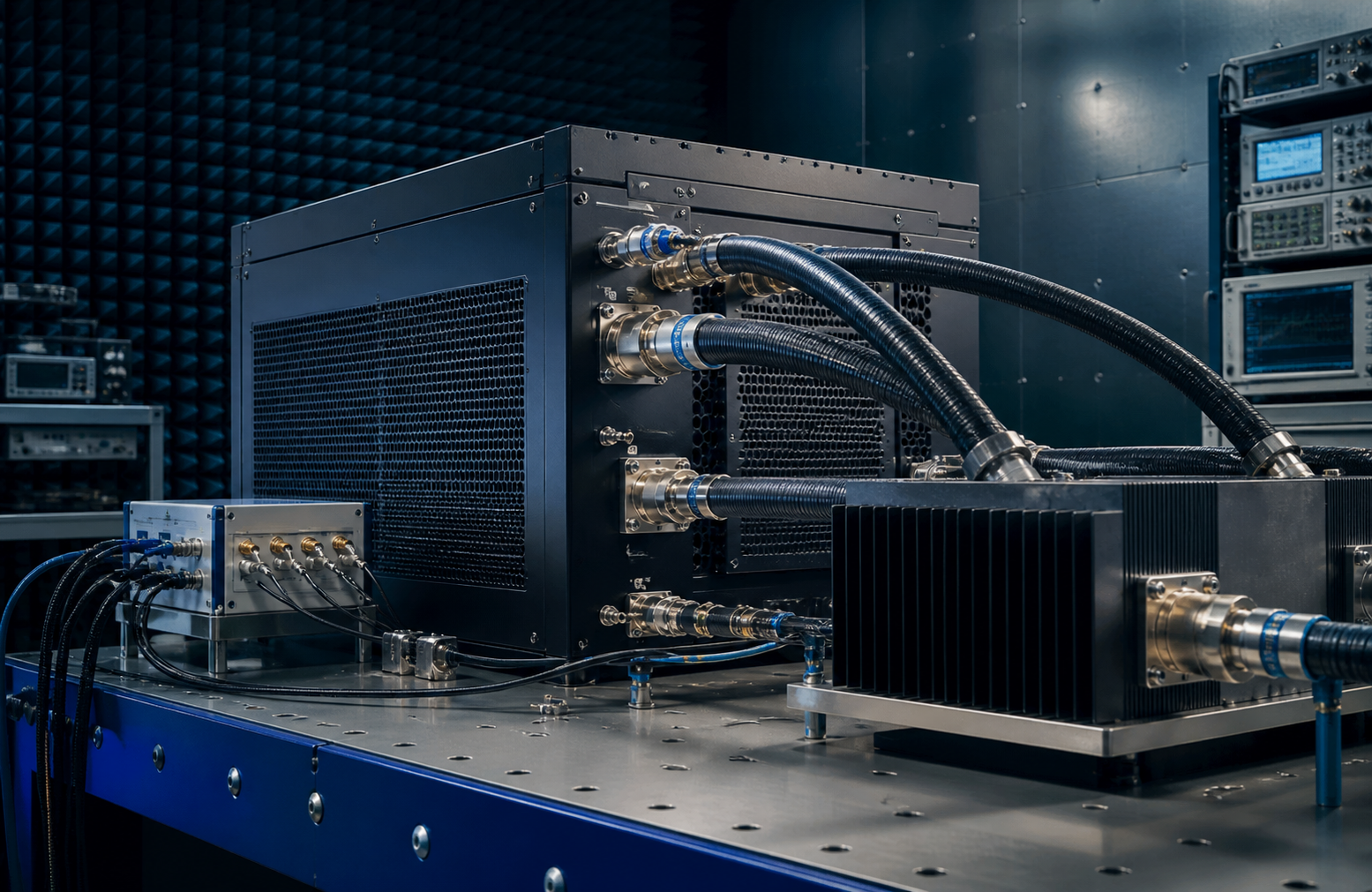
Representative models: CRF-PA-6000M18000M-300W / CRF-PA-6000M18000M-1000W
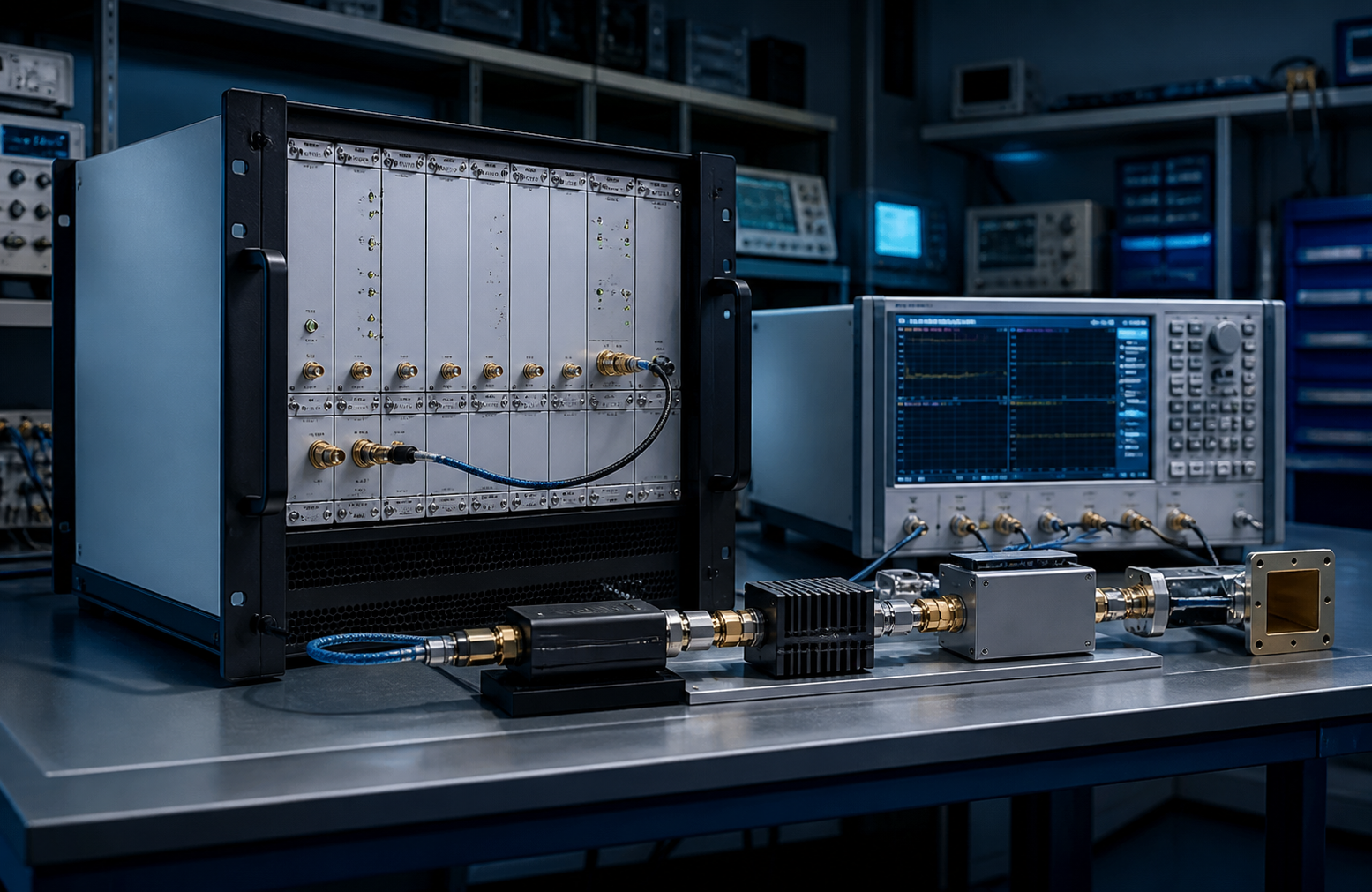
Representative models: CRF-PA-10M50G-1W
EMC test requirements vary by frequency range, power level, load condition, chamber setup, test duration and integration environment. CorelixRF supports project-based configuration instead of forcing customers into a fixed model window.
Whether your program needs a low-frequency conducted EMC amplifier, a high-power UHF platform, a broadband GHz amplifier or a microwave RF test system, our engineering team can review the platform window before production.
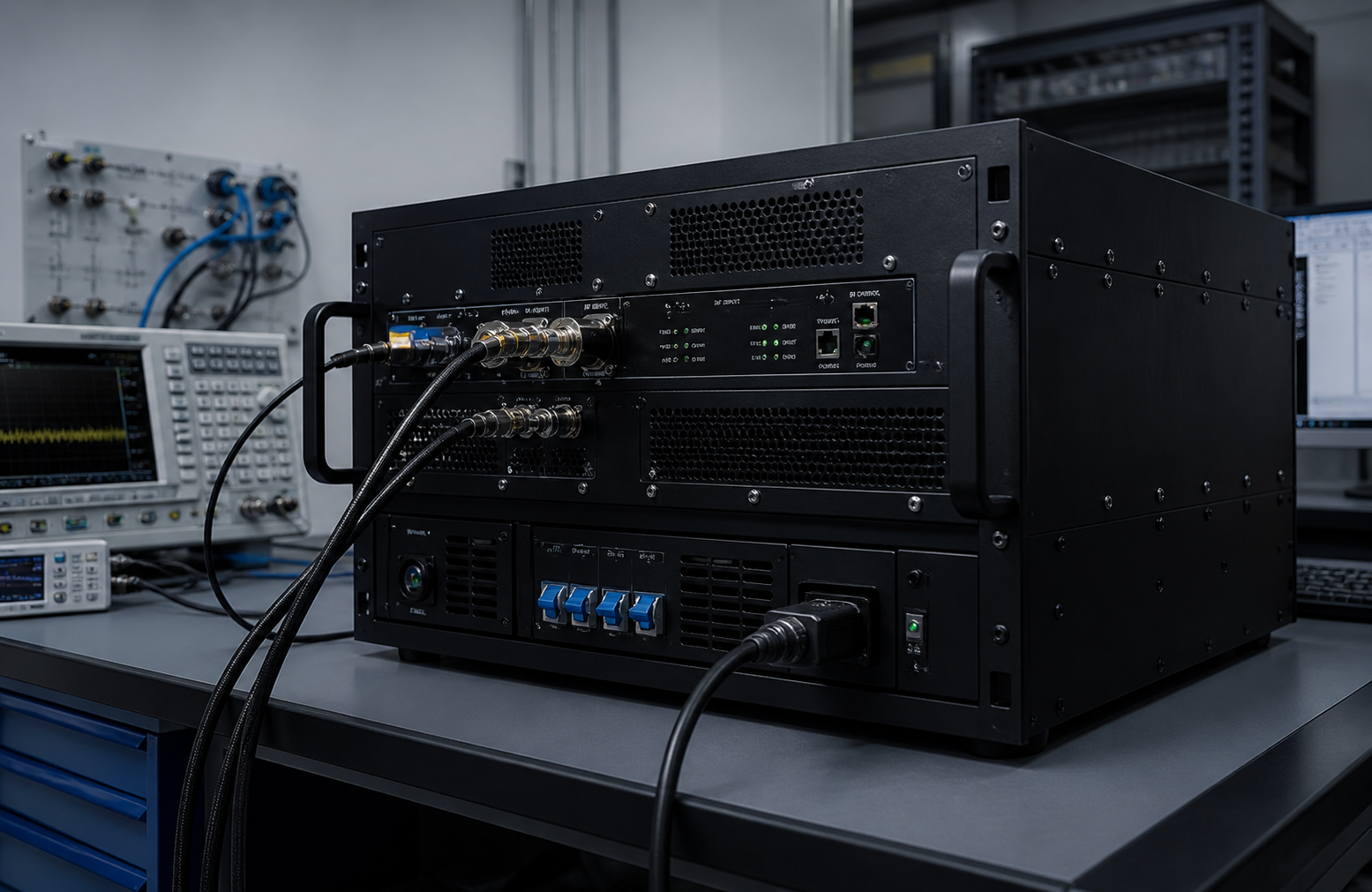 Rack / module configuration support
Review custom frequency coverage, output power class and full-band performance requirements before platform selection.
Review CW, pulse width, duty cycle, timing behavior and thermal load for the actual test condition.
Confirm airflow, heat dissipation, VSWR, over-temperature, over-drive and system-level protection behavior.
Support rack-mounted, module-level, panel and OEM mechanical integration requirements.
Review remote control, monitoring interface, power detection and system communication requirements.
Define output power, gain flatness, harmonics, spurious, thermal records and inspection data requirements.
A suitable EMC RF amplifier is selected through engineering conditions, not only by model name. The following information helps CorelixRF identify the correct platform window.
Confirm start frequency, stop frequency and whether full-band performance is required.
Review rated power, margin, load condition and whether power must be maintained across band.
Clarify CW, pulse width, duty cycle, timing behavior and operating sequence.
Check antenna, load, fixture, chamber and reflected power risk before configuration.
Review airflow, rack depth, heat dissipation structure and continuous test duration.
Confirm RF connector, remote control, monitoring interface and system communication needs.
Review VSWR, over-temperature, over-current, over-voltage and system-level protection behavior.
Define output power, gain flatness, spectrum, harmonics or thermal records needed before shipment.
Review rack, module, panel, connector direction, cable routing and OEM/ODM integration limits.
Confirm production priority, inspection records, labeling, packing and project documentation.
EMC amplifier procurement should not rely only on rated power and brochure wording. CorelixRF can support unit-level RF validation data before shipment, depending on project requirements.
Representative test data is provided for reference. Final acceptance limits and test items are defined in the approved product specification.
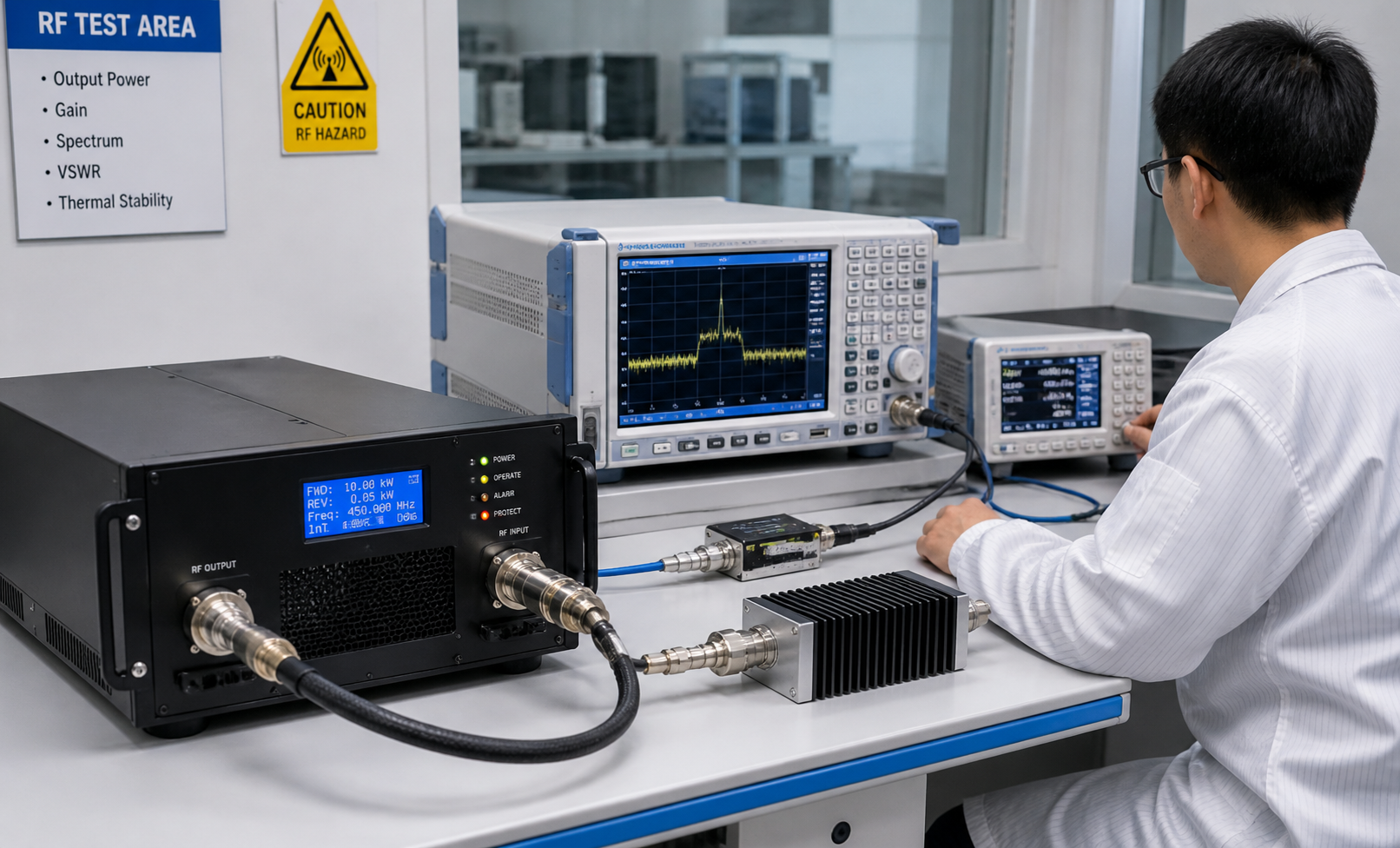 Output power / gain / spectrum validation
Confirm that the amplifier platform can support the required output level across the target frequency window, not only at a single point.
Review gain behavior across the required band to support system-level planning and test repeatability.
Check spectrum-related performance based on the test platform and project documentation requirements.
Review cooling, temperature behavior and thermal margin for long-duration or high-power EMC test operation.
Review mismatch conditions, reflected power risk and protection behavior when antennas, chambers or fixtures are involved.
Support inspection records, labeling, packing confirmation and project documentation before shipment where applicable.
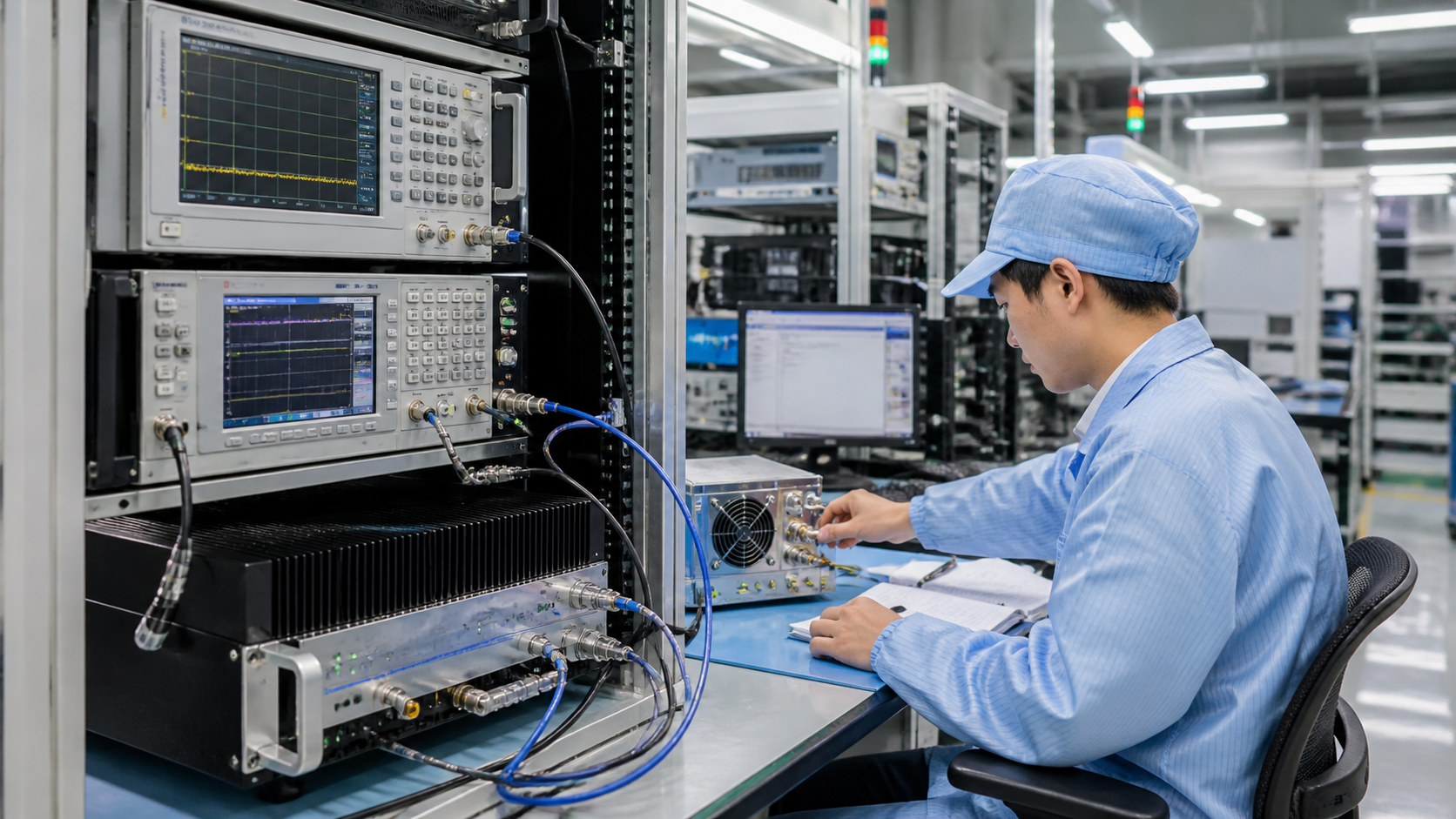 Factory RF testing and validation
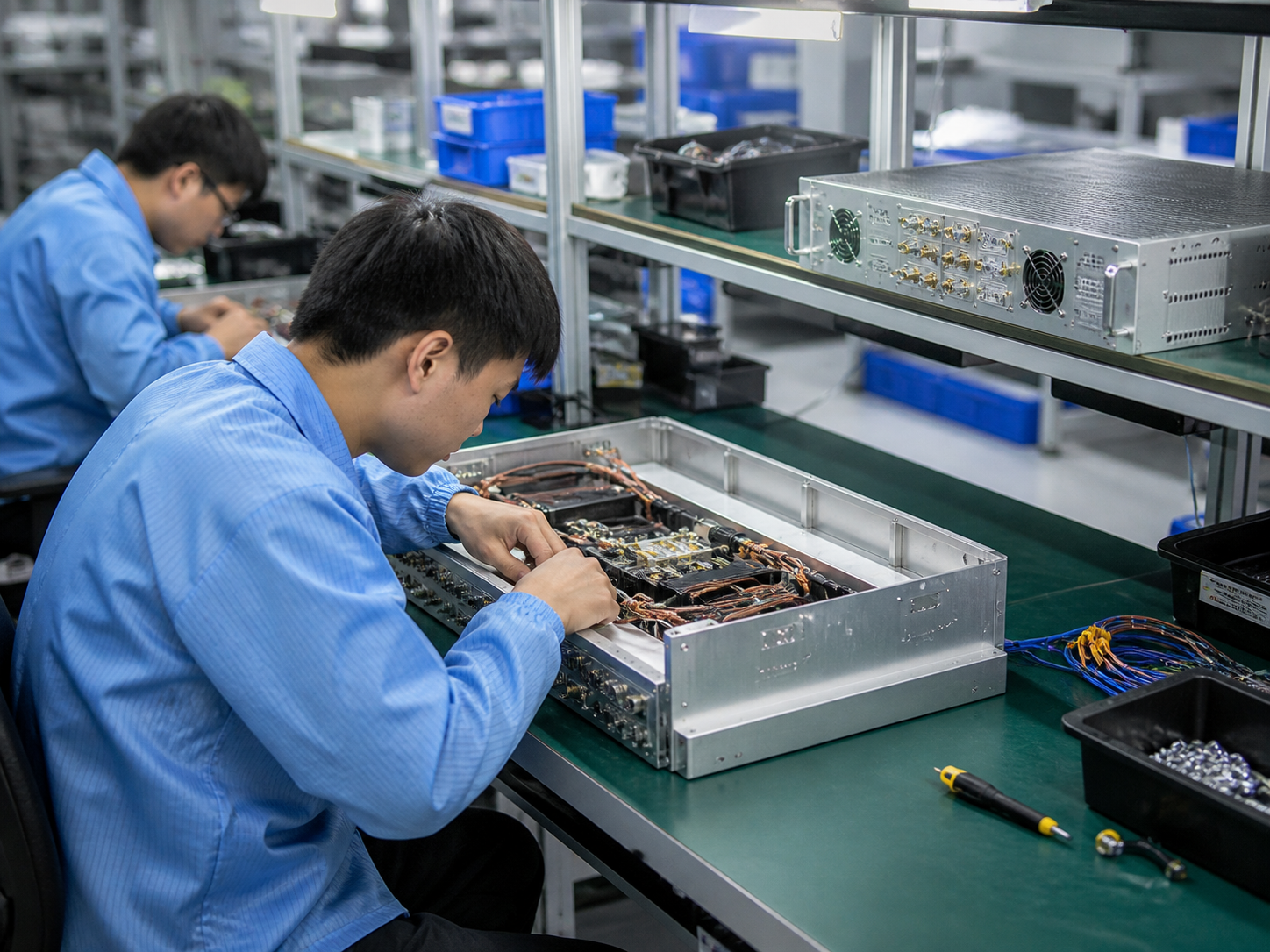

CorelixRF supports EMC amplifier projects through in-house RF engineering, controlled production, module and rack-level integration, RF testing and project-based customization.
Frequency, power, control, protection and mechanical requirements can be reviewed by an RF engineering team.
Packing, labels, inspection records and project documentation can be coordinated before export delivery.
Support for rack-mounted platforms, OEM/ODM integration and project-specific mechanical requirements.
Output power, gain, spectrum and thermal behavior can be reviewed before delivery based on project needs.
For projects referencing IEC 61000-4-6 conducted immunity or IEC 61000-4-3 radiated immunity setups, amplifier review should include frequency range, target field strength, antenna or CDN/BCI path, cable loss, modulation, duty cycle, cooling margin and documentation requirements.
EMC amplifier platforms are used in controlled RF test environments where power stability, protection, documentation and integration reliability matter.
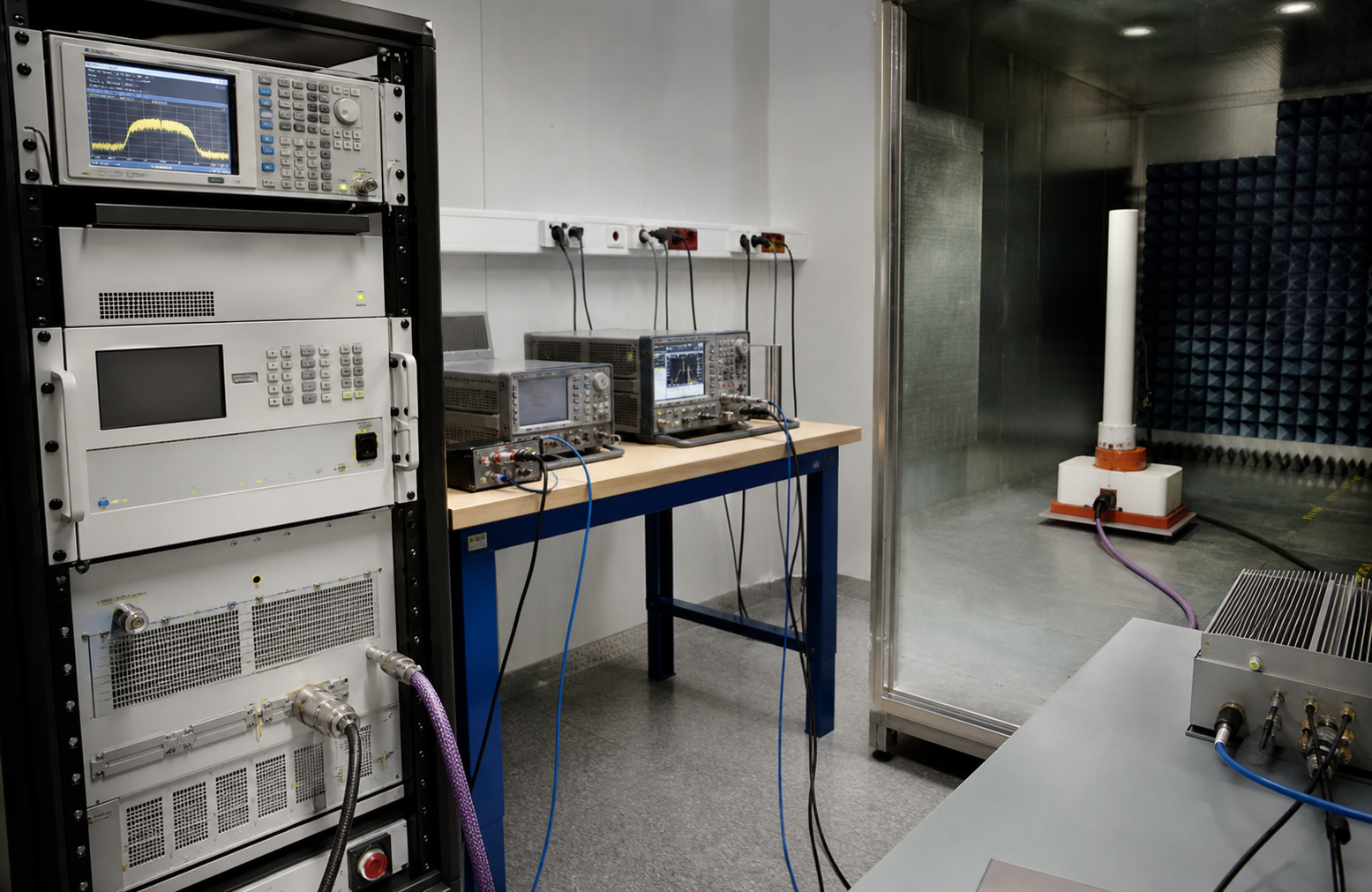
Amplifier platforms for controlled high-power RF output in EMC-related immunity test environments.
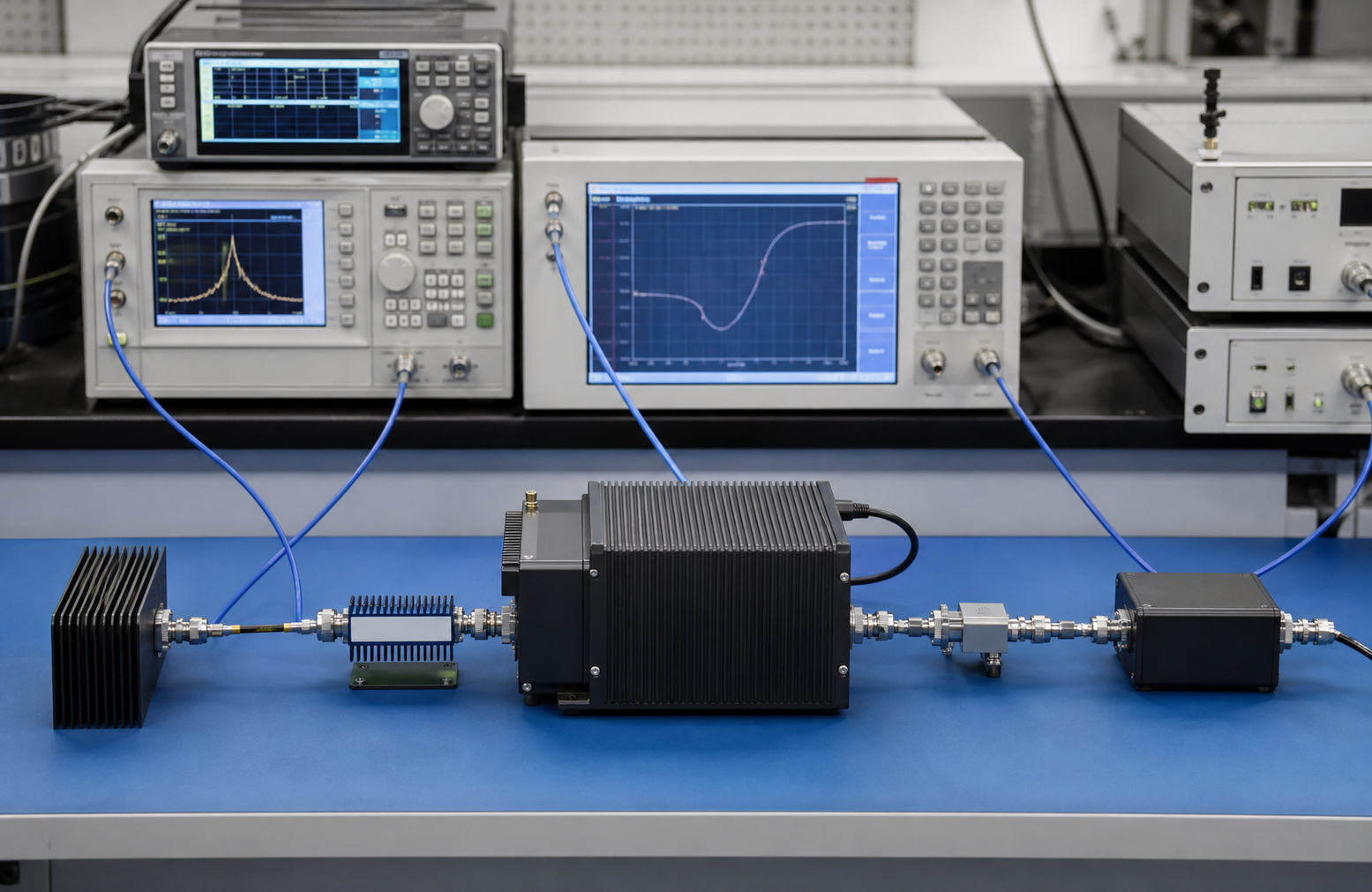
Low-frequency and UHF amplifier platforms for conducted RF testing and system validation.
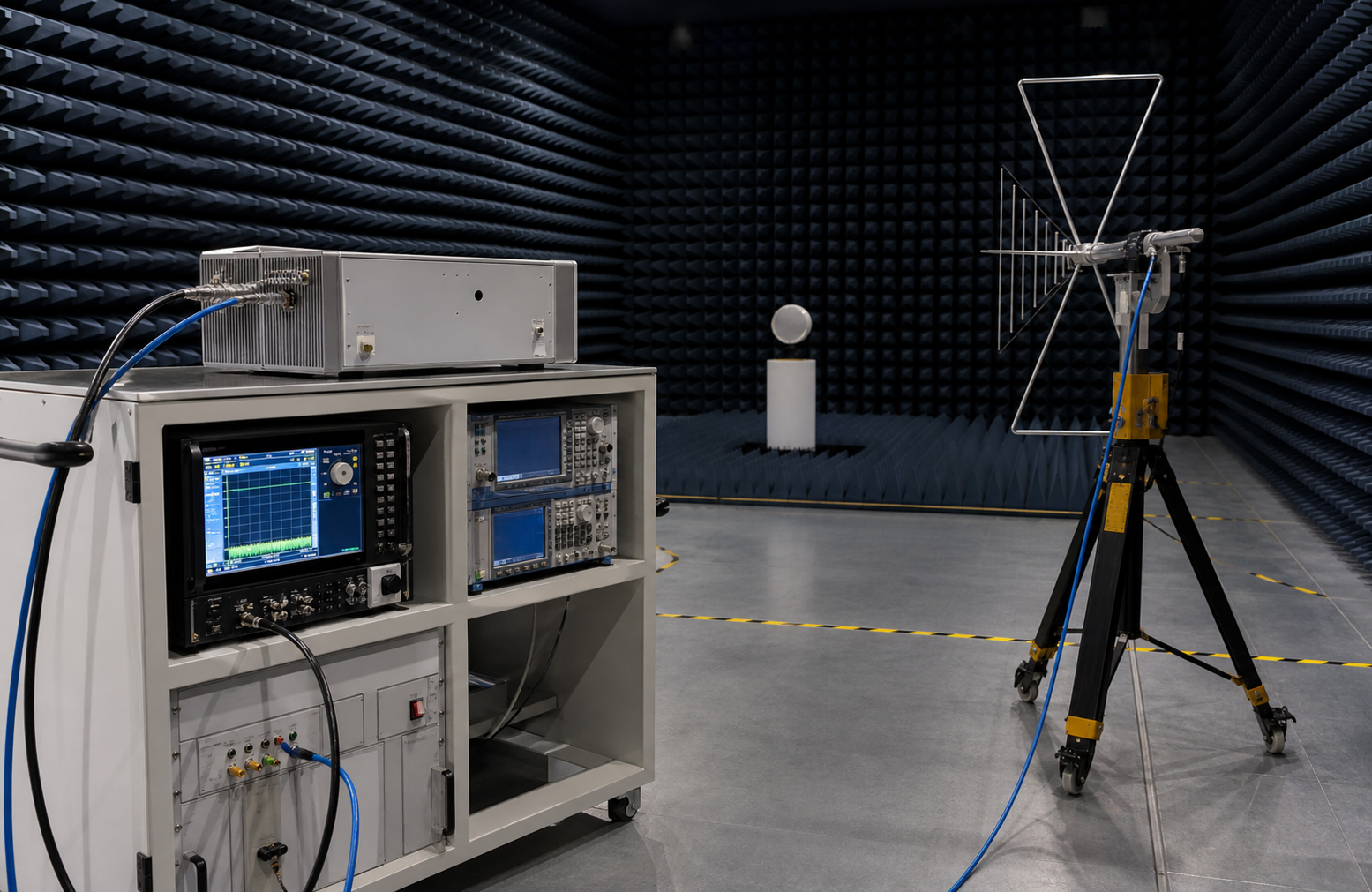
Power amplifier support for RF test setups involving antennas, chambers and radiated field environments.
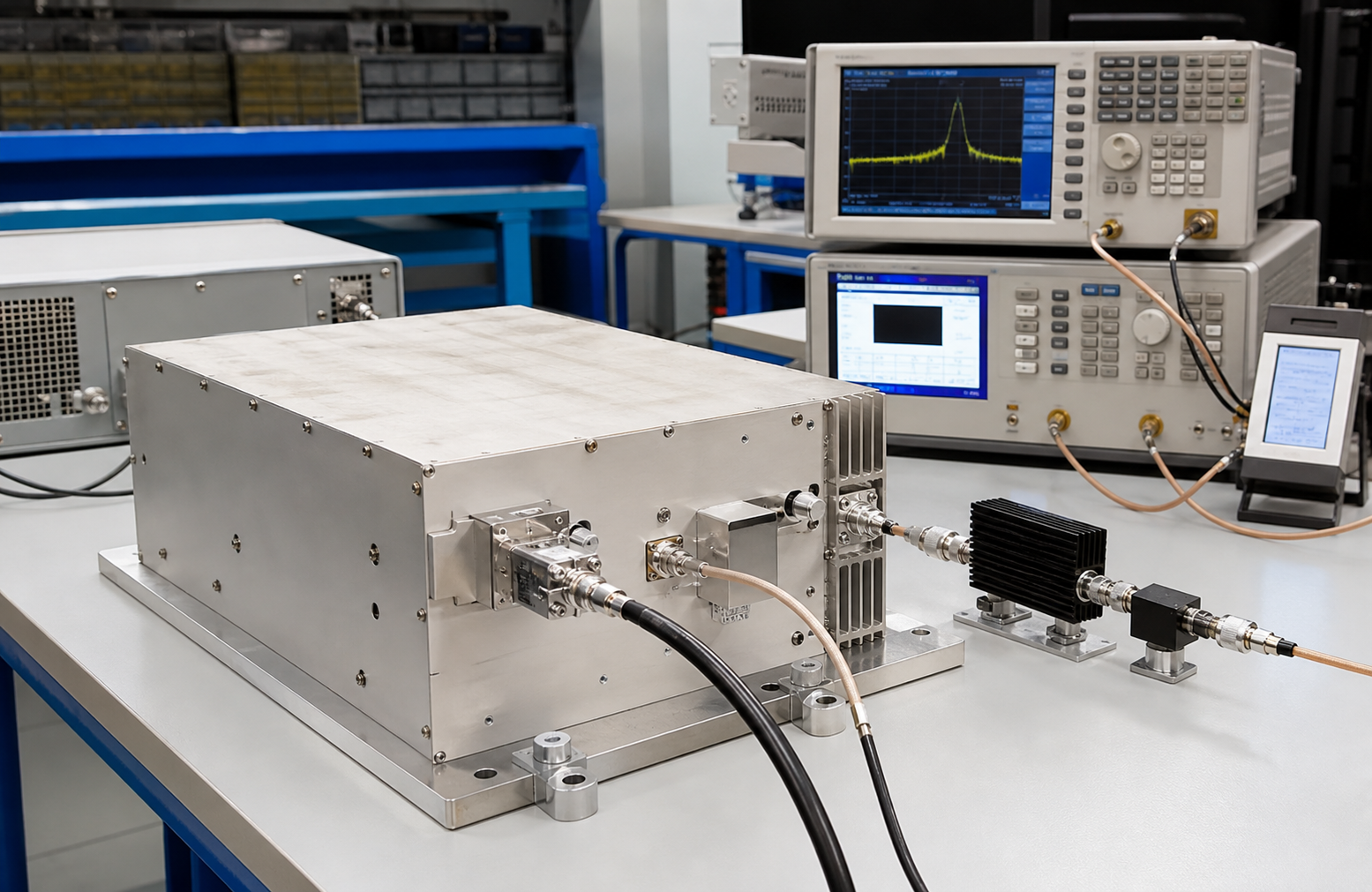
Amplifier platforms for RF component, antenna, subsystem and test bench validation programs.
An EMC RF amplifier provides controlled RF power for EMC-related test environments, including immunity testing, conducted RF testing, radiated RF test setups, laboratory RF validation and compliance-related amplifier systems.
CorelixRF supports EMC amplifier platform areas from kHz-range low-frequency systems to UHF, broadband GHz and microwave amplifier platforms, including project-based custom platforms up to extended high-frequency ranges.
Yes. Output power can be reviewed based on frequency range, required margin, CW or pulse operation, duty cycle, load environment, cooling condition and mechanical integration requirements.
CorelixRF can review CW or pulse requirements depending on the amplifier platform. Pulse width, duty cycle, timing behavior and thermal margin should be confirmed before final recommendation.
Depending on project requirements, measured RF data can include output power, gain flatness, harmonics, spurious performance, thermal behavior and unit-level inspection records.
Please provide frequency range, target output power, CW or pulse operation, load or chamber condition, duty cycle, cooling space, connector type, control interface and required test data or documentation.
Yes. CorelixRF supports OEM/ODM integration review and NDA-based discussions for project-specific RF amplifier platforms, mechanical structures, control interfaces and system integration needs.
Send your frequency range, required output power, CW or pulse condition, load or chamber environment, cooling requirement, RF connector, control interface and documentation needs. CorelixRF will review whether a standard platform or custom configuration is more suitable.
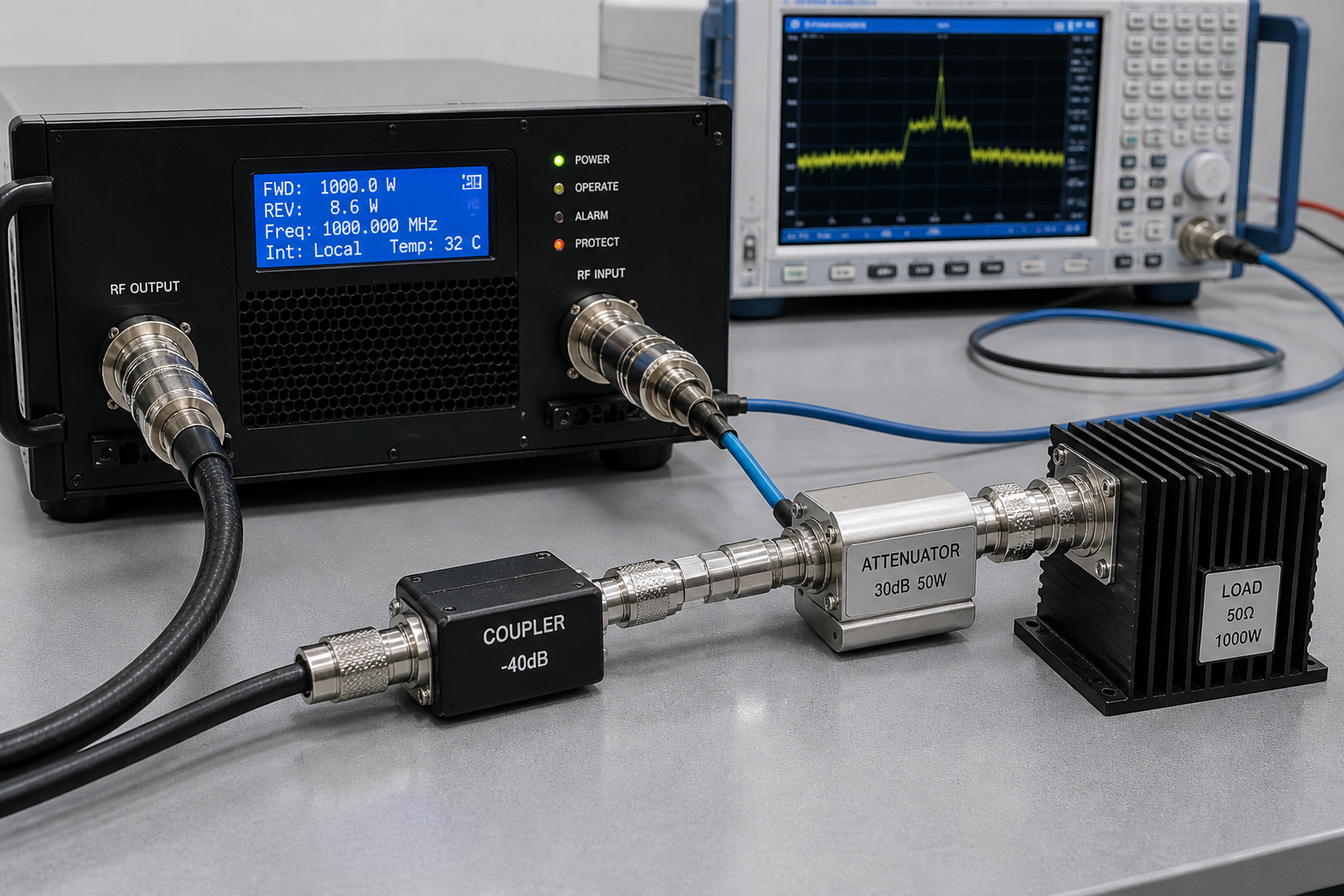 RF connector / test chain close-up
EMC AMPLIFIER PROCUREMENT EVIDENCE
EMC amplifier projects need more than a headline wattage number. Buyers should align frequency band, field-strength target, antenna path, dwell time, protection behavior, cooling and calibration-related documentation before quotation.
Map immunity test bands, chamber setup and antenna path to the amplifier platform.
Read EMC selection guideConfirm whether standard RF power amplifier platforms or modified builds fit the lab requirement.
RF amplifier platformsAsk for test records, delivery documentation and acceptance notes before final approval.
Delivery documentation