
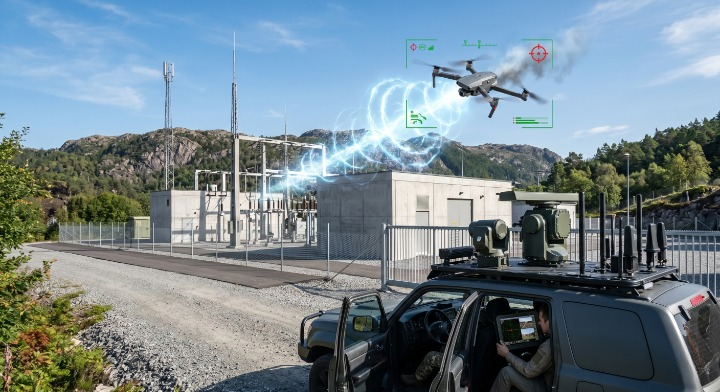
A Counter-UAS system is an integrated technology framework designed to detect, track, identify, and mitigate unauthorized uncrewed aerial systems (UAS). You are likely facing a reality where airspace security is no longer a luxury, but a fundamental operational requirement. Unauthorized drones can disrupt critical operations, perform industrial espionage, or carry dangerous payloads into restricted zones. Implementing a comprehensive Counter-UAS strategy provides you with the multi-layered defense necessary to neutralize these evolving aerial threats effectively.
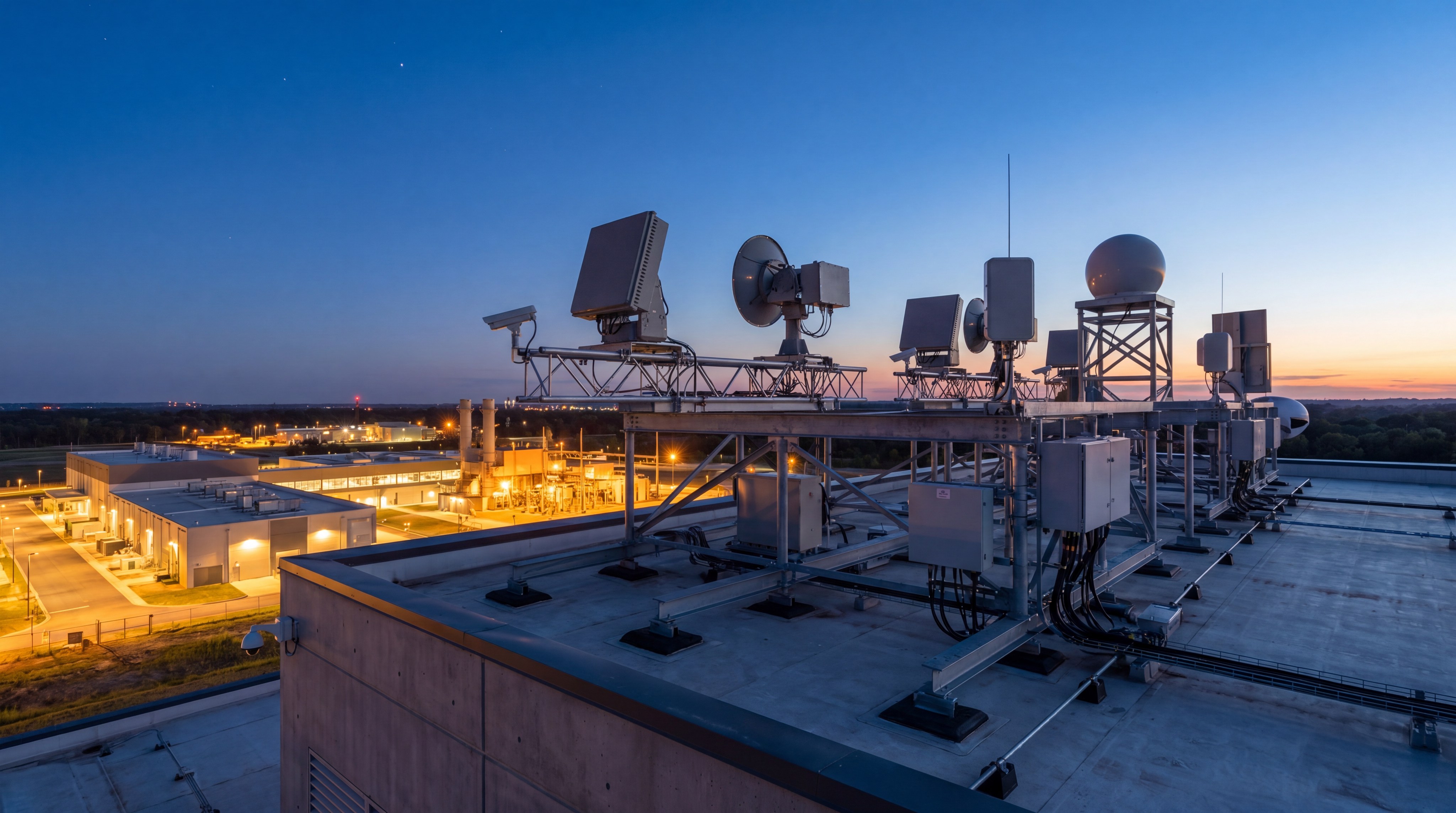
What exactly is a Counter-UAS system?
A Counter-UAS system is a suite of sensors and countermeasures that provides full-spectrum awareness and protection against uncrewed aircraft. These systems monitor the lower airspace to ensure that any drone entering a designated warning zone is immediately interrogated. By combining detection with mitigation, you can respond to incursions before they compromise your facility’s safety.
What are the primary system components?
Think about it: a truly effective system is more than just a single sensor. It typically integrates radio frequency (RF) sensors, radar, and optical cameras to create a complete picture of the sky.
- Detection sensors (RF, Radar, Acoustic).
- Identification software (AI-driven analysis).
- Mitigation hardware (Jammers, Kinetic, Cyber).
The best part: these components work in unison to provide a “kill chain” that moves from initial detection to final resolution.
- Detection: Alerting you to a drone presence.
- Tracking: Monitoring the flight path and pilot location.
- Identification: Determining the drone’s specific model and intent.
How does UAS differ from a single drone?
Here is the kicker: while the term “drone” refers to the vehicle, “UAS” encompasses the entire operating architecture. This includes the aircraft, the ground control station, and the communication links that bind them together.
- UAV: The physical uncrewed aerial vehicle.
- Control Station: The remote interface used by the operator.
- Communication Link: The radio signals connecting the two.
Key Takeaway
Understanding the full system architecture allows you to target vulnerabilities in the communication link rather than just the flying vehicle.
| Component | Focus Area | Role in Security |
|---|---|---|
| UAV | Physical Vehicle | The target that must be intercepted or tracked. |
| Ground Station | Controller | The source location used to find the pilot. |
| Link | RF Signals | The primary target for jamming and cyber mitigation. |
This structural breakdown ensures that your security personnel can distinguish between the hardware in the air and the electronic signals controlling it.
Why do you need specialized airspace security today?
You require specialized protection because the proliferation of affordable, sophisticated drones has created new vulnerabilities in the lower airspace of critical infrastructure and private sites. Counter-UAS platforms address risks ranging from surveillance and espionage to the delivery of illicit payloads or physical obstruction. Without these systems, your traditional ground-based security remains blind to threats approaching from above.
What threats do you face most often?
Look: the range of drone-related threats is expanding as quickly as the technology itself. You might encounter unauthorized media coverage, airspace obstruction at airports, or even destructive payloads intended for critical infrastructure.
- Surveillance and Corporate Espionage.
- Airspace Obstruction and Collisions.
- Contraband Delivery to Facilities.
- Destructive or Explosive Payloads.
Think about it: a single consumer drone can cause millions of dollars in losses by forcing an airport to halt all departures and arrivals.
- Commercial disruption: Halting logistics or travel.
- Privacy violations: Unauthorized filming of sensitive sites.
- Security breaches: Physical delivery of illegal items.
Are there legal considerations for defense?
Here is the kicker: navigating the legal landscape of airspace defense requires a system that complies with regional and federal regulations. You must ensure that your detection and mitigation methods do not violate communications laws or interfere with authorized aircraft.
- FAA regulations on uncrewed aircraft.
- FCC standards for signal interference.
- Local privacy and surveillance laws.
Key Takeaway
Compliance is non-negotiable, and your chosen platform must offer policy-driven recommendations to keep your operations within legal boundaries.
| Legal Factor | Governance | Impact on Operations |
|---|---|---|
| Signal Emission | FCC / Communications Authorities | Limits the use of high-power jammers in urban areas. |
| Airspace Rights | FAA / Aviation Agencies | Determines who is allowed to fly in specific zones. |
| Privacy | Local/Regional Courts | Affects how you store and use optical surveillance data. |
A compliant system provides a clear legal framework for your security team to act with confidence during an incursion.
How do radio frequency sensors detect threats?
Radio frequency sensors operate by receiving and analyzing the signals transmitted between a drone and its control station to establish a detection event. These sensors provide a passive way to monitor the environment without emitting signals that could alert an intruder. By utilizing SDR signal source modules, modern systems can scan a wide spectrum to find even the most elusive signatures.
Can RF sensors identify specific models?
In fact: most modern drones use specific communication protocols that act as a digital fingerprint. RF sensors can match these signals against a library of known drone profiles to identify the exact model and manufacturer.
- Protocol matching for commercial drones.
- Identification of frequency-hopping signals.
- Detection of RF-silent or “dark” drones.
Think about it: knowing the model gives you critical intel on the drone’s speed, range, and potential payload capacity.
- Model range: Determining how far the pilot might be.
- Payload capacity: Assessing the immediate physical threat.
- Communication type: Deciding which mitigation tool is best.
How do wideband components improve detection?
Look: the ability to monitor multiple frequencies simultaneously is what separates professional systems from hobbyist tools. Utilizing 300 – 2700 MHz components allows you to cover the vast majority of commercial and custom drone bands.
- Continuous wideband monitoring.
- Real-time signal analysis and logging.
- High-gain reception for early warning.
Key Takeaway
Broadband coverage ensures that your system remains effective even as new drones enter the market using non-standard frequencies.
| Frequency Band | Common Usage | Detection Priority |
|---|---|---|
| 433 / 915 MHz | Long-range control links | High (Early Warning) |
| 2.4 GHz | Standard Wi-Fi/Video | Very High (Commercial Drones) |
| 5.8 GHz | High-speed video downlink | High (Tactical Awareness) |
This multi-band approach guarantees that no signal goes unnoticed, regardless of the drone’s complexity.
Can radar improve your situational awareness?
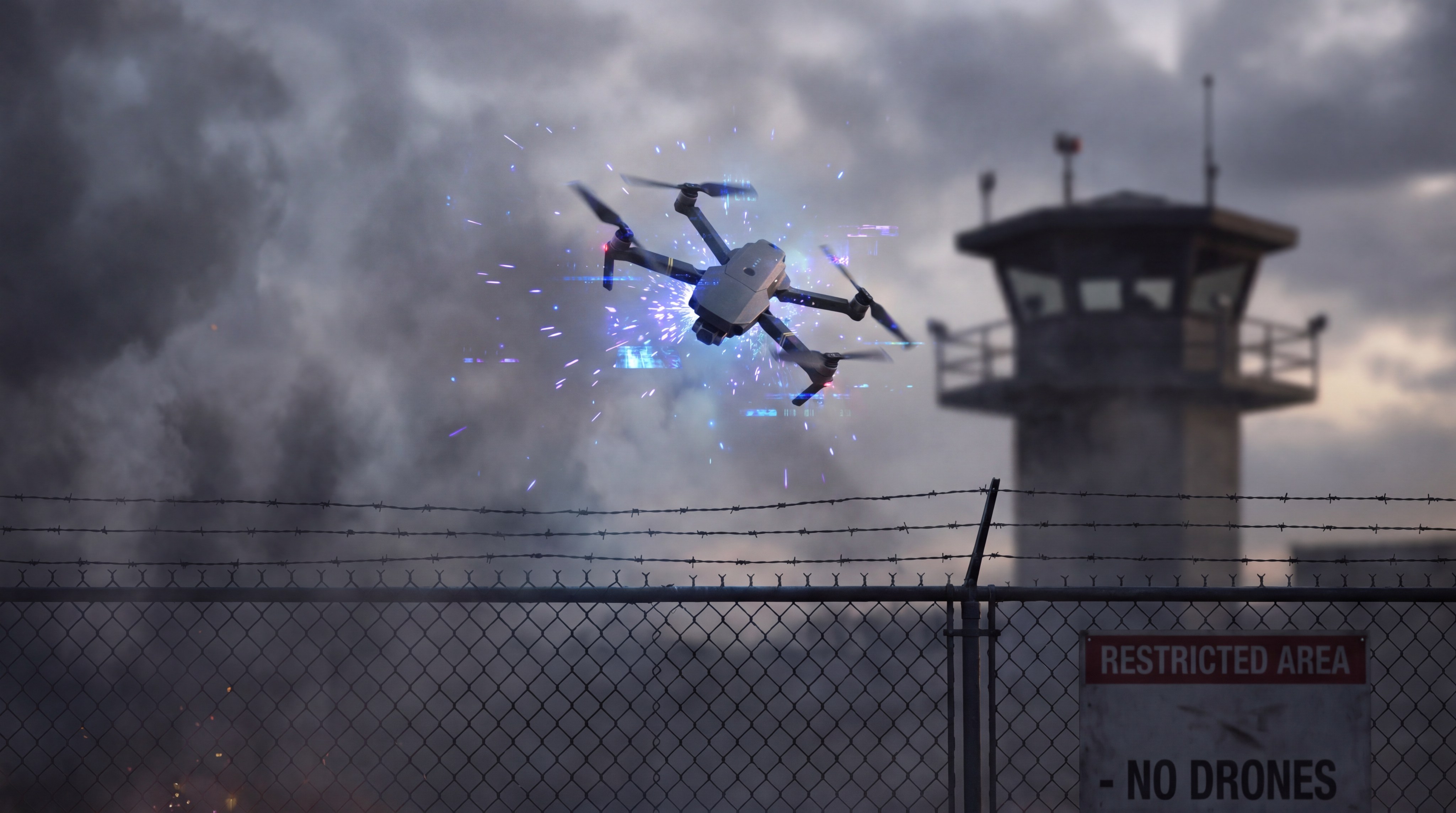
Radar significantly enhances your situational awareness by providing long-range detection and the ability to track drones that do not emit radio signals. An effective Counter-UAS strategy often utilizes both active and passive radar to ensure all-weather performance. While RF sensors listen for “chatter,” radar looks for physical objects in the sky.
What is the benefit of active radar?
The best part: active radar systems transmit their own signals and analyze the reflections to provide precise tracking and target verification. This allows you to see drones that are flying autonomously via GPS without any active control link.
- Precise range and altitude data.
- Detection of RF-silent autonomous drones.
- Simultaneous tracking of multiple targets.
Look: this technology is particularly effective at managing drone swarms where multiple vehicles must be tracked at once.
- Swarm tracking: Monitoring group movements.
- Trajectory analysis: Predicting the drone’s path.
- Speed measurement: Distinguishing drones from birds.
Does radar work in adverse weather?
Think about it: while cameras and human eyes fail in fog or heavy rain, radar remains highly effective. It provides a reliable detection layer that operates 24/7, regardless of environmental lighting or atmospheric conditions.
- Performance in rain, snow, and fog.
- Day and night operational capability.
- Long-range early warning at the perimeter.
Key Takeaway
Radar is your most reliable tool for long-range detection and for finding “silent” threats that RF sensors might miss.
| Radar Type | Signal Method | Primary Benefit |
|---|---|---|
| Active | Emits and receives pulses | High precision and distance data. |
| Passive | Uses external ambient signals | Stealthy operation with no emissions. |
| Micro-Doppler | Analyzes motor/blade rotation | Excellent at filtering out birds. |
Integrating radar into your platform ensures that you have a comprehensive view of the airspace in all conditions.
What roles do optical and acoustic sensors play?
Optical and acoustic sensors provide essential secondary verification layers to confirm the presence and nature of a detected drone. Cameras integrated into the platform allow for visual evidence of payloads, while acoustic sensors can detect drones even when line-of-sight is obstructed by buildings or terrain. These sensors act as the “eyes and ears” that confirm the data provided by your RF and radar systems.
When should you use PTZ cameras?
Here is the kicker: Pan-Tilt-Zoom (PTZ) cameras can be automatically directed by the C2 platform to “slew-to-cue” on a detected target. This provides you with high-resolution video evidence of the threat in real-time.
- Visual verification of payloads (cameras, explosives).
- Evidence collection for law enforcement.
- Tracking of the drone’s landing location.
Look: seeing a drone’s payload often dictates whether you move to “duck and cover” or proceed with active mitigation.
- Payload assessment: Identifying dangerous attachments.
- Identification: Confirming the brand and model visually.
- Forensics: Saving video files for future investigation.
Can acoustic sensors operate in the dark?
In fact: acoustic sensors create an “acoustic image” of the environment, identifying the unique sound signatures of drone motors. This makes them useful in total darkness or heavy fog where optical sensors might struggle to find a target.
- Detection behind physical obstructions.
- Operation in low-visibility environments.
- Passive detection with zero signal footprint.
Key Takeaway
Acoustic and optical sensors serve as the final confirmation layer, ensuring you have visual and audible proof before taking action.
| Sensor Type | Detection Method | Best Use Case |
|---|---|---|
| PTZ Camera | Visible Light / Infrared | Day/Night visual payload verification. |
| Acoustic | Microphone Arrays | Urban canyons or non-line-of-sight zones. |
| Thermal | Heat Signature | High-contrast tracking in varied lighting. |
Adding these layers prevents false positives and gives your team the confidence to execute a response plan.
How does mitigation disrupt unauthorized drone flight?
Mitigation disrupts unauthorized flight by interfering with the communications or navigation systems of the drone, forcing it to land or return to its origin. Modern Counter-UAS solutions offer a variety of methods to neutralize threats, from radio frequency jammers to high-energy microwave beams. By using custom RF systems, you can tailor the mitigation response to the specific risk level.
What are the categories of mitigation?
Think about it: you have four main ways to stop a drone once it has been identified as a threat. These range from “soft-kill” electronic methods to “hard-kill” physical interventions.
- Electronic Jammers (Link disruption).
- Cyber-Takeover (Protocol hacking).
- Kinetic Solutions (Nets, missiles, or interceptors).
- High-Energy (Lasers or microwaves).
Look: most commercial applications favor electronic jamming because it is a “low-collateral” way to handle the problem safely.
- Soft-kill: Disabling the electronics or signals.
- Hard-kill: Physically destroying the vehicle.
- Non-destructive: Forcing a landing or return.
How do cyber-takeover methods function?
Here is the kicker: cyber-takeover is an elegant solution where you essentially “impersonate” the drone’s legitimate controller. This allows you to take command of the aircraft, view its camera feed, and steer it to a safe landing zone.
- Remote hijacking of the drone’s link.
- Access to onboard data and cameras.
- Controlled landing in a secure area.
Key Takeaway
While cyber-takeover is sophisticated, it requires constant signal dominance and may not work against complex drone swarms.
| Mitigation Method | Primary Action | Success Rate |
|---|---|---|
| RF Jamming | Severs the control signal | Very High (Works on swarms). |
| Cyber-Takeover | Impersonates the controller | Moderate (Protocol dependent). |
| High-Power Microwave | Destroys drone electronics | High (Area-of-effect). |
Choosing the right mitigation depends on your environment, as urban areas require different safety protocols than open battlefields.

Is jamming a safe option for urban environments?
Precision jamming is considered a safe and effective option for urban environments when it utilizes narrow-band technology to minimize collateral interference. By targeting specific frequencies, you can sever the drone’s control link without disrupting local Wi-Fi or emergency communication networks. Utilizing 30 – 512 MHz amplifiers as part of a wider RF strategy helps manage long-range control frequencies effectively.
How does a jammer handle drone swarms?
The best part: unlike kinetic solutions that target one drone at a time, a jammer can project a wide cone of interference. This effectively neutralizes an entire swarm of drones simultaneously by severing their connection to a central control point.
- Omni-directional signal interference.
- Multi-band jamming across common protocols.
- Disruption of GPS and GLONASS signals.
Look: when a swarm loses its signal, the individual drones typically enter a “fail-safe” mode, resulting in a gentle landing or hover.
- Fail-safe mode: Automatic safety protocols.
- Signal saturation: Overwhelming the drone’s receiver.
- Area protection: Creating an electronic “no-fly” zone.
What happens when the link is severed?
Think about it: a drone is programmed to follow specific safety protocols when it loses communication with its pilot. Most commercial models are set to either land slowly on the spot or return to their initial launch coordinates.
- Return-to-Home (RTH) protocols.
- Automatic vertical landing.
- Hover-until-battery-depletion.
Key Takeaway
Electronic jamming is the industry standard for urban security because it provides a non-destructive way to ground unauthorized threats.
| Jamming Type | Coverage Area | Best Application |
|---|---|---|
| Directional | Conic Beam | Targeted threat neutralization. |
| Omni-directional | 360-degree Sphere | Perimeter defense and swarm protection. |
| Narrow-band | Specific Frequency | Minimizing collateral Wi-Fi disruption. |
Properly configured jamming hardware ensures that your defense is both effective and surgically precise.
Why is multi-sensor fusion critical for success?
Multi-sensor fusion is critical because it aggregates data from RF, radar, and optical sensors into a single operating picture for the user. A robust Counter-UAS command and control platform uses artificial intelligence to interrogate targets autonomously, reducing the burden on your security personnel. Integrating SDR + Amplifier integration units ensures that your signal detection is both fast and accurate.
Can you manage multiple sensors easily?
In fact: a modern Command and Control (C2) system handles the complex task of “de-conflicting” sensor data automatically. It identifies if a radar track and an RF signal belong to the same drone, presenting you with a single, clear alert.
- Automated sensor coordination.
- Single-pane-of-glass interface.
- Reduction of human error and fatigue.
Look: the goal is to give you a definitive answer to “what is it?” and “where is it?” without making you look at ten different screens.
- Simplified UI: Easy-to-read maps and alerts.
- Real-time data: Instant updates on drone movement.
- Decision support: Recommended actions for the operator.
Does AI improve identification accuracy?
Here is the kicker: machine learning algorithms can analyze thousands of drone signatures in milliseconds to provide a friend-or-foe identification. This allows authorized drones, such as your own facility inspection units, to operate without triggering a mitigation response.
- Automatic “friend or foe” classification.
- Reduced false alarms from birds or planes.
- Continuous learning of new drone protocols.
Key Takeaway
Sensor fusion backed by AI is the only way to manage the massive amount of data generated by a modern security environment.
| Integration Layer | Function | Outcome |
|---|---|---|
| Sensor Data | Raw signal/image input | Comprehensive awareness. |
| AI Processing | Pattern recognition | Accurate identification. |
| C2 Interface | Visualization | Actionable security intelligence. |
By automating the “interrogation” process, your team can focus on responding to actual threats rather than chasing false positives.
Can you deploy these systems in remote locations?
You can rapidly deploy these systems in remote locations using portable all-in-one kits designed for field use. These mobile units provide the same detection and mitigation capabilities as fixed-site installations but can be operational in less than twenty minutes. High-performance Antenna platforms allow these portable units to maintain a wide coverage area even in challenging terrain.
Are rapid-response towers available?
The best part: you can utilize trailer-mounted units that feature telescopic towers reaching up to 50 feet. These provide a high vantage point for sensors, significantly extending the line-of-sight for both radar and optical systems.
- Trailer-mounted for easy towing by SUV.
- Telescopic towers for height advantage.
- Integrated power and networking for remote use.
Think about it: these units are ideal for temporary events like VIP visits, outdoor festivals, or emergency response scenarios.
- Temporary security: Protecting pop-up events.
- Border security: Monitoring remote perimeters.
- Industrial sites: Moving defense as construction progresses.
What makes a system truly portable?
Look: a truly portable kit should fit into ruggedized cases that can be checked as luggage on a commercial flight. It must include all necessary RF sensors, laptops, and networking gear to establish a secure airspace in minutes.
- Ruggedized, weather-proof enclosures.
- Modular design for easy setup/teardown.
- Battery or portable generator compatibility.
Key Takeaway
Portability ensures that your airspace security is as mobile as the threats you are trying to stop.
| Deployment Mode | Setup Time | Best Environment |
|---|---|---|
| Fixed Site | Days/Weeks | Permanent infrastructure (Airports/Prisons). |
| Rapid Response | < 1 Hour | Public events and temporary VIP sites. |
| Man-Portable | < 20 Minutes | Tactical field use and remote patrols. |
Having a mobile option allows you to relocate your defenses as the threat landscape changes or as new critical zones are established.
How do you choose the right RF hardware components?
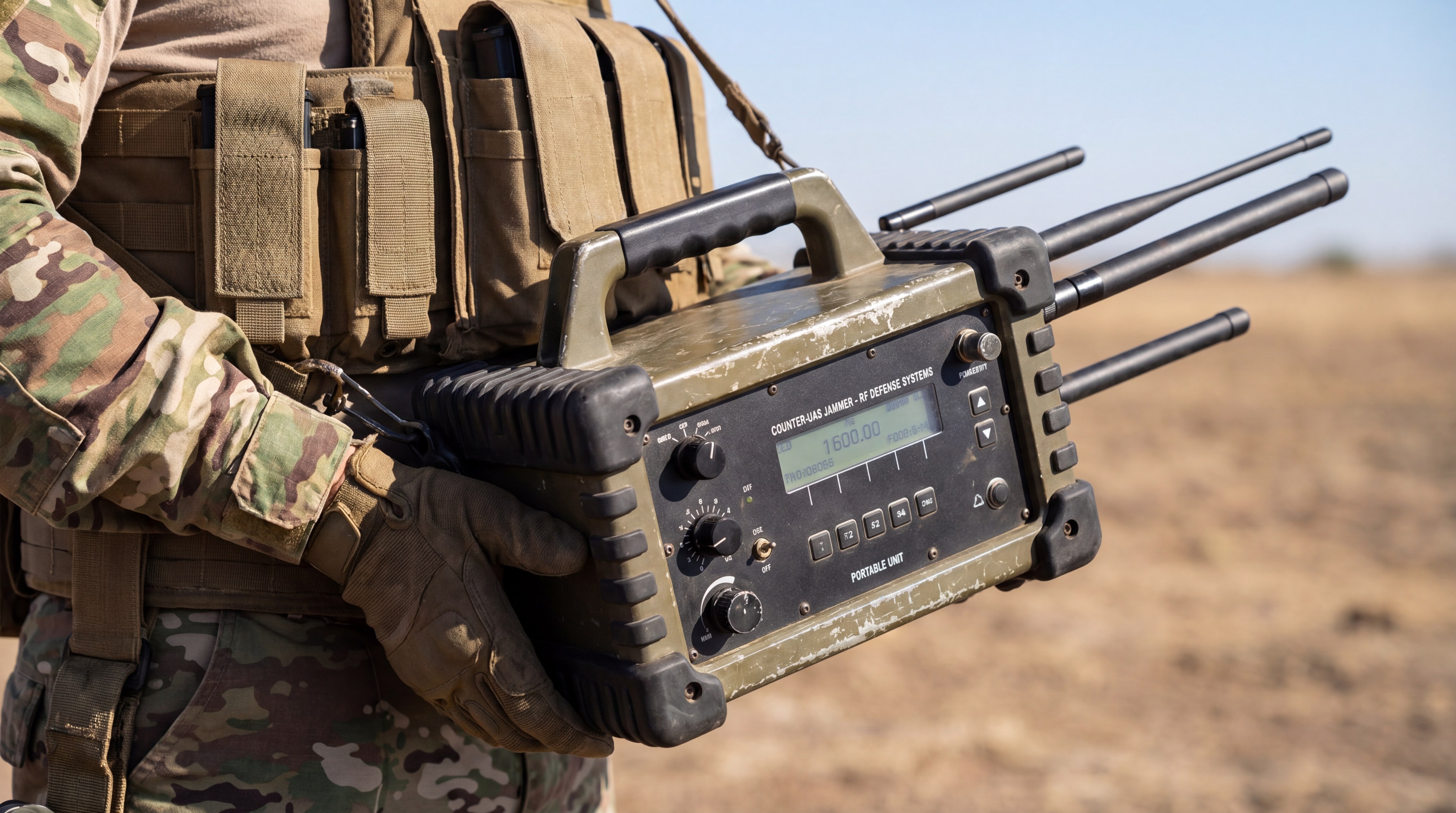
Choosing the right RF hardware involves selecting amplifiers, antennas, and signal sources that match your specific frequency and power requirements. Integrating high-performance Counter-UAS components ensures that your system has the necessary gain and range to meet evolving threats. You can explore High Frequency Amplifiers to cover the upper bands that are increasingly being used by custom-built drones.
Why is frequency coverage important?
In fact: if your hardware doesn’t cover a specific band, you are effectively blind to any drone operating on that frequency. Selecting wideband components ensures that you are protected against both common consumer models and high-end industrial systems.
- Coverage from 4 kHz to 110 GHz.
- Support for standard and custom protocols.
- Future-proofing against new RF standards.
Think about it: as the spectrum becomes more crowded, having high-linearity hardware is essential to distinguish small drone signals from background noise.
- Signal clarity: Reducing noise interference.
- Range: Detecting threats at greater distances.
- Reliability: Consistent performance in high-RF areas.
Can custom systems be built for specific needs?
Here is the kicker: every site has unique challenges, from mechanical constraints to specific power requirements. Engaging with Custom RF Development services allows you to build a tailor-made system that integrates perfectly with your existing security infrastructure.
- OEM and ODM hardware support.
- Custom enclosures and cooling solutions.
- Tailored interface and control options.
Key Takeaway
Standard platforms provide a fast start, but custom engineering ensures your hardware meets the exact demands of your environment.
| Hardware Need | Typical Solution | Benefit |
|---|---|---|
| Wideband Detection | Broadband Amplifiers | Covers the entire commercial spectrum. |
| Precise Targeting | Directional Antennas | Focuses power on the detected threat. |
| Signal Generation | SDR Source Modules | Allows for flexible protocol interrogation. |
Selecting the right hardware is the foundation of a successful defense strategy, ensuring that your software has the best possible data to work with.
*
Frequently Asked Questions
Can I use these systems in a residential area?
Yes, but with caveats. While detection is generally legal, active mitigation like jamming is highly regulated in residential zones due to potential interference with emergency services and home Wi-Fi.
What’s the best way to handle a drone swarm?
Wideband electronic jamming is the most effective method. Unlike kinetic interceptors, a jammer creates an area-of-effect that can disable multiple communication links simultaneously.
How do I know if a drone is a friend or a foe?
The system uses Remote ID and protocol analysis. By matching the drone’s digital signature against a whitelist, the platform can automatically distinguish your own authorized units from intruders.
Can a drone fly without any RF signals?
Yes, some autonomous drones use GPS waypoints and optical navigation. This is why integrating radar and optical sensors is critical, as they detect the physical drone rather than its radio chatter.
What is the detection range of a typical portable system?
Range varies by terrain, but you can typically expect several kilometers for RF detection. Radar and optical ranges are often shorter and depend on line-of-sight and target size.
*
The Path to Comprehensive Airspace Security
Securing your lower airspace is a multi-dimensional challenge that requires more than just a single piece of hardware. By implementing an integrated strategy, you solve the critical problems of unauthorized surveillance, physical incursions, and operational disruption. Our mission is to provide the high-performance RF components and system intelligence required to make your airspace impenetrable.
Whether you are protecting a high-profile public event, a correctional facility, or critical energy infrastructure, the right tools ensure you are never caught off guard. Do not wait for an incident to occur before securing your perimeter. To discuss your specific RF requirements and start building your defense, contact us today.