
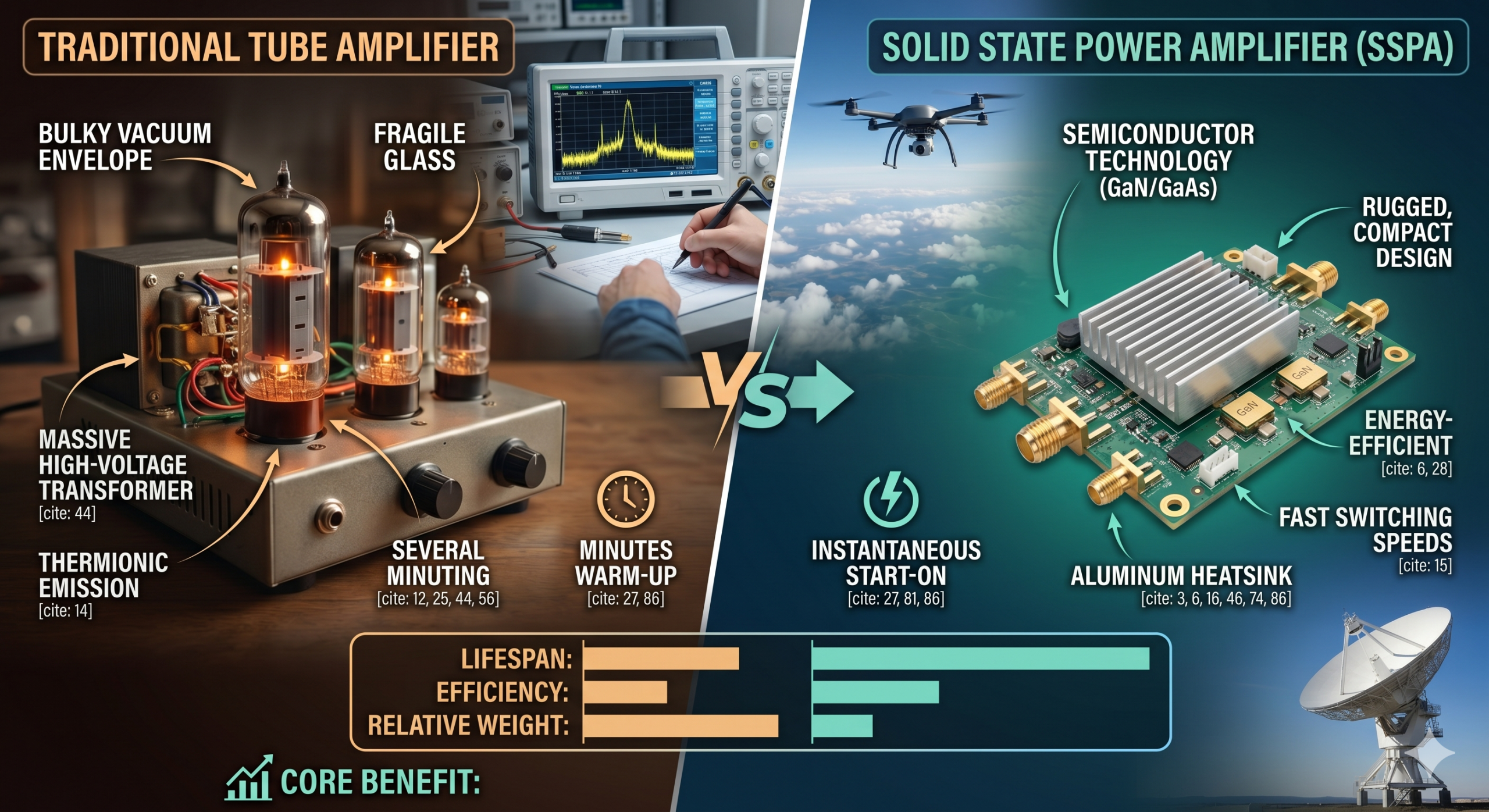
What is a solid state power amplifier compared to tube types?
A solid state power amplifier is a modern RF device that uses semiconductor technology like GaN or GaAs transistors instead of legacy vacuum tubes to increase signal strength. Imagine you are building a mission-critical communication link for a high-altitude drone system. You often face the problem of heavy, fragile equipment that drains batteries and generates excessive heat. By switching to a semiconductor-based solution, you get a rugged, compact, and energy-efficient system that ensures your data reaches its destination without interruption.
Turn solid-state PA efficiency goals into quote-ready hardware requirements
When system efficiency depends on GaN/LDMOS selection, cooling, gain flatness, EMC exposure or integration limits, CorelixRF can review amplifier platforms and supporting RF hardware before procurement.
How does the basic architecture differ?
Think about it. While traditional tube amplifiers rely on boiling electrons in a vacuum, a solid state power amplifier moves charges through solid semiconductor materials. This creates a more stable signal path with fewer points of failure.
- Semiconductor Die: The core where amplification happens at the molecular level.
- Matching Circuits: Ensuring the signal flows without reflecting back.
- Integrated Control: Built-in logic for monitoring health and power.
Key Takeaway: Solid-state architecture eliminates the fragile glass and high-voltage requirements of older tube-based systems.
How does a solid state power amplifier differ in technology?
The primary technological difference is that a solid state power amplifier uses transistors to control electron flow within a crystal lattice, whereas traditional models use thermionic emission in a vacuum. You will find that this fundamental shift allows for much faster switching speeds and better linearity across wide bandwidths.
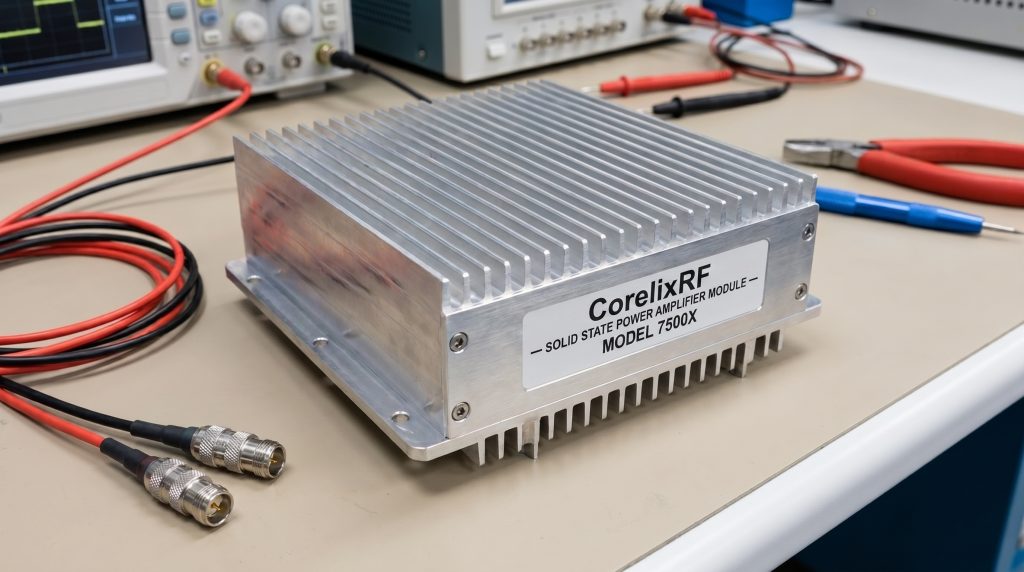
What makes semiconductor gain different?
Here is the kicker. Semiconductor gain stages can be cascaded easily to reach the desired output power without the need for massive power supplies. This modularity gives you the freedom to scale your RF project as needed.
- GaN Efficiency: High power density in a tiny footprint.
- GaAs Precision: Excellent for low-noise applications.
- Low Voltage: Operates safely on standard DC rails.
Why is linearity so important?
Believe it or not, the way a solid state power amplifier handles complex digital waveforms is vastly superior to legacy designs. You get a faithful reproduction of your data, which is essential for modern 5G or satellite communications.
- Low Distortion: Clearer signals for high-order modulation.
- Phase Stability: Consistent performance across temperature changes.
- Harmonic Control: Reduced interference with neighboring bands.
Key Takeaway: Modern semiconductor technology provides the precision and scalability required for 21st-century digital RF standards.
| Feature | SSPA Technology | Traditional Tube |
|---|---|---|
| Active Component | Transistors (GaN/GaAs) | Vacuum Tubes |
| Operating Voltage | 28V – 50V DC | 1000V+ AC/DC |
| Warm-up Time | Instantaneous | Several Minutes |
This comparison highlights how solid-state logic simplifies the electrical demands of your RF system integration.
Why is a solid state power amplifier more efficient?
A solid state power amplifier is more efficient because it converts DC power into RF energy with significantly less waste heat compared to traditional cathode-heated tubes. You won’t have to worry about wasting half of your input power just to keep a filament glowing.
How does DC-to-RF conversion improve?
The truth is, semiconductor devices like GaN transistors have much lower internal resistance. You see more of your electricity turning into useful signal power and less turning into ambient heat that stresses your enclosure.
- Direct Conversion: No energy lost to thermionic heating.
- Peak Efficiency: Optimized for specific power levels.
- Reduced Loss: Shorter internal signal paths within the module.
What is the impact on your power budget?
Now we’re talking. For field-deployed units or satellite payloads, every milliamp counts, and a solid state power amplifier helps you stretch your battery life further.
- Lower Operational Cost: Less electricity consumed over the unit’s life.
- Smaller Power Supplies: Reduced weight and cost for supporting hardware.
- Green Technology: A sustainable choice for large-scale deployments.
Key Takeaway: Higher efficiency means less energy waste, allowing you to design smaller systems with lower operating expenses.
| Efficiency Metric | Solid State Advantage | Traditional Tube Loss |
|---|---|---|
| Heat Generation | Low to Moderate | High to Extreme |
| Power Conversion | 30% to 60%+ | Often < 20% |
| Idle Power | Minimal | High (Filament power) |
Analyzing these metrics shows that semiconductor solutions are the optimal choice for power-sensitive engineering projects.
How do size and weight favor a solid state power amplifier?
A solid state power amplifier is significantly smaller and lighter because it lacks the heavy vacuum envelopes and massive high-voltage transformers required by legacy tubes. You can easily integrate these modules into hand-held devices or compact rack systems that were previously impossible to build.
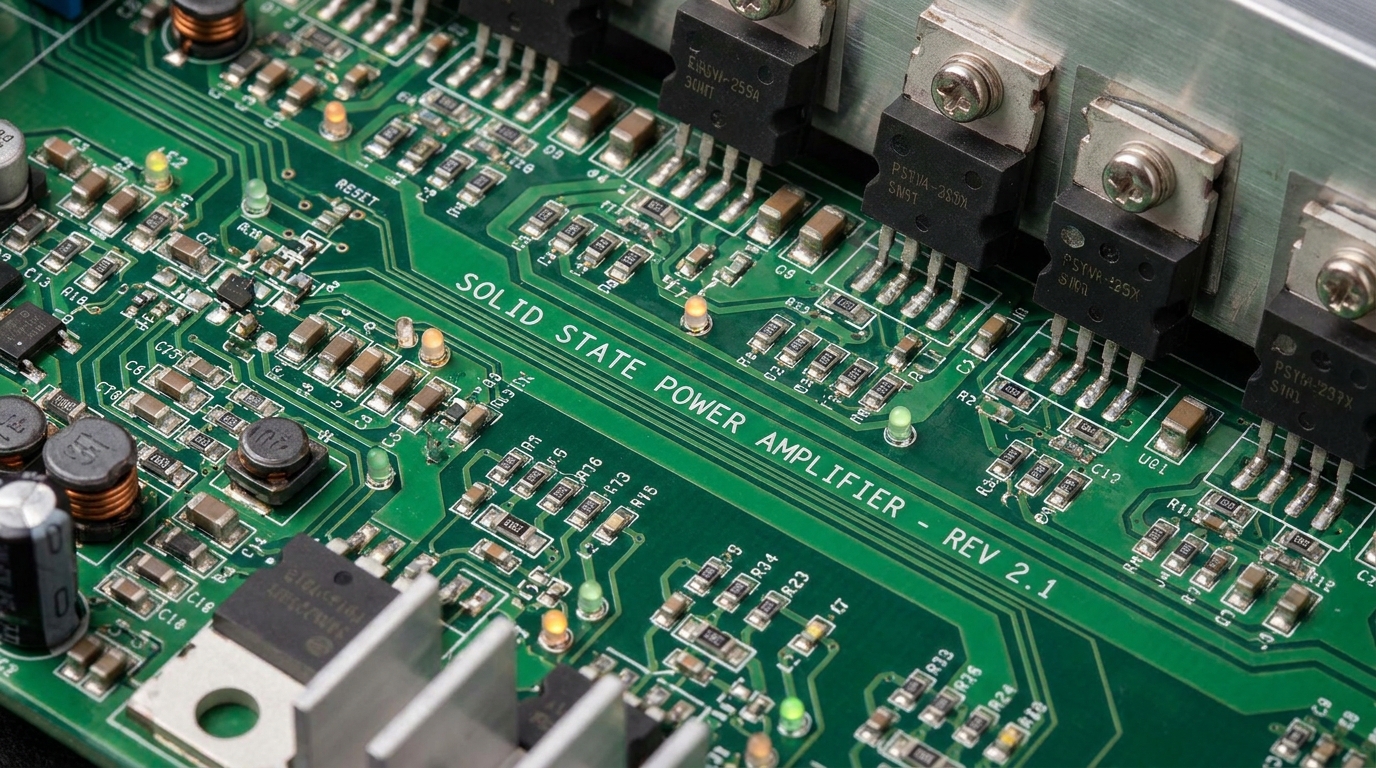
Why is miniaturization possible?
Think about it. The ability to etch complex circuits onto a single piece of silicon or gallium nitride means you can pack a multi-watt system into a space the size of a smartphone.
- Microwave Integration: Combining many functions on one chip.
- Surface Mount Design: Reducing the need for bulky connectors.
- Integrated Passive Devices: Shrinking filters and couplers.
How does weight affect deployment?
Here is the kicker. Shaving a few kilograms off your RF payload can save thousands of dollars in shipping costs or allow your UAV to stay airborne for an extra hour.
- Portable Labs: Systems that fit in a standard briefcase.
- Aerospace Savings: Lower launch costs for satellite systems.
- Ease of Installation: One technician can handle the mounting process.
Key Takeaway: The extreme power density of solid-state hardware enables a level of mobility and integration that tubes cannot match.
| Physical Property | Solid State Amplifier | Legacy Tube System |
|---|---|---|
| Footprint | Compact / Modular | Bulky / Rack-mounted |
| Relative Weight | Light (Grams to kg) | Heavy (Dozens of kg) |
| Form Factor | PCB or Benchtop | Large Metal Housing |
The physical reduction in size directly translates to more flexible deployment options for your specialized RF hardware.
What is the lifespan of a solid state power amplifier?
The lifespan of a solid state power amplifier typically exceeds 100,000 hours of continuous operation, which is nearly ten times longer than most vacuum tube models. You will find that these devices do not suffer from the “wear-out” mechanisms like cathode depletion that eventually kill all tubes.
Why is reliability so much higher?
The secret is out. Without moving parts, filaments, or vacuums that can leak, a solid state power amplifier is inherently a “set it and forget it” piece of technology for your lab.
- No Cathode Degradation: Performance stays consistent over years.
- Solid Construction: Resistant to the internal stress of high power.
- Protection Logic: Intelligent circuits that prevent self-destruction.
What are the maintenance costs?
Believe it or not, your maintenance budget will drop to near zero once you move away from traditional tube swaps. You can spend your time on innovation instead of troubleshooting old, failing hardware.
- Zero Tube Swaps: No need for scheduled hardware replacements.
- Remote Monitoring: Check system health from across the globe.
- High Uptime: Essential for critical telecommunications infrastructure.
Key Takeaway: Superior longevity makes semiconductor amplifiers the most cost-effective solution for long-term RF infrastructure projects.
| Longevity Factor | SSPA Performance | Tube Reliability |
|---|---|---|
| Mean Time to Failure | >100,000 Hours | ~5,000 – 15,000 Hours |
| Scheduled Service | None required | Frequent tube tuning |
| Failure Mode | Graceful / Partial | Sudden / Catastrophic |
This data confirms that investing in solid-state technology minimizes downtime and maximizes the return on your hardware investment.
Is a solid state power amplifier better for mobile use?
Yes, a solid state power amplifier is the industry standard for mobile use because its rugged construction handles the shocks and vibrations of field operation without losing signal integrity. You can deploy these units on off-road vehicles or aircraft where a glass vacuum tube would shatter instantly.
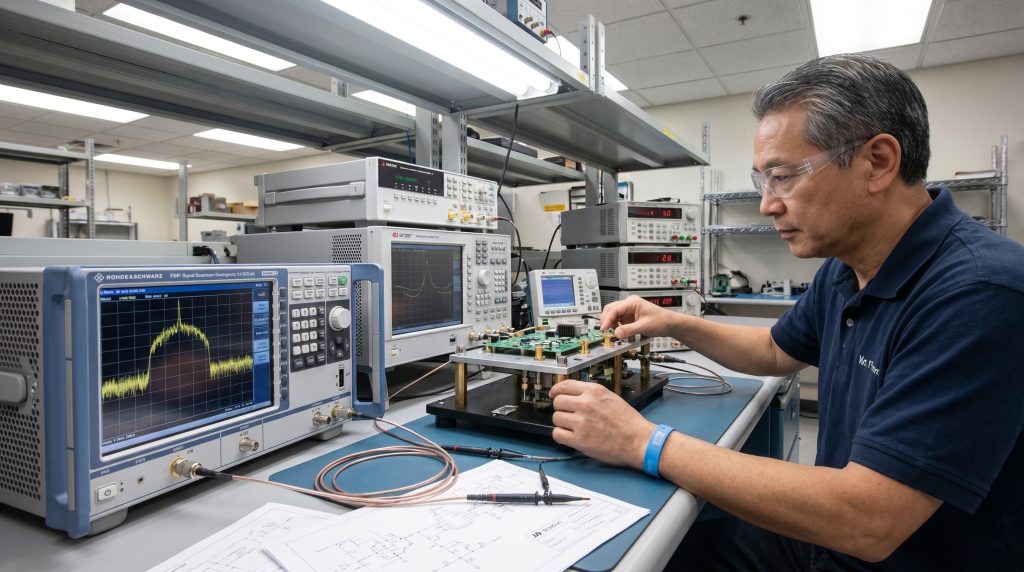
How does vibration resistance work?
It gets better. Since the internal components of a solid state power amplifier are soldered directly to a PCB and often potted in resin, they are virtually immune to mechanical stress.
- Shock Testing: Surviving high-G environments with ease.
- Constant Performance: No microphonics or signal flutter during motion.
- Rugged Enclosures: CNC-machined aluminum for maximum protection.
Why is instant-on power a game changer?
Think about it. In a mobile or emergency scenario, you don’t have time to wait five minutes for a tube to warm up before you can start transmitting.
- Immediate Signal: Full power output the second you flip the switch.
- Power Savings: Turn the unit off when not in use to save battery.
- Reliable Response: Ready whenever the mission demands it.
Key Takeaway: The combination of mechanical toughness and instant availability makes solid-state the only choice for modern mobile RF.
| Environmental Factor | Solid State Performance | Tube Vulnerability |
|---|---|---|
| Mechanical Shock | High Resistance | High Fragility |
| Operating Vibration | No signal impact | Prone to noise/failure |
| Ready State | Instantaneous | Required Warm-up |
The ability to operate under harsh mechanical conditions ensures your signal remains stable regardless of the environment.
How does cooling impact a solid state power amplifier?
Cooling is simplified for a solid state power amplifier because the heat is generated at the base of the transistor, allowing for efficient conduction through a metal heatsink. You won’t need the massive, noisy forced-air or liquid cooling systems often found in high-power tube racks.
What are the conductive cooling benefits?
Here is the kicker. By using the chassis itself as a heatsink, a solid state power amplifier can often operate silently without any moving fans in lower power applications.
- Passive Cooling: Using fins and convection for silent operation.
- Fan-Assisted: Small, efficient fans for high-power modules.
- Thermal Mapping: Ensuring no hot spots damage the internal die.
How does this affect system size?
The truth is, removing bulky cooling pumps and large air ducts allows you to fit your solid state power amplifier into much tighter spaces. You gain more room for other critical components in your system rack or enclosure.
- High Density: Fitting more channels into a single 1U rack.
- Sealed Units: Operating in dusty or harsh environments without air intake.
- Reduced Noise: A quieter laboratory or field environment.
Key Takeaway: Efficient thermal conduction through the baseplate allows for more compact and quieter RF system designs.
| Cooling Method | Solid State Capability | Traditional Tube Need |
|---|---|---|
| Primary Method | Conduction / Heatsink | Forced Air / Liquid |
| Cooling Footprint | Small / Integrated | Large / External |
| Noise Level | Low to Silent | Often very loud |
By mastering heat dissipation through conduction, you can build more resilient systems that operate in restricted spaces.
Which applications require a solid state power amplifier?
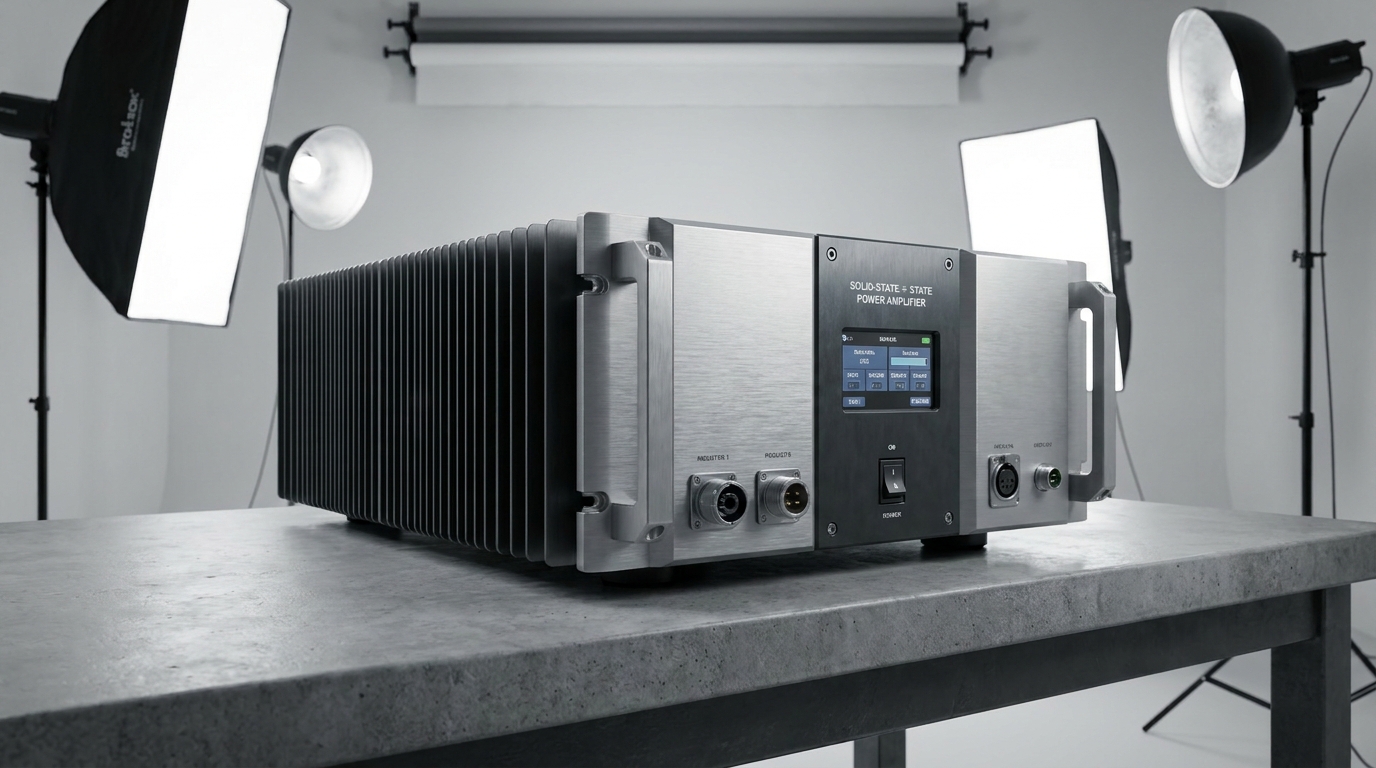
Applications requiring high linearity, wide bandwidth, and rugged reliability, such as UAV links and 5G test benches, strictly require a solid state power amplifier. You will find these devices at the heart of everything from satellite ground stations to electronic warfare systems.
Why is it used in SATCOM?
Believe it or not, the satellite industry has moved almost entirely to solid-state for ground terminals due to the better phase noise and lower maintenance requirements.
- Ku/Ka Band: Supporting the latest high-frequency data links.
- Digital Modulation: Handling complex signals without distortion.
- Continuous Operation: Maintaining links for years without service.
How does it support EMC testing?
Now we’re talking. For electromagnetic compatibility (EMC) labs, a solid state power amplifier provides the stable, repeatable fields needed to validate new electronics.
- Wide Frequency Sweep: Covering MHz to GHz in a single unit.
- Consistent Gain: Reliable field strength across the entire band.
- Safe Operation: Protecting the lab from high-voltage hazards.
Key Takeaway: From deep space to the testing lab, solid-state power is the indispensable foundation of modern RF infrastructure.
| Application Sector | Why SSPA is Used | Core Benefit |
|---|---|---|
| Unmanned Systems | Small size and weight | Longer mission time |
| Testing & Lab | Precision and Repeatability | Validated test data |
| Broadcasting | High efficiency and uptime | Lower electricity bills |
Selecting a semiconductor path ensures your application benefits from the highest standards of modern signal processing.
How to select the right solid state power amplifier?
To select the right solid state power amplifier, you must balance your frequency requirements, output power needs, and environmental constraints like cooling and mounting space. You should start by defining your 1dB compression point (P1dB) to ensure your signal remains linear at peak power.
What are the critical RF specs?
Think about it. If you choose an amplifier with poor gain flatness, your signal strength will fluctuate wildly across your operating band.
- Frequency Range: Match the bandwidth to your specific waveform.
- Gain Stability: Ensure consistent levels across temperature swings.
- VSWR Protection: Prevent damage from reflected power or bad loads.
Why does the interface matter?
Here is the kicker. A high-quality solid state power amplifier should offer a control interface that lets you monitor performance in real-time from your workstation.
- Digital Monitoring: Tracking current, voltage, and temperature.
- Remote Control: Adjusting gain or muting the unit via software.
- Fault Logging: Recording events to prevent future system failures.
Key Takeaway: Proper selection involves a deep dive into both RF performance metrics and the physical integration requirements of your project.
| Selection Step | Critical Question to Ask | Why it Matters |
|---|---|---|
| Power Budget | What is my peak Psat? | Prevents signal clipping |
| Thermal Review | Is there enough airflow? | Prevents thermal shutdown |
| Interface Check | Does it support Ethernet? | Allows for remote automation |
Guiding your selection with these technical checkpoints will ensure you receive a validated amplifier that fits your exact project baseline.
Frequently Asked Questions about solid state power amplifier technology?
Can I replace my old tube amplifier with a solid state power amplifier?
Yes, in most cases, you can swap them directly. Modern semiconductor units are designed as drop-in replacements with standard rack sizes and standard RF connectors.
What’s the best frequency range for these amplifiers?
There is no single “best” range, as semiconductor technology covers everything from 4 kHz up to 170 GHz. You should choose a module that specifically covers your required operating band with a small margin.
How do I know if I need a pulsed or continuous wave model?
It depends on your waveform; radar applications usually require pulsed models for high peak power. If you are doing general communications or testing, a continuous wave (CW) unit is the standard choice.
Can I customize the connectors on my amplifier module?
Absolutely. Most high-end manufacturers allow you to select your preferred connector types, such as SMA, N-type, or 2.92mm, during the engineering review process.
How do I get technical support for my specific RF project?
You should reach out to the engineering team directly. Most factory-direct providers offer a technical review within 24 to 48 hours to help match hardware to your real project conditions.
*
Ready to Upgrade Your RF System?
Transitioning from legacy vacuum tubes to a modern solid state power amplifier is the most effective way to improve your system’s reliability, efficiency, and performance. Whether you are building a satellite ground station, a laboratory test bench, or a mobile communication link, our factory-direct engineering team is here to help you move from requirement review to validated delivery.
At CorelixRF, we specialize in high-performance RF platforms that cover 4 kHz to 170 GHz. We focus on providing unit-level test data with every shipment so your integration starts with a verified baseline. Stop struggling with bulky, fragile legacy hardware and embrace the future of semiconductor-driven RF power.
Contact us today to start your engineering review and find the perfect RF solution for your next mission-critical project.
Make the lab setup and report curves part of the RFQ
Test-bench issues become easier to resolve when the RFQ lists signal source, cable loss, load condition, calibration setup, power sequencing, gain flatness, spurious limits and report format.
Recommended next step: send the operating band, output power target, duty cycle, load condition, control interface, protection or thermal limits and required FAT documents. CorelixRF can review this How to Improve System Efficiency With a Solid State Power Amplifier? requirement against standard RF amplifier platforms, RF front-end options and controlled customization paths.