
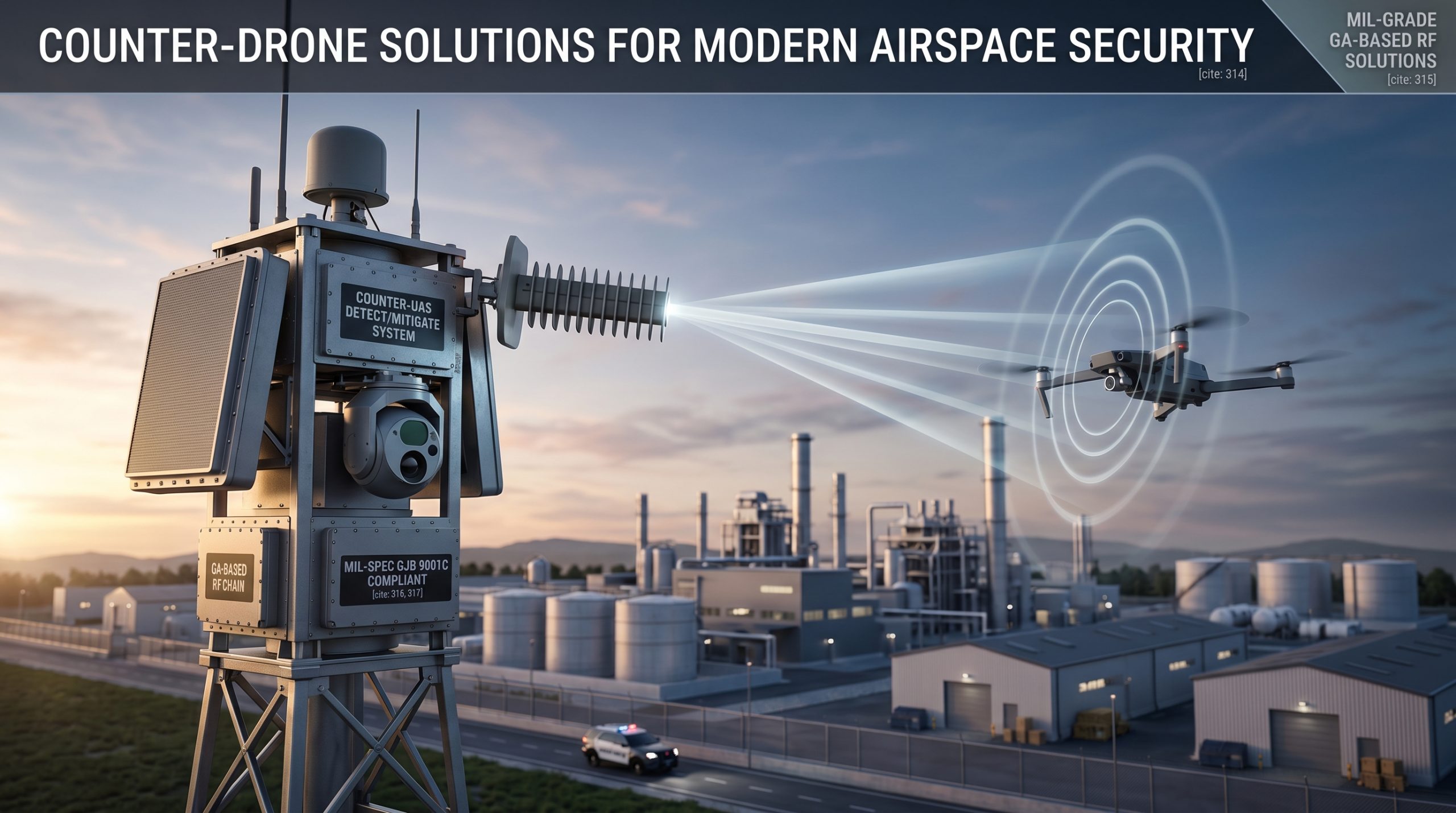
Authorized RF Review Boundary
Critical Infrastructure Counter-UAS RF Review is maintained as a compliance-first engineering page. CorelixRF discusses regulated counter-UAS RF topics only for authorized programs with documented scope, lawful operating boundaries and buyer-side approval.
- RF front-end platform review for amplifier, antenna, source and control interfaces.
- Custom RF system review for enclosure, thermal, control and documentation needs.
- RFQ checklist for band, power, duty cycle, load, interface and acceptance inputs.
- Delivery documentation for inspection records, test curves and FAT-style evidence.
- Contact CorelixRF engineering sales with authorized project documents.
This page does not provide public deployment, evasion, interference, power-setting or bypass instructions. If a project cannot document legal authority, the correct next step is compliance review.
Primary Topic Hub and RFQ Path
This primary guide now consolidates related authorized C-UAS and RF safety review topics. Use it for lawful scope definition, RF interface review, documentation and factory RFQ preparation.
- How to Protect Critical Infrastructure With Anti-Drone Modules? – consolidated reference
- How to Secure Critical Infrastructure with an Anti-Drone Solution? – consolidated reference
For regulated counter-UAS or interference-adjacent topics, CorelixRF keeps the discussion at authorized RF engineering review, documentation, test evidence and procurement boundaries. This page does not provide public deployment, evasion or unlawful interference instructions.
- RFQ checklist – prepare band, power, duty cycle, interface, cooling and acceptance inputs.
- RF configurator – turn project requirements into a first engineering brief.
- Delivery documentation – align test curves, inspection records and FAT-style evidence.
- Case studies – review how CorelixRF frames RF problems for buyer decisions.
- Contact engineering sales – submit the documented scope for review.
Unauthorized unmanned aircraft systems pose severe risks to critical infrastructure worldwide. Reckless drone flights disrupt busy airports, delay shipping, and threaten sensitive defense installations. To resolve this growing operational hazard, organizations deploy comprehensive Counter-Drone architecture to detect, track, and mitigate airborne threats instantly. This professional guide delivers the exact technical strategies required to protect your facility from rogue drone incursions.
1. Why is Counter-Drone Technology Vital for Today’s B2B Security Operations?
Counter-Drone technology provides the essential radar, optical, and radio frequency systems required to secure industrial airspace against unauthorized surveillance or payloads. Industrial facilities face sophisticated espionage attempts daily. But here’s the kicker… traditional perimeter security cannot monitor the sky, leaving your upper boundary completely exposed to low-altitude intrusion. Enterprise operations require dedicated aerial defense systems to block corporate espionage and ensure continuous business continuity.
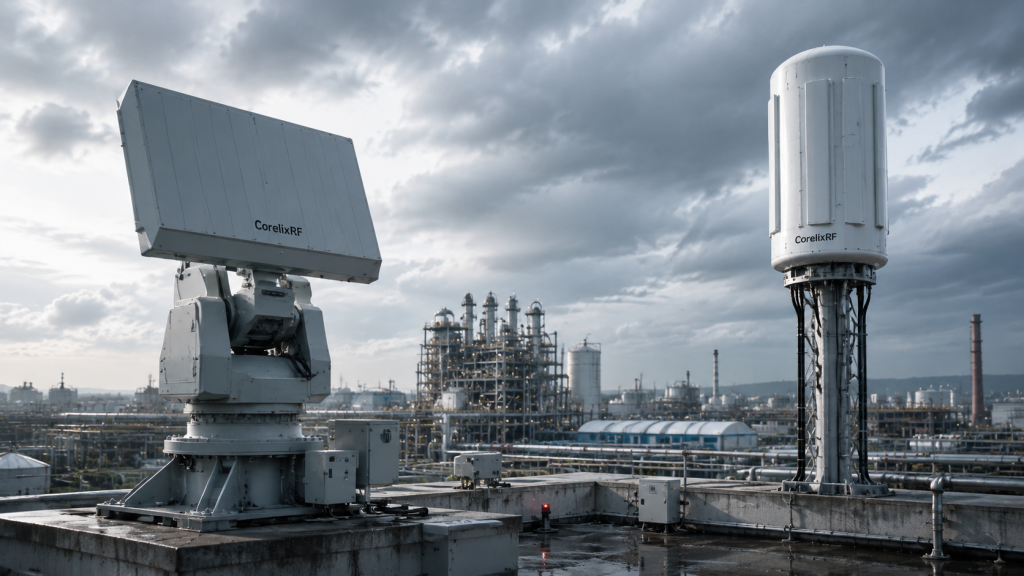
What Are the Core Threats of Rogue UAS?
Rogue drones carry out unauthorized photography, payload drops, or signal interception near factory sites. These small aircraft easily bypass physical fences and security guards.
- Espionage risks increase when drones capture high-resolution imagery of proprietary manufacturing lines.
- Payload drop hazards threaten physical asset damage or safety compromises at chemical plants.
- Data interception devices attached to drones can siphon confidential wireless network traffic.
How Do Regulatory Compliance Standards Mandate Airspace Protection?
International aviation and local safety bodies enforce strict guidelines regarding industrial airspace monitoring. Facilities must deploy compliant detection systems to meet modern risk assessment criteria.
- Airspace monitoring regulations demand verifiable logging of all local low-altitude flight activities.
- Insurance policies frequently require advanced electronic mitigation steps before insuring high-value infrastructure.
- Cross-border security protocols enforce strict tracking of aerial movements near international logistical hubs.
Key Takeaway
Deploying a robust defense system mitigates costly operational delays and shields proprietary B2B technology from airborne intellectual property theft.
| Security Threat | Operational Impact | Mitigation Method |
| Drone Espionage | Intellectual Property Loss | Continuous RF Monitoring |
| Payload Drop | Physical Asset Damage | Automated Radar Tracking |
| Signal Sniffing | Corporate Data Breach | Protocol Disruption |
A quick analysis of these threat vectors shows that multi-layered electronic warfare components provide the most comprehensive operational coverage for high-value facilities.
2. What Methods Are Used to Detect Unauthorized Drones?
Counter-Drone detection relies on a combination of radio frequency sensors, radar tracking, optical cameras, and acoustic arrays to verify airborne targets. No single sensor catches every threat. What’s the real story? Sophisticated drones use frequency-hopping or autonomous flight paths to evade basic security setups. Professional operators integrate multiple technical layers to ensure accurate early warnings and zero blind spots.
How Does Radio Frequency Detection Identify UAS Signatures?
Radio frequency sensors scan the local spectrum for command signals passing between the pilot and the drone. This methodology identifies the unique digital fingerprint of specific drone manufacturers.
- RF sniffing tracks down the exact control frequencies used by consumer and commercial aircraft.
- Direction finding calculations pinpoint the geographic coordinates of both the drone and the pilot.
- Continuous spectrum scanning provides early warnings before the drone even lifts off the ground.
Can Active Radar Systems Track Low-RCS Drone Targets?
Active radar transmits microwave signals and measures the reflections to track small, low-altitude flying objects. This system detects autonomous drones that do not emit radio signals.
- High-frequency radar tracking identifies the micro-Doppler signatures caused by spinning drone propellers.
- Micro-RCS tracking distinguishes small consumer quadcopters from local birds or blowing debris.
- Long-range radar units provide miles of situational awareness for early facility lockdowns.
Key Takeaway
Combining RF sniffing with active radar tracking ensures your security team detects both remote-controlled and pre-programmed autonomous threats.
| Sensor Type | Detection Range | Primary Advantage |
| Radio Frequency | Long Range | Locates Pilot Position |
| Active Radar | Medium Range | Tracks Autonomous Aircraft |
| Electro-Optical | Short Range | Visual Confirmation |
The data confirms that blending passive RF scanning with active radar creates a highly reliable tracking web for complex industrial environments.
3. How Do Electro-Optical and Infrared Cameras Confirm Airborne Threats?
Counter-Drone thermal imaging and optical tracking deliver the definitive visual verification required before security teams initiate defensive actions. Radars detect targets, but cameras prove what those targets actually are. Ready for the good part? High-definition optical sensors integrate directly with radar systems to automatically slew and zoom onto the exact target coordinates. This automated process removes human error and accelerates your response times during high-stress intrusions.
How Does Thermal Imaging Spot Drones at Night?
Thermal infrared sensors detect the heat signatures generated by drone batteries, motors, and electronic speed controllers. This capability ensures complete operational visibility during total darkness or heavy fog.
- Long-wave infrared sensors track the hot thermal signatures of electric motors against cold skies.
- Mid-wave infrared units provide crisp imaging across long distances in challenging coastal humidity.
- Continuous thermal tracking prevents intruders from using night cover to capture facility vulnerabilities.
What Role Does AI Video Analytics Play in Target Verification?
Artificial intelligence algorithms analyze live video feeds to automatically classify detected objects as drones, birds, or planes. This technology filters out false alarms for security personnel.
- Optical shape recognition identifies specific drone frames to confirm a malicious threat.
- Automated flight path analysis separates erratic bird movements from structured drone flight patterns.
- Real-time visual tracking maintains a lock on fast-moving targets behind trees or structural columns.
Key Takeaway
Implementing AI-driven camera systems provides the visual proof needed to trigger high-power electronic mitigation tools without risking false alarms.
| Camera System | Optimal Environment | Target Identification Method |
| Visible Light HD | Bright Daylight | Shape and Payload Classification |
| Thermal Infrared | Total Darkness | Heat Signature Discrimination |
| Automated PTZ | Dynamic Tracking | Continuous Coordinates Alignment |
This breakdown illustrates that a dual-camera system operating across visible and thermal spectrums provides unbroken tracking validation around the clock.
4. What Are the Core Building Blocks of a Full RF Chain Defense?
Counter-Drone infrastructure requires a complete radio frequency chain, including digital signal sources, power amplifiers, directional antennas, and power supplies. High-performance components determine the overall range and reliability of your airspace defense system. This is where it gets interesting… low-quality amplifiers suffer from rapid power degradation under thermal stress, which shrinks your protection bubble during an active attack. Professional B2B systems utilize rugged components designed to sustain maximum power output indefinitely.
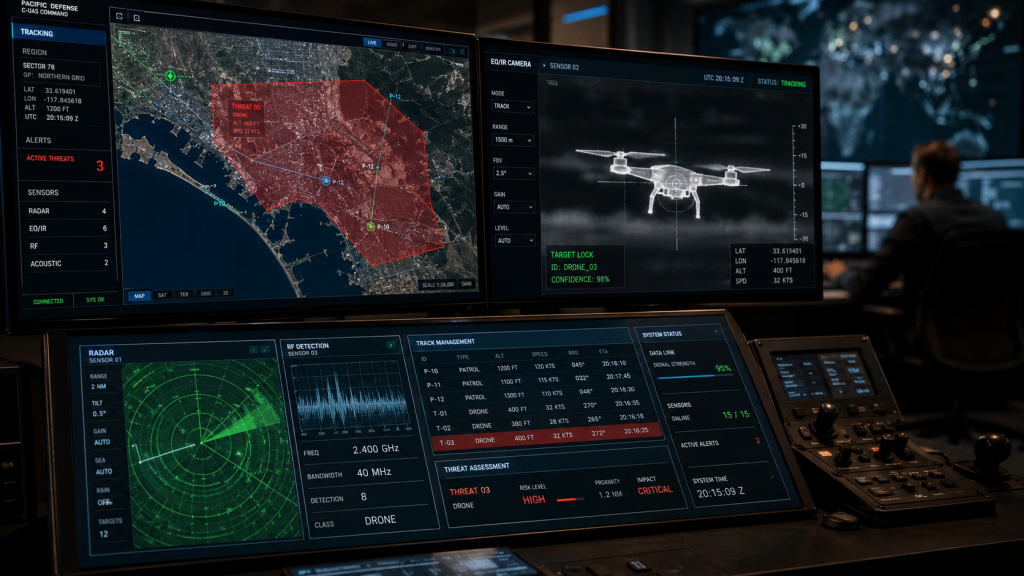
Why Are Wideband GaN Power Amplifiers Critical for Jamming?
Gallium Nitride solid-state power amplifiers deliver high output power across ultra-wide frequency bands stretching from 30MHz up to 6GHz. This technology enables broad spectrum suppression of all commercial drone channels.
- High power efficiency reduces heat generation inside sealed outdoor electronic enclosures.
- Broad frequency coverage allows a single amplifier module to target multiple communication bands.
- High linearity prevents signal distortion, ensuring your output power hits the target frequency.
How Do SDR Digital Signal Sources Control Jamming Waveforms?
Software Defined Radio signal sources generate custom interference waveforms to block control, telemetry, and satellite navigation signals. These programmable systems quickly adapt to emerging drone communication protocols.
- Real-time frequency hopping allows the signal source to match agile, fast-switching drone links.
- Multi-waveform generation creates custom noise patterns that disrupt advanced digital telemetry.
- Dual-channel architectures enable simultaneous disruption of both control links and GPS bands.
Key Takeaway
Selecting rugged GaN amplifiers and versatile SDR signal sources ensures your defense system maintains maximum suppression ranges during prolonged incidents.
| RF Component | Technical Requirement | Strategic Purpose |
| GaN Power Amplifier | High Output (30W-200W) | Maximizes Signal Suppression Range |
| SDR Signal Source | 100MHz-6GHz Range | Generates Adaptive Disruption Waves |
| Directional Antenna | High Gain Performance | Focuses Energy Toward Threat |
Our engineering analysis demonstrates that matching high-efficiency GaN hardware with software-defined digital control forms an impenetrable electronic barrier.
5. How Do RF Jamming Systems Neutralize Rogue Drones?
Counter-Drone jamming systems disrupt the critical wireless links that drones rely on for navigation and remote control. Forcing an uninvited aircraft down requires precise spectral targeting. But here’s the kicker… poorly targeted jamming can disrupt local corporate Wi-Fi or emergency radio networks. Advanced electronic warfare systems use targeted directional energy to break the drone’s control link while leaving surrounding infrastructure completely unharmed.
What Is the Difference Between Protocol Disruption and Noise Jamming?
Protocol disruption sends smart, simulated commands to fool the drone, while noise jamming floods the entire frequency band with raw electronic static. Both methods break the pilot’s command link effectively.
- Smart protocol disruption commands the drone to land safely or return to its takeoff point.
- High-power noise jamming completely severs the data stream, triggering the drone’s automated failsafes.
- Targeted band suppression concentrates radio energy onto specific frequencies like 2.4GHz or 5.8GHz.
How Does GNSS Spoofing Redirect Intruding Aircraft?
GNSS spoofing generates altered satellite coordinates to confuse the drone’s internal navigation computer. This tactic misleads the aircraft into flying away from protected industrial zones.
- Safe coordinate manipulation convinces the drone it is drifting into a restricted no-fly zone.
- Fake position transmission forces the aircraft’s automated flight system to land outside your facility.
- Directional GPS disruption cuts off the drone’s ability to hold its position during hovering operations.
Key Takeaway
Utilizing directional RF jamming and smart GNSS manipulation allows your security team to safely neutralize threats without causing local signal issues.
| Disruption Type | Targeted Frequency | Operational Outcome |
| Control Link Jamming | 2.4GHz / 5.8GHz ISM Bands | Activates Drone Return-to-Home |
| GNSS Disruption | 1.2GHz / 1.5GHz GPS Bands | Forces Drift or Instant Landing |
| Smart Spoofing | Dynamic Navigation Channels | Redirects Drone to Secure Zone |
Evaluating these electronic mitigation methods highlights how precise directional control protects local municipal communications while eliminating airborne security threats.
6. What Is the Importance of Fixed vs. Mobile Counter-Drone Deployment?
Counter-Drone configurations must match the operational footprint of your facility, using either fixed infrastructure or mobile tactical setups. Site geography dictates your deployment strategy. What’s the real story? Permanent industrial sites need hardened, weatherproof sensors, while VIP escorts or border patrols require portable, rapid-deployment gear. Flexible electronic platforms allow security managers to scale up their coverage zones as threat levels change.
When Should Facilities Deploy Hardened Fixed Detection Arrays?
Fixed detection arrays are permanently mounted on towers or building roofs to provide uninterrupted protection for critical industrial plants. These systems withstand extreme outdoor environments over years of service.
- Weatherproof aluminum enclosures shield sensitive high-frequency RF components from rain and sun.
- Continuous power connections ensure uninterrupted airspace monitoring without battery swaps.
- Lightning protection hardware guards expensive radar modules against sudden electrical surges.
How Do Portable Tactical Systems Protect Remote Sites?
Portable tactical systems pack into rugged transit cases for quick deployment at temporary VIP events or remote industrial worksites. These compact units operate on battery power for flexible field defense.
- Lightweight modular designs allow a single technician to set up a defense perimeter in minutes.
- Independent battery operation powers full detection and jamming chains during off-grid operations.
- Ruggedized vehicle mounts turn standard security trucks into mobile airspace defense hubs.
Key Takeaway
Choosing the correct deployment style ensures your security architecture provides continuous, reliable coverage tailored to your specific site layout.
| Deployment Mode | Primary Use Case | Main Advantage |
| Hardened Fixed Array | Airports / Power Plants | Continuous 24/7 Airspace Protection |
| Portable Tactical | VIP Events / Field Operations | Rapid Setup in Remote Areas |
| Vehicle-Integrated | Border Patrol / Convoy Defense | Mobile Defense on the Move |
This comparison highlights that fixed installations provide long-term stability for permanent assets, while mobile setups offer vital flexibility for dynamic field operations.
7. How Do You Integrate Multi-Sensor Systems Into a Unified Command Platform?
Counter-Drone command software binds radar, optical tracking, and RF sensors into a single, cohesive user interface. Managing multiple separate sensor feeds slows down critical response times. Ready for the good part? Modern Command and Control (C2) software automates sensor data fusion, presenting your security team with a single clean map view of all local airspace activity. This integration streamlines your decision-making when split seconds count.
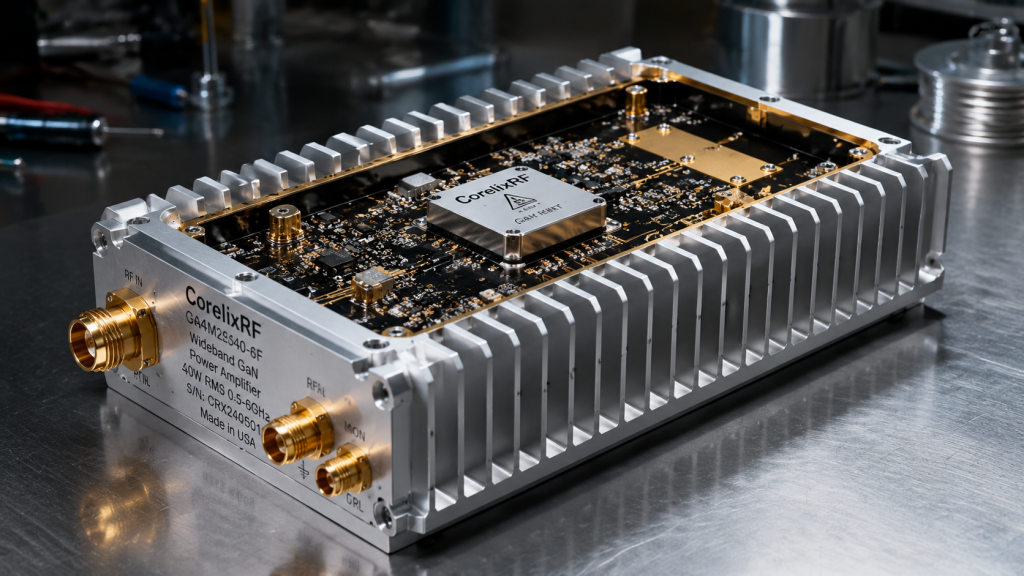
What Is Sensor Fusion in Low-Altitude Airspace Monitoring?
Sensor fusion combines data streams from radar, cameras, and RF detectors to verify and track a target with high accuracy. This technique eliminates individual sensor weaknesses.
- Radar tracking data automatically guides optical cameras to lock onto the exact airborne target.
- RF signal data adds specific drone manufacturer details to the radar track on the map screen.
- Automated data merging filters out conflicting sensor readings to lower your false alarm rates.
How Do Automated Threat Alerts Accelerate Response Times?
Automated alert systems instantly ping security staff via desktop software, mobile apps, or industrial sirens the moment a drone crosses your boundary. This early warning triggers immediate defensive protocols.
- Custom airspace geofencing creates invisible warning zones around your facility borders.
- Instant email and SMS text alerts keep off-site security directors informed during incidents.
- Automated jamming activation triggers instant electronic countermeasures the moment a drone enters high-risk zones.
Key Takeaway
Using centralized command software with automated sensor fusion empowers your security team to manage threats quickly and reduce human error.
| Software Feature | Data Inputs | Operational Benefit |
| Automated Sensor Fusion | Radar + RF Sniffer + PTZ Camera | Eradicates Conflicting Target Data |
| Dynamic Geofencing | GIS Mapping + GPS Coordinates | Highlights Immediate Boundary Violations |
| Automated Countermeasures | C2 Trigger + Jammer Array | Disrupts Intruder Signals Instantly |
The integrated data shows that unified C2 platforms reduce system response latency, turning separate sensor components into an efficient defensive shield.
8. What Are the Key Engineering Challenges in High-Frequency RF Design?
Counter-Drone engineering requires meticulous high-frequency PCB layout and advanced thermal management to maintain clean, stable signal output. Designing electronics that operate above 3GHz introduces tough physical challenges. This is where it gets interesting… high-power RF modules generate extreme heat that can easily cause component failure or signal drifting. Specialized engineering protocols ensure your electronic warfare equipment functions reliably during sustained operations in hot climates.
How Do Engineers Control Extreme Thermal Disks in GaN Modules?
Advanced thermal management uses integrated copper heat pipes, aluminum fins, and high-CFM cooling fans to pull damaging heat away from GaN transistors. Keeping operating temperatures low preserves your equipment’s lifespan.
- CNC-milled aluminum housings provide direct thermal paths for high-power electronic components.
- Thermal interface materials minimize heat resistance between the circuit board and the cooling block.
- Integrated temperature sensors automatically adjust cooling fan speeds to prevent thermal runaway.
Why Is Impedance Matching Essential for High-Power RF Output?
Precise 50-ohm impedance matching across the entire circuit path prevents signal reflections from bouncing back into the power amplifier. This design safeguard protects your hardware from permanent damage.
- Microstrip line optimization ensures smooth signal flow through high-frequency circuit traces.
- Low-loss dielectric board materials prevent signal absorption and maintain high output efficiency.
- Automated VSWR tracking circuits cut power instantly if an antenna mismatch occurs.
Key Takeaway
Investing in military-grade thermal engineering and precise circuit layout ensures your defense systems operate reliably in harsh industrial environments.
| Engineering Focus | Technical Solution | Operational Benefit |
| Thermal Management | Milled Aluminum Heatsinks | Prevents Power Degradation |
| Impedance Matching | 50-Ohm Microstrip Design | Protects Circuit from Reflected Power |
| Material Selection | Low-Loss PTFE Substrates | Maximizes High-Frequency Efficiency |
This analysis highlights that robust mechanical and electrical engineering keeps critical RF defense hardware running smoothly under continuous thermal load.
9. How Do Modern Systems Mitigate Swarm Drone Vulnerabilities?
Counter-Drone protection must evolve to counter swarm attacks, where multiple synchronized aircraft attempt to overwhelm standard security grids. A single drone is easy to track and neutralize. But here’s the kicker… a coordinated swarm can saturate individual sensor channels, allowing secondary drones to slip through your perimeter. Modern defense platforms deploy multi-channel digital signal arrays to track and disrupt numerous targets at the same time.
Can Wideband Omnidirectional Arrays Block Coordinated Swarms?
Wideband omnidirectional antennas project an unbroken 360-degree electronic shield around your facility, suppressing control signals from all directions simultaneously. This comprehensive coverage stops coordinated multi-angle attacks.
- High-power omnidirectional arrays disrupt multiple incoming control signals across all horizons.
- Balanced signal distribution ensures equal electronic defense ranges across the entire facility perimeter.
- Simplified antenna setups reduce system footprint while maintaining complete hemispherical coverage.
What Role Does Multi-Target Radar Tracking Play in Swarm Defense?
Advanced digital radar systems use active electronically scanned arrays (AESA) to track dozens of airborne targets simultaneously. This technology ensures every drone in a swarm is continuously monitored.
- Multi-beam digital architecture tracks distinct targets across a wide field of view without lag.
- High-speed data processors calculate separate threat vectors for each individual swarm element.
- Automated tracking handoff updates camera feeds continuously to keep eyes on the highest-risk targets.
Key Takeaway
Deploying multi-target AESA radar paired with omnidirectional jamming components provides the processing power and signal coverage needed to neutralize complex swarm attacks.
| Swarm Threat Vector | System Countermeasure | Tactical Advantage |
| Multi-Angle Intrusion | Omnidirectional Suppression | Blocks Signals Across 360 Degrees |
| Target Saturation | AESA Multi-Beam Radar | Tracks Dozens of Assets Simultaneously |
| Coordinated Espionage | Multi-Channel Digital Sources | Jam Multi-Frequency Transmissions |
This data illustrates that defending against modern coordinated threats requires high-performance processing and wide-angle electronic countermeasures to ensure total perimeter safety.
10. How Do You Select the Right Airspace Defense Strategy for Your Enterprise?
Counter-Drone strategic planning requires evaluating your facility’s specific threat levels, local regulations, and infrastructure layout. Buying generic security gear often leaves critical coverage gaps. What’s the real story? An airport requires long-range passive detection that won’t interfere with navigation electronics, while a remote power plant might need high-power directional jamming. Conducting a professional RF site survey ensures your final system design fits your specific operational environment.
Why Is a Professional RF Site Survey Required Before Installation?
An RF site survey measures local background wireless noise and identifies physical obstacles that could block radar or camera views. This data ensures optimal placement for every sensor module.
- Spectrum analysis identifies local high-traffic frequencies to avoid creating false alarms.
- Line-of-sight analysis maps out building and tree shadows to find the best sensor tower locations.
- Environmental testing ensures your chosen hardware can handle local temperature and humidity swings.
How Do You Balance Detection Range with Countermeasure Coverage?
Your electronic countermeasure range must match or exceed your detection boundary to ensure threats are neutralized before crossing your perimeter. Balancing these zones prevents late responses.
- Long-range detection sensors give your team the advance warning needed to confirm incoming threats.
- Focused directional countermeasures concentrate jamming energy precisely where the intruder is located.
- Scalable modular platforms allow you to add more sensor nodes easily as your facility grows.
Key Takeaway
Tailoring your airspace defense system through thorough site surveys and balanced sensor integration ensures reliable, long-term security for your valuable business assets.
| Selection Step | Technical Action | Operational Goal |
| RF Site Survey | Local Spectrum Mapping | Prevents Signal Interference |
| Coverage Balancing | Matching Sensor and Jammer Ranges | Ensures Early Threat Disruption |
| Modular Scaling | Adding Nodes to C2 Software | Adjusts System for Future Expansion |
A final look at these planning steps shows that customized site engineering creates a highly dependable, regulatory-compliant airspace defense network.
Securing low-altitude airspace requires robust, engineering-driven electronics that operate reliably in the most demanding environments. Organizations must eliminate blind spots by replacing outdated manual monitoring with unified multi-sensor detection networks and high-efficiency GaN power amplifiers. Secure your perimeter, protect your intellectual assets, and ensure operational continuity. Contact us today to get an expert engineering proposal tailored to your facility’s unique security needs.
FAQs
Can I deploy automated RF jamming systems at my facility without local regulatory approval?
No, local wireless communications authorities must approve all radio frequency disruption equipment before deployment. Unlicensed jamming can interfere with critical municipal emergency networks and commercial aviation frequencies. Always consult with certified legal and technical experts to secure the necessary experimental or operational security licenses for your specific region.
What’s the best way to detect autonomous drones that do not use remote control frequencies?
Active radar tracking paired with electro-optical thermal cameras is the most reliable method for spotting autonomous aircraft. Because autonomous drones follow pre-programmed GPS coordinates without emitting radio control signals, passive RF sensors cannot track them. Active radar detects the physical frame and moving blades, then automatically guides high-definition cameras to visually confirm the target.
How do I know if weather conditions will degrade my airspace defense system’s tracking range?
Hardened fixed sensor arrays use specialized environmental protection to minimize data loss during heavy rain, thick fog, or blowing dust. While extreme downpours can reduce the maximum range of certain high-frequency radars and optical cameras, combining multiple sensor types ensures your perimeter remains protected. Passive RF sniffers and thermal imaging units maintain strong detection capabilities even when visual sight is limited.
Can modern counter-drone platforms distinguish friendly commercial delivery aircraft from security threats?
Yes, modern command and control platforms use digital whitelist databases and automated identification friend-or-foe protocols to separate verified aircraft from unauthorized intruders. System operators input the unique electronic signatures or scheduled flight times of authorized drones into the monitoring software. When a whitelisted aircraft enters the geofenced area, the system logs the flight without triggering alarms or jammers.
How do high-power GaN amplifiers improve the performance of my electronic countermeasures?
Gallium Nitride solid-state power amplifiers deliver superior power efficiency and exceptional signal linearity across ultra-wide frequency ranges. This advanced hardware configuration enables your countermeasure system to project stronger, cleaner interference signals over longer distances. Increased power headroom ensures your equipment operates continuously at peak performance without overheating or experiencing signal degradation during an active multi-drone incident.
Authorized RF engineering and compliance review
For regulated RF systems, this page should be used as an engineering and compliance review path, not as a public deployment checklist. CorelixRF starts with authorization status, operating region, frequency plan, output limit, antenna interface, safety controls, thermal limits and acceptance documents.
- RFQ checklist – send the data buyers usually forget, including band, power, duty cycle, interface and test standard
- delivery documentation – check what documents can support incoming inspection, FAT review and long-term maintenance
- quality and certification review – review the quality and compliance evidence before the project moves into procurement
- RF front-end platform – compare the RF chain as a system instead of selecting one isolated module
- RF configurator – turn frequency, power, thermal and interface requirements into a first configuration brief
- case studies – review similar engineering paths before sending an RFQ
- engineering contact – send the application notes, block diagram or target specification to engineering sales
This keeps the discussion inside lawful, authorized RF programs while still giving procurement teams a clear way to request amplifier, antenna, SDR source, documentation and factory review.
Critical Infrastructure RF Hardware Review Path
For authorized critical-infrastructure RF programs, connect site risk requirements to RF power amplifier selection, RF front-end integration and antenna/load planning. Share frequency bands, output power, duty cycle, enclosure, cooling, VSWR protection, compliance boundaries and validation records through the RF inquiry form.