
Risk Register Context
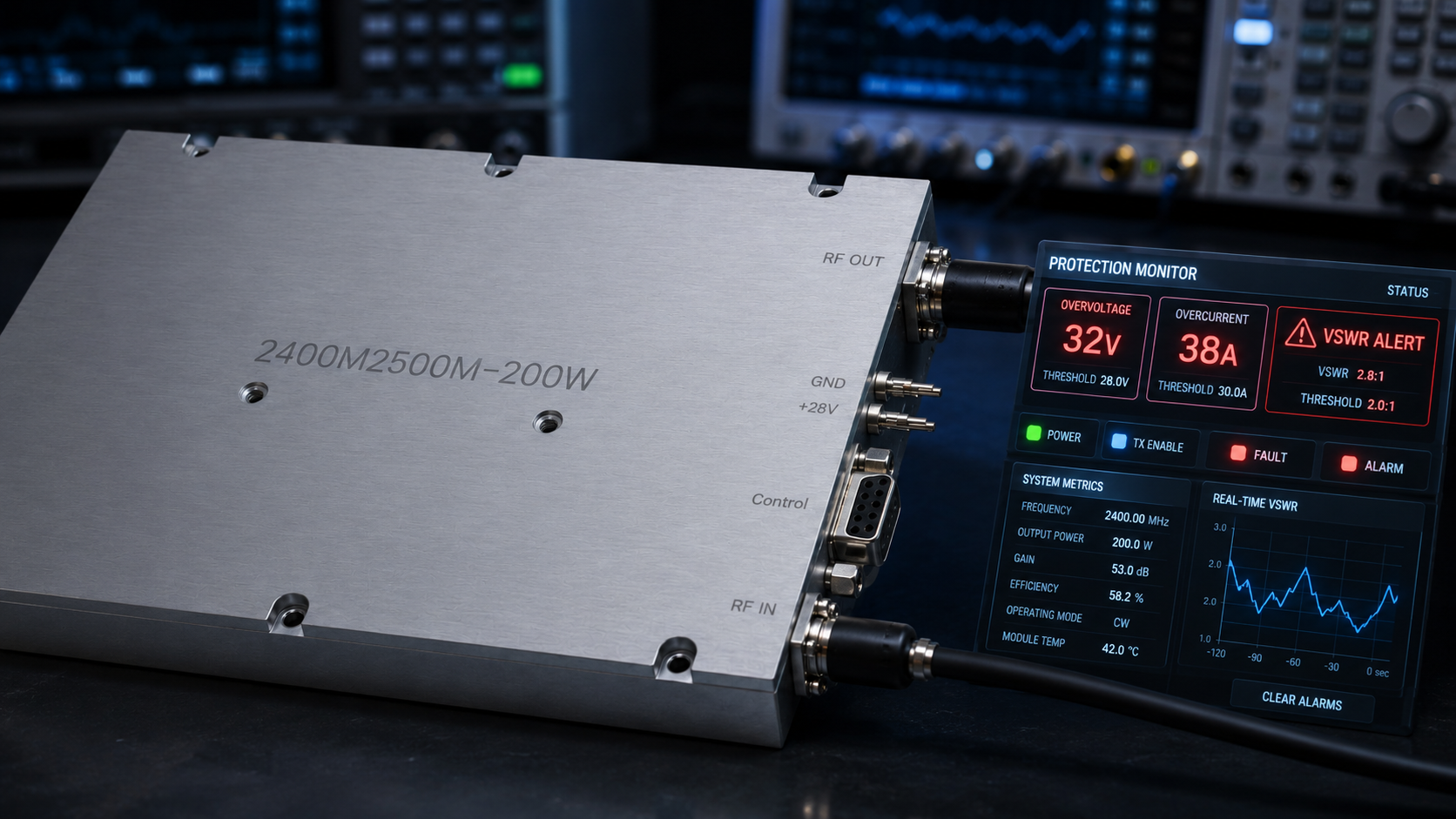
The CorelixRF CRF-PA-2400M2500M-200W is a GaN narrowband amplifier for 2400–2500 MHz. The June 2026 V1.0 datasheet describes 200 W rated CW output on its overview page; its electrical table lists saturated output power (Psat) as 160 W minimum and 200 W typical. The table conditions are a 50 Ω system, +28 V DC nominal supply and CW operation at normal temperature. Keep the rating, parameter definition and minimum/typical columns distinct when agreeing on acceptance limits.
Risk 1 – Frequency and Version Boundaries
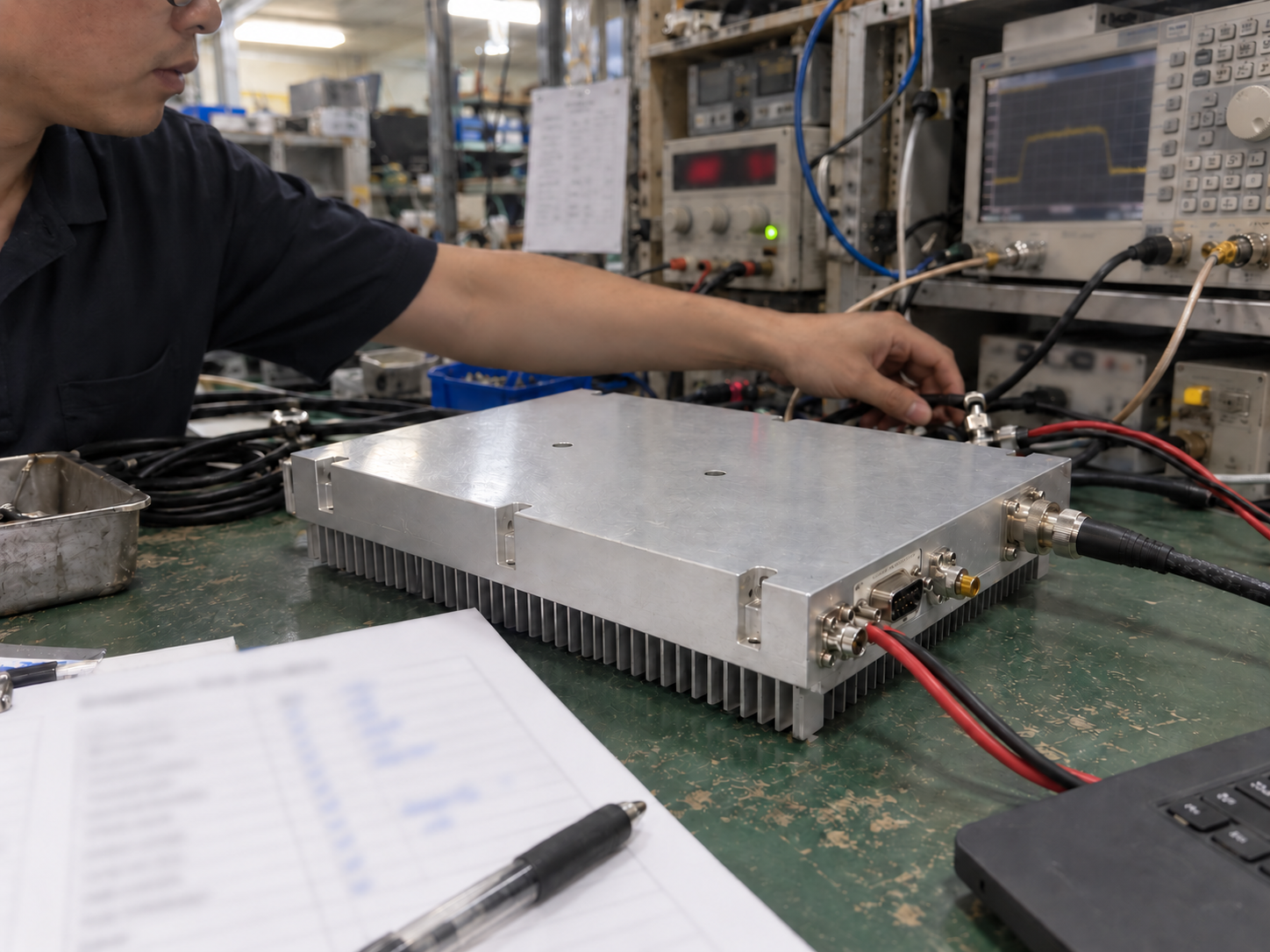
Define the required operating points within 2400–2500 MHz and identify the source path before ordering. The V version includes an internal VCO source and scan function; M/M1 configurations provide an amplifier-module path with optional RS485 control. State whether an external generator or internal source is needed, together with frequency-step, scan-bandwidth and control requirements. Source-adjustment settings do not extend the stated amplifier operating band or prove output performance outside it.
Risk 2 – Module Mounting And Heat Flow
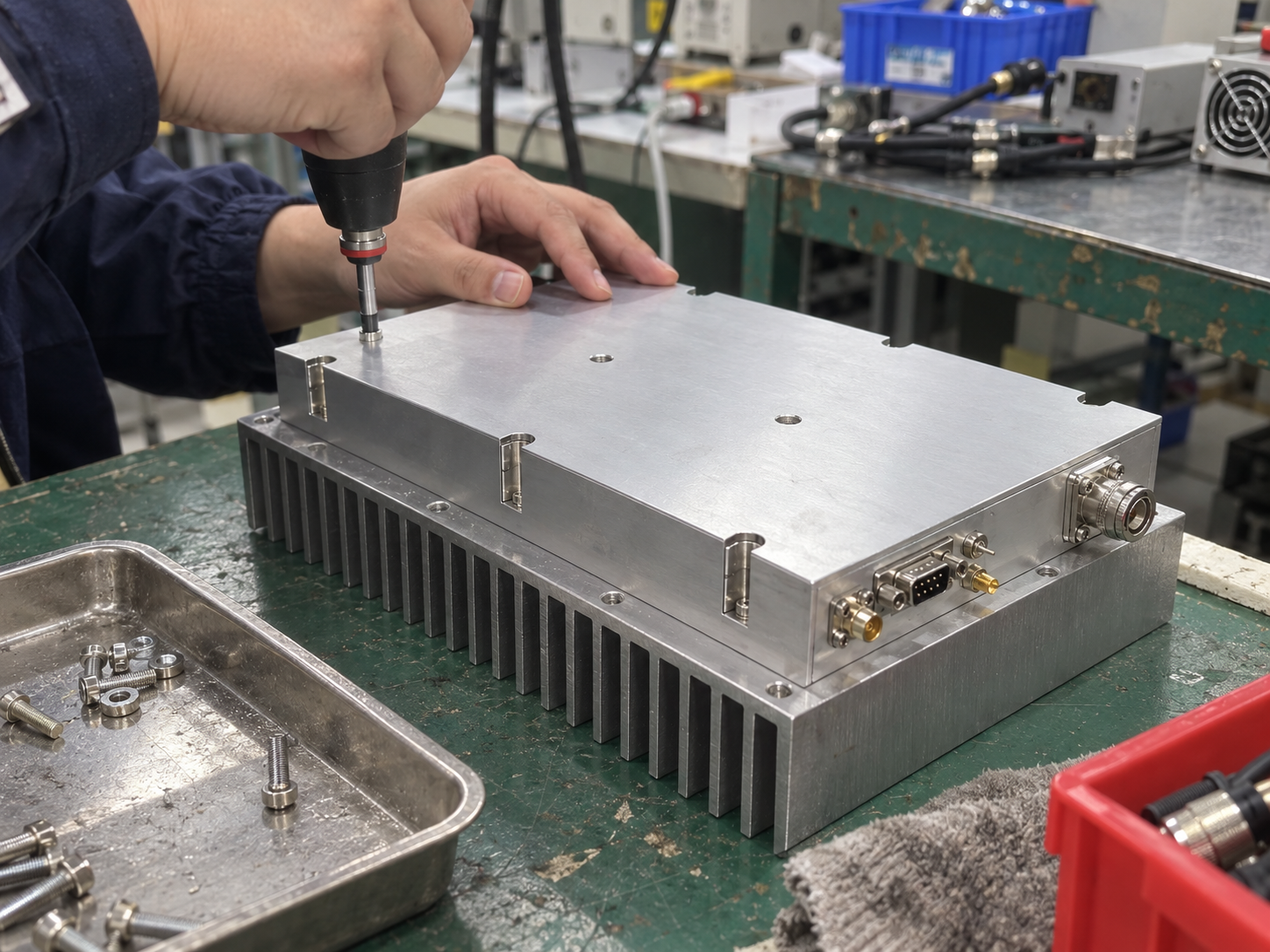
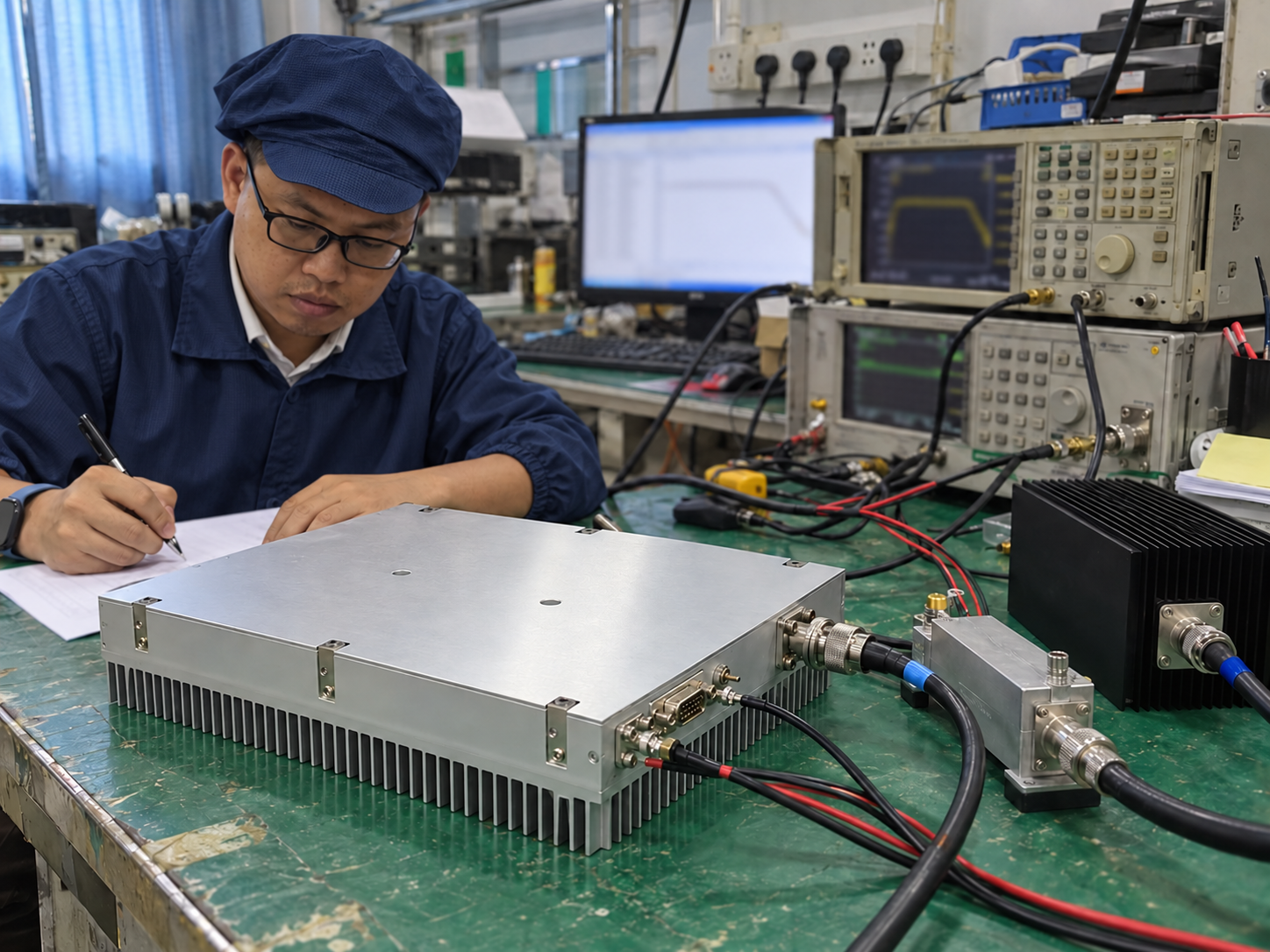
The amplifier module is listed at 200 x 158 x 25 mm and about 1.4 kg, with external heat-sink cooling. A compact RF amplifier module can still fail in integration if the heat path is undefined. The risk-control action is simple: specify mounting flatness, heat-sink capacity, airflow, operating temperature, and the method used to record module temperature during acceptance.
Risk 3 – Control Connector Ambiguity
The source lists SMA-KFD46 RF interfaces, D-Sub 15-pin female control, and pull-core capacitance power input. Optional functions include gain adjustment, RS485 monitoring/control, forward/reverse power indication, temperature output, PA enable, alarm outputs, and alarm reset. If the delivered configuration does not include the expected pins or protocol, the system wiring may need redesign.
Risk 4 – Protection Behavior Not Documented
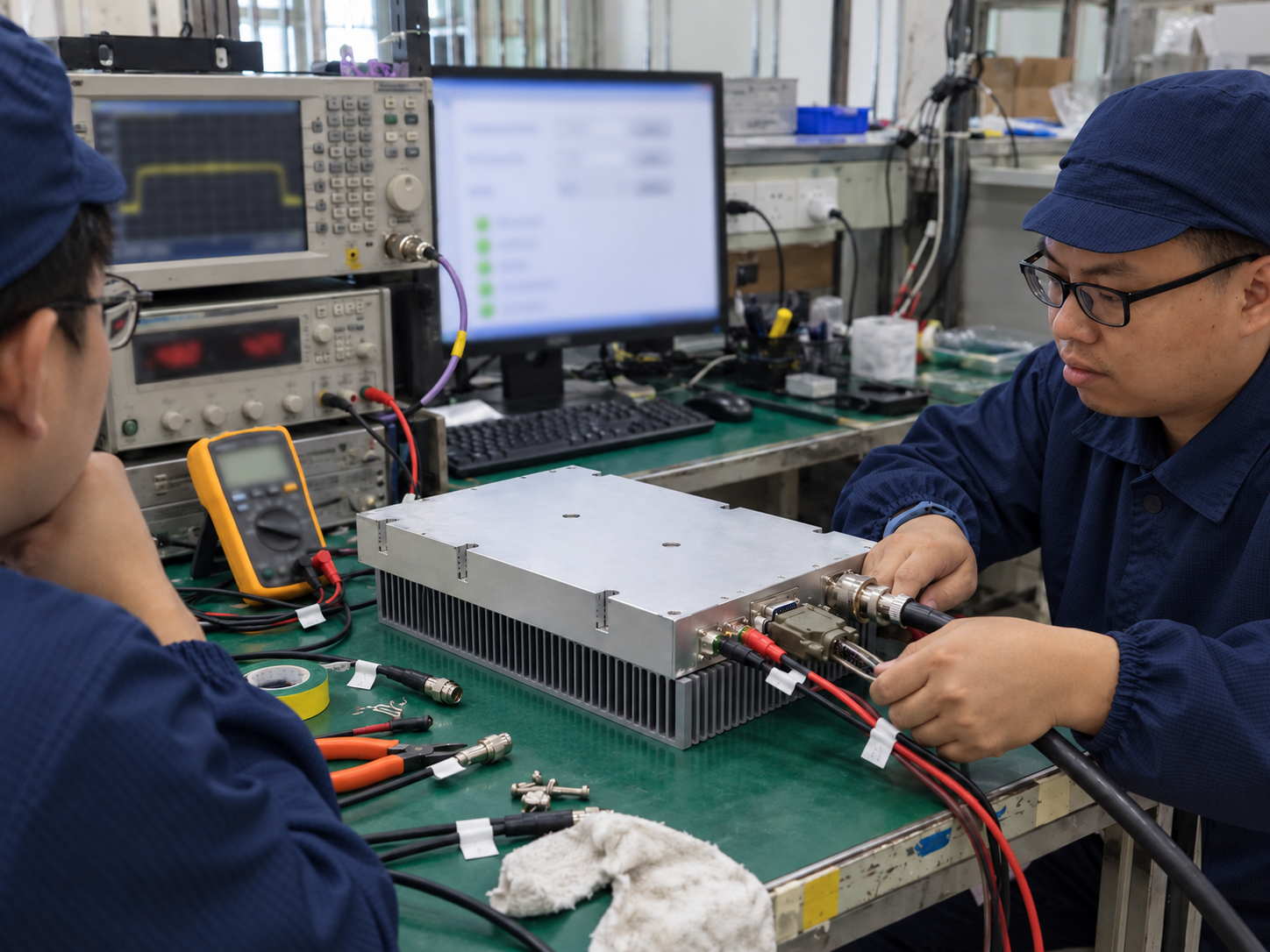
Protection includes over-temperature shutdown/recovery, over-VSWR locked shutdown, over-voltage lock above 32 V, and over-current lock above 38 A. Those behaviors should be described in the operating procedure before the first high-power run. For a radio frequency power amplifier, protection is valuable only when operators know how to identify the fault, remove the cause, and restore operation safely.
Risk 5 – RFQ Missing Acceptance Evidence
Request final drawings, version selection, control logic, test data and thermal recommendations for the quoted build. Define low, middle and high test points across 2400–2500 MHz. At each agreed condition, record output power and its definition, gain, input source level, load and reference plane, supply voltage and current, temperature, heat-sink condition and alarm state. State the waveform, run duration and pass limits so the resulting evidence supports an acceptance decision.
Assign Owners and Close the Register
Give every risk an owner, required evidence and status. Assign thermal mounting to the mechanical or RF hardware owner, control interfaces to the electrical or software owner, and protection verification to the test owner. Mark each item as accepted with a recorded basis, mitigated, or unresolved. Keep unresolved questions in the purchase-review package and request a written technical response before closing them.
FAQ
What frequency range does CRF-PA-2400M2500M-200W cover?
The datasheet lists 2400 to 2500 MHz.
What output power is listed?
The overview describes 200 W rated CW output. The electrical table lists Psat as 160 W minimum and 200 W typical under its stated 50 Ω, +28 V DC nominal, CW and normal-temperature conditions. The acceptance requirement should identify which definition and limit apply.
Does the model have version options?
The source describes M/M1 amplifier module versions and a V version with internal VCO source and scan function.
What is the main integration risk?
The main risk is ordering before thermal mounting, control functions, and protection behavior are documented.