
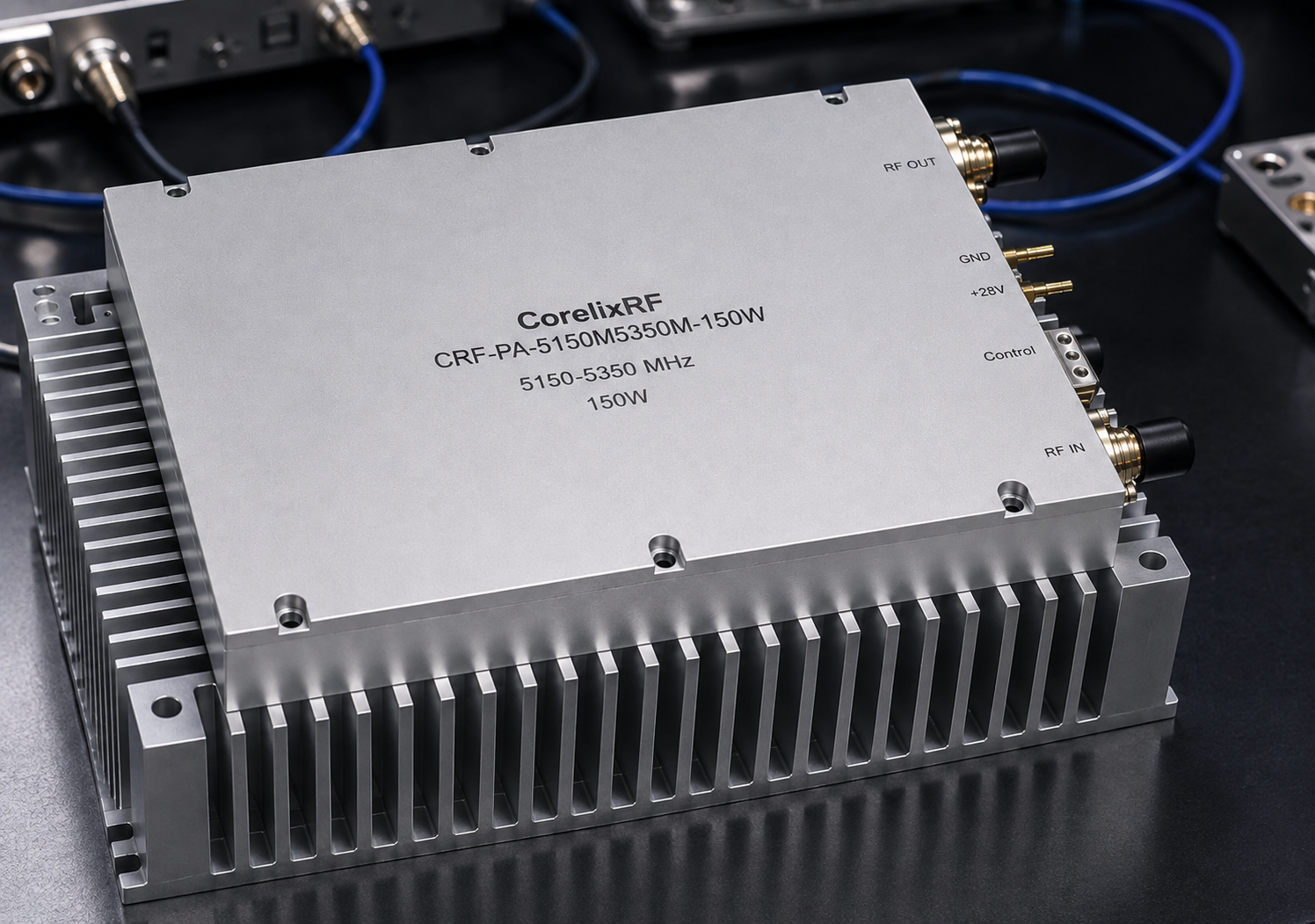
Handoff log for CorelixRF CRF-PA-5150M5350M-150W. This is a 5150 to 5350 MHz 150W narrowband RF amplifier built on a GaN SSPA platform. The datasheet lists 120 W minimum and 150 W typical output power, 48 / 50 / 52 dB gain, 20 dB gain adjustment in 0.5 dB steps, SMA-KFD46 RF connectors, +24 V to +32 V supply range with +28 V nominal, 22 A typical and 27 A maximum current, D-Sub 15-pin female control interface, pull-core capacitance power input, 200 x 158 x 25 mm size, 1.4 kg weight, and external heat-sink cooling.
Log Entry 001: Source Configuration
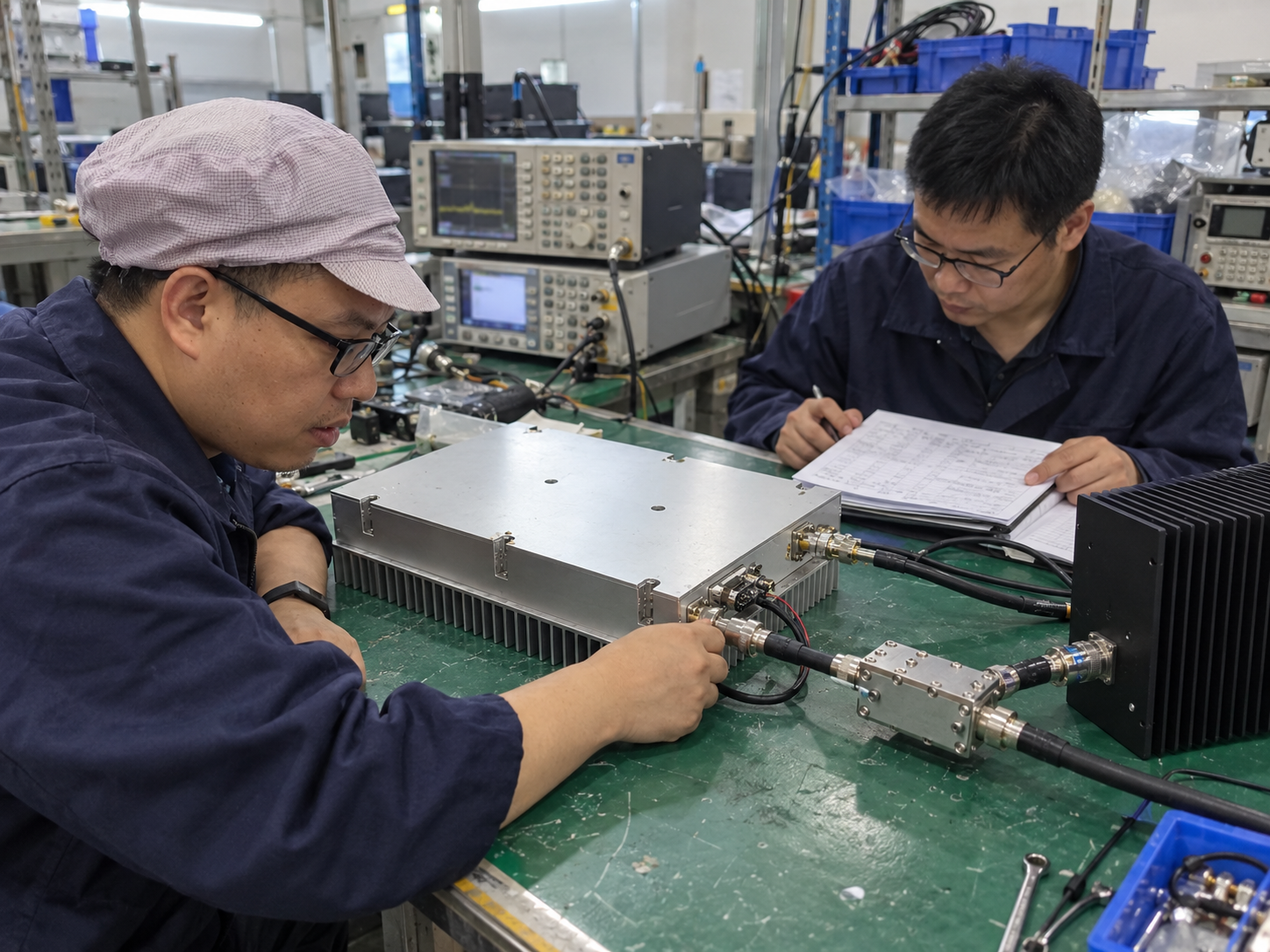
Record the exact M, M1 or V configuration and the source-control owner. The V version lists an internal VCO and scan function with 10 Hz stepping, 5060–5450 MHz frequency adjustment and 80–450 MHz bandwidth adjustment. M/M1 configurations use an external-source amplifier path with optional monitoring/control functions. The adjustment ranges describe source controls; they do not establish rated amplifier output outside the specified 5150–5350 MHz operating band.
Log Entry 002: Fixed-Frequency Run
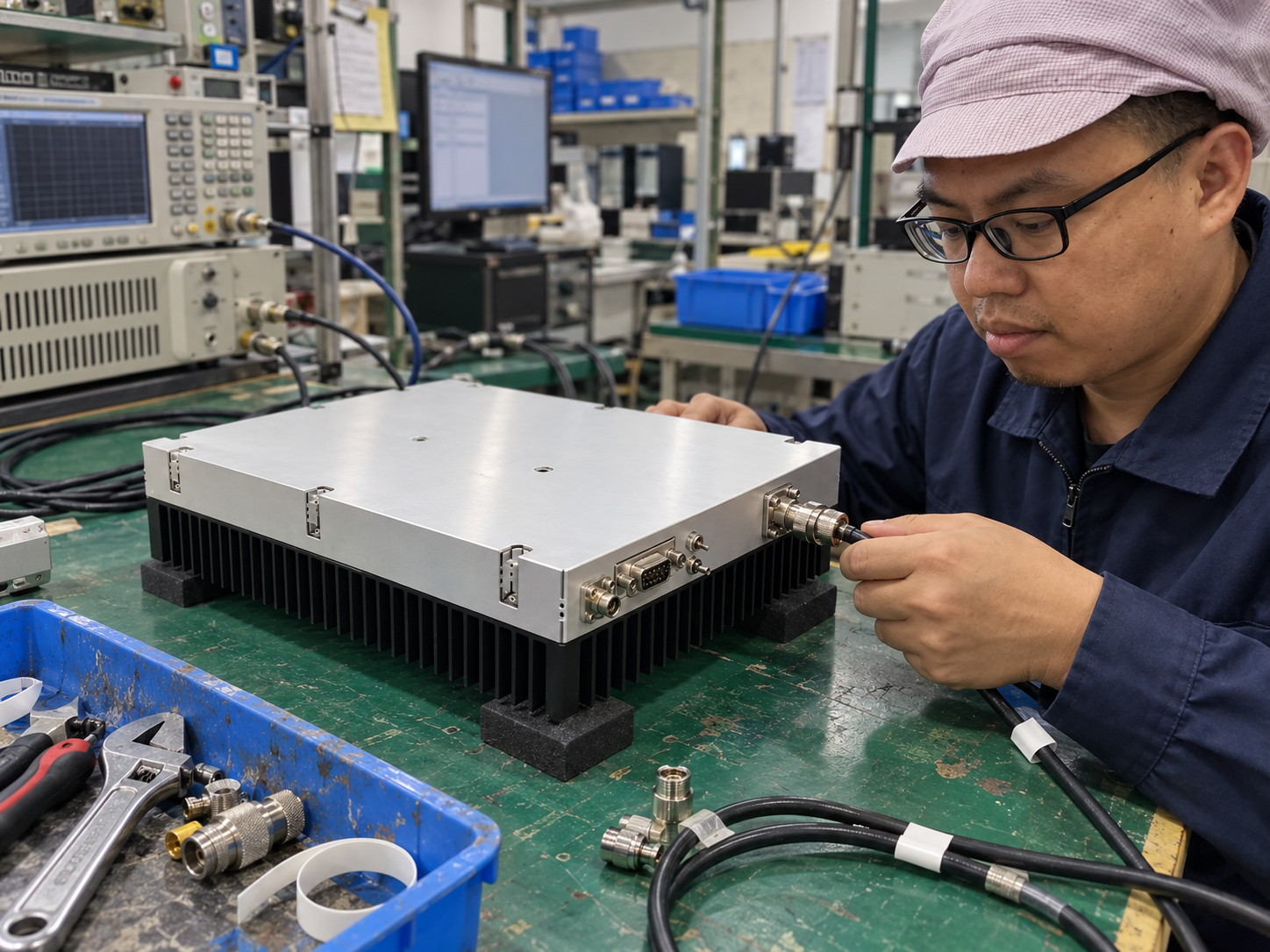
For a fixed-frequency run, record selected frequency, gain step, source level, output reference plane, load condition, supply current, heat-sink state and alarm output. The next operator should be able to reconstruct the same configuration before enabling RF.
Log Entry 003: Test-Bench Record
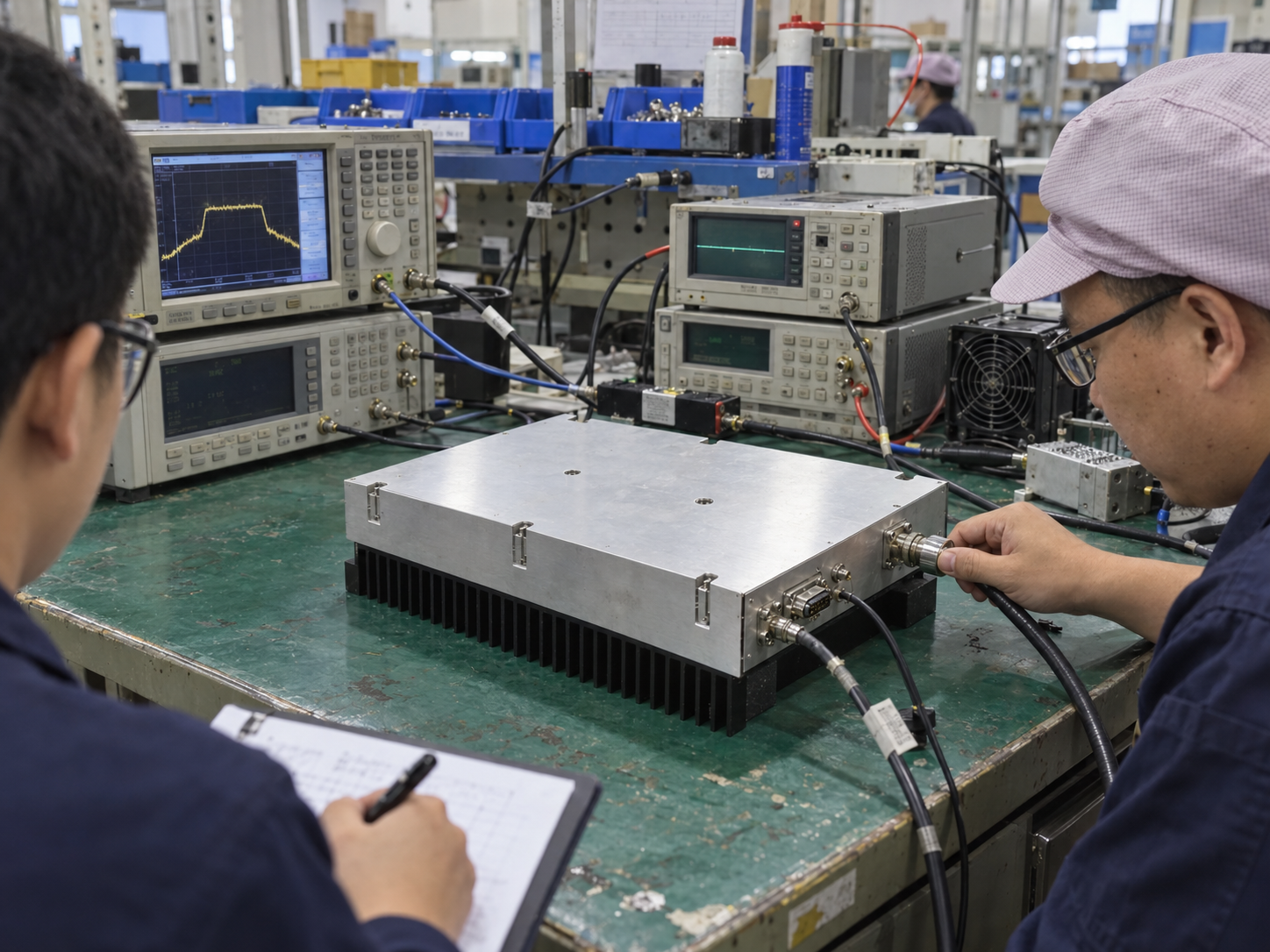
In RF test and measurement, the same amplifier can support repeatable source-chain evaluation. The lab record should capture whether the signal came from an external source or the V-version internal source, whether optional RS485 monitoring/control was quoted, and whether Pf/Pr indicators or temperature output are required. That makes later RF testing and validation easier to interpret.
Log Entry 004: Communication-System Review
For communication-system evaluation, record the required signal, gain state, connector reference planes and source settings. If filtering, switching or other source-control hardware is present, include its state and configuration in the same log. A repeatable bench setup does not by itself establish compliance with a named communications standard.
Log Entry 005: Handoff Checklist
Close the Log
Before quote release, identify the frequency range, output requirement, source path, waveform and duty condition, control interface, mechanical constraints and environment. Name any required RS485 functions, alarm outputs, gain/power adjustment, Pf/Pr indications or temperature output. Attach the handoff record and list unresolved configuration questions.
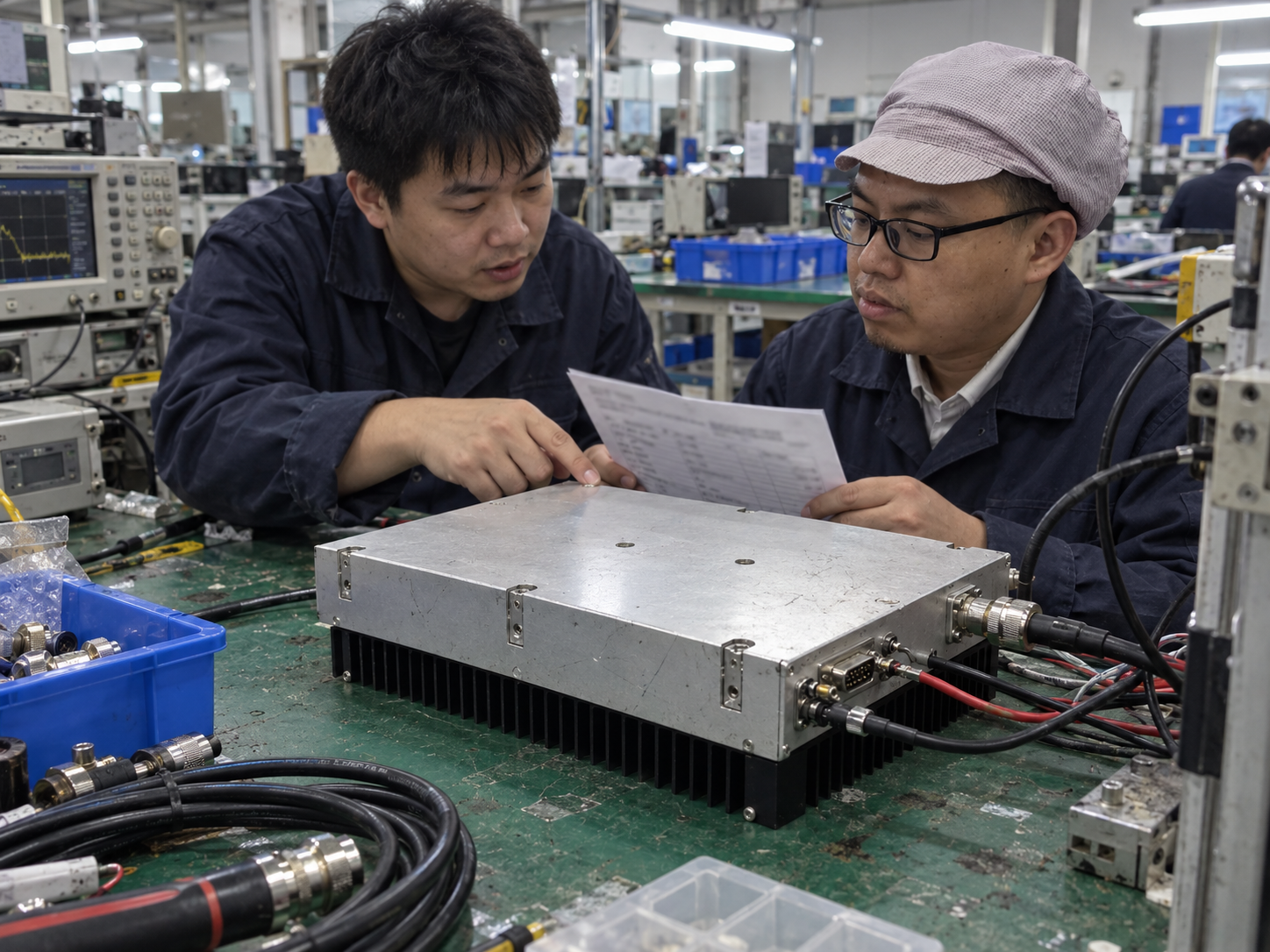
Frequency Ownership
Frequency ownership should be assigned to one operator or control process before RF enable. That person records the selected source path, gain step, and measurement condition so the next shift can repeat the same 5150-5350 MHz setup without reconstructing decisions from memory.
FAQ
What frequency and output power are listed?
The datasheet lists 5150 to 5350 MHz coverage, 120 W minimum output, and 150 W typical output.
What makes the V version important?
The V version includes an internal VCO source and scan function with 10 Hz stepping; M/M1 paths are amplifier-module configurations.
Which real applications fit?
Narrowband RF amplification, communication systems, RF test and measurement, and system-level RF source integration fit the source categories.