
Worksheet Purpose
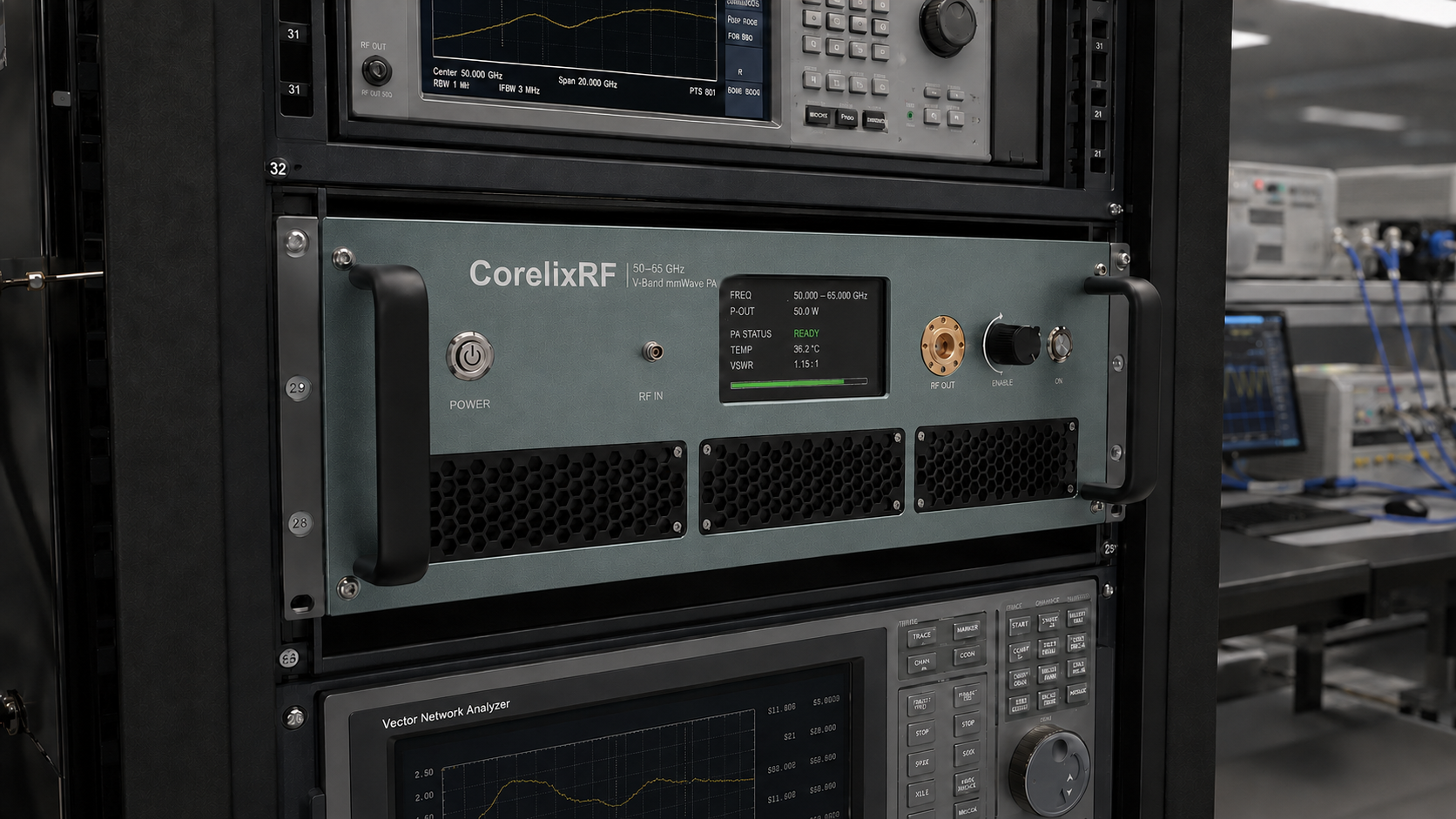
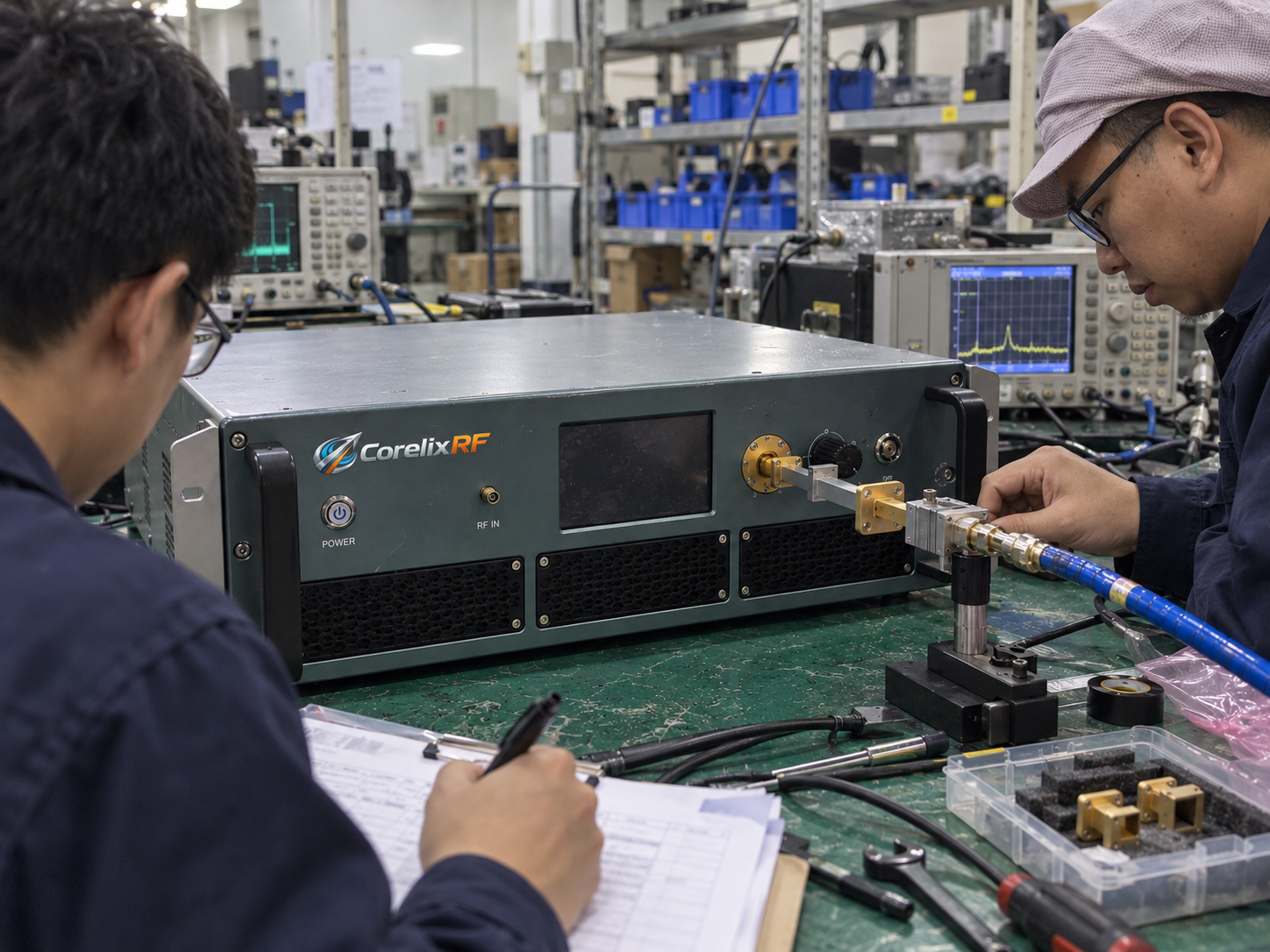
This worksheet is for teams preparing an RFQ for a V-band mmWave amplifier where the mechanical and waveguide details are just as important as the wattage. The CRF-PA-50000M65000M-120W covers 50 to 65 GHz, lists 120 W solid-state RF output power, uses GaN technology, and provides 52 dB minimum small-signal gain with -10 to +10 dB gain flatness.
Field 1 – Frequency And Power
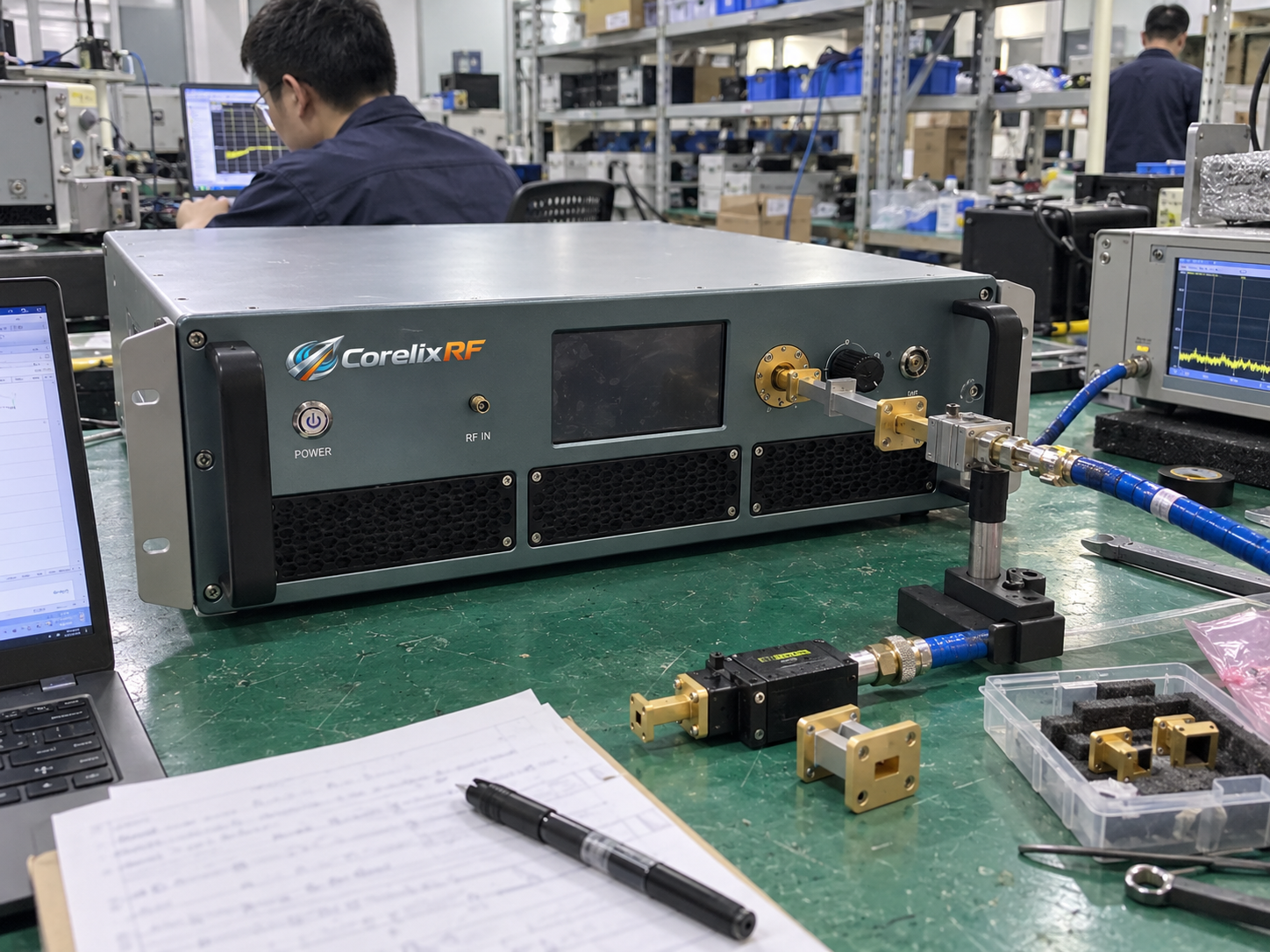
Write the required operating window, any guard-band needs, and whether the full 50-65 GHz span is required. Then record the rated output power and expected operating condition. The model is listed for 120 W output power, but the RFQ should still state waveform type, duty cycle or CW expectation, test temperature, and acceptance margin.
Field 2 – Waveguide And Connector Boundary
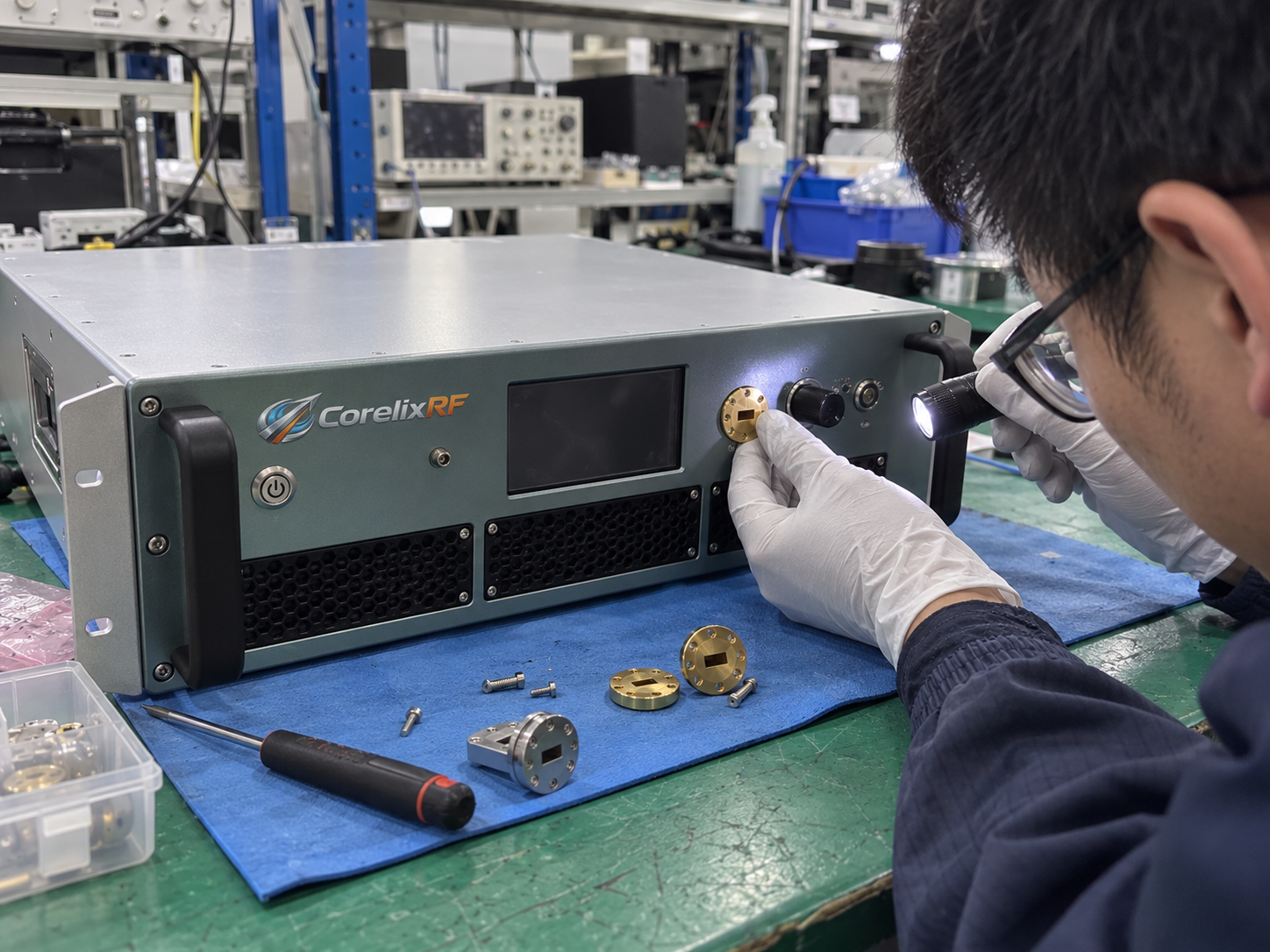
The source lists 1.85mm-F input and WR15 waveguide output. Specify the mating waveguide and flange, adapter chain, handling and torque procedure, and service access. Identify whether the WR15 output feeds a calibrated load, antenna range, coupler, switch or fixture. Record the load rating, mismatch conditions and measurement reference plane with the accessory list; these define the interface and acceptance boundary together.
Field 3 – Control And Diagnostics
RS485 and LAN are listed as control interfaces. The source also lists temperature and current monitoring, optional forward/reverse power monitoring, optional LAN remote monitoring and alarm protection. Confirm the command protocol, alarm definitions and values available for acceptance logging in the quoted configuration.
Field 4 – Rack And Cooling
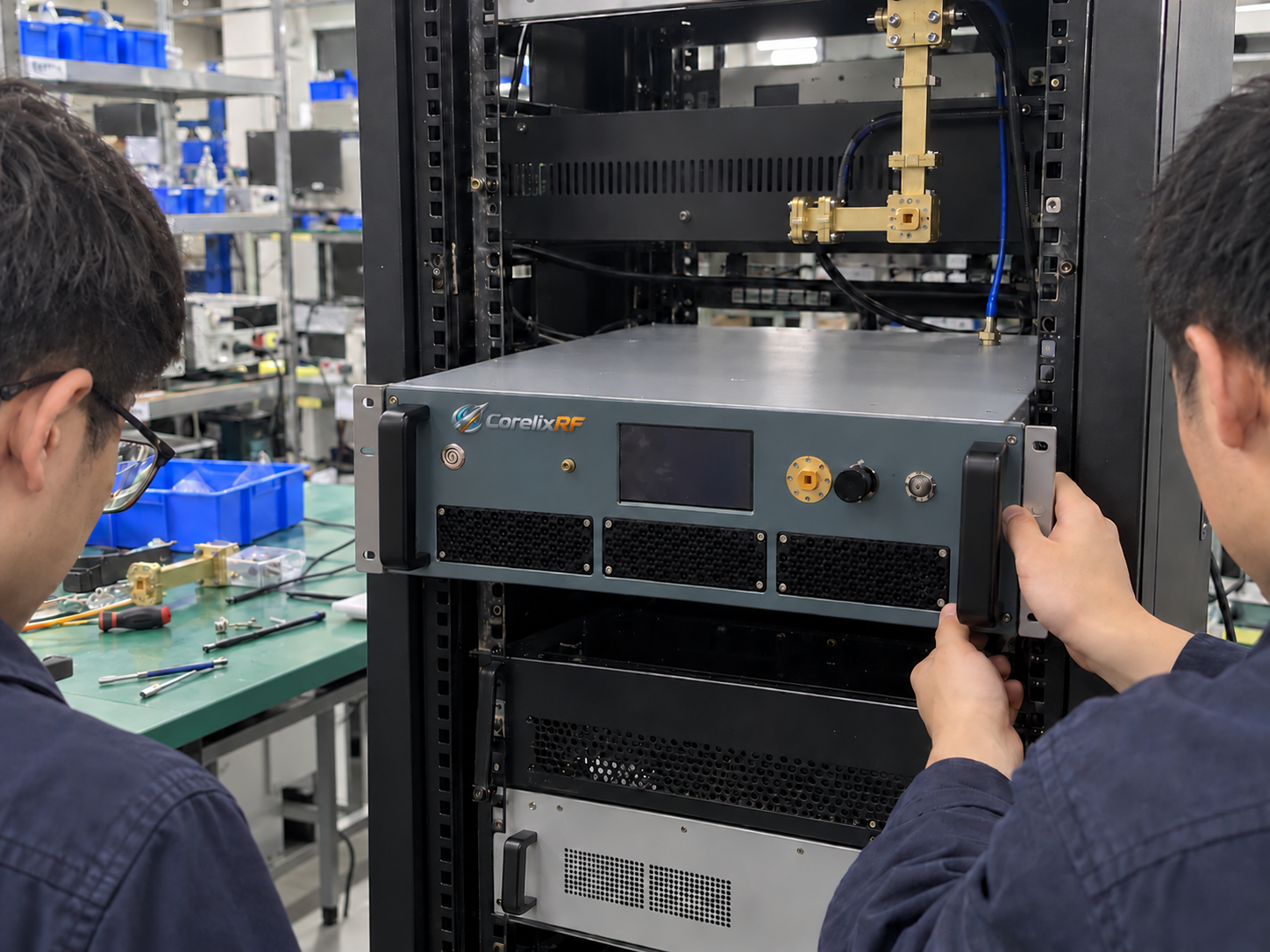
The amplifier uses a forced-air 19-inch 6U form factor and AC 220 V +/-10%, 50/60 Hz supply. The RFQ should include rack depth, airflow path, inlet temperature assumption, cable and waveguide service access, and whether front-panel or rear-panel routing is preferred. A high-power RF front-end integration can be delayed by mechanical ambiguity even when the RF specification is clear.
Field 5 – Options And Evidence
Ask which optional functions are included in the proposed quotation: forward/reverse power monitoring, input power detection, GPIB programmable control, LAN remote control, or project-specific protocol support. For custom amplifier review, request final mechanical drawings, production test data, control notes, and any configuration limits before procurement release.
Field 6 – Define the Operator Workflow
Ask who will control the amplifier and how often settings will change. A lab setup may need front-panel convenience and occasional remote logging. A production or automated test setup may need repeatable RS485 or LAN commands, alarm polling, and documented recovery. The RFQ should describe that workflow instead of only listing a control interface, because interface presence alone does not define operation.
Field 7 – RFQ Closeout
The final RFQ package should include the exact model, source datasheet path, target frequency range, required output power, expected waveform, rack constraints, control interface, monitoring options, waveguide details, and acceptance evidence. If any field is unknown, mark it as an engineering decision rather than leaving it implicit. That makes the supplier response easier to evaluate and reduces revision loops.
FAQ
What frequency range does this V-band amplifier cover?
The datasheet lists 50 to 65 GHz.
What output power is listed?
The source lists 120 W output power.
What RF interfaces are listed?
The amplifier uses 1.85mm-F input and WR15 waveguide output.
What should be included in the RFQ?
Include waveform, duty cycle or CW use, control interface, cooling, rack constraints, waveguide details, and required test evidence.