
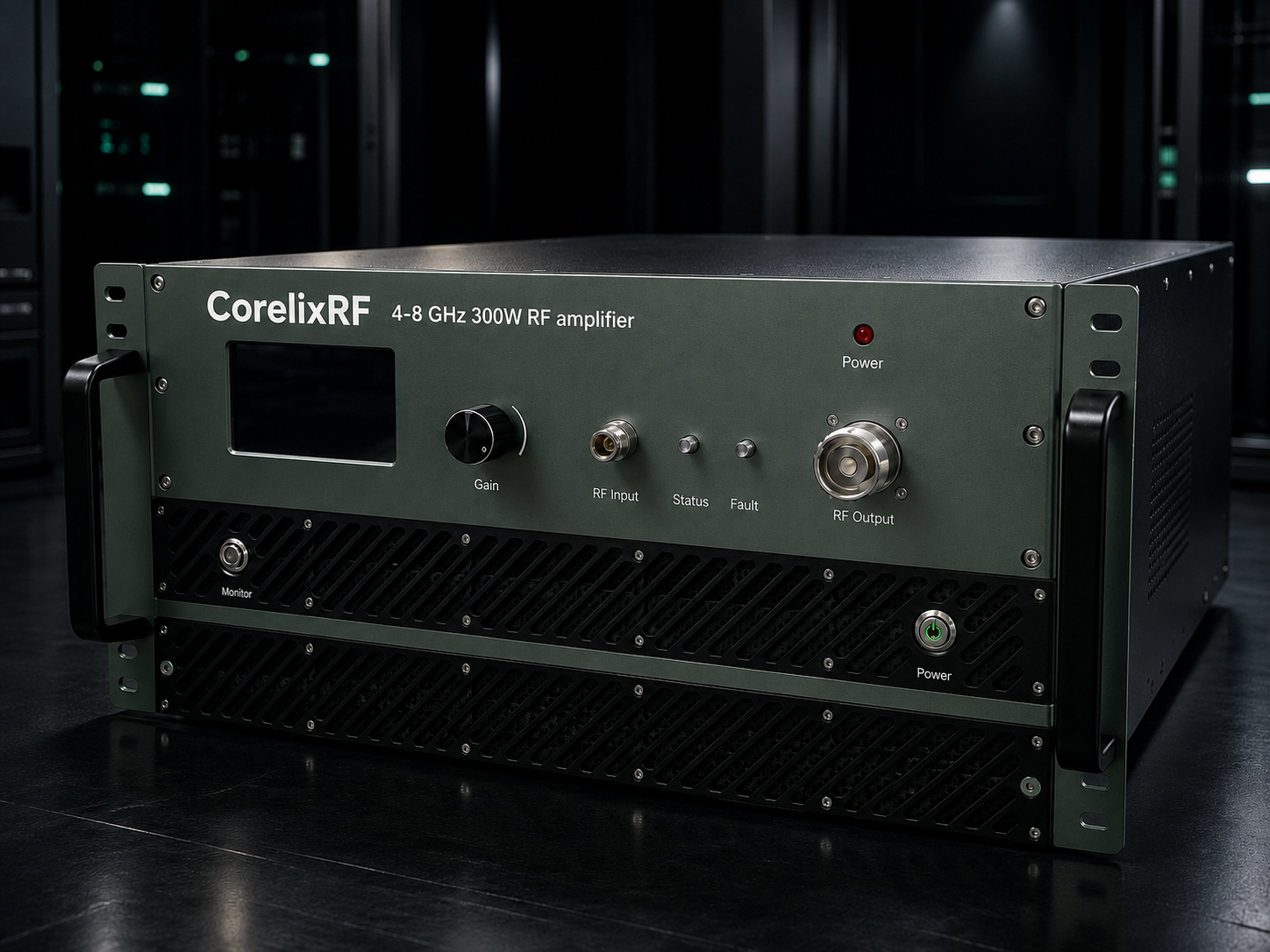
A 4-8 GHz 300W C-band RF amplifier should be walked down before it becomes part of a production or engineering test rack. The CorelixRF CRF-PA-4000M8000M-300W covers 4 GHz to 8 GHz, provides 300 W rated solid-state RF output power, uses GaN SSPA technology, and lists 57 dB minimum small-signal gain. The local datasheet identifies N-Female / 7/16-Female RF interfaces, forced-air 5U rack-mount configuration, temperature/current diagnostics, alarm protection, and project-ready control interfaces.
A walkdown is useful for buyers searching for a c-band amplifier, wideband rf amplifier, 300W GaN SSPA, high power rf amplifier, or 4-8 GHz RF power amplifier. The process checks the physical rack, RF path, control path, and acceptance paperwork in the same pass.
Walkdown Stop 1: Front and Rear Access
Verify that the 5U rack position allows connector access, cable strain relief, airflow clearance, and service work. High-power C-band equipment can be difficult to maintain when racks are packed tightly. The walkdown should include the amplifier, source, load, couplers, sensors, switches, and any control computer mounted nearby.
Walkdown Stop 2: Connector and Load Path
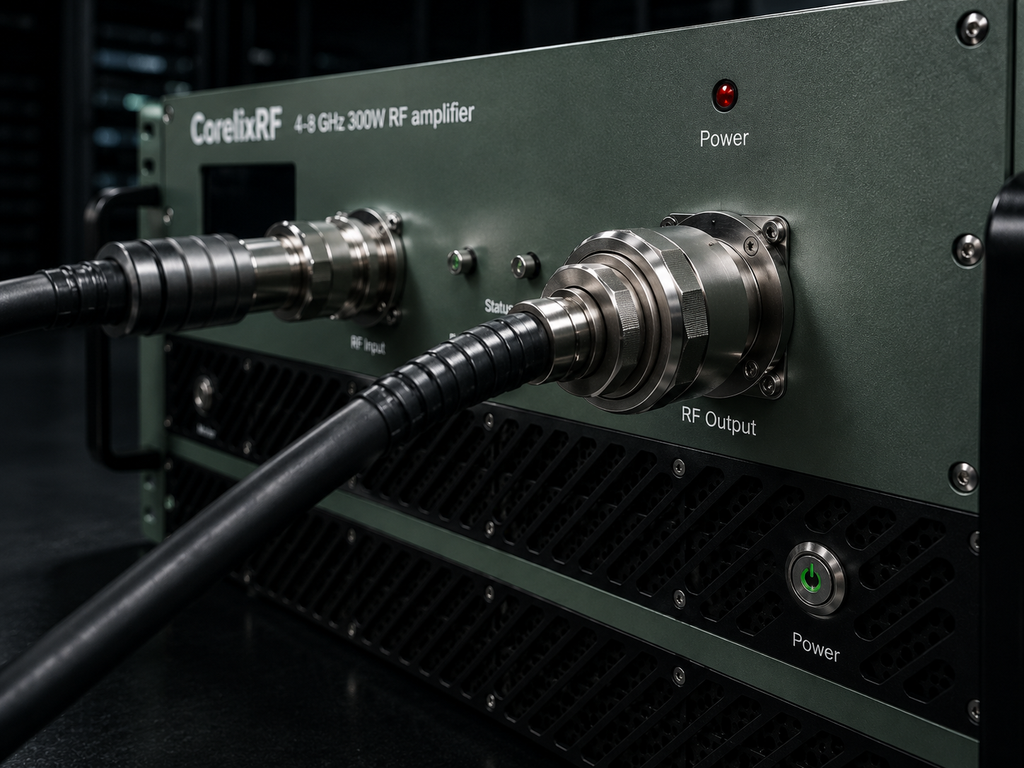
The source identifies N-Female / 7/16-Female interfaces. The acceptance plan should state which connector is used at each point, where the measurement plane sits, what load or antenna path is connected, and how cable loss is handled. A RF front-end platform with filters or switches needs the same level of documentation as the amplifier itself.
- Check output path power rating before RF enable.
- Verify source limits for a 57 dB gain amplifier.
- Log temperature and current during sweep or fixed-frequency tests.
- Write a reset procedure for alarm events.
- Store the final rack diagram with the acceptance record.
Walkdown Stop 3: Control and Monitoring
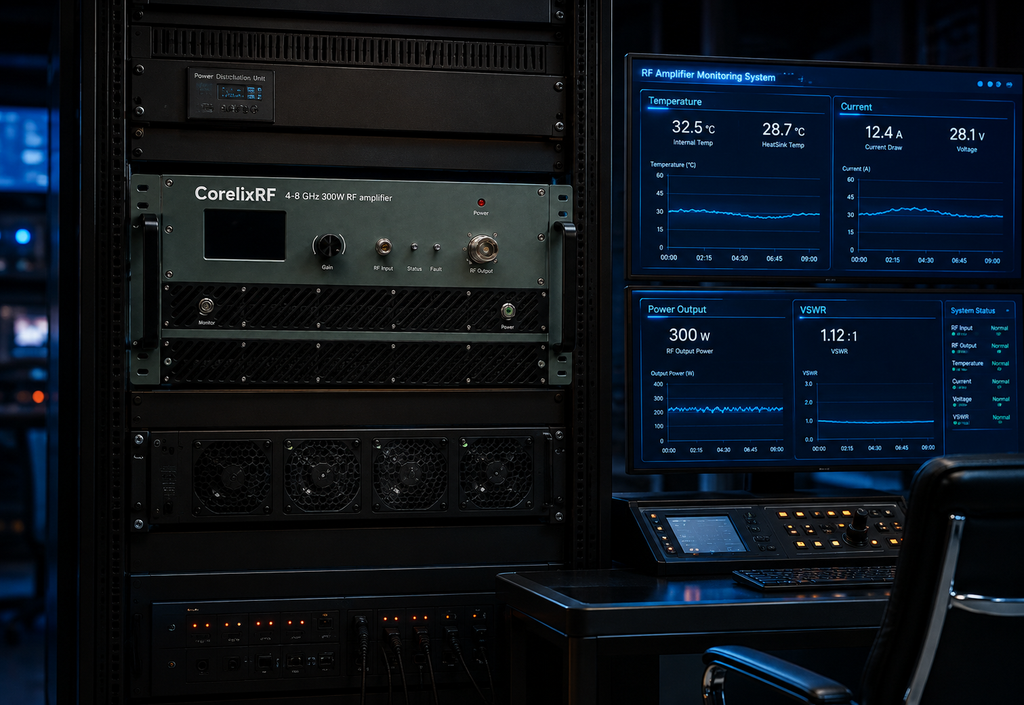
Project-ready control interfaces should be tied to the operating method. If the amplifier is controlled by automated software, the script should own source limits, enable timing, gain state, alarm response, and data logging. If the amplifier is manually controlled, the receiving checklist should still require current and temperature readings during output verification.
Walkdown Stop 4: Procurement Questions
A complete inquiry includes frequency points, output power target, duty condition, source type, rack layout, control preference, monitoring needs, and documentation expectations. The engineering and manufacturing page is a natural next step when the buyer needs test data format, mechanical drawings, or a repeatable acceptance procedure.
Walkdown Stop 5: Customization Boundary
If the project needs special packaging, a different interface, integrated switching, or remote monitoring behavior, it should be discussed as custom RF amplifier work. That keeps the quote aligned with the real system instead of hiding integration scope behind a standard model number.
The target keyword set is 4-8 GHz 300W C-band RF amplifier, c-band amplifier, wideband rf amplifier, high power rf amplifier, and 4-8 GHz RF power amplifier. These phrases are placed in engineering context so the article reads like a useful walkdown, not a keyword page.
Walkdown Closeout
The amplifier is ready for acceptance when the rack condition, RF reference plane, source limit, connector path, control method, monitoring record, and alarm response are all documented. The article does not claim inventory, certification, or field deployment. It uses the CorelixRF datasheet to guide a practical receiving process.
For recurring lab use, the walkdown should be repeated after any major change. A new load, a different cable set, a software update, or a rack move can change the acceptance context. Repeating the walkdown protects the engineering record and makes later troubleshooting faster.
Walkdown Evidence Package
The evidence package should include a final rack diagram, connector map, frequency list, output reference plane, source limit, gain state, current and temperature readings, and the alarm response procedure. A short photograph set can also be useful for internal records, but the public article does not need to include images. The important point is that the physical installation and RF measurement method are captured together.
C-band systems often combine power amplifiers with filters, switches, antennas, couplers, or chamber hardware. If those items are part of the deliverable, they should be listed in the RFQ rather than added after quotation. That helps CorelixRF review whether the request is a standard amplifier purchase, a modified rack configuration, or a broader integration project.
The walkdown method also gives the article a practical SEO angle. Buyers looking for a 4-8 GHz RF power amplifier usually need acceptance and integration guidance, not another broad definition of RF gain.
Operational Notes After Acceptance
After acceptance, the walkdown should become part of the operating record. Operators should record source setting, gain state, frequency, output power, current, temperature, and any alarm condition during important tests. If the rack is shared between engineering groups, the record helps each group understand what changed since the last successful run.
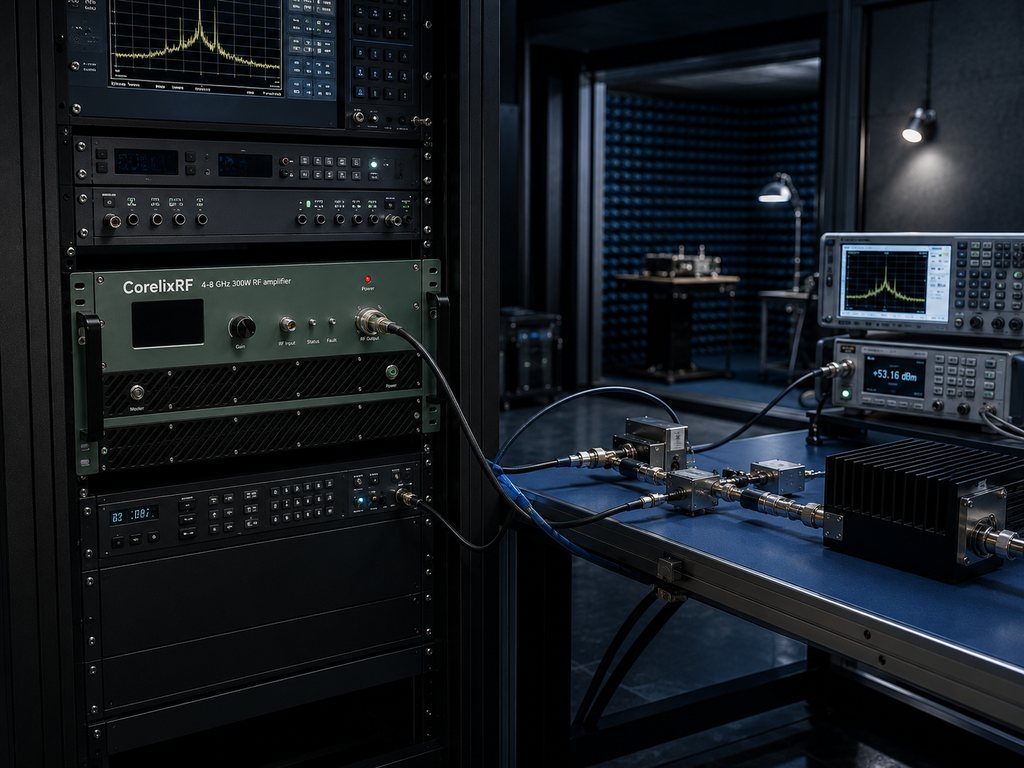
C-band test benches can be deceptively flexible because many sources and loads cover the band. That flexibility creates risk when adapters, attenuators, or switch paths are changed without updating the acceptance notes. A short walkdown before critical tests protects the RF chain and keeps purchasing, engineering, and lab operations aligned.
FAQ
What frequency range does CRF-PA-4000M8000M-300W cover?
The datasheet lists 4 GHz to 8 GHz.
What output power and gain are listed?
The source lists 300 W rated output power and 57 dB minimum small-signal gain.
What RF interfaces are listed?
The local datasheet identifies N-Female / 7/16-Female RF interfaces.
What mechanical format is listed?
The source lists a forced-air 5U rack-mount configuration.