
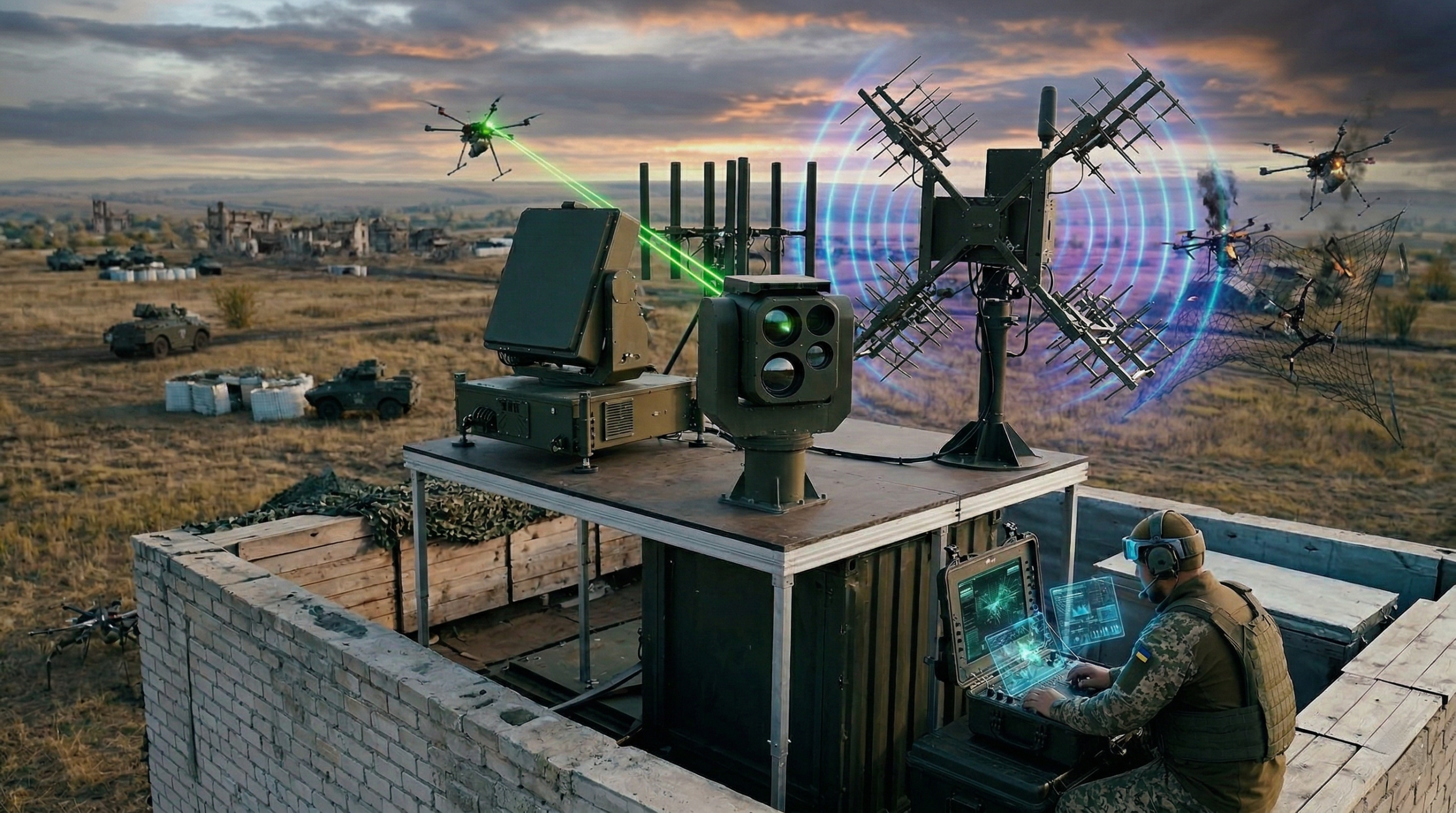
Drone and counter drone warfare in Ukraine represents a rapid shift toward unmanned tactical combat operations. You deploy expensive armored vehicles across open terrain. Sudden strikes from cheap unmanned aerial systems destroy millions in equipment instantly. Implementing reliable anti drone networks stops these lethal threats before they strike. Modern battlefields demand robust defensive perimeters. Upgraded signal jamming neutralizes hostile swarms rapidly.
How Did Drone Warfare Escalate So Quickly?
Rapid technological adoption and cheap commercial components accelerated military deployment significantly. Forces modified consumer quadcopters for lethal payload delivery overnight. Consequently, an effective anti drone mechanism became a critical survival tool. Without adequate protection, entire battalions remain vulnerable.
What is the real story here? Both sides adapted civilian technology for an asymmetric warfare advantage. They turned hobbyist gadgets into precision munitions quickly. Traditional air defenses struggle against such small targets.
What Sparked This Innovation?
Desperation drives rapid field testing of new tactical approaches. Soldiers bypass traditional procurement channels completely. They build strike capabilities using off-the-shelf parts directly.
Here is the kicker: You face an enemy that iterates designs weekly.
- Commercial availability speeds up development cycles.
- Open-source software enables autonomous flight patterns.
- Local manufacturing allows custom payload mechanisms.
Conflict Evolution Metrics
| Phase | Focus Area | Impact Level |
| Early | Reconnaissance | Moderate |
| Mid | Guided Strikes | High |
| Current | Swarm Tactics | Severe |
This table highlights rapid capability scaling during active operations.
Key Takeaway: Adapting civilian tech forces rapid defensive strategy shifts.
What Are Primary Countermeasures Today?
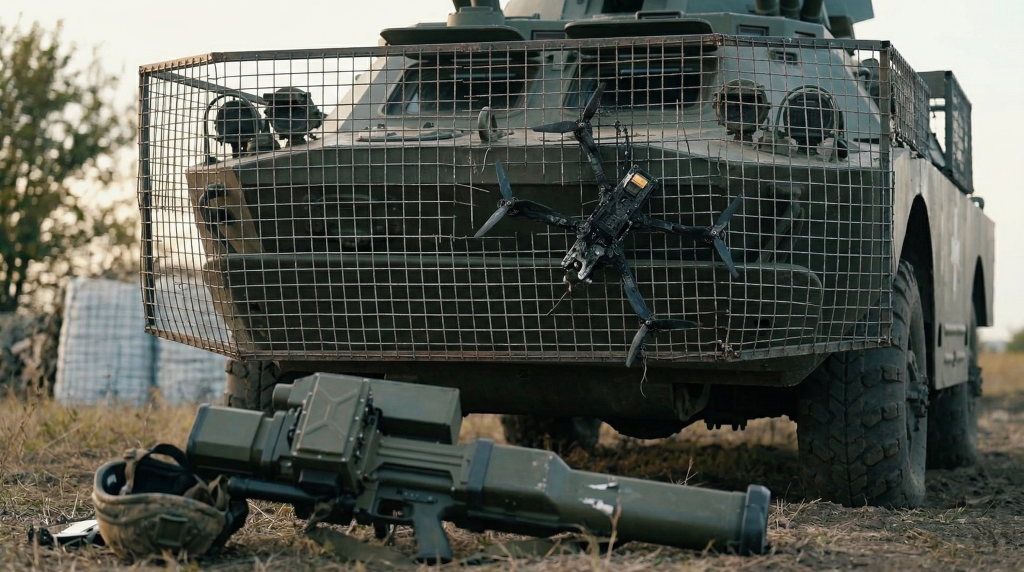
Electronic warfare jamming and kinetic interceptors represent current primary defensive layers. A layered anti drone perimeter disrupts navigation signals effectively. This approach causes hostile units either crash or return home.
Why does this matter? Single-layer defenses fail against coordinated multi-vector attacks. Commanders must integrate several systems for complete airspace dominance. You need overlapping radar and optical tracking tools.
How Do Jammers Work?
Radio frequency jammers overpower incoming control signals with massive noise. This severs communication links between operators and their aircraft. Many models also spoof GPS coordinates simultaneously.
Want to know the best part? Modern systems fit inside small backpacks.
- Portable jammers protect moving infantry squads.
- Vehicle-mounted units defend supply convoys.
- Static installations shield fixed command posts.
Countermeasure Types
| Type | Range | Main Function |
| Handheld | Short | Point defense |
| Mobile | Medium | Convoy protection |
| Static | Long | Area denial |
This breakdown shows operational range variations among defensive tools.
Key Takeaway: Layered defense architectures provide maximum airspace security.
How Effective Are Electronic Warfare Systems?
Electronic warfare proves highly successful at disrupting commercial quadcopter frequencies. Modern anti drone platforms block video feeds and control channels instantly. However, autonomous navigation upgrades make continuous jamming mandatory.
Look at it this way: Signal disruption offers a non-kinetic takedown method. It prevents collateral damage from falling debris over populated areas. Operators can capture intact enemy equipment for intelligence gathering.
Can EW Stop Swarms?
Coordinated attacks require massive broadcast power for complete suppression. Narrowband jammers might miss frequency-hopping communication protocols. Broad spectrum jamming becomes necessary against advanced threats.
This is where it gets interesting: Advanced AI predicts frequency hopping patterns.
- Machine learning analyzes signal behaviors rapidly.
- Automated responses trigger appropriate counter-frequencies.
- Networked sensors share threat data instantly.
EW Effectiveness Stats
| Threat Level | Jamming Success | Requirement |
| Low Tech | 95% | Basic RF Jammer |
| Medium | 75% | Multi-band System |
| Advanced | 40% | AI Predictive EW |
Data reveals decreasing effectiveness against sophisticated autonomous systems.
Key Takeaway: Electronic warfare must evolve constantly against adaptive threats.
Why Are Commercial Drones Tactical Nightmares?
Their tiny radar cross-sections make early detection incredibly difficult. Implementing a specialized anti drone radar becomes critical for perimeter defense. Standard military radar often categorizes them as birds.
Think about that for a minute. Anyone can buy a high-definition observation platform online. They cost less than a single artillery shell. Modifying them for grenade dropping takes minimal engineering skill.
How Do They Avoid Detection?
Low altitude flight paths hide them behind terrain features. Electric motors produce almost zero acoustic signatures from far away. Plastic bodies reflect very little radar energy.
Now consider this: Thermal imaging offers a reliable detection alternative.
- Battery heat signatures remain visible at night.
- Motor warmth contrasts sharply against cold skies.
- Optical tracking confirms target identity visually.
Commercial Unit Traits
| Feature | Military Impact | Detection Difficulty |
| Size | High mobility | Extreme |
| Cost | Expendable | N/A |
| Material | Low radar return | High |
These traits explain why consumer units bypass traditional defenses.
Key Takeaway: Cheap commercial platforms democratize precision aerial strike capabilities.
What Role Do FPV Units Play?
First-person view aircraft act as highly maneuverable loitering munitions. A targeted anti drone gun remains one effective defense against them. Skilled pilots guide these explosive-laden racers directly into vehicle weak points.
It gets better: They offer unparalleled strike precision inside urban environments. Operators fly them through windows or into open tank hatches. Their high speed makes kinetic interception extremely challenging.
How Do You Defend Against FPVs?
Directional jamming antennas provide localized protection domes. Metal mesh screens pre-detonate shaped charges before hitting armor. Smoke grenades obscure visual targeting during terminal approach phases.
But wait, there is more. Reactive armor upgrades help mitigate blast damage.
- Spaced armor plates absorb initial explosive force.
- Continuous RF scanning detects approaching video feeds.
- Automated shotguns provide localized kinetic defense.
FPV Strike Statistics
| Target Type | Success Rate | Defense Method |
| Armored Vehicle | High | Mesh Screens |
| Infantry Squad | Medium | RF Jammers |
| Static Position | Low | Layered EW |
These figures demonstrate FPV effectiveness against different tactical targets.
Key Takeaway: Agile FPV weapons require instantaneous close-in defensive reactions.
How Do Multi-Sensor Systems Improve Defense?
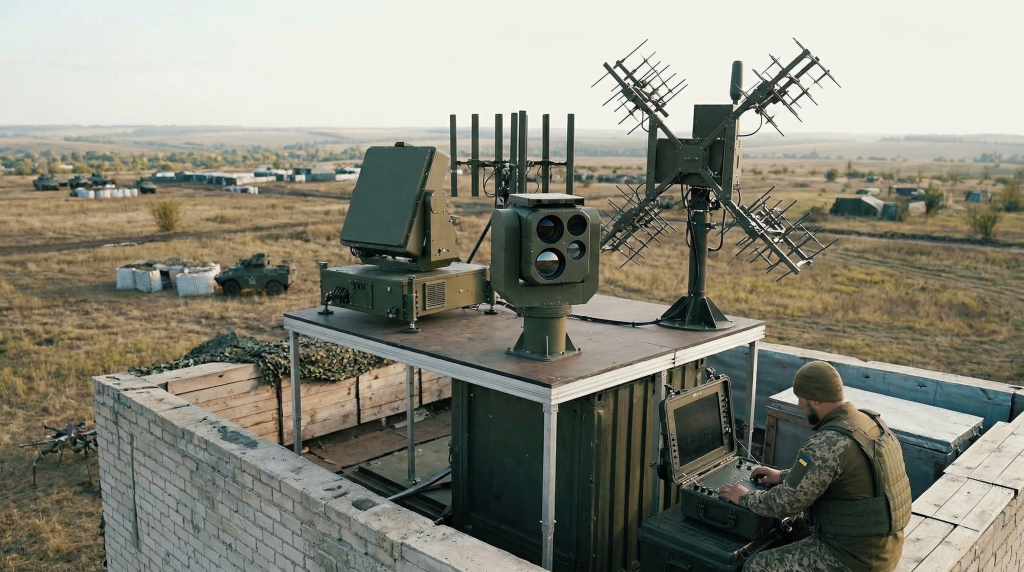
Integrating radar, optical, and acoustic sensors creates unified threat awareness. Complete anti drone networks fuse data for accurate targeting solutions. Single-sensor platforms suffer from false positives frequently.
Here is the bottom line: Weather conditions affect individual sensor performance drastically. Fog blinds optical cameras completely. Rain creates massive background noise for acoustic microphones.
Why Is Data Fusion Critical?
Combining different data streams eliminates individual sensor blind spots. Algorithms filter out biological targets like birds automatically. This reduces operator fatigue during long surveillance shifts.
What does this mean for you? You get reliable actionable intelligence faster.
- Radar detects an anomaly at long range.
- Optical cameras zoom in for positive identification.
- Electronic warfare modules engage the confirmed threat.
Sensor Fusion Benefits
| Sensor Type | Weakness | Compensating Tech |
| Optical | Bad Weather | Radar |
| Acoustic | Ambient Noise | Optical |
| Radar | Small Targets | Acoustic |
This matrix illustrates how combined technologies cover individual vulnerabilities.
Key Takeaway: Multi-sensor integration provides unparalleled situational awareness.
What Are Kinetic Interception Limitations?
Firing traditional projectiles at small agile targets wastes valuable ammunition. Conventional anti drone missiles cost significantly more than their targets. This cost exchange ratio favors the attacking force heavily.
Let that sink in. Using a million-dollar missile against a thousand-dollar quadcopter is unsustainable. Depleting defensive stockpiles leaves base infrastructure vulnerable to larger strikes. Logistics chains struggle to supply enough interception ordnance.
Are There Cheaper Kinetic Options?
Programmable airburst ammunition increases hit probabilities against small targets. Laser energy weapons burn through plastic fuselages at light speed. Attack quadcopters equipped with nets capture hostile units safely.
Truth be told: Directed energy weapons offer infinite magazine depth.
- Lasers require only electrical power for operation.
- Cost per shot drops to mere pennies.
- Target engagement happens almost instantly.
Kinetic Options Comparison
| Method | Cost Per Use | Effectiveness |
| Missile | Extreme | High |
| Airburst | Moderate | Medium |
| Laser | Very Low | High |
Evaluating cost per use drives future procurement strategies heavily.
Key Takeaway: Economic sustainability remains critical for long-term defensive operations.
How Will Swarm Tactics Change Combat?
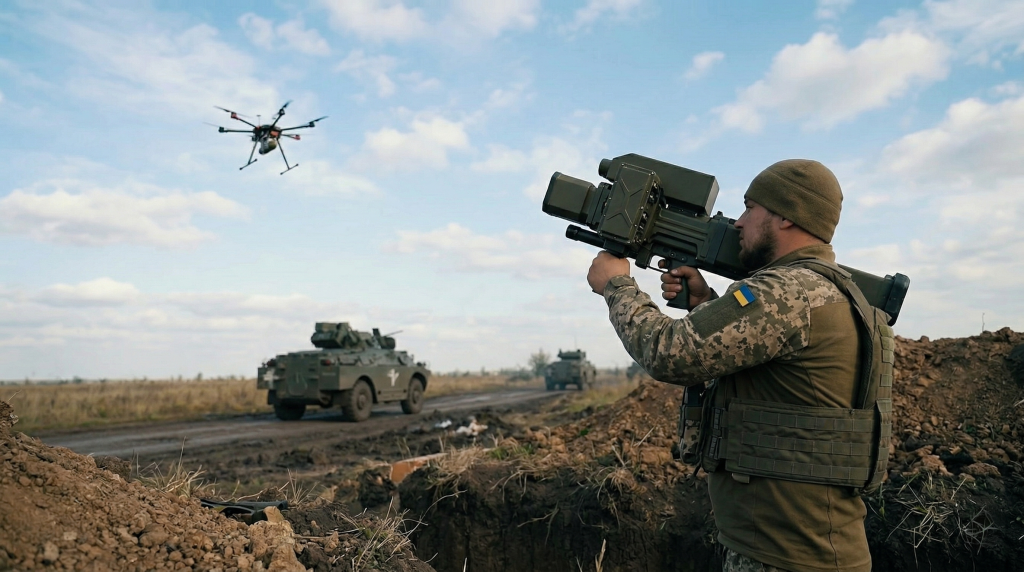
Hundreds of networked autonomous units will overwhelm traditional defense arrays. Modern anti drone architectures must process multiple targets simultaneously. Swarms communicate internally to bypass localized jamming attempts.
Consider the possibilities. A swarm can attack from 360 degrees concurrently. If one unit falls, others adjust their flight paths automatically. They share targeting data across the entire network instantly.
Can We Defeat Swarms?
High-powered microwave weapons fry electronic circuits across wide areas. This approach drops entire swarms simultaneously without individual targeting. Electromagnetic pulses act like an invisible wall against electronics.
Why should you care? Future conflicts will rely on automated swarm interactions.
- Defensive AI must react faster than human operators.
- Area denial weapons will replace point defense tools.
- Cyber warfare will target swarm command networks directly.
Swarm Defense Needs
| Tactic | Threat Level | Required Defense |
| Single Target | Low | Rifle/Jammer |
| Small Group | Medium | Airburst/EW |
| Massive Swarm | Extreme | Microwave/EMP |
Scaling defensive capabilities matches anticipated future threat volumes.
Key Takeaway: Defeating swarms requires broad-spectrum electromagnetic pulse technologies.
Why Is Continuous Research Vital Now?
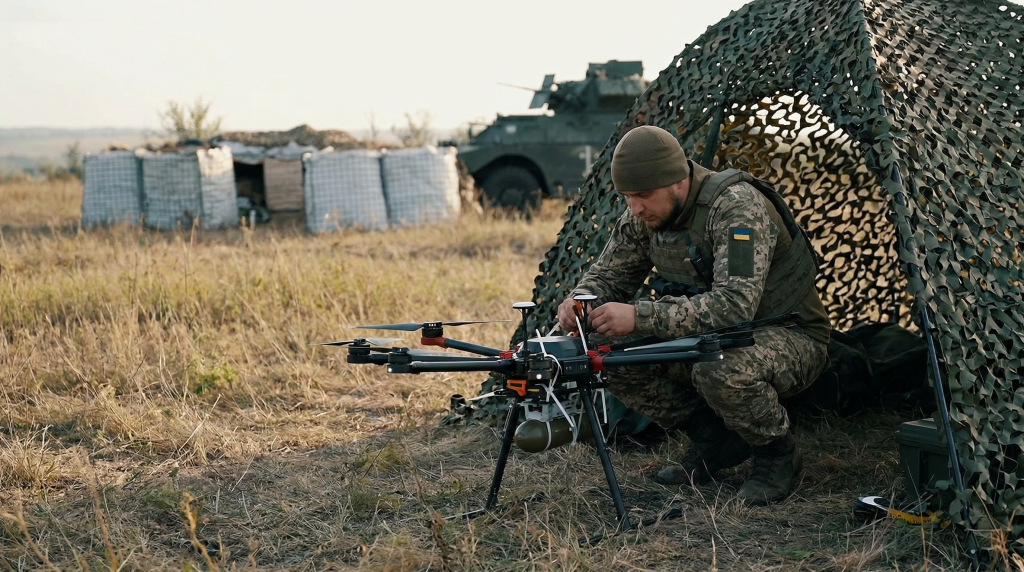
Adversaries update flight software and communication frequencies almost daily. Static anti drone technologies become obsolete within mere months. Maintaining a technological edge requires relentless engineering focus.
Do not ignore this fact. The innovation cycle in Ukraine operates at breakneck speed. What worked yesterday might fail completely tomorrow morning. Defense contractors must push software updates constantly.
How Fast Is Tech Evolving?
Hardware iterations happen in weeks rather than years. Field feedback drives immediate factory floor modifications. This agile development model breaks traditional military procurement paradigms.
Here is what you need to know: Adaptability wins modern conflicts.
- Software-defined radios allow instant frequency adjustments.
- Modular hardware makes field repairs significantly easier.
- Open architectures support rapid third-party tech integration.
Innovation Cycle Speeds
| Sector | Dev Cycle | Deployment Time |
| Traditional | 5-10 Years | Slow |
| Commercial | 1 Year | Moderate |
| Battlefield | 2-4 Weeks | Immediate |
Rapid battlefield iteration outpaces traditional defense contracting completely.
Key Takeaway: Continuous technological adaptation ensures continued battlefield relevance.
How Can You Prepare Defensively?
Evaluating your specific airspace vulnerabilities represents the critical first step. Deploying scalable anti drone solutions protects your physical assets effectively. You must train personnel on evolving threat identification constantly.
Make no mistake. Ignoring this aerial threat leaves your facilities totally exposed. Proactive security measures save lives and protect expensive equipment. Layered defenses deter opportunistic reconnaissance and targeted strikes alike.
What Steps Should You Take?
Conduct a comprehensive RF spectrum analysis around your perimeter. Install baseline detection sensors to monitor local airspace activity. Develop strict operational protocols for unauthorized aerial incursions.
Let us wrap this up: Preparation dictates survival in modern warfare.
- Audit existing security infrastructure immediately.
- Invest in modular EW jamming equipment.
- Establish clear rules of engagement for operators.
Preparation Checklist
| Phase | Action Item | Priority Level |
| 1 | Airspace Audit | High |
| 2 | Sensor Install | High |
| 3 | Staff Training | Medium |
Following structured preparation steps minimizes potential security breaches.
Key Takeaway: Proactive airspace management prevents catastrophic tactical surprises.
We provide cutting-edge solutions for your toughest airspace security challenges. Our innovative systems guarantee unparalleled protection against hostile unmanned threats. Reach out and contact us today to secure your perimeter. RF Sky Power stands ready to defend your skies relentlessly.
FAQ
Q1: Can I use commercial jammers for base protection?
Using commercial jammers offers limited protection. They often lack the required frequency range to stop modified military-grade targets.
Q2: How do I know if my airspace is compromised?
You need specialized RF detection equipment. Standard visual observation fails to catch small, high-altitude, or nighttime aerial intrusions.
Q3: What is the best defense against FPV attacks?
Directional RF jamming combined with physical barriers works best. This dual approach disrupts the video feed and detonates the charge early.
Q4: Are laser defense systems currently viable?
Laser systems represent a highly viable solution today. They offer a low cost per shot and instantaneous target engagement capabilities.
Q5: Can I update my current defensive sensors easily?
Modular systems allow for rapid software updates. Software-defined radios permit quick frequency adjustments without requiring full hardware replacements.