
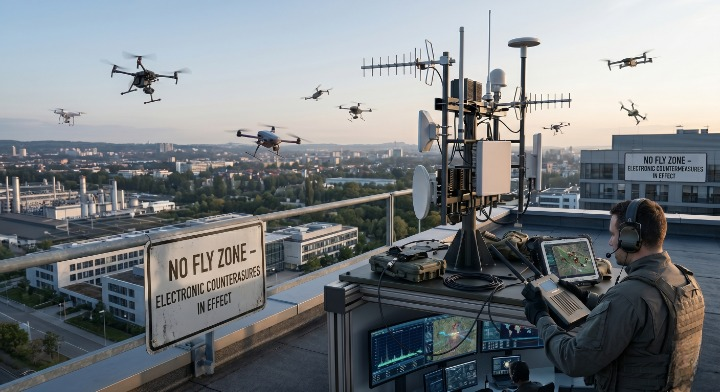
In the United States, private individuals and ordinary businesses generally may not market, sell, import, or operate radio-frequency jammers. The FCC prohibits unauthorized interference with licensed radio communications, while limited counter-UAS mitigation authority may apply only to specifically authorized federal programs and designated facilities. This guide provides general compliance information—not legal advice—and explains the restrictions organizations should review before evaluating active RF mitigation equipment.
What Is the Difference Between Jamming and Spoofing?
Jamming specifically refers to using a transmission-blocking signal to disrupt communications, while spoofing involves a third party taking over the drone by impersonating the pilot’s remote control. Professional Drone Jammers work by saturating the drone’s receiver with noise to prevent it from hearing legitimate commands. You can utilize these distinct methods depending on whether you need to block a signal or redirect the craft entirely.
How Does RF Noise Block Communication?
Noise injection creates a wall of interference that the drone’s internal antenna cannot penetrate. Because the drone can no longer communicate with the ground station, it enters a pre-programmed failsafe mode immediately.
Think about it:
- The drone loses its command and control link.
- The video telemetry feed to the pilot is severed.
- Autonomous functions may take over the flight path.
The truth is simple: if the drone can’t hear the pilot, it can’t complete its mission. Key Takeaway: Jamming is a blunt electronic tool used for total signal denial.
Why Is Spoofing More Complex Than Jamming?
Spoofing requires emitting a structured signal that mimics the original controller’s unique protocol and timing. This technique tricks the drone into accepting commands from your own transmitter rather than the legitimate one.
But that’s not all:
- You can gain full control over the flight direction.
- The drone’s camera feed can be accessed or downloaded.
- The drone believes it is still following authorized orders.
Here is the kicker: spoofing is surgical and requires precise signal replication to be successful. Key Takeaway: Spoofing allows for active takeover rather than passive disruption.
| Technique | Primary Method | Security Result |
|---|---|---|
| Jamming | Noise Saturation | Immediate Link Loss |
| Spoofing | Signal Mimicry | Active Craft Takeover |
Effective airspace security relies on choosing between brute-force noise or sophisticated signal manipulation.
How Do Drone Jammers Force a Safe Landing?
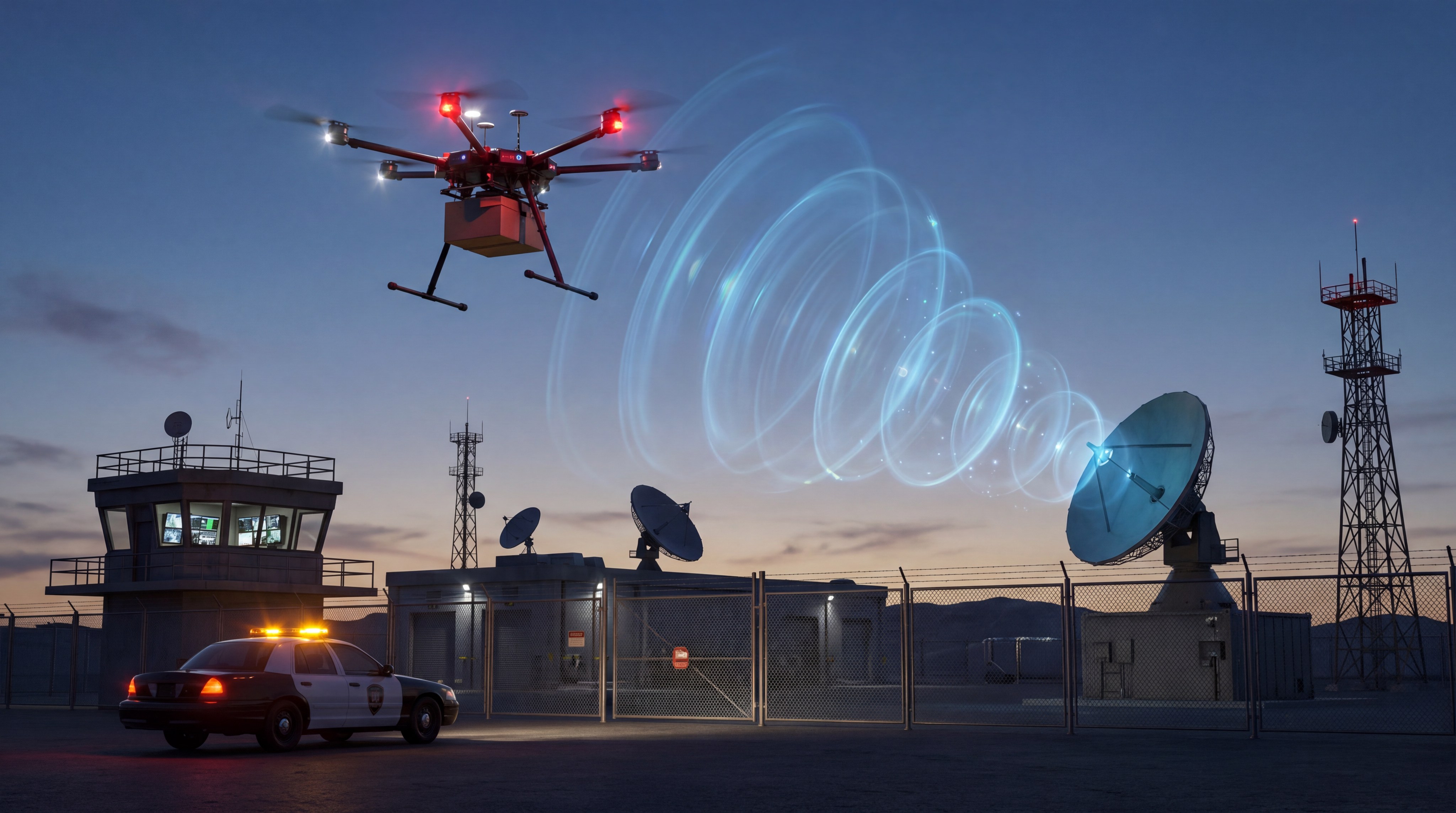
Drone Jammers force a safe landing by severing the vital radio link, which triggers the drone’s internal logic to ground itself to prevent a flyaway. When you deploy these systems, the drone’s onboard computer realizes it is no longer under pilot control. It then initiates a sequence designed to protect the hardware and surrounding environment from a crash.
What Triggers the Return to Home Feature?
Most commercial drones possess a “Return to Home” function that activates when the GPS or radio link is lost. The drone uses its recorded takeoff coordinates to navigate back to its origin point autonomously.
Wait, there’s more:
- The drone climbs to a safe altitude to avoid obstacles.
- It flies in a straight line toward the takeoff spot.
- It lands automatically once the coordinates are reached.
Look at it this way: the drone is programmed to save itself the moment you block the pilot’s signal. Key Takeaway: Jamming can lead you directly to the unauthorized pilot’s location.
How Is Forced Landing Executed Remotely?
If a drone lacks a home point or the link remains blocked, it will typically descend vertically at its current location. This prevents the drone from drifting into dangerous areas or colliding with other aircraft in the sky.
Keep this in mind:
- The motors slowly reduce power for a controlled descent.
- Sensors attempt to find a flat landing surface.
- The drone remains grounded until the interference stops.
Think about this for a second: you are essentially parking the drone in mid-air and bringing it down safely. Key Takeaway: Forced landing is the primary safety mechanism for drones without stable GPS.
| Mitigation | Action | Impact on Drone |
|---|---|---|
| Signal Block | RTH Trigger | Returns to takeoff point |
| Link Denial | Forced Landing | Descends at current spot |
By understanding these failsafes, you can predict exactly how a target will behave once the jammer is active.
Can Drone Jammers Give You Full Control Over Flight?
No, standard Drone Jammers only block communication, as giving full flight control requires more specialized spoofing hardware and protocol emulation. High-performance Drone Jammers are designed for denial of service rather than command manipulation. You must understand that simply drowning out a signal does not allow you to “steer” the drone yourself.
Can You Redirect a Drone Without Spoofing?
Without spoofing, you are limited to the drone’s pre-defined failsafe behaviors like landing or returning to its home. You cannot manually fly the craft to a different location or change its mission parameters through jamming alone.
Why does this matter?
- Jamming is easier to deploy than spoofing.
- It works across a wider variety of drone models.
- It does not require knowledge of the drone’s internal code.
The truth is simple: jamming is for stopping threats, while spoofing is for capturing them. Key Takeaway: Standard jamming equipment is built for airspace denial, not remote piloting.
| Control Level | Hardware Type | Operational Scope |
|---|---|---|
| Zero Control | Standard Jammer | Blocks Pilot Signal |
| Full Control | Spoofing System | Overwrites Commands |
You must decide if your priority is simply clearing the sky or taking ownership of the intruding hardware.
Which Hardware Is Needed for Successful Jamming?
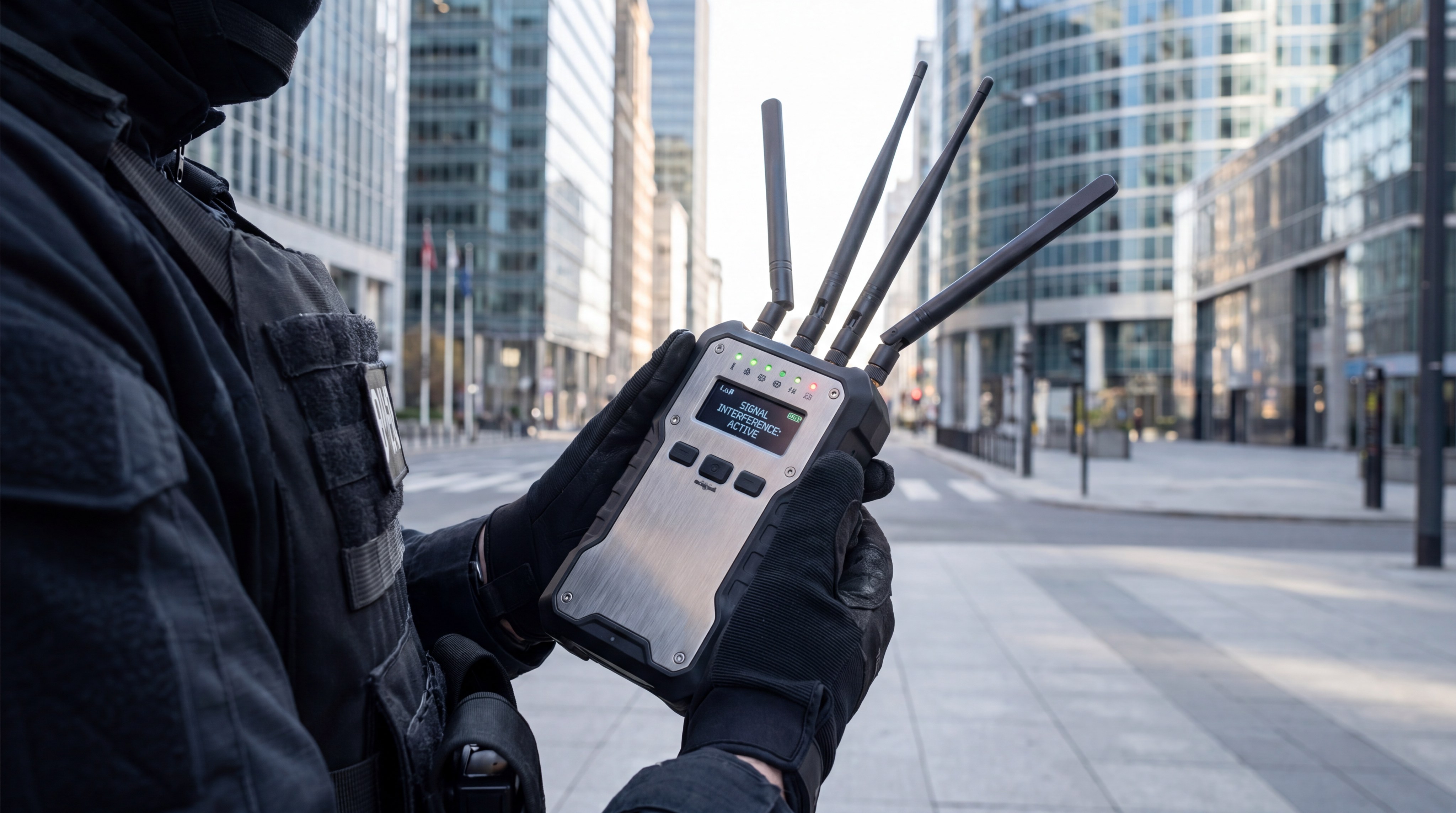
Successful jamming requires a combination of a signal source, a high-power amplifier, and a specialized antenna to project the interference. Drone Jammers depend on the quality of these components to ensure the noise effectively reaches the drone’s receiver at a distance. When you build a defense system, each part of the chain must be optimized for the specific frequencies used by modern UAVs.
Why Use Wideband SDR Signal Sources?
Software-Defined Radio (SDR) modules allow you to generate precise waveforms that target the exact frequencies of an incoming threat. These modules can be updated to counter new drone models that use frequency-hopping or non-standard bands.
It gets even better:
- You can target multiple frequency bands at once.
- The signal can be customized for specific modulation types.
- SDRs are compact and integrate easily into mobile systems.
Here is why: flexibility in signal generation is the only way to keep up with evolving drone technology. Key Takeaway: SDR sources provide the tactical agility needed for modern counter-UAS operations.
How Do Amplifiers Support Drone Jammers?
The amplifier takes the low-power SDR signal and boosts it to a level that can overcome the pilot’s remote control. High-power amplifiers ensure that your jamming signal remains dominant even if the drone is far from your location.
Think about it:
- More power translates to a longer effective range.
- Solid-state amplifiers offer high reliability and stability.
- They must handle continuous broadcast without overheating.
But that’s not all: the amplifier is the “muscle” of your electronic defense system. Key Takeaway: Without sufficient amplification, your jamming signal will never reach the target.
| Component | Function | Tactical Benefit |
|---|---|---|
| SDR Module | Waveform Creation | Frequency Agility |
| Power Amp | Signal Boosting | Extended Engagement Range |
Integrated hardware ensures that your defense remains robust against a wide variety of commercial and custom drones.
Why Are Drone Jammers Considered Incomplete Solutions?
Drone Jammers are considered incomplete because they provide a non-kinetic way to stop a flight without identifying the pilot or the drone’s intent. While Drone Jammers effectively disrupt the link, they do not provide intelligence on where the drone came from or what it is carrying. You must view them as one layer of a broader security strategy that includes detection and identification.
What Are the Risks of Unknown Payloads?
If a drone is carrying a sensitive or dangerous payload, jamming it could cause it to land or crash in an unsafe area. You have no way of knowing if the drone is equipped with explosives, chemicals, or cameras until it is physically inspected.
Here is the kicker:
- A jammed drone might land on an innocent bystander.
- Sensitive payloads could break upon impact.
- Approaching a grounded drone carries significant physical risk.
The truth is simple: stopping the flight doesn’t always stop the danger the drone represents. Key Takeaway: Jamming a drone with a hazardous payload requires careful coordination with ground teams.
Can Autonomous Drones Bypass Your Jamming?
Drones that follow a pre-programmed GPS waypoint path do not need a constant radio link to the pilot. If you only jam the remote control frequencies, these autonomous units will continue their mission as if nothing happened.
Think about this for a second:
- The drone doesn’t care if the pilot is disconnected.
- It relies solely on internal sensors and satellites.
- You would need to jam GPS signals to stop its progress.
Wait, there’s more: a sophisticated attacker will always use autonomous flight to bypass standard RF denial. Key Takeaway: Effective defense must target both command links and navigation satellites.
| Limitation | Technical Reason | Operational Risk |
|---|---|---|
| No Pilot Data | RF Denial Only | Attacker remains anonymous |
| Payload Hazard | Physical Grounding | Potential site contamination |
You must integrate jamming with detection sensors to understand the full scope of the aerial threat.
Is the Use of Drone Jammers Legally Restricted?
Yes, the use of Drone Jammers is highly regulated and generally illegal for private citizens and businesses due to potential interference with public safety communications. These devices do not distinguish between a drone’s signal and other authorized radio traffic. When you operate a blocker, you risk disrupting emergency calls, law enforcement radios, and medical equipment.
What Are the Federal FCC Regulations?
The Federal Communications Commission (FCC) prohibits the marketing, sale, and use of jamming equipment by the general public. Under federal law, intentional interference with radio communications can lead to massive fines and equipment seizure.
Keep this in mind:
- Violations can result in hundreds of thousands of dollars in penalties.
- Criminal sanctions may include federal imprisonment.
- It is even unlawful to advertise these devices to consumers.
Look at it this way: the government prioritizes the integrity of the radio spectrum over individual security needs. Key Takeaway: Unauthorized use of jamming tech is a fast track to federal legal trouble.
Why Do Jammers Risk Public Safety?
A wideband jammer can inadvertently block cellular signals and Wi-Fi networks in the surrounding neighborhood. This means you could prevent someone from calling 911 during a real emergency while you are trying to stop a drone.
Think about it:
- First responders rely on clear radio channels.
- Air traffic control signals could be disrupted.
- Hospital telemetry systems may fail due to interference.
But that’s not all: the collateral damage of jamming often outweighs the benefits of stopping a drone. Key Takeaway: Jamming creates an electronic “dead zone” that affects everyone in the vicinity.
| Entity | Legal Status | Enforcement Agency |
|---|---|---|
| Private Citizen | Prohibited | FCC / Federal Law |
| Federal Agency | Authorized | Specific DOJ/DHS Waivers |
You should always seek legal counsel and federal authorization before considering the deployment of signal interruption technology.
How Does Distance Impact These Drone Jammers?
The effectiveness of Drone Jammers decreases exponentially as the distance between the jammer and the target drone increases. High-quality Drone Jammers must output significantly more power than the pilot’s remote to be effective at long ranges. You will find that environmental obstacles and atmospheric conditions also play a massive role in signal degradation.
Can You Jam Drones from Miles Away?
While professional systems can reach thousands of feet, jamming from several miles away requires massive power and specialized directional antennas. The further the drone is, the weaker your interference signal becomes by the time it reaches the drone’s antenna.
Why does this matter?
- You need a clear line of sight for maximum range.
- Nearby buildings can reflect and weaken your signal.
- Atmospheric moisture can absorb certain radio frequencies.
It gets even better: using a directional setup can double your effective range without increasing power. Key Takeaway: Tactical placement is just as important as the raw wattage of your amplifier.
How Does Signal Falloff Affect Your Defense?
Radio waves follow the inverse-square law, meaning that doubling the distance results in a signal that is four times weaker. To double your jamming range, you technically need to quadruple your power output if all other factors remain constant.
Here is why:
- Short-range defense is easy to achieve with handheld units.
- Long-range protection requires permanent, high-power installations.
- The drone’s proximity to its pilot can overcome your jammer.
The truth is simple: if the pilot is closer to the drone than you are, their signal will be harder to block. Key Takeaway: Maintaining a “power advantage” over the pilot’s transmitter is the key to distance jamming.
| Distance | Signal Strength | Hardware Requirement |
|---|---|---|
| < 500m | Very Strong | Handheld / Portable |
| > 2km | Significantly Weak | High-Gain Stationary System |
You must calculate your required coverage area to ensure your hardware has the power to reach the perimeter.
Who Is Authorized to Deploy Drone Jammers Today?
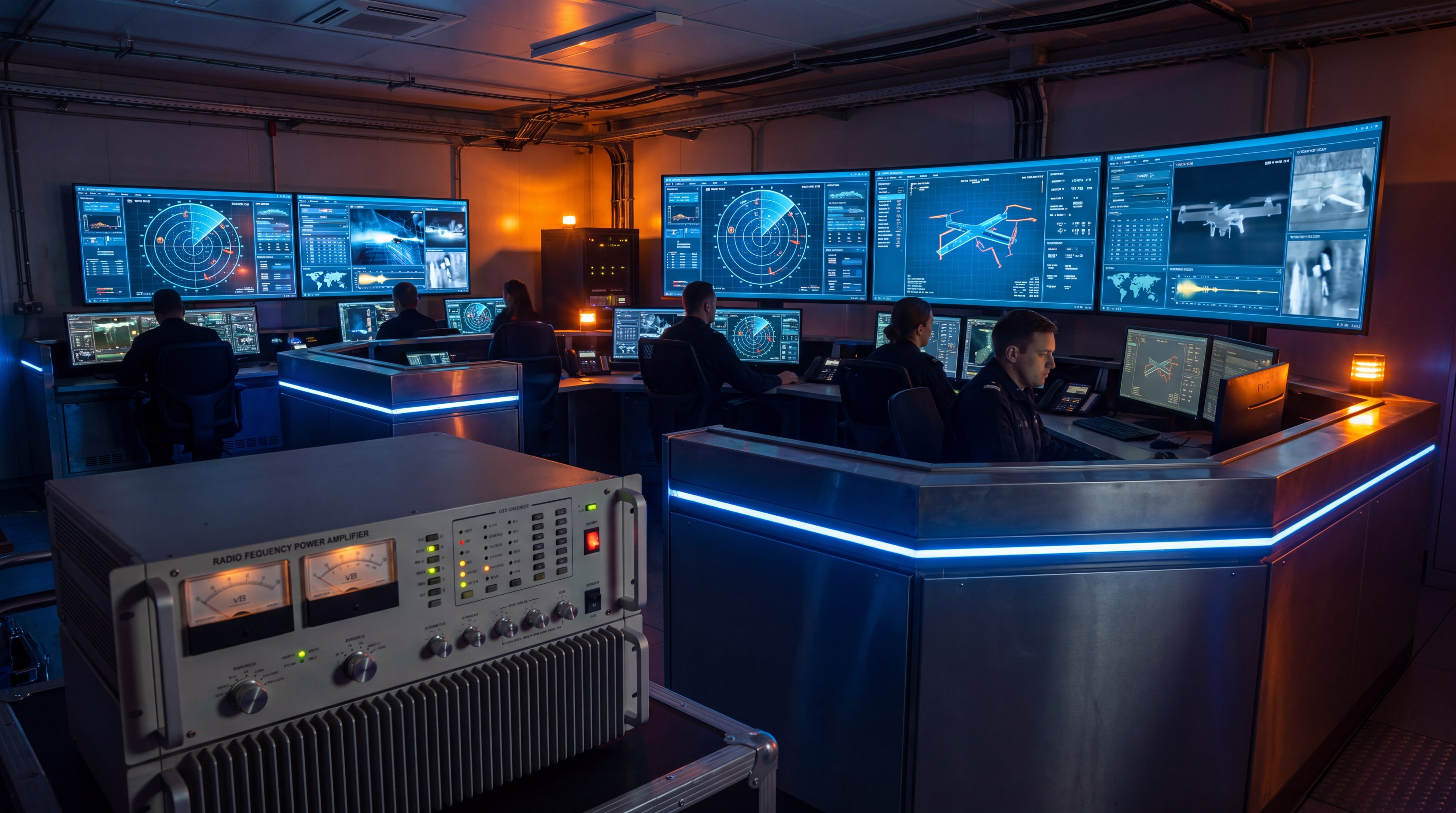
Authorization to deploy Drone Jammers is almost exclusively reserved for federal government agencies and specific military departments. These organizations have the legal authority to prioritize national security over potential radio spectrum interference. When you see these systems in use, they are typically protecting high-value targets where the threat of a drone attack is severe.
How Are Military Bases Protected?
Military security teams use advanced jamming arrays to create a “no-fly zone” around sensitive installations. These systems are active 24/7 and can neutralize threats before they even enter the visible range of the perimeter.
Wait, there’s more:
- They protect against both commercial and weaponized drones.
- Jamming is integrated with radar and acoustic sensors.
- Multiple frequency bands are monitored and suppressed simultaneously.
Think about it: in a warzone or a secure base, electronic warfare is the first line of defense. Key Takeaway: Military authorization allows for wide-spectrum jamming that would be illegal elsewhere.
Are Airports Allowed to Jam Drones?
Airports are currently testing counter-drone technologies, but they face strict regulations to avoid interfering with critical aviation communications. Most airports focus on detection and only use jamming in extreme emergencies under federal oversight.
Keep this in mind:
- Aircraft navigation relies on precise radio signals.
- Misplaced jamming could ground entire fleets of airplanes.
- Testing is strictly managed by the FAA and related agencies.
Look at it this way: at an airport, the cure (jamming) can be more dangerous than the disease (a drone). Key Takeaway: Civil aviation jamming is highly restricted even for government-run facilities.
| Sector | Authorization Level | Primary Use Case |
|---|---|---|
| Military | Full Operational | Base & Personnel Protection |
| Civil Aviation | Testing / Restricted | Safety & Flight Prevention |
You must recognize that your specific industry determines the level of electronic counter-UAS authority you can obtain.
Can Directional Antennas Enhance Drone Jammers?
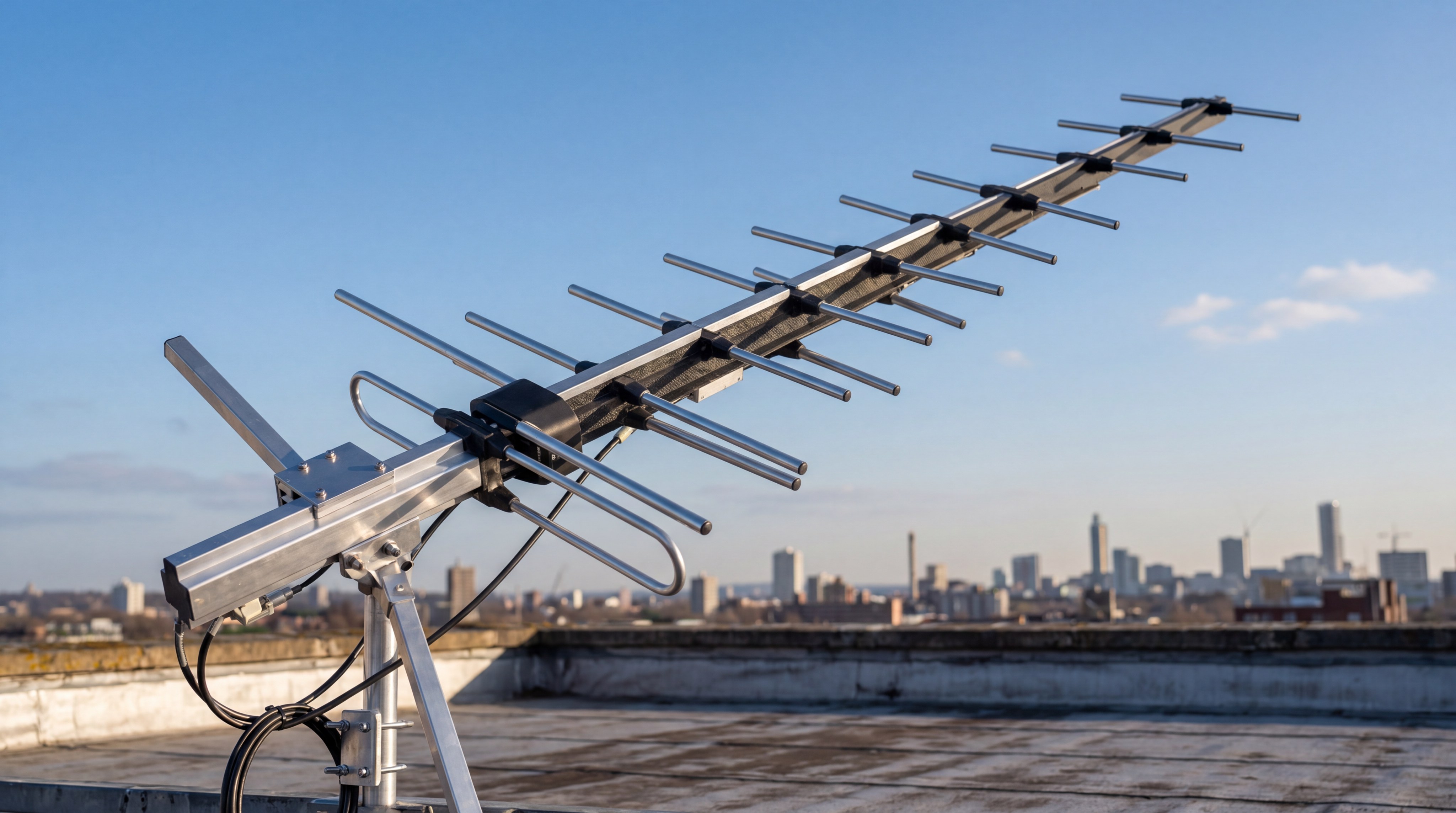
Yes, directional antennas enhance Drone Jammers by focusing the interference energy into a narrow beam, which significantly increases the effective range. By using a high-gain Drone Jammers setup with a directional antenna, you reduce the risk of interfering with devices behind or to the side of the jammer. You can think of it like a spotlight versus a lightbulb; the spotlight travels much further but covers less area.
How Does Focusing Energy Benefit Security?
Focusing energy allows you to target a specific drone far in the distance while leaving your own local Wi-Fi and communications networks unaffected. This precision is vital for urban environments where a wide-area jammer would cause too much collateral damage.
Here is why:
- You can reach drones that are kilometers away.
- The signal density at the target is much higher.
- It reduces the overall “noise floor” of your operation.
But that’s not all: directional antennas allow for stealthier operation because the signal isn’t blasting in every direction. Key Takeaway: Precision antenna selection minimizes environmental impact while maximizing defense power.
Why Are Omnidirectional Antennas Still Used?
Omnidirectional antennas are essential when you don’t know where the drone is coming from and need a 360-degree protective “bubble.” While they have shorter ranges, they ensure that no drone can sneak in from an unmonitored angle.
Think about it:
- They provide continuous coverage for a specific site.
- No aiming or tracking of the drone is required.
- They are ideal for fixed installations on roof perimeters.
Here is the kicker: a perfect defense usually combines both directional and omnidirectional elements. Key Takeaway: Use omni for constant protection and directional for long-range engagement.
| Antenna Type | Coverage | Range Advantage |
|---|---|---|
| Directional | Narrow Beam | High (Focus) |
| Omnidirectional | 360 Degrees | Moderate (Bubble) |
By choosing the right antenna structure, you can optimize your jamming system for either broad protection or surgical strikes.
How Does Power Affect These Drone Jammers?
Power output determines the size of the “interference zone” that Drone Jammers can create to overcome the signals from a pilot’s high-gain controller. To be successful, your system must deliver a signal that is significantly stronger than the legitimate command link when it reaches the drone’s antenna. When you evaluate hardware, you will find that power efficiency and thermal management are the two most critical factors.
Why Is Saturated Signal Power Crucial?
Saturated power ensures that every bit of the drone’s receiving circuitry is overwhelmed by noise, leaving no room for legitimate data to get through. If your power is too low, the drone might still receive intermittent commands, leading to erratic and dangerous flight behavior.
Think about this for a second:
- Higher power kills frequency-hopping signals more effectively.
- It allows you to defend against “swarm” attacks.
- Saturated signals provide the fastest response time.
The truth is simple: in electronic warfare, the loudest voice in the sky always wins. Key Takeaway: Insufficient power makes your jammer nothing more than a mild annoyance to an advanced drone.
What Is the Role of GaN Technology?
Gallium Nitride (GaN) technology allows for much higher power levels in a smaller, more efficient package compared to older silicon-based systems. This means you can have a long-range jammer that is light enough to be portable or handheld.
Look at it this way:
- GaN amplifiers waste less energy as heat.
- They provide more “punch” for the same amount of battery power.
- They are the current industry standard for military-grade jamming.
But that’s not all: efficiency means your jammer can stay active longer during an extended threat scenario. Key Takeaway: GaN-based amplifiers are the gold standard for modern, high-intensity drone defense.
| Amplifier Type | Efficiency | Best Use Case |
|---|---|---|
| Standard Silicon | Low | Fixed / Low Cost |
| Advanced GaN | High | Mobile / High Performance |
Your success in clearing the sky depends entirely on the raw output and efficiency of the amplification hardware behind your signal.
Frequently Asked Questions
Can I use a jammer to protect my home?
No. In almost all jurisdictions, it is highly illegal for private individuals to operate jamming equipment because it can block emergency services and other authorized radio traffic.
What’s the best range for professional jammers?
Excellent range starts at 500 meters and can extend beyond 2 kilometers, but this is entirely dependent on having a high-power amplifier and a directional antenna with a clear line of sight.
Can I jam a drone with my smartphone?
Impossible. Smartphones lack the dedicated RF power amplifiers and specialized antennas required to generate a signal strong enough to disrupt a drone’s hardened radio link.
What’s the safest way to stop a drone without a jammer?
Professional detection is the safest first step, as it allows you to identify the pilot and contact law enforcement to handle the situation through legal and physical means.
Can I buy drone jammers for commercial use?
Technically yes, but only if you are a federally authorized entity with the proper waivers and certifications to operate high-power radio frequency equipment in your region.
At CorelixRF, we believe that a secure sky is a silent one. As a factory-direct manufacturer, we are dedicated to providing the high-frequency engineering and power amplification platforms necessary to protect the world’s most critical infrastructure from aerial threats. To secure your perimeter and explore our advanced RF solutions, contact us today to speak with our engineering team about your specific mission requirements. Our vision is to empower global security leaders with the most reliable, high-performance electronic countermeasures ever developed.
C-UAS compliance review
Move legal-risk C-UAS traffic into authorized RF engineering review
This topic should be handled as a compliance-aware engineering discussion. CorelixRF can review authorized C-UAS RF chain requirements, amplifier platform fit, antenna/load matching, protection logic and documentation needs without publishing operational misuse instructions.
Define the legal program context, operating environment, compliance owner and documentation requirements before RF chain review.
Review amplifier band, power class, antenna/load condition, thermal design, control interface and protection behavior.
Use RFQ checklist, delivery documentation and case profiles to support internal approval without public misuse instructions.
CorelixRF authorized RF system review path: for C-UAS RF compliance review, connect the compliance scope to the hardware chain before requesting a quote. Review custom RF front-end platforms, confirm the UHF amplifier path, match the RF antenna interface, then send band, power, duty-cycle and documentation needs through engineering inquiry.