
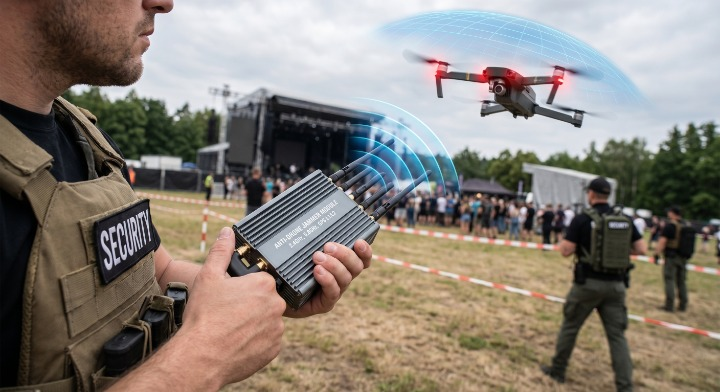
The Anti-Drone Jammer Module provides a compact and portable design to neutralize UAV threats instantly in any field environment. When unauthorized drones enter restricted airspace, you face immediate risks to security and privacy. Bulky, stationary equipment often prevents a rapid response to these fast-moving incursions. By integrating a high-efficiency Anti-Drone Jammer Module, you gain the mobility needed to protect critical infrastructure anywhere.
What is an Anti-Drone Jammer Module?
An Anti-Drone Jammer Module is a specialized RF component designed to disrupt the navigation and control links of unauthorized drones. These units generate noise on specific frequencies to overpower the drone’s internal receiver.
How does signal interference stop UAVs?
Here is the deal. Signal interference effectively severs the bond between the operator and the aircraft through several mechanisms.
- Overpowers the remote control signal.
- Blocks GPS and satellite navigation.
- Interrupts real-time video telemetry.
Is the technology legal for security?
Believe it or not, the legality of these devices depends entirely on your jurisdiction and professional authorization.
- Restricted to military and government use.
- Requires specific radio frequency licensing.
- Mandates strict operational protocols.
Key Takeaway: An Anti-Drone Jammer Module is the core electronic engine that turns a standard security setup into a proactive drone defense system.
| Component | Function | Primary Goal |
|---|---|---|
| Signal Generator | Creates interference waves | Disrupt Control Link |
| Power Amplifier | Boosts signal strength | Extend Range |
| Antenna System | Directs RF energy | Target Accuracy |
This modular breakdown demonstrates how specific hardware elements work in unison to provide a comprehensive signal denial umbrella.
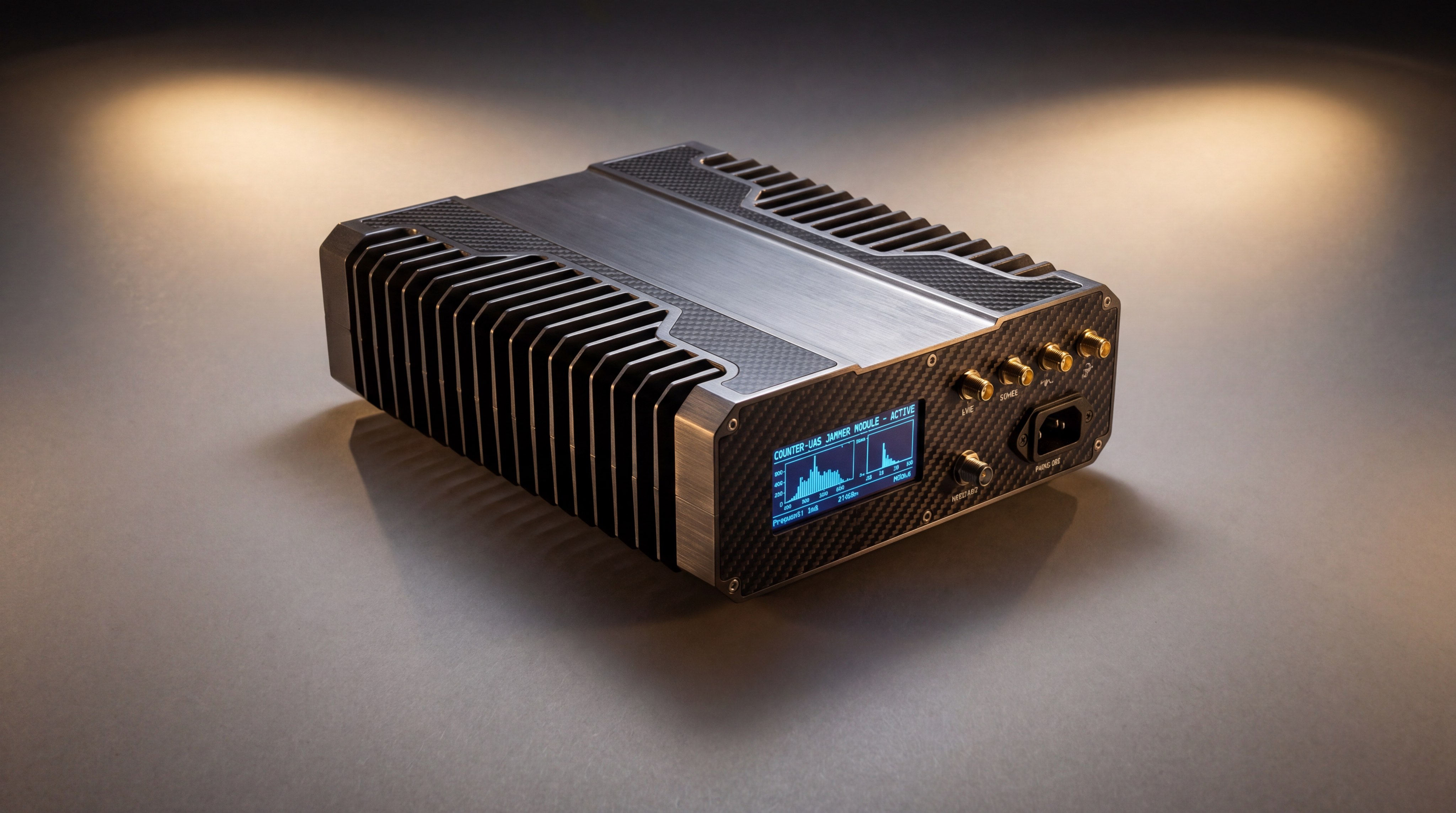
Why is a compact design essential?
A compact design is essential because the Anti-Drone Jammer Module must be deployable in urban or remote areas where space and weight are critical factors. Large, heavy systems limit your ability to track a drone that is moving quickly across complex terrain.
Does size impact mobility in the field?
You might be wondering. Reduced physical size allows security personnel to stay agile during high-stakes patrols or VIP movements.
- Reduces operator physical fatigue.
- Fits into standard tactical gear.
- Allows for one-person deployment.
Can small modules match large systems?
Here is the truth. Modern high-density RF engineering allows smaller modules to deliver power levels that were once exclusive to rack-mounted hardware.
- Uses GaN technology for efficiency.
- Maintains high output in small shells.
- Integrates micro-circuitry for logic.
Key Takeaway: Compactness ensures that your security team can respond to threats the moment they appear, without being tethered to a vehicle.
| Feature | Traditional System | Compact Module |
|---|---|---|
| Portability | Fixed/Vehicle Mounted | Handheld/Backpack |
| Deployment Time | 15–30 Minutes | < 1 Minute |
| Physical Footprint | Large | Under 200 mm |
This comparison highlights that portability does not necessitate a sacrifice in operational speed or tactical effectiveness.
Which frequency bands does it support?
This Anti-Drone Jammer Module supports a wide array of frequencies including the 2.4 GHz, 5.8 GHz, and GPS L1/L2 bands. By covering these specific ranges, you can target nearly all commercial and DIY hobbyist drones currently on the market.
Does it cover 2.4 GHz and 5.8 GHz?
The best part is that these two bands are the most common frequencies used for drone flight control and video streaming.
- 2.4 GHz for long-range control.
- 5.8 GHz for high-definition video.
- Dual-band simultaneous jamming capability.
Are GPS L1 and L2 bands included?
Think about this. Without GPS, a drone loses its ability to hover in place or follow a pre-programmed flight path autonomously.
- L1 band for standard navigation.
- L2 band for precision military GPS.
- Induces immediate “Return to Home” or landing.
Key Takeaway: Multi-band support ensures that your Anti-Drone Jammer Module remains effective against a broad spectrum of evolving drone technologies.
| Frequency Band | Target Signal | Impact on Drone |
|---|---|---|
| 2.4 GHz | Remote Control / Video | Loss of Control |
| 5.8 GHz | High-Speed Video Link | Blind Operator |
| GPS L1/L2 | Satellite Navigation | Drift/Emergency Land |
By targeting multiple signal layers, the module effectively neutralizes both manual piloting and automated flight missions.
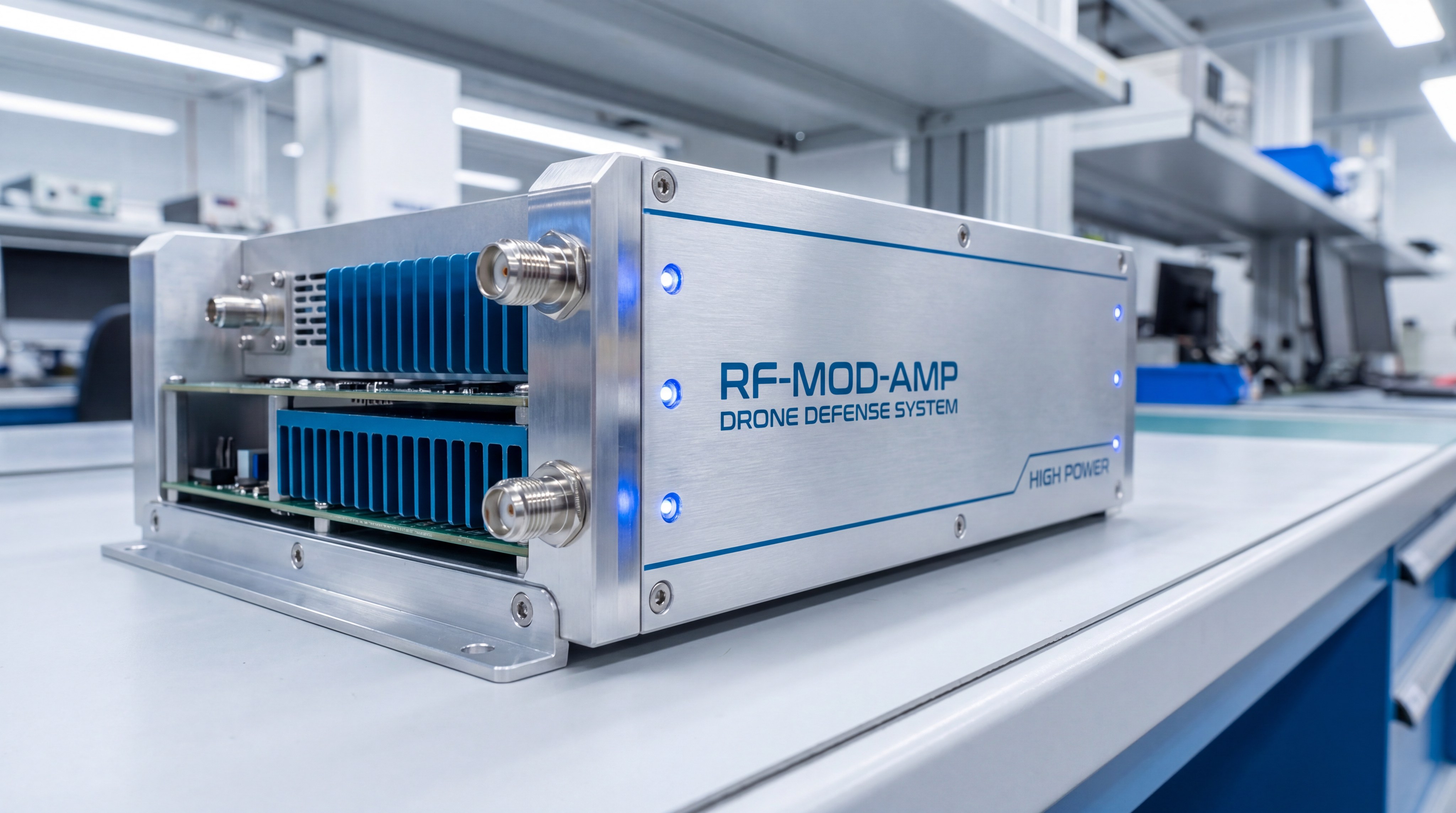
How does the portable design work?
The portable design of the Anti-Drone Jammer Module works by utilizing lightweight aluminum alloys and high-efficiency power management systems to reduce overall mass. These engineering choices allow the unit to remain under 1.5 kg while providing full-power interference capabilities.
What is the weight of a portable module?
It gets better. Modern modules are designed to be light enough for handheld use throughout an entire security shift without strain.
- Average weight below 1.5 kg.
- Ergonomic weight distribution.
- Easy to carry in a holster.
Are there mounting options for vehicles?
But wait, there’s more. The modular frame includes standardized mounting points so you can transition from a handheld unit to a vehicle-mounted system in seconds.
- Quick-release bracket compatibility.
- Magnetic roof mount options.
- Integration with existing light bars.
Key Takeaway: Portable engineering focuses on the weight-to-power ratio to ensure the Anti-Drone Jammer Module is a versatile asset in any tactical kit.
| Design Metric | Typical Value | Benefit |
|---|---|---|
| Weight | < 1.5 kg | Handheld Fatigue Reduction |
| Dimensions | 200 x 150 x 80 mm | Easy Storage/Mounting |
| Material | Aluminum Alloy | Durability & Shielding |
The use of high-grade materials ensures that the module remains durable in harsh outdoor conditions while maintaining its lightweight profile.
What are the technical specifications?
Technical specifications for a high-performance Anti-Drone Jammer Module typically include an output power of 10W to 50W per band and a range of up to 1.5 km. These specs ensure that you can intercept a threat long before it reaches the restricted perimeter.
What is the typical output power?
Check this out. Output power determines how effectively the jammer can “shout over” the operator’s remote control signal.
- Standard 10W for handheld units.
- Up to 50W for high-power modules.
- Adjustable power levels for range control.
How far is the effective jamming range?
The fact is that the effective range is influenced by the surrounding environment and the type of drone you are targeting.
- 500m to 1km for standard units.
- 1.5km+ with directional antennas.
- Spherical or directional coverage modes.
Key Takeaway: High output power combined with sensitive signal generation allows the Anti-Drone Jammer Module to provide a massive protective bubble.
| Parameter | Specification | Performance Level |
|---|---|---|
| Output Power | 10 W to 50 W | High Efficiency |
| Jamming Range | 500 m – 1.5 km | Long Distance |
| Signal Mode | CW / Sweep / Pulse | Versatile |
These specifications highlight the balance between power consumption and the reach required to secure large outdoor areas effectively.
Is heat management effective in small units?
Heat management is highly effective in these small units because the Anti-Drone Jammer Module uses integrated passive cooling fins and smart thermal throttling. Without these systems, the high-power RF components would overheat during extended operations in hot climates.
Do aluminum heatsinks prevent overheating?
Believe it or not, the entire outer casing of the module often acts as a massive heatsink to draw warmth away from the internal chips.
- Passive cooling with no moving parts.
- Increases hardware lifespan significantly.
- Maintains performance in desert heat.
Does low-power circuitry save energy?
The real secret is that high-efficiency GaN (Gallium Nitride) chips generate far less waste heat than older silicon-based components.
- Maximizes battery runtime.
- Reduces cooling requirements.
- Enables a smaller total footprint.
Key Takeaway: Advanced thermal engineering allows the Anti-Drone Jammer Module to run at peak power for hours without requiring bulky active fans.
| Cooling Method | Material | Effectiveness |
|---|---|---|
| Passive | Aluminum Fin Heatsink | High Reliability |
| Active | Internal Micro-fans | Peak Load Protection |
| Power Control | Smart Circuitry | Minimal Waste Heat |
Effective cooling is the silent partner of high power, ensuring that the module remains reliable when you need it most.
Where can these modules be deployed?
You can deploy an Anti-Drone Jammer Module in diverse locations including airports, border crossings, and crowded public events. Their portable nature means you are no longer restricted to fixed security posts when responding to aerial threats.
Is it suitable for airport security?
You need to know that airport environments require precise jamming to avoid interfering with critical aviation communication systems.
- Targeted interference patterns.
- Protects runways from incursions.
- Integrates with radar detection.
Can it protect VIPs during outdoor events?
As a matter of fact, the discreet and portable design makes it perfect for protecting individuals in open-air settings like rallies or concerts.
- Fits in a standard backpack.
- Fast activation for sudden threats.
- Quiet operation for low visibility.
Key Takeaway: The versatility of the Anti-Drone Jammer Module allows it to adapt to almost any security mission, from fixed borders to mobile patrols.
| Environment | Deployment Method | Mission Priority |
|---|---|---|
| Airport | Perimeter Mounting | Flight Safety |
| VIP Convoy | Vehicle Integration | Personal Protection |
| Public Event | Tactical Backpack | Crowd Safety |
This deployment flexibility ensures that your counter-UAS strategy remains as dynamic as the threats you are trying to mitigate.

How long does the battery last?
The battery for a standard Anti-Drone Jammer Module lasts between 4 and 6 hours of continuous use, depending on the power settings and frequency bands active. This duration is usually sufficient for a standard tactical mission or a routine security patrol.
What is the average continuous runtime?
You should consider that the runtime varies based on how many frequency bands you are jamming simultaneously.
- 4 hours at peak power.
- 6 hours with selective jamming.
- Quick-swap battery functionality.
Are there external power alternatives?
But wait, there’s more. If you need 24/7 protection, these modules can be plugged into vehicle power or stationary AC outlets.
- Compatible with 12V vehicle DC.
- Supports external battery packs.
- Seamless switching between sources.
Key Takeaway: Efficient power management ensures the Anti-Drone Jammer Module provides reliable protection throughout your entire operational window.
| Power Source | Duration | Best Use Case |
|---|---|---|
| Internal Li-Po | 4–6 Hours | Handheld Patrol |
| Vehicle DC | Unlimited | Mobile Convoy |
| External Pack | 12+ Hours | Long-term Observation |
Having multiple power options allows the module to scale from a short handheld mission to a permanent site security installation.
Can it be integrated into larger systems?
Yes, the Anti-Drone Jammer Module is designed for easy integration into larger defense systems like tactical backpacks or automated sensor networks. The modular interface allows you to combine multiple units to cover more frequency bands or increase overall output.
Is SDR integration a possibility?
Think about this. Software Defined Radio (SDR) allows you to update the jammer’s signal patterns via software as new drone protocols emerge.
- Updates against new drone models.
- Customizable interference waveforms.
- Future-proofs your hardware investment.
Can it fit into tactical backpacks?
Here is the deal. The standardized form factor is specifically designed to slide into the radio pockets of most professional tactical gear.
- Lightweight for solo operators.
- Easy cable routing for antennas.
- Supports external cooling vents.
Key Takeaway: Modular integration means the Anti-Drone Jammer Module can grow with your needs, from a single unit to a complex defense grid.
| Integration Type | Advantage | Result |
|---|---|---|
| SDR + Module | Dynamic Waveforms | Targeted Interference |
| Antenna + Module | Directional Focus | Reduced Side Lobe Noise |
| Manpack | All-in-one | Solo Operator Capability |
System-level integration transforms individual modules into a cohesive shield capable of defending high-value targets against swarms.
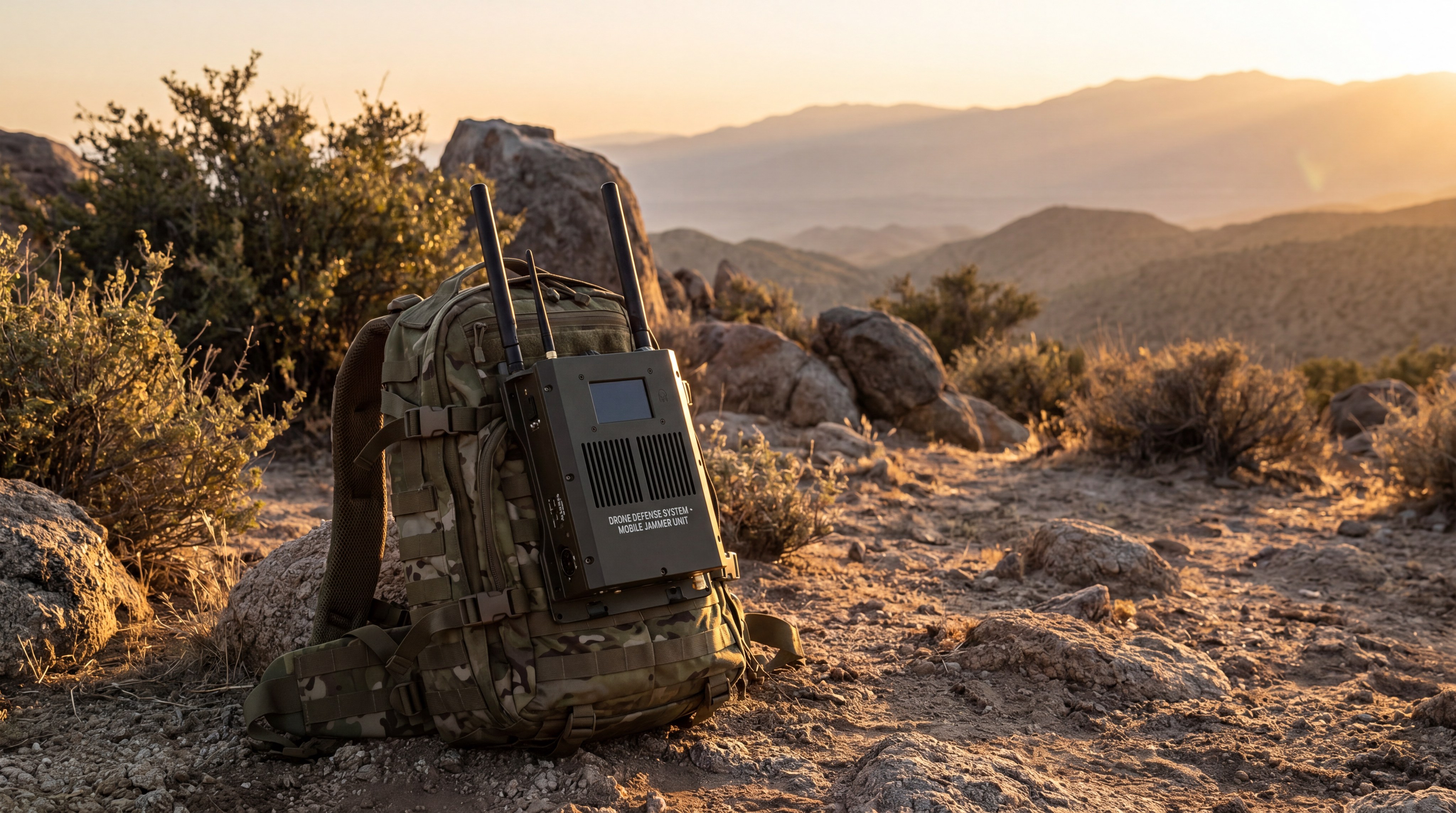
Why choose modular anti-drone solutions?
Choosing modular anti-drone solutions allows you to upgrade specific parts of the Anti-Drone Jammer Module without replacing the entire expensive system. This approach reduces long-term maintenance costs and ensures you can adapt to new drone frequencies as they are released.
Is modularity better for maintenance?
You will find that modular units allow for faster repairs in the field by simply swapping out a single component.
- Lowers downtime significantly.
- Simplifies spare parts logistics.
- Reduces overall service costs.
Does it allow for future band upgrades?
The point is that as drones move to new frequencies, you only need to add a new module rather than buying a new jammer.
- Scalable frequency coverage.
- Protects your initial investment.
- Rapid adaptation to new threats.
Key Takeaway: A modular Anti-Drone Jammer Module setup provides the highest ROI by offering a flexible path for future security upgrades.
| Benefit | Long-Term Impact | Value |
|---|---|---|
| Field Repair | Replace single module | Low Downtime |
| Upgradability | Add new bands easily | Future-Proof |
| Cost-Efficiency | Lower initial investment | High ROI |
Modularity is the ultimate strategy for staying ahead of the rapidly evolving drone market without breaking your budget.
Frequently Asked Questions
Can I use this for private property protection?
Usage is restricted. Usually, only government, military, or authorized security entities can operate these modules due to radio communication laws.
What’s the best frequency for commercial drones?
2.4 GHz and 5.8 GHz. Most commercial and hobbyist drones rely on these bands for control and video, making them the primary targets for security.
Can I mount this on my own drone?
Yes. The lightweight design is engineered for mounting on “interceptor” drones to provide mobile aerial jamming capabilities in the sky.
What’s the best way to maintain the battery?
Store it partially charged. Keep the module in a temperature-controlled environment and avoid full discharge to preserve the health of the lithium-polymer cells.
How do I know if the range is sufficient?
Check your specifications. By using high-gain directional antennas or increasing output power, you can scale the effective range to meet your site’s needs.
Conclusion
The compact and portable design of the Anti-Drone Jammer Module represents the pinnacle of modern counter-UAS technology. By prioritizing mobility without sacrificing power, this hardware empowers you to maintain security in an increasingly crowded airspace. Our vision is to provide the world’s most reliable RF defense components, ensuring that your critical assets remain safe from aerial intrusion. To learn more about our modular solutions or to discuss your specific project requirements, contact us today to speak with an RF engineering expert.