
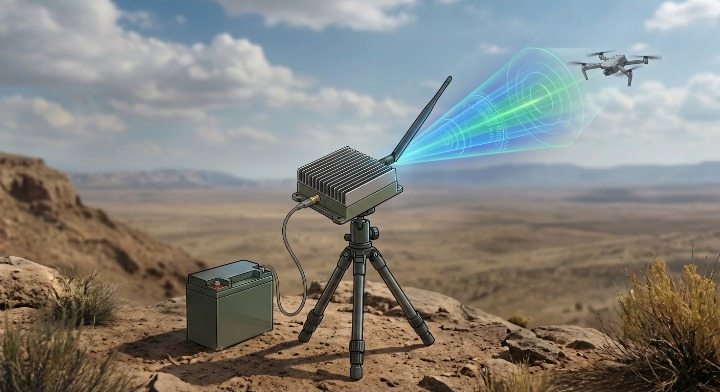
Low power consumption is the critical factor that determines whether your security perimeter remains active during a prolonged power outage or an extended remote mission. In today’s security landscape, relying on high-wattage, power-hungry systems often results in sudden battery depletion or thermal instability at the exact moment a threat appears. You need a solution that balances high-performance signal disruption with the practical energy constraints of mobile and remote operations. By integrating a modern Anti-Drone Jammer Module, you can achieve efficient protection with minimal energy use, ensuring your airspace remains secure without the burden of heavy power equipment.
Why is low power vital for an Anti-Drone Jammer Module?
Low power consumption is essential because it guarantees system uptime in environments where constant access to the electrical grid is impossible. When you deploy counter-UAV technology in the field, every watt saved translates into longer mission endurance.
Think about it: a jammer that drains batteries in two hours is a liability during a twelve-hour shift. Efficiency ensures that the hardware remains operational through the most critical windows of vulnerability.
Does efficiency improve system reliability?
High energy draw is frequently linked to hardware stress and component wear. By optimizing the power profile of an Anti-Drone Jammer Module, you reduce the mechanical strain on the entire security system.
- Consistent 24/7 uptime.
- Reduced need for heavy backup generators.
- Lower risk of sudden power-related shutdowns.
Key Takeaway: Low power consumption is the foundation for reliability in persistent, round-the-clock drone defense scenarios.
| Parameter | Traditional Jammer | Low-Power Module |
|---|---|---|
| Energy Demand | 250W – 500W | 50W – 100W |
| Power Source | Heavy Generators | Battery/Solar |
Reduced power requirements allow for more agile and sustainable security deployments across any terrain.
How do modern modules achieve 80% energy savings?
Modern modules achieve these massive savings by utilizing advanced power-efficient electronics and smart logic controllers. An Anti-Drone Jammer Module now uses solid-state technology to focus energy exactly where it is needed most.
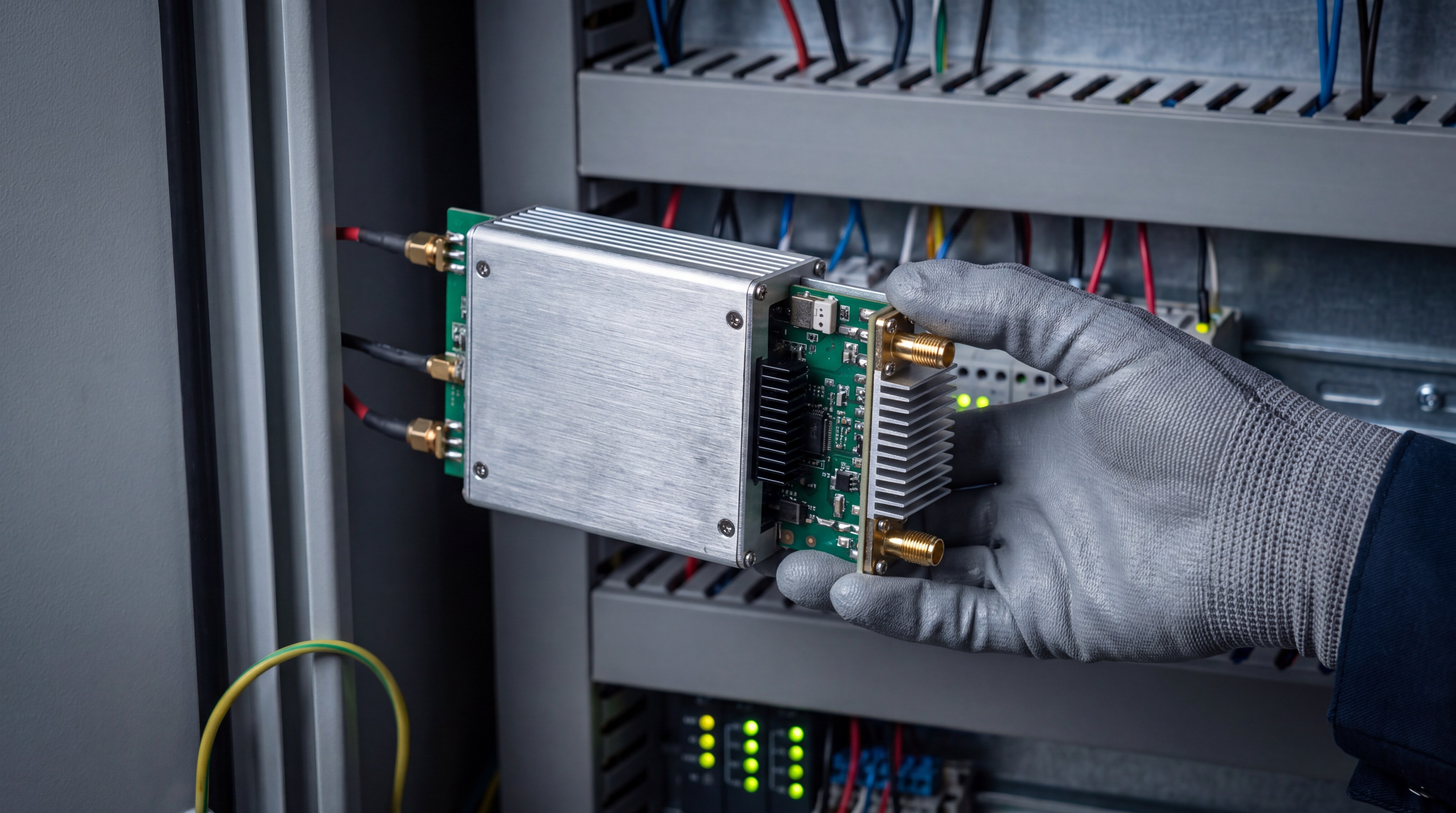
But that’s not all; the software-defined nature of these units allows for precision signal generation. This prevents the “broadcasting into the void” problem that plagued older, inefficient hardware designs.
Which components reduce energy waste?
The shift toward high-efficiency components minimizes the “waste” energy that usually dissipates as useless heat. These internal upgrades ensure that a higher percentage of input power is converted into effective jamming signals.
- Gallium Nitride (GaN) transistors.
- Precision matching circuits.
- Low-loss RF connectors.
Key Takeaway: 80% energy reduction is achieved through a combination of high-efficiency hardware and software-driven power allocation.
| Technology | Benefit | Efficiency Impact |
|---|---|---|
| GaN Electronics | Reduced waste heat | ~40% Improvement |
| Smart Logic | Targeted broadcasting | ~40% Improvement |
Intelligent hardware design allows security professionals to do more with significantly less energy input.
Can low-power jammers sustain 8-hour mobile operations?
Yes, an efficient module can easily provide an entire shift of protection while running on a single standard battery. By operating within a 50W to 100W envelope, the Anti-Drone Jammer Module remains active long after legacy systems have failed.
Here is the deal: mobility is the hallmark of modern defense. If you can carry your protection without a trailer for batteries, your tactical advantage increases exponentially.
Is it possible to run on standard 12V batteries?
Modern low-consumption designs are specifically engineered to interface with standard portable power sources. This compatibility eliminates the need for proprietary, expensive, and heavy high-voltage battery packs in the field.
- Support for 12V/20Ah batteries.
- Lightweight man-portable configurations.
- Rapid battery swaps without downtime.
Key Takeaway: Energy efficiency transforms drone defense from a short-burst capability into a viable long-term surveillance and protection solution.
| Battery Type | Legacy System Runtime | Low-Power Runtime |
|---|---|---|
| 12V/20Ah | 2 Hours | 6 – 8 Hours |
| 24V/40Ah | 5 Hours | 14 – 16 Hours |
Longer runtimes ensure that security personnel can focus on the mission rather than monitoring a battery gauge.
Does reduced power improve jammer thermal reliability?
Lower energy draw directly reduces heat production, which allows the Anti-Drone Jammer Module to operate safely using passive cooling methods. Excessive heat is the primary enemy of RF stability and component longevity in harsh environments.
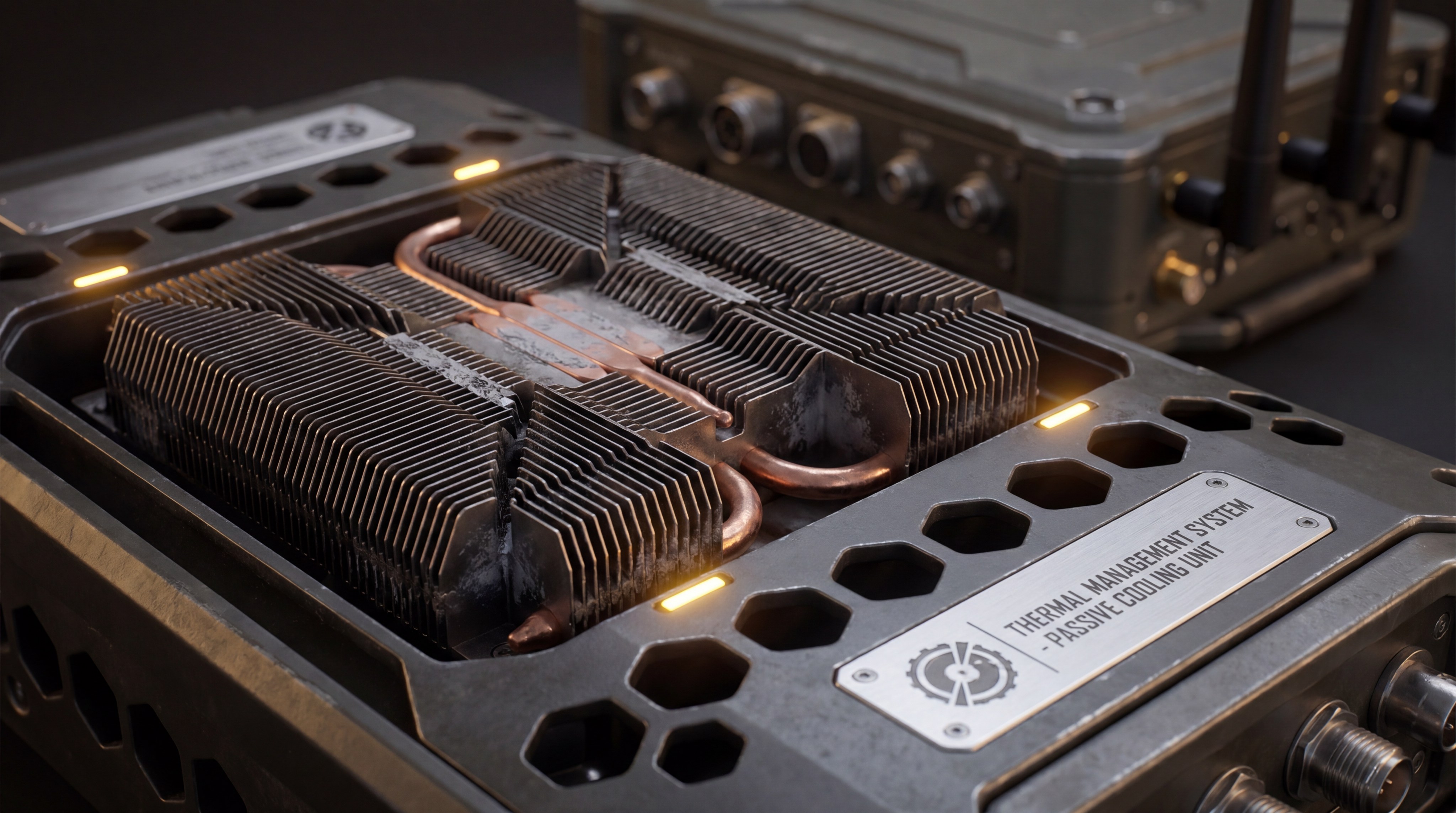
Look closer at the hardware: when you eliminate the need for active fans, you also eliminate a major point of mechanical failure. Passive heat sinks are silent, rugged, and require zero maintenance over their entire lifespan.
Why is passive cooling superior for defense?
Passive cooling systems are not affected by dust, sand, or moisture in the same way that motorized fans are. This makes the equipment ideal for desert or coastal deployments where debris would quickly clog a traditional cooling vent.
- Zero mechanical failure risk.
- Silent operation for covert use.
- Reduced overall module footprint.
Key Takeaway: Lower power translates to lower heat, which significantly increases the Mean Time Between Failures (MTBF).
| Cooling Method | Weight Factor | Maintenance |
|---|---|---|
| Active (Fans) | High | High (Cleaning/Replacement) |
| Passive (Sinks) | Low | Near-Zero |
Reliability is significantly enhanced when heat management is handled by design rather than by forced air.
Are low-power modules effective against all UAV bands?
These modules are engineered to neutralize 2.4 GHz, 5.8 GHz, and GPS L1 frequencies with surgical precision despite their lower draw. The effectiveness of an Anti-Drone Jammer Module is determined by signal density rather than raw, unoptimized wattage.
You might wonder: does a lower power level mean drones can fly through the signal? In reality, precision engineering ensures the disruptive noise floor is high enough to break every critical drone command link.
Can it cover complex multi-band threats?
Most modern threats utilize a variety of frequencies for navigation and remote control. Efficient modules can toggle between these bands or cover them simultaneously using optimized power-sharing protocols.
- Interdiction of WiFi control links.
- Disruption of GNSS/GPS navigation.
- High-speed video downlink interference.
Key Takeaway: Efficiency does not mean weakness; low-power modules provide surgical disruption across all critical drone frequencies.
| Band | Target Link | Effectiveness |
|---|---|---|
| 2.4 GHz | Remote Control | High |
| 5.8 GHz | Video Data | High |
| GPS L1 | Navigation | High |
By focusing the energy on specific communication protocols, the module achieves maximum impact with minimal energy waste.
How does energy efficiency lower long-term operational costs?
Significant energy savings translate directly into reduced electricity bills and lower maintenance expenses for large-scale deployments. For organizations protecting airports or borders, an Anti-Drone Jammer Module offers a much lower Total Cost of Ownership (TCO).
In fact, the cumulative savings from operating a grid of these units can reach thousands of dollars annually. Lower power consumption also aligns with modern corporate sustainability goals and green energy initiatives.
What is the ROI of efficient jamming?
When you consider the costs of electricity and hardware replacement, the return on investment for efficient modules becomes clear. These units last longer because they run cooler and experience fewer electrical surges.
- Reduced monthly power expenses.
- Fewer battery replacement cycles.
- Lower cooling infrastructure costs.
Key Takeaway: Financial and environmental benefits make low-power jamming the preferred choice for large-scale infrastructure protection.
| Metric | High-Power Grid (10 Units) | Low-Power Grid (10 Units) |
|---|---|---|
| Daily Usage | ~120 kWh | ~24 kWh |
| Monthly Cost | Significant | Minimal |
Operational efficiency allows security budgets to be allocated toward more advanced detection and response capabilities.
Can low-power jammers match high-power signal range?
Effective jamming range depends more on signal quality and antenna gain than raw wattage, allowing these modules to achieve 500m+ coverage. The Anti-Drone Jammer Module proves that “louder” is not always better when it comes to RF interdiction.
Believe it or not, high-wattage systems often create excessive noise that interferes with their own performance. A low-power, precision-tuned signal can reach just as far by maintaining a cleaner and more focused output beam.
How does signal precision beat raw power?
Precision engineering allows the module to concentrate energy on the exact channel the drone is using. This focused approach ensures the signal reaches the target with enough strength to overwhelm the receiver without wasting power on adjacent frequencies.
- Use of high-gain directional antennas.
- Narrowband signal concentration.
- Reduced out-of-band noise interference.
Key Takeaway: Range is determined by the precision of the RF output, allowing 500m+ protection at only 50W.
| Module Type | Input Power | Effective Range |
|---|---|---|
| Legacy System | 250W | 500m |
| Low-Power Unit | 50W | 500m |
Quality of signal beats quantity of power every time when the goal is reliable and efficient drone neutralization.
How does efficient power affect RF front-end integration?
Low-power modules allow for a more compact and streamlined RF Front-End architecture that fits into tight spaces. An efficient Anti-Drone Jammer Module simplifies the entire system by requiring smaller power supplies and less shielding.
More importantly, this efficiency makes it easier to combine multiple modules into a single enclosure for wide-spectrum coverage. When each component draws less current, the heat management and wiring complexity are significantly reduced.
Is it compatible with SDR source modules?
Modern integration often relies on SDR Source Modules to provide flexible and evolving jamming waveforms. Efficient power modules are the perfect companion for these digital sources, as they can react instantly to software changes without overloading the power bus.
- Seamless digital control synchronization.
- Modular “plug and play” architecture.
- Scalable multi-channel configurations.
Key Takeaway: Low-power modules act as a catalyst for more compact, sophisticated, and cost-effective RF system architectures.
| Component | Integration Benefit |
|---|---|
| Power Supply | Smaller & Lighter |
| Enclosure | Compact Footprint |
| SDR Source | Digital Waveform Support |
Integrating efficient modules allows you to build a smarter, more agile defense system that is easier to maintain and upgrade.
Is low-power design compatible with custom RF amplifiers?
These modules integrate perfectly with Custom RF Amplifiers to scale power up or down based on your specific mission requirements. The low-power baseline of the Anti-Drone Jammer Module provides a stable and efficient foundation for any tailored security solution.
Check this out: you can build a hybrid system that uses ultra-low power for standard surveillance and ramps up only when a threat is confirmed. This modularity gives you the flexibility to adapt to changing drone technologies without redesigning your entire power grid.
Can you scale the system for different terrains?
Different environments, such as dense urban centers or wide-open borders, require different power levels. Efficient modules allow you to swap in various amplifier stages to match the terrain while keeping the core energy management logic the same.
- Tailored output for specific ranges.
- Frequency expansion for new UAV tech.
- Ruggedized housings for extreme weather.
Key Takeaway: The modularity of low-power designs ensures they can be scaled and customized for any specialized defense application.
| Customization | Resulting Benefit |
|---|---|
| Power Scaling | Optimized Battery Life |
| Band Selection | Targeted Disruption |
| Rugged Shells | Environmental Resilience |
Flexibility in design ensures that your drone defense remains effective even as UAV threats become more diverse and sophisticated.
What is the future of energy-efficient drone countermeasures?
The future lies in autonomous, GaN-based units that can operate indefinitely on solar energy or other renewable sources. As an Anti-Drone Jammer Module becomes even more efficient, the dream of “set and forget” security nodes becomes a reality.

The bottom line: we are entering an era where energy efficiency is the primary driver for innovation in the defense sector. AI-driven power throttling will soon allow modules to sleep during low-activity periods and wake up instantly when a drone is detected by radar.
Will AI optimize future power consumption?
Artificial intelligence will play a major role in managing how these modules consume energy in the field. Future systems will analyze the environment in real-time to determine the minimum amount of power required to neutralize a specific target.
- Dynamic output power adjustments.
- Intelligent threat classification.
- Long-term solar-powered autonomy.
Key Takeaway: We are entering an era of “intelligent jamming” where energy efficiency is the driver for autonomous security.
| Future Trend | Estimated Impact |
|---|---|
| GaN Technology | +20% Efficiency |
| AI Modulation | Extended Battery Life |
| Solar Power | Grid Independence |
Sustainable defense technology is no longer a luxury; it is a strategic necessity for the modern security professional.
FAQ
- Can I operate these modules on solar power?
Yes. Because these modules consume only 50-100W, they are perfect for solar-powered stations in remote areas like borders or critical infrastructure sites. - What’s the best way to extend the battery life of a portable jammer?
The best way is to use modules with intelligent power management that only activate specific frequency channels when a drone is actually detected. - Can I match the range of a 250W jammer with a 50W module?
Yes. By using high-gain antennas and precise signal matching, a 50W module can achieve the same effective 500-meter range as a less efficient 250W unit. - What’s the best cooling method for a low-power jammer?
Passive cooling using high-surface-area heat sinks is the best method, as it requires no power, is silent, and has no moving parts to fail. - Can I integrate these modules into a vehicle-mounted system?
Yes. Their low power draw and compact size make them ideal for integration into the limited space and power budgets of security vehicles and mobile command centers.
Conclusion: Securing the Skies Efficiently
The evolution of the Anti-Drone Jammer Module has proven that superior protection does not require excessive energy. By prioritizing low power consumption, you can deploy more reliable, portable, and cost-effective solutions that stand up to the rigors of modern UAV threats. Whether for a mobile man-portable unit or a large-scale fixed installation, choosing energy-efficient modules ensures that your defense is as sustainable as it is effective.
Ready to optimize your drone defense system?
Contact us today to discuss your specific RF requirements and explore our custom low-power solutions. We stand at the forefront of RF innovation, providing the hardware you need for total airspace control.