
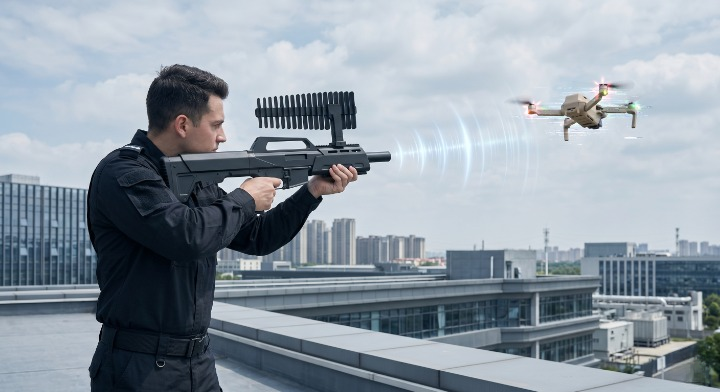
Primary engineering guide: this near-duplicate reference has been consolidated under How to Choose the Best Drone Jammer for Airspace Security?. Use the primary guide for the latest RF engineering review, compliance-safe wording, RFQ inputs and factory documentation path.
- Open the primary guide for the current topic cluster.
- Prepare RFQ inputs before requesting engineering review.
- Use the RF configurator to summarize band, power, interface and duty-cycle needs.
- Review delivery documentation for FAT-style evidence and shipment records.
- Contact CorelixRF when the project has a documented scope.
Archived page topic: How to Choose the Right Drone Jammer for Facility Security?. This page remains available for reference, but search engines are pointed to the primary guide through canonical consolidation.
Unauthorized drones are becoming a persistent threat to privacy and high-security operations. Imagine a compact device hovering over your private facility, capturing sensitive data or disrupting your workflow without any easy way to stop it. You need a reliable solution to regain control of your airspace, and understanding what is a drone jammer is the first step toward securing your perimeter.
What is a drone jammer?
A drone jammer is an electronic device designed to disrupt the communication between a drone and its remote controller. By emitting radio frequency signals on the same bands used by unmanned aerial vehicles (UAVs), it prevents the pilot from sending commands. You will find that what is a drone jammer effectively creates an invisible wall that forces the drone into a fail-safe mode.
How does it block drone signals?
The device works by overwhelming the drone’s receiver with “noise” so it cannot interpret the legitimate signals from the operator. Think about it: it is like trying to have a conversation in the middle of a loud concert.
- It targets specific frequency bands.
- It interrupts the downlink for video transmission.
- It breaks the control link between the pilot and the craft.
Key Takeaway: Jammers isolate the drone from its pilot, forcing a predictable safety response.
| Feature | Function |
|---|---|
| Primary Goal | Signal Disruption |
| Targeted Link | RF Communications |
Analysis Sentence: This technology ensures that any incoming drone is electronically blinded before it can reach its target.
Does it target specific frequencies?
Drones typically operate on public frequencies like 2.4 GHz and 5.8 GHz, which are the primary targets for these devices. Because these bands are unallocated, the jammer can flood them without interfering with most licensed telecommunications.
Here is the kicker: high-end systems can also target GPS frequencies to prevent the drone from knowing its physical location.
Key Takeaway: Targeted frequency management allows for precise disruption without collateral damage.
| Frequency | Usage |
|---|---|
| 2.4 GHz | Standard Control & Video |
| 5.8 GHz | High-Definition Video Link |
Analysis Sentence: Modern jammers focus on these specific bands to maintain operational efficiency in crowded RF environments.
How do drone jammers work?
Drone jammers work by broadcasting powerful electromagnetic signals that match the frequencies used by the drone’s communication system. When you ask what is a drone jammer, you are looking at a system that exploits the drone’s reliance on clear radio paths. By introducing interference, the jammer ensures the drone’s internal processor cannot distinguish legitimate commands from the background noise.
Understanding signal interference
The jammer acts as a high-powered transmitter that emits a signal much stronger than the remote controller’s output. You can imagine the jammer “shouting” so loudly that the drone can no longer hear the operator’s “whisper.”
- Signals are broadcast in a specific direction or 360 degrees.
- The interference disrupts the pulse-width modulation (PWM).
- Data packets are lost, resulting in a connection timeout.
Key Takeaway: Superior signal power is the foundation of effective drone neutralization.
| Concept | Explanation |
|---|---|
| Signal Strength | Must exceed the remote’s signal at the drone |
| Modulation | Interference mimics the communication protocol |
Analysis Sentence: Success depends entirely on achieving a higher signal-to-noise ratio than the drone’s legitimate control link.
What happens to the drone?
Once the drone loses its connection, it typically follows its pre-programmed emergency protocols. Depending on the settings, the drone will either perform a controlled vertical landing or attempt a “Return to Home” (RTH) maneuver.
Think about it: you aren’t destroying the drone, you are simply taking away its ability to be controlled.
Key Takeaway: Jammers lead to safe, predictable outcomes rather than kinetic destruction.
| Drone Response | Result |
|---|---|
| Return to Home | Drone flies back to the takeoff point |
| Emergency Landing | Drone descends slowly to the ground |
Analysis Sentence: These safety responses minimize the risk of the drone falling and causing property damage.
What are the types of drone jammers?
There are several variations of these devices, ranging from handheld “guns” to permanent stationary installations. When researching what is a drone jammer, you will encounter portable units for rapid response and fixed systems for 24/7 site protection. Each type is designed to balance power output with mobility requirements.
Portable and handheld units
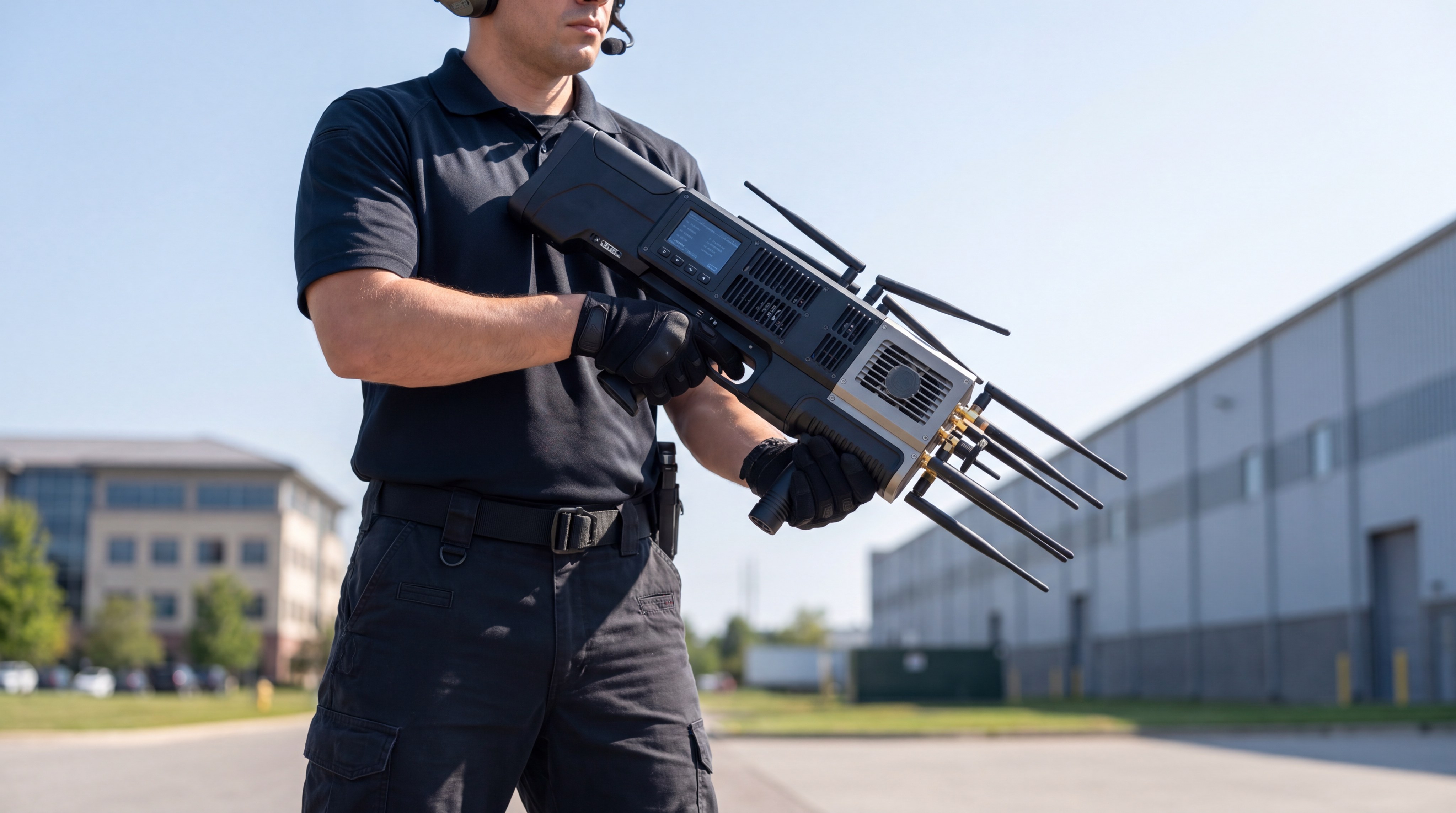
Handheld jammers often resemble rifles and are used by security personnel to point and “shoot” an electronic beam at a visible drone. These are ideal for tactical scenarios where you need to move quickly and address a dynamic threat.
- Lightweight designs for easy transport.
- Internal batteries for cord-free operation.
- Directional antennas to focus power on the target.
Key Takeaway: Portability allows security teams to respond to threats from any location on a large campus.
| Type | Mobility |
|---|---|
| Handheld Gun | High |
| Backpack Unit | Medium |
Analysis Sentence: Portable devices offer the flexibility needed for immediate, short-range drone mitigation.
Fixed and stationary systems
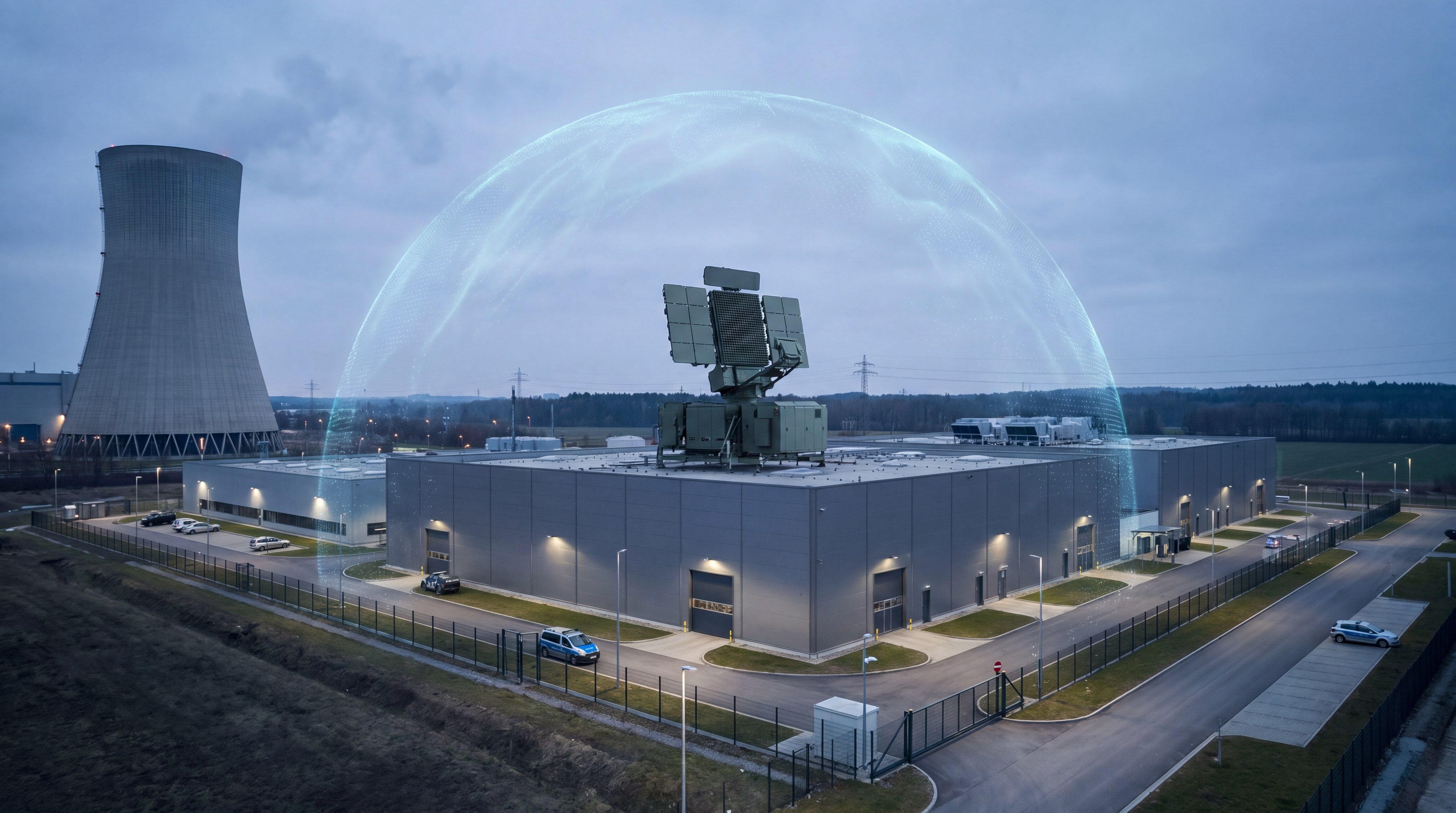
Fixed systems are mounted on buildings or poles to create a permanent “no-fly” zone around critical infrastructure. Here is the kicker: these systems often integrate with detection sensors to automate the jamming process the moment a drone is spotted.
- High-gain antennas for long-distance reach.
- Continuous power supply for non-stop defense.
- Weatherproof enclosures for outdoor deployment.
Key Takeaway: Stationary systems provide a consistent and automated shield for sensitive locations.
| Feature | Fixed System Advantage |
|---|---|
| Coverage | 360-degree omnidirectional |
| Power | Unlimited via grid connection |
Analysis Sentence: Fixed installations are the gold standard for protecting airports, prisons, and government buildings.
How far can drone jammers reach?
The reach of these devices depends heavily on the power of the internal amplifier and the type of antenna used. When you evaluate what is a drone jammer, you must consider whether you need to stop a drone at 100 meters or 2 kilometers. Distance is also affected by environmental factors like physical obstacles and local radio interference.
Determining the effective range
Most tactical handheld units have a range of roughly 500 to 1,500 meters, while stationary systems can extend much further. You must ensure that your jammer’s range exceeds the drone’s ability to capture high-quality images of your site.
- Power output measured in Watts determines the distance.
- Directional antennas provide a longer reach than omni types.
- Signal degradation occurs as the drone gets further away.
Key Takeaway: Range must be matched to the specific vulnerability of the facility you are protecting.
| Jammer Type | Typical Range |
|---|---|
| Tactical Gun | 1.0 km |
| Fixed High-Power | 3.0 km+ |
Analysis Sentence: High-power modules are required to overcome the distance limitations of standard portable equipment.
Factors affecting performance
Signal range isn’t just about the device itself; your surroundings play a major role in how well the jammer works. Think about it: trees, buildings, and even high-voltage power lines can absorb or deflect the jamming signal.
- Atmospheric conditions can weaken radio waves.
- Dense urban environments cause signal “bounce.”
- Terrain height determines the line of sight to the drone.
Key Takeaway: Environmental surveys are essential to ensure there are no “blind spots” in your defense.
| Obstacle | Impact |
|---|---|
| Concrete Buildings | High signal blockage |
| Open Fields | Maximum range potential |
Analysis Sentence: Understanding local topography allows for strategic placement that maximizes the jammer’s effective radius.
Are drone jammers legal?
The legality of these devices is complex and varies significantly depending on your country and jurisdiction. In many regions, what is a drone jammer is classified as restricted technology reserved for government, military, or law enforcement use. You must consult local regulations before purchasing or operating any RF jamming equipment.
FCC and international regulations
In the United States, the FCC strictly prohibits the operation or sale of jammers to the general public because they can interfere with emergency communications. Other countries may have similar laws to prevent the disruption of public cellular and Wi-Fi networks.
- Unauthorized use can result in massive fines.
- Equipment may be seized by federal authorities.
- Commercial licenses are rarely granted to private individuals.
Key Takeaway: Compliance with radio frequency laws is non-negotiable for any organization.
| Entity | Regulation Status |
|---|---|
| Private Citizens | Generally prohibited |
| Law Enforcement | Permitted with authorization |
Analysis Sentence: Legal barriers are in place to ensure that jamming does not compromise public safety systems.
Who is allowed to use them?
Typically, only authorized entities like national security agencies, military units, and certain correctional facilities are permitted to use these tools. Here is the kicker: even authorized users must often follow strict protocols to ensure they don’t accidentally knock out a nearby cell tower.
- Military defense of overseas bases.
- Prisons preventing contraband deliveries.
- Security for high-profile government events.
Key Takeaway: Authorized usage is limited to scenarios where drone threats outweigh the risks of radio interference.
| Authorized User | Typical Application |
|---|---|
| Border Patrol | Stopping illegal surveillance |
| Airport Security | Preventing runway incursions |
Analysis Sentence: Restricted access ensures that these powerful electronic tools are used responsibly and safely.
What components make up a jammer?
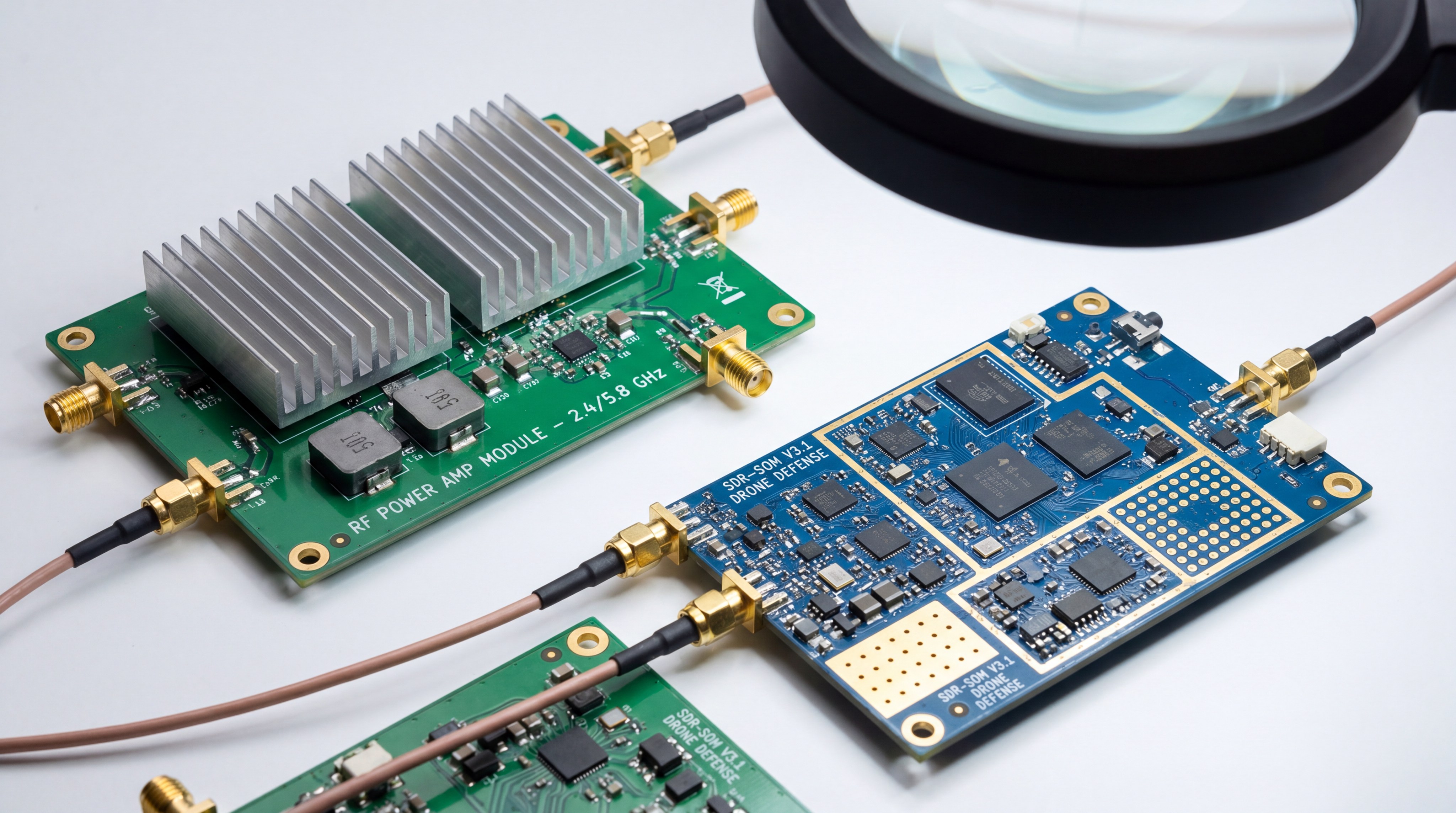
A professional jammer is a sophisticated assembly of high-precision electronic parts. To understand what is a drone jammer at a technical level, you must look at how it generates and amplifies the signal. The core of the system relies on high-quality rf power amplifier modules to ensure the signal is strong enough to reach the target.
Role of the signal generator
The signal source creates the specific waveform needed to confuse the drone’s receiver. Today, sdr software defined radio modules are commonly used because they can be programmed to target multiple different drone protocols simultaneously.
- Frequency synthesis ensures exact band targeting.
- Software-defined logic allows for easy updates.
- Precision oscillators maintain signal stability.
Key Takeaway: Modern signal generation must be agile to keep up with evolving drone frequencies.
| Component | Function |
|---|---|
| SDR Module | Flexible signal generation |
| Oscillator | Timing and frequency control |
Analysis Sentence: Utilizing software-defined components allows a single jammer to adapt to new drone models without hardware changes.
Importance of the power stage
Without a robust amplifier, the jamming signal would never make it more than a few meters from the antenna. The power stage takes the weak signal from the generator and boosts it to a level that can overcome the drone’s internal filters.
Think about it: the amplifier is the “muscle” of the entire electronic system.
- GaN (Gallium Nitride) technology for high efficiency.
- Heat sinks to manage high temperatures during use.
- Protection circuits to prevent damage from signal reflection.
Key Takeaway: The quality of the RF amplifier directly dictates the jammer’s range and reliability.
| Tech Type | Benefit |
|---|---|
| LDMOS | Proven reliability for lower bands |
| GaN | High power density for microwave bands |
Analysis Sentence: Choosing the right amplification technology is critical for maintaining performance in high-stress environments.
Why do facilities use jammers?
Businesses and government agencies use these systems to prevent unauthorized surveillance and industrial espionage. When you analyze what is a drone jammer, it becomes clear that these tools are essential for maintaining the physical and digital security of a site. One drone with a high-resolution camera can capture trade secrets that cost millions to develop.
Protecting sensitive corporate data
Industrial facilities use jammers to stop “corporate “prying eyes” from filming proprietary manufacturing processes or new product prototypes. You cannot rely on fences alone when a threat can simply fly over them.
- Prevents aerial photography of R&D labs.
- Blocks drones from sniffing local Wi-Fi signals.
- Discourages competitors from monitoring site activity.
Key Takeaway: Electronic countermeasures are the only way to extend a security perimeter into the sky.
| Asset Type | Threat Prevented |
|---|---|
| Product Prototypes | Visual theft/leaks |
| Data Centers | Wireless packet sniffing |
Analysis Sentence: Airspace security is now a fundamental requirement for any business handling sensitive intellectual property.
Safety for large-scale events
In stadiums or public squares, a rogue drone can be a major safety hazard if it loses power or is used maliciously. Here is the kicker: a jammer can stop a drone from entering the crowd’s airspace before it ever becomes a physical danger.
- Prevents illegal broadcasting of live events.
- Stops drones from dropping objects into crowds.
- Secures the VIP areas from harassment.
Key Takeaway: Jammers act as a proactive safety measure to prevent accidents in high-density areas.
| Application | Benefit |
|---|---|
| Concert Security | Intellectual property protection |
| Sports Stadiums | Public safety and crowd control |
Analysis Sentence: Large venues utilize jamming to manage the increasing density of consumer drones in urban spaces.
How do you choose a drone jammer?
Selecting the right device requires a deep understanding of your specific threat profile and operational environment. You shouldn’t just look for the most powerful unit available; instead, ask what is a drone jammer that fits your specific range and frequency needs. A mismatched system will either be ineffective or cause unnecessary interference to your own communications.
Matching power to the threat
If you are only concerned about small consumer drones at close range, a low-power handheld device might be sufficient. However, for long-range professional drones, you will need a system with high-gain antennas and multi-watt power output.
- Identify the most common drone models in your area.
- Calculate the necessary distance to initiate jamming.
- Consider if you need to block GPS as well as control.
Key Takeaway: Technical specifications should always be driven by a realistic threat assessment.
| Threat Level | Required Power |
|---|---|
| Low (Toy Drones) | < 10 Watts per band |
| High (Pro/Military) | > 50 Watts per band |
Analysis Sentence: Over-specifying power can lead to regulatory issues, while under-specifying leaves you vulnerable.
Assessing your local environment
Your choice must take into account whether the system will be used in a city or a remote rural area. Think about it: a system that works perfectly in an open field might struggle in a city center filled with metal and glass.
- Check for existing RF interference from cell towers.
- Determine the available power source for fixed units.
- Evaluate the need for ruggedized, waterproof hardware.
Key Takeaway: The hardware must be durable enough to survive the conditions of its deployment site.
| Environment | Key Hardware Feature |
|---|---|
| Coastal/Saltwater | Corrosion-resistant housing |
| High-Density Urban | Directional precision antennas |
Analysis Sentence: Tactical success is highly dependent on how well the hardware integrates with the local landscape.
What are common jammer limitations?
No technology is perfect, and jammers have specific weaknesses that you must account for in your security planning. When you look closely at what is a drone jammer, you will find that some drones are designed to resist standard interference. Understanding these gaps allows you to build a multi-layered defense strategy.
Dealing with pre-programmed flight
Standard jammers fail against drones that are programmed to fly a specific path using internal sensors rather than external radio signals. You should be aware that high-end drones can fly without GPS or a live controller link.
- Autonomous drones use visual odometry to navigate.
- Inertial measurement units (IMUs) help drones stay on track.
- Some drones are set to “finish the mission” if the signal is lost.
Key Takeaway: Electronic jamming is only one part of a comprehensive anti-drone strategy.
| Drone Mode | Jammer Effectiveness |
|---|---|
| Manual Control | Extremely High |
| Full Autonomous | Low to Moderate |
Analysis Sentence: Autonomous flight capabilities require advanced spoofing or physical intercept solutions to be fully mitigated.
Collateral signal interference
Because jammers broadcast high-power noise, they can accidentally disrupt other electronics in the immediate vicinity. Here is the kicker: if you aren’t careful, your drone jammer could shut down your own facility’s Wi-Fi or cellular reception.
- Improperly aimed directional antennas can hit the wrong building.
- Omnidirectional jammers affect everyone in the radius.
- Frequency “bleed” can interfere with nearby legal bands.
Key Takeaway: Careful planning and high-quality filtering are required to minimize unintended disruption.
| Affected Device | Potential Problem |
|---|---|
| Office Wi-Fi | Slow speeds or total dropout |
| Mobile Phones | Dropped calls and no data |
Analysis Sentence: Precision engineering in the amplifier and antenna stage is the only way to avoid harmful collateral interference.
How is jammer technology evolving?
The future of drone defense lies in intelligent systems that can detect and jam threats automatically. By integrating what is a drone jammer with artificial intelligence and radar, security teams can respond to threats in milliseconds. These next-generation systems are designed to be smarter, more efficient, and easier to manage from a central command center.
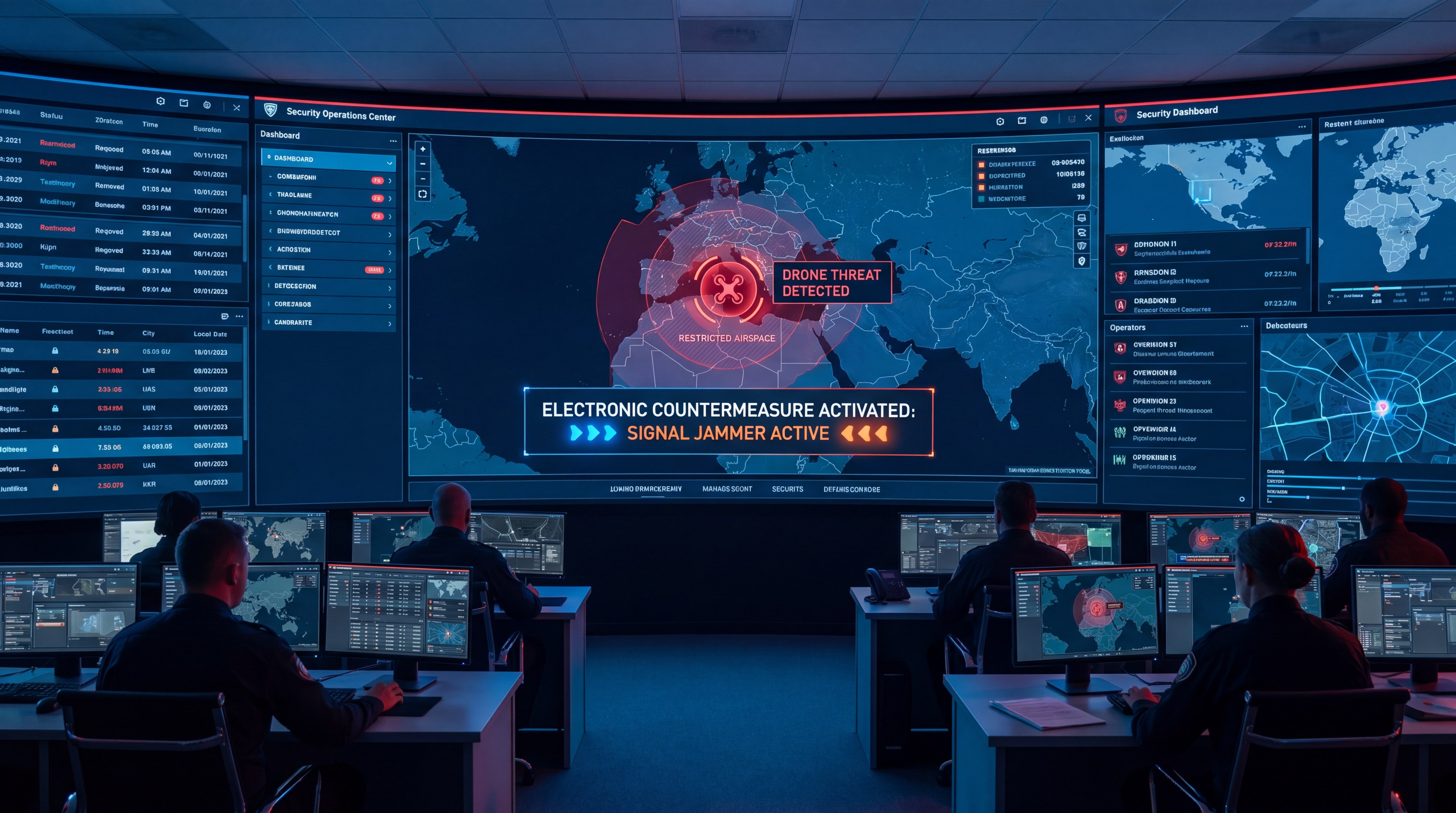
AI and automated detection
Next-generation jammers use machine learning to identify the specific electronic “fingerprint” of an incoming drone. This allows the system to apply the exact amount of power needed on the correct frequency, reducing energy waste and interference.
- Automatic threat classification by model.
- Smart power management based on distance.
- Integration with multi-sensor detection platforms.
Key Takeaway: Intelligent automation reduces the need for human operators and increases response accuracy.
| Technology | Role in Evolution |
|---|---|
| Machine Learning | Pattern recognition of RF signals |
| Sensor Fusion | Combining radar, RF, and optics |
Analysis Sentence: Moving toward automated systems allows for a “detect-and-forget” approach to airspace security.
Multi-band integrated solutions
As drones begin to use more exotic frequencies, jammer manufacturers are creating all-in-one solutions that cover a wider spectrum. You will see more systems that can block everything from low-frequency remote controls to high-speed satellite links.
Think about it: the “drone war” is essentially a race to see who can control the most bandwidth.
- Expansion into the 900 MHz and 1.2 GHz bands.
- Compact modules that combine multiple amplifiers.
- Cloud-based updates for new drone frequency profiles.
Key Takeaway: Broad-spectrum coverage is becoming essential as drone technology diversifies.
| Frequency Band | Target |
|---|---|
| 433 MHz | Long-range control links |
| 2.4 / 5.8 GHz | Standard commercial drones |
Analysis Sentence: Integrated hardware platforms are the only way to ensure protection against a diverse and changing threat landscape.
FAQ
Can I use a drone jammer to protect my private backyard?
Generally, no. In the United States and many other countries, the use of jammers by private citizens is illegal under strict radio frequency regulations. These laws exist to prevent the accidental disruption of critical public infrastructure and emergency services.
What’s the best way to stop a drone without a jammer?
The most legal and effective alternative is often a drone detection system that alerts you to the presence of a drone and its pilot. Once the pilot is located, local law enforcement can be contacted to handle the situation according to privacy and trespassing laws.
How do I know if a drone jammer is powerful enough for my site?
You must evaluate the device’s output power in Watts and the gain of its antennas relative to the size of your perimeter. For high-security environments, you should consult with an RF engineer to conduct a link-budget analysis and environmental survey.
Can a drone jammer cause a drone to crash?
Highly unlikely. Most modern drones have a built-in safety feature that initiates a slow, controlled landing or a flight back to the starting point if the signal is lost. While the drone is “stopped,” it usually does not fall out of the sky uncontrollably.
How long does it take for a jammer to work?
The disruption is nearly instantaneous. Once the jammer is activated and pointed toward the target, the drone will usually lose its connection within one to two seconds, triggering its emergency flight protocol.
At CorelixRF, we believe that the safety of your airspace should never be left to chance. Our mission is to provide the high-precision RF components and integrated systems required to build a future where critical infrastructure is immune to aerial threats. With over 30 years of engineering expertise, we stand as a dedicated partner in the global effort to secure the skies.
Contact us today at corelixrf.com to discuss your project requirements and receive a professional engineering review within 48 hours.
Authorized RF engineering and compliance review
For regulated RF systems, this page should be used as an engineering and compliance review path, not as a public deployment checklist. CorelixRF starts with authorization status, operating region, frequency plan, output limit, antenna interface, safety controls, thermal limits and acceptance documents.
- RFQ checklist – send the data buyers usually forget, including band, power, duty cycle, interface and test standard
- delivery documentation – check what documents can support incoming inspection, FAT review and long-term maintenance
- quality and certification review – review the quality and compliance evidence before the project moves into procurement
- RF front-end platform – compare the RF chain as a system instead of selecting one isolated module
- RF configurator – turn frequency, power, thermal and interface requirements into a first configuration brief
- case studies – review similar engineering paths before sending an RFQ
- engineering contact – send the application notes, block diagram or target specification to engineering sales
This keeps the discussion inside lawful, authorized RF programs while still giving procurement teams a clear way to request amplifier, antenna, SDR source, documentation and factory review.