
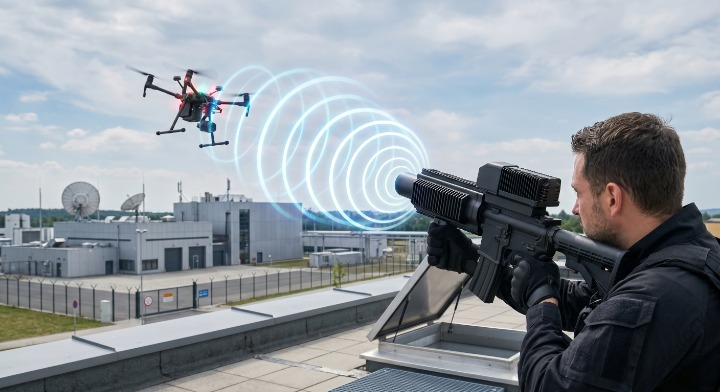
Unregulated drone flights are becoming a significant threat to personal privacy and site security, with quiet, high-tech UAVs hovering over private property without consent. Imagine being watched by an unseen pilot or having your proprietary data captured from the air; these “eyes in the sky” can monitor your daily patterns and record private conversations. To regain control, you need to understand what is a drone jammer and how this RF technology can effectively neutralize unauthorized aerial surveillance to keep your perimeter secure. By disrupting the communication link, you force the intruder to retreat or land safely.
What exactly is a drone jammer?
A drone jammer is a specialized electronic device that transmits radio frequency signals to disrupt and neutralize the communication links of an unauthorized Unmanned Aerial Vehicle (UAV). It functions by creating a localized zone of interference that overpowers the drone’s ability to receive commands. This allows security personnel to take control of the airspace without physically destroying the hardware.
Defining UAV signal disruption
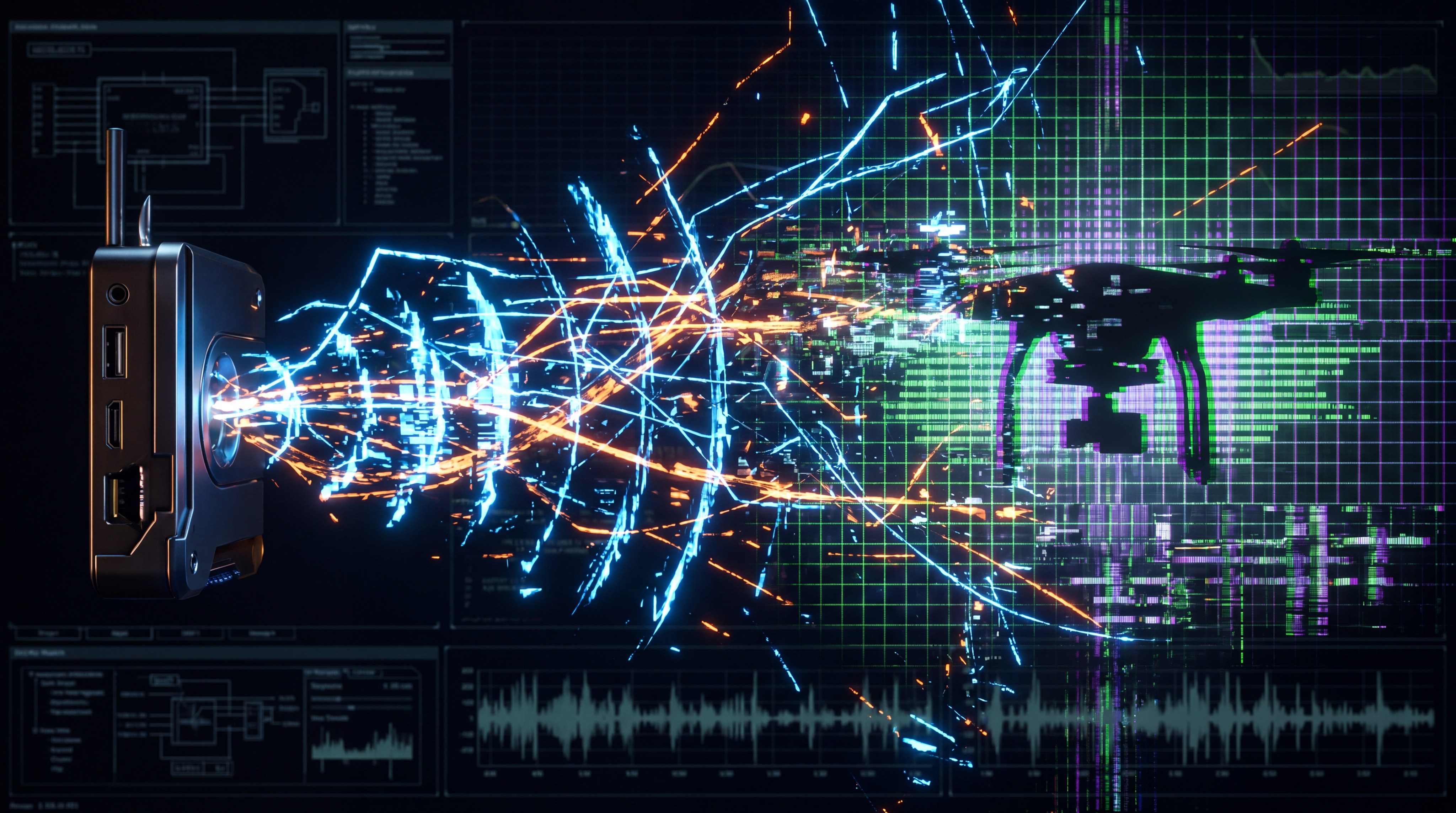
Disruption occurs when the device emits “white noise” on the same frequencies the drone uses for operation. This interference makes it impossible for the drone to distinguish legitimate commands from the noise.
- Electronic noise overpowers the controller signal.
- The drone enters a “fail-safe” mode immediately.
- Data transmission to the pilot is severed.
Think about it this way:
The jammer acts like a high-powered megaphone that shouts over a quiet whisper, ensuring the drone can no longer “hear” its pilot.
The purpose of counter-UAS tech
These systems serve as the primary defense for privacy-conscious individuals and critical infrastructure security teams. They provide a non-kinetic way to stop prying eyes or potential physical threats from above.
Key Takeaway: Understanding the hardware is the first step toward effective perimeter defense and airspace sovereignty.
| Aspect | Description |
|---|---|
| Primary Goal | Communication link disruption |
| Common Outcome | Land in place or return to home (RTH) |
| Technology Base | Radio Frequency (RF) interference |
This fundamental understanding of the device’s role ensures that security strategies are built on realistic operational capabilities.
How does a drone jammer function?
Understanding what is a drone jammer requires looking at how it emits powerful RF signals that “drown out” the weaker signals sent from a drone’s remote control or GPS satellites. By saturating the local environment with targeted energy, the jammer effectively blinds the drone’s receivers. This prevents the aircraft from navigating or receiving flight adjustments from its operator.
Interfering with GPS navigation
Most drones rely on Global Navigation Satellite Systems (GNSS) to maintain their position and follow autonomous flight paths. The jammer targets L1 and L2 frequencies to make the drone “blind” to its own global coordinates.
- Saturates the 1.5 GHz frequency band.
- Prevents the drone from locking onto satellite timing.
- Forces the drone to hover or land due to loss of orientation.
Here is the kicker:
Without a GPS signal, most commercial drones cannot maintain a stable hover and will drift or descend to prevent a flyaway.
Breaking the operator link
The primary control of a drone usually happens over the 2.4 GHz or 5.8 GHz ISM bands. Jammers focus high-power energy on these bands to sever the command and control (C2) connection entirely.
Key Takeaway: By blocking both GPS and C2 links, the jammer ensures the drone cannot continue its mission or return data to the operator.
| Function | Method of Operation |
|---|---|
| GPS Jamming | Overpowers L1/L2 satellite signals |
| Command Jamming | Disrupts 2.4GHz/5.8GHz ISM bands |
| Video Jamming | Blocks the FPV (First Person View) feed |
Targeting both control and navigation ensures a comprehensive denial of drone functionality across all common operational modes.
Why should you consider blocking drones?
Many professionals ask what is a drone jammer used for in a civilian or industrial context, and the primary answer is the mitigation of privacy invasion and physical safety risks. Drones can be used for everything from corporate espionage to simple prying into private estates. Taking proactive measures ensures that your sensitive activities remain confidential and protected from aerial surveillance.
Preventing unauthorized surveillance
Unseen pilots can use high-resolution cameras to record video or take photos of sensitive locations or private gatherings. Jammers provide an immediate “no-fly” bubble that prevents these optics from being used effectively.
- Stops live video feeds from reaching the pilot.
- Prevents high-altitude photography of proprietary sites.
- Discourages repeat offenders by making their equipment useless.
But wait, there’s more:
Beyond privacy, jammers protect you from the risk of drones dropping unauthorized payloads or contraband into secure yards.
Reducing physical crash risks
Drones operated by inexperienced pilots can fly erratically over crowds or structures, posing a significant injury risk. Jammers can force these drones into a controlled landing, preventing a high-speed impact.
Key Takeaway: Jamming technology provides a safe, non-destructive method to neutralize aerial threats before they can cause harm or theft.
| Protection Type | Advantage |
|---|---|
| Privacy | Blocks unauthorized photo/video capture |
| Safety | Prevents drones from falling into crowds |
| Security | Stops drones from dropping payloads or contraband |
Investing in these defenses is the most reliable way to maintain the integrity of your private or professional airspace.
Which frequencies do drone jammers target?
When evaluating what is a drone jammer, you must consider its ability to target the specific RF bands that almost all commercial drones rely on for flight and data. Most drones operate on standardized frequencies that allow for easy communication between the controller and the aircraft. A professional jammer covers all these essential bands to ensure no communication gap remains.
The importance of ISM bands
The Industrial, Scientific, and Medical (ISM) bands are the most common frequencies for drone remote control. These frequencies are used because they are unlicensed and globally recognized for low-power communication.
- 2.4 GHz: The standard for long-range control and video.
- 5.8 GHz: Used for high-bandwidth video and short-range control.
- 915 MHz: Occasionally used for telemetry and extended range links.
In other words:
If you don’t block these specific bands, the drone will continue to receive orders even if its GPS is disabled.
Disrupting GNSS constellations
To truly neutralize a drone, the jammer must also target the frequencies used for positioning. This includes GPS (USA), GLONASS (Russia), and Galileo (Europe) systems.
Key Takeaway: A multi-band jammer is necessary because modern drones can hop between frequencies to avoid simple interference.
| Frequency Band | Usage in Drones |
|---|---|
| 2.4 GHz | Standard remote control and video |
| 5.8 GHz | High-speed video and secondary control |
| 1.5 GHz (L1) | Standard GPS positioning |
Comprehensive frequency coverage is the only way to ensure that high-end, multi-frequency drones cannot bypass your security perimeter.
Are there different types of drone jammers?
To fully grasp what is a drone jammer, it is helpful to categorize them into handheld “guns,” fixed-site systems, and vehicle-mounted defensive suites. Each type is designed for a specific operational environment, whether you need to protect a moving convoy or a static office building. The choice depends entirely on the size of the area you intend to defend.
Portable handheld jammer guns
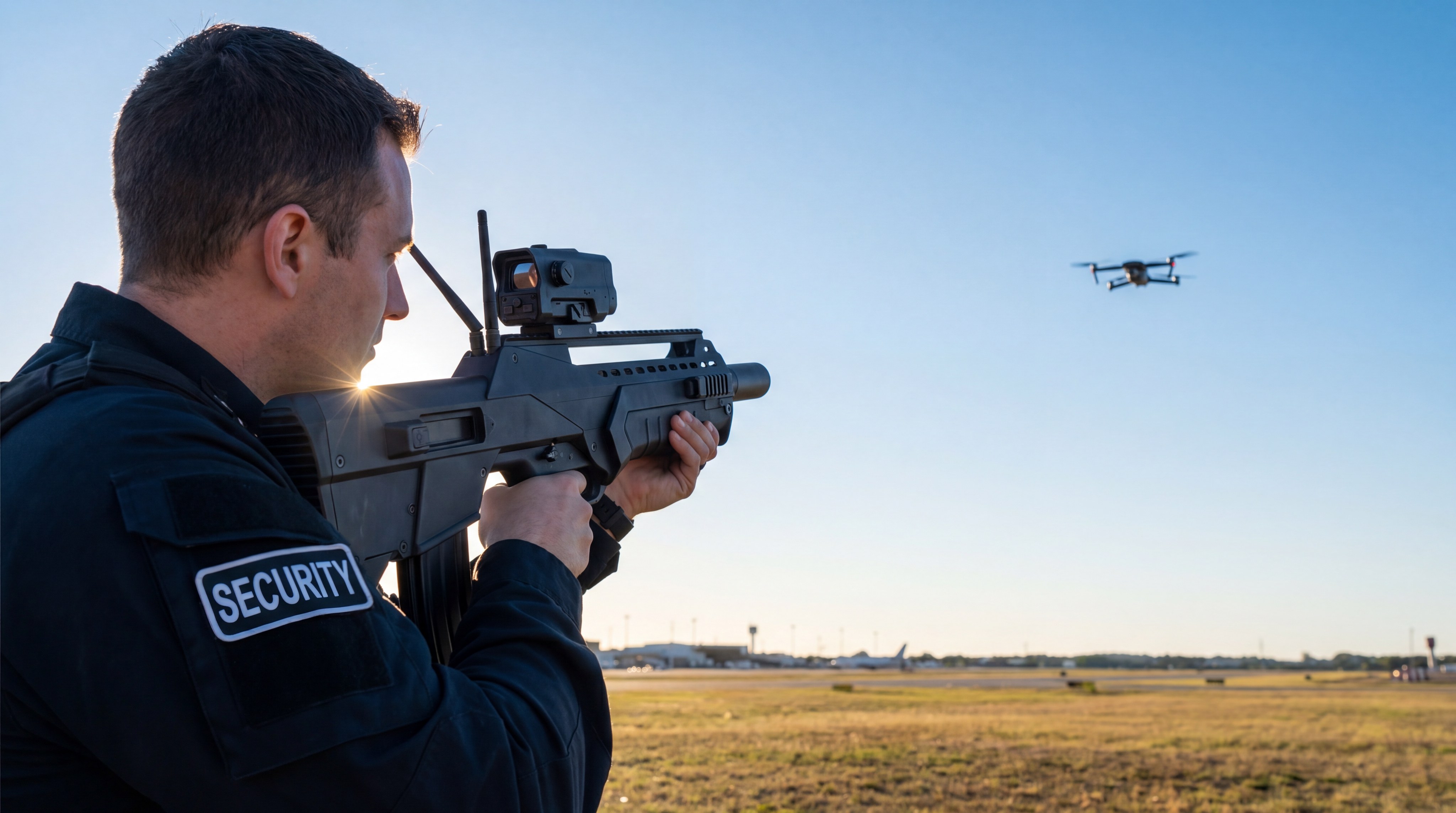
These are directional units designed for security personnel to point and shoot at a visible drone threat. They look like futuristic rifles and are highly effective for rapid response in the field.
- Directional antennas focus energy only at the target.
- Battery-powered for maximum mobility and ease of use.
- Immediate activation for reactive security scenarios.
The best part?
Handheld units allow you to neutralize a drone without affecting other electronics in the surrounding area.
Fixed-site perimeter systems
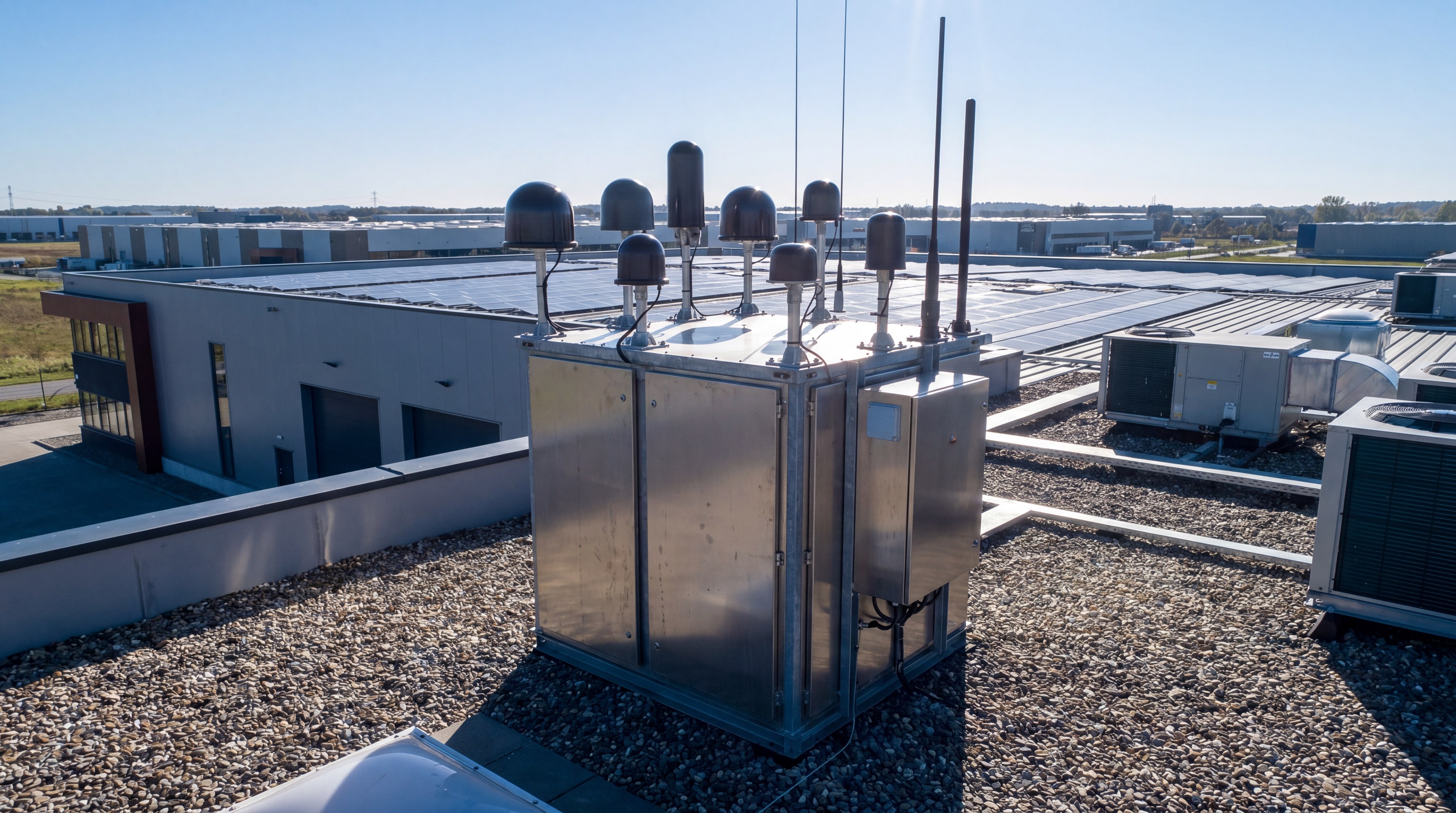
Fixed systems are installed on rooftops or towers to create a permanent protection bubble around a facility. These use omnidirectional antennas to cover 360 degrees of the surrounding airspace.
Key Takeaway: Choosing between portable and fixed systems depends on whether your security needs are reactive or preventative.
| Jammer Type | Best Use Case | Range |
|---|---|---|
| Handheld | Incident response | 500m – 2km |
| Fixed-Site | Perimeter security | 1km – 5km+ |
| Vehicle-Mounted | Convoy protection | 2km – 3km |
Selecting the right form factor ensures that your security team can respond effectively to aerial threats in any environment.
What components make a jammer effective?
A high-performance response to what is a drone jammer depends on professional-grade hardware, specifically high-power RF amplifiers and high-gain antennas. The quality of these internal components determines how far the signal reaches and how reliably it can block complex drone links. Without robust engineering, a jammer may fail to stop drones in areas with high background noise.
The role of RF power amplifiers
The amplifier is the heart of the system, taking a low-power signal and boosting it to levels that can overwhelm a drone’s receiver. High-efficiency amplifiers ensure the device doesn’t overheat during extended operation.
- GaN (Gallium Nitride) technology provides superior power density.
- High linearity prevents signal distortion across the band.
- Stable output power ensures consistent range performance.
Believe it or not:
The difference between a 100-meter range and a 2-kilometer range is often found in the quality of the RF amplifier stages.
Selecting high-gain antennas
Antennas determine how the RF energy is shaped and directed toward the target. Directional antennas provide long-range focus, while omnidirectional antennas create a defensive “dome” around the operator.
Key Takeaway: Engineering-driven components are the backbone of any reliable counter-UAS system, ensuring the signal is strong enough to work.
| Component | Function | Importance |
|---|---|---|
| Power Amplifier | Boosts signal strength | Critical for range |
| Antenna | Directs the RF energy | Determines coverage area |
| Signal Source | Generates the interference | Ensures frequency accuracy |
Using high-quality, factory-tested components is the only way to ensure your jamming system performs when a real threat appears.
How can jammers enhance national security?
In the context of defense, what is a drone jammer but a vital tool for protecting airports, government buildings, and military installations from airborne threats. Small, cheap drones have become a significant asymmetric threat that can be used for surveillance or even as improvised explosive delivery systems. Jammers provide a critical layer of defense that can be deployed quickly to protect restricted airspaces.
Securing restricted airspace
Large-scale jammers are used at airports to prevent hobbyist drones from entering flight paths and causing catastrophic mid-air collisions. These systems can clear the skies without interfering with traditional aircraft communications.
- Prevents airport shutdowns caused by rogue drones.
- Protects government buildings from prying eyes.
- Safeguards public events and large stadium gatherings.
Even better:
These systems can be integrated with radar to automatically trigger jamming only when a threat is detected.
Mitigating terror threats
Military forces use high-powered jammers to protect forward operating bases from “kamikaze” drones. By severing the link, these drones are neutralized before they can reach their intended target.
Key Takeaway: National security relies on the ability to detect and neutralize UAVs before they reach their target or gather intelligence.
| Security Sector | Application |
|---|---|
| Aviation | Keeping runways clear of hobbyist drones |
| Military | Protecting forward operating bases |
| Public Events | Safeguarding stadiums and political rallies |
Integrating jamming technology into national defense strategies provides a scalable response to the growing proliferation of low-cost UAVs.
Can you use jammers for site protection?
Industrial facilities use the technology behind what is a drone jammer to prevent corporate espionage and ensure the physical safety of their infrastructure. From data centers to power plants, the risk of a drone hovering over sensitive equipment is too high to ignore. Professional jamming systems provide a persistent defense that operates 24/7 to keep unauthorized craft away from critical assets.
Protecting critical infrastructure
Facilities like water treatment plants and oil refineries use jammers to prevent sabotage or unauthorized monitoring. A drone crash in these environments could lead to fires or chemical leaks.
- Maintains a “no-fly” zone around sensitive valves and tanks.
- Prevents thermal cameras from mapping facility weaknesses.
- Ensures the physical safety of on-site personnel.
Bottom line:
Protecting your site’s physical integrity starts with controlling the air above it.
Preventing industrial spying
Competitors may attempt to use drones to film proprietary manufacturing processes through warehouse windows or roof skylights. Jammers stop these attempts by cutting the video feed immediately upon approach.
Key Takeaway: Stationary jamming systems offer the most reliable way to protect large-scale industrial sites from prying aerial cameras.
| Industry | Primary Threat |
|---|---|
| Oil & Gas | Sabotage or monitoring |
| Tech/Manufacturing | IP theft/Espionage |
| Correctional | Dropping contraband into yards |
By securing the sky, industrial leaders can focus on their core operations without the constant threat of aerial surveillance or sabotage.
Is a drone jammer safe for the operator?
When asking what is a drone jammer, safety is paramount; professional units are engineered with internal shielding to protect the operator from high-power RF exposure. Because these devices emit high-frequency energy, the hardware must be designed to direct that energy away from the user. High-quality manufacturing standards ensure that the device meets safety guidelines for human exposure to radio waves.
Understanding RF radiation safety
Quality jammers are built with multi-layered shielding that prevents RF energy from leaking into the handle or the body of the device. This ensures the user is not exposed to harmful levels of electromagnetic radiation.
- Enclosures are made of RF-absorbing materials.
- Internal circuits are isolated from the user interface.
- Devices are tested for Specific Absorption Rate (SAR) compliance.
As it turns out:
A well-shielded jammer is as safe to use as a high-powered industrial Wi-Fi router, provided it is handled correctly.
Proper handling and deployment
Operators should always point directional jammers away from themselves and others to minimize incidental exposure. Following the manufacturer’s guidelines ensures the device performs its job without posing any health risks.
Key Takeaway: Always source equipment from ISO-certified manufacturers who provide verified test data and safety documentation for their products.
| Safety Feature | Purpose |
|---|---|
| RF Shielding | Protects internal circuits and the user |
| Heat Sinks | Prevents hardware overheating during use |
| Directional Aim | Focuses energy away from the operator |
Choosing a professionally engineered system guarantees both the security of your airspace and the safety of the personnel operating the hardware.
How do you choose the right jammer power?
Deciding on the appropriate output for what is a drone jammer depends on the specific range you need to cover and the complexity of the local RF environment. If you are in a remote area with little interference, a low-wattage system may suffice. However, in urban centers with dense Wi-Fi and cellular traffic, you will need much more power to ensure your signal reaches the drone effectively.
Calculating the required range
The distance you need to block is the most important factor. To stop a drone at 2 kilometers, your amplifier must have significantly higher wattage than one designed for 500 meters.
- 10W to 20W is ideal for personal residential privacy.
- 50W to 100W is standard for industrial site perimeters.
- 500W+ is required for military or large airport applications.
Truth be told:
More power isn’t always better; you need the right power levels to be effective without interfering with your own authorized communications.
Environmental signal interference
In cities, the background RF noise can be quite high. This noise acts like “friction” for your jammer’s signal, requiring higher output levels to achieve the same effective range as in a rural area.
Key Takeaway: Consulting with an RF engineer is the best way to match your equipment’s power level to your specific environmental challenges.
| Range Needs | Recommended Power | Typical Application |
|---|---|---|
| Short (<500m) | 10W – 20W | Residential privacy |
| Medium (1km-2km) | 50W – 100W | Industrial perimeters |
| Long (5km+) | 500W+ | Military/Airport defense |
Carefully selecting your power levels ensures a secure perimeter that is effective against intruders while remaining compliant with technical requirements.
Frequently Asked Questions
Can I legally use a drone jammer on my property?
In many jurisdictions, including the US, the use of jammers is restricted to federal authorities and authorized personnel; always check local laws before deployment. Private use without proper licensing can lead to significant legal penalties and fines.
What’s the best range for a residential jammer?
For home privacy, a range of 200–500 meters is typically sufficient to create a “privacy bubble” without affecting neighbors. This range ensures that any drone attempting to hover over your backyard is immediately neutralized.
Can I block a drone without crashing it?
Yes, most modern drones are programmed to either hover in place or return to their takeoff point when the signal is lost. Jamming severs the command link, triggering the drone’s built-in safety protocols rather than causing a free-fall.
What’s the most important frequency to jam?
The 2.4 GHz band is the most critical, as it is the most common frequency for both drone control and video transmission. Blocking this frequency alone can neutralize a vast majority of consumer and prosumer drones.
How do I know if a drone is being jammed?
You will see the drone stop mid-air, start to drift, or begin an automatic descent or return-to-home maneuver. If the drone was recording video, the pilot will see a “signal lost” message on their screen immediately.
Conclusion
Protecting your airspace from unwanted intruders requires a deep understanding of RF technology and the right hardware. Whether you are securing a private estate or a massive industrial complex, the core of your defense lies in high-quality amplification and antenna systems. At CorelixRF, we believe that every security professional deserves access to engineering-driven, factory-direct RF solutions that perform in the most challenging environments. Our mission is to provide the reliable components needed to secure the skies and protect your privacy from emerging aerial threats. To find the perfect RF components for your security needs, contact us today and speak with an experienced RF engineer who can help you build a robust counter-UAS strategy.
Authorized RF engineering and compliance review
For regulated RF systems, this page should be used as an engineering and compliance review path, not as a public deployment checklist. CorelixRF starts with authorization status, operating region, frequency plan, output limit, antenna interface, safety controls, thermal limits and acceptance documents.
- RFQ checklist – send the data buyers usually forget, including band, power, duty cycle, interface and test standard
- delivery documentation – check what documents can support incoming inspection, FAT review and long-term maintenance
- quality and certification review – review the quality and compliance evidence before the project moves into procurement
- RF front-end platform – compare the RF chain as a system instead of selecting one isolated module
- RF configurator – turn frequency, power, thermal and interface requirements into a first configuration brief
- case studies – review similar engineering paths before sending an RFQ
- engineering contact – send the application notes, block diagram or target specification to engineering sales
This keeps the discussion inside lawful, authorized RF programs while still giving procurement teams a clear way to request amplifier, antenna, SDR source, documentation and factory review.
Site Security RF Hardware Review Path
For authorized site-security RF reviews, translate coverage requirements into RF power amplifier sizing, RF front-end protection and antenna/load interface planning. Send operating bands, power targets, duty cycle, cable loss, VSWR limits, enclosure constraints and validation evidence needs through the RF inquiry form.