
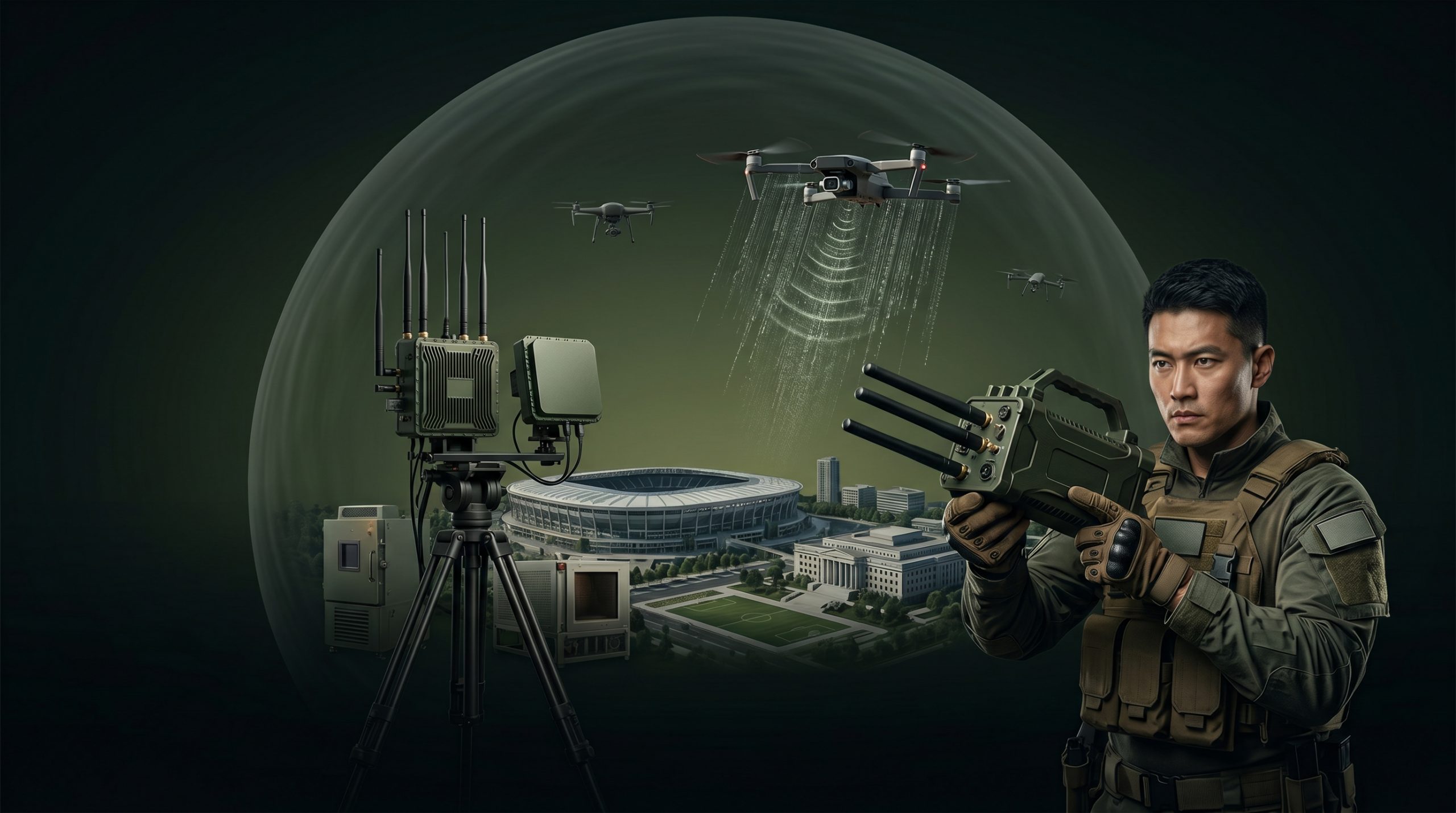
Selecting proper counter UAS equipment requires matching RF output power against realistic site threat profiles accurately. Imagine managing security for a crowded outdoor stadium when an unidentified drone suddenly breaches your perimeter. Your current guards lack technical means for tracking aerial threats rapidly. Implementing effective Drone Jamming Systems solves this immediate security gap efficiently. We manufacture high-power RF modules giving facility managers total airspace control globally.
What Are Drone Jamming Systems Exactly?
These devices function as specialized electronic warfare tools blocking unauthorized aerial vehicle communication signals. A primary Drone Jamming Systems deployment disrupts remote control frequencies effectively. Such disruption forces an invading craft into emergency landing protocols automatically. Facility operators regain airspace dominance without firing kinetic weapons.
How Do They Disrupt UAV Signals?
Radio frequency transmission relies upon clear channels connecting pilots with aerial units. Interference hardware broadcasts noise across those identical frequency bands continuously. This overriding noise creates a massive communication barrier instantly.
What’s the real story?
Interfering with command links requires precise power output management.
- Operators match hostile frequencies.
- Hardware generates stronger competing signals.
- Target crafts lose navigation capabilities.
Detection Vs Mitigation: Which Matters?
Identifying a threat always precedes neutralizing that specific target. Mitigation hardware requires accurate locational data before activating transmission sequences. Operators combine radar sensors with active RF disruption tools seamlessly.
- Sensors spot incoming targets early.
- Software calculates exact trajectory vectors.
- RF gear neutralizes identified threats safely.
Key Takeaway: Combining early detection hardware with robust mitigation tools creates a comprehensive defensive shield against rogue UAVs.
| Feature Type | Primary Function | Operational Impact |
| Radar Sensors | Track aerial movement | Provides early warning |
| RF Jammers | Block command signals | Forces immediate landing |
| Optical Cameras | Confirm target visually | Reduces false positives |
Integrating sensor data directly into RF suppression gear maximizes defensive response times drastically.
Which Frequencies Do Most Drones Utilize?
Commercial quadcopters typically operate on standard public communication bands worldwide. Modern Drone Jamming Systems target these exact spectrums for maximum operational efficiency. Hobbyist models rely heavily upon consumer-grade radio channels regularly. Advanced platforms might employ different spectrums avoiding basic interference intentionally.
Which Bands Carry Standard Video Feeds?
Most civilian aerial hardware uses common Wi-Fi spectrums for video transmission tasks. A standard 2.4 GHz range provides long-distance control capability reliably. Conversely, 5.8 GHz handles high-bandwidth camera feed streams perfectly.
Ready for the good part?
Disrupting these two channels neutralizes most civilian aerial threats immediately.
- Blocks pilot control inputs.
- Stops live video feeds.
- Triggers return-to-home programming.
What Makes Custom 433 MHz Dangerous?
Professional intruders often modify their equipment using lower frequency spectrums intentionally. These alternative bands penetrate physical obstacles better than standard consumer channels. Lower frequencies require specialized RF hardware for effective signal disruption.
- Evades standard Wi-Fi suppressors.
- Penetrates dense concrete structures.
- Requires wideband suppression gear.
Key Takeaway: Equipping security teams with full-band suppression hardware guarantees protection against both consumer toys and customized professional intrusion tools.
| Frequency Band | Typical Usage | Threat Level |
| 2.4 GHz | Standard command links | Moderate |
| 5.8 GHz | High-speed video feeds | Moderate |
| 433 MHz | Modified custom controls | High |
Deploying wideband RF architecture ensures your security perimeter remains impenetrable against varied communication protocols.
How Does Range Impact Drone Jamming Systems?
Distance dictates defense effectiveness completely since signal strength diminishes rapidly over space. Advanced Drone Jamming Systems offer varied operational radii matching specific site needs. Stopping threats far from vulnerable perimeters requires significant RF power output. Short-range devices only protect localized zones effectively.
Securing Large Stadiums And Zones
Event venues cover massive physical areas requiring overlapping RF shields. Small handheld devices lack adequate coverage for massive crowds. High-power fixed installations generate broad protective bubbles successfully.
Here’s the deal:
A tiny 500-meter range allows intruders uncomfortably close.
- Venues need multi-kilometer coverage.
- Overlapping zones prevent blind spots.
- Powerful amplifiers maintain signal integrity.
Why Are 5km Ranges Needed Today?
Professional attackers operate their crafts from safe distances secretly. Countermeasures must reach outward far beyond visual sightlines. High-end hardware projects interference fields extending up past 5km seamlessly.
- Neutralizes threats before visual contact.
- Protects extensive compound perimeters.
- Requires military-grade GaN technology.
Key Takeaway: Selecting hardware with multi-kilometer reach guarantees hostile UAVs drop before breaching your outer security perimeter.
| Range Category | Typical Distance | Best Application |
| Short Range | Under 1km | Localized VIP security |
| Medium Range | 1km – 3km | Small industrial sites |
| Long Range | Over 3km | Massive stadium venues |
Matching hardware output power directly against facility footprint dimensions creates a foolproof security perimeter.
Should You Choose Portable Or Fixed Gear?
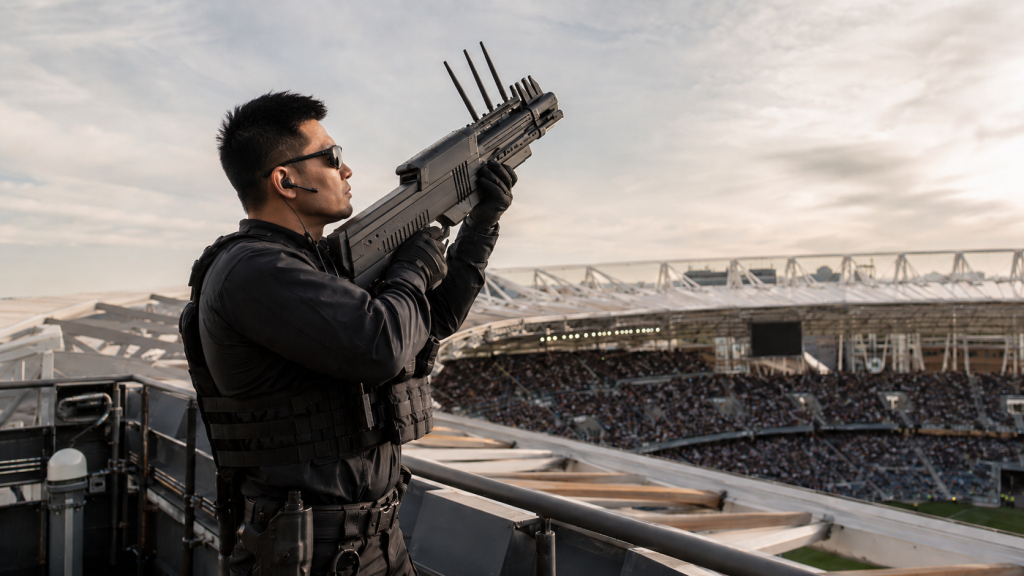
Selecting appropriate form factors depends upon your specific operational mobility requirements completely. Mobile teams require lightweight Drone Jamming Systems for agile response missions. Permanent facilities benefit from heavy-duty stationary installations globally. Facility layout drives this hardware selection process directly.
What Are Handheld Form Factor Benefits?
Security guards need portable tools during active foot patrols. Rifle-style RF suppressors provide directional interference rapidly. These battery-powered units offer immediate tactical flexibility anywhere.
This is where it gets interesting…
Mobile units allow guards precise targeting capabilities instantly.
- Deployable within seconds anywhere.
- Requires minimal technical training.
- Runs on replaceable battery packs.
When Should You Install Stationary Systems?
Large facilities demand continuous automated protection constantly. Fixed installations connect directly into main power grids for uninterrupted service. These massive systems house powerful GaN amplifiers supporting extreme operational loads.
- Offers automated threat mitigation.
- Delivers maximum RF output power.
- Withstands severe weather conditions.
Key Takeaway: Balancing mobile response capabilities with permanent automated shields yields maximum site security continuously.
| Form Factor | Mobility Level | Power Output |
| Handheld Rifle | Extremely high | Moderate |
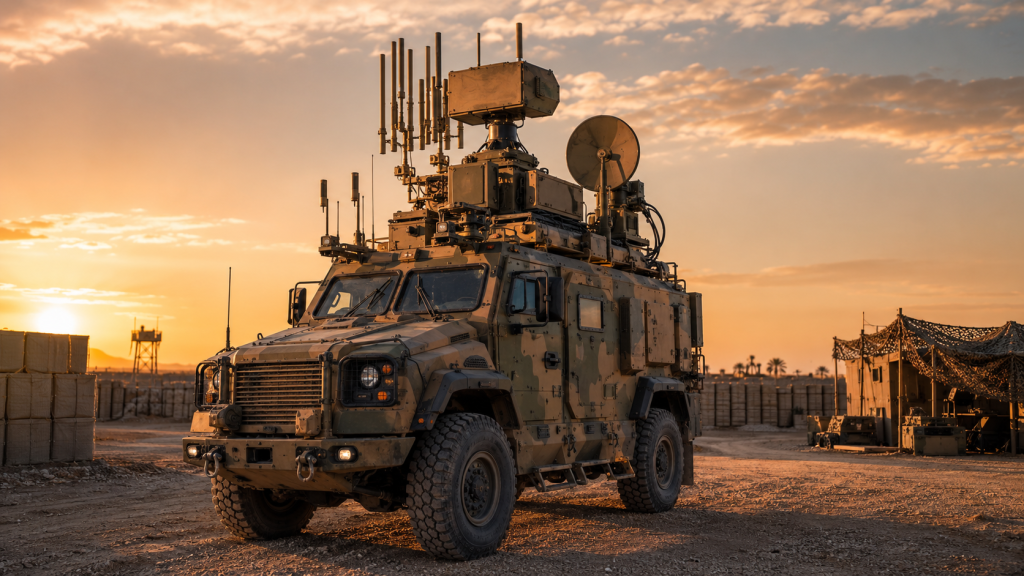
| Vehicle Mounted | Moderate | High |
| Fixed Station | None | Maximum |
Deploying fixed stations for perimeter defense while equipping mobile patrols with handheld units establishes layered airspace dominance.
How Do Military Forces Deploy Counter UAS?
Armed forces integrate high-power RF modules into centralized battlefield command networks seamlessly. Modern Drone Jamming Systems serve as critical battlefield survival tools globally. Defending troops requires high-power RF modules blocking complex encrypted signals. Military specifications demand flawless performance under extreme environmental stress.
How Do Soldiers Defend Forward Operating Bases?
Temporary military camps remain vulnerable against coordinated drone swarms. Tactical units deploy wideband interference shields immediately upon arrival. These invisible domes block all hostile navigation attempts effectively.
You might be wondering:
How do soldiers power these massive systems?
- Generators supply continuous heavy current.
- Systems utilize high-efficiency GaN amplifiers.
- Hardware withstands intense desert heat.
Can You Integrate With Existing Tech?
Modern warfare relies upon interconnected digital ecosystems completely. Standalone interference tools integrate flawlessly alongside existing radar arrays. Custom interface protocols allow centralized command control effortlessly.
- Syncs with early warning radars.
- Shares target data across networks.
- Prevents friendly fire incidents.
Key Takeaway: Military-grade RF hardware provides uncompromising reliability when facing advanced adversarial drone swarms globally.
| Deployment Type | Protection Target | Tech Integration |
| Base Defense | Static compounds | Centralized radar |
| Convoy Escort | Moving vehicles | Mobile sensors |
| Dismounted | Infantry patrols | Standalone operation |
Syncing wideband RF suppression tools with military command networks maximizes battlefield awareness simultaneously.
Why Do Police Use Drone Jamming Systems?
Law enforcement utilizes RF mitigation tools for preventing catastrophic accidents above crowded urban events. Urban police departments deploy Drone Jamming Systems during sensitive public gatherings. Unauthorized aerial vehicles pose severe risks near crowded public spaces. Rapid mitigation tools help officers maintain public safety efficiently.

Protecting High-Profile Events Successfully
Parades attract hundreds of unauthorized hobbyist pilots seeking aerial footage. These small crafts can fall onto tight crowds causing severe injuries. Police deploy vehicle-mounted RF suppressors around event perimeters proactively.
What’s the catch?
Officers must suppress signals without affecting civilian cell phones.
- Jammers target specific UAV bands only.
- Directional antennas minimize collateral interference.
- Operations remain completely covert.
How Do Police Secure Local Airspace?
Emergency responders require clear skies during active rescue operations. Medical helicopters cannot land when rogue drones occupy local airspaces. Ground units use handheld suppressors clearing flight paths rapidly.
- Forces immediate drone landings.
- Protects rescue helicopter flight paths.
- Helps apprehend negligent remote pilots.
Key Takeaway: Equipping law enforcement with precise RF mitigation tools prevents catastrophic accidents during crowded urban events.
| Operation Type | Primary Objective | Preferred Gear |
| Crowd Security | Prevent aerial crashes | Vehicle systems |
| VIP Transport | Block surveillance | Mobile domes |
| Rescue Ops | Clear flight paths | Handheld rifles |
Targeting narrow UAV frequency bands prevents unwanted disruption of critical public emergency communication networks.
Can Jammers Guard Critical Infrastructure?
Permanent hardware establishes automated invisible security barriers around vulnerable industrial sites perfectly. National grids remain prime targets for malicious aerial attacks continuously. Industrial Drone Jamming Systems offer robust protection for sensitive chemical facilities. Advanced RF systems establish permanent invisible security barriers reliably.
Defending Power And Water Plants
Industrial sabotage via aerial payloads represents a severe modern threat. Water treatment facilities house vulnerable open-air chemical storage tanks. Fixed suppression towers blast overlapping RF signals continuously.
But here’s the kicker…
These locations face severe environmental challenges daily.
- Equipment withstands corrosive chemical exposure.
- Systems handle extreme temperature variations.
- Hardware operates without failing.
Creating Reliable No-Fly Zones
Facility managers configure customized boundaries matching property lines exactly. Crossing these invisible boundaries triggers immediate RF suppression protocols. This automated response requires zero human intervention normally.
- Defines strict aerial perimeters accurately.
- Activates countermeasures upon perimeter breach.
- Logs all intrusion attempt data securely.
Key Takeaway: Establishing automated RF perimeters around vulnerable utilities prevents catastrophic sabotage attempts effectively.
| Facility Type | Risk Factor | Defense Strategy |
| Power Plant | High | Fixed wideband shield |
| Water Supply | High | Automated zone denial |
| Data Center | Extreme | Layered RF suppression |
Installing weather-resistant GaN-based amplifier modules guarantees continuous protective coverage across harsh industrial environments.
What Is The True Cost Of C-UAS Equipment?
Procurement budgets dictate hardware quality heavily since military-grade GaN components carry premium price tags. Cheap Drone Jamming Systems often fail during critical security incidents. High-performance military-grade components demand significant financial investments upfront. Understanding exact technical requirements prevents wasteful spending entirely.
Avoiding The Sledgehammer Approach
Buying overpowered hardware for tiny properties wastes vast resources unnecessarily. Small private estates do not need massive multi-kilometer military systems. Facility managers must match equipment specifications against actual needs.
The reality is:
Over-specifying gear burns through budgets fast.
- Analyze realistic site dimensions carefully.
- Select appropriate output power levels.
- Avoid unnecessary custom protocol features.
Evaluating Your Budget Realistically
Quality RF components like GaN transistors cost premium prices. System reliability directly correlates with internal manufacturing standards. Cheaper alternatives suffer from severe thermal degradation quickly.
- High-quality amplifiers prevent power fading.
- Solid-state designs offer better longevity.
- Maintenance contracts add long-term value.
Key Takeaway: Investing heavily into high-quality GaN RF modules pays off through decades of flawless operational stability.
| Budget Tier | Typical Capability | Component Quality |
| Entry Level | Short range handheld | Basic silicon |
| Mid Tier | Medium range fixed | Standard LDMOS |
| Premium | Multi-kilometer automated | Military GaN |
Matching your financial investment directly against realistic site threat models optimizes long-term security spending completely.
How Should You Evaluate Site Threats?
Security directors map out vulnerable angles meticulously by analyzing physical terrain layouts first. Blindly purchasing hardware guarantees poor security outcomes always. Effective Drone Jamming Systems deployment starts with intense site analysis. Understanding your specific adversary profiles dictates hardware choices perfectly.
Evaluating Acreage And Environment
Dense urban jungles bounce RF signals unpredictably. Open desert plains allow maximum transmission range continuously. Hardware placement requires careful geographical mapping always.
Keep this in mind:
Physical obstacles reduce suppression effectiveness drastically.
- Tall buildings block interference waves.
- Thick forests absorb radio frequencies.
- Elevated mounting positions overcome terrain issues.
Identifying Professional Intruders Accurately
Corporate espionage utilizes advanced customized drone platforms frequently. These professional units bypass standard Wi-Fi suppression tools easily. Detecting non-standard frequencies requires sophisticated wideband sensory equipment.
- Amateurs use basic consumer models.
- Professionals use customized transmission rigs.
- Custom threats demand adaptable wideband hardware.
Key Takeaway: Conducting thorough environmental mapping prior to hardware installation prevents costly dead zones across your property.
| Environment | RF Challenge | Optimal Solution |
| Urban | Signal reflection | Multi-point low power |
| Rural | Massive distance | Single high power |
| Coastal | Humidity corrosion | Sealed rugged chassis |
Selecting environmentally appropriate mounting locations maximizes interference wave propagation across your entire facility footprint.
What Steps Guarantee Proper Implementation?
Successful deployment requires training operators thoroughly regarding precise targeting protocols securely. Buying hardware represents only half your defensive battle. Poorly configured software leaves massive holes inside your protective shield. Following strict deployment protocols validates your financial investment completely.
Training Staff For Safe Operation
Operating high-power RF gear requires specific technical knowledge. Untrained guards might suppress friendly communications accidentally. Comprehensive educational programs teach staff precise targeting protocols securely.
The best part?
Proper training eliminates operational hesitation during crises.
- Guards learn rapid deployment sequences.
- Operators understand basic frequency spectrums.
- Teams practice emergency maintenance procedures.
Finalizing Your Purchase Decision Safely
Vendor selection impacts long-term success heavily. Serious buyers demand detailed engineering proposals outlining exact specifications. Authentic manufacturers provide rigorous factory testing documentation willingly.
- Request detailed technical datasheets always.
- Verify exact power output claims.
- Confirm global export compliance certificates.
Key Takeaway: Partnering directly with true RF manufacturers rather than traders guarantees superior technical support over decades.
| Implementation Phase | Action Required | Expected Outcome |
| Planning | Site survey | Perfect component match |
| Installation | Mount and wire | Active perimeter shield |
| Training | Staff education | Flawless system operation |
Validating factory quality control documents before signing purchase orders prevents acquiring sub-standard counterfeit hardware.
Final Strategy For Airspace Security
Securing vulnerable airspaces requires military-grade engineering precision daily. We resolved your confusion regarding RF disruption metrics directly. Facility directors now understand how frequency bands dictate hardware selection accurately. Our factory produces genuine high-power GaN modules handling extreme interference tasks flawlessly. We engineer complete RF chain architecture customized for your specific site requirements perfectly. CorelixRF maintains a strict 46-step quality control protocol stopping failure risks permanently. We envision a safer sky where malicious aerial threats fail instantly upon perimeter breach. Ready for a technical proposal? Reach out and contact us today.
FAQ
Q1: Can I mount portable jammers on a moving vehicle?
Yes, you can adapt portable gear easily. Many handheld units feature modular brackets fitting standard vehicle mounting rails securely.
Q2: What’s the best frequency range for stopping professional drones?
Wideband coverage from 300MHz to 6GHz blocks custom threats best. Professional attackers utilize lower frequencies bypassing standard consumer jammers completely.
Q3: How do I know if my facility needs a fixed or portable system?
Analyze your daily operational footprint directly. Massive static properties require fixed automated towers, while mobile security patrols need lightweight handheld units.
Q4: Can I integrate new jammers with my current radar sensors?
Absolutely, modern systems support seamless data integration. SDR modules utilize standard interfaces communicating with existing early warning networks perfectly.
Q5: What’s the best way to verify actual power output before buying?
Demand extensive factory testing documentation upfront. True manufacturers supply spectrum analyzer screenshots proving exact gain flatness metrics reliably.