
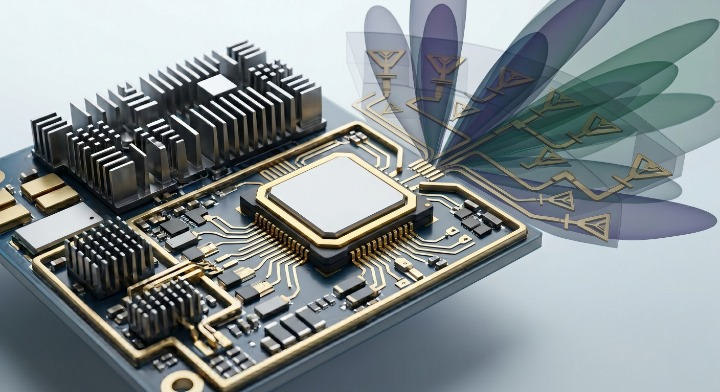
What are Drone Jammers and why do they need GaN?
GaN chips are vital because they provide the superior power density and efficiency required to neutralize modern, high-speed UAV threats at significant distances. While traditional silicon-based components struggle to keep up with evolving communication protocols, Drone Jammers powered by Gallium Nitride ensure your airspace remains secure.
Think about it. As rogue drones become more sophisticated, the hardware used to stop them must evolve even faster. Relying on outdated hardware creates vulnerabilities that can lead to catastrophic security breaches for your facility or operation.
What is the primary role of jamming?
The primary goal is to block GPS, telemetry, and remote control signals between the drone and its pilot. This forces the aircraft to either land immediately or return to its point of origin by overwhelming its onboard receiver with “noise.”
Here is why it matters:
- GPS Disruption: Prevents satellite navigation and automated flight paths.
- Telemetry Interference: Cuts off the data stream to the operator.
- Remote Control Blocking: Stops manual steering and payload activation.
What makes GaN a unique material?
GaN is a wide-bandgap semiconductor that can operate at much higher voltages and temperatures than legacy materials. It effectively handles the massive radio frequency (RF) output required to create a reliable electronic shield.
Consider these properties:
- High Electron Mobility: Allows for faster switching and higher frequency operation.
- Breakdown Voltage: Resists failure under high-power conditions.
- Thermal Stability: Maintains performance in extreme environments.
Key Takeaway: GaN technology provides the foundational power and stability needed to overwhelm modern drone signals effectively and reliably.
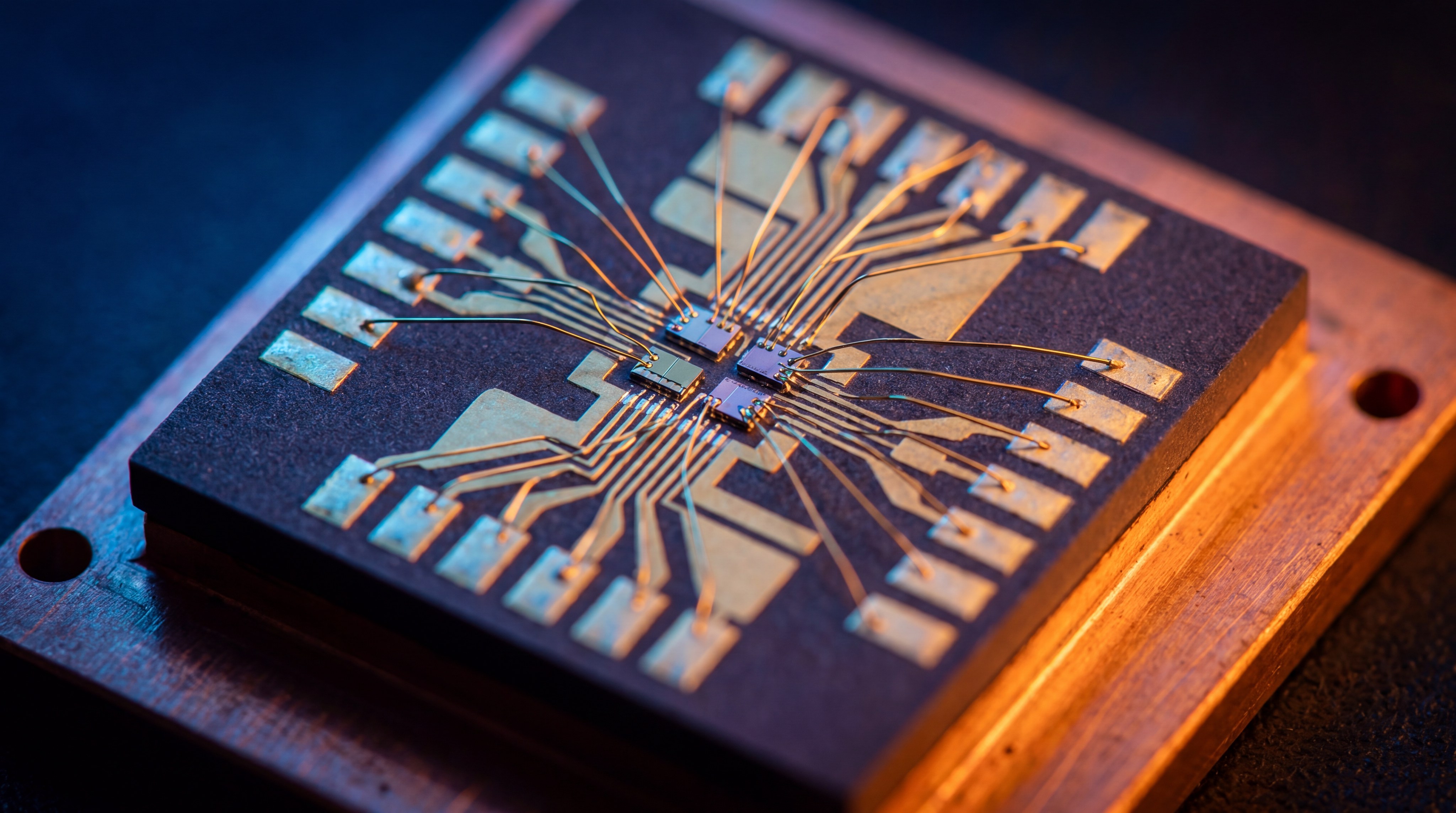
How do GaN-based systems disrupt UAV signals?
GaN-powered Drone Jammers function by emitting high-power interference signals that physically overwhelm the communication channel between a UAV and its operator. If the jammer’s signal is stronger than the operator’s control signal at the drone’s receiver, the drone loses its ability to process commands.
Here is the deal: jamming is fundamentally a game of power. By flooding specific frequencies with white noise, you can effectively silence any incoming or outgoing signals.
How does RF jamming stop a drone?
RF jamming targets the specific radio frequencies—usually 2.4GHz or 5.8GHz—used for manual flight control. By flooding these frequencies with high-energy noise, the drone can no longer receive commands from the pilot.
You can expect:
- Signal Saturation: Overloading the drone’s internal receiver.
- Command Rejection: The drone ignores operator inputs due to noise.
- Safety Protocols: Most drones will enter an “auto-land” or “fail-safe” mode.
Is GPS jamming effective against UAVs?
Yes, GPS jamming disrupts the satellite signals the drone uses for critical navigation and positioning tasks. Without a clear GPS lock, most drones cannot hover in place or follow pre-programmed waypoints accurately.
The impact includes:
- Position Drift: The drone loses its spatial awareness.
- Navigation Failure: Pre-set flight paths are immediately terminated.
- Emergency Landing: The drone often descends to avoid crashing into structures.
Key Takeaway: By overwhelming both control and navigation frequencies, GaN-based jammers ensure a total loss of control for unauthorized aircraft.
| Feature | Jamming Impact | GaN Advantage |
|---|---|---|
| RF Control | Stops manual pilot steering | High power saturation |
| GPS Link | Disables autonomous waypoints | Wide frequency coverage |
| Telemetry | Cuts video and data feeds | Clean signal amplification |
This technical synergy allows for a comprehensive defense strategy that targets every communication vulnerability of the UAV.
Why is power handling vital for effective jamming?
Superior power handling is the most important factor in determining the effective range of Drone Jammers, allowing them to neutralize threats before they approach protected assets. GaN can manage significantly higher voltages and currents than silicon-based semiconductors without breaking down or losing signal integrity.
It gets better. You can push more energy through a smaller chip, creating a wall of interference that is difficult for any drone to penetrate. This makes the difference between a jammer that works at 100 meters and one that works at 2 kilometers.
Can GaN handle higher voltages?
Absolutely, as GaN chips operate at voltages that would cause traditional silicon chips to fail or melt instantly. This capability allows for the design of amplifiers that deliver massive RF output while staying stable over long periods.
The benefits are clear:
- Voltage Resilience: Handles spikes and high-duty cycles with ease.
- Current Density: Moves more power through a smaller physical area.
- Stable Output: Prevents signal drop-off during intense jamming sessions.
Does high power increase effective range?
Power is directly proportional to range, meaning more wattage translates into a larger protected perimeter. A high-wattage GaN amplifier ensures that the interference signal remains potent enough to disrupt a drone even at extreme distances.
Think about these factors:
- Inverse Square Law: Signal strength drops fast, so you need high initial power.
- Signal Penetration: Overcomes environmental obstacles like trees or walls.
- Early Detection Response: Neutralizes threats at the horizon line.
Key Takeaway: The raw power capacity of GaN enables jammers to create long-range denial zones that are impossible for standard drones to bypass.

| Metric | Silicon Limit | GaN Performance |
|---|---|---|
| Operating Voltage | Lower (5-12V) | Higher (28-50V) |
| Power Density | Limited | 5x to 10x Greater |
| Range Potential | Short | Long/Ultra-Long |
Leveraging high-voltage resilience is the only way to achieve the range necessary for critical infrastructure protection.
How do systems achieve wide frequency coverage?
Drone Jammers use GaN’s wide frequency response to target multiple bands, including Wi-Fi, GPS, and custom radio links, within a single modular system. But wait, there’s more to it than just raw power.
Legacy systems often required different hardware for different frequencies, which increased weight and cost. With GaN, a single amplifier can cover a broad spectrum, making the jammer much more versatile against varied threats.
Why is multi-band coverage necessary?
Commercial drones usually operate on 2.4GHz and 5.8GHz, but military or custom drones might use lower or higher bands to evade standard jammers. To be truly effective, your system must cover all possibilities simultaneously.
You need to address:
- Low Frequencies: 433MHz and 900MHz for long-range control.
- Satellite Bands: L1 and L2 frequencies for GNSS/GPS.
- High Frequencies: 5.8GHz and emerging 6GHz communication links.
Can one system target various protocols?
Yes, GaN-powered systems are flexible enough to disrupt everything from standard OcuSync protocols to custom analog FPV video links. You don’t have to swap hardware when a new drone model appears on the market.
This flexibility allows for:
- Protocol Agnostic Jamming: Blocking signals regardless of their “language.”
- Dynamic Tuning: Adjusting frequencies in real-time to match the threat.
- Future-Proofing: Ready for next-generation drone communication standards.
Key Takeaway: The broad bandwidth of GaN chips allows a single jammer to replace multiple older units, providing a more comprehensive defense in a smaller package.
| Frequency Band | Common Use | Jamming Requirement |
|---|---|---|
| 433 / 900 MHz | Remote Control | High Gain / Penetration |
| 1.2 – 1.6 GHz | GPS / GNSS | High Precision |
| 2.4 / 5.8 GHz | Wi-Fi / Control | High Bandwidth |
A wideband approach ensures that you are never caught off guard by a drone operating on a non-standard frequency.
Does GaN efficiency resolve thermal management issues?
Yes, GaN is exceptionally efficient at converting electrical power into RF signals, which minimizes the amount of wasted energy that turns into destructive heat. In high-power Drone Jammers, managing heat is the biggest challenge to maintaining continuous operation.
The best part? Because GaN generates less heat than traditional silicon, the overall system remains more reliable during sustained use. In the field, a jammer that overheats is a jammer that fails when you need it most.
How does low heat improve reliability?
Lower operating temperatures reduce the thermal stress on internal components, extending the lifespan of the entire system. This prevents “thermal runaway,” a condition where a chip gets hotter until it eventually destroys itself.
Expect the following:
- Consistent Performance: Power output doesn’t drop as the unit gets warm.
- Longer Duty Cycles: The jammer can run for hours without needing a break.
- Component Longevity: Internal circuits last significantly longer.
Are smaller cooling fans possible?
Because GaN is so efficient, you can use smaller heat sinks and fans or even move to passive cooling in some designs. This results in a lighter overall system that is easier for security personnel to carry.
Smaller cooling systems provide:
- Reduced Noise: Stealthier operation for tactical teams.
- Lower Weight: Easier portability for handheld units.
- Improved Sealing: Better protection against dust and water ingress.
Key Takeaway: GaN’s high efficiency transforms a thermal liability into a performance advantage, ensuring jammers stay active in the heat of the moment.
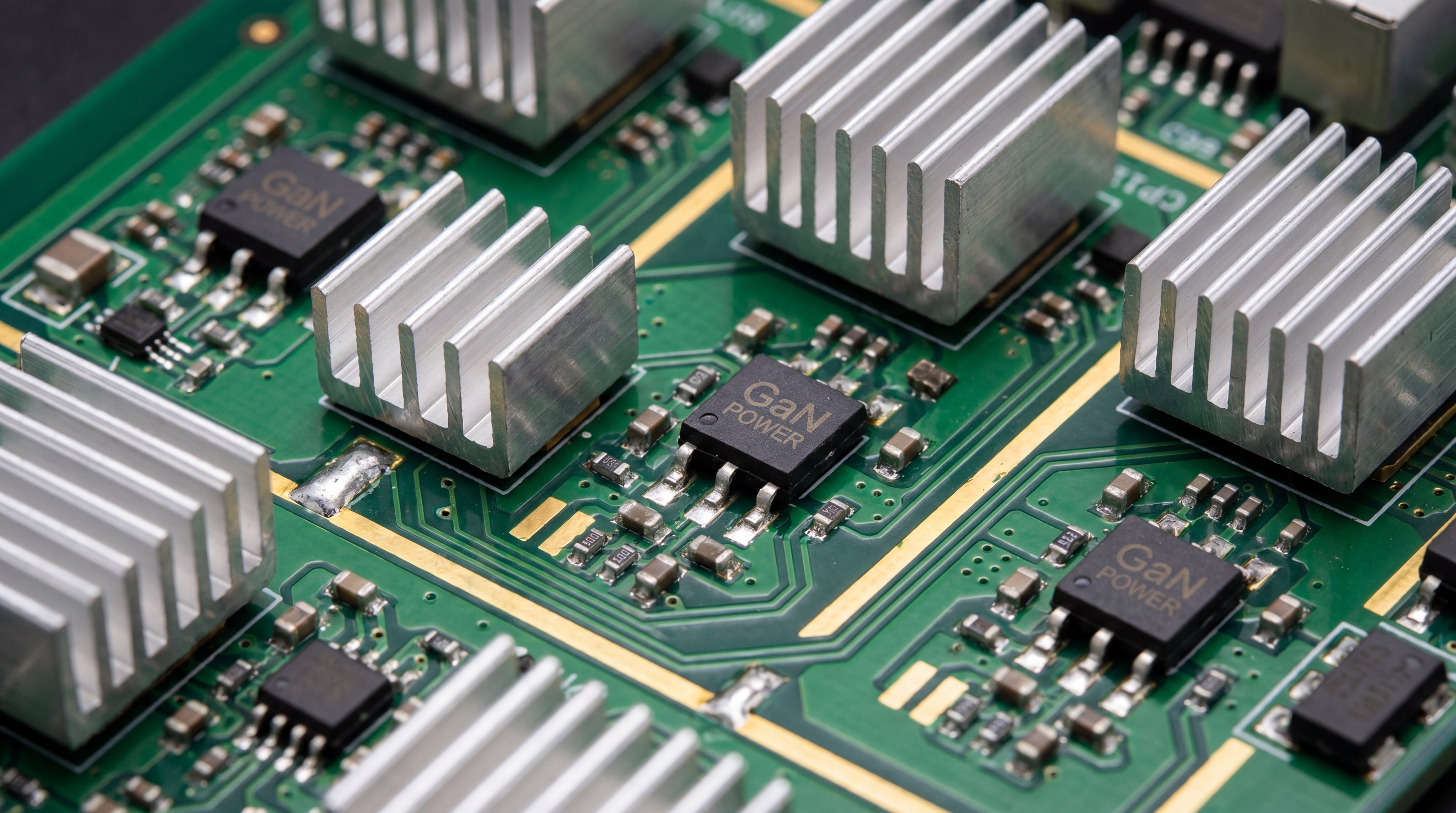
| Parameter | Silicon (Si) | GaN Technology |
|---|---|---|
| Power Conversion | 40% – 50% | 70% – 85%+ |
| Heat Generation | High Waste | Low Waste |
| Cooling Needs | Massive / Active | Compact / Efficient |
Reducing thermal waste is the key to creating high-power RF systems that are both reliable and deployable in real-world conditions.
Can GaN technology enable portable jammer designs?
The high power density of GaN allows Drone Jammers to be integrated into handheld or man-portable units that offer the same performance as older, truck-mounted systems. Think about it: in a tactical situation, mobility is everything.
A security guard at an airport or a soldier on the move cannot carry a 50-pound amplifier. GaN makes “handheld defense” a reality by shrinking the core electronics while maintaining massive signal output.
Why is portability a tactical advantage?
Portability allows for rapid deployment in response to a sudden drone sighting, allowing you to react in seconds. It enables security teams to move with the threat rather than being tethered to a fixed, stationary installation.
Tactical benefits include:
- Rapid Deployment: Go from “off” to “jamming” in moments.
- Flexible Positioning: Change your location to maintain a line-of-sight.
- Handheld Operation: Aim and fire like a standard security tool.
Does size impact deployment speed?
Smaller, GaN-based modules can be integrated into “drone guns” or backpack units that are ready for immediate use. These systems can be activated instantly, providing an electronic shield for VIPs or critical infrastructure.
Design advantages are:
- Ergonomic Forms: Balanced weight for easy handling.
- Battery Power: High efficiency allows for longer runtime on smaller batteries.
- Discreet Profile: Easier to transport and store in security vehicles.
Key Takeaway: GaN technology has moved anti-drone defense from the back of a truck to the palm of your hand, providing a massive tactical leap.
| System Type | Weight | Performance |
|---|---|---|
| Legacy (Silicon) | 20+ kg | Medium Range |
| Modern (GaN) | 2 – 5 kg | Long Range |
| Benefit | Mobile | Superior |
Switching to compact GaN modules allows your team to stay mobile and responsive without sacrificing the power needed to stop threats.
How does GaN performance compare to traditional Silicon?
GaN significantly outperforms traditional Silicon (Si) in electron mobility and breakdown voltage, making it the superior choice for high-frequency Drone Jammers. Here is why it matters: Silicon has reached its physical limits in the RF world.
Once you reach a certain frequency and power level, silicon simply stops working effectively. GaN pushes those limits much further, enabling the next generation of electronic warfare and drone defense hardware.
Is GaN better for high frequencies?
GaN’s high electron mobility allows it to switch much faster than silicon, which is crucial for jamming high-frequency signals. This is particularly important for 5.8GHz and the upcoming 6GHz drone control bands that silicon struggles to handle.
Frequency advantages include:
- High-Speed Switching: Better for complex, frequency-hopping signals.
- Upper Band Access: Reliable performance at 10GHz and beyond.
- Lower Signal Loss: More of your power reaches the antenna.
Why is Si failing in modern jamming?
Silicon struggles with power density, meaning you need a very large chip to handle the power required for long-range jamming. This makes the resulting jammer too heavy, too hot, and too inefficient for modern tactical needs.
Silicon limitations:
- Thermal Bottlenecks: Melts at the power levels needed for range.
- Size Constraints: Too bulky for modern portable form factors.
- Efficiency Ceiling: Wastes too much battery power as heat.
Key Takeaway: The physical properties of GaN allow it to do what silicon simply cannot: deliver high-power RF at high frequencies in a compact space.
| Property | Silicon (Si) | GaN |
|---|---|---|
| Electron Mobility | Moderate | High |
| Frequency Limit | ~3 GHz (Power) | 100+ GHz |
| Heat Resistance | Low | High |
Moving away from silicon is no longer optional if you want to maintain a competitive edge in electronic airspace security.
Why is GaN superior to Gallium Arsenide in RF jammers?
While many systems previously used Gallium Arsenide (GaAs), GaN has taken over because it offers much better thermal conductivity and higher power levels. The best part? You get the frequency benefits of GaAs with the raw “brute force” power of GaN.
GaAs is great for low-power high-frequency signals, but it cannot handle the sustained power required to jam a drone from a significant distance without overheating. GaN provides a more robust and reliable platform for heavy-duty security applications.
Does GaN offer better linearity?
GaN provides excellent linearity, which ensures that the interference signal is clean and stays precisely within the target frequency band. This prevents accidental interference with your own friendly communication systems nearby.
Linearity benefits:
- Precision Jamming: Target only the threat, not your own radios.
- Clean Signals: Maximizes the impact of your interference “noise.”
- Spectral Efficiency: Uses power more effectively within the band.
Is GaAs limited by heat generation?
Yes, GaAs has much poorer thermal conductivity compared to GaN, making it difficult to keep cool at high power. In a high-power jammer, GaAs chips often require massive cooling systems that negate the benefits of their small size.
Thermal differences:
- Heat Dissipation: GaN moves heat away from the chip faster.
- Power Sustenance: GaN stays at peak power while GaAs might throttle.
- System Durability: GaN is less likely to burn out during a long engagement.
Key Takeaway: GaN combines the high-frequency agility of GaAs with the thermal robustness and power of a much larger system.
| Metric | GaAs | GaN |
|---|---|---|
| Power per mm | ~1 Watt | ~5 – 10 Watts |
| Heat Conductivity | Low | High |
| Cost-Efficiency | High (Legacy) | High (Mass Production) |
Choosing GaN over GaAs ensures that your jammer has the “muscular” signal required to stop drones at a distance without burning out.
What are the top practical applications for GaN jammers?
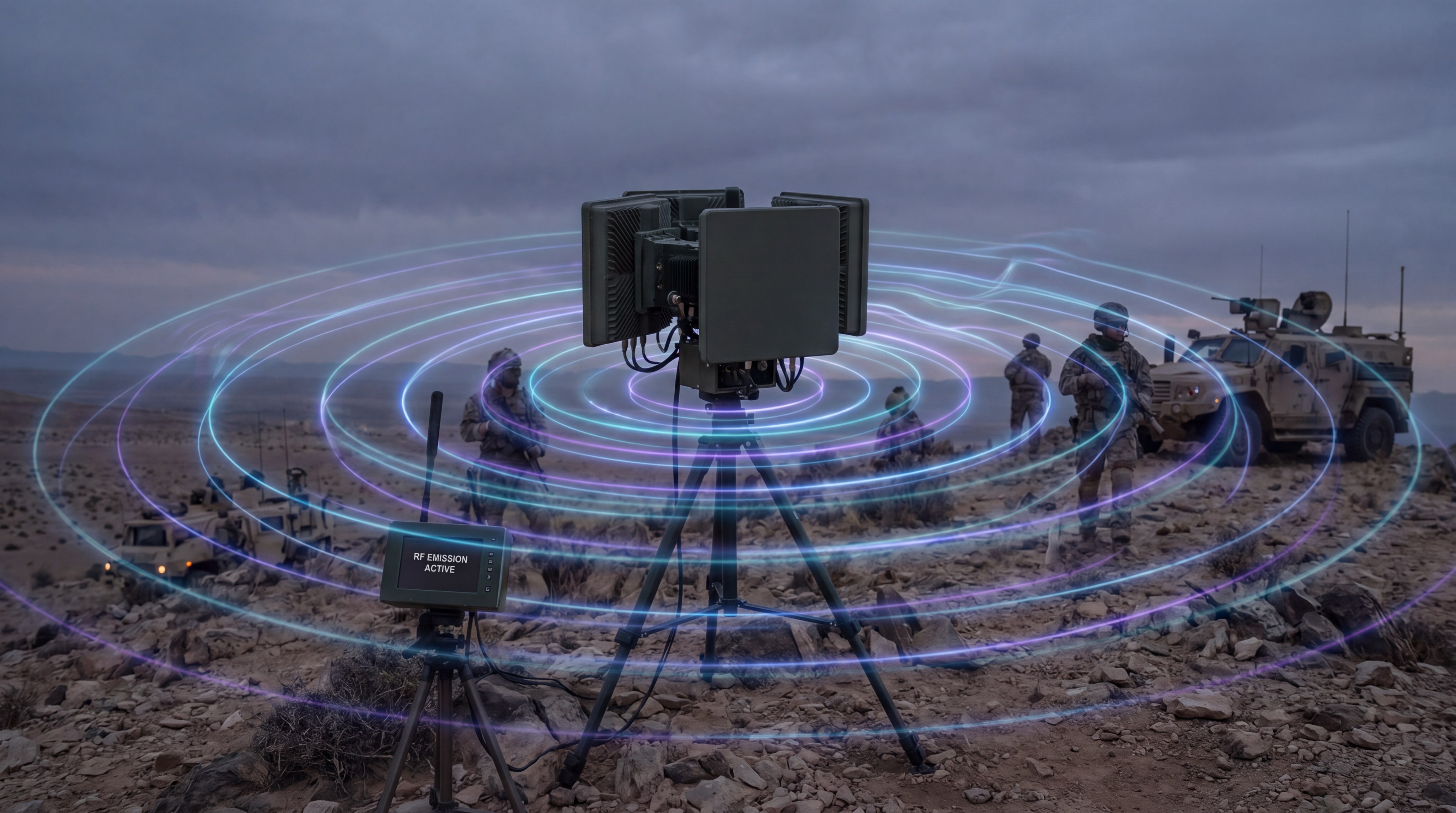
Military forces and security professionals use Drone Jammers to create protective “electronic bubbles” around convoys, forward operating bases, and critical infrastructure. It gets better: modern warfare is increasingly dominated by small, lethal suicide drones that require an instant electronic response.
GaN technology allows these units to neutralize threats silently and effectively without firing a single bullet. This “soft kill” capability is essential for protecting sensitive sites where kinetic weapons might cause collateral damage.
How does GaN protect critical sites?
By deploying high-power GaN jammers at the perimeter of an airport or power plant, you can ensure that no unauthorized drone can get close enough to take photos or drop payloads.
Common sites include:
- Airports: Preventing flight delays and collisions.
- Prisons: Stopping the delivery of contraband over walls.
- Public Events: Protecting large crowds from aerial threats.
Can jammers stop swarming drones?
GaN’s ability to cover wide bandwidths makes it ideal for countering “swarm” attacks, where dozens of drones attack simultaneously. A single powerful GaN system can disrupt multiple drones across different frequencies at the same time.
Swarm defense requires:
- High Power Reserve: Enough energy to saturate a large area.
- Multi-Band Output: Hitting every drone’s control frequency at once.
- Fast Response: Locking onto and jamming new targets in milliseconds.
Key Takeaway: GaN-based jammers are the gold standard for high-stakes environments where failure to stop a drone is not an option.
| Application | Primary Goal | GaN Role |
|---|---|---|
| Military Convoy | Protection from IEDs/Drones | Mobile “Electronic Bubble” |
| Private Property | Privacy Enforcement | Discrete Signal Denial |
| Border Security | Preventing Smuggling | Long-Range Detection & Neutralization |
Deploying GaN jammers provides a non-lethal but highly effective solution for securing any airspace against unwanted intrusion.
What are the most common questions about GaN technology?
Can I customize GaN modules for specific military frequencies?
Yes, GaN-based amplifiers are highly customizable because engineers can tune the matching networks within the module to provide peak performance for non-standard military bands.
What’s the best way to reduce jammer heat?
The best way is to use GaN-based components, as they are inherently more efficient and generate less heat from the start than any other semiconductor material available.
How do I know if my system needs GaN chips?
If your application requires output power above 10 Watts and operates at frequencies above 2GHz, GaN is likely a mandatory requirement for performance and stability.
What’s the best frequency range for drone defense?
The most critical ranges are 2.4GHz and 5.8GHz for control links, but a comprehensive system should also cover 1.2GHz to 1.6GHz for GPS/GNSS disruption.
Can I integrate GaN modules into older jamming systems?
Yes, most GaN power amplifier modules are designed with standard RF connectors and can be used to upgrade the output stage of legacy jamming systems quite easily.
Secure Your Airspace Today
The rapid proliferation of drones has made advanced electronic defense a necessity rather than a luxury. At CorelixRF, we provide the cutting-edge Gallium Nitride (GaN) technology required to keep your critical infrastructure and personnel safe from unauthorized aerial threats. Our mission is to deliver the most powerful, efficient, and reliable RF solutions to stay ahead of the ever-evolving drone landscape.
Don’t leave your security to chance with outdated silicon-based systems. contact us today to discuss your project requirements or to request a custom quote for our advanced GaN-powered jamming modules.