
Primary engineering guide: this near-duplicate reference has been consolidated under How to Protect Your Facility with Anti Drone Technology?. Use the primary guide for the latest RF engineering review, compliance-safe wording, RFQ inputs and factory documentation path.
- Open the primary guide for the current topic cluster.
- Prepare RFQ inputs before requesting engineering review.
- Use the RF configurator to summarize band, power, interface and duty-cycle needs.
- Review delivery documentation for FAT-style evidence and shipment records.
- Contact CorelixRF when the project has a documented scope.
Archived page topic: How to Secure Your Perimeter with Modern Anti Drone Technology. This page remains available for reference, but search engines are pointed to the primary guide through canonical consolidation.
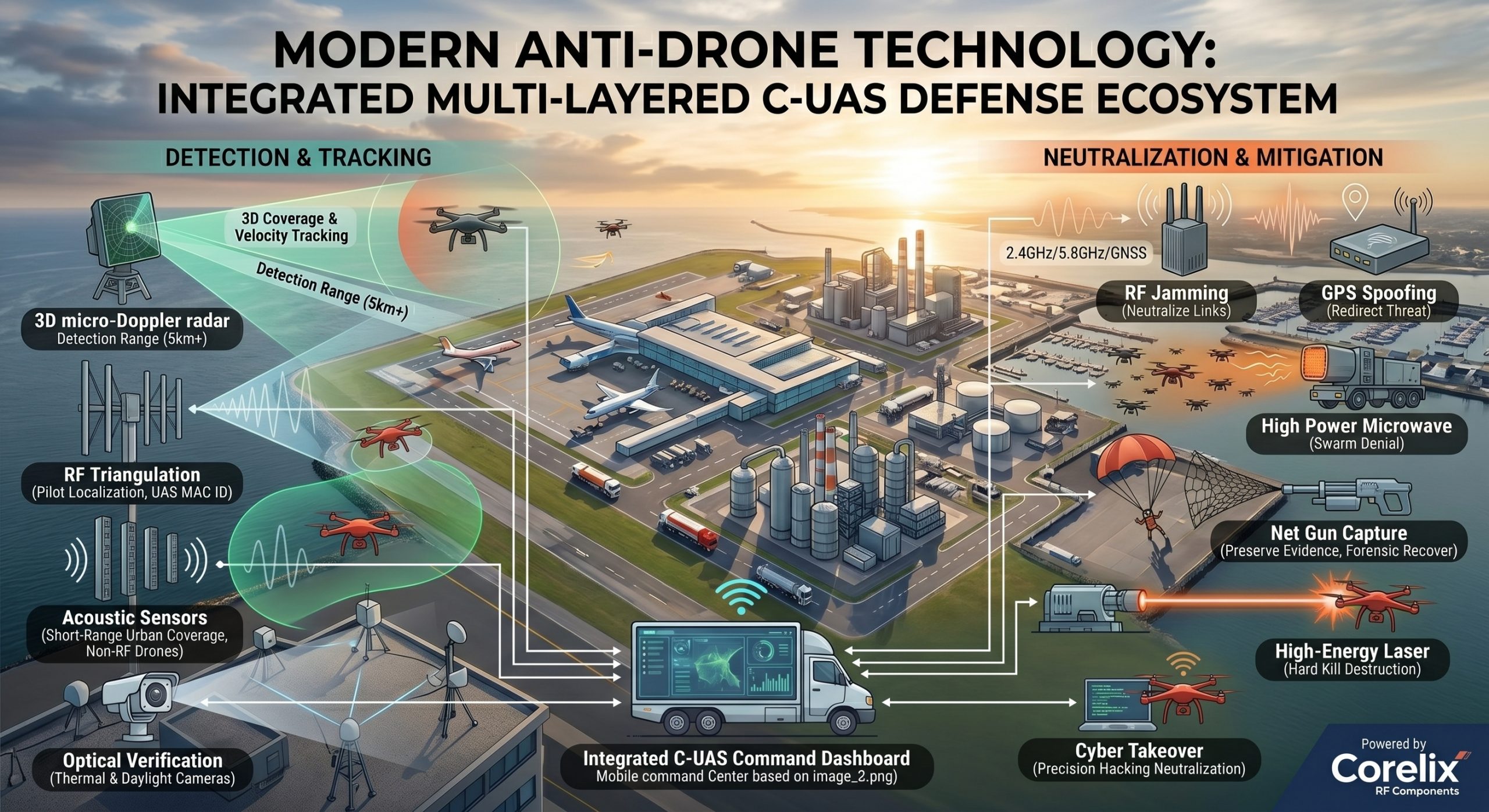
Modern counter-drone technology refers to the suite of electronic and physical tools used to detect, track, and neutralize unauthorized unmanned aerial systems (UAS). As illegal drone flights rise, organizations face massive security gaps that traditional measures cannot close. A single quadcopter can disrupt an entire airport or steal sensitive corporate data in minutes. To secure your facility, you must understand what is anti drone technology and how to deploy a multi-layered defense to gain total airspace awareness.

How does radar detect unauthorized drones?
Determining what is anti drone technology begins with active radar systems that scan the horizon for moving objects. Radar emits radio energy and analyzes the reflected signals to pinpoint the distance and velocity of a target.
Why is 3D coverage necessary?
3D radar is essential because it provides both elevation and azimuth data, allowing you to distinguish a drone from ground clutter. This capability ensures that security teams can track a threat’s exact flight path in real-time.
- Constant Tracking: Monitors targets in total darkness or heavy fog.
- Multi-Target Handling: Capable of tracking dozens of drones simultaneously.
- Micro-Doppler Analysis: Separates drone rotor movements from bird wings.
The best part? Unlike cameras, radar does not need a line-of-sight visual to “see” a threat several kilometers away.
Key Takeaway: Radar serves as the primary long-range detection layer for any comprehensive C-UAS installation.
| Feature | Radar Performance |
|---|---|
| Detection Range | Up to 5km+ for large UAS |
| Operational Light | Day, Night, and All Weather |
| Data Provided | 3D Coordinates and Velocity |
Specialized C-UAS radar utilizes high-resolution processing to ensure that even the smallest consumer quadcopters are identified before they reach a sensitive perimeter.
Can radio frequency analyzers track pilots?
To understand what is anti drone technology, you must consider how passive RF analyzers listen for the communication links between a drone and its controller. These systems scan the electromagnetic spectrum to identify unique digital signatures.
How does RF triangulation work?
By using multiple antenna arrays, RF sensors can triangulate the exact location of the drone and the person holding the remote. This is vital for law enforcement teams who need to apprehend an operator before a flight ends.
- MAC Identification: Identifies specific drone models and serial numbers.
- Zero Emissions: Operates passively without alerting the pilot to your presence.
- Early Warning: Often detects the controller signal before the drone even takes off.
Think about it: if you find the pilot, you stop the threat permanently rather than just stopping one single flight.
Key Takeaway: RF analyzers provide the forensic data needed to identify drone models and locate their ground-based operators.
| Feature | RF Analyzer Performance |
|---|---|
| Detection Type | Passive Spectrum Scanning |
| Identification | Make, Model, and MAC Address |
| Strength | Locates the Pilot on the Ground |
While RF analyzers are highly effective for most commercial drones, they require updated libraries to recognize the latest communication protocols used by new manufacturers.
How do acoustic sensors hear incoming drones?
Evaluating what is anti drone technology requires looking at acoustic sensors that use sensitive microphone arrays to detect the unique sound signatures of propellers. These sensors are particularly useful in urban “canyons” where buildings block radar or radio signals.
When are microphone arrays used?
Microphone arrays are deployed as gap-fillers to cover blind spots around buildings or within dense vegetation. They provide a secondary verification layer that confirms a threat through audible frequency analysis.
- Ground Clutter Ready: Works perfectly in areas with high physical obstruction.
- Autonomous Detection: Finds drones that are flying without a radio link.
- Quick Deployment: Can be mounted on temporary masts or rooftops easily.
Look: even if a drone is flying a pre-programmed GPS path with no radio emissions, it cannot hide the noise of its motors.
Key Takeaway: Acoustic sensors excel at short-range detection in complex environments where traditional sensors might struggle with interference.
| Feature | Acoustic Sensor Performance |
|---|---|
| Max Range | 300m to 500m (Environment Dependent) |
| Primary Advantage | Detects Non-RF Emitting Drones |
| Limitation | High Background Noise Environments |
Acoustic systems provide a critical fail-safe for short-range detection, ensuring that “silent” autonomous drones do not go unnoticed near high-value assets.
Can optical sensors provide visual evidence?
One major part of what is anti drone technology involves using high-definition cameras and thermal imaging to verify a radar “blip” as a genuine threat. Optical sensors provide the visual confirmation needed to authorize an expensive or disruptive countermeasure.
Why is thermal imaging critical?
Thermal imaging allows your security team to maintain a visual lock on a drone at night by detecting the heat generated by its motors and batteries. Modern systems use AI to automatically follow and classify the object as it moves.
- Forensic Proof: Captures high-resolution video of the drone and its payload.
- Threat Assessment: Allows you to see if the drone is carrying a camera or a weapon.
- AI Integration: Automatically filters out birds or planes to reduce false alerts.
Believe it or not, the visual evidence provided by these cameras is often the most important factor in a legal prosecution after an incident.
Key Takeaway: Optical sensors transform raw data into visual proof, allowing human operators to make informed decisions about mitigation.
| Feature | Optical Sensor Performance |
|---|---|
| Visual Range | Up to 2km with High-Zoom Lenses |
| Night Capability | Infrared and Thermal Sensors |
| Output | Live Video and Forensic Records |
By combining daylight and thermal lenses, optical platforms ensure that your security team has eyes on the target regardless of the time of day.
How do RF jammers neutralize drone links?
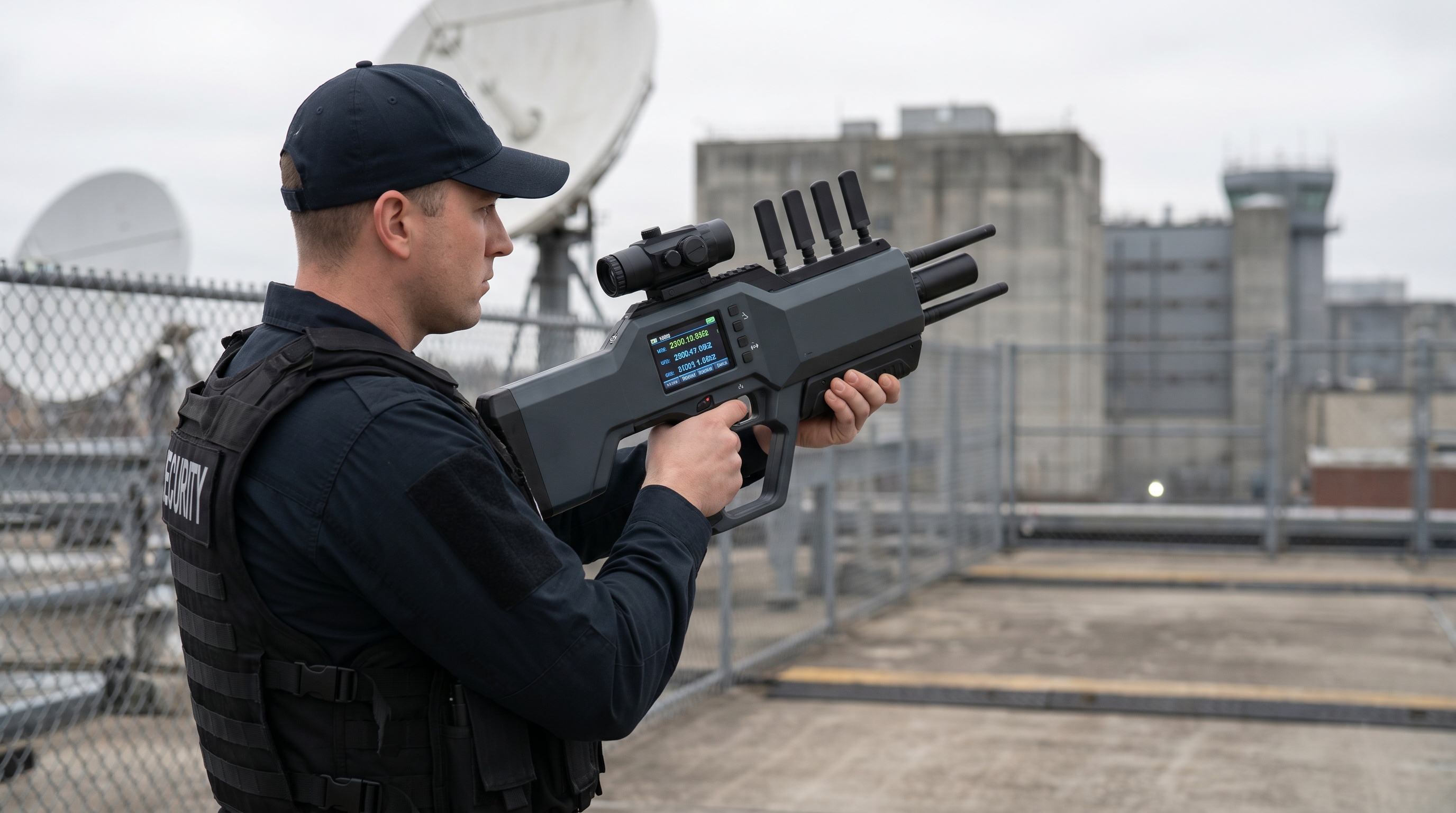
The most common method for what is anti drone technology to stop a flight is through the use of radio frequency jammers. These devices flood the drone’s receiver with “noise” on the 2.4GHz or 5.8GHz bands, severing the link to the pilot.
What happens when a drone is jammed?
When the control link is lost, most drones will either perform a controlled landing or trigger a “Return to Home” protocol. High-power amplifiers ensure the jamming signal is strong enough to overcome the pilot’s transmitter even at a distance.
- Non-Kinetic: Stops the drone without causing it to fall and shatter.
- Directional Jammers: Focuses energy on a specific target to avoid local Wi-Fi interference.
- Omni-Directional: Creates a “no-fly” bubble around a sensitive site.
Wait, there is more. Jammers can also block GPS frequencies, preventing the drone from knowing its position or following a pre-set waypoint.
Key Takeaway: RF jamming is a cost-effective, non-destructive way to immediately regain control of your airspace.
| Feature | RF Jammer Performance |
|---|---|
| Mitigation Type | Electronic Signal Disruption |
| Bands Covered | 2.4GHz, 5.8GHz, and GNSS/GPS |
| Impact | Forces Landing or Return-to-Home |
RF jammers remain the industry standard for immediate mitigation, though they must be used carefully to avoid disrupting authorized communications nearby.
What is the role of GPS spoofing systems?
Advanced what is anti drone technology includes GPS spoofing, which feeds false coordinates to a drone to lead it away from your facility. This is a more surgical approach than jamming, as it tricks the drone’s navigation system.
How does spoofing redirect a threat?
Spoofing sends a fake satellite signal that is stronger than the real one, making the drone “believe” it is miles away from its actual location. You can then dynamically alter these coordinates to guide the drone into a safe landing zone.
- Precision Control: Take over the flight path without the pilot’s knowledge.
- Safe Zone Landing: Moves the threat to a location where it can be recovered.
- Effective Against Autonomy: Works on drones that do not rely on a pilot’s RF link.
Here is the deal: spoofing is highly regulated because it can accidentally affect legitimate aircraft or local navigation systems if not strictly controlled.
Key Takeaway: GPS spoofing provides a high-tier electronic warfare capability to relocate threats without the risk of a crash.
| Feature | GPS Spoofer Performance |
|---|---|
| Control Method | Coordinate Manipulation |
| Primary Use | Redirecting Autonomous Threats |
| Regulatory Status | High Restriction (Gov/Military) |
While complex to implement, spoofing represents the pinnacle of non-destructive electronic countermeasures for high-security environments.
Do high power microwave devices stop swarms?
When facing multiple targets, what is anti drone technology utilizes high power microwave (HPM) pulses to disable electronic circuitry. Unlike a jammer that disrupts a signal, HPM physically damages the internal components of the drone.
Can HPM handle coordinated swarms?
HPM devices emit a wide-angle electromagnetic pulse that fries the flight controllers of every drone within the beam. This makes it the most effective defense against “swarming” tactics where dozens of drones attack at once.
- Instant Effect: Targets fall from the sky the moment the pulse hits.
- Wide Coverage: Can clear a massive area of the sky in a single burst.
- All-Weather: Microwave energy is not affected by rain, smoke, or dust.
The best part? Because it targets the hardware directly, HPM is effective against any drone, regardless of the frequencies it uses to communicate.
Key Takeaway: High power microwave systems are the ultimate solution for protecting against massed, coordinated drone attacks.
| Feature | HPM System Performance |
|---|---|
| Target Type | Electronic Circuitry Destruction |
| Effective For | Mass Drone Swarms |
| Collateral Risk | High for Local Electronics |
HPM provides a “scorched earth” electronic defense that ensures no unauthorized UAS can remain operational within the protected perimeter.
Why are net guns still used for capture?
A physical approach to what is anti drone technology involves net guns, which entangle the propellers of a drone to bring it down. This kinetic method is preferred when the physical preservation of the drone is required for forensic investigation.
How do net cannons help prosecution?
By capturing the drone intact, investigators can download internal flight logs and serial numbers to build a legal case against the pilot. Many net guns also include a parachute to ensure the captured drone does not cause injury upon landing.
- Zero RF Interference: Safe to use around hospitals or sensitive tech labs.
- Physical Evidence: Ensures you have the hardware to prove the crime.
- Low Cost: Much cheaper than high-energy lasers or HPM systems.
Think about it: in a crowded public space, a net with a parachute is often the safest way to remove a threat without endangering people below.
Key Takeaway: Net guns provide a reliable, low-tech solution for the safe physical recovery of rogue drones in urban settings.
| Feature | Net Gun Performance |
|---|---|
| Range | 20m to 300m (Launcher Dependent) |
| Outcome | Physical Entanglement and Capture |
| Safety Feature | Parachute Integration |
Net-based systems are a vital component of the C-UAS toolkit, particularly for civilian security forces who must prioritize the safety of bystanders.
Can high-energy lasers destroy drone targets?
High-energy lasers are a cutting-edge form of what is anti drone technology that uses a focused beam of light to melt through a drone’s structure. This “speed-of-light” solution is increasingly popular for military-grade perimeter security.
What is the advantage of laser speed?
Lasers reach the target instantly, meaning there is no “travel time” to account for when firing at a fast-moving object. Once the initial system is purchased, the “cost per shot” is virtually zero, as it only requires electricity.
- Infinite Magazine: Can fire as many times as your power source allows.
- Pinpoint Accuracy: Can target specific parts of a drone, like a camera.
- Long Range: Capable of neutralizing threats kilometers away.
Look: while lasers are effective, they require a perfectly clear line-of-sight and can be limited by heavy smoke or reflective coatings.
Key Takeaway: High-energy lasers offer a futuristic, low-operating-cost method for the permanent destruction of long-range aerial threats.
| Feature | Laser System Performance |
|---|---|
| Attack Type | Thermal Structural Damage |
| Ammunition | Unlimited (Electrical Power) |
| Range | Multi-Kilometer Capability |
As laser technology matures, it is becoming a cornerstone of defensive perimeters that must deal with high-velocity, high-frequency incursions.
How do cyber takeover systems hack drones?
The most sophisticated what is anti drone technology today involves cyber takeover, where your system hacks into the drone’s radio protocol to seize control. This allows you to land the drone exactly where you want it without any signal jamming or physical damage.
Is cyber takeover the future of C-UAS?
Cyber takeover is highly precise because it only affects the target drone, leaving all other local radio traffic completely untouched. It uses AI to reverse-engineer the drone’s communication and “impersonate” the original pilot.
- Total Control: You can fly the drone away or force it to land safely.
- Zero Collateral: No risk of interfering with Wi-Fi or emergency radios.
- Automated Response: Can be set to automatically take over any drone that enters a zone.
The truth is, this technology requires massive, constantly updated libraries of drone software to remain effective against new models.
Key Takeaway: Cyber takeover represents the cleanest, most sophisticated way to neutralize a drone threat with surgical precision.
| Feature | Cyber Takeover Performance |
|---|---|
| Mitigation Type | Software Protocol Manipulation |
| Risk of Damage | Zero (Surgical Accuracy) |
| Requirement | Up-to-date Software Libraries |
By integrating cyber takeover into your defense, you gain the ability to neutralize threats in the most professional and non-disruptive manner possible.
*
Conclusion
Securing your airspace from modern UAS threats requires an integrated ecosystem that spans from long-range radar to surgical cyber takeovers. By understanding the strengths and limitations of each sensor and countermeasure, you can solve the complex problem of unauthorized surveillance and physical security breaches. Our brand stands at the forefront of providing the high-power RF components and engineering expertise necessary to build these life-saving systems. To secure your perimeter with professional-grade technology, contact us today.
Counter-Drone FAQ
Can I use jammers for my private property?
In most countries, using RF jammers is restricted to military and law enforcement agencies due to the risk of interfering with public communications and emergency services.
What’s the best technology for long-range detection?
3D Micro-doppler radar is widely considered the best long-range detection tool because it tracks speed and elevation in all weather conditions.
How do I know if a drone is autonomous?
A drone is likely autonomous if it is following a specific flight path but emits no radio frequency (RF) signals back to a controller or pilot.
Can I combine different detection methods?
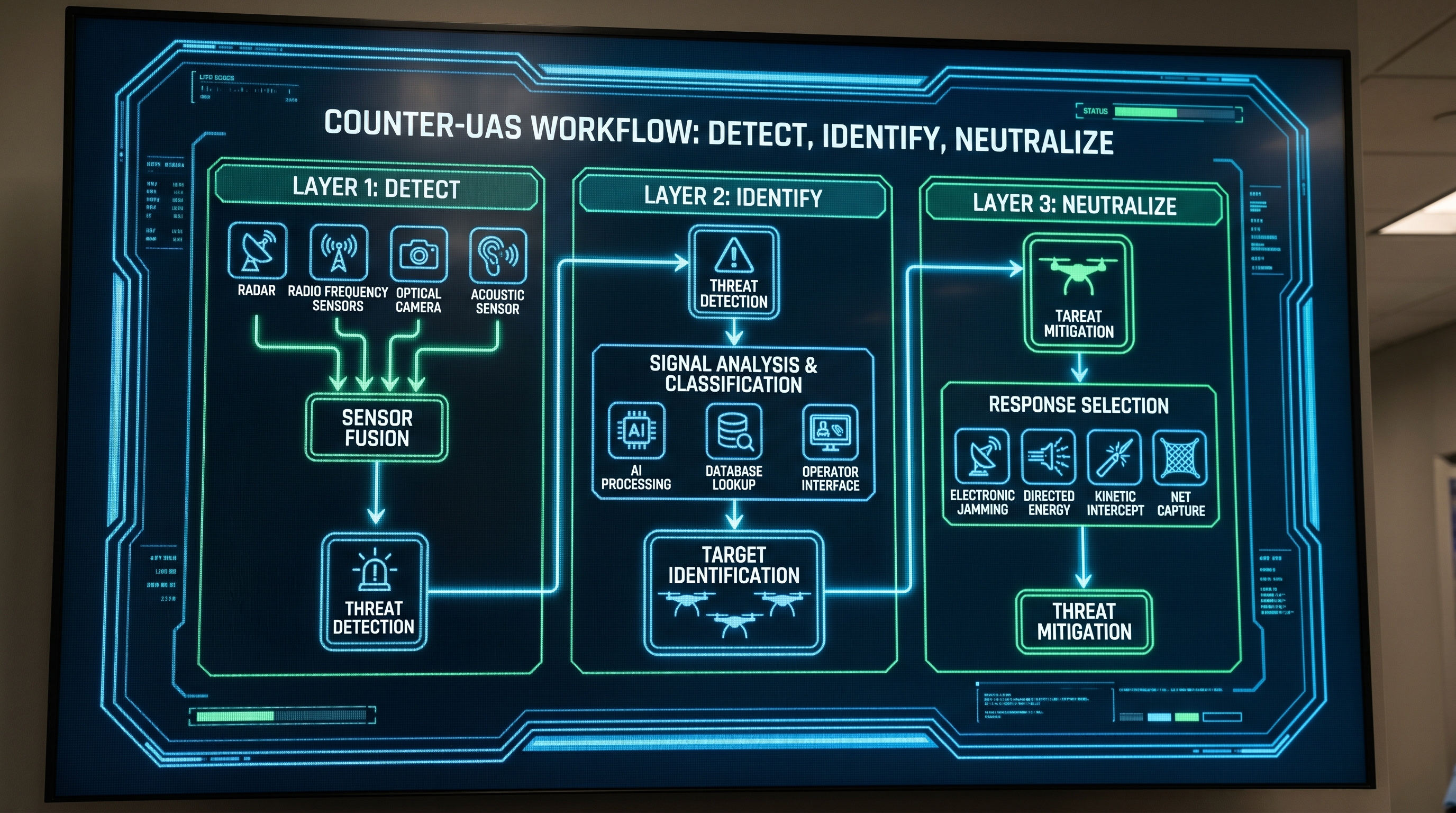
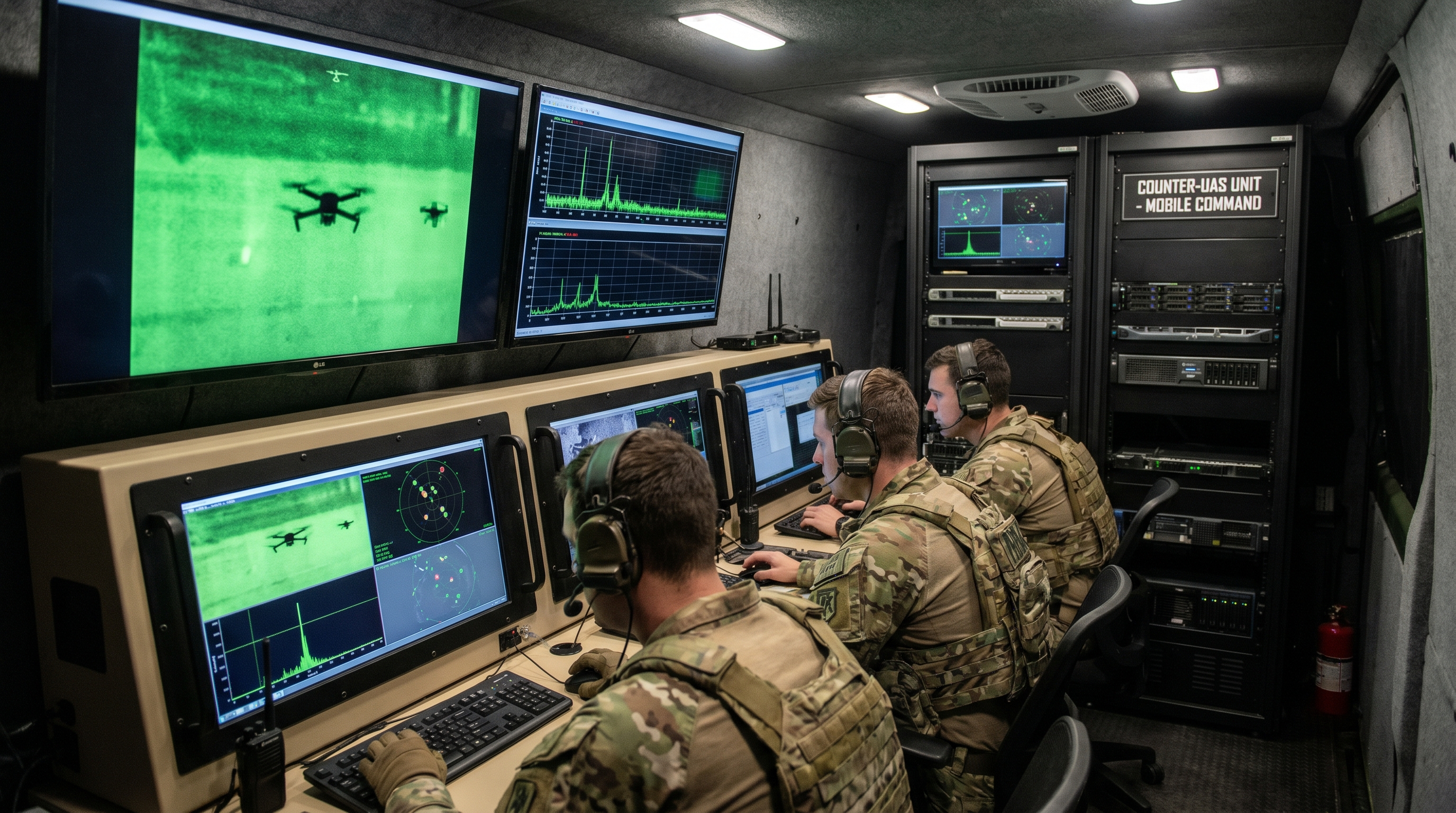
Yes, the most effective “Counter-UAS” systems use sensor fusion to combine radar, RF analysis, and cameras into a single, unified security dashboard.
What’s the best way to handle swarm threats?
High Power Microwave (HPM) systems are the most effective way to neutralize swarms, as they can disable dozens of drones simultaneously with a single electromagnetic pulse.
Authorized RF engineering and compliance review
For regulated RF systems, this page should be used as an engineering and compliance review path, not as a public deployment checklist. CorelixRF starts with authorization status, operating region, frequency plan, output limit, antenna interface, safety controls, thermal limits and acceptance documents.
- RFQ checklist – send the data buyers usually forget, including band, power, duty cycle, interface and test standard
- delivery documentation – check what documents can support incoming inspection, FAT review and long-term maintenance
- quality and certification review – review the quality and compliance evidence before the project moves into procurement
- RF front-end platform – compare the RF chain as a system instead of selecting one isolated module
- RF configurator – turn frequency, power, thermal and interface requirements into a first configuration brief
- case studies – review similar engineering paths before sending an RFQ
- engineering contact – send the application notes, block diagram or target specification to engineering sales
This keeps the discussion inside lawful, authorized RF programs while still giving procurement teams a clear way to request amplifier, antenna, SDR source, documentation and factory review.