

Problem: In modern wireless communication, radio frequency signals often lose strength as they travel, leading to dropped connections, data errors, and limited transmission range. Without a way to boost these signals, global connectivity would be impossible.
Agitation: Imagine a critical satellite link failing during a storm or a cellular network collapsing in a remote area because the signal is too faint to be processed. For engineers and hobbyists alike, a weak signal isn’t just an inconvenience—it’s a total system failure that wastes power and resources.
Solve: This guide introduces the RF Power Amplifier and its associated technologies. We will explore how these essential components enhance signal quality, the different types available, and how to choose the right hardware for your specific application.
What is an RF Power Amplifier?
An RF power amplifier is an electronic device that converts low-power radio frequency signals into higher-power signals to drive transmission hardware. Utilizing an RF Power Amplifier allows you to ensure that your data reaches its destination with sufficient strength and clarity. These devices are the “muscle” of any radio system, providing the energy necessary to push signals across vast distances.
How does signal amplification work?
Signal amplification works by taking an input signal and using an external power source to increase its amplitude without changing its frequency. You can think of it as a valve that controls a large stream of energy based on a small incoming signal.
Think about this:
- Input signals enter the active component.
- DC power is converted into RF energy.
- The output emerges with significantly higher wattage.
Why is power gain important for transmission?
Power gain determines how much stronger your signal becomes, which directly impacts the effective range of your transmitter. Without sufficient gain, your signal would be swallowed by background noise before reaching the receiver.
It gets better:
- Gain is measured in decibels (dB).
- Higher gain compensates for cable and atmospheric losses.
- It ensures a stable signal-to-noise ratio.
Looking at the core metrics below, you can see how these devices are defined by their performance:
| Feature | Description |
|---|---|
| Primary Function | Converts low-power RF signals into high-power signals. |
| Key Metric | Gain (measured in dB). |
| Output Type | Continuous Wave (CW) or Pulsed. |
Key Takeaway: An RF Power Amplifier is the primary component responsible for signal reach, providing the necessary energy to overcome environmental resistance and distance.
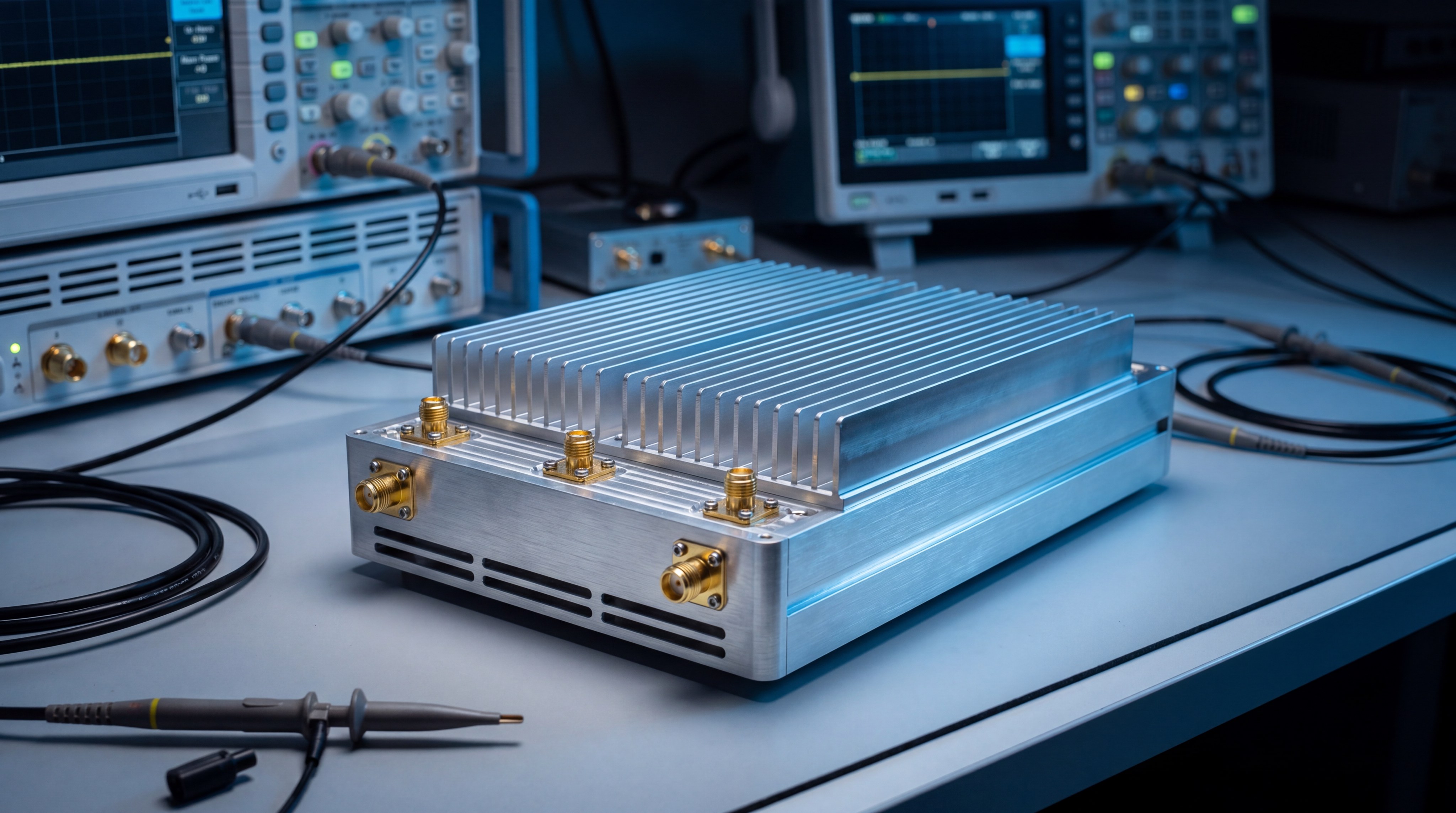
What are the main types of RF amplifiers?
The main types of RF amplifiers include Low Noise Amplifiers (LNAs), driver amplifiers, and power amplifiers, each serving a specific role in the signal chain. When integrating an RF Power Amplifier into your system, you must first understand where the signal needs the most support. Each type of hardware is optimized for a specific stage of either transmission or reception.
What is a Low Noise Amplifier (LNA)?
An LNA is designed to amplify very weak signals while introducing as little electrical noise as possible. You typically place these at the very beginning of a receiver chain to preserve signal integrity.
Here is the deal:
- They maximize the sensitivity of the receiver.
- They prevent the “hiss” of noise from masking the data.
- LNAs are critical for weak signals from space or remote sensors.
How do driver amplifiers function in a circuit?
Driver amplifiers act as an intermediate stage, boosting the signal just enough to “drive” the final high-power stage. They ensure that the final RF Power Amplifier receives an input signal that is strong enough to trigger full output.
But that’s not all:
- Drivers bridge the gap between low-level signal sources and high-power stages.
- They provide additional isolation within the circuit.
- These units are often more compact than the final transmission stage.
What distinguishes a power amplifier from a driver?
A power amplifier is focused on raw wattage output, whereas a driver is focused on preparing the signal for that final boost. While they share similar circuit architectures, the power amplifier is built to handle much higher heat and current.
Let’s dig deeper:
- Power amplifiers are the final stage before the antenna.
- They are rated by total output power (Watts).
- Drivers focus on linearity and gain consistency.
The following table compares the different roles within a standard RF system:
| Amplifier Type | Primary Objective | Circuit Position |
|---|---|---|
| LNA | Minimize noise while boosting weak signals. | Receiver Input |
| Driver | Boost signal to a level that can trigger a PA. | Before Power Amplifier |
| Power Amp | Maximize output wattage for transmission. | Final Output Stage |
Key Takeaway: Different amplifiers serve specific roles; LNAs protect signal clarity at the receiver, while power amplifiers ensure signal reach at the transmitter.
How does a power amplifier boost cellular signals?
An RF power amplifier boosts cellular signals by increasing the strength of frequencies transmitted from base stations to mobile devices. By deploying a high-performance RF Power Amplifier, mobile network operators can eliminate dead zones and support more users simultaneously. These components are vital for maintaining the high data speeds you expect from 4G and 5G networks.
Why is signal strength vital for mobile networks?
Signal strength directly correlates with data throughput and the reliability of voice calls in a cellular environment. When the signal is weak, your phone must work harder to stay connected, which also drains your battery faster.
You might be wondering:
- Strong signals reduce the bit error rate (BER).
- It allows for higher-order modulation like 256-QAM.
- Consistent power prevents dropped calls during handovers.
Can it improve coverage in remote areas?
Yes, high-power amplifiers allow base stations to transmit over much larger geographic areas where infrastructure is sparse. This is the primary way service providers reach rural communities without building thousands of small towers.
Check this out:
- Amplifiers push signals through dense foliage and terrain.
- They allow for “long-haul” wireless backhaul links.
- Signal boosters often use these modules to improve indoor reception.
By reviewing the impact on infrastructure, we can see the clear benefits to network quality:
| Benefit | Impact on Cellular Networks |
|---|---|
| Coverage | Eliminates “dead zones” by boosting base station reach. |
| Quality | Reduces interference and increases data throughput. |
| Reliability | Maintains connection stability in high-traffic environments. |
Key Takeaway: The RF Power Amplifier is the cornerstone of cellular infrastructure, enabling reliable mobile communication even in challenging or remote environments.
How are amplifiers used in satellite communication?
In satellite communication, amplifiers are used to boost signals so they can travel thousands of miles through the atmosphere and into space. Every RF Power Amplifier used in a satellite ground station must be capable of handling specific frequency bands like Ku or Ka. These units ensure that the video, data, or voice signals you send actually reach the orbiting satellite.
Do they handle extremely high power levels?
Satellite amplifiers often operate at very high wattages to overcome the massive “path loss” that occurs during space transmission. You will find systems capable of hundreds or even thousands of watts of continuous output.
Consider this:
- High power is needed to reach geostationary orbits.
- Specialized cooling is required for these high-wattage units.
- They must remain linear even at maximum power levels.
Can they survive rigorous environmental conditions?
Satellite hardware is often installed outdoors or in remote ground stations, requiring it to survive extreme heat, cold, and moisture. The RF Power Amplifier modules are typically housed in ruggedized, weather-proof enclosures.
And the best part?
- Rugged designs prevent thermal shutdown in deserts.
- Sealed chassis protect against salt air in maritime uses.
- Industrial-grade components ensure years of maintenance-free operation.
The requirements for space-based links are summarized in the analysis below:
| Factor | Satellite RF Requirement |
|---|---|
| Frequency | Must support K, Ka, and V bands. |
| Durability | Resistance to extreme temperature fluctuations. |
| Power | Capability to transmit signals to geostationary orbits. |
Key Takeaway: Satellite systems require specialized amplifiers that combine high-frequency capability with industrial-grade durability for space or ground-station use.

Why do amateur radio operators need amplifiers?
Amateur radio operators use amplifiers to extend their communication range and reach other enthusiasts across the globe. Adding an RF Power Amplifier to a home station allows you to overcome poor atmospheric conditions and be heard clearly. While most transceivers have built-in power, external amplifiers provide the extra “punch” needed for long-distance DXing.
How is long-distance transmission achieved?
Long-distance transmission, or DXing, relies on bouncing signals off the ionosphere, which requires a strong initial broadcast. When you use an amplifier, your signal is much more likely to survive multiple “hops” around the Earth’s curvature.
Believe it or not:
- More power makes your station stand out in a “pile-up.”
- It allows for communication even during low solar activity.
- Amplifiers help overcome local electrical interference at the receiver.
Does it enhance the overall operator experience?
Yes, because having a reliable signal means you can actually complete conversations rather than struggling to be heard through the noise. It transforms a frustrating hobby session into a successful international connection.
Wait, there’s more:
- You can use smaller, more discreet antennas if you have more power.
- It provides a sense of technical accomplishment to build or tune a station.
- Clearer audio makes long-form conversations more enjoyable.
The following table illustrates how amplifiers change the amateur radio landscape:
| Component | Amateur Radio Application |
|---|---|
| Range | Allows “DXing” or communicating across global distances. |
| Efficiency | Optimizes the signal-to-noise ratio for clearer audio. |
| Hardware | Usually involves desktop or benchtop amplifier units. |
Key Takeaway: For radio enthusiasts, amplifiers transform local hobbyist setups into powerful stations capable of worldwide communication across many frequency bands.
Which RF Power Amplifier classes exist today?
RF power amplifier classes denote the method by which the internal transistors are biased to manage efficiency and linearity. Choosing the right RF Power Amplifier class involves balancing how much power you waste as heat versus how clean your signal remains. The most common classes you will encounter in modern systems include Class A, AB, and various pulsed modes.
What is the benefit of Class A linear modules?
Class A amplifiers provide the highest linearity because the transistors are always “on,” resulting in zero crossover distortion. You use these when signal purity is more important than power efficiency or heat management.
Think about this:
- They are ideal for high-fidelity broadcasting.
- Class A offers the most faithful reproduction of complex waveforms.
- They are often used in laboratory testing environments.
How do Class AB pulsed modules differ?
Class AB amplifiers are a compromise, turning off for part of the cycle to improve efficiency while maintaining good linearity. A pulsed RF Power Amplifier is further optimized to only operate during specific bursts, which is perfect for radar or medical applications.
It gets better:
- Class AB is the standard for most cellular and broadband needs.
- Pulsed mode allows for much higher “peak” power without melting the hardware.
- These modules generate significantly less heat than Class A units.
When should you use ultra-linear rack mounts?
Ultra-linear rack mounts are necessary when you are dealing with very dense data modulations that are sensitive to any form of distortion. You will typically find these in professional broadcast facilities or high-end EMC testing labs.
You’ll love this:
- They often feature digital pre-distortion (DPD) for extra clarity.
- Rack-mount formats allow for easy integration into server rooms.
- They include built-in monitoring displays for real-time power tracking.
We can analyze the trade-offs of these classes in the comparison table below:
| Class Type | Efficiency | Linearity | Typical Use |
|---|---|---|---|
| Class A | Lower | Highest | High-fidelity, ultra-linear apps. |
| Class AB | Moderate | High | Cellular and broadband systems. |
| Pulsed | High | Specialized | Radar and medical ablation. |
Key Takeaway: Selecting the correct RF Power Amplifier class is a balance between the need for energy efficiency and the requirement for signal linearity.
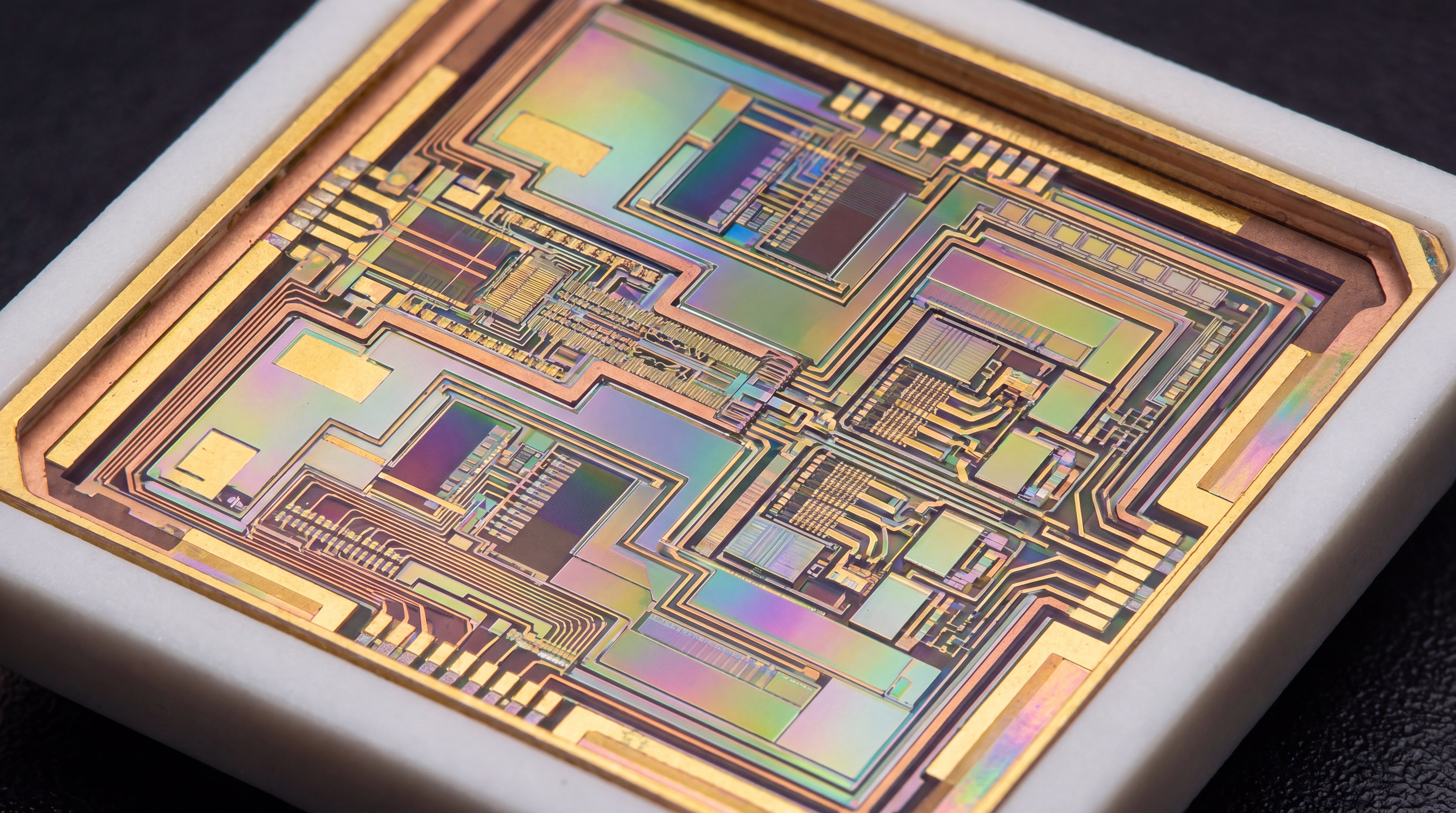
What role do GaN materials play in modern RF?
GaN, or Gallium Nitride, is a wide-bandgap semiconductor material that allows amplifiers to operate at higher voltages and temperatures. By utilizing a GaN-based RF Power Amplifier, you can achieve much higher power density in a smaller physical package. This technology is currently replacing older silicon-based designs in almost every high-performance application.
Is GaN better for high power output?
Yes, GaN transistors can handle much higher power levels per square millimeter than traditional silicon or LDMOS components. This means you can get hundreds of watts out of a module that fits in the palm of your hand.
It’s true:
- GaN supports much wider bandwidths for multi-band systems.
- It operates efficiently even at millimeter-wave (mmWave) frequencies.
- The high breakdown voltage makes the chips very durable.
Does it improve thermal efficiency?
GaN has superior thermal properties, meaning it can dissipate heat more effectively and operate at higher internal temperatures without failing. For you, this means simpler cooling systems and lower overall power consumption.
The result?
- You can use smaller fans or even passive heat sinks.
- Systems have a longer lifespan due to lower thermal stress.
- It reduces the size and weight of airborne or satellite equipment.
Comparing semiconductor materials reveals why GaN is the modern industry leader:
| Material | Power Density | Operating Frequency |
|---|---|---|
| Silicon (Si) | Moderate | Low to Medium |
| GaN (Gallium Nitride) | High | High (up to Millimeter Wave) |
| Efficiency | Standard | Superior thermal conductivity |
Key Takeaway: Gallium Nitride (GaN) technology has revolutionized the industry by allowing smaller amplifiers to produce significantly higher power with less heat.
How to select the right RF Power Amplifier?
Selecting the right RF power amplifier requires matching the device’s frequency, power, and linearity specs to your specific project needs. When you evaluate an RF Power Amplifier, you must look beyond just the wattage and consider how it will interact with your antenna and signal source. Making the wrong choice can lead to poor performance or even permanent hardware damage.
Should you choose broadband or narrowband?
Broadband amplifiers cover a wide range of frequencies, while narrowband units are tuned for maximum performance within a very small slice of the spectrum. You should choose broadband if you need flexibility, but narrowband if you need the absolute highest efficiency.
Here is the secret:
- Broadband is perfect for software-defined radio (SDR) projects.
- Narrowband offers better rejection of unwanted signals.
- Broadband modules are more expensive due to complex matching circuits.
Is frequency range the primary factor?
While frequency is critical, you must also ensure the amplifier can handle the “Duty Cycle” and “VSWR” of your operating environment. An RF Power Amplifier that works at the right frequency but has poor VSWR protection will fail as soon as your antenna is slightly misaligned.
Don’t overlook this:
- VSWR protection prevents reflected power from destroying the transistors.
- Duty cycle determines if the amp can run 100% of the time (CW).
- The input power level must match what your signal source can provide.
The following criteria should guide your selection process:
| Selection Criteria | Importance |
|---|---|
| Frequency Range | Must match the operating band (e.g., 2GHz–18GHz). |
| Output Power | Measured in Watts; must meet application demand. |
| VSWR Protection | Protects the unit from reflected signal damage. |
Key Takeaway: Selecting an RF Power Amplifier requires a deep understanding of your frequency requirements, power targets, and system protection needs.
When is a custom RF solution necessary?
A custom RF solution is necessary when off-the-shelf components cannot meet your specific frequency, size, or power requirements. Working with an engineering team for a custom RF Power Amplifier ensures that every parameter is optimized for your unique project constraints. While standard modules are faster to acquire, they often involve compromises that can hinder a specialized system.
Can standard modules be modified for unique projects?
Often, a manufacturer can take a standard platform and “tweak” it to change the gain, connector types, or housing to better fit your needs. This “build-to-print” approach is a great middle ground between stock parts and a full custom design.
Make no mistake:
- Modifications can include adding specialized cooling blocks.
- You can request specific control interfaces like RS-485 or Ethernet.
- Tuning for a specific frequency can increase efficiency by several percent.
What are the benefits of custom engineering?
Custom engineering allows you to integrate multiple functions—like filtering and switching—directly into the amplifier chassis. This reduces the number of cables in your system and improves overall reliability.
Look at this:
- Custom units fit perfectly into your existing enclosure.
- They can be designed for unique power supply voltages.
- You get direct access to the designers for long-term support.
The table below outlines the differences between standard and custom paths:
| Solution Type | Speed to Market | Flexibility |
|---|---|---|
| Standard | Immediate | Limited to catalog specs. |
| Custom | Slower (R&D) | Tailored frequency, size, and interfaces. |
Key Takeaway: While standard platforms are faster, custom-engineered amplifiers are essential for specialized defense, medical, or research applications.
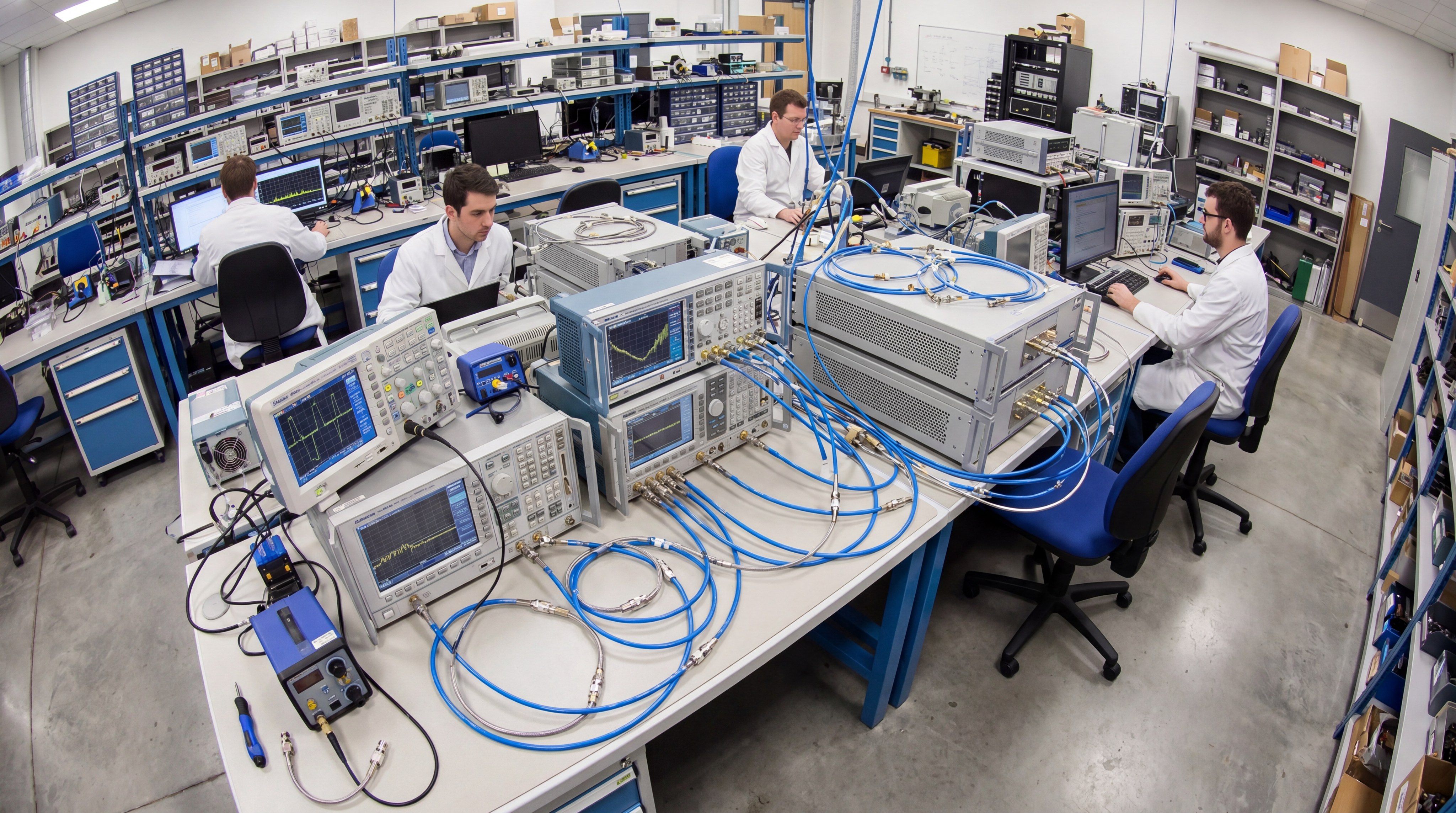
What testing is required for RF hardware?
Testing for RF hardware involves verifying power output, linearity, and spectral purity across the entire operating range. Every RF Power Amplifier must undergo rigorous validation to ensure it doesn’t create interference or fail under load. Without proper testing in a controlled laboratory, you cannot guarantee that your system is safe for deployment.
Why is unit-level validation critical?
Unit-level validation ensures that every single device meets the datasheet specifications, as manufacturing variances can cause performance differences. You should always request a test report for your specific RF Power Amplifier to verify its “Gain Flatness.”
Keep this in mind:
- It catches “infant mortality” failures before the unit is in the field.
- Validation proves that the device won’t interfere with other bands.
- It provides a baseline for future troubleshooting.
How do S-parameters impact performance?
S-parameters describe how RF energy moves through the amplifier, telling you exactly how much signal is reflected back at the input. High-quality amplifiers have well-matched S-parameters, meaning they are efficient and easy to integrate with other components.
You see:
- S11 measures the input return loss.
- S21 measures the actual gain of the system.
- Good S-parameters ensure the amplifier doesn’t oscillate or become unstable.
Validation involves the following critical test metrics:
| Test Metric | Purpose |
|---|---|
| Gain Flatness | Ensures consistent boost across the whole band. |
| Harmonics | Checks for unwanted signal distortion. |
| Active Load-Pull | Tests how the amp handles different impedances. |
Key Takeaway: Rigorous validation and individual unit testing are the only ways to guarantee that an amplifier will perform safely within a larger system.
Conclusion
Choosing the right RF hardware is a complex technical decision that impacts the success of your entire project. If you are ready to move from concept to deployment, contact us today for a comprehensive feasibility review and project discussion. As we move toward a future defined by 6G, advanced satellite constellations, and pervasive IoT, the evolution of high-frequency, high-efficiency amplification will be the primary driver of global innovation and connectivity.
Frequently Asked Questions
Can I use an LNA instead of a power amplifier?
No, they serve opposite purposes. An LNA is used at the receiving end to amplify very weak signals while keeping noise low, whereas a power amplifier is used at the transmitting end to boost signal power for broadcast.
What’s the best amplifier for 5G applications?
The best choice is typically a GaN-based Class AB broadband amplifier that supports high frequencies and offers excellent linearity for complex 5G data modulation.
Can I modify a standard amplifier for more power?
It is generally unsafe to modify internal circuitry without expert engineering. It is better to consult a manufacturer about custom modifications to ensure thermal and electrical safety.
What happens if I use the wrong frequency range?
Using an amplifier outside its rated frequency can lead to severe signal distortion, loss of gain, and potentially permanent hardware damage due to reflected power.
How can I reduce the heat generated by my amplifier?
Ensure your system has adequate heat sinking or active fan cooling. For high-power systems, moving to GaN-based modules can improve efficiency, which naturally reduces wasted heat.