
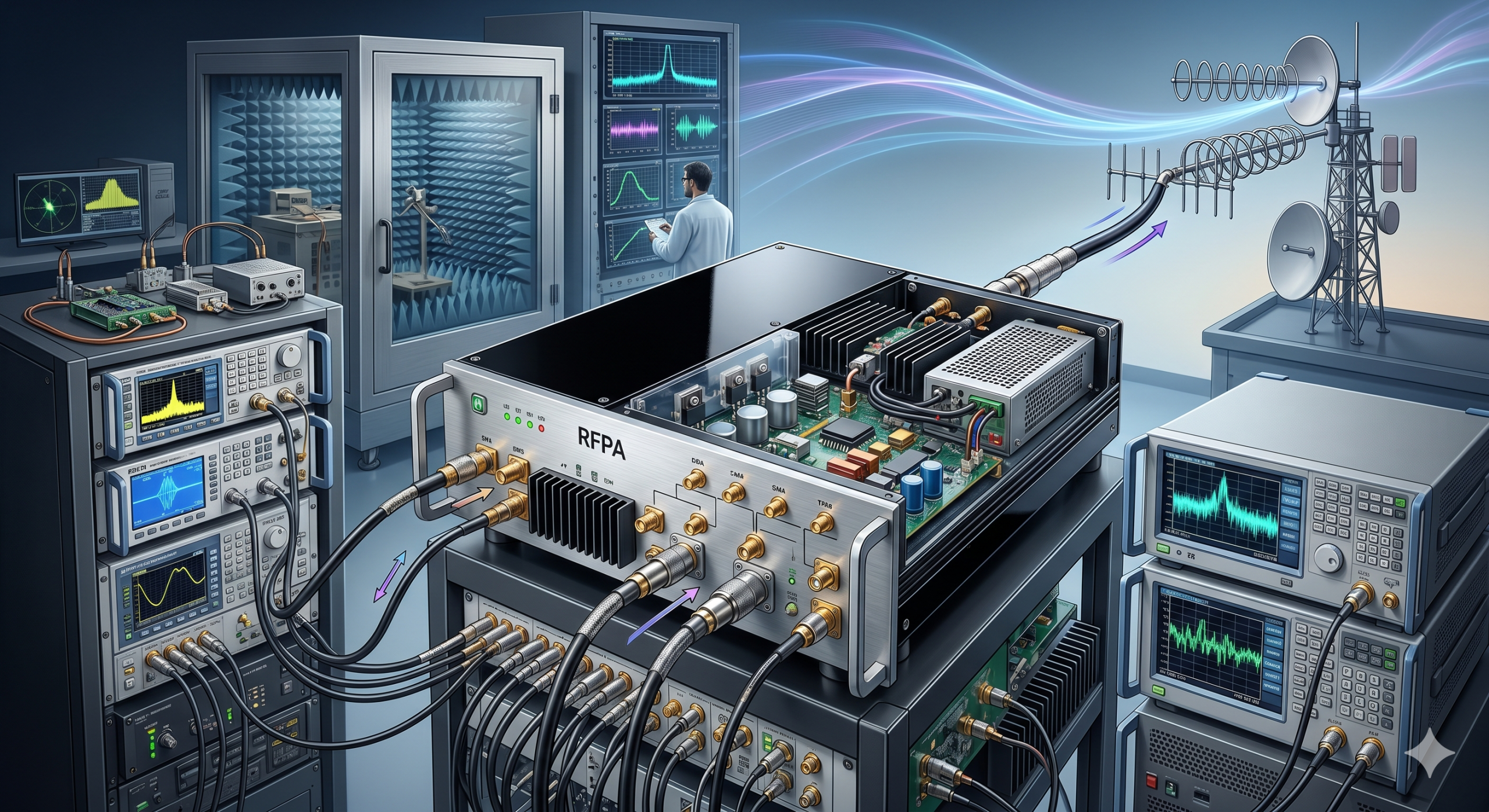
The fundamental function of an RF amplifier is to increase the amplitude or power level of a radio frequency signal while maintaining the original signal’s characteristics. When your wireless system suffers from dropped connections or poor data throughput, the culprit is often a signal that is too weak to be processed. This lack of power leads to transmission failures that can stall critical operations or compromise safety in the field. You need a reliable way to boost these signals so they can reach their destination with high integrity. High-performance RF Amplifiers provide the necessary power to bridge these communication gaps effectively.
Validate signal integrity across the amplifier test path
CorelixRF can help connect amplifier gain, linearity, modulation quality, signal source behavior, cabling, load protection and test documentation into a clean RF system review.
How Does Signal Amplification Work?
Signal amplification works by using an active device to convert DC power into a high-amplitude replica of a low-power input signal. You rely on RF Amplifiers to provide the necessary gain required for your specific application’s link budget. This process ensures that the signal remains strong enough to overcome the inherent noise of the electronic environment. It is the primary building block of any modern wireless architecture.
Boosting Weak Signal Levels
You must raise the power of an incoming signal to a level that can be accurately digitized by your receiver. Think about it: a signal that is too quiet is essentially invisible to your hardware.
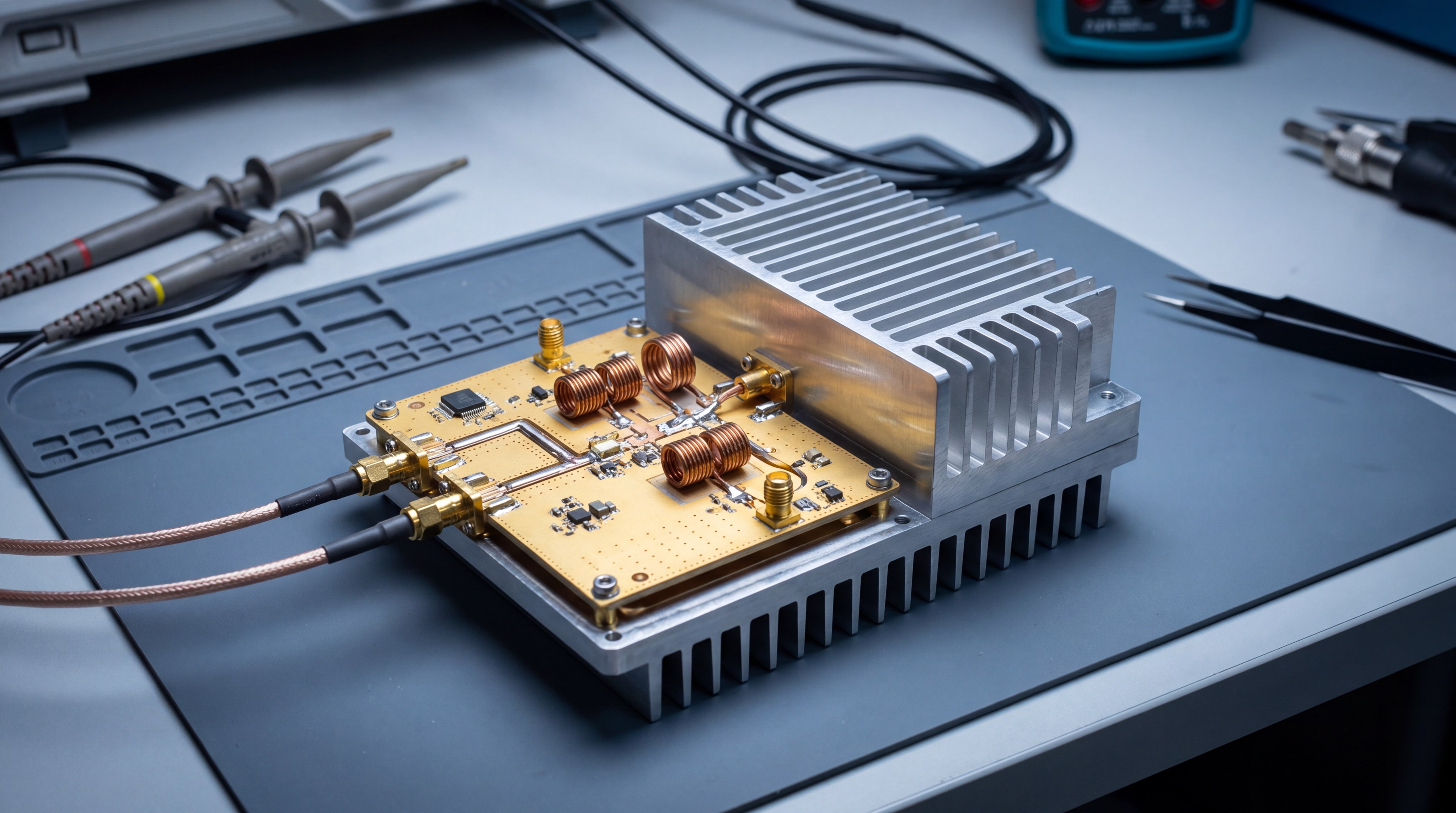
- Increases decibel levels.
- Ensures detection.
- Preserves data.
Achieving Targeted Gain Requirements
The gain of a system determines how much the input signal is multiplied before it is sent to the next stage. Here is the kicker: improper gain settings can lead to clipping or saturation that ruins your data.
Key Takeaway: Mastering signal gain allows you to maintain the perfect balance between signal visibility and system stability.
| Parameter | Function | Benefit |
|---|---|---|
| Gain | Power Multiplication | Better detection |
| Fidelity | Signal Replication | Data accuracy |
| DC Efficiency | Power Conversion | Lower heat |
Proper gain management ensures the system operates within safe thermal and electrical limits while maximizing signal reach.
How Do Amplifiers Extend Signal Range?
Amplifiers extend signal range by boosting the output power so the electromagnetic waves can travel further before dissipating. Integrating RF Amplifiers into your transmit chain allows your hardware to cover vast distances that would otherwise be impossible. This is critical for long-range drone telemetry and remote sensor networks. Without this extra push, your signal would simply fade into the background noise.
Overcoming Propagation Limits
Wireless signals naturally lose energy as they spread out through the atmosphere or encounter obstacles. Look at it this way: the further a wave travels, the thinner its energy becomes.
- Combats free-space path loss.
- Penetrates physical barriers.
- Enables over-the-horizon links.
Expanding Wireless Coverage Footprints
You can significantly increase the “radius of operation” for a base station or mobile unit by using high-power amplification. The reality is that range is directly proportional to the power density you can generate at the antenna.
Key Takeaway: Increased output power directly translates to a larger operational area and more reliable remote connections.
| Feature | Range Impact | Use Case |
|---|---|---|
| High Wattage | Miles of Coverage | Telemetry |
| SSPA Efficiency | Mobile Range | UAVs |
| Gain Flatness | Consistent Reach | Wideband |
Extending range through power amplification is often more cost-effective than deploying multiple redundant receiver nodes in the field.
How Is Signal Loss Effectively Mitigated?
Signal loss is mitigated by providing active compensation for the energy dissipated in cables, connectors, and physical paths. You use RF Amplifiers to ensure that the power level arriving at the antenna is exactly what your system design requires. This compensation prevents “brownouts” in your signal chain where the energy drops below a functional threshold. It keeps your system running at peak performance regardless of cable length.
Compensating for Path Loss
As your signal travels through miles of air, it encounters atmospheric attenuation that reduces its strength. What does this mean for you? You need a proactive way to “refill” that lost energy to keep the link alive.
- Neutralizes air resistance.
- Maintains link margins.
- Supports long-distance comms.
Reducing Cable and Connector Attenuation
Every inch of coaxial cable and every adapter in your rack introduces a small amount of signal loss. Here is the kicker: in high-frequency systems, these small losses can add up to a total signal failure.
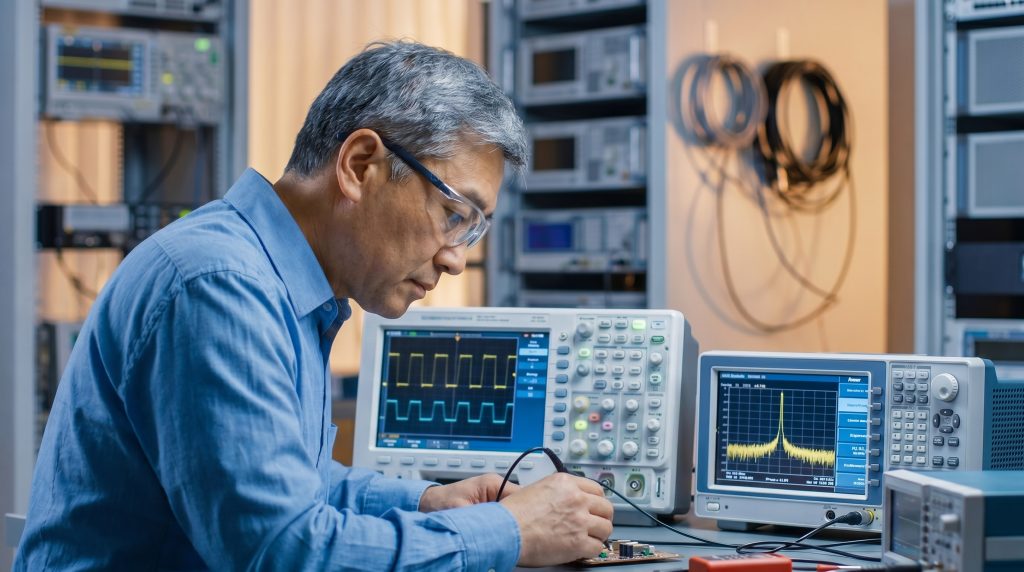
Key Takeaway: Using amplifiers to offset hardware-induced loss ensures that your intended signal power actually reaches the radiator.
| Loss Type | Mitigation Method | Result |
|---|---|---|
| Cable Loss | Inline Amplification | High signal level |
| Path Loss | Transmit Gain | Long distance |
| Reflection | Matching Stages | Power stability |
Active loss mitigation ensures that your system budget remains predictable even when using complex or long cable runs.
Can Amplifiers Improve Signal-to-Noise Ratios?
Yes, specialized amplifiers improve signal-to-noise ratios (SNR) by boosting the signal at the earliest possible stage with minimal added noise. You implement RF Amplifiers at the receiver’s front end to distinguish a faint signal from the background static. This allows you to decode data that would otherwise be buried in electronic interference. It is the only way to achieve high sensitivity in crowded RF environments.
Implementing Low Noise Amplifier Stages
Low Noise Amplifiers (LNAs) are designed to provide gain while adding almost zero noise of their own. Why does this matter? If your first amplifier is noisy, you will amplify that noise along with your signal, ruining your SNR.
- Improves receiver sensitivity.
- Cleans up weak inputs.
- Filters out background fuzz.
Minimizing Background Interference
By amplifying the desired band of interest, you make it much easier for your system to ignore out-of-band noise. But that’s not all: a higher SNR allows for much faster data rates and fewer retransmissions.
Key Takeaway: High SNR is the key to high-speed data; without clean amplification, your throughput will always remain limited.
| Component | Function | SNR Benefit |
|---|---|---|
| LNA | Early Gain | High sensitivity |
| Filter | Noise Rejection | Clearer signal |
| Driver | Level Control | Signal stability |
Optimizing SNR through clean amplification allows your receivers to pull usable data out of extremely low-power environments.
Why Are Amplifiers Essential for Antennas?
Amplifiers are essential because they provide the necessary power to drive the antenna and ensure the output impedance is correctly matched. You utilize RF Amplifiers to transform your low-level electronic data into a high-energy field that the antenna can radiate. This interaction is what creates the physical wave that travels through the air. Without this power, your antenna would have nothing to broadcast.
Matching Output Impedance Levels
For maximum power transfer, the amplifier must “see” an impedance that matches its own output stage. Think about it: if the match is poor, the power reflects back and could destroy your equipment.

- Prevents power reflection.
- Optimizes wave radiation.
- Protects internal circuits.
Powering High-Gain Radiating Elements
Large antenna arrays require a significant amount of drive power to function at their rated gain levels. It gets better: high-gain amplifiers allow you to use smaller, more efficient antennas while still achieving massive broadcast range.
Key Takeaway: The synergy between your amplifier and antenna determines the final efficiency and effectiveness of your wireless broadcast.
| Radiator Need | Amplifier Role | Outcome |
|---|---|---|
| Drive Power | Energy Supply | Strong field |
| VSWR Safety | Power Protection | Device longevity |
| Bandwidth | Signal Support | Multi-frequency |
Ensuring your antenna is properly driven is the final step in converting digital data into a successful wireless transmission.
Do Amplifiers Support Complex Modulation?
Yes, linear amplifiers support complex modulation by amplifying high-bandwidth signals without distorting the sensitive phase and amplitude data. You need RF Amplifiers that offer high linearity to ensure that modern signals like QAM or OFDM remain readable. If your amplifier is non-linear, it will “smear” the signal, making it impossible for the receiver to decode. This is vital for high-speed internet and high-definition video links.
Maintaining Waveform Fidelity
Fidelity refers to how closely the output signal matches the shape of the input signal. Let’s dive deeper: in complex modulation, the “shape” of the wave is the data, so fidelity is everything.
- Preserves phase data.
- Reduces bit error rates.
- Supports high data rates.
Minimizing Non-Linear Signal Distortion
When an amplifier is pushed too hard, it begins to distort the signal, creating harmonics and interference. Here is the kicker: this distortion doesn’t just ruin your link; it can also interfere with other users on nearby frequencies.
Key Takeaway: High linearity is the “gold standard” for amplifiers used in modern, high-speed digital communication systems.
| Mod. Type | Amplifier Need | Result |
|---|---|---|
| OFDM | Peak Linearity | High speed |
| QPSK | Phase Stability | Link reliability |
| AM/FM | Amplitude Range | Audio clarity |
Linear amplification ensures that your complex digital waveforms arrive at the receiver exactly as they were intended to look.
How Is Signal Conditioning Managed?
Signal conditioning is managed by adjusting the gain and frequency response of the signal to fit the specific needs of the hardware. You employ RF Amplifiers to “shape” the signal before it enters sensitive components like mixers or converters. This process prevents overloading your hardware while ensuring the signal is loud enough to be processed. It is like an “audio mixer” for the radio spectrum.
Adjusting Frequency Response Curves
Not all frequencies are amplified equally by passive components, so you must use amplifiers to flatten the response. Look at it this way: you want your system to perform just as well at 2 GHz as it does at 6 GHz.
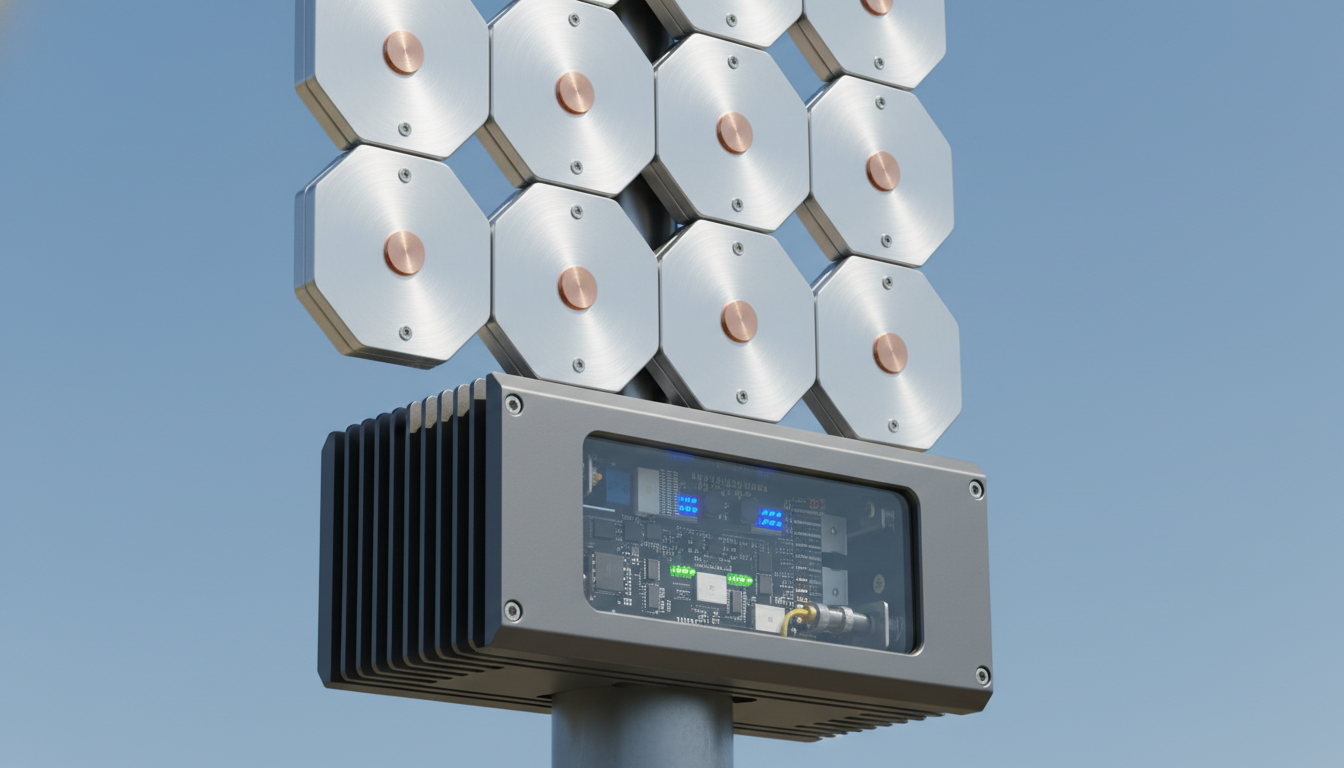
- Equalizes gain levels.
- Supports wideband use.
- Eliminates “dead zones.”
Implementing Dynamic Gain Control
Your incoming signal level might change constantly as a mobile transmitter moves around. Here is the kicker: dynamic gain control allows your amplifier to automatically adjust to these changes in real-time.
Key Takeaway: Effective conditioning ensures that your signal is always in the “sweet spot” for your receiver’s dynamic range.
| Conditioning | System Benefit | Practical Use |
|---|---|---|
| AGC | Level Stability | Mobile comms |
| Tilt | Frequency Flatness | Long cable runs |
| Limiting | Device Protection | Safety systems |
Managing the shape and level of your signal through conditioning is the best way to ensure long-term system reliability.
What Role Do They Play in Power Transmission?
Amplifiers play a central role in power transmission by converting low-voltage signals into high-wattage outputs for broadcast or industrial use. You rely on heavy-duty RF Amplifiers to push kilowatts of power into the atmosphere for radar or satellite communications. These systems are designed to handle extreme electrical loads while maintaining continuous operation. Without this high-power capability, global communication networks would cease to function.
Enabling High Output SSPA Platforms
Solid State Power Amplifiers (SSPAs) have replaced older tube technology because they are more reliable and easier to control. Think about it: a solid-state system can run for years without the maintenance required by older vacuum-tube designs.
- Supports CW and Pulse.
- Highly reliable modules.
- Easily scalable power.
Supporting Pulse and CW Operating Modes
Different applications require different “rhythms” of power, such as continuous waves (CW) for radio or high-energy pulses for radar. The best part? Modern amplifiers can switch between these modes to support multi-mission hardware.
Key Takeaway: High-power amplifiers are the “muscles” of the RF world, doing the heavy lifting required for global connectivity.
| Mode | Energy Delivery | Application |
|---|---|---|
| CW | Constant Stream | Broadcast |
| Pulse | Bursts of Power | Radar / Sensing |
| SSPA | Integrated Power | SATCOM |
The ability to transmit high power levels reliably is what enables the high-performance radar and satellite links we rely on daily.
How Are They Used in Laboratory Testing?
In laboratory settings, amplifiers are used to generate the high-intensity electromagnetic fields required for equipment validation and compliance. You use RF Amplifiers to stress-test your own products to see if they can survive in high-interference environments. This ensures that your electronics won’t fail when placed near other powerful transmitters. It is a vital step in getting your product ready for the commercial market.
Facilitating EMC Compliance Validation
Electromagnetic Compatibility (EMC) testing requires you to blast a device with RF energy to see if it malfunctions. Why does this matter? If your product isn’t “hardened,” it could cause a safety hazard in a hospital or cockpit.
- Simulates real interference.
- Validates device shielding.
- Meets global standards.
Supporting Precision Signal Generation
Testing high-frequency components requires a very clean, high-power source that can be precisely controlled. The reality is: that your test results are only as good as the amplifier driving your signal generator.
Key Takeaway: Lab-grade amplifiers provide the repeatable, high-accuracy power needed to prove that your hardware meets its specifications.
| Lab Task | Amplifier Need | Result |
|---|---|---|
| Susceptibility | High Field Strength | Verified safety |
| Emissions | Clean Output | Proven compliance |
| Component Test | Wide Bandwidth | Full-range data |
Precision laboratory amplification is the final gatekeeper that ensures new technologies are safe and effective for public use.
What Is the Future of SDR Integration?
The future of Software Defined Radio (SDR) integration lies in amplifiers that can handle wide bandwidths and rapidly changing waveforms via software control. You integrate RF Amplifiers with digital signal processors to create “smart” radios that can change their function on the fly. This allows a single piece of hardware to act as a cell tower, a radar, and a jammer simultaneously. It represents the ultimate in hardware flexibility and efficiency.
Supporting Software-Defined Waveforms
Since SDRs generate their signals digitally, the amplifier must be flexible enough to handle any waveform the software creates. But that’s not all: this allows you to upgrade your entire system’s capabilities just by updating the code.
- Universal signal support.
- Instant band switching.
- Future-proof hardware.
Achieving Wideband Frequency Versatility
Modern systems need to operate across huge chunks of the spectrum without needing to swap out hardware. Here is the kicker: wideband amplifiers allow you to cover multiple frequency bands with a single integrated module.
Key Takeaway: SDR-integrated amplifiers allow for a level of operational agility that was impossible with traditional, fixed-frequency hardware.
| SDR Benefit | Amplifier Role | Impact |
|---|---|---|
| Flexibility | Wideband Support | Fewer devices |
| Agility | Fast Switching | Multi-mission |
| Longevity | Software Updates | Lower cost |
The integration of smart amplification with digital signal processing is defining the next generation of high-performance wireless hardware.
*
Summary of RF Amplifier Functions
By boosting weak signals, extending transmission range, and maintaining waveform fidelity, RF amplifiers serve as the essential foundation for all wireless connectivity. This article has explored how these components solve your signal loss issues, improve SNR, and enable advanced laboratory testing. At CorelixRF, our vision is to provide the high-performance, factory-direct hardware that empowers your most ambitious engineering projects. Whether you are building long-range UAV links or advanced EMC test labs, we are here to support your success. Please contact us today to discuss your specific RF requirements and let our expert engineers help you find the perfect solution.
*
Frequently Asked Questions
Can I use any amplifier for my SDR project?
No, you must choose an amplifier that matches the frequency range and peak-to-average power ratio (PAPR) of your SDR’s waveform. If the amplifier is not wideband enough or lacks linearity, your digital signals will become distorted and unreadable.
What’s the best way to prevent my amplifier from overheating?
The best way is to ensure proper heat sinking and airflow based on the device’s efficiency rating. For high-power systems, you should use active cooling or liquid-cooled plates to dissipate the thermal energy generated during continuous transmission.
How do I know if I need a Low Noise Amplifier (LNA)?
You know you need an LNA if your receiver is struggling to detect weak signals in a high-noise environment. Adding an LNA at the very front of the antenna chain improves the signal-to-noise ratio before the signal is processed by the rest of your hardware.
Can I chain multiple amplifiers together for more power?
Yes, but you must carefully manage the gain stages to prevent the second amplifier from saturating. This “cascading” technique requires precise level control to ensure the final output remains clean and does not damage the subsequent stages.
How do I know if my amplifier is linear enough for my data?
You can check this by reviewing the amplifier’s 1dB compression point and its Third-Order Intercept (IP3) specifications. For complex digital data, you generally want to operate the amplifier well below its compression point to maintain high signal fidelity.
Turn this RF requirement into a quotable specification
Use this article as a starting point for a buildable RF specification. Before quoting, CorelixRF normally checks frequency range, output power, gain flatness, duty cycle, load mismatch, thermal path, control interface, enclosure limits and acceptance data.
- RF power amplifier platforms – match the article topic to available RF power amplifier families
- solid state power amplifier page – review SSPA architecture when reliability and repeatable test data matter
- custom amplifier support – request mechanical, control, cooling or frequency changes on a standard amplifier base
- RFQ checklist – send the data buyers usually forget, including band, power, duty cycle, interface and test standard
- delivery documentation – check what documents can support incoming inspection, FAT review and long-term maintenance
- case studies – review similar engineering paths before sending an RFQ
- engineering contact – send the application notes, block diagram or target specification to engineering sales
For a faster review, send operating band, power target, modulation or waveform, antenna/load condition, cooling limit, mechanical envelope and target test standard through the RFQ or contact path.