
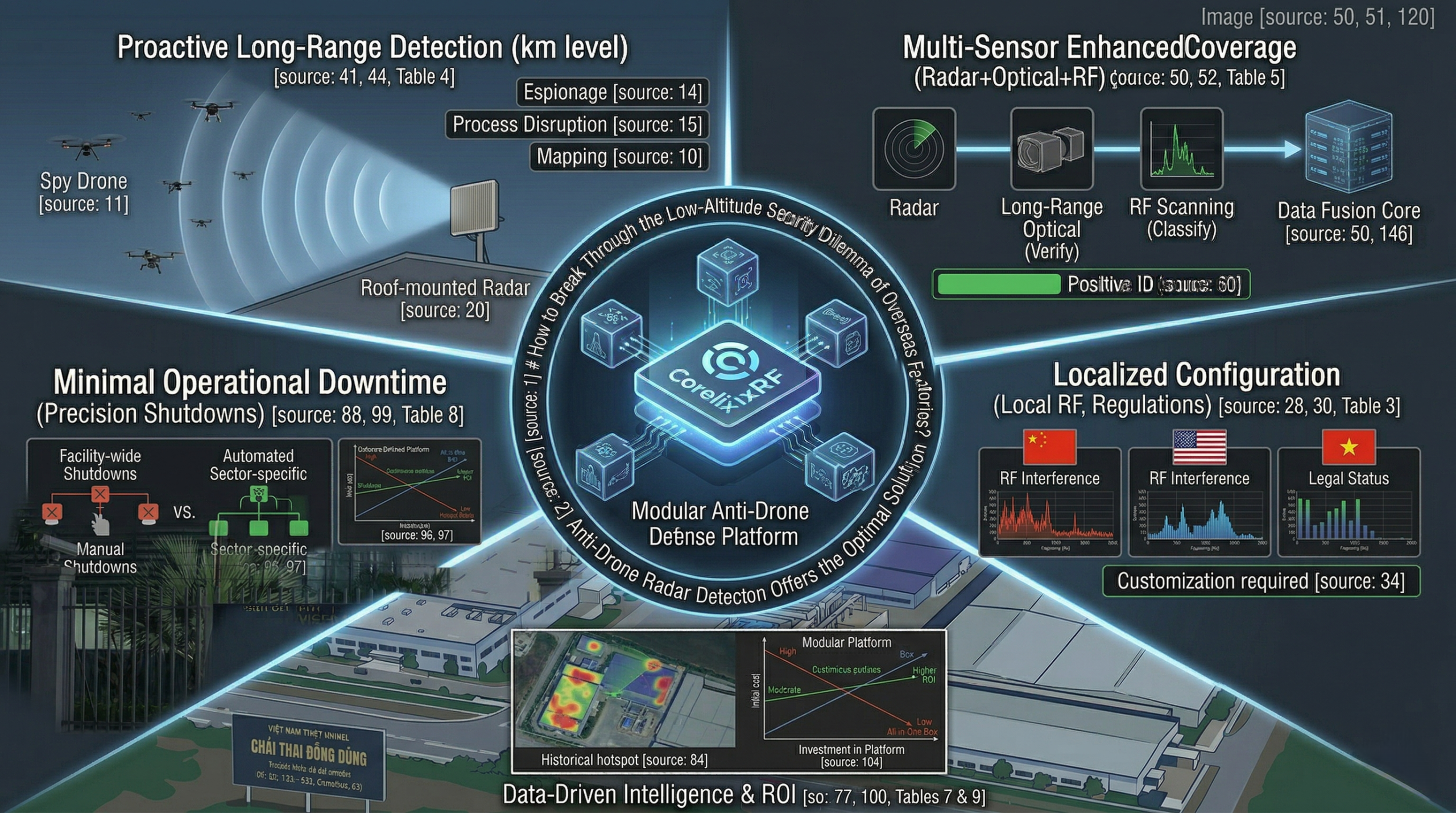
Low-altitude drone security for overseas factories is no longer an optional safety measure but a critical requirement for protecting high-value operations and sensitive data. The rise of easy-to-use drones has created a complex security gap that traditional ground-based solutions fail to address, making your perimeter vulnerable from above. Think about the potential for corporate espionage or even operational disruption that can occur in a matter of minutes. Effectively closing this gap means prioritizing advanced Anti-Drone radar detection as your optimal solution. This technology provides the necessary proactive intelligence and continuous monitoring to secure your low-altitude airspace against diverse drone threats, giving you peace of mind.
Why is Low-Altitude Security Critical for Modern Factories?
Securing low-altitude airspace is critical because modern factories face unprecedented risks from unauthorized drones that threaten intellectual property and operational continuity. Your facility is no longer just a physical structure; it’s a hub of innovation and efficient production that is vulnerable from the air. The best part? Proactive security is the key.
- Drones can be used for corporate espionage.
- They can map your physical security layout.
- Operational interference can cause costly delays.
- Small, inexpensive drones are easily accessible to anyone.
A small, agile drone can hover over a critical processing unit or research lab, capturing detailed visual or RF data without ever setting foot on your property. This threat is particularly acute in competitive global markets where overseas factories are high-stakes targets for disruption.
Table 1: Key Risks of Unsecured Low-Altitude Airspace in Factories
| Risk | Description | Impact |
| Information Theft | Drones capture unauthorized footage or signals. | Loss of IP, compromised formulas. |
| Process Disruption | Drone presence forces emergency shutdowns. | Massive operational downtime, cost. |
| Physical Harm | Drones crash or are used for malicious payloads. | Personnel injury, asset damage. |
This table clearly highlights the multidimensional threats posed by unregulated drone activity.
(Key Takeaway: Understanding these specific aerial vulnerabilities allows you to prioritize the right technology for continuous, proactive protection.)
How Does Anti-Drone Radar Technology Solve Detection Gaps?
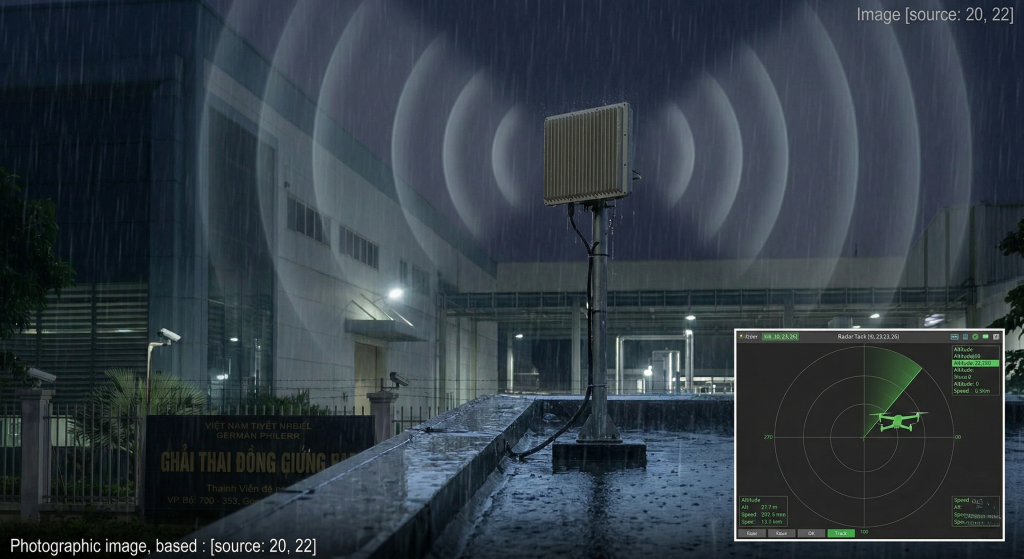
Anti-Drone radar technology solves critical detection gaps by providing 24/7 all-weather monitoring, effectively eliminating the blind spots common to standard visual, acoustic, and RF-based sensors. This is where dedicated radar truly excels, delivering precise tracking that other methods miss.
Why is Radar Detection Superior?
Unlike cameras or acoustic sensors that rely on clear conditions, specialized Anti-Drone radar utilizes radio waves that are unaffected by darkness, rain, or fog. This ensures that your low-altitude defense is never offline. You cannot manage a threat you cannot see, and radar guarantees constant visibility of your entire airspace. This relentless consistency is fundamental to a robust security posture, making it the bedrock of any serious counter-UAS strategy for factories.
Table 2: Detection Capability Comparison: Radar vs. Traditional Methods
| Detection Method | Night Performance | Weather Performance | Detection Range | Target Tracking |
| Visual Cameras | Very Poor | Moderate | Medium | Good (Line of Sight) |
| Acoustic Sensors | Good | Poor (Windy/Rain) | Short | Moderate |
| Dedicated Radar | Excellent | Excellent | Long | Continuous (precise) |
This comparison clearly illustrates radar’s unique advantage in maintaining reliable detection under all environmental conditions.
(Key Takeaway: The best security system must operate in all conditions, which is why active radar is indispensable for closing the low-altitude vulnerability.)
What Makes Overseas Factory Anti-Drone Solutions Different?
Overseas factory Anti-Drone solutions are distinct because they must account for unique local RF environments and regulatory complexities while maintaining robust defense. You can’t just deploy a generic solution in a new country. Local wireless interference can disrupt sensitive detection equipment, requiring professional site analysis before deployment. Furthermore, understanding the legal landscape for countermeasures is crucial.
- Regulatory requirements for air space are different in every country.
- Radio frequency availability and interference vary significantly.
- Remote maintenance and support become essential operational hurdles.
- Local infrastructure may not support high-bandwidth detection sensors.
This is where expert, customized planning and deployment are not just useful but required. A solution that is compliant and effective in one region may be illegal or useless in another, creating a different kind of risk for your overseas operations.
Table 3: Unique Challenges of Deploying Anti-Drone Systems Overseas
| Challenge Category | Key Considerations | Impact on Solution |
| RF Environment | Urban vs. rural clutter, existing wireless traffic. | Requires adaptive filtering and site-specific configuration. |
| Regulatory | Jamming legality, data privacy, air traffic integration. | Restricts response options; requires modular design. |
| Operational | Local staffing, maintenance logistics, power stability. | Demands rugged, low-maintenance, and easy-to-use systems. |
These distinct factors must shape the architecture of your low-altitude security deployment when working internationally.
(Key Takeaway: Successfully securing an overseas factory requires a localized strategy that navigates unique technical and regulatory landscapes, which only customized solutions can provide.)
Can Active Detection Systems Preempt Factory Intrusions?
Active detection systems are designed to preempt factory intrusions by using specialized Anti-Drone radar to identify and track drones from kilometres away, giving your security team critical lead time for a measured response. The real value isn’t just knowing a drone is overhead; it’s knowing before it arrives. Think about the strategic advantage of early warning.
How Do Proactive Systems Shift the Paradigm?
Instead of reacting only when a drone is over a sensitive area, a proactive system allows you to initiate security protocols, deploy interceptors, or secure sensitive data minutes ahead of any potential breach. This changes your posture from reactive to preventive. By eliminating the element of surprise, you drastically reduce the risk of a successful operational or espionage attempt against your overseas factory. It’s about leveraging technology to always be one step ahead of the threat.
Table 4: Proactive vs. Reactive Security Strategies
| Security Posture | Response Trigger | Goal | Result |
| Reactive | Drone already over-facility | Mitigation of damage | Highly variable success, high risk. |
| Proactive | Drone detected kilometres away | Prevention of intrusion | Consistent threat neutralization, low risk. |
This comparison clearly illustrates why preemption, enabled by long-range radar, is the only effective defense strategy.
(Key Takeaway: The ability to detect and track drones at a long range is what transforms your factory’s low-altitude security from a hopeful defense into a controlled, preemptive neutralization capability.)
How do Integrated Sensors Strengthen Anti-Drone Coverage?
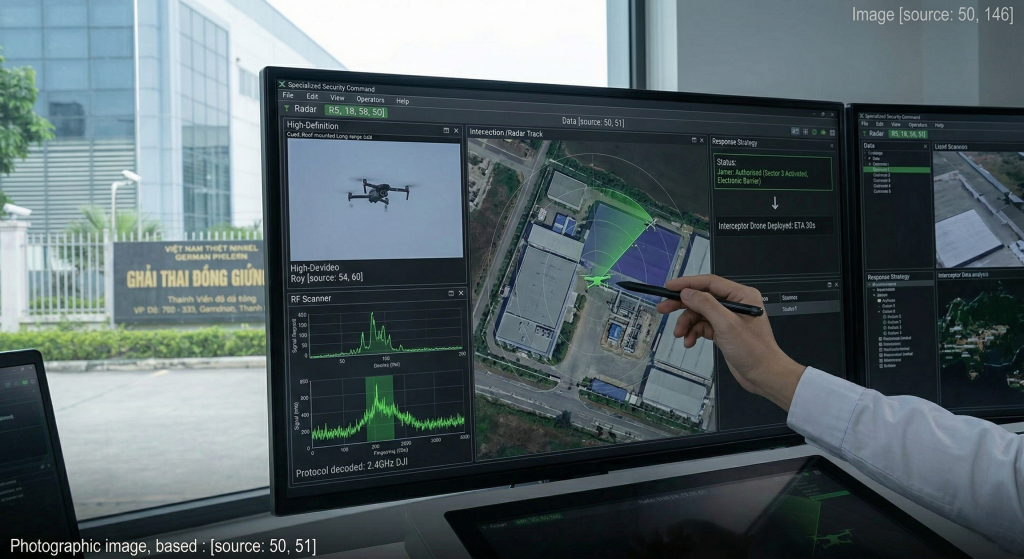
Integrated sensors strengthen Anti-Drone coverage by layering complementary technologies that work together to eliminate blind spots, improve positive identification, and provide a unified operational picture. A single technology will always have limitations, but a multi-sensor ecosystem provides synergistic protection that is far greater than the sum of its parts. Consider the power of sensor data fusion.
- Radar detects and tracks targets continuously.
- RF scanners provide additional intent analysis (e.g., protocol decoding).
- Long-range optical sensors confirm the type and payload of the drone.
- Jammers (if permissible) create an effective electronic barrier.
A unified system might use radar to detect a drone, then automatically cue a long-range camera to capture a positive visual ID of the specific model. This level of automation ensures that your security personnel have all the information they need to make the right decision instantly, without relying on stressful manual operations. The efficiency and accuracy gain is undeniable, making integrated solutions the benchmark for high-security environments.
Table 5: How a Multi-Sensor Ecosystem Works Together
| Sensor Type | Core Strengths | Role in a System | Synergy Contribution |
| Radar | Continuous all-weather tracking | The “eyes” that are always on. | Long-range cued detection. |
| Optical/EO/IR | Visual/Thermal confirmation | The “closer look” to verify. | Positive identification. |
| RF Scanner | Intent and model signal analysis | The “ears” that listen to signals. | Confirmation of target type. |
This table clearly highlights how integrated sensors create a layered, multi-capability defense network.
(Key Takeaway: A layered approach that integrates radar, optical, and signal intelligence is necessary for creating the robust and comprehensive low-altitude security required by overseas factories.)
What’s the Best Anti-Drone Radar for Challenging Environments?
The best Anti-Drone radar for challenging environments is one designed with localized clutter suppression, high-resolution tracking, and rugged construction. Standard sensors that perform well in open fields will often struggle in complex urban, industrial, or coastal settings, leading to frustrating false positives or missed detections. This is why specialized ruggedized radar is required.
- High-frequency detection sensors offer excellent resolution.
- Advanced digital signal processing can filter out rain, trees, and buildings.
- Multiple antenna configurations provide tailored coverage.
- Automated updates enable constant performance optimization.
In practical terms, you don’t want to be waking up for a bird or a moving tree when your goal is critical asset protection. A system that can reliably distinguish a drone from a piece of environmental noise is the mark of a professional, localized Anti-Drone solution. This reliability ensures that your security teams trust the system, which is the cornerstone of its effectiveness.
Table 6: Key Features of Radar in Challenging Environments
| Radar Feature | Environmental Challenge | Benefit |
| Customized Clutter Filtering | Large industrial structures, moving traffic. | Drastically fewer false alarms. |
| All-Weather Durability | Coastal salt spray, extreme desert heat. | Continuous operation in any climate. |
| Adaptive Configuration | Varied terrain, specific coverage gaps. | Maximizes detection performance. |
This table clearly highlights the specific features that enable a specialized radar system to maintain performance in a complex, demanding factory environment.
(Key Takeaway: The best solution isn’t the most generic; it’s the one that can be precisely customized to your factory’s specific environment, ensuring reliable, localized protection.)
Is Data-Driven Intelligence Essential for Anti-Drone Strategy?
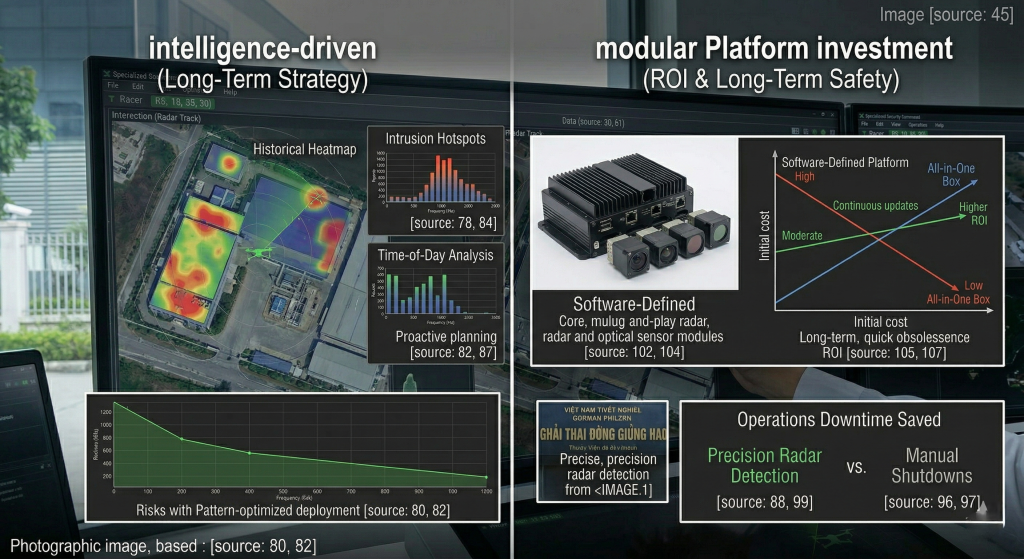
Data-driven intelligence is essential for an effective, long-term Anti-Drone strategy because it transforms raw detection events into actionable insights, enabling you to recognize patterns and make informed security decisions. Think about it: a single detection is useful, but a historical record is strategic.
How Does Data Empower Your Defense?
By using a data-driven approach, you can identify high-risk flight corridors, peak threat times, and even the most common drone models targeting your location. This allows you to optimize patrol routes and configure sensor sensitivity for maximum effect. You can also build an evidence-based case for reporting and regulatory compliance. This shift from guess-work to intelligence-driven planning ensures your security resources are always deployed where they are needed most.
Table 7: Data points gathered and their strategic utility
| Data Point | Description | Strategic Utility |
| Intrusion Hotspots | Historical record of drone detection locations. | Optimizes deployment of physical security or additional sensors. |
| Time-of-Day Analysis | Temporal patterns of drone activity. | Informs shift planning and threat prioritization. |
| RF Signal Analysis | Signature of the targeting drone’s controller. | Identifies specific threat types and potentially the pilot’s location. |
These distinct data types are what transform a reactive detection capability into a proactive, intelligence-led defense strategy.
(Key Takeaway: Integrating data analysis into your security operations is the key to creating a truly intelligent, adaptive, and effective low-altitude security posture.)
How Can Anti-Drone Systems Minimize Operational Downtime?
Anti-Drone systems minimize operational downtime by providing precise, real-time tracking that allows you to isolate a threat, neutralizing only the relevant sector rather than initiating a costly, facility-wide emergency shutdown. When you know exactly where a drone is and where it is heading, your response can be localized, precise, and measured.
- Real-time monitoring allows for targeted shutdowns.
- Precise localization means only one process is impacted.
- Early warning enables proactive mitigation.
- Automation reduces time-consuming manual intervention.
For instance, if a drone is detected kilometers away and confirmed to be over a non-critical storage yard, you can initiate a targeted, low-impact security protocol for that specific zone while maintaining all other high-value operations. This creates a significant competitive advantage over a facility that must halt everything at the first hint of an aerial threat. The ability to maintain productivity during a security event is invaluable for overseas factories operating under tight schedules.
Table 8: Precision of Shutdowns: Manual vs. Automated Systems
| Shutdown Precision | Method | Resulting Downtime |
| Facility-Wide | Manual trigger (e.g., visual sighting) | Maximum: all operations halt. |
| Sector-Specific | Precision radar + cued analysis | Minimum: only impacted zone is halted. |
| Proactive Mitigation | Automated long-range preemption | Zero: threat is neutralized before impact. |
This table clearly highlights the direct correlation between detection precision and the preservation of critical factory uptime.
(Key Takeaway: The ability to maintain operational continuity during a security event is not just a safety benefit but a direct financial and competitive advantage, enabled only by precision detection.)
What’s the Optimal Anti-Drone Investment for Long-Term Safety?
The optimal Anti-Drone investment for long-term safety is not a single purchase but a modular system with scalable capabilities and flexible software-defined architecture that can evolve as the drone threat matures. This is where forward-looking engineering really shows its value. Think of the peace of mind that comes from knowing your system won’t be obsolete in a few years.
What Are the Long-Term Financial Benefits?
Instead of a generic, all-in-one box, a modular solution allows you to start with the specific capabilities you need for your environment and then scale up. This means you aren’t paying for unneeded features. Furthermore, a software-defined system can receive updates and performance enhancements over-the-air, ensuring your initial investment continues to improve and provide a clear, long-term return on your security budget. It’s about investing in a platform, not just a product.
Table 9: Return on Investment of Scalable vs. All-in-One Systems
| System Architecture | Initial Cost | Scalability | Long-Term Word Count of Updates | Overall ROI |
| All-in-One Box | High (one-time fee) | Low | Low (rarely upgraded) | Lower (quick obsolescence) |
| Software-Defined Platform | Moderate (subscription/usage-based) | High | High (continuous updates) | Higher (long lifespan) |
This table clearly highlights why modular, software-based systems represent the best long-term financial and security value.
(Key Takeaway: The most cost-effective and secure way to protect your factory’s low-altitude airspace over time is to invest in a software-defined platform that can adapt and scale with your needs and the threat landscape.)
How Should Factory Managers Begin Anti-Drone Deployment?
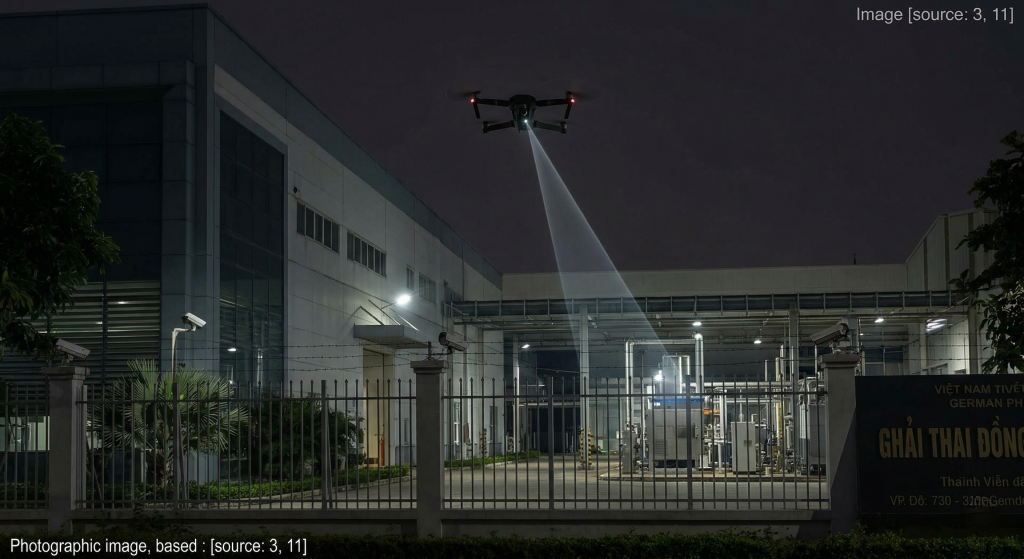
Factory managers should begin deployment by partnering with an expert who can conduct a detailed risk assessment, analyze the specific localized RF environment, and create a customized Anti-Drone security strategy tailored to your facility’s unique challenges and regulatory constraints. This isn’t a simple off-the-shelf product.
- Start with a comprehensive site assessment.
- Define your security protocols and key assets.
- Prioritize modular systems that can scale.
- Schedule consultation services early in the process.
This tailored approach means your system is built from the ground up to solve your specific security dilemma, not a generic one. This expert-guided, data-driven methodology ensures maximum effectiveness, compliance, and return on investment for your low-altitude defense. The path to security is clear: understand your unique needs first, then deploy the specialized, integrated technology to address them.
Table 10: The Phased Deployment Process of an Anti-Drone System
| Phase | Actionable Steps | Outcome for Your Factory |
| Assessment | Risk profile, localized RF analysis, key asset identification. | Detailed security requirements report. |
| Solution Design | Sensor selection (radar, optics), software configuration. | A customized, integrated architecture. |
| Integration | Installation, software platform setup, team training. | A fully operational, responsive defense system. |
This table clearly highlights the structured, step-by-step approach necessary for a successful, compliant, and effective deployment of a low-altitude security solution.
(Key Takeaway: A structured, professional assessment is the essential first step for any factory looking to transform its low-altitude vulnerability into a robust and localized defense capability.)
Conclusion
Securing your overseas factory’s low-altitude airspace is no longer an optional task, as the risk of operational disruption and intellectual property loss from drones is a real and growing threat. This article has detailed how advanced, integrated Anti-Drone radar systems provide the preemptive detection and precise tracking needed to secure your environment. The key to success is prioritizing specialized technology that can be customized to your localized environment. By layering complementary sensors like radar, optics, and signals intelligence, and leveraging data-driven insights, you can create a truly intelligent and adaptive defense. This proactive approach not only enhances security but also minimizes costly downtime, providing a strong return on your long-term investment. Don’t wait for an event to prove your vulnerability. We have helped numerous factory managers globally secure their operations against advanced low-altitude threats, and we can do the same for you. Our mission is to provide you with the comprehensive, compliant technology and expert services needed to close your security gap once and for all. For a detailed site assessment or to discuss your unique challenges, contact us today and take the first step toward continuous, proactive low-altitude security.
Frequently Asked Questions
Can I detect non-transmitting drones with radar?
Yes, a properly configured Anti-Drone radar system is inherently designed to detect non-transmitting drones. This is possible because radar operates by transmitting radio waves and analyzing the reflections from all objects in its path, irrespective of whether the drone itself is transmitting a signal. This is a crucial advantage for detecting the most advanced or maliciously programmed threats that operate in ‘silent’ mode, ensuring that your low-altitude perimeter is never compromised by hidden aerial intruders.
What is the best Anti-Drone radar for a high-clutter environment?
The best system for a high-clutter environment, such as a large factory with complex structures, is a specialized radar that incorporates localized clutter suppression and high-resolution tracking. Standard or generic radars often struggle in these scenarios, leading to many false alarms, but ruggedized radar systems use sophisticated filtering techniques to differentiate small, moving drone targets from stationary background noise. This refined capability ensures that your security personnel only react to genuine low-altitude threats, maintaining the critical trust in your overall security posture.
How do I know if the regulatory environment permits jamming?
You can determine the specific regulations in your local jurisdiction by consulting with a legal expert and a professional security partner. Regulatory frameworks for RF countermeasures vary significantly between countries and even individual states or municipalities, which is why a deep, localized analysis is essential for any Anti-Drone deployment. Understanding these unique legal landscapes is critical not only for maintaining compliance but also for designing a multi-layered system that uses permissible methods of detection and response, ensuring your operations remain legal and secure.
What’s the most cost-effective solution for a multi-facility operation?
The most cost-effective solution for multiple overseas factories is an investment in a modular, software-defined platform that can be centrally managed while supporting remote detection sensors. This intelligent approach provides you with unified visibility across all your properties without requiring a full, unique system and physical console at every location, significantly reducing both initial deployment costs and long-term operational expenses. Furthermore, a platform approach enables centralized data analysis, providing intelligence that can optimize your overall security strategy and drive continuous improvement, ensuring your investment in low-altitude security is truly optimized.
What’s the best approach to integrate an Anti-Drone system with existing security?
The optimal way to integrate these advanced capabilities is through a unified software platform that consolidates data from radar, optics, and signals intelligence into a single operational picture. This is where expert planning and tailored site assessments are invaluable, as they ensure that your low-altitude detection sensors are seamlessly integrated with your facility’s existing video management, access control, and communication systems. By automating sensor data fusion and alert protocols, you create a responsive, synergistic defense network that drastically increases efficiency, reduces response times, and empowers your team with a complete, layered security solution.
Authorized RF engineering and compliance review
For regulated RF systems, this page should be used as an engineering and compliance review path, not as a public deployment checklist. CorelixRF starts with authorization status, operating region, frequency plan, output limit, antenna interface, safety controls, thermal limits and acceptance documents.
- RFQ checklist – send the data buyers usually forget, including band, power, duty cycle, interface and test standard
- delivery documentation – check what documents can support incoming inspection, FAT review and long-term maintenance
- quality and certification review – review the quality and compliance evidence before the project moves into procurement
- RF front-end platform – compare the RF chain as a system instead of selecting one isolated module
- RF configurator – turn frequency, power, thermal and interface requirements into a first configuration brief
- case studies – review similar engineering paths before sending an RFQ
- engineering contact – send the application notes, block diagram or target specification to engineering sales
This keeps the discussion inside lawful, authorized RF programs while still giving procurement teams a clear way to request amplifier, antenna, SDR source, documentation and factory review.
RF Front-End Review Path for Factory Site Awareness
For factory-site RF sensing or awareness projects, start with RF front-end platform planning and match it with suitable RF amplifier platforms before sending requirements through the RF inquiry form. This helps define frequency coverage, signal chain interfaces, antenna/load conditions and documentation needs early.