
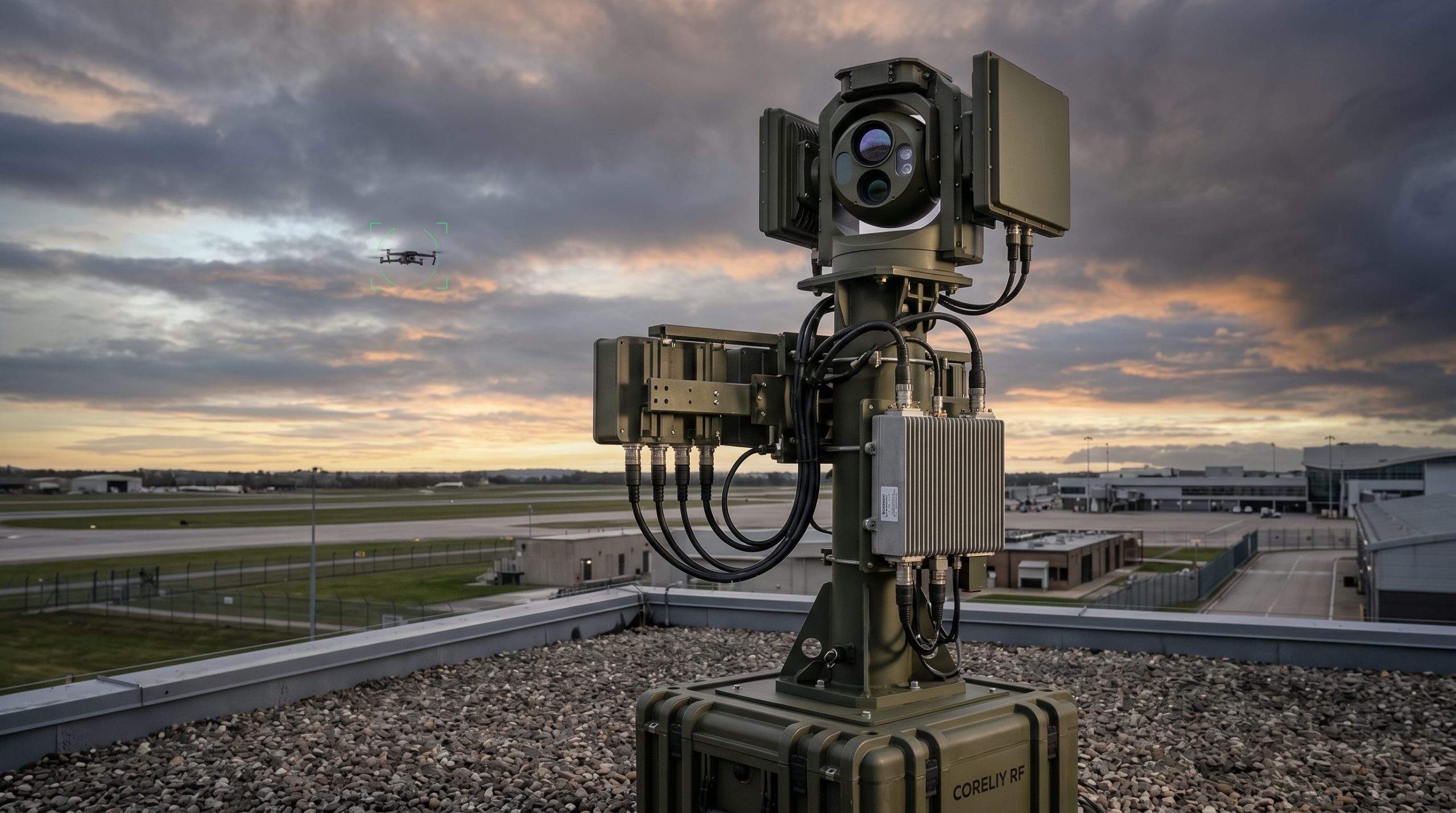
What are the critical hardware elements required to build an effective airspace defense system against unauthorized uncrewed aerial vehicles? Modern security managers face unprecedented aerial threats from commercial drones modifying tactical environments instantly. Unauthorized drone incursions at critical sites cause massive operational delays liability risks and severe financial loss. Here’s the deal. Leaving lower airspace unprotected invites catastrophic security breeches but implementing an advanced, multi-layered tactical solution secures vulnerable perimeters effectively. CorelixRF delivers engineered full-band RF chain hardware to empower global system integrators.
1. What Is the Role of RF Detection in Counter-Drone Systems?
Radio frequency detection represents the primary baseline element of any modern counter-drone defense architecture because it identifies the control links of incoming threats. This passive hardware setup scans specific spectral frequencies continuously to discover communication signatures between drones and operators. Airspace security remains vulnerable without precise frequency tracking capabilities. What’s the real story? Cheap commercial aircraft constantly alter frequency profiles to evade basic detection mechanisms. Implementing continuous full-band scanning hardware solves this critical vulnerability. CorelixRF designs high-performance RF components specifically tailored to detect these elusive signal variations seamlessly.
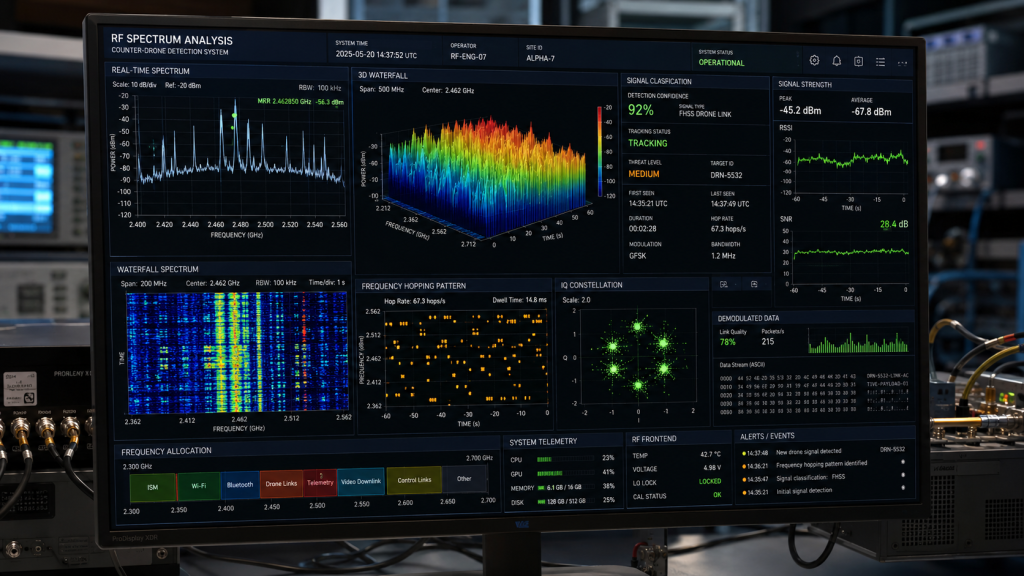
How Does Spectrum Analysis Isolate Targets?
Radio frequency analyzers continuously monitor the electromagnetic environment across critical communication spectrums. This hardware flags rapid signal spikes matching known industrial operational frequencies.
- Real-time signal parsing detects immediate threats.
- Digital signal processing identifies complex frequency signatures.
- Automated spectral alerts notify security staff instantly.
This is where it gets interesting… Custom hardware trackers allow operators to monitor drone control links without emitting trackable radiation. You can learn more about our integrated system hardware at CorelixRF Products.
Why Is Continuous Spectral Monitoring Critical?
Modern uncrewed systems switch transmission channels rapidly to maintain stable control links. Fixed-frequency sensors quickly become obsolete against adaptive modern commercial hardware.
- Adaptive tracking captures fast frequency hoppers.
- Broad spectral sweeps prevent coverage blind spots.
- Simultaneous multi-band processing tracking handles swarms.
Key Takeaway: Continuous spectrum tracking guarantees early warning capabilities against advanced commercial drones before they reach critical perimeter boundaries.
| Scanning Range | Detection Speed | Target Capacity | Signal Isolation |
| 30 MHz – 6 GHz | < 500 ms | Up to 100 Targets | > 45 dB Separation |
The integrated data metrics above show how wideband scanning speeds up target verification times.
2. How Do Modern Radar Sensors Secure Lower Airspace Boundaries?
Active radar sensors send out directed microwave signals to discover the exact physical position of non-emitting threat targets. This mechanical hardware tracks objects through bad weather conditions and absolute darkness when optical equipment fails. Relying solely on passive RF systems creates dangerous blind spots if drones fly autonomously via pre-programmed waypoints. Ready for the good part? Integrating high-resolution micro-Doppler radar hardware detects small consumer drones accurately. System builders rely on these tools to calculate precise target distance, altitude, and vector coordinates.
What Is Micro-Doppler Radar Capability?
Micro-Doppler systems analyze small structural movements like rotating propeller blades to distinguish drones from birds. This specialized signal analysis minimizes false alarms dramatically in busy urban environments.
- Propeller signature matching isolates mechanical targets.
- Velocity tracking separates birds from drones.
- Precision target scaling determines exact aircraft dimensions.
But here’s the kicker… Standard military radar systems often miss miniature commercial quadcopters entirely due to low radar cross-sections. Specialized micro-Doppler hardware filters out ground clutter to track low-altitude targets smoothly.
How Does Radar Cross Section Impact Performance?
The material composition of a drone determines how much radar energy reflects back to receivers. Small plastic aircraft present minimal reflection profiles to outdated surveillance setups.
- Carbon fiber frames reduce traditional radar returns.
- Miniaturized consumer drones require high-frequency sensors.
- Advanced digital filtering extracts faint target signals.
Key Takeaway: High-frequency active radar hardware ensures reliable structural tracking capability regardless of whether the target drone emits radio signals.
| Radar Frequency | Maximum Range | Clutter Rejection | Minimum Target Size |
| X-Band (9.5 GHz) | 5 km | High Digital Filtering | 0.01 square meters |
This parameter matrix illustrates how higher operational radar frequencies improve small target detection limits.
3. Why Are Electro-Optical Sensors Essential for Target Verification?
Electro-optical and infrared camera sensors provide visual confirmation and precise positive identification of detected aerial objects. These optical systems track targets using thermal signatures and high-definition daytime lenses to verify actual threats. Relying blindly on radar data can lead to tracking harmless objects like birds or balloons. You might be wondering… How do operators handle distant tracking challenges during heavy rain or thick morning fog? Implementing dual-sensor thermal cameras overcomes severe environmental visibility limitations effectively.
How Do Thermal Lenses Track Drone Heat?
Drones generate thermal signatures from electric motors, internal battery enclosures, and electronic speed controllers during flight. Infrared cameras capture these distinct thermal footprints against cold sky backdrops easily.
- Long-wave infrared sensors track targets through darkness.
- Temperature differentials isolate mechanical motors from wildlife.
- Continuous optical tracking maintains target lock effortlessly.
What’s the real story? Visual camera setups struggle during nighttime deployment operations when ambient lighting drops significantly. Thermal imaging modules solve this problem by highlighting aircraft heat signatures clearly.
What Is the Purpose of Laser Rangefinders?
Laser rangefinders calculate the exact physical distance to a target by measuring light reflection speeds. This telemetry data allows tracking software to coordinate precise counter-drone mitigation positioning.
- Direct laser targeting provides millimeter-distance accuracy.
- Real-time range updating maintains optical focus locks.
- Coordinate cross-referencing improves system targeting efficiency.
Key Takeaway: Integrating electro-optical imaging hardware prevents expensive false mitigation deployments by confirming the precise visual identity of airborne targets.
| Camera Sensor | Optical Zoom | Thermal Resolution | Target Verification Range |
| HD EO / LWIR | 40x Optical | 640 x 512 Pixels | Up to 3 km |
The specification table highlights how combining daytime zoom with thermal tracking maximizes target verification ranges.
4. How Do High-Power Amplifiers Enhance RF Jamming Success?
High-power RF amplifiers generate the heavy signal suppression force required to disrupt hostile uncrewed aerial vehicle control channels. These solid-state modules amplify low-power disruption waveforms to override incoming drone command signals completely. Weak amplification components allow distant consumer aircraft to break through defensive jamming perimeters easily. This is where it gets interesting… Utilizing high-efficiency Gallium Nitride technology delivers massive output wattage across wide frequency bands without overheating. You can browse our advanced manufacturing capabilities at CorelixRF About Us.
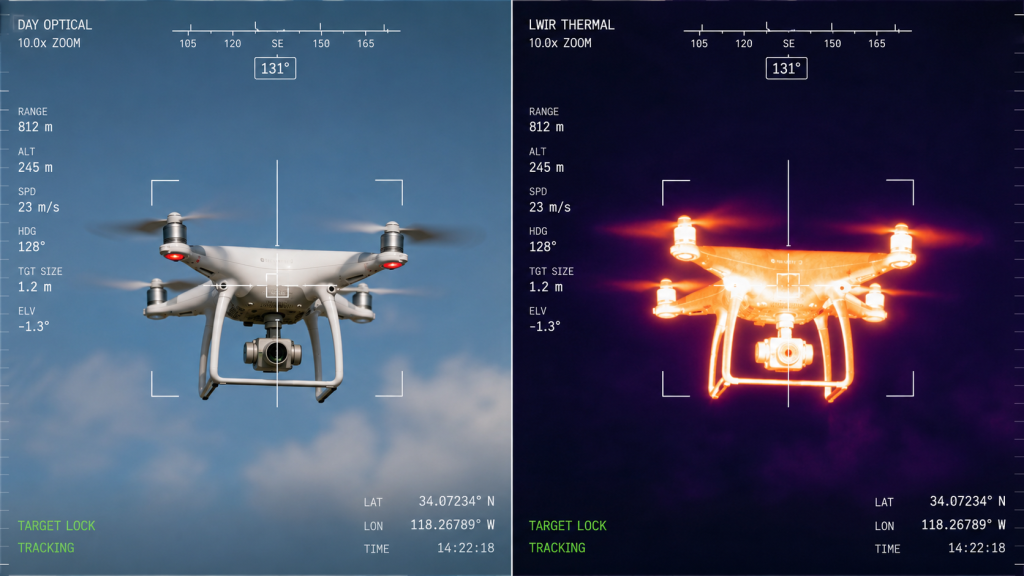
Why Choose GaN Semiconductor Material?
Gallium Nitride components handle significantly higher thermal stress and voltage levels than traditional silicon-based radio hardware platforms. This material choice enables much smaller module footprints with superior power density.
- Higher thermal tolerance prevents power output degradation.
- Wideband frequency execution reduces necessary module counts.
- Superior power efficiency extends remote field battery life.
But here’s the kicker… Cheap silicon components suffer severe power drops as operating temperatures rise during sustained operation. Industrial GaN designs maintain maximum wattage output across extended defense operations.
How Does Power Headroom Prevent Failures?
Engineering extra output margin into power amplifiers prevents signal clipping and system component failure under heavy load. This power cushion ensures clean signal generation during critical mitigation events.
- Extra power headroom guarantees stable multi-channel operation.
- Reduced component stress extends overall hardware lifespan.
- Clean signal amplification prevents unwanted out-of-band emissions.
Key Takeaway: Deploying rugged Gallium Nitride amplifiers ensures your mitigation systems maintain maximum signal suppression power during extended drone defense scenarios.
| Amplifier Platform | Frequency Range | Output Power | Power Headroom |
| Solid-State GaN | 30 MHz – 6 GHz | 200W Configurable | ≥ 15% Design Margin |
This hardware technical layout details how GaN technology provides superior power metrics across wide frequency bands.
5. What Is the Benefit of Software Defined Radio Architecture?
Software Defined Radio technology allows defense hardware to adapt to new drone communication protocols via instant firmware modifications. These versatile digital platforms replace fixed analog circuits with flexible software-controlled signal processing routines. Fixed hardware architectures become obsolete quickly as drone manufacturers launch updated transmission technologies. Ready for the good part? Integrating advanced SDR digital signal engines enables real-time frequency hopping to counter smart aerial threats. These adaptive modules provide the computational flexibility required for complex tactical environments.
How Does Real-Time Frequency Hopping Work?
SDR modules modify operational frequencies thousands of times per second to match agile drone links. This rapid switching allows defense systems to maintain constant tracking locks on variable signals.
- Fast digital synthesis tracks erratic frequency shifts.
- Dual independent channels process multiple bands concurrently.
- Automated waveform adjustment matches target signal types.
You might be wondering… Can standard fixed-frequency transmitters suppress modern commercial control links that jump across bands? They cannot, which makes programmable software-defined radio processing engines completely mandatory for survival.
What Protocol Variations Do SDRs Support?
Programmable radio hardware decodes multiple digital modulation types including advanced spread-spectrum and orthogonal frequency division multiplexing styles. This capability allows defense systems to target diverse industrial drone models.
- Custom protocol injection disrupts proprietary control software.
- Multi-waveform output handles command signals and GNSS.
- Scalable digital architecture supports remote cloud updates.
Key Takeaway: Utilizing software-defined radio hardware preserves initial capital investments by allowing remote updates to counter emerging drone communication technologies.
| Waveform Modes | Processing Interface | Channel Capacity | Frequency Agility |
| CW, LFM, GNSS, OFDM | RS422 Control | Dual Independent | < 10 microseconds |
The architectural matrix demonstrates how digital programming interfaces drive superior frequency modulation agility.
6. How Do Directional Antennas Optimize Jamming Energy Distribution?
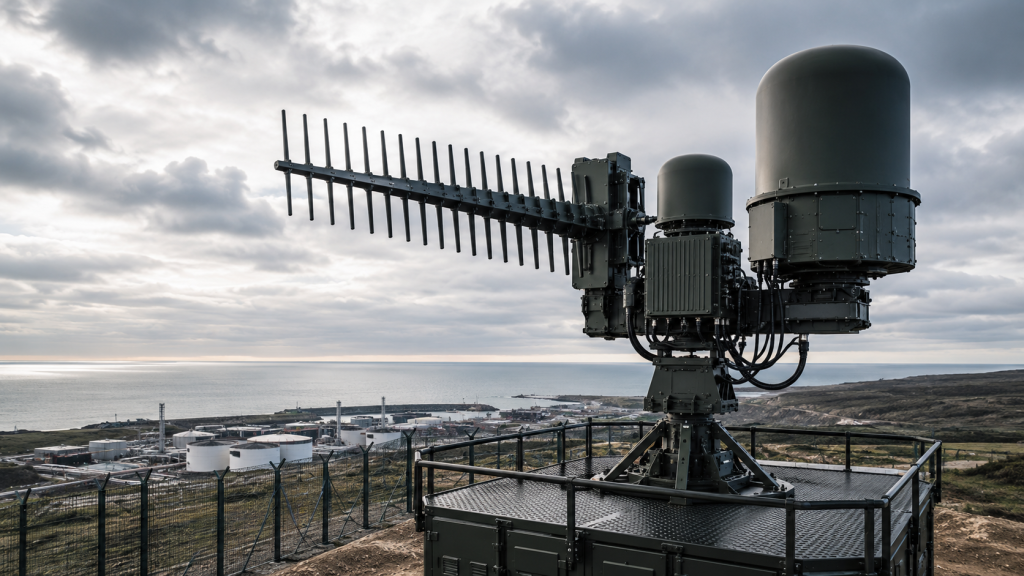
Directional antennas concentrate emitted counter-drone mitigation energy into a tight beam focused directly at incoming airborne threats. This targeted focusing maximizes disruption ranges while protecting surrounding civilian communication infrastructure from unnecessary interference. Omni-directional designs scatter energy randomly across areas causing widespread self-jamming issues for friendly forces. What’s the real story? Spreading transmission power too thinly allows remote targets to escape mitigation zones easily. Utilizing precision directional antennas fixes this power dilution problem. You can explore specialized antenna options at CorelixRF Custom Solutions.
Why Focus RF Energy Precisely?
Concentrating signal output increases the effective isotropic radiated power reaching the target drone receiver sub-systems. This focused approach ensures reliable link breakage at significantly longer stand-off distances.
- High gain metrics maximize localized signal delivery.
- Narrow beamwidths isolate targets without affecting neighbors.
- Targeted coverage optimizes power usage across perimeters.
But here’s the kicker… Broad tactical sweeps often disrupt nearby emergency services or corporate wireless infrastructure by accident. Narrow directional antennas prevent this dangerous collateral signal damage completely.
How Do Multi-Band Antennas Streamline Systems?
Combining multiple antenna elements into a single rugged housing reduces overall system wind resistance and physical space requirements. This integration enables cleaner mechanical installations on mobile mast platforms.
- Integrated multi-band elements reduce total structural footprint.
- Optimized voltage standing wave ratios maximize power delivery.
- Rugged weatherproof radomes protect delicate internal arrays.
Key Takeaway: Implementing high-gain directional antenna arrays multiplies your system’s effective mitigation range while protecting nearby communication networks.
| Antenna Type | Gain Rating | Beamwidth Angle | VSWR Performance |
| Directional Log-Periodic | 12 dBi | 45 Degrees Horizontal | < 1.5:1 Target |
This antenna performance table proves how high gain ratings and tight beamwidths optimize signal delivery.
7. What Quality Protocols Ensure Counter-Drone Hardware Reliability?
Rigorous industrial testing protocols ensure that critical counter-drone equipment operates without error during extreme environmental field deployments. Manufacturing high-frequency defense components requires absolute precision to guarantee stable performance under intense thermal and mechanical stress. Neglecting thorough quality validation allows internal components to fail prematurely when deployed in harsh environments. Here’s the deal. While standard consumer manufacturers stop checking after basic circuit board testing, premium defense builders utilize multi-phase validation. These extensive testing steps eliminate hidden component flaws before final shipment.
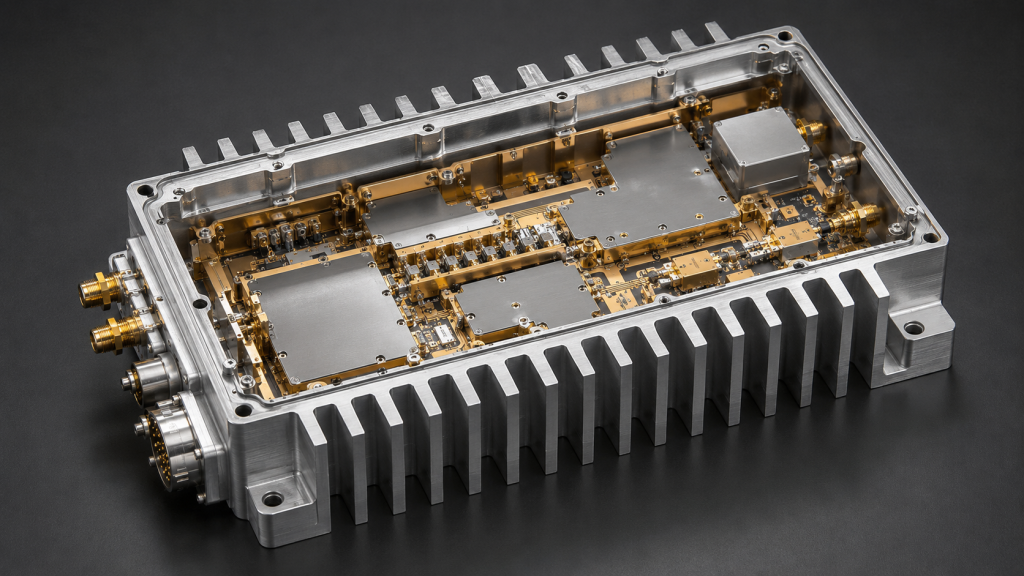
What Environmental Tests Are Mandatory?
Counter-drone modules endure extreme thermal cycling and intense physical vibration tests to simulate years of rugged field operations. These stress procedures expose micro-cracks in circuit paths before deployment.
- Thermal shock baking reveals structural solder flaws.
- Mechanical vibration tables simulate rough tactical transit.
- Extended burn-in procedures stabilize component electrical behavior.
This is where it gets interesting… A power module might work perfectly on a temperate test bench but fail completely when mounted inside a hot enclosure under direct desert sunlight. Environmental chamber testing prevents these catastrophic field failures.
Why Is Conformal Coating Crucial?
Applying specialized protective coatings shields delicate high-frequency electronics from moisture ingress, airborne dust, and salt spray corrosion. This barrier layer preserves electrical performance in tropical or coastal defense environments.
- Moisture isolation prevents dangerous internal short circuits.
- Chemical resistance shields components from industrial pollution.
- Dielectric properties preserve sensitive high-frequency signal paths.
Key Takeaway: Specifying hardware built under rigorous multi-step quality protocols minimizes expensive field maintenance cycles and guarantees long-term operational readiness.
| Protocol Phase | Test Method | Target Standard | Verification Goal |
| 46-Step Defense | Thermal + Vibration | MIL-STD-810 | Zero Component Failure |
The quality protocol breakdown illustrates how comprehensive testing phases eliminate physical component vulnerabilities.
8. How Do Integrated Custom RF Modules Simplify System Integration?
Integrated counter-drone modules combine signal generation amplification and filtering components into a single pre-optimized aluminum enclosure. This unified architecture eliminates complex wiring layouts and reduces signal insertion losses for third-party system builders. Sourcing separate unverified modules leads to severe impedance mismatching problems during final product assembly. Ready for the good part? Deploying factory-matched core modules accelerates product development schedules dramatically. System integrators save months of engineering time by using plug-and-play high-power RF blocks.
What Are the Risks of Mismatched Modules?
Connecting components from different manufacturers often causes high voltage standing wave reflections that damage expensive power amplifiers. Integrated designs resolve these compatibility issues inside the factory.
- High return losses degrade overall system output power.
- Impedance variations introduce unwanted signal distortion.
- Mismatched connections create localized thermal hotspots.
You might be wondering… Why spend valuable engineering hours debugging component interfaces when you can acquire a pre-tested wideband subsystem? Pre-matched modules allow your team to focus exclusively on software and command interfaces.
How Does Thermal Integration Improve Lifespans?
Custom enclosures feature integrated heavy-duty aluminum heatsinks designed to dissipate high thermal loads away from critical transistors. This thermal management keeps internal components within safe operating limits.
- Specialized heat-pipe paths accelerate thermal dissipation.
- Balanced mounting footprints minimize mechanical stress points.
- Compact module layouts maximize cooling fan efficiency.
Key Takeaway: Sourcing factory-integrated RF building blocks removes engineering integration risks and speeds up your path to market.
| Module Design | Interface Type | Cooling Method | Insertion Loss |
| Unified Enclosure | RS422 / SMA | Integrated Aluminum Heatsink | < 0.5 dB Internal |
This design layout emphasizes how integrated systems minimize insertion losses while streamlining thermal management.
9. Why Is Multi-Sensor Fusion Central to Modern Airspace Command?
Multi-sensor fusion platforms combine data streams from RF, radar, and optical hardware to create a unified airspace tracking picture. This central software integration filters out sensor-specific weaknesses to deliver highly accurate target threat assessments. Relying on a single sensor type leaves your facility completely vulnerable to specialized drone designs. What’s the real story? Radars can be fooled by birds and RF trackers miss quiet autonomous aircraft. Sensor fusion software resolves these vulnerabilities by cross-checking targets across multiple hardware layers simultaneously.
How Does Data Cross-Referencing Work?
The central command system correlates spectral signals with radar reflection coordinates and visual thermal imagery in real time. This combined data profile confirms the presence of true threats instantly.
- Radar telemetry guides optical cameras automatically.
- Spectral tracking flags frequencies before radar acquisition.
- Combined sensor confidence scores eliminate false alarms.
But here’s the kicker… Managing three separate unlinked security monitors overwhelms operators during complex multi-drone tracking incidents. Sensor fusion unites all tracking data onto a single intuitive map interface.
What Are the Benefits of Automated Threat Scoring?
Modern command software calculates threat levels based on target speed, approach trajectory, and payload capacities automatically. This processing helps security forces prioritize responses during simultaneous incursions.
- Velocity analysis identifies high-speed tactical aircraft.
- Flightpath tracking alerts operators to perimeter breaches.
- Automated mitigation prompts speed up defensive reactions.
Key Takeaway: Implementing a unified multi-sensor command framework reduces operator fatigue and ensures lightning-fast response times during drone emergencies.
| Sensor Streams | Fusion Interface | Target Latency | Automation Level |
| RF + Radar + EO/IR | Unified GIS Map | < 100 ms | Fully Automated Alerts |
The data integration matrix highlights how combining multiple sensor streams creates a highly responsive command interface.
10. How Do Global Deployment Requirements Shape Hardware Configurations?
International regulatory frameworks and diverse environmental climates dictate specific physical and electrical designs for exportable counter-drone hardware. Manufacturing equipment for global deployment requires compliance with strict international quality standards and rugged mechanical shielding. Shipping delicate non-certified hardware into tropical climates or high-salt maritime environments invites immediate operational failure. Here’s the deal. Experienced defense manufacturers design flexible power architectures and corrosion-resistant enclosures from the start. This proactive engineering ensures trouble-free deployment across global border zones and critical infrastructure sites.
How Do Regional Frequencies Impact Design?
Different countries assign varying regulatory allocations for commercial wireless communication and industrial telemetry applications. Exported counter-drone systems must adapt to these regional spectrum variations seamlessly.
- Flexible digital programming accommodates regional laws.
- Wideband filtering blocks localized civilian interference.
- Modular frequency cards simplify country-specific adaptation.
This is where it gets interesting… A jamming frequency configuration that is perfectly legal in one country could disrupt critical local emergency networks in another. Programmable SDR platforms allow rapid adaptations to match regional telecom policies.
What Shields Hardware from Maritime Environments?
Deploying counter-drone hardware along coastal perimeters or on marine vessels requires advanced anti-corrosion protection. Salt air degrades unshielded metal surfaces and compromises electrical connections rapidly.
- Stainless steel fittings resist marine salt oxidation.
- Hermetically sealed enclosures prevent internal humidity buildup.
- Marine-grade powder coatings protect external metal skins.
Key Takeaway: Selecting hardware engineered for global environmental extremes guarantees dependable performance regardless of your local field deployment conditions.
| Export Certification | Enclosure Rating | Operating Temperature | Corrosion Resistance |
| ISO 9001 / GJB 9001C | IP67 Weatherproof | -40°C to +65°C | ASTM B117 Salt Spray Passed |
This global deployment matrix displays the rugged certification standards required for international site operations.
FAQ
Can I detect autonomous drones that do not use active radio control links?
Yes, you can track autonomous drones using active micro-Doppler radar sensors and thermal electro-optical cameras. These hardware systems do not rely on radio emissions, allowing them to locate targets based entirely on physical structure and engine heat signatures.
What’s the best way to prevent security systems from interfering with local corporate Wi-Fi?
The best approach utilizes highly targeted directional antennas combined with narrow-band software-defined radio filtering. This setups focus suppression energy directly at the airborne target while preventing signal leakage into surrounding corporate buildings.
How do I know if weather conditions will degrade my airspace tracking accuracy?
Radar and thermal infrared sensors maintain steady tracking performance through thick fog, heavy rain, and total darkness. Combining passive RF scanning with active radar sensors ensures your perimeter defenses remain secure during severe weather events.
Can these counter-drone modules integrate directly into existing security software frameworks?
Yes, professional RF modules feature standardized RS422 or Ethernet communication interfaces to support smooth third-party integration. These open protocols allow system builders to feed tracking data directly into pre-existing command software.
How does Gallium Nitride technology improve remote battery-powered field operations?
Gallium Nitride chips deliver superior electrical efficiency compared to legacy silicon modules, converting more energy into raw output power. This efficient operation minimizes wasted heat generation and extends battery runtimes significantly during remote deployments.
Modern lower airspace security challenges require robust technical solutions. This technical guide detailed the critical importance of passive RF tracking, micro-Doppler radar, high-efficiency GaN amplification, and unified multi-sensor fusion software. Resolving these complex detection and mitigation vulnerabilities protects critical infrastructure from devastating financial and operational liabilities. CorelixRF designs and manufactures premium, military-grade full-band RF hardware to empower modern counter-drone system integrators worldwide. To secure your vulnerable perimeter boundaries against emerging aerial threats with high-performance hardware, Contact Us Today.
Authorized RF engineering and compliance review
For regulated RF systems, this page should be used as an engineering and compliance review path, not as a public deployment checklist. CorelixRF starts with authorization status, operating region, frequency plan, output limit, antenna interface, safety controls, thermal limits and acceptance documents.
- RFQ checklist – send the data buyers usually forget, including band, power, duty cycle, interface and test standard
- delivery documentation – check what documents can support incoming inspection, FAT review and long-term maintenance
- quality and certification review – review the quality and compliance evidence before the project moves into procurement
- RF front-end platform – compare the RF chain as a system instead of selecting one isolated module
- RF configurator – turn frequency, power, thermal and interface requirements into a first configuration brief
- case studies – review similar engineering paths before sending an RFQ
- engineering contact – send the application notes, block diagram or target specification to engineering sales
This keeps the discussion inside lawful, authorized RF programs while still giving procurement teams a clear way to request amplifier, antenna, SDR source, documentation and factory review.
RFQ Path for C-UAS Equipment Components
For C-UAS equipment component planning, map sensing, amplifier, antenna and control-interface requirements against RF front-end platform planning and the relevant RF amplifier platform options. Send frequency range, output power, duty cycle, load condition and evidence requirements through the RF inquiry form for engineering review.