
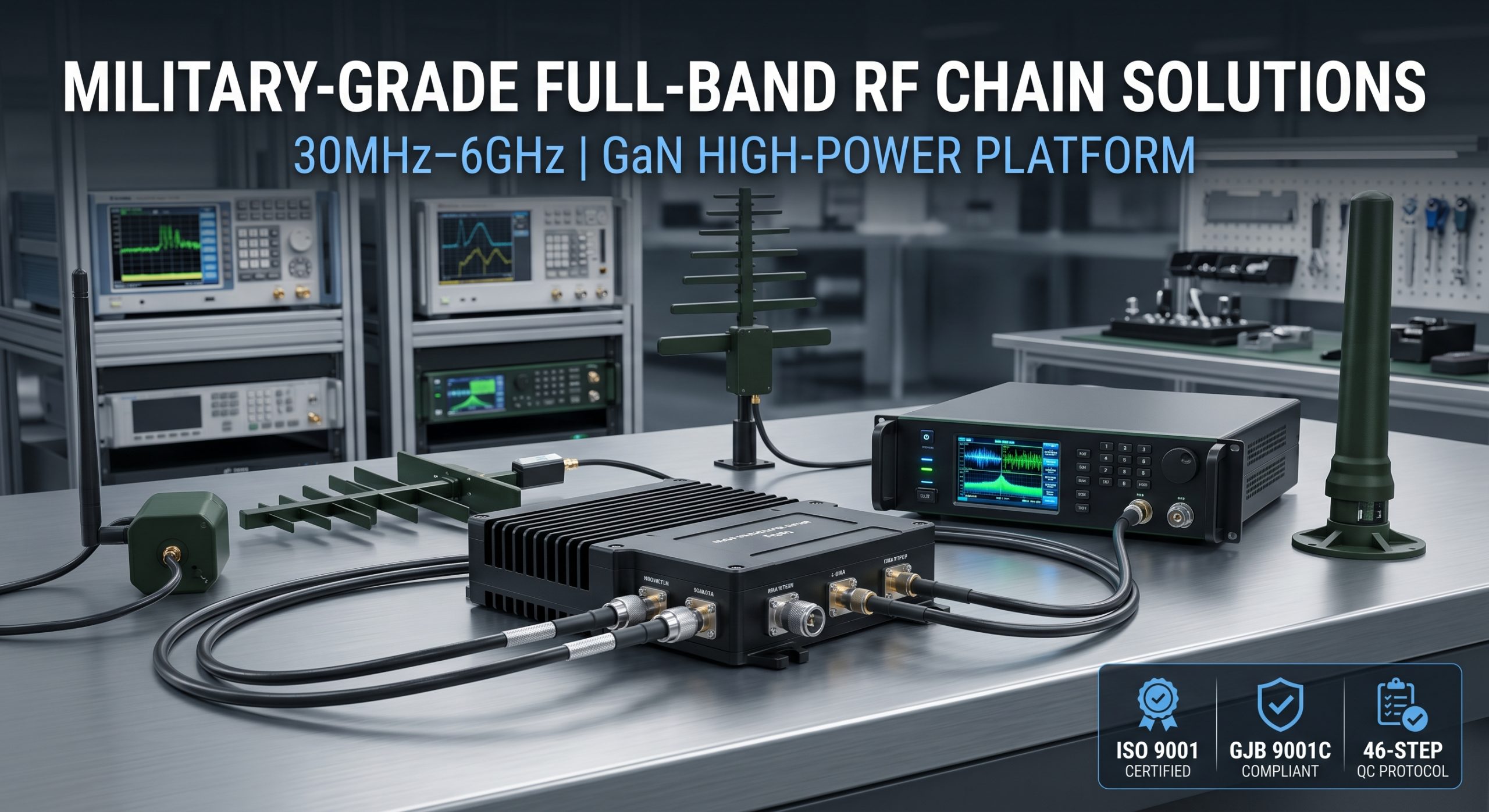
1. What Are Drone Jammers and How Do They Counter Security Threats?
Drone jammers disrupt radio frequency signals between an unmanned aerial vehicle and its controller. Here’s the deal: rogue drones compromise operational privacy and physical security across commercial facilities daily. Purchasing high-power hardware from an experienced Drone Jammers manufacturer provides an immediate line of defense. Our production facility utilizes a strict 46-step quality control protocol to build reliable multi-band solid-state amplification systems.
Why Radio Frequency Interference Stops Drones?
RF interference floods the target receiver with noise to override original command signals. You might be wondering how the drone reacts when connection drops unexpectedly. Most commercial platforms activate automated failsafe routines immediately.
- The drone initiates a controlled vertical landing sequence on the spot.
- The system triggers an automated return-to-home protocol using pre-saved GPS coordinates.
- The aircraft hovers in place until battery depletion forces a landing.
What Components Form an Operational Jamming System?
A professional RF chain solution requires precision engineering across multiple hardware stages. What’s the real story? Traders often supply mismatched modules, whereas full-chain manufacturers guarantee system-level architectural compatibility.
- Wideband GaN power amplifiers deliver raw output wattage.
- SDR digital signal sources generate adaptive sweep interference waveforms.
- Directional antennas concentrate the output energy toward the threat.
Key Takeaway
Understanding RF interference mechanisms allows facility managers to deploy active defensive barriers against commercial espionage and physical site vulnerability.
| System Component | Core Operational Function | Integration Priority |
| SDR Signal Source | Generates precise, programmable interference waveforms | High |
| GaN Amplifier | Amplifies raw signal output across wide bandwidths | Critical |
| Directional Antenna | Directs targeted RF energy toward the rogue aircraft | High |
Analyzing this structural breakdown confirms that sourcing fully matched RF chains prevents the signal degradation common in piecemeal system integration.
2. How Do Drone Jammers Work to Neutralize Airborne Targets?
Drone jammers work by emitting high-power electromagnetic noise across identical frequencies used for remote operation and satellite navigation. This is where it gets interesting… rogue aircraft cannot distinguish legitimate commands from the powerful blocking signal. Deploying continuous-wave Drone Jammers ensures targeted frequencies become completely unusable for telemetry or video transmission within the protected perimeter.
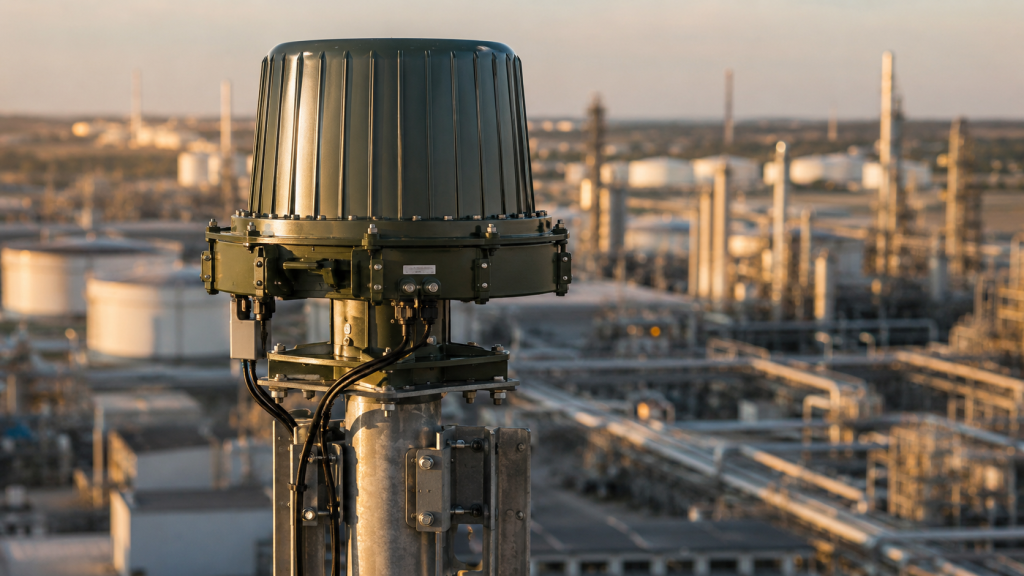
How Frequency Overlap Disrupts Control Telemetry?
The jamming hardware transmits dominant signals on common civilian control bands like 2.4 GHz and 5.8 GHz. Ready for the good part? The amplified output completely overwhelms the factory remote controller signal instantly.
- Standard handheld controllers use low-power microchips that fail against high-wattage amplification.
- High-gain directional antennas focus the disruptive beam directly onto the drone receiver.
- Solid-state amplification keeps the output stable across shifting environmental temperatures.
How GNSS Spoofing and Blocking Desynchronizes Flight Path?
Advanced neutralization relies on blocking satellite positioning coordinates across multiple constellations. What’s the catch? Without active GPS or GLONASS updating, the drone loses its ability to navigate autonomously or return home.
- The jamming module blocks the 1.2 GHz and 1.5 GHz satellite bands.
- Internal inertial measurement units drift quickly without external coordinate references.
- The aircraft drifts away with local wind currents due to positioning loss.
Key Takeaway
Disrupting both the operational control frequency and satellite navigation data eliminates the pilot’s ability to navigate or stream video feeds.
| Frequency Band | Target Target Drone Subsystem | Operational Impact |
| 1.5 GHz (GPS L1) | Satellite Navigation Receiver | Loss of positioning control |
| 2.4 GHz ISM | Remote Telemetry Link | Pilot losing total vehicle control |
| 5.8 GHz ISM | Real-Time Video Downlink | Complete loss of aerial video feed |
Reviewing the data illustrates that simultaneous multi-band suppression is required to counter modern commercial drones utilizing automated GPS backup flight routes.
3. Who Can Legally Use Drone Jammers to Protect Infrastructure?
Federal and local laws restrict the utilization of drone jammers exclusively to authorized defense procurement entities and government agencies. But here’s the kicker… unauthorized use by private corporations can result in severe financial penalties and criminal prosecution. Utilizing certified Drone Jammers hardware guarantees compliance with military-grade testing standards for approved security operators.
Why Civil Aviation Authorities Restrict Signal Jamming?
Unregulated RF transmission creates significant hazards for nearby legitimate communication networks and civilian radar systems. You might be wondering why the restrictions remain so unyielding across commercial airspace sectors.
- High-power signal output can bleed into critical airport emergency frequencies accidentally.
- Broad-spectrum interference blocks local cell tower links utilized by emergency responders.
- Unshielded RF amplifiers generate harmonic emissions that disrupt municipal wireless infrastructure.
Which Specific Sectors Qualify for Legal Exemption?
Military organizations and authorized federal critical infrastructure operators maintain legal access to defense-grade signal suppression tools. Here’s the deal: state borders and high-security installations face unique aerial risks that require active counter-measures.
- Customs and border protection agencies use localized jamming to stop smuggling operations.
- Military installations install continuous full-band RF barriers around ammunition storage areas.
- Maximum-security correctional facilities deploy automated jamming systems to block contraband delivery drops.
Key Takeaway
Navigating the regulatory framework ensures that defense system integrators source hardware that strictly aligns with military-grade production and testing compliance guidelines.
| Authorized Sector | Typical Deployment Use-Case | Regulatory Compliance Standard |
| National Defense | Border surveillance protection | GJB 9001C / MIL-STD-810 |
| Federal Prisons | Contraband delivery prevention | Local Government Authorization |
| Nuclear Facilities | Critical airspace perimeter isolation | National Security Exemption |
The distinction in application requirements proves why sourcing equipment from verified manufacturers with global export validation remains vital for international procurement teams.
4. What Are the Main Types of Drone Jammers Available Today?
Security professionals categorize drone jammers into highly targeted directional systems and wide-area omnidirectional protective shields. This is where it gets interesting… choosing the wrong deployment architecture allows rogue aircraft to bypass the defensive perimeter entirely. Selecting Drone Jammers configured with modular software-defined radio sources allows site operators to adjust to changing aerial threats in real time.

How Handheld Rifle-Style Systems Target Visible Threats?
Tactical personnel utilize highly focused directional rifle configurations for visual, line-of-sight engagement. What’s the real story? These systems excel at localized defense without disrupting neighboring electronics outside the narrow beam width.
- High-gain directional antennas focus energy precisely within a tight directional cone.
- Trigger-activated operation preserves onboard battery reserves during field patrols.
- Integrated optical sights allow operators to track moving airborne targets easily.
How Fixed Omnidirectional Domes Protect Critical Facilities?
Fixed security installations require a 360-degree protective bubble to shield sprawling industrial areas autonomously. Ready for the good part? Multi-band omnidirectional systems run continuously inside ruggedized, weather-proof enclosures.
- Centralized mast mounting provides complete geographic perimeter coverage across all axes.
- Automated integration linking connects the jamming modules to local radar or RF sensors.
- Liquid-cooled heat sinks manage temperature buildup during continuous full-power transmission.
Key Takeaway
Selecting between mobile tactical rifles and permanent omnidirectional domes depends on whether your operational environment requires rapid individual deployment or autonomous area protection.
| System Form Factor | Effective Coverage Pattern | Primary Tactical Advantage |
| Tactical Rifle | Focused directional cone | Low risk of peripheral RF interference |
| Fixed Dome Array | 360-degree radial bubble | Continuous autonomous facility shielding |
| Mobile Vehicle Mount | Dynamic mobile perimeter | Flexible convoy protection in field zones |
Evaluating these diverse form factors underscores the necessity of choosing an agile manufacturing partner capable of customizing power outputs and enclosure specifications.
5. What Frequencies Do Commercial Drone Jammers Target?
Modern counter-UAV platforms target the precise frequency bands used for control telemetry, real-time video downlinks, and satellite-based navigation. What’s the catch? If a single band remains unblocked, an advanced drone can still execute its mission using alternative channels. Utilizing full-band Drone Jammers covering 30 MHz up to 6 GHz provides absolute protection against commercial and customized threat profiles.
Why Multi-Band Continuous Coverage Eliminates Signal Exploitation?
Industrial drones frequently switch between different operational frequencies to avoid basic single-frequency countermeasures. But here’s the kicker… continuous wideband amplification blocks all potential communication avenues simultaneously.
- The 433 MHz and 915 MHz channels are heavily utilized for long-range industrial data links.
- Standard 2.4 GHz and 5.8 GHz bands carry high-definition video feeds back to the pilot.
- Customized digital channels can be countered using real-time frequency-hopping SDR technology.
How GPS, GLONASS, and Galileo Blocking Prevents Autonomous Recovery?
Blocking the control link is ineffective if the aircraft can navigate autonomously via internal satellite receivers. Here’s the deal: precise satellite frequency suppression forces the target drone to lose orientation.
- The GPS L1 band at 1575 MHz regulates basic civilian positioning tracking.
- The GLONASS and Galileo frequencies provide secondary positioning redundancies for modern drones.
- Suppressing these navigation bands simultaneously forces an immediate automated landing sequence.
Key Takeaway
Securing a site requires an integrated RF platform capable of blocking multiple transmission frequencies at the exact same moment without dropping signal output.
| Targeted Frequency Band | Common Global Application | Primary Component Required |
| 433 / 915 MHz | Long-Range Control Links | Low-Band GaN Power Amplifier |
| 1.2 / 1.5 GHz | GNSS Positioning Channels | Precision Navigation Jamming Module |
| 2.4 / 5.8 GHz | Wi-Fi Telemetry & Video Feeds | High-Frequency Wideband Source |
This detailed breakdown demonstrates why single-frequency hardware cannot compete with modern multi-band architecture engineered on a high-power gallium nitride platform.
6. What Is the Effective Operational Range of Tactical Drone Jammers?
The effective range of a drone jammer depends heavily on the distance between the rogue aircraft and its original remote controller. You might be wondering why identical hardware performs differently across distinct field testing environments. Deploying Drone Jammers with significant power headroom ensures consistent defensive boundaries even in complex urban areas.
How the Signal-to-Interference Ratio Determines Mitigation Distance?
To intercept a drone successfully, the jamming signal’s strength at the aircraft’s receiver must surpass the pilot’s control signal. Here’s the deal: if the pilot is close to the drone, significantly higher jamming power is required to sever the link.
- Proximity to the threat allows low-power systems to succeed easily.
- Distant pilots lose control much faster when facing high-power solid-state amplifiers.
- High-gain directional antennas extend the range by focusing output energy directly on the target.
How Environmental Obstacles and Terrain Disrupt RF Performance?
Physical barriers and urban structures alter the propagation of disruptive electromagnetic waves. What’s the real story? Open border areas allow maximum signal propagation, while dense industrial zones cause signal attenuation.
- Concrete buildings and steel structures block and reflect high-frequency signals.
- High ambient RF noise in cities requires specialized, high-efficiency GaN modules.
- Heavy rain or high humidity can scatter high-frequency bands, reducing total effective range.
Key Takeaway
System integrators must calculate the ratio of target distance to controller distance while ensuring the hardware provides adequate power reserves to compensate for environmental loss.
| Operational Environment | Average Effective Range | Primary Limiting Factor |
| Open Border Zone | 2,000 to 5,000+ Meters | Line-of-sight atmospheric attenuation |
| Suburban Industrial Park | 1,000 to 2,000 Meters | Moderate structural signal blockage |
| Dense Urban Center | 300 to 1,000 Meters | High background wireless noise and reflections |
Analyzing these environmental variations highlights why selecting an engineering-driven manufacturer with custom power configuration capabilities remains vital for field deployment success.
7. What Are the Technical Core Elements of a Drone Jammer RF Chain?
An effective counter-drone system relies on a perfectly matched RF chain to translate digital signals into high-power disruptive energy. This is where it gets interesting… generic components sourced from separate suppliers often generate excessive heat and drop in output power. Specifying Drone Jammers built on integrated wideband GaN amplifier platforms guarantees peak performance across extreme environments.
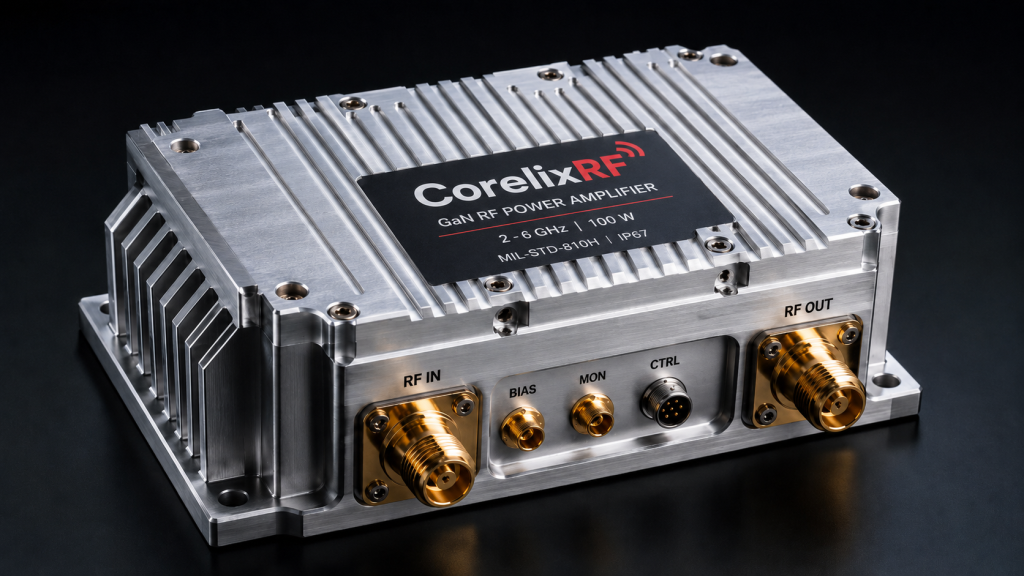
Why Gallium Nitride (GaN) Tech Outperforms Older Silicon Platforms?
Modern defense applications require high power density and wide frequency coverage from compact modules. Ready for the good part? GaN technology handles significantly higher operational voltages and temperatures than traditional silicon transistors.
- GaN modules maintain stable power output without degradation during extended operations.
- Higher thermal conductivity reduces the size and weight of required cooling systems.
- Wideband impedance matching enables a single amplifier module to cover vast frequency ranges.
How Software-Defined Radio (SDR) Signal Sources Counter Modern Threats?
Fixed-frequency sweep generators cannot counter advanced drones that use intelligent frequency-hopping protocols. What’s the catch? Programmable SDR cores allow operators to adapt their tactics to match changing threat profiles.
- Dual-channel outputs enable simultaneous transmission of distinct modulation schemes.
- Real-time frequency control allows quick adjustments to target specific detected frequencies.
- Support for multiple waveforms ensures compatibility with complex digital transmission standards.
Key Takeaway
Investing in an integrated GaN and SDR-driven architecture ensures your counter-drone system retains the technical agility needed to neutralize evolving digital protocols.
| Component Type | Material Base / Tech | Key System Benefit |
| Power Amplifier Module | Gallium Nitride (GaN) | High efficiency with low thermal power drop |
| Signal Generation Unit | Software-Defined Radio (SDR) | Flexible, programmable frequency modulation |
| Thermal Management | Integrated Aluminum Heatsink | Sustained continuous operation in hot climates |
Reviewing these technical metrics demonstrates that full-chain manufacturing control is essential for ensuring individual modules operate in harmony without creating internal signal mismatches.
8. What Security Risks Arise From Inadequate Drone Jammer Quality?
Substandard counter-drone hardware exposes critical facilities to severe security breaches due to sudden component failures or power drops. But here’s the kicker… many low-cost options look professional externally but lack proper testing under extreme stresses. Sourcing Drone Jammers verified by a strict 46-step quality control protocol removes the risk of sudden hardware failures during critical security operations.
Why Thermal Power Degradation Causes Mid-Operation System Failure?
Low-grade power amplifiers often suffer from rapid power drop-off when running continuously in warm climates. You might be wondering why a system rated for 100 watts suddenly drops to a fraction of that power after a few minutes of use.
- Insufficient thermal dissipation causes internal junction temperatures to rise rapidly.
- Unoptimized impedance matching reflects power back into the module, causing overheating.
- Thermal stress damages sensitive high-frequency components, permanently degrading the system’s effective range.
Why Improper VSWR Protection Destroys Core Amplification Circuits?
When a jammer transmits high-power RF signals, any impedance mismatch in the antenna path reflects destructive energy backward. Here’s the deal: without active voltage standing wave ratio (VSWR) protection, the internal amplifier circuit will quickly burn out.
- High reflected power instantly melts delicate internal wire bonds.
- Poorly manufactured antenna connections create severe impedance mismatches.
- Sudden component burnouts leave the security perimeter completely unprotected against aerial threats.
Key Takeaway
Sourcing counter-drone components from facilities with advanced environmental testing labs ensures your hardware will operate reliably during prolonged field operations.
| Failure Mode | Root Component Cause | Operational Impact |
| Thermal Power Drop | Poor heat sink design or low-grade GaN | Drastically reduced protection range over time |
| Amplifier Burnout | Missing or inadequate VSWR protection | Complete system failure during live threats |
| Signal Bleed | Uncalibrated SDR signal source | Accidental interference with civilian communications |
Reviewing these common failure modes emphasizes the importance of partnering with a manufacturer that conducts rigorous thermal cycling and high-stress testing before shipping hardware.
9. How Do Military and Commercial Counter-Drone Systems Differ?
Commercial facilities prioritize localized asset protection, whereas military installations require wide-area full-band coverage across harsh environments. This is where it gets interesting… while commercial operators can often deploy simple directional tools, defense forces need ruggedized, multi-band systems. Deploying Drone Jammers manufactured to GJB 9001C standards ensures maximum reliability for defense integrators handling complex field deployments.
Why Extreme Environmental Resiliency Is Required for Defense Gear?
Tactical military equipment must survive severe physical handling, extreme temperatures, and intense vibrations during combat operations. What’s the real story? Standard commercial enclosures quickly fail when exposed to desert heat or tropical moisture.
- Military-grade hardware undergoes comprehensive thermal shock testing in specialized labs.
- Conformal coating protects internal circuit boards from corrosion caused by salt fog or moisture.
- Ruggedized aluminum enclosures protect fragile internal components from heavy impacts and vibrations.
Why Full-Band Spectrum Coverage Is Vital for Electronic Warfare?
Modern defense forces face highly customized aerial threats that operate outside standard civilian wireless frequencies. Ready for the good part? True military-grade systems provide continuous coverage across the entire RF spectrum to counter non-standard frequencies.
- Continuous coverage from 30 MHz to 6 GHz eliminates blind spots across the spectrum.
- High-power output platforms support multiple modulation types simultaneously.
- Advanced software allows rapid integration with military command-and-control networks.
Key Takeaway
Choosing military-grade hardware over civilian alternatives guarantees the structural durability and spectral coverage required to withstand sophisticated electronic countermeasures.
| Engineering Requirement | Commercial Grade System | Military Grade System |
| Frequency Spectrum | Limited standard civilian bands (e.g., 2.4/5.8 GHz) | Continuous 30 MHz to 6 GHz full-band coverage |
| Quality Control Protocol | Basic functional testing | 46-step protocol with environmental testing |
| Design Compliance | Indoor or mild outdoor use | Tested to strict MIL-STD-810 specifications |
This comparison highlights why international defense procurement authorities rely exclusively on specialized RF manufacturing plants that control the entire production line from raw components to finished systems.
10. How Can System Integrators Customize Drone Jammer Configurations?
System integrators customize drone jammer setups by adjusting output wattage, targeting specific frequencies, and engineering bespoke thermal enclosures. What’s the catch? Standard off-the-shelf modules rarely match the tight space and power constraints of custom vehicle or fixed-mast installations. Partnering with a specialized manufacturer allows you to order tailored Drone Jammers sub-assemblies built exactly to your technical project requirements.
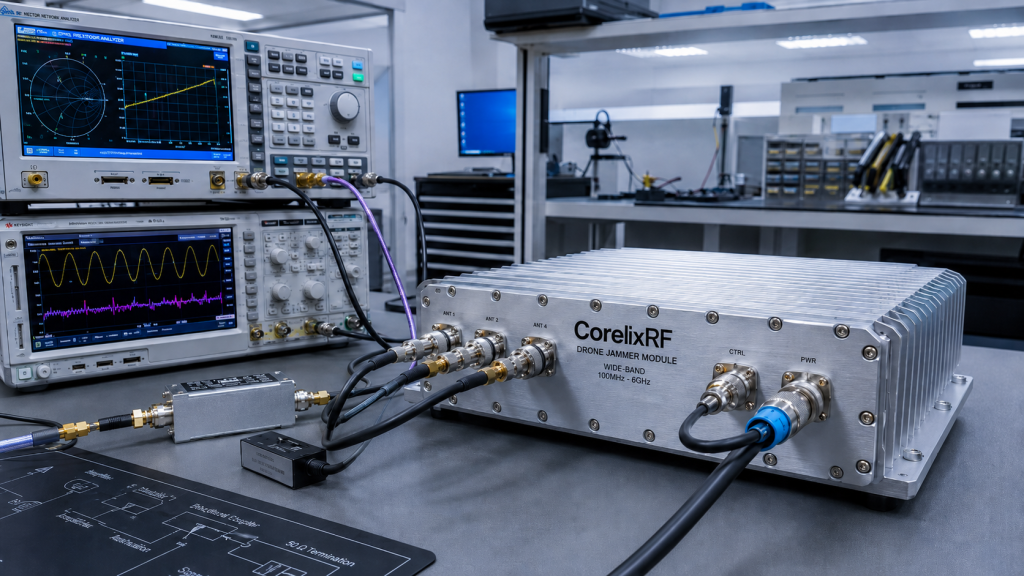
How to Select the Ideal Balance Between Power and Bandwidth?
Every security project balances coverage range against the power limits of the deployment platform. But here’s the kicker… increasing output power requires advanced impedance matching to protect the system’s core circuitry.
- Custom options range from 30-watt modules up to high-power 200-watt platforms.
- Narrowing the frequency focus concentrates maximum power on a single specific threat band.
- Software-defined radios can be programmed with custom frequency patterns to protect proprietary communication links.
How Custom Mechanical Engineering Solves Complex System Integration?
Integrating counter-UAV modules into mobile vehicles or fixed defense towers requires flexible mechanical and electrical interfaces. Here’s the deal: a specialized manufacturing partner can adapt the underlying hardware layout to fit your specific enclosure constraints.
- Custom aluminum heat sinks can be designed to match your existing cooling systems.
- Communication ports can be configured with standard RS422 interfaces for easy system integration.
- Modular card designs allow field technicians to swap frequency modules quickly during maintenance.
Key Takeaway
Working with a direct manufacturer that employs an experienced RF engineering team ensures your custom counter-drone system integrates smoothly and performs reliably in the field.
| Customization Option | Adjustable Parameter Range | Primary System Benefit |
| Power Amplification | 30W to 200W Configurable Output | Optimizes interference range for specific sites |
| Control Interface | RS422 / Custom Digital Protocols | Enables seamless integration with centralized software |
| Enclosure Style | Custom Form Factor & Thermal Base | Fits tight space constraints on vehicles or masts |
This flexibility demonstrates why defense system integrators avoid general brokers and work directly with established RF manufacturing factories to ensure long-term mission success.
Q&A: Frequently Asked Questions About Counter-UAV Technology
Q1: Can I legally operate a drone jammer for private property protection? No, civilian use is strictly prohibited. Federal laws restrict these devices to military branches and authorized government defense agencies due to the high risk of disrupting public communication networks and civil aviation safety.
Q2: How does a drone jammer affect nearby civilian Wi-Fi networks? It temporarily overpowers signals on shared frequencies. Because commercial drones commonly use the 2.4 GHz and 5.8 GHz bands for control links, operating a high-power jammer nearby will disrupt civilian wireless routers and Bluetooth devices sharing those frequencies.
Q3: Can I customize the frequency bands for specific international deployment requirements? Yes, direct factories provide comprehensive frequency customization. System integrators can adjust the RF modules to target unique frequencies ranging from 30 MHz up to 6 GHz, ensuring compliance with local defense requirements.
Q4: How do I know if an amplifier module will maintain its power output in extreme heat? Look for hardware that undergoes comprehensive environmental testing. High-efficiency gallium nitride (GaN) platforms paired with an integrated aluminum heat sink and verified by a 46-step quality protocol will maintain stable output power without degradation.
Q5: What’s the best way to integrate a counter-drone module into an existing security system? Select modules built with programmable SDR signal sources and standard control interfaces like RS422. This design allows system integrators to connect the jamming hardware directly to automated radar or optical tracking systems.
Building the Future of Aerial Defense Perimeter Security
Deploying reliable counter-drone hardware solves the urgent security challenges caused by unauthorized aerial surveillance and remote security breaches. Selecting multi-band GaN amplification platforms equipped with programmable software-defined radio sources ensures your defense system can adapt to changing digital threats. Our manufacturing facility delivers the rigorous engineering, 46-step quality validation protocols, and technical customization required to protect critical airspace globally. To safeguard your perimeter with military-grade reliability, contact us today to receive a customized engineering proposal tailored to your specific system-level requirements.
Authorized RF engineering and compliance review
For regulated RF systems, this page should be used as an engineering and compliance review path, not as a public deployment checklist. CorelixRF starts with authorization status, operating region, frequency plan, output limit, antenna interface, safety controls, thermal limits and acceptance documents.
- RFQ checklist – send the data buyers usually forget, including band, power, duty cycle, interface and test standard
- delivery documentation – check what documents can support incoming inspection, FAT review and long-term maintenance
- quality and certification review – review the quality and compliance evidence before the project moves into procurement
- RF front-end platform – compare the RF chain as a system instead of selecting one isolated module
- RF configurator – turn frequency, power, thermal and interface requirements into a first configuration brief
- case studies – review similar engineering paths before sending an RFQ
- engineering contact – send the application notes, block diagram or target specification to engineering sales
This keeps the discussion inside lawful, authorized RF programs while still giving procurement teams a clear way to request amplifier, antenna, SDR source, documentation and factory review.
C-UAS RF Integration Review Path
For authorized C-UAS integration reviews, connect system architecture requirements to RF front-end integration, RF power amplifier platform selection and antenna/load planning. Share control interfaces, frequency bands, power targets, duty cycle, enclosure limits, VSWR exposure and validation-documentation requirements through the RF inquiry form.