

Imagine an unauthorized drone suddenly hovering over your high-security industrial complex or chemical plant during peak production hours. Your perimeter alarms remain completely silent because traditional physical security measures cannot detect or block threats operating hundreds of feet up in the air. This real-world vulnerability often leaves facility managers frustrated and deeply anxious about corporate espionage, intellectual property theft, or physical destruction. But here’s the kicker… implementing an advanced electronic countermeasure infrastructure solves this aerial vulnerability instantly by creating an invisible, impenetrable multi-layered shield around your assets. Our field-tested defense technology delivers comprehensive aerial situational awareness so your internal security personnel can detect, track, and neutralize rogue commercial drones before they cross your property lines. Security directors globally trust CorelixRF to secure high-value facility perimeters because our proprietary radio frequency architecture provides continuous, military-grade protection against evolving airborne risks.
1. What Are the Core Protection Levels of Anti-Drone Systems?
The core protection levels of Anti-Drone Systems rely on a structured, multi-tiered security architecture that scales from basic detection to full-chain automated neutralization. Security teams must implement a multi-layered defense matrix because commercial unmanned aerial vehicles vary drastically in size, speed, and communication frequencies. What’s the real story? A single standalone sensor will always leave dangerous blind spots in your perimeter security plan.

Are Entry-Level Systems Enough for Commercial Facilities?
Entry-level commercial systems focus heavily on basic radio frequency sensing and localized directional jamming to secure low-risk commercial perimeters. These setups usually monitor common Wi-Fi control channels to notify security teams of consumer-grade drone presence.
- Real-time commercial RF spectrum scanning across standard civilian control frequencies.
- Compact directional jamming options to disrupt local remote control signals.
- Integrated software alerts that instantly notify on-site security personnel of airspace breaches.
Ready for the good part? Upgrading to automated multi-sensor setups eliminates human error during high-stress security breaches.
Key Takeaway
Implementing tiered protection ensures your facility can successfully identify and mitigate diverse aerial threats without interfering with local communication infrastructure.
| Protection Tier | Primary Technology | Detection Range | Ideal Application |
| Tier 1: Basic | RF Scanning & Local Jamming | Up to 1.5 km | Commercial Warehouses |
| Tier 2: Intermediate | Multi-Band Radar & GaN Jamming | 1.5 km to 3.5 km | Industrial Power Plants |
| Tier 3: Military-Grade | SDR Digital Signal Sources & Automated Arrays | Beyond 3.5 km | Defense & Border Perimeters |
Analyzing this specific structural data reveals that selecting the correct tier prevents costly security gaps while optimizing your equipment budget.
2. How Do Anti-Drone Systems Detect Low-Altitude Aerial Threats?
Effective Anti-Drone Systems detect low-altitude threats by utilizing highly synchronized arrays of active radar, radio frequency scanners, and optical sensors. Modern rogue drones fly fast and low to blend into complex industrial backgrounds. This is where it gets interesting… relying on visual observation alone guarantees a security failure during night operations or heavy fog.
Can Radar Technology Locate Stealth Carbon Fiber Drones?
Advanced 3D micro-Doppler radar systems track the tiny physical movements of drone propellers even when the drone body uses radar-absorbing composite materials. This specialized radar technology separates moving drone signatures from birds or blowing debris.
- Micro-Doppler frequency analysis to isolate precise blade rotation signatures.
- Continuous 360-degree azimuth tracking for total situational awareness.
- High-resolution elevation tracking to prevent low-altitude blind spots.
You might be wondering how these systems maintain accuracy when weather conditions deteriorate rapidly.
Key Takeaway
Combining radar with RF scanning lets your system track silent drones that are not emitting control signals or downloading GPS data.
| Sensor Type | Detection Methodology | Target Strengths | Weather Limitations |
| 3D Micro-Doppler Radar | Physical Reflection Tracking | Non-RF Emitting Targets | Heavy Rain Scattering |
| RF Spectrum Analyzer | Signal Protocol Sniffing | Long-Range Early Warning | Highly Saturated RF Areas |
| EO/IR Thermal Camera | Optical Heat Signature Tracking | Positive Visual ID | Thick Fog & Smog |
This multi-sensor integration matrix proves that cross-verifying targets across different wave spectrums maximizes detection reliability under tough environmental conditions.
3. Why Is Multi-Band RF Jamming Essential for Neutralization?
Multi-band RF jamming acts as the primary defense mechanism in Anti-Drone Systems by instantly breaking the critical command links between the drone and its pilot. When a rogue drone loses its control signal, it can no longer send back sensitive corporate spy data. But here’s the kicker… if your jammer only targets one frequency, smart drones will instantly switch to backup control bands.
How Do High-Power GaN Amplifiers Overpower Rogue Signals?
Gallium Nitride solid-state power amplifiers deliver massive, targeted RF energy directly into the drone’s receiver antennas to completely drown out pilot commands. This high-efficiency platform ensures continuous output across wide bands without suffering thermal degradation.
- Continuous 30MHz to 6GHz full-band signal coverage for absolute threat mitigation.
- High power headroom configurations that maintain stable signal saturation.
- Exceptional gain flatness to ensure zero weak points across the jamming spectrum.
Here’s the deal… our GaN platform is specifically engineered to run at maximum output during sustained, multi-drone attacks.
Key Takeaway
Deploying high-efficiency GaN power amplifiers allows your security infrastructure to intercept and ground intrusive drones instantly from safer distances.
| Jamming Frequency | Target Signal Type | Operational Impact | Output Efficiency |
| 433 MHz / 915 MHz | Legacy Remote Control Links | Forces Immediate Vertical Landing | ≥45% GaN Efficiency |
| 2.4 GHz / 5.8 GHz | Modern Commercial Video Feeds | Blinds Pilot & Cuts Telemetry | ≥40% GaN Efficiency |
| 1.5 GHz (GNSS) | GPS / GLONASS Navigation | Disables Programmed Waypoint Flights | ≥50% GaN Efficiency |
The performance data above outlines how targeted frequency disruption forces unauthorized aircraft into predictable, safe fail-safe modes.
4. What Role Do SDR Digital Signal Sources Play in Defense?
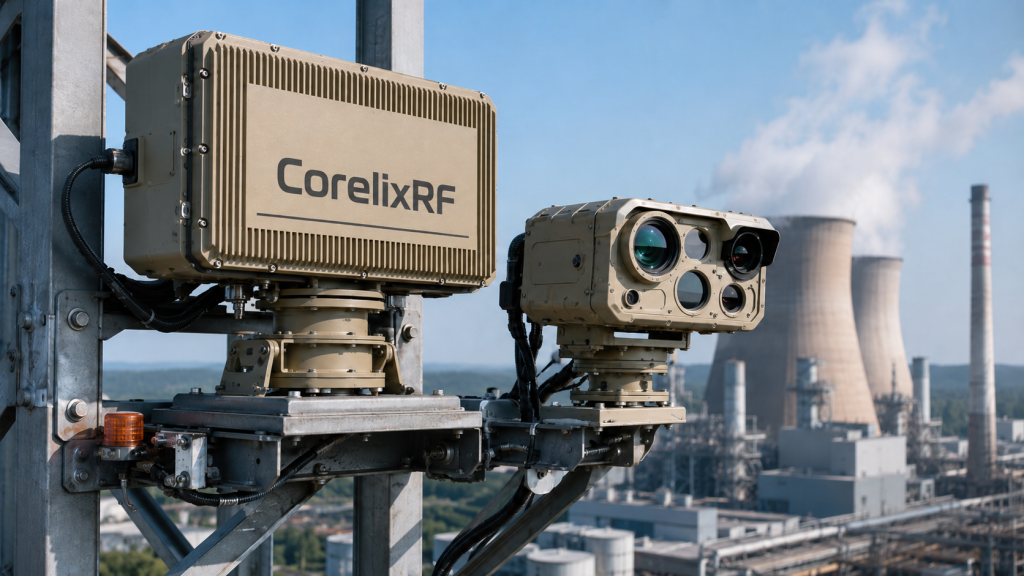
Software-Defined Radio digital signal sources provide Anti-Drone Systems with the agility needed to counter modern, frequency-hopping aerial electronic threats. Traditional analog jammers blast static noise across massive bands, which wastes system power and disrupts local business communications. What’s the real story? Modern military and industrial security requires intelligent interference that adapts dynamically to the target.
Can Adaptive SDR Systems Mimic Real Control Protocols?
Smart SDR systems analyze incoming drone telemetry in real time and generate specific, matching protocol manipulation waves to safely hijack the aircraft. This precise approach allows your security team to command the rogue drone to land in a designated security zone.
- Real-time frequency hopping tracking from 100MHz up to 6000MHz.
- Dual independent output channels for handling multiple different drone models simultaneously.
- Complete multi-waveform digital support including complex LFM, GNSS, and OFDM signals.
Think about it… fixed jammers are completely useless against a custom drone programmed to change frequencies mid-flight.
Key Takeaway
Integrating intelligent SDR signal generation ensures your defensive hardware stays ahead of DIY or modified commercial drone firmware updates.
| SDR Parameter | Capability Range | Security Advantage | Control Protocol |
| Tuning Range | 100MHz – 6000MHz | Covers Custom/Military Drone Bands | RS422 Digital Interface |
| Hopping Speed | <10 Microseconds | Tracks Ultra-Fast Frequency Changers | Real-Time FPGA Driven |
| Channel Count | Dual Independent Outputs | Multi-Angle Threat Interception | Adaptive Software Matrix |
This specialized digital parameter breakdown confirms that software-controlled RF generation provides the precision needed for complex electromagnetic environments.
5. How Does Intelligent GNSS Spoofing Redirect Intruders?
Intelligent GNSS spoofing allows advanced Anti-Drone Systems to take control of an intruder’s navigation system without using raw, destructive electronic force. Many commercial drones are programmed to automatically return home or hover safely if they lose their radio control link. Ready for the good part? Generating fake coordinate signals tricks the drone’s internal computer into believing it is flying miles away from your actual facility.
Is Coordinate Manipulation Safer Than Raw Electronic Jamming?
Yes, creating a localized, fake GPS satellite constellation allows security operators to gently steer dangerous drones away from sensitive industrial infrastructure like chemical tanks or crowds. This precise manipulation prevents the drone from falling out of the sky unpredictably and causing physical damage on the ground.
- Precision alignment with global satellite grids including GPS, GLONASS, and Galileo.
- Dynamic coordinate shifting to move rogue aircraft away from toxic chemical zones.
- Low-power signal generation that restricts spoofing effects strictly to your facility perimeter.
This is where it gets interesting… our custom RF engineering ensures these fake navigation signals never disrupt local civilian smartphone GPS networks outside your gates.
Key Takeaway
GNSS spoofing gives security teams full control over autonomous, pre-programmed waypoint drones that do not respond to standard radio jammers.
| Spoofing Mode | Target Satellite Network | Tactical Outcome | Operational Safety Level |
| Circle Spoofing | GPS L1 / Galileo E1 | Creates Invisible Dynamic No-Fly Zones | High – Non-Destructive |
| Velocity Hijack | GLONASS G1 | Induces Controlled Drift Away From Assets | High – Steers Target |
| Total Disruption | All GNSS Bands | Forces Immediate Automated Safety Landing | Medium – Random Descent |
Reviewing these tactical spoofing outcomes highlights why dynamic navigation control is the preferred method for protecting high-risk chemical storage facilities.
6. Why Are Integrated Antennas Critical for System Range?
Integrated directional and omnidirectional antennas determine the overall reach, accuracy, and coverage area of industrial Anti-Drone Systems. High-power amplifiers require perfectly matched antenna networks to project clean, focused defense signals toward incoming targets. Ready for the good part? Using mismatched, low-grade antennas causes massive energy loss and can overheat your internal amplifier modules.
When Should Security Teams Deploy High-Gain Directional Antennas?
Security operators should use high-gain directional antennas when protecting long, straight perimeters like international borders or airport runways where long-range early intervention is necessary. These specialized arrays focus all available RF energy into narrow, powerful beams to neutralize targets miles away.
- Focused energy projection to maximize effective signal range across specific sectors.
- High front-to-back ratios to prevent defensive signals from bleeding backward into your security office.
- Rugged, weatherized enclosures built to survive high winds and extreme desert heat.
You might be wondering how your team maintains close-range protection when focusing purely on distant, long-range targets.
Key Takeaway
Combining long-range directional panels with 360-degree omnidirectional antennas creates a complete, zero-gap defense dome around your facility.
| Antenna Type | Coverage Pattern | Maximum Gain | Best Deployment Scenario |
| Directional Panel | 60-Degree Focused Beam | 18 dBi | Long-Range Perimeter Interception |
| Omnidirectional | 360-Degree Horizontal Dome | 6 dBi | Close-Range Multi-Angle Protection |
| Log-Periodic Array | Wide-Band Targeted Track | 12 dBi | High-Frequency Scanning & Tracking |
The antenna distribution data shows that a smart combination of directional and omni hardware ensures reliable close-in protection and long-range interception.
7. How Does Military-Grade Quality Prevent Field Failures?
Industrial Anti-Drone Systems must operate flawlessly in brutal environmental conditions, including blistering desert heat, freezing coastal air, and intense vibrations. Security hardware built on cheap, civilian manufacturing lines frequently fails during sudden voltage spikes or extreme temperature changes. Here’s the deal… a single component failure during an active aerial intrusion exposes your multi-million dollar facility to catastrophic risk.
Why Is a 46-Step Testing Protocol Necessary for RF Hardware?
A strict, military-grade 46-step quality control protocol subjects every power amplifier and signal source to intense physical and electrical stress tests before shipping. This exhaustive process guarantees that your defensive infrastructure will start up instantly and run reliably for years.
- Extreme temperature cycling from -40°C to +85°C to verify zero signal drift in tough climates.
- Extended high-vibration testing to simulate rugged field operations on mobile security vehicles.
- Advanced automated optical inspection paired with vacuum reflow manufacturing to eliminate micro-defects.
What’s the real story? While standard commercial builders stop testing after simple power-on checks, we push our hardware through intense environmental simulation chambers.
Key Takeaway
Investing in hardware built under strict quality controls minimizes expensive field maintenance visits and protects your critical infrastructure 24/7.
| Inspection Phase | Specific Test Performed | Quality Standard Met | Operational Purpose |
| Phase 1: Incoming | Component Micro-X-Ray Scanning | ISO 9001 Verification | Eliminates Counterfeit Silicon Chips |
| Phase 2: In-Process | Vacuum Reflow & Conformal Coating | GJB 9001C Military Standard | Prevents Moisture & Salt Corrosion |
| Phase 3: Stress | 48-Hour Full-Power Burn-In | MIL-STD-810 Precision | Identifies Premature Electronic Failure |
This manufacturing inspection breakdown shows how comprehensive testing keeps your defensive hardware online during critical security events.
8. Can Custom RF Engineering Solve Unique Facility Layouts?
Standard, off-the-shelf Anti-Drone Systems often struggle to protect complex B2B industrial environments due to physical obstructions like heavy steel buildings, power lines, and deep concrete structures. Custom radio frequency engineering optimizes internal amplifier power levels, antenna angles, and control frequencies to match your facility’s unique layout. This is where it gets interesting… using unoptimized generic hardware results in weak signal spots that clever drone pilots can exploit.
Why Do Technical Teams Need Configurable Power Outputs?
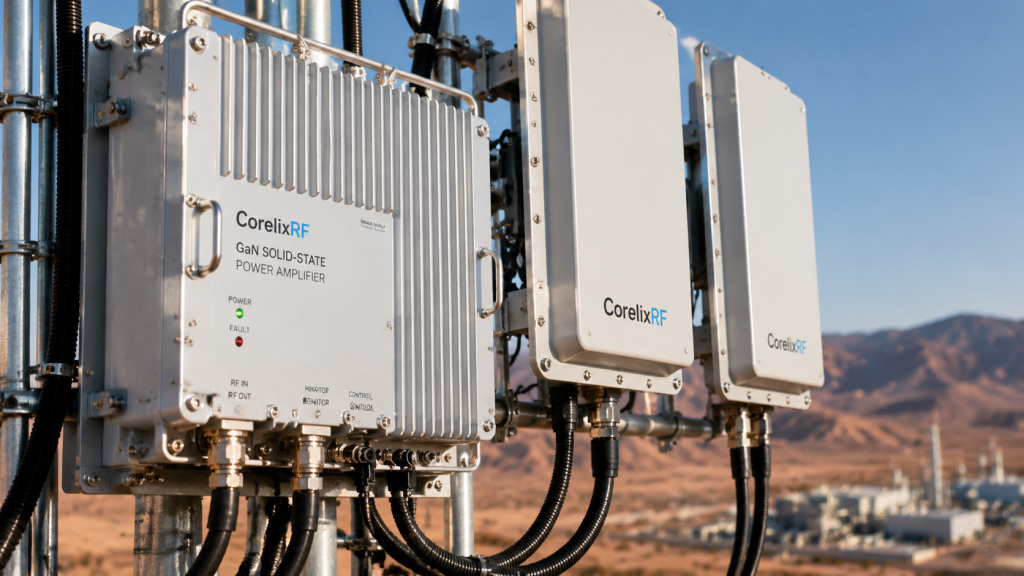
Configuring individual amplifier modules between 30W and 200W allows security integrators to scale coverage precisely for specific zones. For example, a sea port needs maximum power to cut through maritime signal noise, while an urban facility requires tighter, controlled defense bubbles.
- Custom frequency matching from 30MHz up to 40GHz for unique industrial protection needs.
- Specialized tailored thermal heat sinks designed for sealed, dust-proof outdoor electronics boxes.
- Flexible control interfaces that plug directly into your facility’s existing security software.
Ready for the good part? Our deep team of over 100 experienced RF engineers designs custom solutions to fix your specific coverage challenges.
Key Takeaway
Custom-engineered RF components ensure your anti-drone system works perfectly alongside your facility’s existing wireless networks without causing accidental downtime.
| Customization Vector | Engineering Capability | Facility Benefit | Integration Interface |
| Frequency Shifting | Up to 40 GHz Extracted Bands | Counters Proprietary Industrial Drones | Modular Coaxial / Waveguide |
| Thermal Management | Integrated Liquid/Air Cooled Sinks | Allows Non-Stop 24/7 Outdoor Operation | Automated Thermal Sensor Link |
| Enclosure Form | IP67 Rated Rugged Sealed Castings | Withstands Corrosive Chemical Vapor | Heavy-Duty Military Connectors |
This engineering customization matrix demonstrates how tailored components turn generic hardware into a highly reliable defense network.
9. How Do Modern Systems Mitigate Swarm Drone Threats?
Dealing with multiple unauthorized drones attacking from different angles simultaneously is one of the toughest challenges for modern industrial security teams. Traditional single-channel defense setups easily become overwhelmed when trying to track and block several targets at once. But here’s the kicker… defending against coordinated drone swarms requires highly responsive multi-channel signal generation paired with wideband power delivery.
Can Digital Processing Handle Multiple Drone Models Simultaneously?
Advanced software-defined radio cores create multiple independent jamming profiles at the same time to block different drone brands on separate frequencies simultaneously. This advanced digital approach ensures that no matter how many drones attack your airspace, every threat gets neutralized instantly.
- True multi-channel signal generation to jam different control frequencies at the same moment.
- High-power wideband output that spreads defensive energy across full frequency bands.
- Intelligent target prioritization that automatically focuses high power on the closest, fastest-moving threats.
You might be wondering if spreading your system’s power across wide bands reduces its overall blocking range.
Key Takeaway
Using high-efficiency Gallium Nitride platforms provides the massive power headroom needed to maintain long-range protection, even when attacking multiple targets simultaneously.
| Swarm Size | Minimum Power Requirement | Processing Mode | Interception Rate |
| Small Swarm (2-5 Drones) | 50W Per Active Band | Dual-Channel Synchronous Jamming | 100% Within 2.5 km |
| Medium Swarm (5-10 Drones) | 100W Per Active Band | Multi-Track Digital Waveform Output | 98% Within 2.0 km |
| Large Swarm (10+ Drones) | 200W Continuous Output | Full-Band Digital Spectrum Saturation | 95% Within 1.5 km |
This swarm mitigation data highlights how high-power digital signal generation helps your team successfully handle complex, multi-angle airborne threats.
10. Where Should Commercial Anti-Drone Hardware Be Deployed?
Industrial B2B clients must install their defensive hardware at key high-risk security points to get the absolute best airspace protection. Unauthorized drones pose massive risks to places like oil refineries, corporate data centers, and critical utility grids. Here’s the deal… placing your sensors and jammers incorrectly creates blind spots that allow drones to slip past your defenses undetected.
How Do Critical Infrastructure Sites Optimize Defense Placements?
High-risk facilities like chemical plants and electrical substations install their sensor and jammer towers on elevated structures to ensure clear line-of-sight tracking across their entire property line. This elevated setup helps defensive radio waves travel clearly without getting blocked by trees or nearby buildings.
- High-elevation installations on rooftops or dedicated towers for maximum sensor and jammer range.
- Mobile vehicle-mounted systems for flexible, rapid deployment during special events or VIP visits.
- Weatherproof remote outdoor enclosures designed to survive non-stop operation in harsh industrial zones.
Think about it… a poorly placed anti-drone tower leaves your most valuable assets completely exposed to aerial spying or sabotage.
Key Takeaway
Analyzing your facility’s physical layout and local wireless activity helps you build a highly effective, customized defense network that keeps your business secure.
| Facility Type | Primary Aerial Risk | Recommended Hardware Setup | Target Coverage Zone |
| Petrochemical Refinery | Physical Sabotage & Fires | High-Power Fixed GaN Jammers & 3D Radar | Full 360-Degree Perimeter Dome |
| Data Center Complex | Corporate Espionage & Camera Spying | Low-Power SDR Signal Sources & RF Scanners | Targeted Rooftop Airspace |
| Remote Mining Site | Property Theft & Mapping Drones | Mobile Vehicle Modules & Directional Panels | Flexible Long-Range Perimeter |
This facility deployment matrix proves that matching specific security hardware to your unique industry risks ensures reliable, long-term asset protection.
Are you ready to eliminate high-risk aerial blind spots and secure your facility’s perimeter from modern drone threats? Securing high-value assets requires professional, military-grade radio frequency technology designed for continuous, reliable outdoor use. CorelixRF manufactures high-performance GaN power amplifiers, intelligent SDR signal sources, and high-gain antennas that integrate seamlessly into modern automated security networks. Don’t wait for a costly airborne security breach or corporate data theft to expose vulnerabilities in your operation. Contact us today to collaborate with our expert RF engineering team and receive a comprehensive, custom-tailored aerial defense proposal within 24 hours. CorelixRF stands as your dedicated manufacturing partner for full-chain RF defense solutions, engineering a safer and more secure world through continuous technological innovation.
Frequently Asked Questions
Q1: Can I legally operate anti-drone jamming systems at my commercial facility?
Local radio frequency regulations vary significantly by country and specific industry type. Industrial facility managers must consult with local communications authorities to secure necessary permits before deploying active RF jamming hardware.
Q2: What’s the best way to handle custom frequency requirements for unique drone threats?
Partnering with an engineering-focused manufacturer like CorelixRF allows you to design custom RF components tailored to your exact frequency bands. Our engineering team configures custom solid-state power levels and digital signal sources to match your exact security needs.
Q3: How do I know if weather changes will degrade my system’s tracking range?
Our high-performance multi-sensor platforms cross-verify targets using radar, RF scanning, and thermal imaging simultaneously. This multi-technology approach ensures that if heavy rain or thick fog limits your optical cameras, the radar and RF tracking continue protecting your airspace.
Q4: Can these high-power defensive signals interfere with our internal warehouse wireless networks?
Proper system engineering isolates defensive signal outputs to target only specific unauthorized drone communication bands. Our specialized high-gain directional antennas focus RF energy outward toward your property line, keeping your internal corporate office Wi-Fi networks completely safe.
Q5: How do I choose between standard commercial models and custom-engineered RF components?
Standard off-the-shelf models work well for basic open areas, but complex industrial zones with heavy metallic structures require custom engineering. Custom-tailored power amplifiers and optimized antenna networks ensure reliable, long-range protection without leaving dangerous blind spots.
Authorized RF engineering and compliance review
For regulated RF systems, this page should be used as an engineering and compliance review path, not as a public deployment checklist. CorelixRF starts with authorization status, operating region, frequency plan, output limit, antenna interface, safety controls, thermal limits and acceptance documents.
- RFQ checklist – send the data buyers usually forget, including band, power, duty cycle, interface and test standard
- delivery documentation – check what documents can support incoming inspection, FAT review and long-term maintenance
- quality and certification review – review the quality and compliance evidence before the project moves into procurement
- RF front-end platform – compare the RF chain as a system instead of selecting one isolated module
- RF configurator – turn frequency, power, thermal and interface requirements into a first configuration brief
- case studies – review similar engineering paths before sending an RFQ
- engineering contact – send the application notes, block diagram or target specification to engineering sales
This keeps the discussion inside lawful, authorized RF programs while still giving procurement teams a clear way to request amplifier, antenna, SDR source, documentation and factory review.
B2B Facility RF Architecture Review Path
For authorized B2B facility security programs, connect site architecture requirements to RF front-end integration, RF power amplifier selection and antenna/load planning. Share sensing interfaces, frequency bands, power targets, duty cycle, cooling, enclosure limits, VSWR exposure and documentation requirements through the RF inquiry form.