
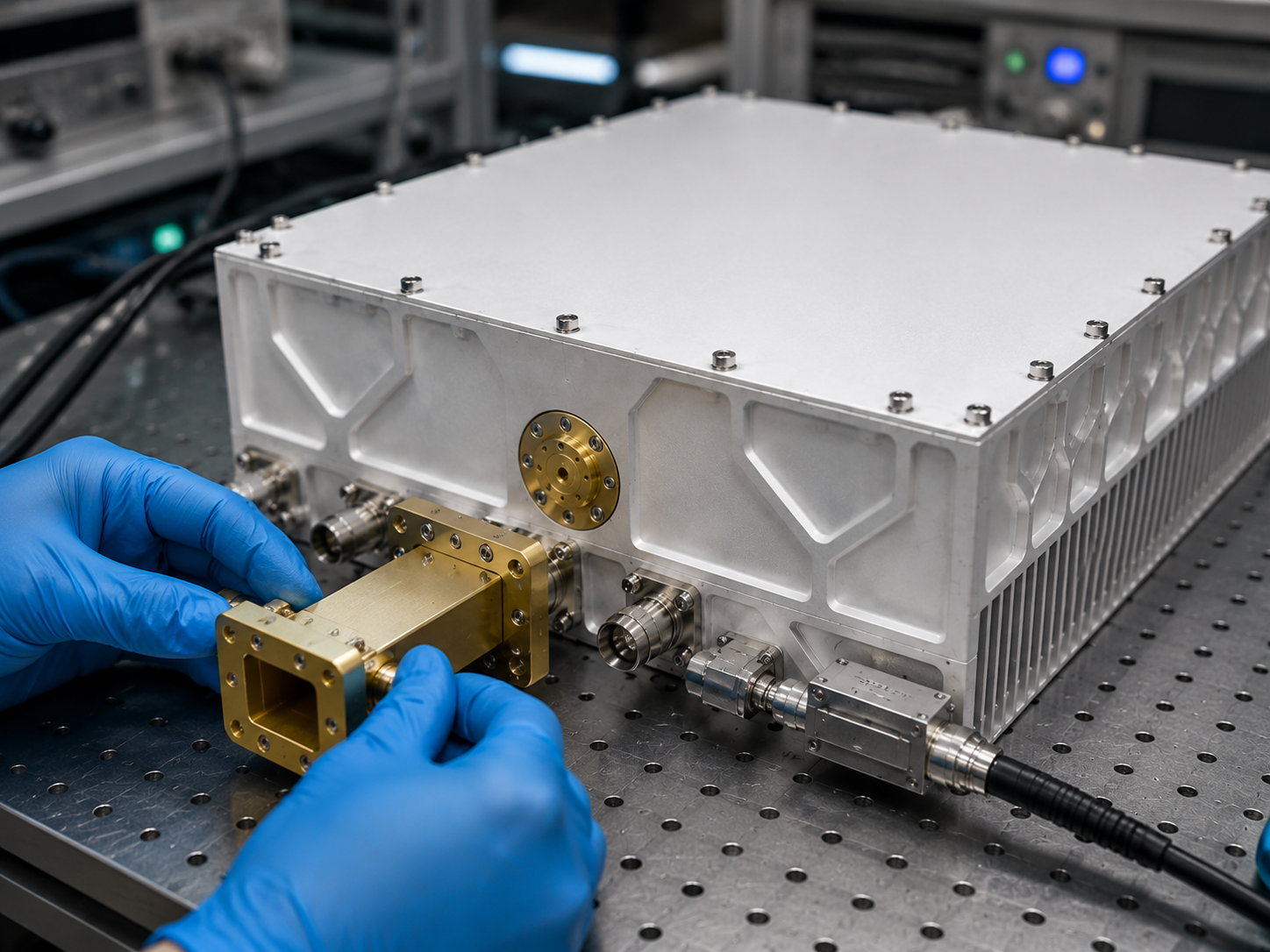
The CRF-PA-47G51.4G-200W is a public representative model name on CorelixRF’s millimeter-wave RF power amplifier page. The 47-51.4 GHz family is described as a narrow-band high-power project platform, with representative model options including 50W, 200W, and 400W. That positioning makes it different from a broad 18-40 GHz or 40-67 GHz inquiry: the value is focused high-power review in a narrower mmWave band.
Because CorelixRF states that detailed specifications and datasheets are released after inquiry review, this article does not assume unpublished gain, connector, efficiency, linearity, or thermal numbers. Instead, it explains how to prepare a useful RFQ for a 47-51.4 GHz high-power project.
Why Narrow-Band Review Can Be Useful
Broadband coverage is flexible, but high-power mmWave systems often benefit from a narrower engineering window. A 47-51.4 GHz platform can be relevant when the project has a defined band, fixed test plan, communication evaluation window, RF front-end validation requirement, or OEM system target.
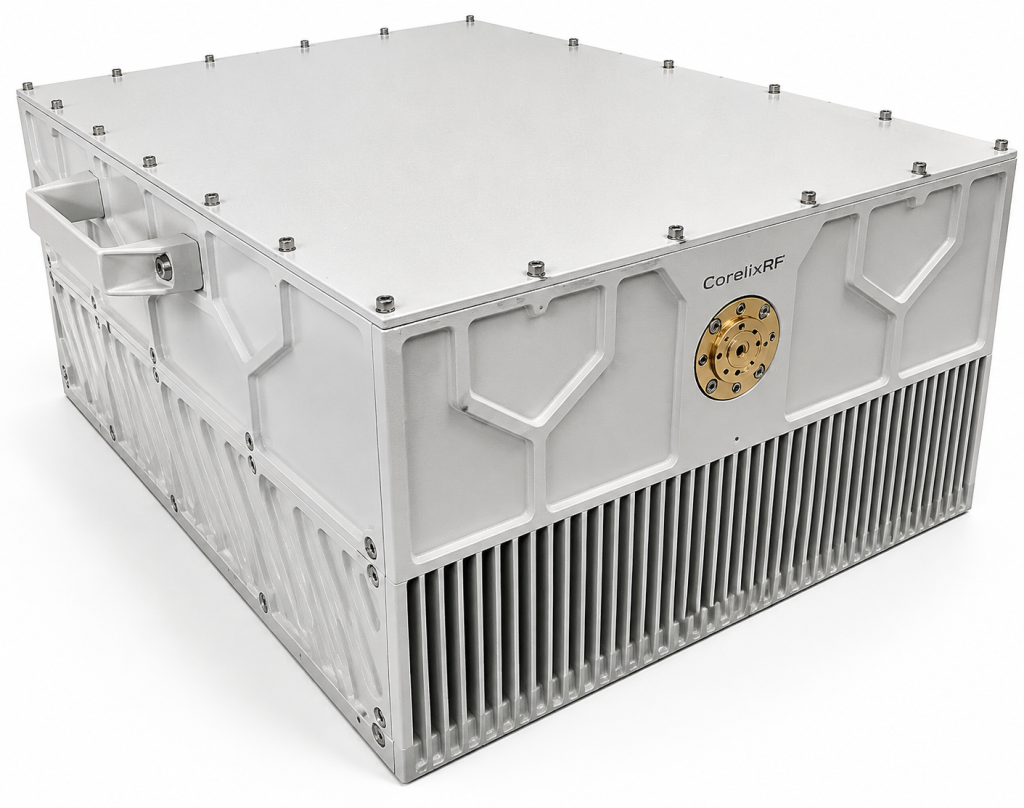
Narrow-band review can help engineering align output path, cooling, interface, gain response, and measured data around the actual operating requirement. The buyer should not request “best possible broadband coverage” if the application only needs a narrower region.
Define the 200W Requirement Carefully
The model name includes 200W, but the RFQ should define where that power is needed. At mmWave frequencies, output power at the amplifier port is not the same as power after adapters, waveguide transitions, switches, couplers, or antenna feed components.
Provide the full RF chain, expected losses, load condition, operating mode, and measurement point. If the power target is needed only at selected frequencies, say so. If it must be maintained across the full 47-51.4 GHz window, that should be explicit.
Interface and Load Path
CorelixRF’s mmWave platform page calls for coaxial or waveguide interface review. For a 200W narrow-band system, interface and load path should be treated as engineering inputs. State connector or waveguide preference, flange standard if known, antenna or load type, expected VSWR, adapter plan, and whether the load may be switched or disconnected.
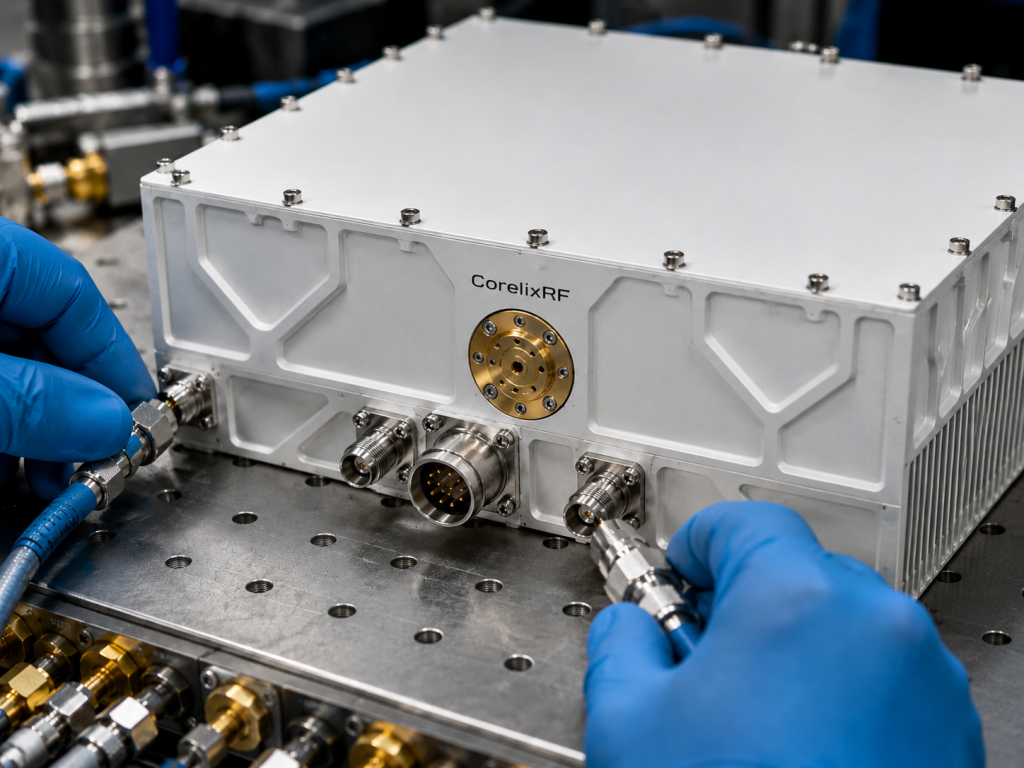
If the project involves a chamber, antenna range, or fielded RF path, include the mechanical and electrical layout. Reflected power and thermal behavior should be reviewed before final configuration.
Cooling, Control, and Protection Logic
High-power 47-51.4 GHz operation requires cooling review. Include CW or pulse mode, duty cycle, burst length, operating duration, ambient temperature, enclosure type, airflow direction, and rack or module constraints.
Control requirements should include enable method, remote interface, fault monitoring, forward/reverse power needs, temperature reporting, and any integration with automated test software. CorelixRF states that control and protection logic can be reviewed as part of custom mmWave configuration support.
Documentation for Internal Approval
High-power mmWave buyers often need more than a quotation. Ask for the relevant datasheet, output power data, gain response, mechanical outline, interface drawing, cooling requirement, control description, and factory test evidence. If the project has acceptance criteria, include them before final configuration.
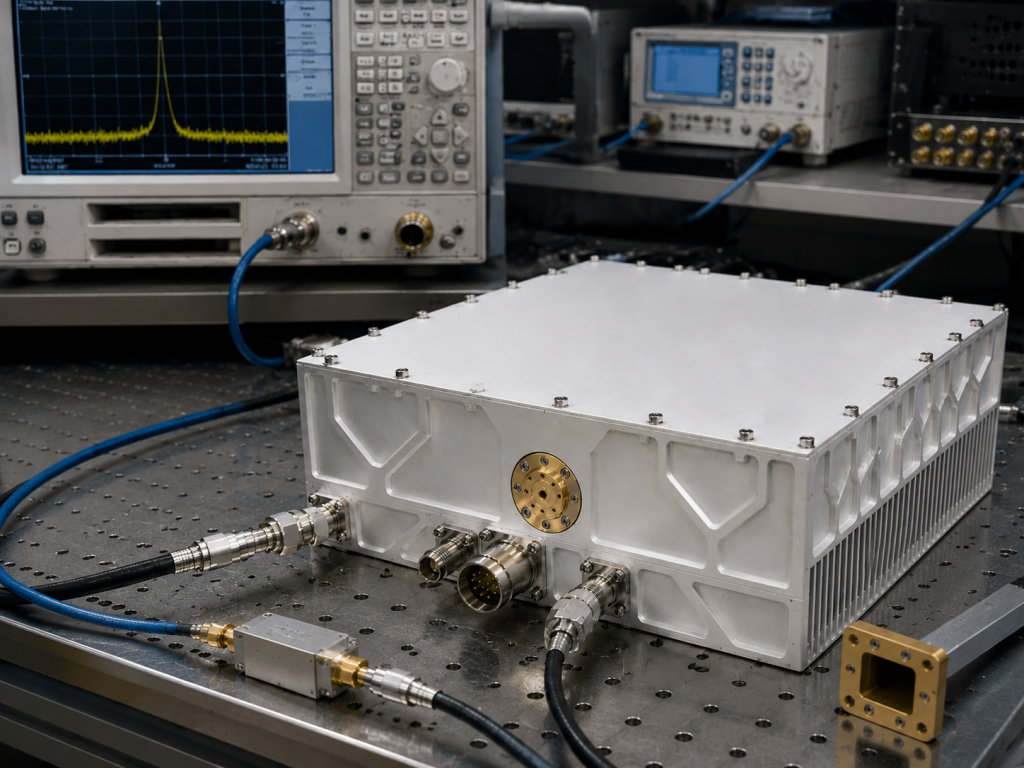
CorelixRF’s RF testing and validation page is a useful internal link for discussing measured output, gain, VSWR, spectrum, and shipment evidence.
FAQ
Is CRF-PA-47G51.4G-200W publicly named by CorelixRF?
Yes. CorelixRF publicly lists CRF-PA-47G51.4G representative options including 200W.
Is this a broadband 18-40 GHz amplifier?
No. It is a representative narrow-band high-power mmWave project platform in the 47-51.4 GHz family.
What should I send for review?
Send frequency window, output measurement point, input level, operating mode, duty cycle, interface, load condition, cooling limits, control needs, documentation requirements, and project stage.
Can CorelixRF provide datasheets?
CorelixRF states that detailed specifications, datasheets, and test data are provided after engineering inquiry review.