
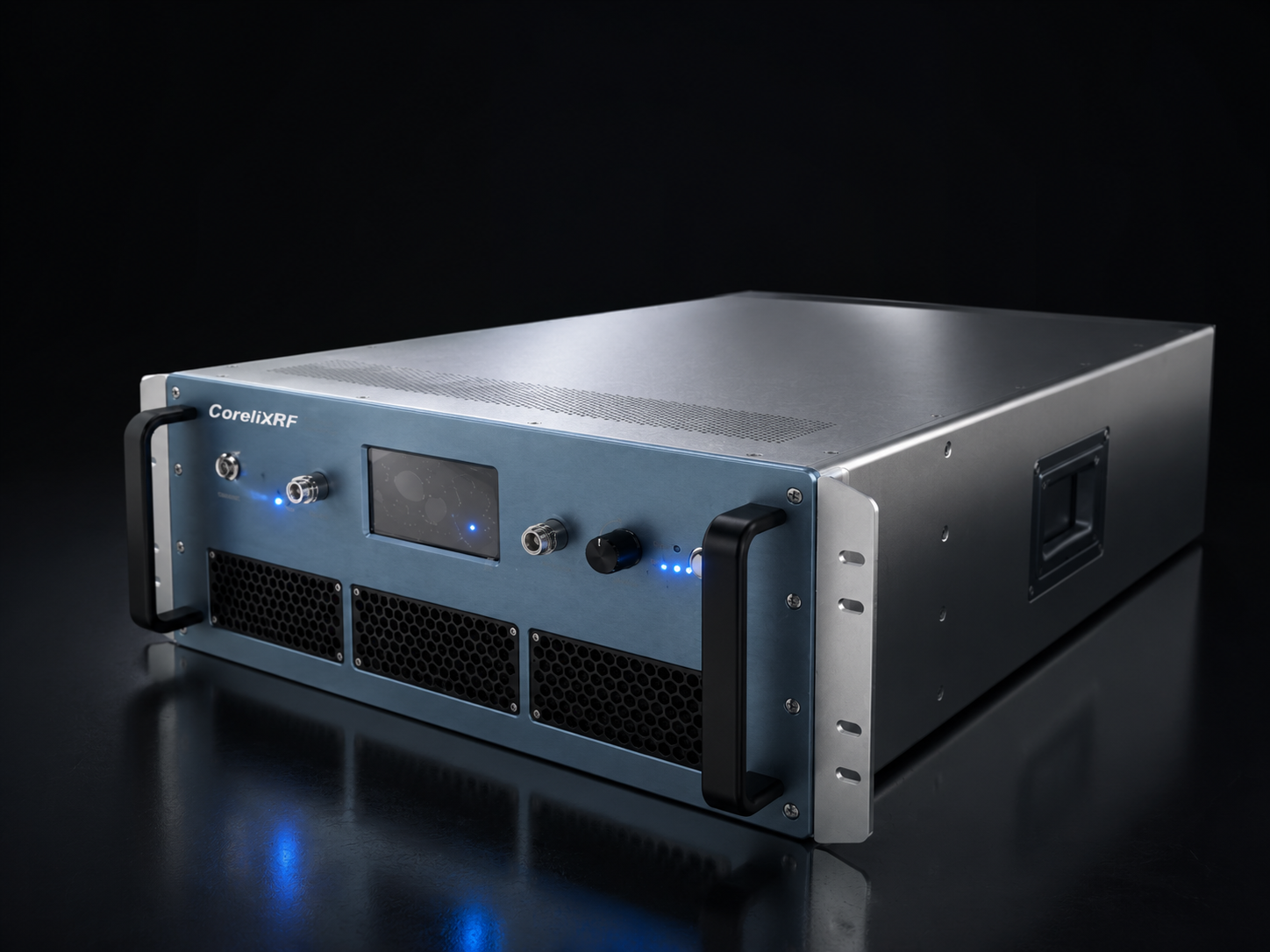
A 2-6 GHz 80W broadband RF power amplifier can be simple to request but difficult to install cleanly if the rack details are left open. The CorelixRF CRF-PA-2000M6000M-80W covers 2 GHz to 6 GHz, provides 80 W rated solid-state RF output power, uses GaN technology, and lists 50 dB minimum gain. The local datasheet identifies N-Female input and output interfaces, a 19-inch 3U forced-air configuration, temperature and current monitoring, alarm protection, and project-ready control interfaces.
The worksheet format helps buyers searching for a broadband RF power amplifier, wideband rf power amplifier, 80W GaN RF amplifier, or solid state power amplifier for a rack. Each worksheet field turns a specification into an installation question that the lab, facility team, and purchasing team can answer together.
Worksheet Field 1: Rack Envelope
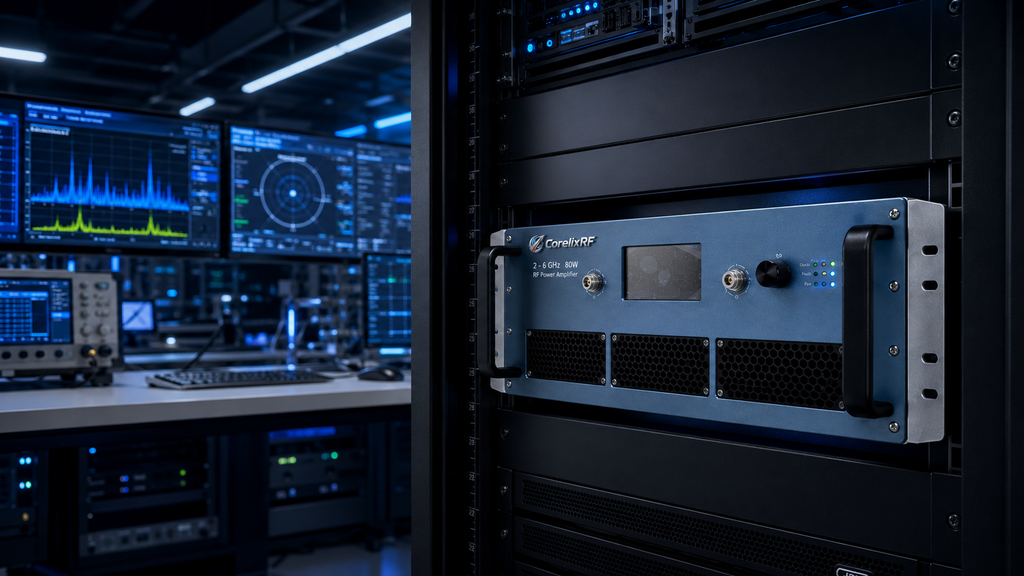
Record the rack slot, rack depth, rear access, front-panel access, cable bend radius, service clearance, and nearby heat sources. A 3U unit still needs airflow space. If the rack contains sources, switches, loads, or measurement gear, the airflow path should be reviewed as a complete assembly rather than a single amplifier location.
Worksheet Field 2: RF Path
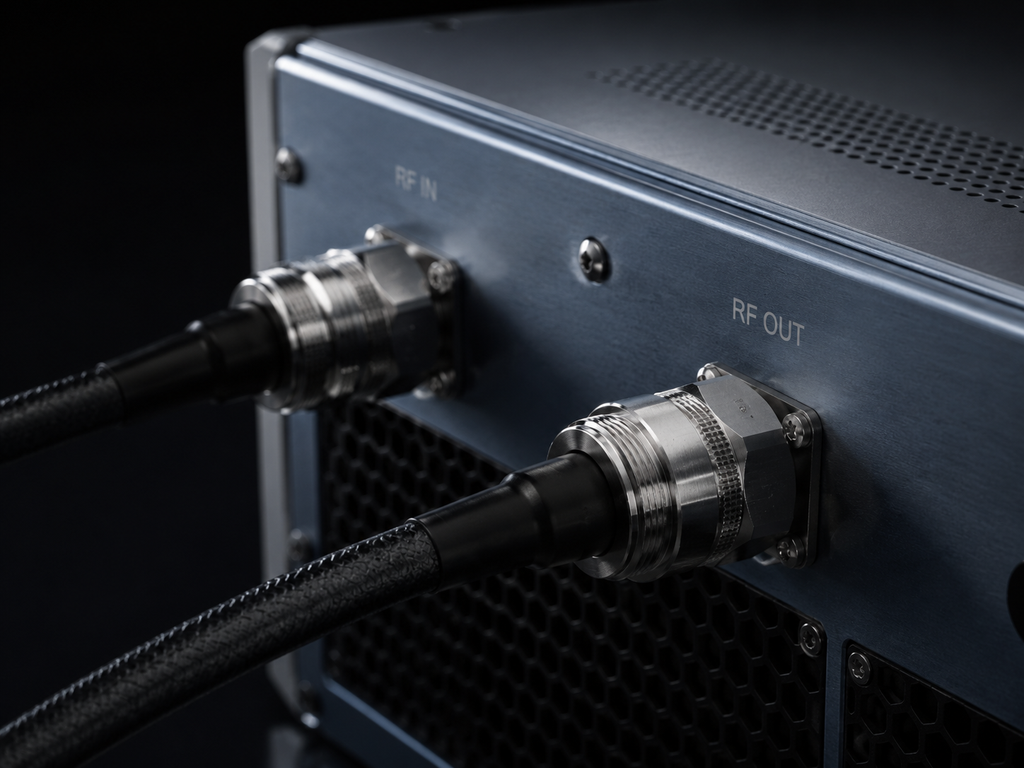
The source lists N-Female input and output. The worksheet should define cable type, load rating, coupler position, antenna or chamber path, and output reference plane. Across 2-6 GHz, connector condition and cable loss can affect repeatability, especially when the amplifier is used for SDR, communication, or RF interference testing.
- Name low, mid, and high frequency acceptance points.
- Lock source output before enabling the 50 dB gain stage.
- Record gain state, output reading, current, and temperature together.
- Confirm load and cable ratings before high-power operation.
- Document alarm response and retest conditions.
Worksheet Field 3: Control Ownership
Project-ready control interfaces are useful only when ownership is clear. The worksheet should state whether the amplifier is controlled locally, through a supervisory PC, or inside an automated RF integration solutions system. If software controls the source and amplifier, the enable sequence, gain state, and alarm recovery should be logged.
Worksheet Field 4: Evidence Requested
Ask for final mechanical drawing, test data, and control protocol when applicable. The engineering and manufacturing review should also receive the expected waveform, operating pattern, rack condition, and documentation needs. This prevents a broad inquiry from becoming a quote that lacks the details needed for acceptance.
Worksheet Field 5: What Not to Assume
Do not assume certification, stock status, custom control behavior, or delivered system power from the datasheet alone. The public facts support frequency, rated output, gain, connector type, rack format, diagnostics, and protection. Final system performance depends on the surrounding RF chain, measurement method, and operating condition.
Closeout
The best RFQ includes the worksheet as an attachment. It tells CorelixRF how the 2-6 GHz amplifier will be used and gives engineering enough context to confirm a standard rack unit, propose a modification, or recommend a broader custom RF amplifier discussion.
The selected keywords are 2-6 GHz 80W broadband RF power amplifier, broadband RF power amplifier, wideband rf power amplifier, rf power amp, and solid state power amplifier. They are naturally tied to rack readiness, not scattered as a keyword list.
For repeat use, keep the completed worksheet with the test rack. When another project changes the source, load, software, or cable set, update the worksheet before reusing acceptance data. That habit protects the technical record and gives purchasing a clear reason when a new quote or engineering review is needed.
Rack Owner Checklist
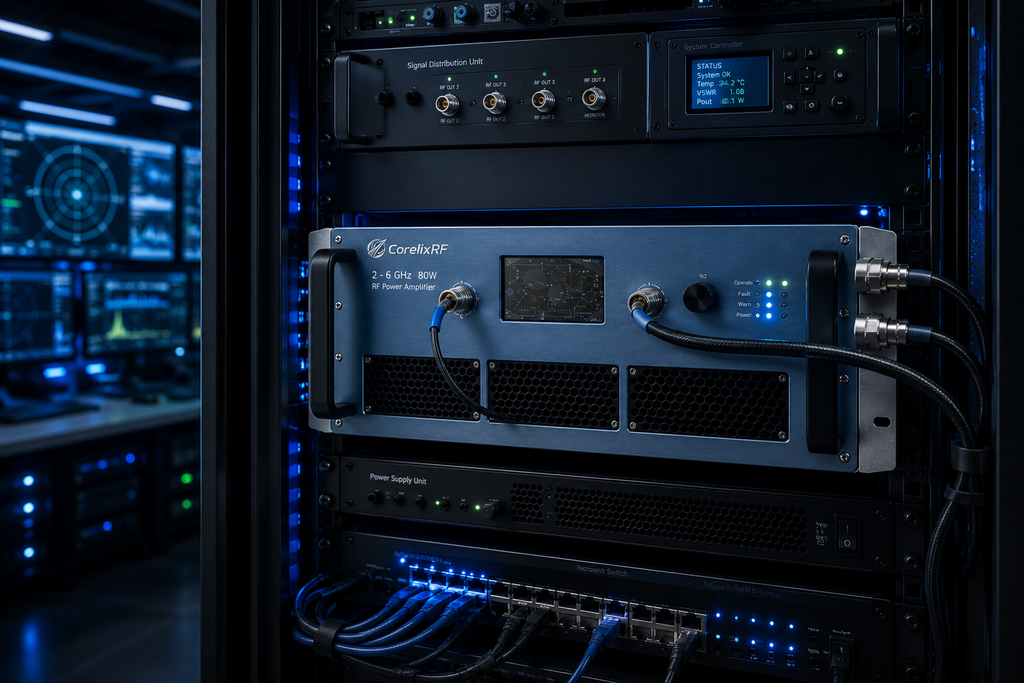
The rack owner should review line power, grounding, airflow, cable access, load rating, and control access before the amplifier is installed. Even an 80 W unit can create confusing results if the source limit is not locked or if the exhaust path is blocked by nearby equipment. The worksheet should be short enough to use, but specific enough to catch the conditions that create repeatability problems.
A second checklist belongs to the RF operator. It should confirm generator state, attenuator value, frequency plan, output sensor range, load condition, and alarm reset rule. When these two checklists are used together, the buyer can distinguish facility readiness from RF measurement readiness. That distinction is useful in a broadband RF amplifier project because the same rack may support different programs with different operating assumptions.
This article does not claim a complete EMC or communication-system result. It describes how the CorelixRF datasheet values can be turned into a procurement and receiving workflow for a 2-6 GHz solid state power amplifier.
How the Worksheet Supports Purchasing
Purchasing can use the completed worksheet to ask clearer questions before price comparison begins. Instead of asking only for an 80W GaN amplifier, the buyer can state rack height, source type, operating frequencies, control expectations, and acceptance data needs. That makes vendor responses easier to compare and reduces the chance that a quote looks complete while cooling, cabling, or documentation requirements remain open.
The worksheet also helps when the amplifier will be reused. A broadband test rack may support several programs, and each one may have different cable sets, loads, software scripts, and power limits. Keeping the worksheet attached to the rack creates a practical operating baseline for future engineering reviews.
FAQ
What frequency range does CRF-PA-2000M6000M-80W cover?
The datasheet lists 2 GHz to 6 GHz.
What output power and gain are listed?
The source lists 80 W rated RF output power and 50 dB minimum gain.
What RF connectors are listed?
The datasheet lists N-Female input and output.
What mechanical format is listed?
The source identifies a 19-inch 3U forced-air configuration.