
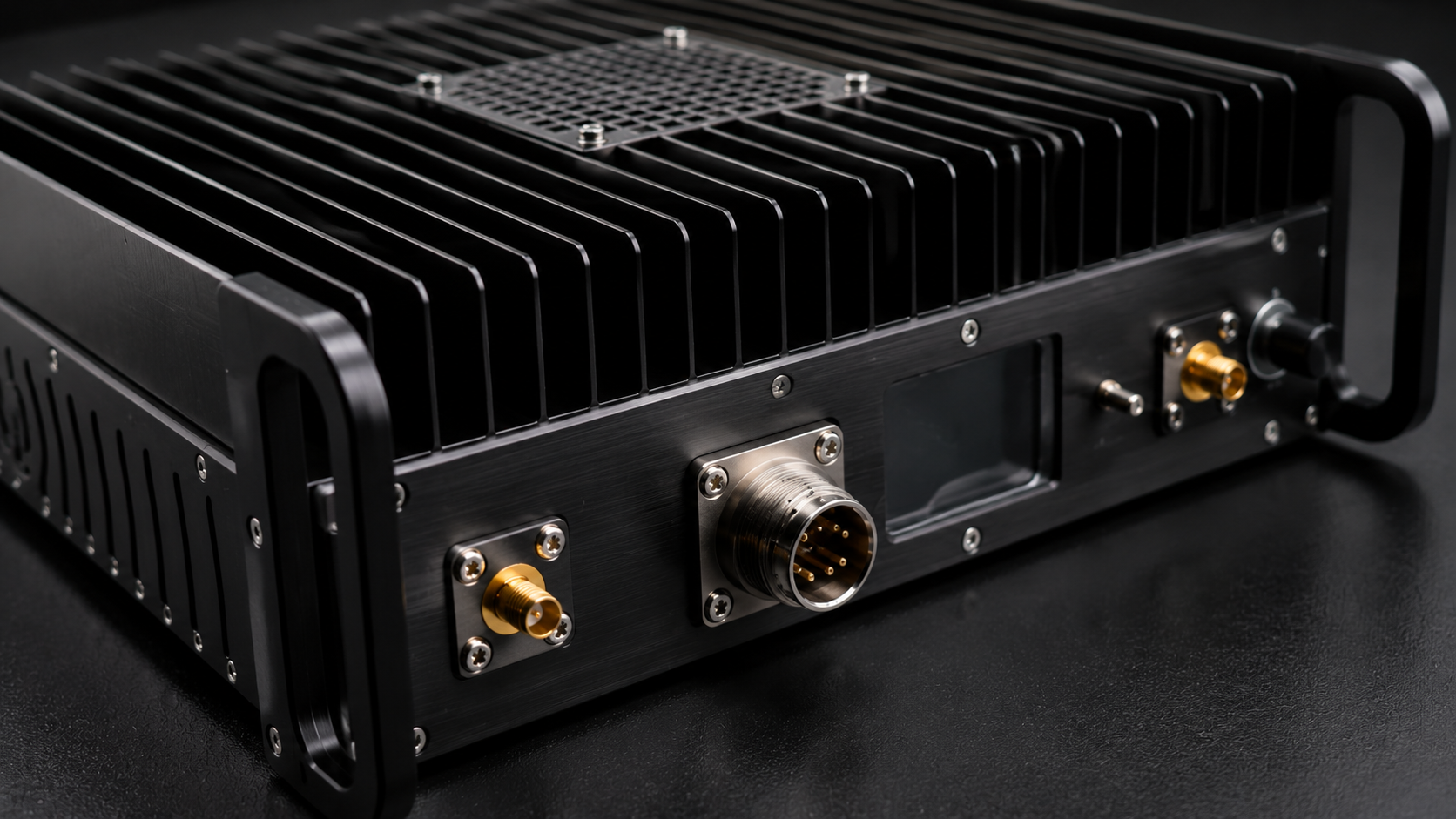
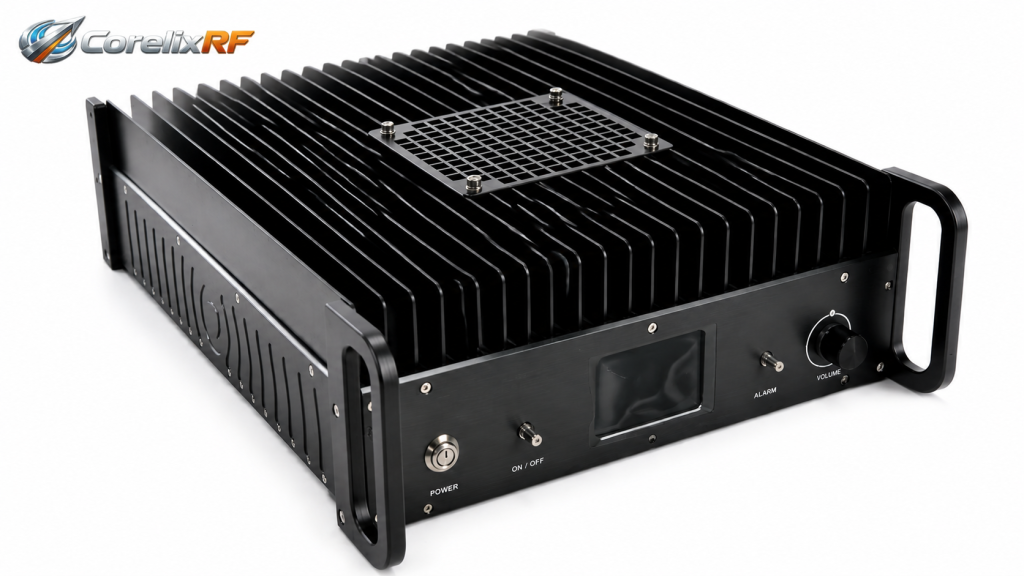
The CRF-PA-18G46G-5W is publicly listed on CorelixRF’s millimeter-wave RF power amplifier page as a representative model name for the CRF-PA-18G46G Series. The public platform range is 18-46 GHz, and CorelixRF describes this family as an extended high-frequency mmWave platform for engineering screening, with detailed specifications and datasheets provided after inquiry review.
For RF test benches, the value of the CRF-PA-18G46G-5W is not only the 5 W public model class. The more important point is the extended frequency window. A test team can discuss coverage beyond a standard 18-40 GHz platform while still keeping the inquiry grounded in a publicly referenced CorelixRF model family.
Why an 18-46 GHz amplifier may be useful
Many mmWave projects do not stop neatly at 40 GHz. A system may need to evaluate components, antennas, frequency converters, communication links, or radar-related hardware across a wider engineering window. The CRF-PA-18G46G Series gives buyers a public starting point when the requirement extends into the 40-46 GHz region.
That does not mean every project should request full 18-46 GHz coverage. A narrower operating window can simplify output interface review, gain behavior, thermal planning, and validation data. The RFQ should state whether the amplifier must support the entire range or only selected sub-bands.
Build the RFQ around the real test chain
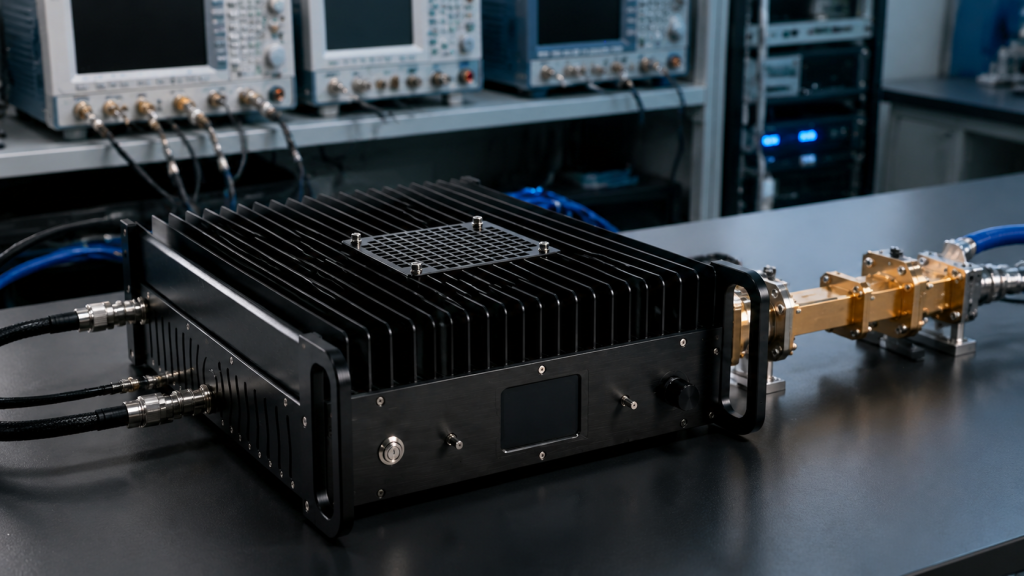
At mmWave frequencies, source level, cable loss, adapter loss, waveguide transitions, couplers, and calibration planes can affect real delivered power. A 5 W class model may be sufficient for some benchtop validation tasks, but the system budget should confirm the power needed at the DUT, antenna, load, or measurement plane.
Provide the available input signal level, waveform type, duty cycle, operating frequency points, expected path loss, and output destination. If the amplifier is part of a larger RF front-end platform, include the upstream source and downstream load details in the same inquiry.
Interface review is not optional
CorelixRF notes that mmWave amplifier selection depends on interface type, output condition, cooling structure, control method, load environment, and system integration requirement. For the CRF-PA-18G46G-5W, the buyer should define whether the output path should be coaxial, waveguide, or project-specific.
If the amplifier must connect to existing lab hardware, list connector standards, adapters, waveguide components, loads, antennas, and measurement instruments. This helps CorelixRF review whether the representative model family fits the intended setup.
Cooling and control planning
Even a lower wattage mmWave amplifier needs a realistic cooling and control plan. State the intended operating duration, ambient temperature, enclosure style, airflow availability, rack or module constraints, enable logic, alarm needs, and whether remote control is required for automated testing.
CorelixRF’s factory capability includes RF design, thermal design, system integration, and validation testing. Those capabilities are relevant when the amplifier is not just a benchtop component, but part of a repeatable production or engineering station.
What documentation to request
For the CRF-PA-18G46G-5W, ask for datasheet access, available measured data, output power and gain behavior over the required range, RF input and output interface confirmation, cooling notes, mechanical information, and test documentation suitable for your approval process.
Because public mmWave model names are intended for initial screening, a clear inquiry is the fastest way to receive model-level information without choosing the wrong configuration.
FAQ
What is the CRF-PA-18G46G-5W?
It is a publicly listed representative CorelixRF model name in the CRF-PA-18G46G Series, an 18-46 GHz extended mmWave amplifier platform.
Is detailed electrical data publicly downloadable?
No. CorelixRF states that detailed specifications, test data, and datasheets for mmWave platforms are provided after engineering inquiry review.
What applications may fit this model family?
Typical uses include RF test benches, mmWave component validation, high-frequency communication test chains, radar-related evaluation, and OEM subsystem review.
What should I send in the inquiry?
Send target frequency range, output requirement, source level, waveform, duty cycle, interface preference, cooling condition, application scenario, and documentation needs.