
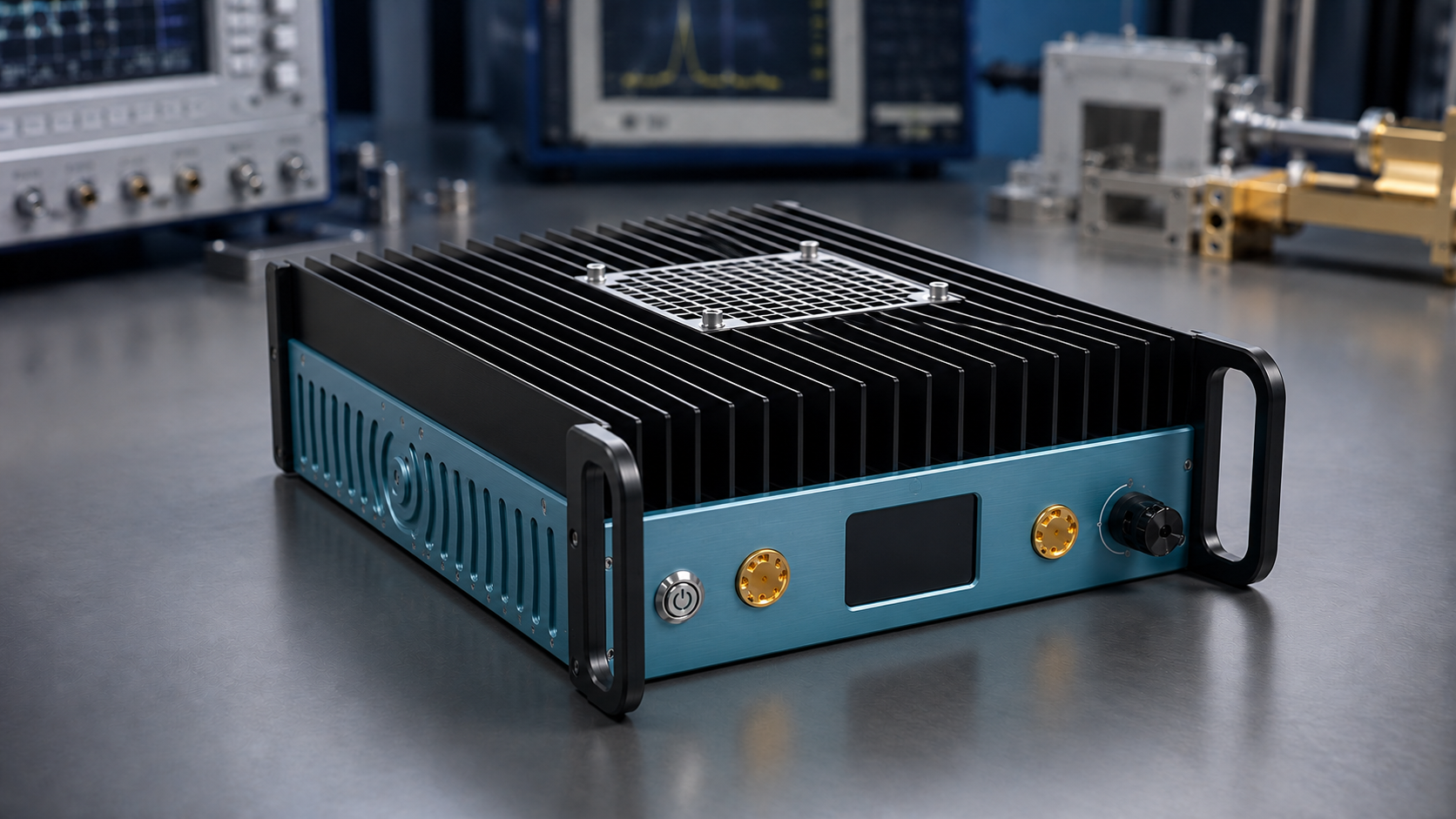
The CRF-PA-50G75G Series is publicly listed by CorelixRF as a 50-75 GHz broadband mmWave test platform. Representative public model names include 2 W, 3 W, 5 W, and 8 W classes, while detailed specifications, test data, mechanical information, and datasheets are provided after engineering inquiry review.
For engineers working in high-frequency communication, RF validation, signal-environment simulation, and OEM subsystem development, this series offers a public screening path for projects that need coverage above 50 GHz without immediately moving to W-band. The final selection still depends on the exact frequency window, power target, interface path, waveform, duty cycle, and cooling structure.
Why 50-75 GHz broadband coverage matters
The 50-75 GHz range can support broadband mmWave test activity where a narrower fixed-band amplifier would limit validation flexibility. It may be relevant for high-frequency communication links, front-end testing, converter-chain evaluation, and laboratory stimulus generation.
However, full-band operation should be requested only when the system needs it. If the project works in a smaller portion of the 50-75 GHz range, state that window clearly. A focused requirement can help CorelixRF review the most suitable representative model, interface option, and test data package.
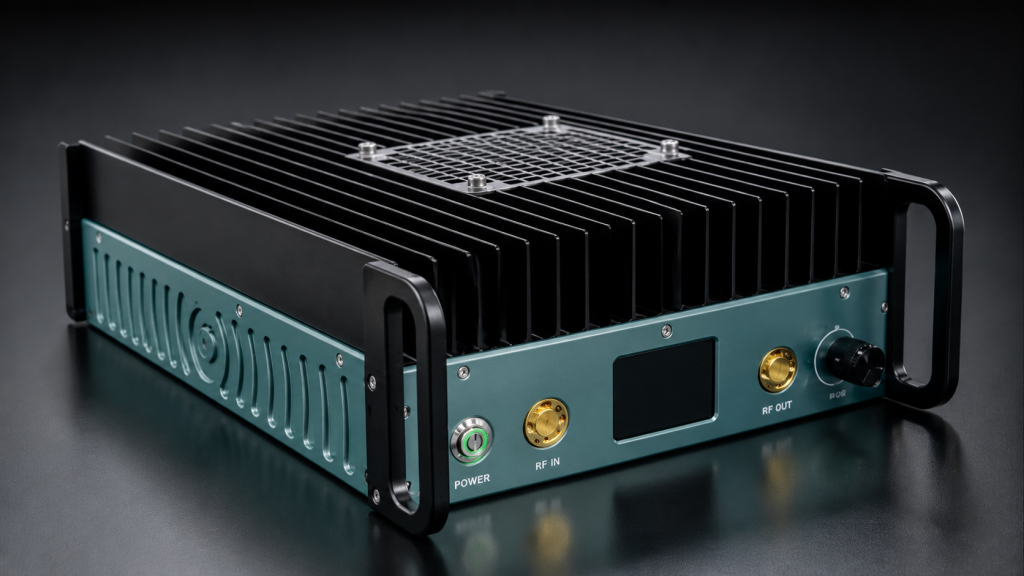
Select the power class from delivered-power needs
The public CRF-PA-50G75G representative classes are 2 W, 3 W, 5 W, and 8 W. At mmWave frequencies, those output classes should be interpreted through the complete RF path. Waveguide or coaxial transitions, adapters, couplers, switches, loads, and antennas can all affect delivered power.
The RFQ should define the target power at the calibration plane, not only the desired amplifier output class. Include source level, required gain, path loss, antenna gain if relevant, DUT power target, and measurement method. This gives CorelixRF a practical basis for recommending a model class.
Interface and measurement setup
CorelixRF’s mmWave page emphasizes that coaxial or waveguide interface selection needs project review. For the CRF-PA-50G75G Series, the buyer should identify existing connectors, waveguide components, adapters, loads, antennas, and test instruments that the amplifier must work with.
If the amplifier is being integrated into a larger RF front-end platform, describe the source, control method, switching path, output chain, enclosure, and monitoring requirements. System context prevents the amplifier from being specified in isolation.
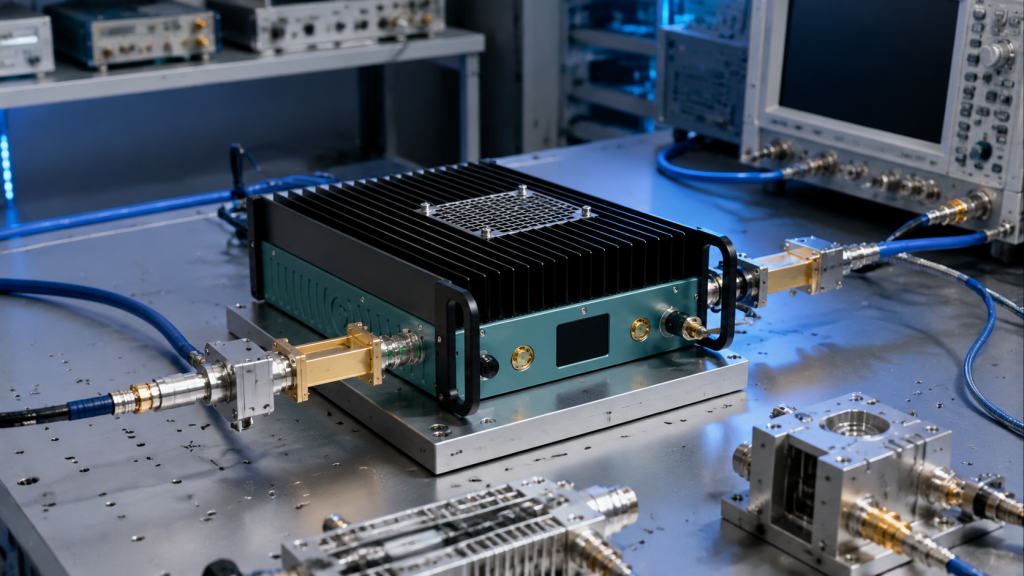
Thermal and control requirements
Cooling requirements should be discussed before datasheet release and quotation. State operating duration, ambient temperature, duty cycle, waveform type, airflow availability, rack or module size limits, and whether the amplifier needs remote enable, alarms, interlocks, or automated control.
This is especially important for repeatable RF validation stations. A short manual bench test and a long automated test sequence may require different control and thermal assumptions.
Request evidence matched to your band
For a 50-75 GHz broadband mmWave amplifier, useful documentation may include datasheet review, output power behavior in the required band, gain response, interface confirmation, thermal notes, mechanical information, and acceptance data if the project requires it.
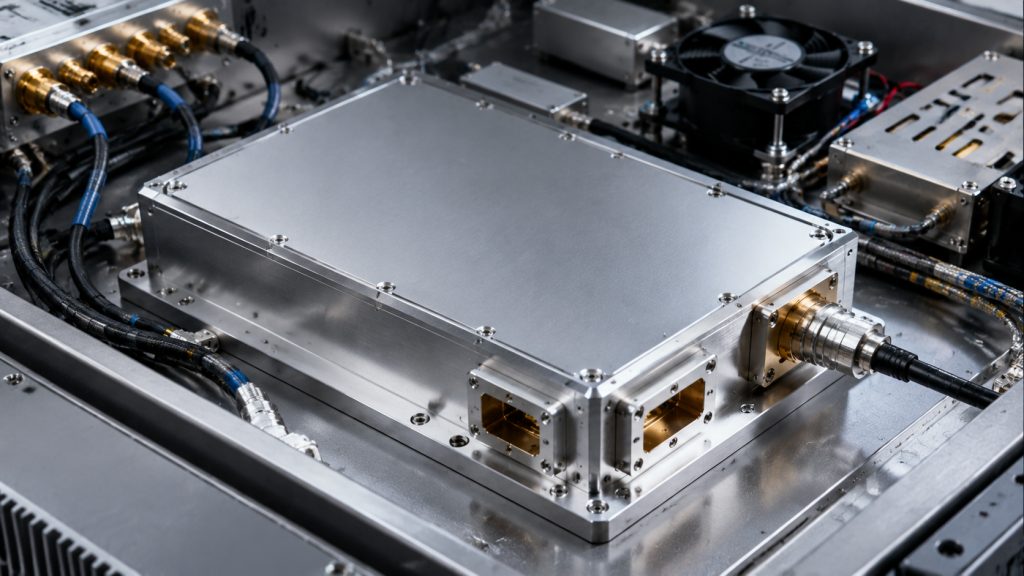
CorelixRF’s public case profile content shows how application context can change amplifier selection and integration review. Use that same principle in the RFQ: describe the project goal clearly enough for engineering screening, even if confidential details stay out of the first request.
FAQ
What is the CRF-PA-50G75G Series?
It is a CorelixRF publicly listed 50-75 GHz broadband mmWave test platform for engineering review.
What model classes are publicly shown?
Representative public model names include 2 W, 3 W, 5 W, and 8 W classes.
Why is the datasheet inquiry-based?
CorelixRF provides detailed mmWave specifications after inquiry because interface, cooling, load condition, control, and application requirements can change the final configuration.
What information is needed for a 50-75 GHz RFQ?
Provide frequency window, output requirement, source level, waveform, duty cycle, interface preference, load or antenna path, cooling constraints, and documentation needs.