
Primary engineering guide: this near-duplicate reference has been consolidated under How to Protect Your Facility with Anti Drone Technology?. Use the primary guide for the latest RF engineering review, compliance-safe wording, RFQ inputs and factory documentation path.
- Open the primary guide for the current topic cluster.
- Prepare RFQ inputs before requesting engineering review.
- Use the RF configurator to summarize band, power, interface and duty-cycle needs.
- Review delivery documentation for FAT-style evidence and shipment records.
- Contact CorelixRF when the project has a documented scope.
Archived page topic: Anti Drone Technology For Infrastructure. This page remains available for reference, but search engines are pointed to the primary guide through canonical consolidation.
What is anti drone technology? It refers specifically to specialized systems designed to detect, track, and intercept unauthorized unmanned aerial vehicles. Unauthorized flights over sensitive areas frequently cause severe security breaches or operational downtime. A minor airspace intrusion can halt operations entirely causing immense frustration. You suffer massive financial losses while risking public safety simultaneously. Implementing a robust anti drone framework resolves these vulnerabilities instantly. These advanced setups provide continuous monitoring and rapid neutralization capabilities. Your facility regains total control over its immediate airspace. Operators neutralize threats before any damage occurs.
What Exactly Is Anti Drone Technology and How Does It Function?
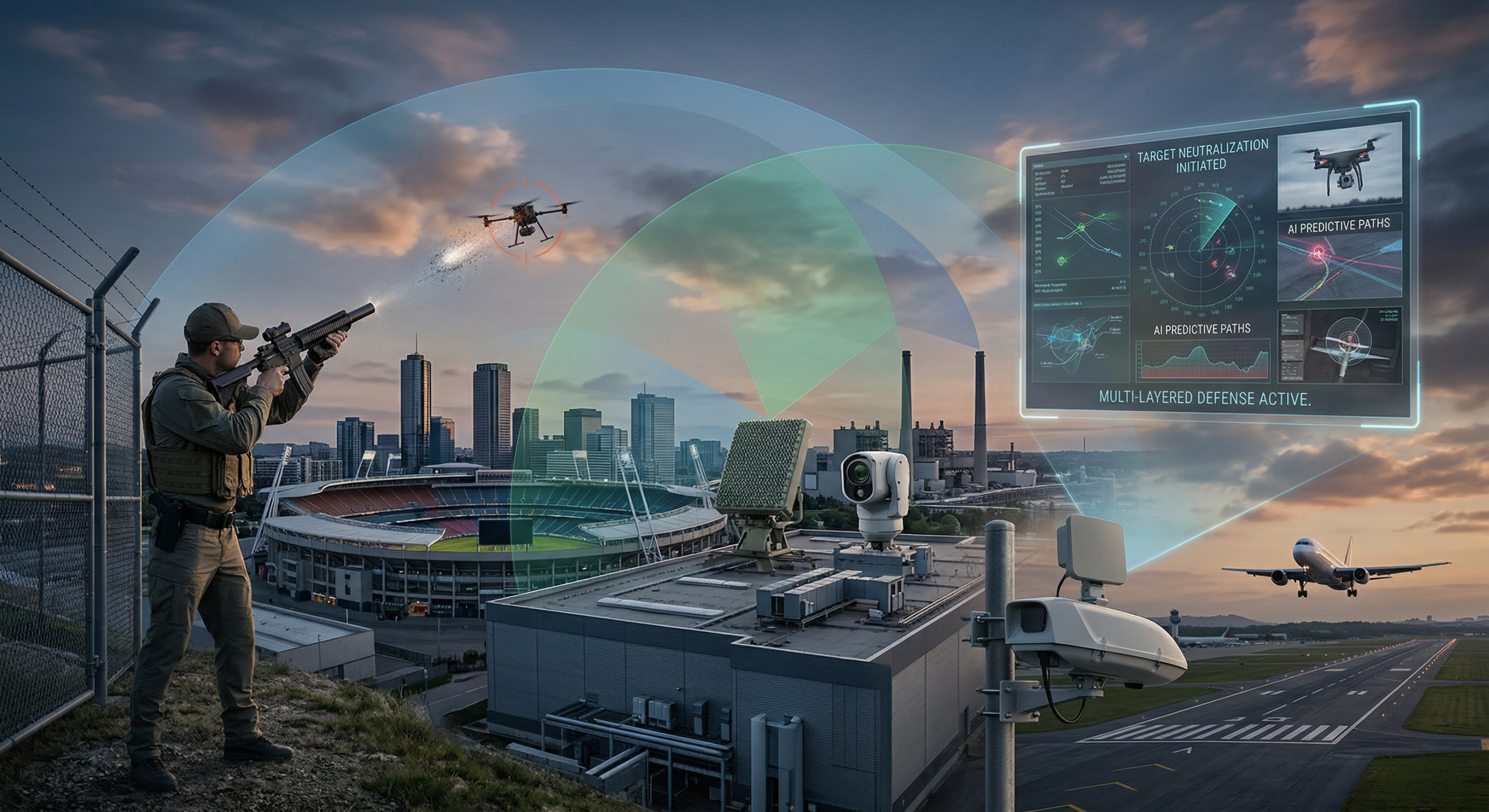
This technology functions as a multi-layered defense shield identifying and disabling rogue aerial vehicles. Modern anti drone architectures rely on complex sensor networks working seamlessly together. Operators monitor airspace activity through centralized dashboards displaying real-time data feeds. These systems automate threat evaluation quickly.
Understanding The Core Mechanics
Here is the deal: operators need rapid response times during active intrusions. The detection phase locates invading craft using advanced radar signatures. Following positive identification, countermeasure protocols initiate automatically or manually. Interception methods force offending devices downward safely.
Why Real-Time Tracking Matters
Speed defines successful airspace defense operations against agile aerial targets. You must anticipate erratic flight patterns near restricted perimeter zones.
- Radar elements track movement vectors continuously.
- Optical sensors verify target payloads visually.
- Radio frequency scanners detect control signals.
Securing Your Perimeter
Facility protection demands comprehensive coverage across all vertical entry vectors. Integrated software merges disparate sensor inputs into coherent situational awareness maps. What is the real story? Unified data prevents blind spots during coordinated multi-drone attacks.
Key Takeaway: Understanding functional mechanics allows security teams to deploy appropriate countermeasures efficiently during critical airspace breaches.
| Component Phase | Primary Function | Operational Outcome |
| Detection | Identifies incoming signals | Early threat warning |
| Identification | Verifies target type | False alarm reduction |
| Mitigation | Neutralizes unauthorized craft | Secured local airspace |
This operational flow ensures systematic threat neutralization while maintaining overall facility security protocols efficiently.
Which Detection Methods Power Effective Anti Drone Systems?
Radio frequency scanners, specialized radars, and optical sensors power these defensive systems. Effective anti drone detection requires layering multiple sensing technologies simultaneously. Single-sensor setups frequently miss stealthy or modified aerial targets. Combined approaches guarantee higher interception success rates.
Radar And Frequency Scanning
Traditional radar struggles with small objects flying low across complex terrain. Specialized 3D phased-array variants solve this by filtering out ground clutter. Ready for the good part? These upgraded units detect micro-craft from kilometers away accurately.
Optical And Thermal Imaging
Visual confirmation remains critical before activating aggressive jamming protocols nearby. High-resolution tracking cameras lock onto erratic flight paths instantly.
- Infrared modes spot thermal signatures at night.
- Daylight cameras identify dangerous attached payloads.
- Algorithmic software predicts subsequent flight maneuvers.
Acoustic Sensor Integration
Acoustic sensors listen for unique motor frequencies emitted by hovering craft. Microphones cross-reference audio profiles against known manufacturer databases rapidly. But here is the kicker… Audio detection works exceptionally well in dense urban canyons.
Key Takeaway: Layering diverse detection mechanisms drastically reduces false negatives and secures critical infrastructure perimeters flawlessly.
| Sensor Type | Ideal Environment | Key Limitation |
| RF Scanner | Open industrial spaces | Silent autonomous flights |
| 3D Radar | Long-range borders | High initial cost |
| Thermal Camera | Nighttime operations | Adverse weather conditions |
Combining varying sensor capabilities mitigates individual technological weaknesses while establishing an impenetrable observation grid.
What Countermeasure Strategies Neutralize Drone Threats?
Countermeasure strategies neutralize threats through signal jamming, spoofing, or physical capture methods. Deploying proportional anti drone responses prevents collateral damage within populated zones. Security personnel must evaluate environmental risks before engaging hostile craft. Choosing appropriate mitigation tactics dictates overall operational success.
Signal Jamming Techniques
Jamming severs communication links between operators and their remote vehicles effectively. Targeted radio frequency interference forces unauthorized units into safe auto-landing modes. This is where it gets interesting… Advanced jammers disrupt both control inputs and video feeds simultaneously.
GPS Spoofing Applications
Spoofing feeds false navigation coordinates directly into onboard satellite receivers covertly. Invading units fly away from sensitive targets believing they follow correct routes.
- Redirects craft toward designated safe zones.
- Prevents sudden crashes over crowded areas.
- Allows authorities to apprehend hidden operators.
Physical Interception Methods
Sometimes electronic warfare fails against pre-programmed autonomous flight paths completely. Net-firing devices or interceptor drones physically disable rotors mid-air safely. What is the catch? Physical takedowns require closer proximity than electronic interference methods.
Key Takeaway: Selecting proportional mitigation tactics ensures rapid threat elimination without endangering nearby personnel or critical infrastructure.
| Mitigation Tactic | Primary Mechanism | Best Use Case |
| RF Jamming | Signal disruption | Commercial quadcopters |
| GPS Spoofing | Coordinate manipulation | High-value target redirection |
| Net Capture | Physical entanglement | Close-quarters interception |
Tactical flexibility regarding mitigation choices allows security teams to handle diverse airspace incursions effectively.
Why Do Critical Infrastructures Need Anti Drone Solutions?
Critical infrastructures require protection against espionage, sabotage, and accidental aerial collisions. Unprotected power plants remain highly vulnerable to airborne reconnaissance missions. Implementing proactive anti drone barriers secures sensitive operational data completely. Perimeter breaches cause catastrophic cascading failures across utility networks.
Protecting Power Grids
Energy sectors face continuous threats from localized aerial surveillance attempts daily. Malicious actors map out vulnerable substation components for future coordinated disruptions. You might be wondering… Early detection prevents these unauthorized mapping missions entirely.
Securing Prison Airspace
Correctional facilities battle constant contraband smuggling via small remote-controlled drops. Inmates receive weapons or narcotics dropped directly into recreation yards.
- Jammers block deliveries near perimeter fences.
- Sensors locate hidden operators outside walls.
- Automated logs provide prosecutorial evidence later.
Safeguarding Airport Runways
Commercial aviation suffers massive delays whenever rogue craft enter designated flight paths. Near-miss incidents threaten hundreds of civilian lives during critical landing phases. Here is the deal: Dedicated suppression systems keep commercial flight corridors clear permanently.
Key Takeaway: Hardening critical infrastructure against airborne threats guarantees continuous service delivery while preventing catastrophic operational disruptions.
| Infrastructure Type | Primary Airborne Threat | Recommended Defense |
| Energy Substations | Covert surveillance | 3D Radar + Cameras |
| Correctional Centers | Contraband smuggling | RF Jammers |
| Commercial Airports | Flight path collision | Passive RF Detection |
Tailoring defense architectures specific infrastructure vulnerabilities maximizes protection while optimizing security resource allocations.
How Do Legal Regulations Impact Anti Drone Deployment?
Legal regulations dictate deployment zones, allowable frequencies, and mitigation authorities strictly. Understanding jurisdictional rules prevents costly compliance violations during anti drone operations. Many regions prohibit civilian entities from utilizing active signal jamming equipment. Security directors must consult legal counsel before finalizing procurement contracts.
Navigating Jamming Restrictions
Federal communications agencies aggressively regulate electromagnetic spectrum usage across public spaces. Unauthorized jamming interferes with legitimate emergency broadcast channels dangerously. What is the real story? Only specific military or federal agencies hold blanket jamming authorization.
Privacy Law Considerations
Tracking hardware inherently collects data regarding surrounding airspace and neighboring properties. High-powered optical cameras risk recording private citizens inadvertently during surveillance sweeps.
- Masking software blurs residential windows automatically.
- Data retention policies limit video storage durations.
- Audits ensure compliance with local privacy acts.
Liability During Interception
Forcing rogue craft downward creates distinct liability concerns regarding potential property damage. Facility owners might face lawsuits following collateral destruction during active mitigation. Ready for the good part? Passive detection tools carry significantly fewer legal risks than active jammers.
Key Takeaway: Thorough legal analysis prior to system activation shields organizations from severe regulatory penalties and civil litigation.
| Regulatory Area | Primary Concern | Compliance Strategy |
| Spectrum Usage | Emergency signal interference | Passive detection focus |
| Data Privacy | Civilian surveillance | Automated visual masking |
| Physical Liability | Collateral ground damage | Designated safe landing zones |
Proactive legal compliance frameworks allow organizations to deploy effective countermeasures without assuming unnecessary corporate liabilities.
What Are The Core Components Of A Stationary Anti Drone Setup?
Stationary setups combine central command hubs, fixed sensor arrays, and mounted effectors. A permanent anti drone installation provides continuous 360-degree perimeter overwatch capabilities. Engineers bolt robust hardware onto rooftops or dedicated communications towers securely. These fixed ecosystems integrate directly into existing facility security networks smoothly.
The Central Command Hub
The command console processes massive data streams collected by peripheral sensors instantly. Custom software visualizes complex telemetry data onto accessible user interfaces. This is where it gets interesting… Machine learning algorithms identify hostile flight patterns automatically.
Fixed Sensor Arrays
Permanently mounted sensors establish an invisible dome over sensitive geographic locations. Strategically placed radar panels eliminate blind spots caused by surrounding architecture.
- Weatherproof housings protect delicate internal electronics.
- Fiber optic connections guarantee low-latency data transfers.
- Redundant power supplies maintain continuous active scanning.
Mounted Effector Systems
Effectors handle actual threat neutralization once command confirms hostile intent definitively. Directional antennas focus jamming signals precisely toward incoming targets. But here is the kicker… Concentrated energy beams minimize disruption across surrounding civilian networks.
Key Takeaway: Constructing comprehensive stationary defenses creates impenetrable airspaces capable of neutralizing sophisticated coordinated aerial assaults.
| Component Category | Hardware Example | Operational Role |
| Command Interface | Software dashboard | Threat visualization |
| Sensor Array | Phased-array radar | Target acquisition |
| Effector Unit | Directional jammer | Threat neutralization |
Synchronizing these core stationary elements guarantees continuous facility protection regardless of external environmental conditions.
How Do Handheld Anti Drone Devices Provide Tactical Flexibility?
Handheld devices provide tactical flexibility through extreme portability and rapid deployment capabilities. Mobile anti drone equipment empowers ground patrols dealing with sudden airspace incursions. Security teams carry these lightweight units during large outdoor public events easily. Their point-and-shoot design requires minimal specialized technical training beforehand.
Portability And Rapid Response
Stationary towers cannot cover constantly shifting temporary perimeters effectively. Backpack units allow personnel to establish temporary safe zones anywhere. You might be wondering… Battery-powered systems activate within seconds during emergency situations.
Directional Targeting Accuracy
Rifle-style jammers utilize directional antennas focusing energy exactly where aimed. Operators sight invading targets visually before squeezing activation triggers.
- Limits collateral interference nearby.
- Extends effective operational battery life.
- Enables precise single-target isolation techniques.
Adapting To Crowd Environments
Securing massive outdoor music festivals requires discreet mobile mitigation options. Guards position themselves strategically among crowds maintaining clear lines of sight. What is the catch? Operators must remain vigilant since handheld ranges trail behind fixed installations.
Key Takeaway: Integrating portable countermeasures grants security forces agile response mechanisms suitable for dynamic and unpredictable environments.
| Device Feature | Tactical Advantage | Operational Benefit |
| Battery Powered | Grid independence | Remote location deployment |
| Directional Antenna | Focused energy | Reduced collateral disruption |
| Rifle Form Factor | Intuitive aiming | Minimal training required |
Tactical mobility ensures security personnel maintain defensive superiority across rapidly evolving ground situations.
Which Industries See The Highest ROI From Anti Drone Gear?
Energy, defense, event management, and corrections sectors experience the highest financial returns. Investing heavily in anti drone defenses saves millions by preventing operational downtime. Sabotage attempts against commercial infrastructure result in catastrophic revenue losses quickly. Averting one major incident covers initial hardware procurement costs entirely.
Event Management Safeguards
Stadiums host thousands of fans demanding secure environments during premium matches. Unauthorized broadcasts via unauthorized cameras violate exclusive lucrative broadcasting rights. Here is the deal: Disrupting pirate streams protects massive television licensing revenues.
Oil And Gas Protection
Refineries hold highly volatile materials vulnerable to explosive aerial payloads. Terrorist organizations view petroleum facilities as high-value strategic targets globally.
- Prevents catastrophic environmental disaster scenarios.
- Protects specialized engineering personnel onsite.
- Maintains uninterrupted global supply chains.
VIP Close Protection
Private security firms shield high-net-worth individuals from paparazzi surveillance constantly. Airborne cameras compromise privacy during exclusive corporate retreats or private vacations. Ready for the good part? Mobile detection tools warn bodyguards about incoming threats beforehand.
Key Takeaway: Strategic investment into specialized airspace defense yields massive returns through disaster prevention and continuous operational stability.
| Industry Sector | Primary Financial Risk | Protective Benefit |
| Entertainment | Broadcast piracy | Revenue preservation |
| Oil & Gas | Facility destruction | Asset protection |
| VIP Security | Privacy compromise | Client retention |
Identifying sector-specific vulnerabilities justifies procurement budgets by highlighting severe financial consequences associated with inaction.
How Can You Integrate Anti Drone Gear With Existing Security?
You integrate this gear through unified software platforms merging multiple security feeds. Modern anti drone networks share data seamlessly with traditional closed-circuit television systems. This holistic approach prevents disjointed responses during chaotic multi-front facility attacks. Centralizing alerts onto one dashboard reduces operator fatigue significantly.
Unifying Command Interfaces
Security personnel struggle managing dozens of separate software windows simultaneously. API integrations push radar alerts directly into primary video management software. What is the real story? Single-pane-of-glass operations accelerate critical decision-making processes.
Cross-Cueing Technologies
Radar units guide pan-tilt-zoom optical cameras toward detected targets automatically. This cross-cueing eliminates manual searching thereby saving precious reaction seconds.
- Automates initial target acquisition phases.
- Provides immediate visual threat confirmation.
- Reduces reliance on human operator speed.
Automated Alert Workflows
Software triggers pre-programmed security workflows whenever airspace boundaries suffer breaches. Facilities initiate automated lockdowns or mass notification sequences instantly. This is where it gets interesting… Integration transforms passive detection into active comprehensive facility defense.
Key Takeaway: Fusing airspace monitoring with terrestrial security networks creates impenetrable defensive ecosystems resilient against diverse modern threats.
| Integration Type | Technical Method | Security Advantage |
| VMS Integration | API connection | Unified interface |
| Camera Cross-Cue | Coordinate sharing | Automated tracking |
| Alarm Triggers | Relay outputs | Instant facility lockdown |
Comprehensive systems integration maximizes hardware utility while streamlining emergency response protocols across entire organizations.
What Does The Future Hold For Next-Gen Anti Drone Innovation?
Future innovation promises artificial intelligence integration, microwave weapons, and autonomous interceptor swarms. Next-generation anti drone equipment will predict flight paths using advanced machine learning models. As hostile swarming tactics evolve rapidly, defensive counter-swarms become strictly necessary. Miniaturization shrinks powerful radar panels into highly mobile discrete packages.
Artificial Intelligence Advancements
Neural networks analyze vast historical flight data identifying subtle anomaly patterns. AI distinguishes between harmless birds and hostile micro-craft with near-perfect accuracy. But here is the kicker… Autonomous decision engines suggest optimal mitigation strategies instantly.
High-Power Microwave Weaponry
Traditional jamming fails against heavily shielded military-grade autonomous aerial vehicles. Directed microwave energy fries internal circuitry completely regardless of communication links.
- Disables entirely autonomous flight programming.
- Affects multiple targets within wide cones.
- Leaves no physical debris during interception.
Cloud-Based Threat Sharing
Isolated facilities will soon share real-time threat telemetry via secure cloud networks. Regional defense grids track rogue operators moving across multiple city jurisdictions. You might be wondering… Collaborative intelligence prevents repeat offenders from exploiting neighboring blind spots.
Key Takeaway: Embracing emerging defensive technologies ensures organizations remain secure against increasingly sophisticated and coordinated airspace threats.
| Future Tech | Primary Capability | Threat Addressed |
| AI Algorithms | Pattern recognition | Autonomous swarms |
| Microwave | Circuit destruction | Shielded military units |
| Cloud Grids | Data sharing | Regional coordination |
Anticipating technological trajectories allows forward-thinking security directors to future-proof their critical infrastructure investments intelligently.
Securing your facility against unauthorized aerial intrusion stops devastating operational delays completely. We provide the robust expertise necessary for designing impenetrable airspace defense architectures globally. Reach out and contact us today to fortify your perimeter definitively. We believe uncompromising security builds the foundation for limitless industrial innovation.
Q1: Can I deploy these systems in crowded urban areas safely?
Passive detection tools operate safely without disrupting local communication grids. Active jammers require special authorization due to potential interference with civilian networks.
Q2: What’s the best setup for a temporary outdoor festival?
Mobile backpack jammers offer the finest tactical flexibility for temporary events. Operators establish secure zones rapidly without mounting permanent radar towers.
Q3: How do I know if a drone threatens my facility?
Integrated command dashboards highlight unauthorized telemetry data instantly upon perimeter breach. Automated visual cross-cueing confirms hostile payloads before you initiate countermeasures.
Q4: Can I track the person flying the rogue device?
Advanced radio frequency scanners pinpoint ground-based operator coordinates accurately. Security teams dispatch ground personnel while intercepting the aerial vehicle simultaneously.
Q5: What’s the best way to prevent false alarms from birds?
Artificial intelligence algorithms filter biological flight patterns out of radar data seamlessly. Thermal imaging confirms mechanical heat signatures eliminating costly false positive alerts.
Authorized RF engineering and compliance review
For regulated RF systems, this page should be used as an engineering and compliance review path, not as a public deployment checklist. CorelixRF starts with authorization status, operating region, frequency plan, output limit, antenna interface, safety controls, thermal limits and acceptance documents.
- RFQ checklist – send the data buyers usually forget, including band, power, duty cycle, interface and test standard
- delivery documentation – check what documents can support incoming inspection, FAT review and long-term maintenance
- quality and certification review – review the quality and compliance evidence before the project moves into procurement
- RF front-end platform – compare the RF chain as a system instead of selecting one isolated module
- RF configurator – turn frequency, power, thermal and interface requirements into a first configuration brief
- case studies – review similar engineering paths before sending an RFQ
- engineering contact – send the application notes, block diagram or target specification to engineering sales
This keeps the discussion inside lawful, authorized RF programs while still giving procurement teams a clear way to request amplifier, antenna, SDR source, documentation and factory review.