
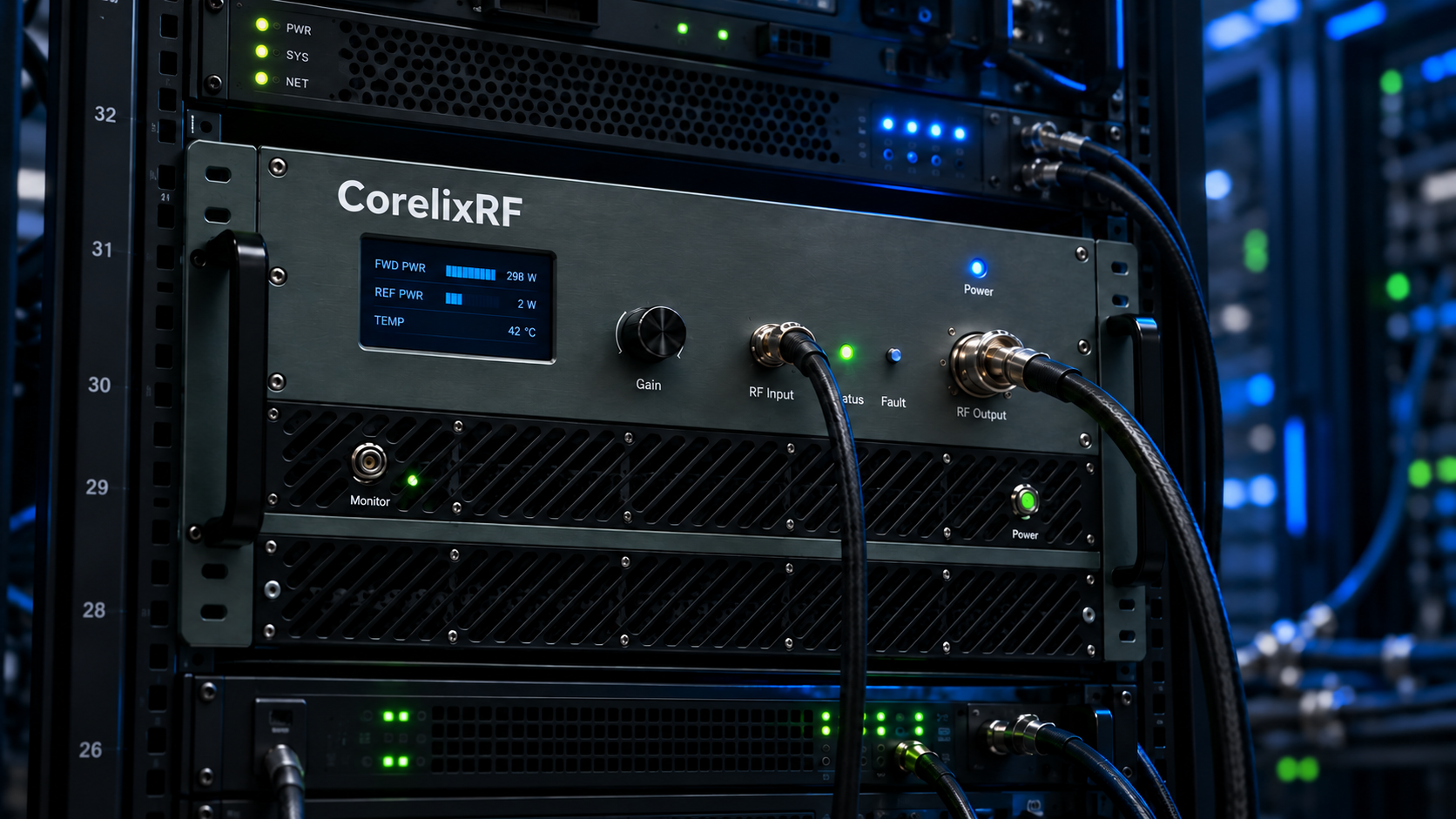
An OEM RF amplifier project can meet its electrical target and still become difficult to repeat if the approved configuration is not transferred as one controlled baseline. The handoff must connect the RF requirement, mechanical drawing, cooling method, control protocol, test procedure, acceptance limits and unresolved deviations to the exact prototype, first article or production batch they describe.
This guide starts after the initial requirement and development route have been defined. Use the custom RF amplifier RFQ guide to prepare the original inquiry, and use the custom RF amplifier development guide for platform selection and engineering integration. This page covers the configuration handoff that prevents an approved design from drifting between prototype review, first-article acceptance and repeat production.
1. Freeze One Configuration Baseline
Create a baseline only when the documents describe the same build. Do not approve the RF test report against one revision while purchasing, manufacturing or integration uses another drawing or control definition.
| Baseline element | Record to freeze | Why it matters |
|---|---|---|
| Product identity | Exact model, project code, hardware revision and applicable options | Prevents data from a nearby model or option set being reused as acceptance evidence |
| RF conditions | Frequency range, output definition, gain, waveform, duty condition, input limit, load and measurement reference plane | Keeps quoted performance tied to stated operating and test conditions |
| Electrical interface | Supply requirement, connector assignment, enable logic, grounding and protection inputs | Prevents installation assumptions from changing the approved electrical boundary |
| Mechanical and thermal interface | Drawing revision, envelope, mounting, connector positions, cooling method and service clearances | Connects RF acceptance to the actual installed configuration |
| Control definition | Protocol revision, command map, alarm meanings, reset rules and supported monitoring | Stops software and hardware teams from using different interface assumptions |
| Verification package | Test procedure, calibration references, pass limits, report and open deviations | Shows what was tested, how it was judged and what remains unresolved |
A baseline is not a claim that every item is final forever. It is the reference against which later changes are assessed.
2. Separate Prototype, First Article and Repeat Production
Each stage answers a different question. Keeping the stages separate makes the evidence easier to review and prevents a prototype result from becoming an unsupported production claim.
| Stage | Main decision | Minimum handoff evidence |
|---|---|---|
| Prototype | Can the proposed RF, mechanical, thermal and control approach satisfy the agreed requirement? | Prototype configuration, test conditions, measured results, deviations and next-revision actions |
| First article | Does the controlled build match the released configuration and acceptance plan? | Released drawings, BOM revision, software or firmware revision, inspection record, acceptance report and deviation approvals |
| Repeat production | Can later units be built and checked against the same approved basis? | Effective revision, approved substitutions, production test procedure, acceptance limits, traceability and change history |
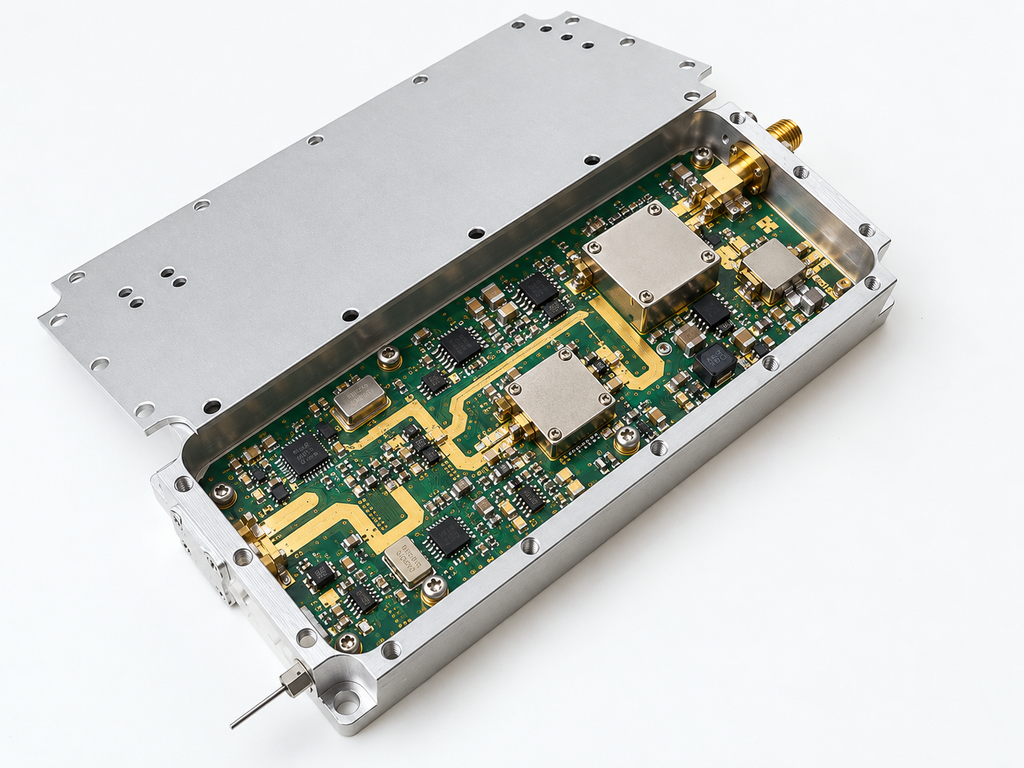
The handoff should identify evidence that applies only to one engineering sample. If a result depends on a temporary fixture, laboratory cooling arrangement, non-production controller or special tuning state, record that limitation before first-article release.
3. Use a Change Record That Forces an Impact Decision
A useful change record does more than describe what changed. It connects the change to affected interfaces, required review, retest scope, approval and the serial number or batch where the change becomes effective.
| Change record field | Required entry |
|---|---|
| Change identification | Change number, date, requester and reason |
| Current baseline | Model, hardware, drawing, BOM, control and test revisions being replaced |
| Proposed change | Exact component, dimension, interface, firmware, process or document change |
| Affected boundaries | RF, electrical, mechanical, thermal, control, safety, documentation and procurement effects |
| Verification impact | Analysis, inspection, partial retest or full acceptance testing required |
| Approval | Technical, quality, business or customer approval required for the stated scope |
| Effectivity | Prototype, serial number, purchase order, production batch or date where the change applies |
| Closure evidence | Updated documents, test result, deviation disposition and released baseline revision |
Do not treat a component substitution, connector relocation, cooling change or protocol update as a documentation-only edit until the affected engineering owners have assessed it.
4. Define the Retest Boundary Before Approving the Change
The retest decision should follow the affected function. A connector or cable-path change may alter loss, matching, power handling or the output reference plane. A mechanical change may affect airflow, liquid connections, service access or strain. A control update may change enable sequencing, alarm interpretation, returned values or recovery behavior. A component change may affect output power, gain, flatness, harmonics, spurious response, stability, thermal behavior or protection.
Record why a test is repeated and why another test is not. “No retest required” needs an approved engineering basis, just as a full retest needs a defined procedure and pass limit. The aim is traceability, not automatically repeating every test after every edit.
For an installed unit whose rack location, load, pulse condition or operating procedure changes after release, use the separate 1500W pulsed RF amplifier change-control playbook. That page addresses operational change triggers after an approved setup exists. This page controls the OEM product baseline from prototype through repeat production.
5. Build the Handoff Package Around the Released Revision
The package should let engineering, purchasing, manufacturing, test and the customer identify the same configuration without reconstructing decisions from email or chat history.
Include the following items when applicable:
- Exact model, project identifier and approved option list.
- Released BOM and approved substitution list.
- Mechanical drawing, connector locations, mounting and cooling interface.
- RF interface and measurement reference-plane definition.
- Supply, enable, grounding and protection-interface requirements.
- Control protocol, command map, alarm meanings and software or firmware revision.
- Production and acceptance test procedures with conditions and pass limits.
- Prototype, first-article and production evidence clearly identified by stage.
- Approved deviations, open items, responsible owners and closure dates.
- Confidentiality, document access and customer-owned information requirements.
Keep released documents separate from working notes. Draft calculations, temporary drawings and unapproved command lists can remain in the project record, but the handoff index should identify which files control the build.
6. Control Repeat Orders and Supplier Changes
A repeat order should reference the accepted baseline rather than only a model name. Confirm whether the requested unit must be identical to the previous approved configuration or may use the supplier’s current standard revision. If equivalence is allowed, define which interfaces and performance conditions must remain unchanged and which substitutions require notice or approval.
Procurement should record the applicable revision in the purchase package. Engineering should review changes that affect RF performance, thermal management, control behavior, mechanical fit or acceptance evidence. Quality should retain the approved change record and effectivity. This prevents a commercial reorder from silently becoming a new technical configuration.
7. Close the Handoff With Open Items Visible
Do not hide unresolved items inside a generally approved package. List each deviation or missing input with its owner, required evidence, decision authority and due point. State whether it blocks prototype operation, first-article acceptance, production release or only a later documentation update.
The handoff is ready when the configuration index, released documents, acceptance evidence, approved deviations and change history all point to the same revision. For project-specific review, send CorelixRF the configuration baseline and open-item list together with the required RF, mechanical, thermal and control conditions.
Frequently Asked Questions
Is this the same as writing a custom RF amplifier RFQ?
No. An RFQ defines the need before the configuration is selected. Configuration handoff controls the approved solution and its evidence after development decisions have been made.
Does prototype test data automatically approve repeat production?
No. The record must show whether the tested prototype matches the released first-article or production configuration and whether any temporary fixtures, tuning states or deviations affect the result.
Does every change require a complete RF retest?
No. The responsible engineering team should assess the affected interfaces and document the justified retest scope with defined conditions and pass limits.
What should a repeat order reference?
Reference the exact approved model, option set, hardware and document revision, along with any accepted substitutions and applicable test requirements.