
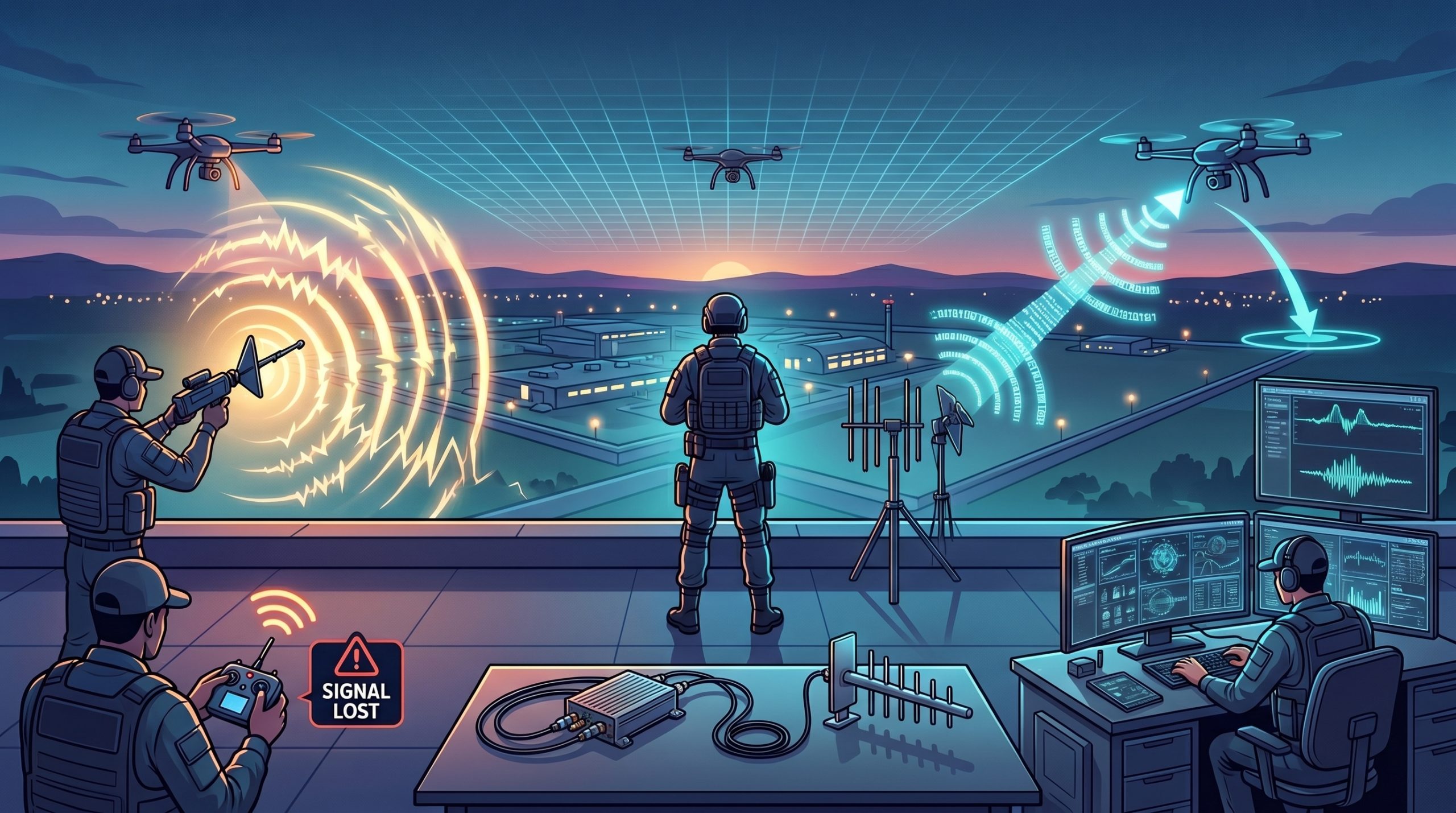
Drone jamming and spoofing involve the targeted use of radio frequency (RF) energy to disrupt or manipulate the communication links between an unmanned aerial vehicle (UAV) and its operator.
As drones become more accessible, you face an increasing threat of unauthorized aerial surveillance and payload delivery over sensitive facilities. This proliferation means your security perimeter is no longer just on the ground, creating a high-stakes vulnerability for critical infrastructure. By utilizing professional electronic interruption techniques, you can regain control of your airspace and neutralize these airborne risks effectively. If you are researching how to build a drone jammer, understanding the technical requirements is the first step toward professional airspace defense.
What is drone jamming and spoofing?
Drone jamming is the process of flooding a drone’s receiver with “noise” to block legitimate control signals, while spoofing involves sending fake signals to take control of the aircraft. When considering how to build a drone jammer, you must distinguish between simply blocking a signal and intelligently manipulating it. Jamming acts like a loud white noise that prevents the drone from “hearing” its pilot.
How does signal noise work?
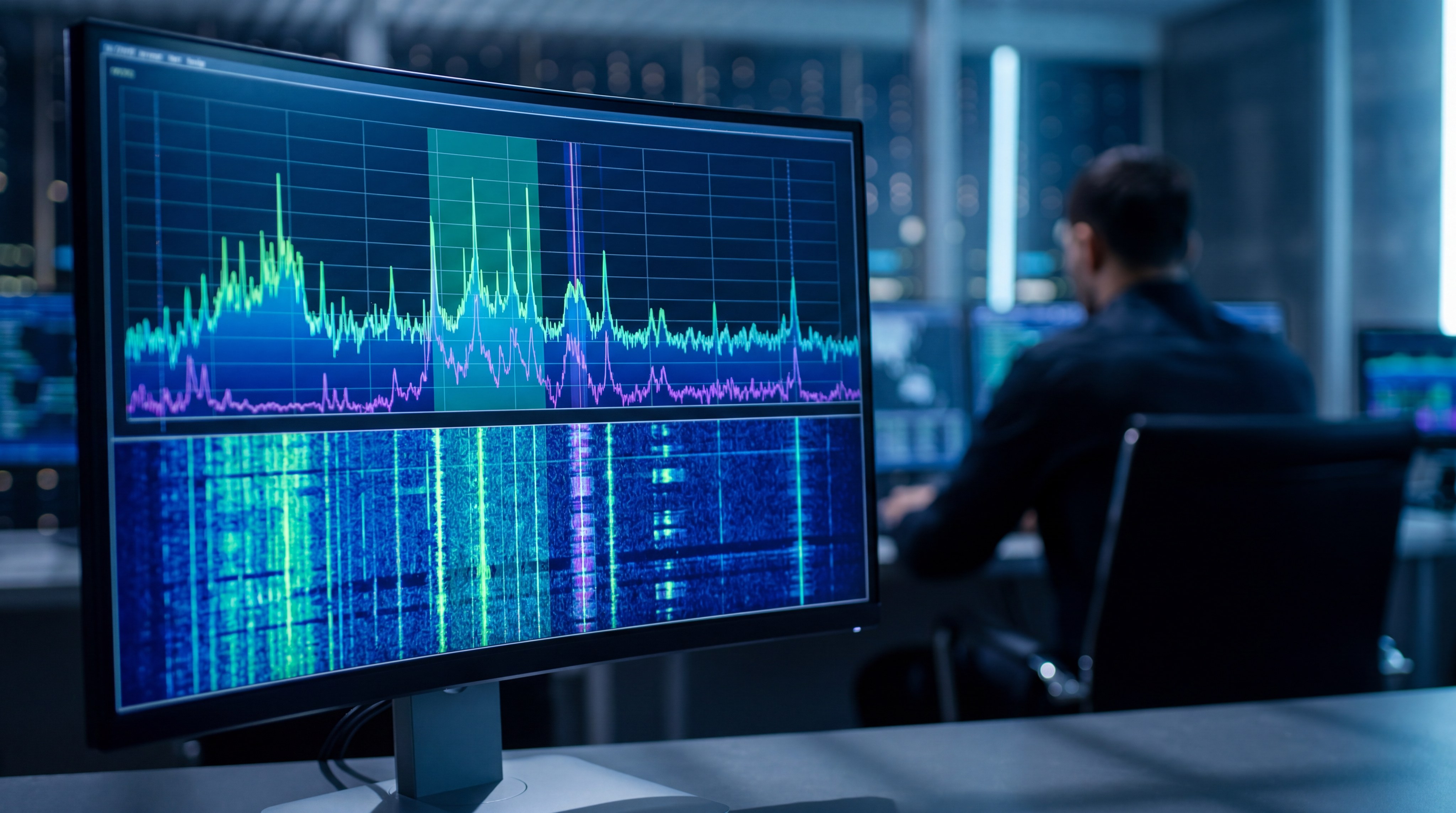
Signal noise works by emitting high-power RF energy on the exact frequencies used by the drone’s remote control or GPS. This effectively raises the noise floor so high that the legitimate communication pulses are lost.
Look:
- Frequency matching is essential for success.
- Power levels must exceed the original signal.
- Continuous emission prevents reconnection.
The best part? Professional monitoring systems can detect these frequencies before you even deploy countermeasures.
What is the goal of spoofing?
The goal of spoofing is to trick the drone’s onboard computer into following a new, unauthorized set of instructions. This is often achieved by mimicking the GPS satellite signals or the operator’s control packets.
Think about it:
- Spoofing can force a landing in a safe zone.
- It allows for the redirection of a hostile drone.
- The drone remains under “control” rather than falling.
Key Takeaway: Jamming denies the drone information, whereas spoofing provides the drone with false information to manipulate its behavior.
| Technique | Primary Method | End Result |
|---|---|---|
| Jamming | RF Noise Injection | Signal Loss/Failsafe |
| Spoofing | Protocol Mimicry | Directional Takeover |
Effective airspace management requires knowing which of these two methods best suits the specific threat profile.
How does jamming differ from spoofing?
Jamming focuses on total communication disruption, whereas spoofing prioritizes the takeover of flight controls or navigation data. If you are evaluating how to build a drone jammer, you are likely looking for a way to break the link between the pilot and the UAV immediately. Jamming is generally easier to implement but offers less precision than a spoofing attack.
Will a jammed drone return home?
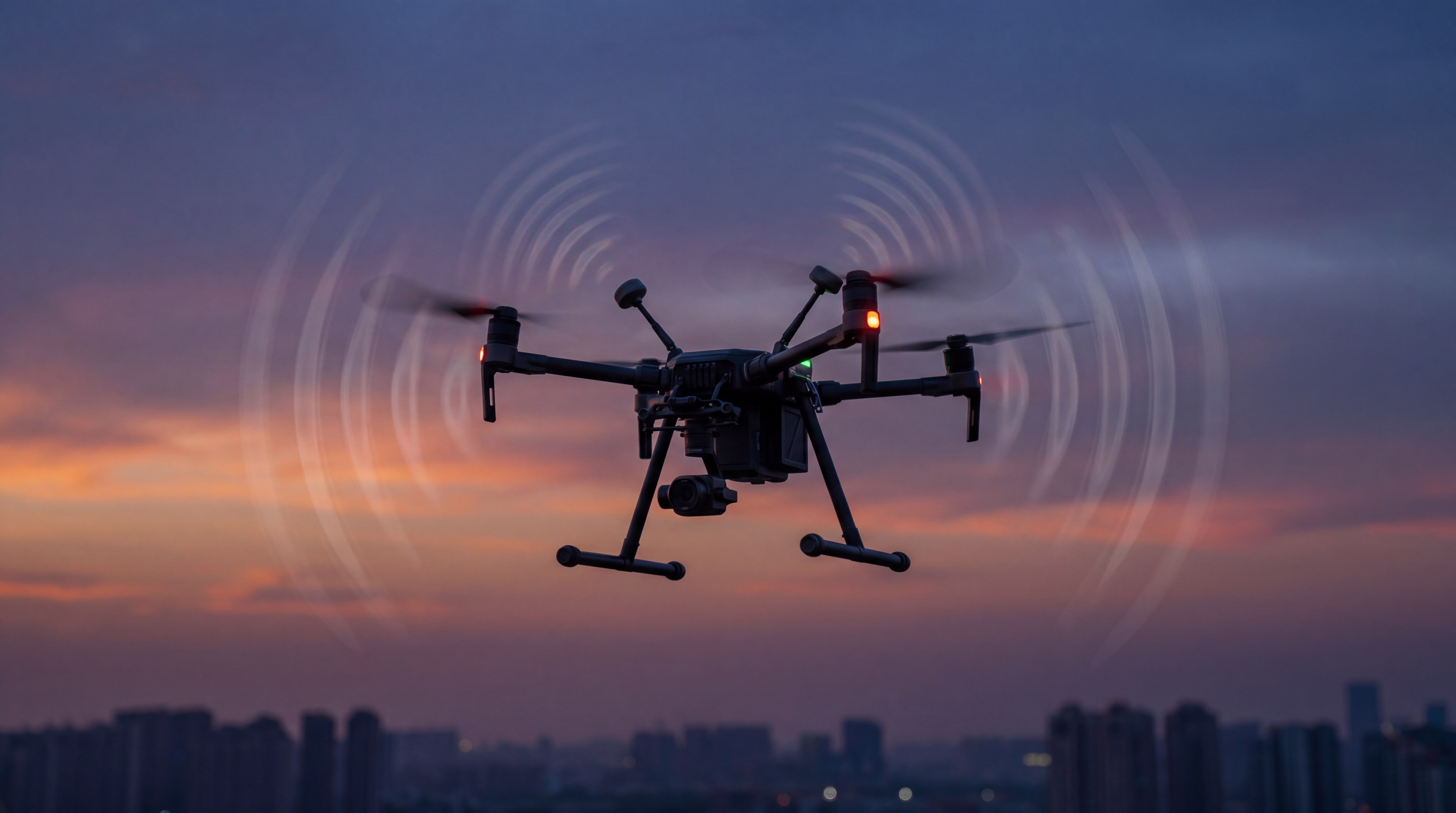
Most modern drones are programmed with a “Return to Home” (RTH) feature that activates when the control signal is lost. When you jam a drone, you are triggering this automated failsafe mechanism.
The reality is:
- RTH depends on a clear GPS signal.
- If GPS is also jammed, the drone may hover.
- Some drones are set to land immediately upon signal loss.
The best part? You can use this predictable behavior to clear the airspace without damaging the drone.
Can a spoofed drone be redirected?
A spoofed drone can be redirected because its internal logic believes it is receiving legitimate commands from its authorized pilot. This allows security personnel to guide a drone to a designated recovery area for investigation.
Look:
- Navigation spoofing alters the GPS coordinates.
- Control spoofing mimics the operator’s stick movements.
- Redirecting minimizes the risk of a crash over populated areas.
Key Takeaway: Jamming creates a communication vacuum that triggers failsafes, while spoofing creates a controlled environment for aerial intervention.
| Feature | Jamming | Spoofing |
|---|---|---|
| Precision | Low | High |
| Hardware Cost | Moderate | High |
Understanding these differences is critical for selecting the right electronic countermeasure for high-value asset protection.
What tools are required for signal interruption?
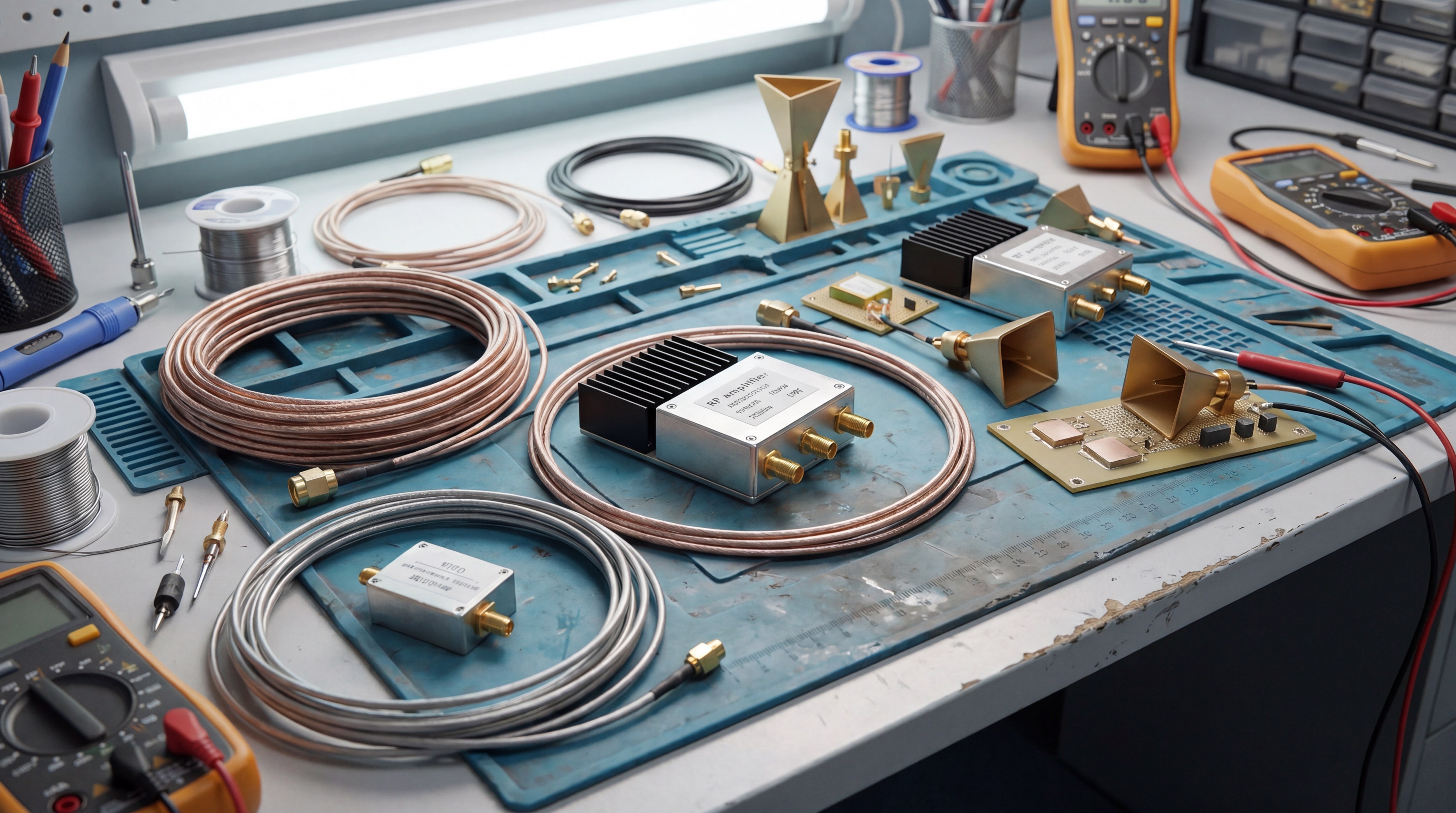
Effective signal interruption requires a combination of high-power RF transmitters, precise signal generators, and specialized antennas. Professionals learning how to build a drone jammer focus on the integration of these components into a unified, mobile, or fixed system. High-quality hardware ensures the signal remains stable and reaches the target drone at the necessary distance.
What is the role of amplifiers?
The RF power amplifier is the heart of any interruption system, boosting low-level signals to levels capable of overcoming a drone’s receiver. Without sufficient amplification, the jamming signal will not have the “reach” required to neutralize a distant threat.
Think about it:
- Higher wattage equals longer effective range.
- Heat management is crucial for continuous operation.
- Broadband capability allows for multi-frequency coverage.
Look: The right amplifier determines whether your countermeasure is effective or just expensive noise.
Why use directional antennas?
Directional antennas allow you to focus your RF energy toward a specific point in the sky rather than wasting power in all directions. This precision is vital for minimizing interference with legitimate local electronics.
Features to consider:
- High gain for long-distance targeting.
- Narrow beamwidths to isolate the drone.
- Lightweight designs for portable jamming kits.
Key Takeaway: A professional toolkit must balance raw power from amplifiers with the surgical precision of high-gain directional antennas.
| Component | Function | Priority |
|---|---|---|
| Power Amp | Signal Boosting | Critical |
| Antenna | Signal Focusing | High |
High-quality RF components are the foundation of any reliable system designed for modern electronic warfare.
Why is jamming used for airspace security?
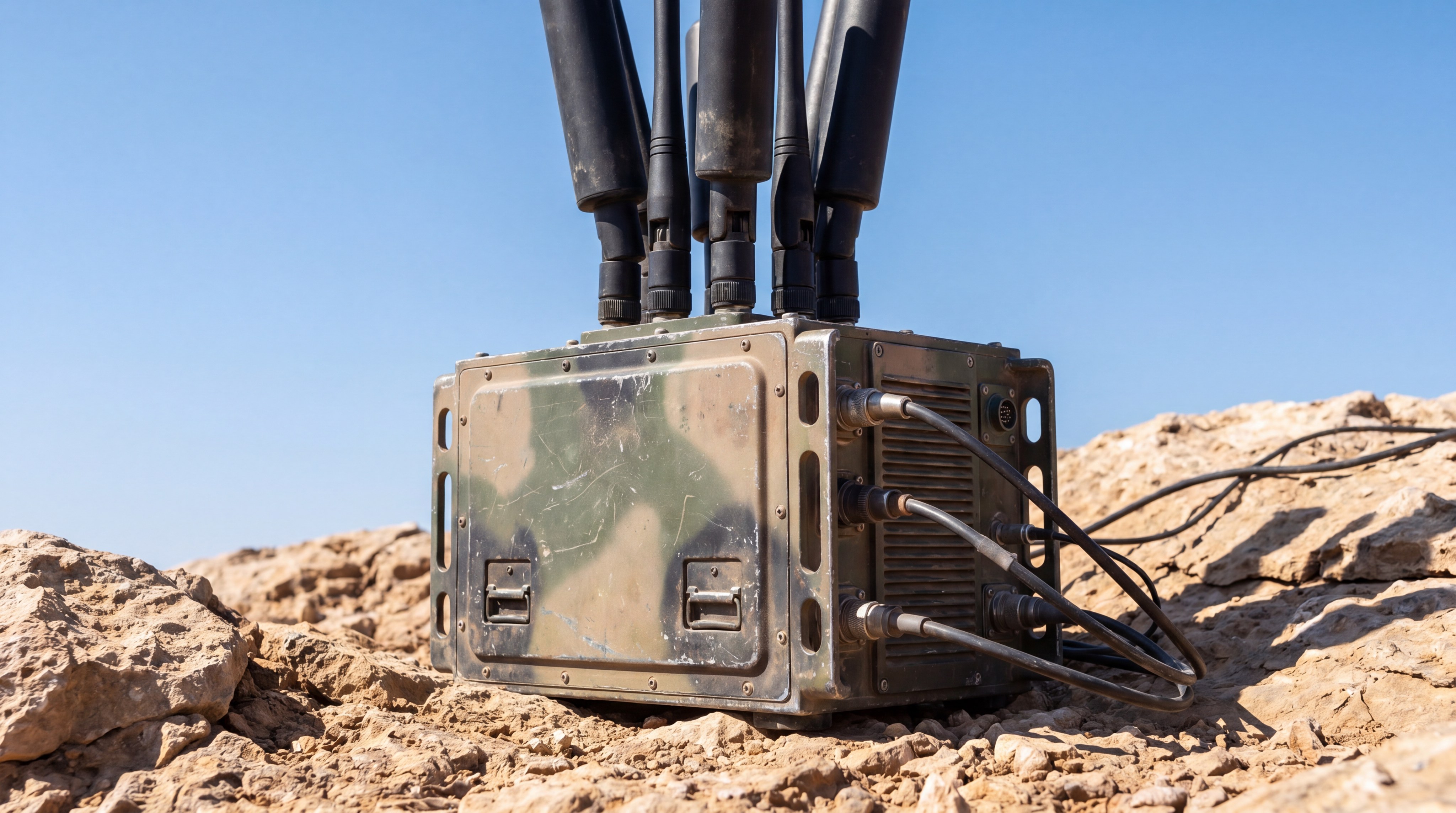
Jamming is used to create a “no-fly zone” around sensitive locations to prevent aerial espionage, smuggling, and physical attacks. When authorities consider how to build a drone jammer, the primary goal is usually the rapid neutralization of unauthorized aircraft. It provides an invisible wall that drones cannot easily penetrate or bypass.
Is aerial espionage a real threat?
Aerial espionage is a significant concern for corporate and military sites where drones can capture high-resolution imagery from angles that ground security cannot see. Small drones can easily hover near windows or over restricted testing grounds.
Look:
- Drones can record classified data remotely.
- They can map facility security blind spots.
- Stealthy operation makes them hard to detect without RF tools.
The best part? Electronic interruption stops the data transmission instantly, protecting your intellectual property.
How are contraband drops prevented?
Contraband delivery via drone has become a major issue for correctional facilities and border security. Jamming the control link near the perimeter forces the drone to land or return to the pilot before the drop is completed.
Consider these risks:
- Narcotics and weapons delivery to inmates.
- Smuggling high-value items across borders.
- Bypassing traditional physical fences and walls.
Key Takeaway: Jamming serves as a proactive defense layer that addresses the unique challenges of 3D perimeter security.
| Security Risk | Jamming Benefit | Effectiveness |
|---|---|---|
| Espionage | Stops Data Uplink | High |
| Smuggling | Prevents Payload Drop | Very High |
By implementing RF countermeasures, organizations can effectively close the “open sky” vulnerability inherent in traditional security models.
Is the drone safe after electronic interference?
The safety of a drone after interference depends largely on its pre-programmed failsafe behavior and the environment in which the interruption occurs. When you explore how to build a drone jammer, you must account for the physical risks of a drone losing its navigational stability. While most drones are designed to handle signal loss, electronic interference can sometimes lead to unpredictable results.
What are the risks of flight paths?
Unpredictable flight paths occur if a drone’s GPS is jammed and its “Return to Home” function cannot find the correct coordinates. In these cases, a drone might drift with the wind or begin a forced landing in a hazardous area.
Think about it:
- Drift can lead a drone into power lines.
- Forced landings might occur on busy roads.
- Battery depletion during hovering creates a crash risk.
The best part? Modern spoofing techniques can mitigate these risks by providing the drone with a safe, simulated landing coordinate.
Why are payloads a danger?
Sensitive or heavy payloads attached to a drone can become dangerous projectiles if the aircraft loses stability during an interruption event. If a drone is carrying hazardous materials, a crash landing caused by jamming could lead to an environmental or safety crisis.
Look:
- Heavy cameras can cause damage upon impact.
- Explosive or chemical payloads require careful handling.
- Gravity is the ultimate threat during signal loss.
Key Takeaway: Electronic interruption is effective for security, but it requires a strategic approach to ensure the physical safety of people and property on the ground.
| Event | Likely Outcome | Risk Level |
|---|---|---|
| Signal Loss | Automated Failsafe | Moderate |
| GPS Jamming | Drift/Manual Landing | High |
System operators must weigh the immediate security threat against the potential collateral damage of a forced aerial landing.
Are these counter-drone methods legal to use?
In most jurisdictions, the use of drone jammers is strictly regulated and generally reserved for government, military, and specific law enforcement agencies. If you are researching how to build a drone jammer, it is vital to understand that unauthorized use can result in severe federal penalties. Regulations exist because RF interference can accidentally disrupt emergency communications and public cellular networks.
Who is authorized to use signal blockers?
Authorization is typically limited to federal entities such as the military, secret service, and specific homeland security departments. Private individuals and commercial security firms are usually prohibited from operating active jamming equipment.
Look:
- Military bases use jammers for site protection.
- Prison systems may have special federal waivers.
- Major national events often utilize authorized RF teams.
The best part? You can still utilize passive RF detection systems legally to monitor and track unauthorized drones.
What are the federal penalties?
Federal penalties for illegal jamming can include massive fines, the seizure of equipment, and even imprisonment. The FCC and other regulatory bodies view unauthorized RF emission as a serious threat to the public airwaves.
Consider these facts:
- Fines can reach tens of thousands of dollars per day.
- Intentional interference is a criminal offense.
- Seizure of hardware happens immediately upon discovery.
Key Takeaway: While the technology is accessible, the legal framework for active drone jamming is highly restrictive and favors authorized state actors.
| Entity | Authorization Status | Risk of Use |
|---|---|---|
| Private Citizen | Prohibited | Extremely High |
| Federal Gov | Authorized | None (Regulated) |
Navigating the legal landscape is the most critical step for any organization looking to deploy electronic countermeasures.
What role does RF power play in effective jamming?
RF power is the decisive factor in whether a jamming signal is strong enough to overwhelm the drone’s legitimate control link at a distance. When investigating how to build a drone jammer, engineers must focus on achieving a high Signal-to-Noise Ratio (SNR) at the drone’s receiver. Without enough raw power, the drone will continue to “hear” the pilot over your interference.
How do you overcome signal gain?
Overcoming the signal gain of a drone’s transmitter requires your jammer to emit significantly more power than the operator’s remote control. This is a battle of physics where the closer the drone is to the pilot, the more power you need to disrupt it.
Think about it:
- Distance follows the inverse square law.
- Your amplifier must compensate for atmospheric loss.
- High-gain antennas can focus limited power more effectively.
Look: Power isn’t just about volume; it’s about being “louder” than the pilot at the drone’s location.
Why is power stability important?
Stable power amplification ensures that your jamming signal remains consistent and doesn’t “flicker,” which would allow the drone to momentarily reconnect and regain control. Fluctuations in power can also damage your internal RF components over time.
Features of stable power:
- Low harmonic distortion for cleaner signals.
- Thermal protection to prevent overheating.
- Constant output levels across the frequency band.
Key Takeaway: Effective jamming is not just about peak power; it is about maintaining a consistent, overwhelming presence on the target frequency.
| Metric | Impact on Jamming | Priority |
|---|---|---|
| Output Wattage | Effective Range | High |
| Linearity | Signal Clarity | Medium |
Reliable power amplification is the foundation of any successful electronic interruption campaign.
Which antenna types optimize signal targeting?
The choice between directional and omnidirectional antennas determines whether your jamming signal is broadcast locally or focused on a distant target. When designing how to build a drone jammer, antenna selection is as important as the power amplifier itself. The right antenna allows you to maximize your link budget and minimize collateral interference.
When to use directional antennas?
Directional antennas are the best choice for long-range drone interception because they concentrate the RF energy into a tight beam aimed directly at the threat. This prevents the signal from being wasted in directions where there is no drone present.
Look:
- Provides the longest possible reach.
- Reduces interference with nearby electronics.
- Requires accurate aiming to be effective.
The best part? These antennas can be mounted on automated gimbals that track drones in real-time.
Are omnidirectional antennas useful?
Omnidirectional antennas are useful for creating a “bubble” of protection around a small, fixed site where threats could come from any direction. They are ideal for close-range defense where you don’t have the luxury of aiming.
Think about it:
- 360-degree coverage for localized zones.
- No tracking hardware required.
- Lower range compared to directional setups.
Key Takeaway: Directional antennas offer surgical precision for long distances, while omnidirectional antennas provide broad coverage for immediate perimeters.
| Antenna Type | Coverage Area | Range |
|---|---|---|
| Directional | Narrow Beam | Long |
| Omnidirectional | 360 Degrees | Short |
Matching the antenna pattern to your specific security threat is essential for optimizing system performance.
How can SDR modules enhance signal spoofing?
Software Defined Radio (SDR) modules allow for the creation of custom waveforms and protocol manipulation, which are essential for advanced spoofing attacks. When moving beyond simple noise, how to build a drone jammer becomes a task of software engineering. SDRs provide the flexibility to adapt to new drone communication protocols as they hit the market.
What is waveform manipulation?
Waveform manipulation involves digitally crafting an RF signal that perfectly mimics the timing and structure of a drone’s control packets. This level of sophistication is what allows a spoofing system to “hijack” a flight without triggering a failsafe.
Consider these capabilities:
- Frequency hopping synchronization.
- Custom modulation schemes (FHSS, DSSS).
- Real-time adjustment to drone responses.
The best part? A single SDR unit can be updated via software to tackle different drone brands without hardware changes.
Can spoofing mimic control signals?
Spoofing can mimic control signals by recording the handshake between a legitimate pilot and drone and then replaying or modifying those packets. This effectively puts your hardware in the position of the “pilot” in the drone’s internal logic.
Look:
- Takes full control of the camera gimbal.
- Allows for remote landing in a safe zone.
- Bypasses simple frequency-blocking countermeasures.
Key Takeaway: SDR technology transforms a basic jammer into a sophisticated tool capable of intelligent drone management and protocol takeover.
| Feature | SDR Capability | Impact |
|---|---|---|
| Adaptability | Software Updates | Multi-Drone Support |
| Precision | Digital Signal Gen | Higher Takeover Rate |
SDRs are the “brain” of modern electronic warfare, providing the agility needed to counter evolving aerial threats.
What are the risks of using illegal jammers?
The primary risk of using illegal jammers is the unintended interruption of public safety communications, including 911 calls, ambulance dispatch, and aviation radar. Even if you are simply looking at how to build a drone jammer for personal use, the RF footprint of such a device is often much larger than you expect. These devices can effectively “blind” critical infrastructure far beyond your own property lines.
Can jammers block emergency calls?
Yes, jammers often operate on frequencies that overlap with cellular bands used by emergency responders and the general public. A jammer intended for a drone over a backyard could easily prevent a neighbor from calling for help during a medical emergency.
Think about it:
- Mobile networks use many of the same bands as drones.
- Signal bleed can affect entire city blocks.
- Blocked signals can delay life-saving responses.
The best part? Professional systems are designed with narrow filtering to avoid these catastrophic side effects.
What are the risks of equipment seizure?
If an illegal jammer is detected by the authorities, you face immediate equipment seizure and potentially life-altering legal consequences. Regulatory agencies use sophisticated monitoring vans to triangulate the source of any unauthorized RF interference very quickly.
Look:
- Agencies can track signals to a specific room.
- Seized hardware is rarely returned.
- Legal defense costs can be astronomical.
Key Takeaway: The risks of illegal jamming—both to public safety and to your personal legal standing—far outweigh the perceived benefits of unauthorized drone defense.
| Risk Area | Unintended Consequence | Severity |
|---|---|---|
| Public Safety | Blocked 911 Calls | Critical |
| Personal | Legal Prosecution | High |
Responsible security involves using only authorized, professionally engineered solutions that comply with regional RF laws.
Conclusion
Understanding the mechanics of drone jamming and spoofing is essential for anyone responsible for modern airspace security. By identifying the differences between simple signal noise and advanced protocol manipulation, you can better protect your assets from unauthorized aerial incursions. We have explored the critical roles of RF power, antenna selection, and SDR flexibility in building a robust defense.
Our professional systems address the growing problem of drone-based espionage and smuggling by providing reliable, high-performance interruption hardware. Whether you need custom RF amplification or specialized signal sources, our team is dedicated to providing the technical expertise required for high-stakes electronic warfare. For professional-grade solutions and consulting on your next airspace security project, contact us today.
Frequently Asked Questions (FAQ)
Can I use a jammer to stop drones flying over my private house?
No, because the FCC and other regulatory bodies strictly prohibit the use of jamming devices by private individuals. Using such equipment can interfere with authorized radio communications, including emergency services, regardless of the drone’s location over your property.
What’s the best way to protect a site without using illegal jammers?
The best way is to implement passive RF detection and monitoring systems. These systems identify the presence of drones and their operators without emitting disruptive signals, allowing you to alert law enforcement through legal channels.
How do I know if a drone is being jammed or spoofed?
You can tell by the drone’s behavior; a jammed drone typically enters a failsafe mode like hovering or returning to home, while a spoofed drone may follow a path that seems controlled but is not directed by its original operator.
Can spoofing allow a third party to view the drone’s camera feed?
Yes, because if a third party successfully intercepts the downlink or spoofs the control link, they can potentially gain access to the real-time video transmission. This allows them to effectively hijack the drone’s sensory data.
Why are signal amplifiers necessary for counter-drone systems?
Signal amplifiers are necessary because standard signal generators produce very low power that cannot travel far. To overcome the signal from a drone’s pilot who may be kilometers away, you need the extra wattage provided by an amplifier to dominate the drone’s receiver.