

Drone jamming is the intentional use of radio frequency (RF) signals to disrupt the communication link between an unmanned aerial vehicle (UAV) and its operator or satellite navigation.
Imagine an unauthorized drone hovering over your secure industrial facility, capturing sensitive data or creating a physical threat. This security breach puts your proprietary information and personnel at immediate risk, creating an agitation point where traditional security fails. Understanding what is a drone jammer and how to deploy high-performance RF countermeasures is the professional solution to regaining control of your private airspace.
What is the primary function of a drone jammer?
The primary function of a drone jammer is to emit powerful RF noise on the same frequencies used by the drone’s control and navigation systems. When you investigate what is a drone jammer, you discover it acts as a “wall” of signal that prevents the UAV from receiving commands or GPS coordinates.
Which components are essential?
- High-stability RF signal generator
- High-power broadband RF amplifier
- Specialized directional or omnidirectional antennas
- Robust thermal management system
Thinking about the impact?
You should realize that once the signal-to-noise ratio favors the jammer, the drone typically enters a “fail-safe” mode. This often results in the drone hovering in place, landing immediately, or attempting to return to its takeoff point.
Key Takeaway
A jammer succeeds by overwhelming the drone’s receiver with enough noise to sever its link to the pilot.
| Component | Role | Impact |
|---|---|---|
| Signal Generator | Creates the disruption wave | Determines frequency target |
| RF Amplifier | Boosts the output power | Determines effective range |
| Antenna | Directs the signal | Determines coverage area |
Consistent power output is the most critical metric for ensuring a jammer can overcome modern drone receiver sensitivity.

Why is frequency hopping used in UAV defense?
Frequency hopping is used to prevent electronic warfare systems from easily blocking a drone’s signal by rapidly switching between different channels within a band. It is a direct response to what is a drone jammer, forcing the jamming device to either cover a very wide spectrum or guess the next channel. To learn more about what is a drone jammer, you must understand that modern UAVs are increasingly agile.
How does FHSS improve resilience?
- Spreads signals across a wide frequency range
- Reduces the probability of intercept (LPI)
- Minimizes the effect of narrowband interference
- Enhances data security during flight
Want to know the secret?
You can effectively counter frequency hopping only if your jamming system has the bandwidth to saturate the entire hopping range simultaneously. This requires high-gain broadband platforms that maintain flat power across the target spectrum.
Key Takeaway
Agile frequency management is the first line of defense for drones operating in contested or noisy RF environments.
| Defense Type | Method | Counter-Strategy |
|---|---|---|
| FHSS | Fast channel switching | Barrage jamming |
| DSSS | Spreading signal power | Broadband saturation |
| LPI Waveforms | Low power signals | High-sensitivity detection |
Broadband saturation remains the most reliable method for neutralizing agile frequency-hopping drones in mission-critical scenarios.
How do portable jamming modules operate?
Portable jamming modules operate by integrating a compact signal source with a battery-powered amplifier to provide mobile protection for ground teams. If you are researching what is a drone jammer for tactical use, these units are often designed as handheld “rifles” or backpack-mounted systems.
What are the design priorities?
- Lightweight, ergonomic housing
- High energy density battery packs
- Targeted frequency band selection
- Rapid activation triggers
Here is the kicker:
You must balance the weight of the portable unit with the cooling requirements of the internal RF power amplifier. Without efficient heat dissipation, the unit’s effective range will drop sharply during prolonged use.
Key Takeaway
Tactical portability requires highly efficient RF components that deliver maximum power with minimal thermal overhead.
| Feature | Tactical Benefit | Technical Constraint |
|---|---|---|
| Handheld Form | Ease of deployment | Limited thermal mass |
| Battery Power | Field independence | Restricted operation time |
| Integrated Antenna | Simplified aiming | Fixed beamwidth |
Portable units are ideal for short-duration tactical engagements but require careful energy management for sustained defense operations.
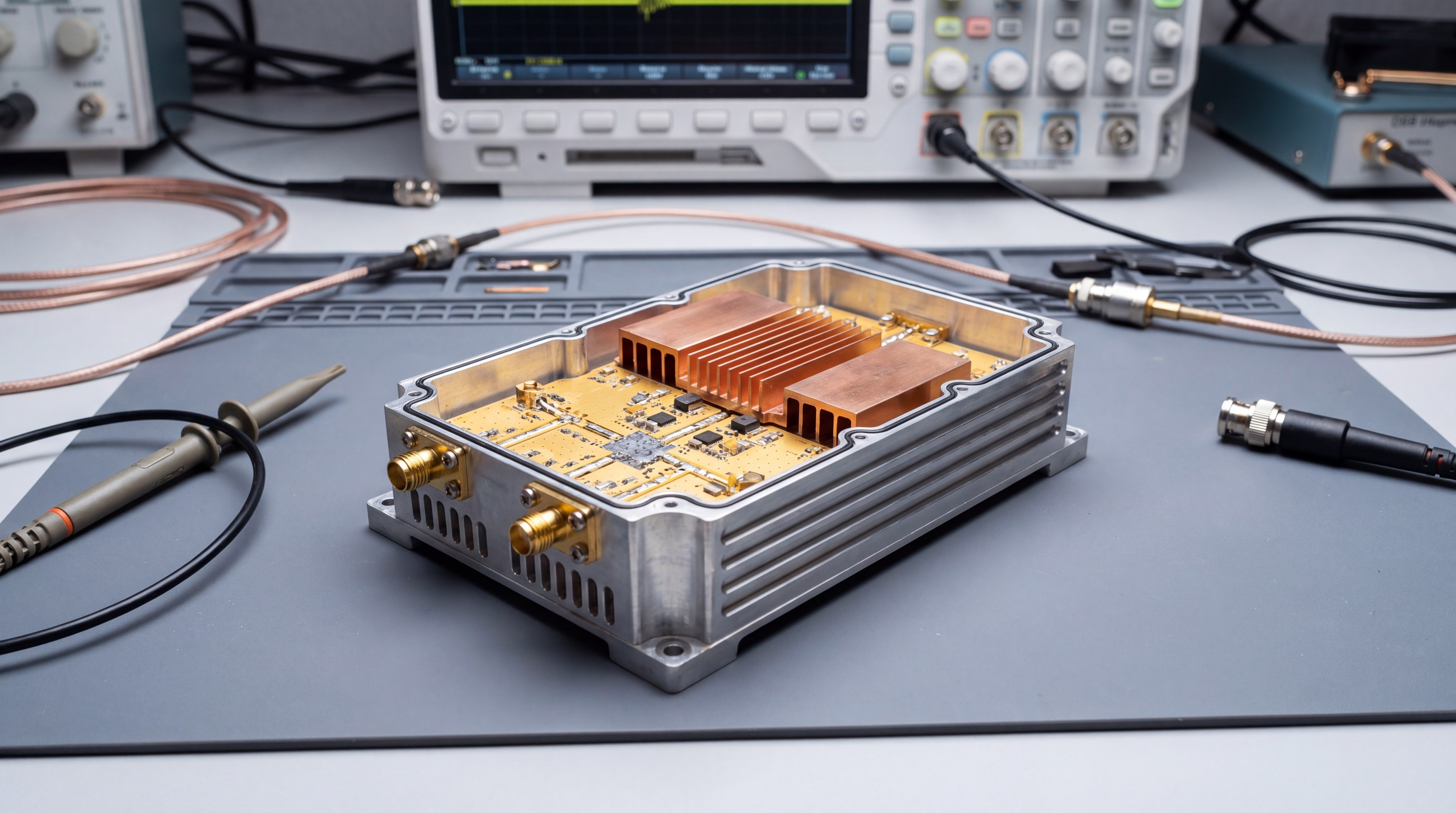
Can high-power amplifiers stop drone swarms?
High-power amplifiers can stop drone swarms by generating enough barrage noise to saturate large volumes of airspace across multiple frequency bands. When evaluating what is a drone jammer for swarm defense, the focus shifts to multi-kilowatt custom RF systems capable of persistent operation. You can find more about what is a drone jammer through our engineering review process.
Why is high power necessary?
- Overcomes the collective signal strength of the swarm
- Provides 360-degree area denial
- Counters drones at significantly longer distances
- Penetrates shielded or hardened receivers
Ready for the next level?
You should consider that swarm defense requires “barrage” jamming, where the amplifier must maintain high output across several GHz of bandwidth. This is why multi-kW pulsed RF amplifiers are often preferred for high-energy density requirements.
Key Takeaway
Neutralizing a swarm requires a brute-force RF approach that only high-power, industrial-grade amplifier systems can provide.
| Swarm Factor | Countermeasure | Hardware Requirement |
|---|---|---|
| Multiple Targets | Barrage jamming | Wideband high power |
| Spread Frequencies | Multi-band emission | Integrated SDR source |
| High Speed | Rapid signal detection | Real-time RF feedback |
Strategic swarm defense is fundamentally a power-vs-quantity game where the highest output power usually wins the engagement.
What role does GPS spoofing play in jamming?
GPS spoofing plays a role by tricking a drone into believing it is at a different location rather than simply blocking its signal entirely. While a traditional what is a drone jammer search focuses on noise, spoofing is a more surgical approach that can lead a drone to a safe capture zone.
What makes spoofing effective?
- Replaces legitimate satellite signals with fake data
- Can “capture” the drone’s autonomous path
- Avoids the brute-force power needs of noise jamming
- Harder for the operator to detect immediately
Think it’s that easy?
You need incredibly precise timing and signal synchronization to successfully spoof a military-grade GPS receiver. This usually involves high-frequency amplifiers to ensure the fake signal is slightly stronger than the real satellite broadcast.
Key Takeaway
Spoofing is a deceptive technique that allows for the redirection of a drone rather than its simple grounding.
| Technique | Goal | Detection Risk |
|---|---|---|
| Noise Jamming | Block communication | Very High |
| GPS Spoofing | Redirect navigation | Low to Moderate |
| Meaconing | Delay signal arrival | Moderate |
Sophisticated electronic warfare often combines noise jamming for control links with spoofing for navigation to achieve total UAV neutralization.
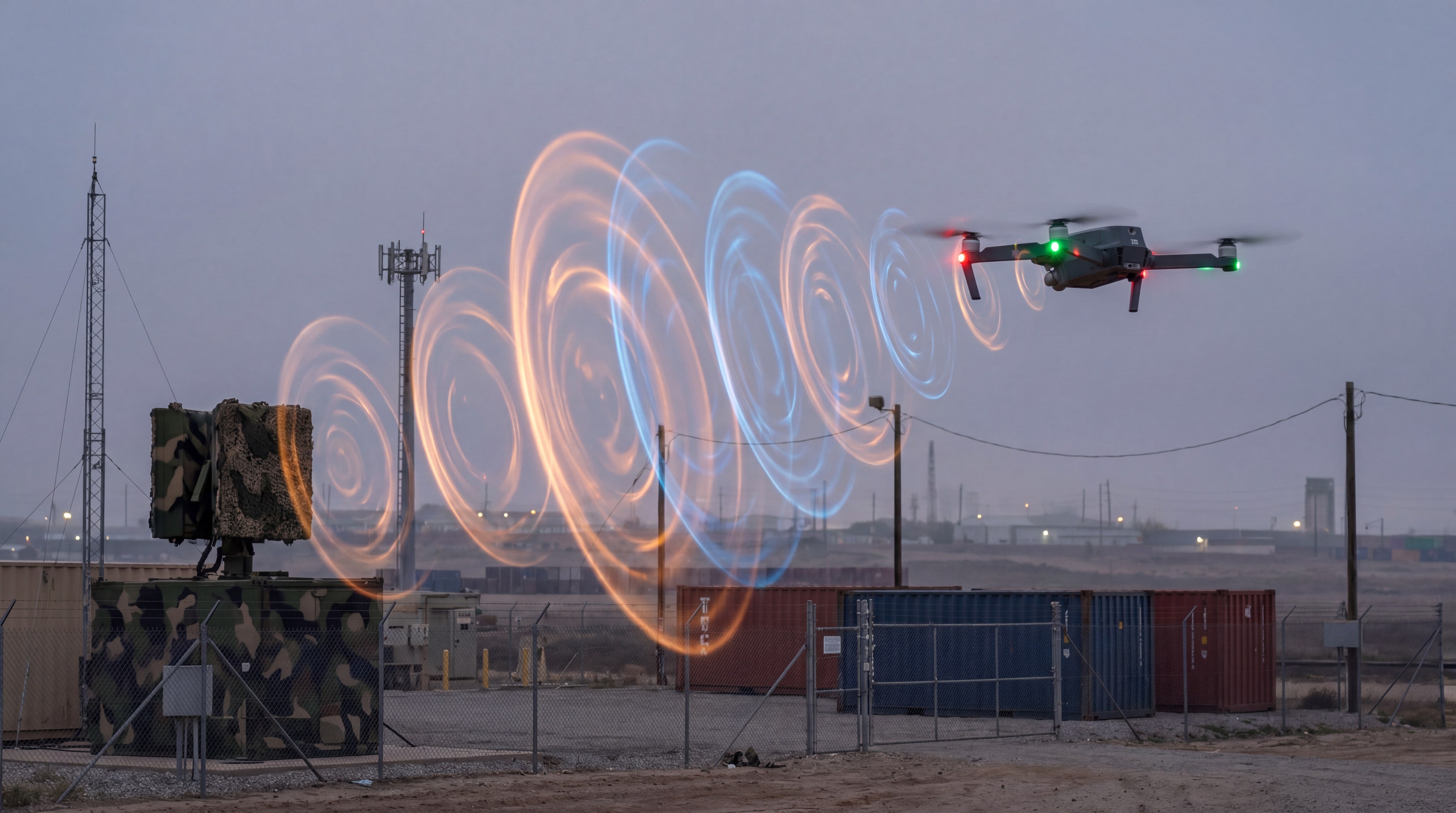
How do you choose the right RF antenna?
Choosing the right RF antenna depends on whether you need to protect a specific narrow corridor or provide broad, area-wide aerial denial. In the context of what is a drone jammer, the antenna platform determines how efficiently your amplified signal is delivered to the target. Finding what is a drone jammer starts with matching your coverage requirements.
When to use directional antennas?
- Long-range, point-to-point jamming
- High-gain targeting of specific UAVs
- Minimizing interference with friendly systems
- Tactical handheld “gun” configurations
But what about omnidirectional?
You should opt for omnidirectional solutions when protecting a base or a vehicle convoy where threats could arrive from any direction. These systems typically utilize omni-wideband antennas to create a constant “no-fly” bubble around a valuable asset.
Key Takeaway
The antenna is the final stage of the counter-drone chain, and its pattern must match your specific operational theater.
| Antenna Type | Pattern | Best Use Case |
|---|---|---|
| Directional | Focused Beam | Perimeter defense / Tactical |
| Omnidirectional | 360-Degree | Vehicle / Base protection |
| Phased Array | Steering Beam | Advanced swarm tracking |
Antenna selection is just as critical as amplifier power, as it determines the total efficiency of the electronic countermeasure.
What are the impacts of unintentional noise?
Unintentional noise can accidentally ground a drone by cluttering the 2.4 GHz or 5.8 GHz bands with signals from Wi-Fi routers and industrial equipment. This “natural” version of what is a drone jammer is a common headache for commercial operators in urban centers.
Where does urban noise come from?
- High-density Wi-Fi networks
- Bluetooth devices and smart home tech
- High-voltage power lines and transformers
- Microwave ovens and industrial motors
Facing a crowded spectrum?
You can overcome urban clutter by using higher-quality low-noise amplifiers on your receiver or by shifting your operating frequency to less crowded bands. Advanced filtering is essential to separate your control signal from the background chaos.
Key Takeaway
Industrial environments can be naturally “jammed,” necessitating the use of more robust RF hardware to maintain link integrity.
| Noise Source | Severity | Mitigation |
|---|---|---|
| Wi-Fi 6 | High | Band switching |
| Power Lines | Moderate | Shielding / Filtering |
| Cell Towers | Low to Moderate | Band-pass filters |
Spectrum monitoring is the best way to identify unintentional interference before it causes a mission-critical failure of your drone link.
Why is multi-band communication necessary?
Multi-band communication is necessary because it provides redundancy against both deliberate jamming and localized signal interference. When you look at what is a drone jammer, you see that most target the common 2.4 GHz band, making SDR + amplifier integration a vital defensive move. Investigating what is a drone jammer reveals that flexibility is the best defense.
What bands are typically used?
- 433 MHz / 900 MHz (Long range control)
- 2.4 GHz (Standard control and video)
- 5.8 GHz (High-speed video telemetry)
- 1.2 GHz / 1.5 GHz (GNSS/GPS bands)
Want to stay connected?
You must ensure your drone can switch between these bands automatically if it detects a drop in signal quality. This requires a multi-band RF front-end that can handle different frequencies without needing separate physical modules.
Key Takeaway
Redundancy across multiple frequency bands is the only way to ensure 100% link uptime in a hostile RF environment.
| Link Strategy | Resilience | Hardware Complexity |
|---|---|---|
| Single-Band | Low | Low |
| Dual-Band | Moderate | Moderate |
| Multi-Band / SDR | High | High |
Modern drone platforms are moving toward software-defined radios (SDR) to enable real-time frequency adaptation against jamming.
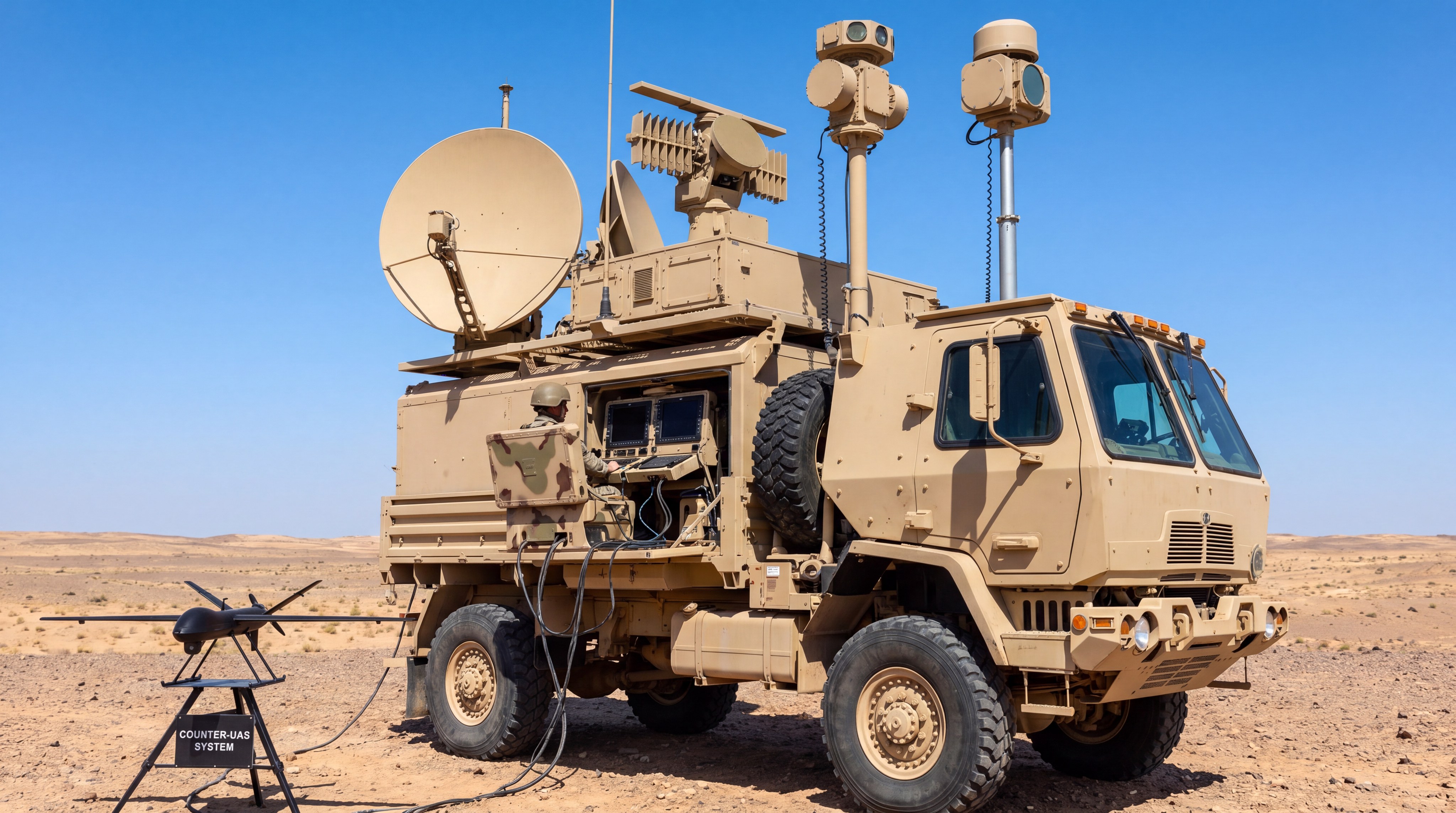
How can you test RF countermeasure hardware?
You can test RF countermeasure hardware by using anechoic chambers and high-speed oscilloscopes to verify that the jamming signal matches the target frequency and power profile. If you are building a system based on what is a drone jammer research, validation is the most important step before field deployment.
What metrics should you measure?
- Output power across the entire bandwidth
- Harmonics and spurious emissions
- Gain flatness and VSWR protection
- Thermal stability under full load
Need absolute precision?
You should look for a manufacturer that provides verified performance data with every unit. Reliable testing ensures that when you trigger the jammer, it actually produces the power required to drop the target drone.
Key Takeaway
Rigorous RF testing is the difference between a functional security asset and a piece of equipment that fails when needed most.
| Test Phase | Equipment | Metric |
|---|---|---|
| Lab Verification | Spectrum Analyzer | Frequency Accuracy |
| Power Testing | Power Meter | Wattage Consistency |
| Field Validation | Real Drone Target | Effective Range |
Unit-level validation is mandatory for high-reliability systems, especially when lives or high-value infrastructure are at stake.
What is the future of anti-jamming tech?
The future of anti-jamming tech lies in Artificial Intelligence (AI) and cognitive radio systems that can predict and elude interference patterns in real-time. As the debate over what is a drone jammer evolves, so does the technology to defeat it, moving into high-frequency millimeter-wave territory. Exploring what is a drone jammer shows that the industry is moving toward autonomous RF intelligence.
What is changing?
- AI-driven signal identification and filtering
- Higher frequency bands (Ka/Ku/V-band)
- Directional “beamforming” for secure links
- Integrated SDR signal sources
Think you’re ready for the future?
You will need to adopt hardware that can handle much higher frequencies and more complex modulation schemes. This transition requires custom RF development to ensure your systems remain compatible with the next generation of secure UAV communication.
Key Takeaway
The next era of drone security will be defined by intelligent, high-frequency systems that can “think” their way through jamming.
| Trend | Benefit | Implementation |
|---|---|---|
| Cognitive RF | Smart interference avoidance | AI Algorithms |
| mmWave Links | Massive bandwidth | 18-110 GHz Amplifiers |
| Beamforming | Highly secure, private links | Phased Array Antennas |
Staying ahead of the electronic warfare curve requires constant innovation and a move toward wider, higher, and smarter RF platforms.
Frequently Asked Questions
Can I legally use a drone jammer to protect my privacy?
No. In most jurisdictions, including the US (FCC) and Europe, the use of jamming equipment by civilians is strictly illegal and can lead to massive fines or imprisonment.
What’s the best way to detect a jammer?
The best way is to monitor the signal-to-noise ratio (SNR) on your control link; a sudden, massive spike in background noise usually indicates a nearby jammer.
How do I know if my drone is being jammed?
It depends. If your drone suddenly stops responding to commands while the video feed freezes or the GPS “home” point drifts wildly, you are likely experiencing active interference.
Can a jammed drone still follow a pre-programmed path?
Yes. If the drone has high-end inertial navigation or optical flow sensors, it can continue a mission without GPS or a control link, though its accuracy will degrade over time.
Conclusion
Successfully navigating the complex world of drone jamming requires a deep understanding of RF physics and the deployment of industrial-grade hardware. From high-power broadband amplifiers to intelligent frequency-hopping tactics, the tools to secure your airspace are available today. If you are developing a counter-UAS platform or need to harden your UAV’s communication links, contact us today to discuss your project with our senior RF engineers.
We provide the power to overcome the noise and the precision to maintain your mission’s integrity. CorelixRF: Engineering the future of secure, high-power electromagnetic environments.
Authorized RF engineering and compliance review
For regulated RF systems, this page should be used as an engineering and compliance review path, not as a public deployment checklist. CorelixRF starts with authorization status, operating region, frequency plan, output limit, antenna interface, safety controls, thermal limits and acceptance documents.
- RFQ checklist – send the data buyers usually forget, including band, power, duty cycle, interface and test standard
- delivery documentation – check what documents can support incoming inspection, FAT review and long-term maintenance
- quality and certification review – review the quality and compliance evidence before the project moves into procurement
- RF front-end platform – compare the RF chain as a system instead of selecting one isolated module
- RF configurator – turn frequency, power, thermal and interface requirements into a first configuration brief
- case studies – review similar engineering paths before sending an RFQ
- engineering contact – send the application notes, block diagram or target specification to engineering sales
This keeps the discussion inside lawful, authorized RF programs while still giving procurement teams a clear way to request amplifier, antenna, SDR source, documentation and factory review.
C-UAS RF Test Architecture Review Path
For authorized RF test architecture reviews, translate lab and field-validation requirements into RF power amplifier platform choices, RF front-end protection and antenna/load planning. Share bands of interest, power targets, duty cycle, VSWR limits, cooling method and documentation needs through the RF inquiry form.