
An omnidirectional RF antenna is often selected when the project needs broad surrounding coverage instead of a focused beam. For RF transmission, wireless communication, fixed installation, RF amplifier matching, and system integration, the key selection factors are frequency range, gain, VSWR, power handling, connector type, mounting method, and pattern data.
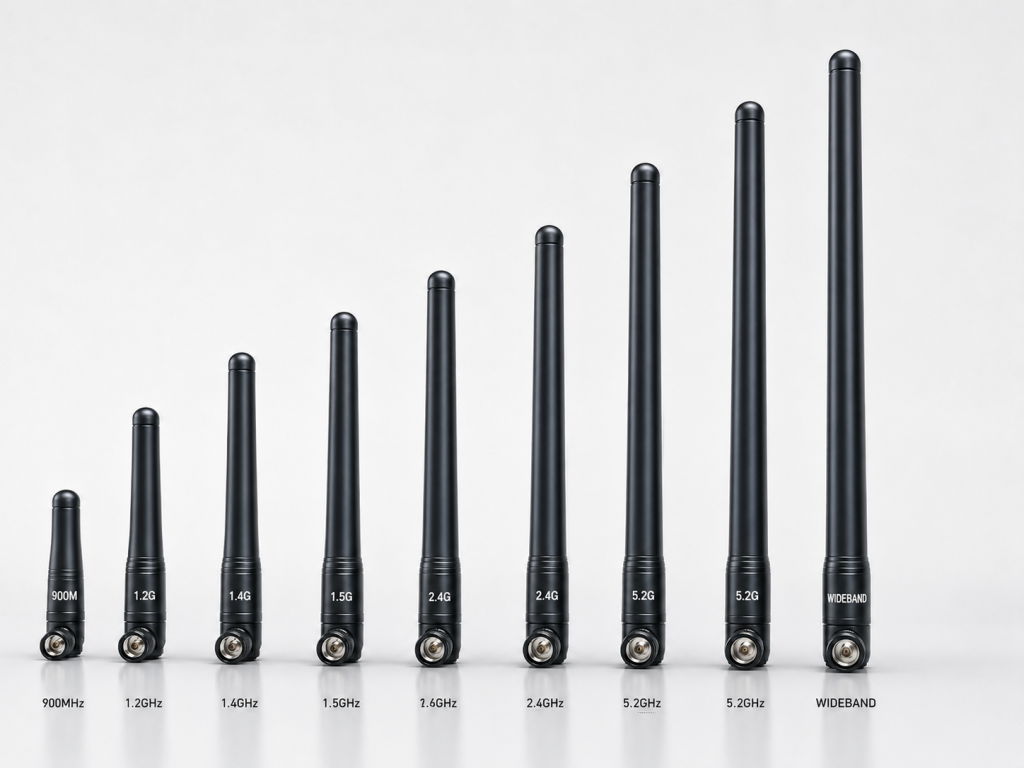
CorelixRF supplies CRF-OA omnidirectional RF antennas across 380 MHz to 6 GHz. The uploaded model range includes narrow-band and broadband options, N-J / 50 ohm interfaces, vertical polarization, VSWR review, measured pattern references, and project-based RF documentation. Standard models cover UHF, L-band, 2.4 GHz, 5.2 GHz, 5.8 GHz, and broadband 380-6000 MHz paths.
When to Choose an Omnidirectional Antenna
Choose an omnidirectional antenna when the system needs coverage around the antenna rather than a single focused direction. Typical uses include outdoor RF coverage, wireless communication, monitoring, fixed installation, amplifier output-side matching, and RF chain integration.
If the project needs a focused beam, a directional panel or horn antenna may be a better choice. If the project needs broad surrounding coverage, the CRF-OA family gives buyers a structured model range to review.
Representative CorelixRF OA Models
CRF-OA-430M440M-3dBi covers 430-440 MHz with 3 dBi gain, VSWR <2.0, 50 W power handling, N-J connector, and optional mounting styles.
CRF-OA-868M915M-5.52-6.36dBi covers 868-915 MHz with 5.52-6.36 dBi gain, VSWR <2.0, 50 W power handling, N-J connector, and optional mounting styles.
CRF-OA-1560M1610M-7.7-8.5dBi covers 1560-1610 MHz with 7.7-8.5 dBi gain, VSWR <2.0, 150 W power handling, N-J connector, and optional mounting styles.
CRF-OA-2400M2500M-4.7-8dBi covers 2400-2500 MHz with 4.7-8 dBi gain, VSWR <2.0, 150 W power handling, N-J connector, and optional mounting styles.
CRF-OA-400M6000M-0-9dBi is a broadband option covering 400-6000 MHz with 0-9 dBi gain, VSWR <2.0, 250 W power handling, N-J connector, and flange mount.
Matching Antennas with RF Power Amplifiers
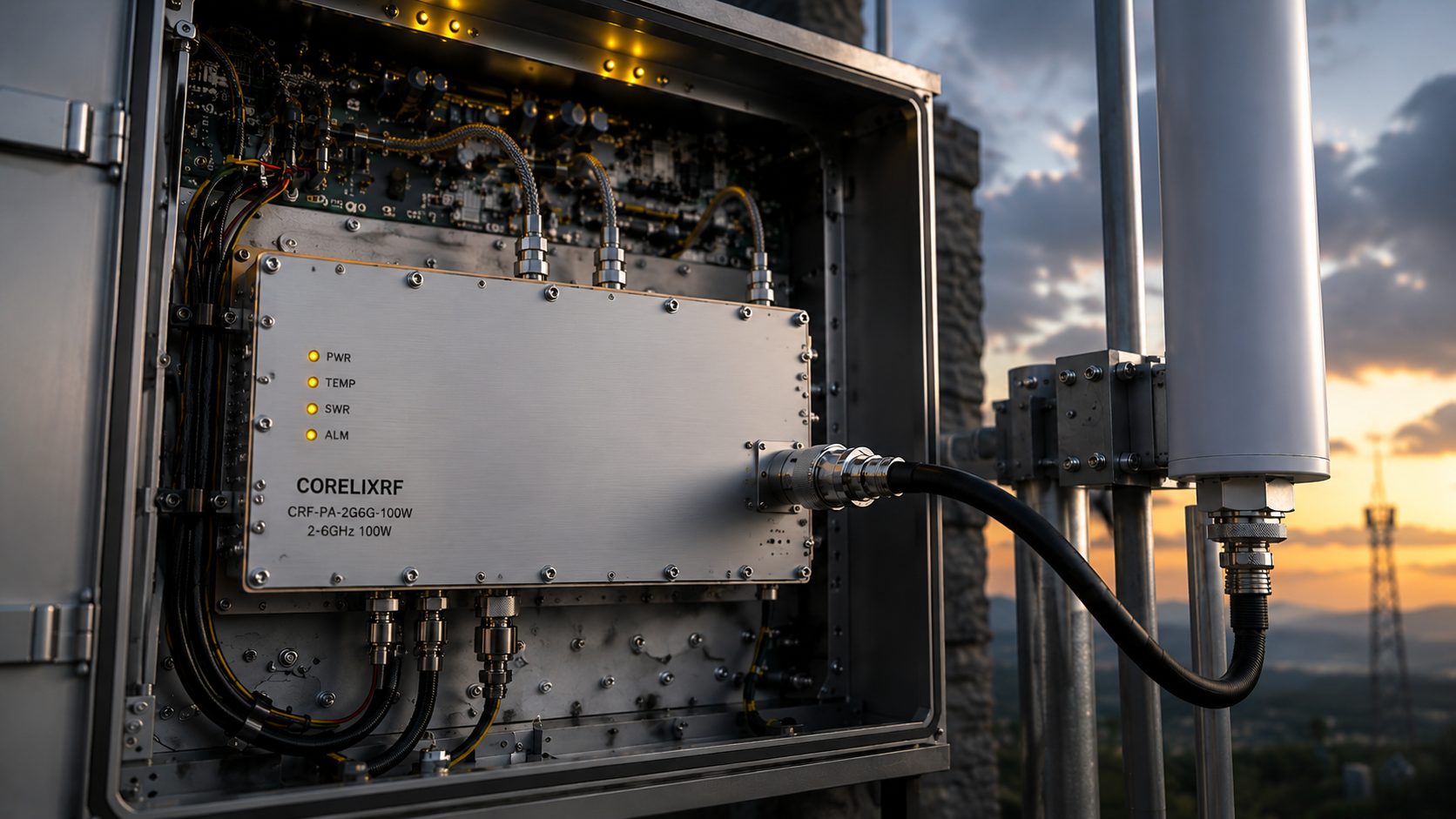
Antenna sourcing should include amplifier output power, connector type, cable loss, duty cycle, mounting environment, and expected operating band. Even when the antenna frequency range looks correct, the power handling and VSWR should be reviewed with the amplifier path.
Buyers should ask for VSWR curves, radiation pattern references, gain data, connector confirmation, and mounting documentation before final integration.
FAQ
What frequency range does the CorelixRF omnidirectional antenna platform cover?
The CRF-OA range covers 380 MHz to 6 GHz through narrow-band and broadband models.
What connector is commonly listed?
The model matrix lists N-J / 50 ohm interfaces across the OA family.
When should I choose broadband instead of narrow-band?
Choose broadband when the system must cover multiple bands or changing frequency plans. Choose narrow-band when the project has a defined operating band and wants a focused model match.