
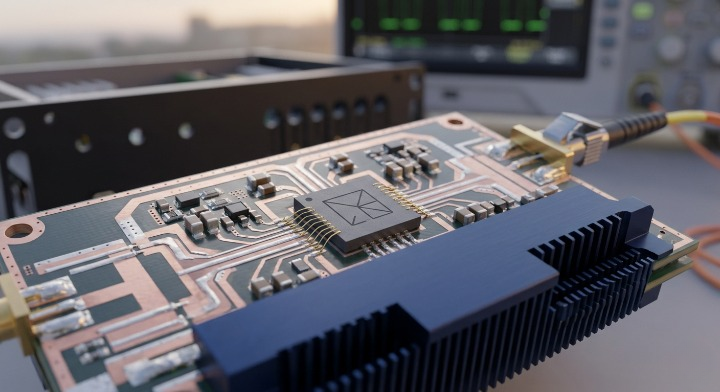
High-frequency amplifiers are the essential components that increase the power of electrical signals to enable data transmission across massive distances and complex networks.
As you scale your communication infrastructure, signal attenuation at higher frequencies becomes a critical failure point. Weak signals result in dropped packets and increased latency, which can paralyze real-time B2B operations and autonomous systems. High-Frequency Amplifiers from CorelixRF provide the necessary power to overcome these atmospheric hurdles while maintaining absolute signal integrity.
What are high-frequency amplifiers in modern tech?
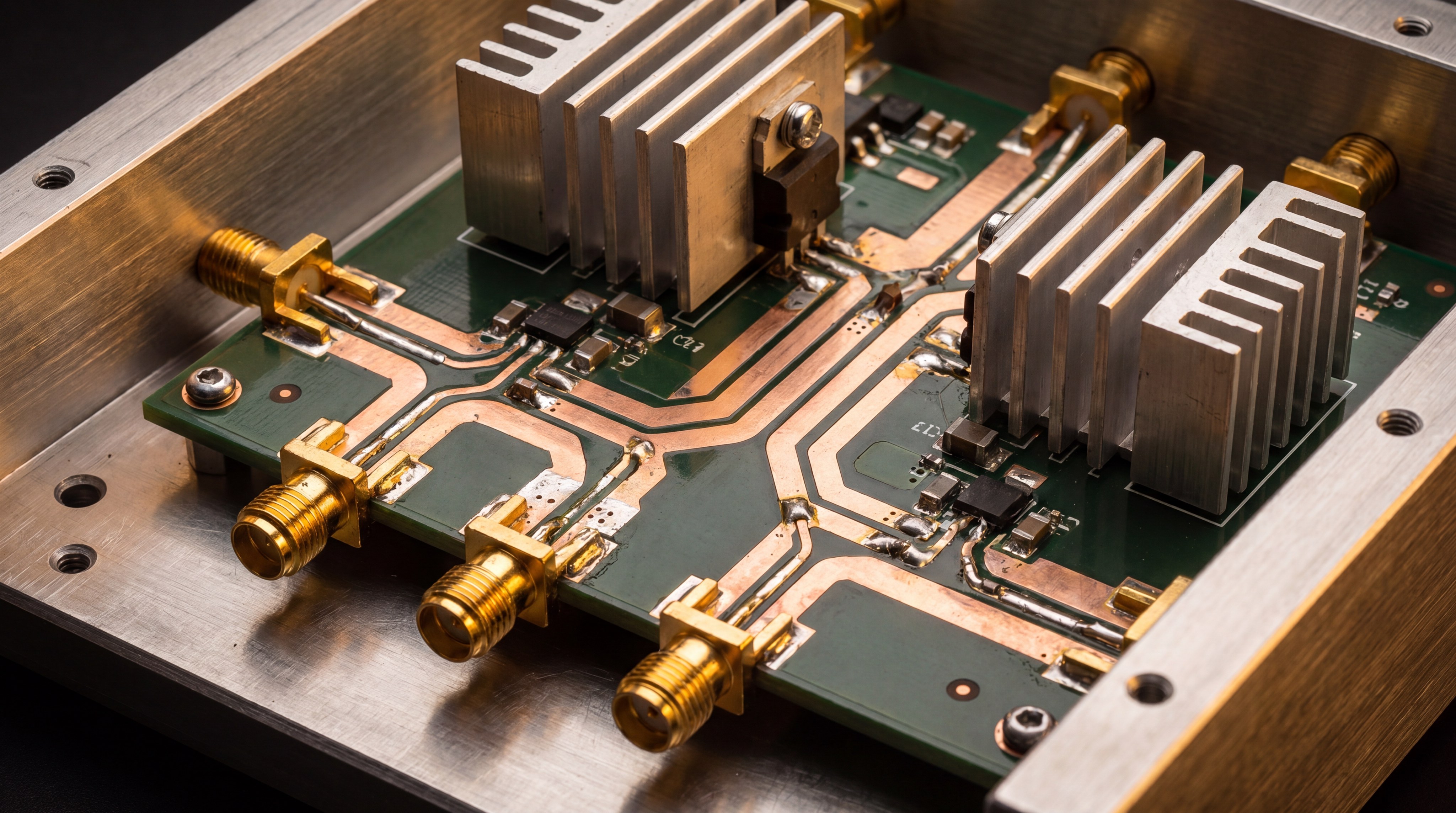
High-frequency amplifiers are devices designed to boost signals in the radio frequency and microwave ranges without adding significant noise. In the current landscape of wireless connectivity, High-Frequency Amplifiers are the silent engines powering data highways. These components ensure that high-bandwidth signals remain well above the noise floor during transmission.
How do you define the RF and microwave spectrums?
The electromagnetic spectrum serves as the primary highway for all wireless data you transmit. You generally classify these frequencies between 1 GHz and 100 GHz, where bandwidth is abundant but signal decay is rapid.
Here is the kicker:
- Signals in this range are highly susceptible to atmospheric absorption.
- Precision amplification is required to maintain the signal-to-noise ratio.
- These devices enable multi-gigabit data transfer rates across diverse terrains.
Key Takeaway: High-frequency amplifiers convert weak, high-bandwidth signals into robust transmissions that can overcome environmental interference.
| Specification | Description |
|---|---|
| Frequency Range | Typically 1 GHz to 100+ GHz |
| Primary Goal | Power boosting with minimal noise addition |
| End Result | Reliable high-speed data throughput |
This summary highlights how these amplifiers act as the fundamental building block for any modern RF infrastructure.
Why are these amplifiers critical for 5G deployments?
These amplifiers are vital for 5G because they compensate for the high path loss associated with millimeter-wave frequencies. When you deploy 5G infrastructure, High-Frequency Amplifiers ensure that mmWave signals can penetrate obstacles and reach end-users with high throughput. They provide the “punch” required for signals to travel through walls and dense urban foliage.
Can you support ultra-low latency demands effectively?
Latency is the primary enemy of your real-time applications and industrial automation. High-frequency amplification allows for faster signal processing, which drastically reduces the time data takes to travel from a device to a base station.
But wait, there’s more:
- Amplifiers enable the “instant-on” feel of modern 5G networks.
- You can connect thousands of devices in dense urban environments.
- Higher frequency bands effectively open new lanes on the data highway.
Key Takeaway: Without high-frequency amplification, the short-range nature of 5G would make wide-scale deployment technically and economically unfeasible.
| 5G Factor | Amplifier Role |
|---|---|
| Throughput | Enables wide bandwidth usage at higher frequencies |
| Signal Reach | Overcomes rapid decay of mmWave signals |
| Density | Maintains clarity in high-interference urban zones |
The ability to maintain signal strength in crowded environments is what makes these amplifiers indispensable for the 5G rollout.
How do they impact satellite communication links?
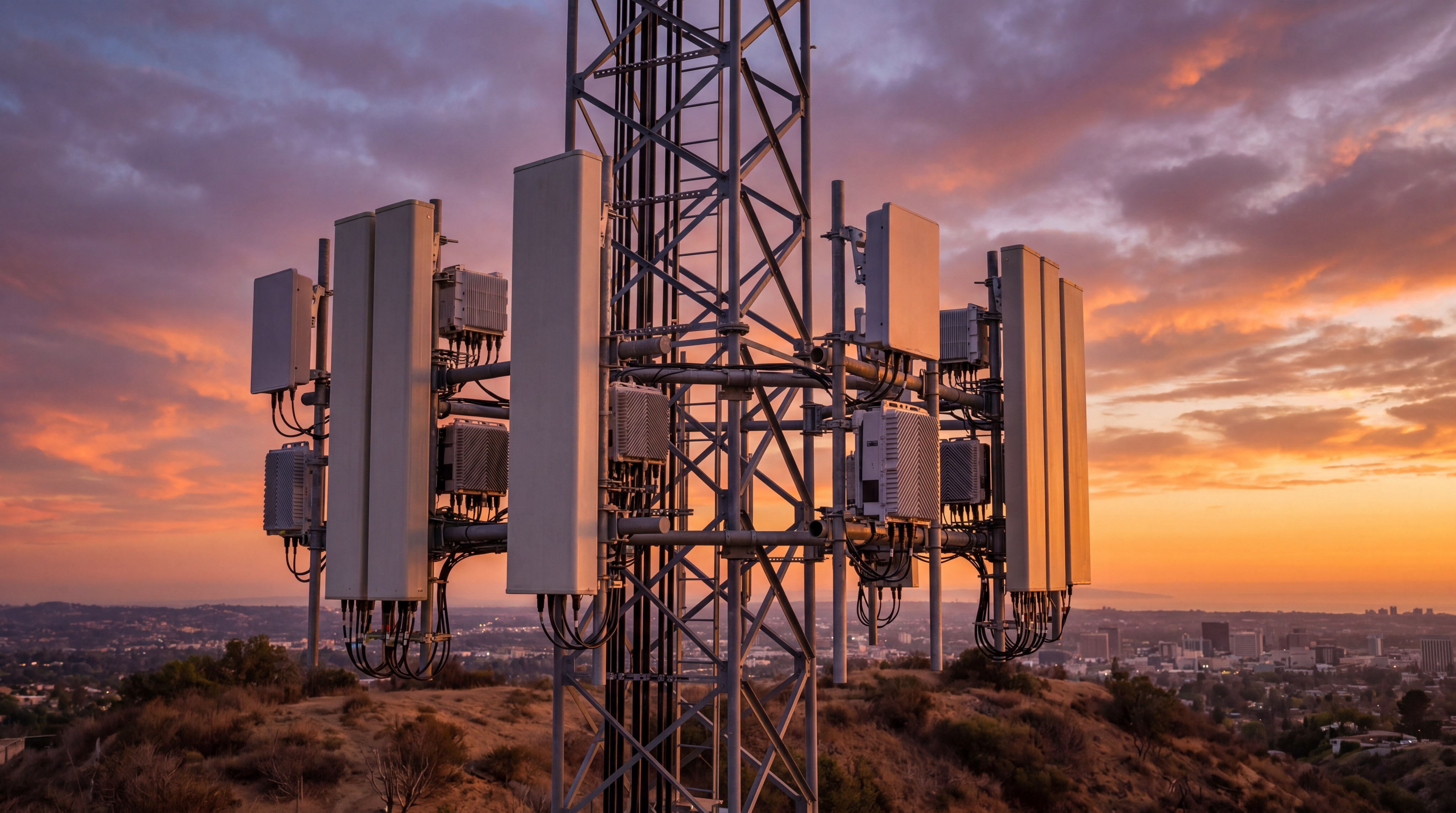
They impact satellite links by providing the necessary uplink and downlink power to bridge the vast distances between ground stations and orbit. Within the aerospace sector, High-Frequency Amplifiers are used to ensure that telemetry and broadband data remain robust against cosmic interference. This technology ensures that global GPS services and satellite internet remain functional regardless of atmospheric conditions.
How do you bridge the gap to low earth orbit?
Satellite communication requires your signals to travel through the ionosphere without significant data loss. High-frequency systems ensure that your transmissions possess enough energy to reach satellites orbiting thousands of miles above.
It gets better:
- Ground station amplifiers boost uplink signals for global reach.
- Low-noise amplifiers on the satellite handle weak downlink signals.
- Precision tuning prevents data from being lost in background cosmic noise.
Key Takeaway: In satellite technology, amplifiers serve as the primary link that overcomes atmospheric barriers and the vast distances of space.
| Component | Function in Space Comms |
|---|---|
| Uplink Amplifier | Powers ground signals to reach orbiting payloads |
| Downlink Receiver | Clarifies weak signals returning from orbit |
| Noise Management | Ensures data integrity in deep space networks |
This structured approach ensures that satellite-based networks can maintain the uptime required for global B2B operations.
Which materials define current amplifier power levels?
Gallium Nitride (GaN) and Laterally Diffused Metal Oxide Semiconductor (LDMOS) are the primary materials defining modern amplifier capabilities. To achieve high efficiency, modern High-Frequency Amplifiers leverage GaN technology for its superior thermal conductivity and power density. This allows you to deploy smaller, more powerful hardware that consumes less energy while delivering higher performance.
Can you benefit from the shift to GaN technology?
Gallium Nitride has revolutionized the industry by handling higher voltages and temperatures than traditional silicon. This makes it the ideal choice for your high-power density requirements in compact radar and satellite systems.
Think about this:
- GaN offers higher efficiency and broader bandwidth capabilities.
- You can reduce the overall footprint of your RF hardware.
- LDMOS remains a cost-effective staple for lower frequency broadcasting.
Key Takeaway: The choice of semiconductor material—whether GaN or LDMOS—directly dictates the amplifier’s efficiency, size, and thermal management.
| Material | Key Advantage | Best Use Case |
|---|---|---|
| GaN | High power density and efficiency | 5G, Radar, Satellite |
| LDMOS | Ruggedness and thermal stability | FM/TV Broadcast |
| GaAs | Low noise at extreme frequencies | Wi-Fi, Consumer handsets |
Understanding the material science behind your amplifiers is crucial for optimizing the lifespan and reliability of your RF chain.
How do custom systems enhance your RF performance?
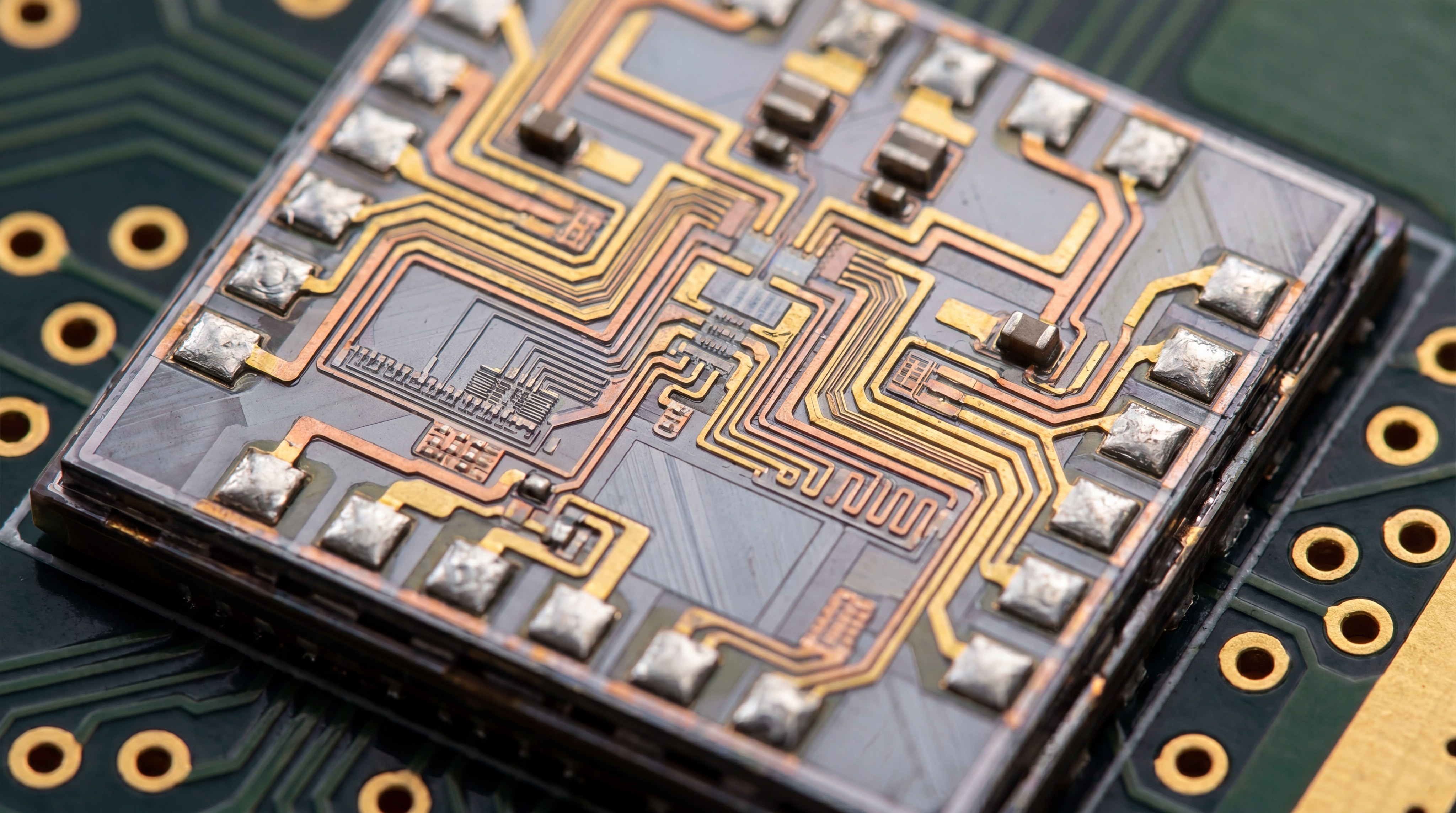
Custom systems enhance performance by tailoring the gain, noise figure, and mechanical form factor to your specific operational environment. By opting for custom RF systems, you ensure that your High-Frequency Amplifiers are perfectly matched to your mission-critical hardware requirements. Generic hardware often fails under extreme environmental conditions where specialized shielding is required.
How do you optimize for specific thermal loads?
Specialized applications like electronic warfare or aerospace telemetry require heat dissipation that standard units cannot provide. You can integrate liquid cooling or custom heat sinks to prevent thermal throttling during continuous high-power operation.
You might be wondering:
- How do I achieve the highest signal-to-noise ratio?
- Can I shield against specific electromagnetic interference?
- What cooling mechanism is best for high-duty cycle operations?
Key Takeaway: Custom RF engineering ensures that amplifiers are perfectly matched to their operational environment, maximizing both hardware lifespan and signal performance.
| Optimization Factor | Strategic Benefit |
|---|---|
| Linearity Tuning | Handles complex modulation without data loss |
| Custom Enclosures | Protects against harsh industrial environments |
| Thermal Routing | Specialized cooling for maximum uptime |
Customization moves your system beyond standard specs to achieve peak performance in the most challenging RF environments.
What role do standard platforms play in scaling?
Standard platforms provide pre-validated architectures that allow you to reduce development time and accelerate market deployment. Utilizing a standard platform for your High-Frequency Amplifiers offers a reliable balance between cost-efficiency and technical performance. These platforms use proven components and manufacturing processes to deliver consistent results across large-scale deployments.
Can you reduce lead times for your RF deployment?
Developing a system from scratch can take months of engineering and validation. By selecting a standard platform, you leverage field-tested architectures that are ready for immediate integration into your network.
That’s not all:
- Pre-validated designs reduce the risk of hardware failure.
- You benefit from shorter lead times and lower procurement costs.
- Standardization ensures interoperability with your existing infrastructure.
Key Takeaway: Standardized RF platforms allow for rapid deployment and cost-effective scaling of high-speed communication networks.
| Benefit | Impact on Business |
|---|---|
| Speed to Market | Shortens the design-to-deployment cycle significantly |
| Reliability | Uses field-tested architectures to mitigate risk |
| Cost Control | Avoids the high R&D costs of bespoke solutions |
Standardized solutions are the key to expanding network coverage quickly while maintaining a predictable budget.
How are thermal challenges managed in amplifiers?
Thermal challenges are managed through advanced cooling techniques such as liquid-cooled plates, integrated heat sinks, and temperature sensors. In high-wattage applications, High-Frequency Amplifiers require sophisticated thermal management to prevent hardware failure and maintain peak linearity. Heat is the primary factor limiting the lifespan and output power of any high-frequency component.
Which cooling method should you select for your site?
The choice between air-cooled and liquid-cooled systems depends on your power density and installation environment. Air cooling is common for lower-power units, while high-wattage systems often require liquid-cooled cold plates to dissipate heat efficiently.
Here is the reality:
- Thermal runaway can destroy your equipment if not monitored.
- Modern amplifiers use internal sensors for real-time adjustments.
- Efficient cooling allows the amplifier to maintain performance at peak power.
Key Takeaway: Effective thermal management is as critical as electrical design, as heat is the primary limit on amplifier power and longevity.
| Cooling Type | Advantage | Disadvantage |
|---|---|---|
| Forced Air | Lower cost and easier maintenance | Limited heat dissipation capacity |
| Liquid Cooled | Extremely high heat dissipation | Higher complexity and installation cost |
Selecting the right cooling strategy ensures that your high-frequency components operate within safe thermal margins for years.
Why is linearity vital in high-frequency designs?
Linearity is vital because it prevents signal distortion and spectral regrowth, ensuring that digital data remains clear and uncorrupted. When you operate in crowded spectrums, High-Frequency Amplifiers must maintain high linearity to avoid interfering with adjacent communication channels. If an amplifier is non-linear, it distorts the amplitude and phase of your signal, leading to critical bit errors.
How do you reduce signal distortion in your data?
In digital communication, your information is encoded in the complex phase of the signal. High-linearity amplifiers ensure that the signal you receive is an exact replica of the signal you sent.
Bottom line:
- Non-linearity causes “spectral regrowth” into other frequency bands.
- You must minimize intermodulation distortion to maintain clarity.
- High-linearity ensures you adhere to strict regulatory standards.
Key Takeaway: Linearity is the difference between a loud, garbled signal and a clear, high-speed data stream that reaches its destination intact.
| Metric | Importance |
|---|---|
| P1dB | Measures the point where the signal begins to saturate |
| IP3 | Predicts the level of intermodulation distortion |
| EVM | Measures overall signal quality and data accuracy |
Maintaining linearity is the most effective way to ensure your network provides a high-quality user experience without data corruption.
How is medical imaging improved by RF amplifiers?
High-frequency RF amplifiers improve medical imaging by increasing the signal-to-noise ratio in systems like MRI and providing precision for ablation tools. In the healthcare industry, High-Frequency Amplifiers are the key to high-resolution diagnostics and minimally invasive surgical procedures. These amplifiers transition from simple communication tools to life-saving instruments in clinical environments.
Can you enhance MRI signal-to-noise ratios?
Magnetic Resonance Imaging relies on RF pulses to excite atoms within the patient’s body. High-quality amplification of the faint return signals allows you to detect smaller anomalies earlier in the diagnostic process.
And here is the impact:
- Precision RF power is used to destroy cancerous tumors in ablation.
- You get clearer medical images with less background interference.
- Medical telemetry ensures real-time transmission of patient vitals.
Key Takeaway: In the medical field, high-frequency amplifiers enable precision diagnostics and treatments that save lives every day.
| Application | Role of RF Technology |
|---|---|
| MRI Scanners | Signal reception and atomic excitation |
| RF Ablation | Targeted thermal destruction of tissue |
| Diagnostics | High-resolution imagery of internal structures |
The precision required in medical RF systems proves the reliability and accuracy of high-frequency amplification technology.
What defines the future of high-frequency tech?
The future is defined by the integration of AI-driven optimization and the expansion of communication into the Terahertz spectrum. As you look toward 6G, High-Frequency Amplifiers will continue to evolve through miniaturization and the adoption of even more efficient semiconductor materials. Research is currently pushing toward frequencies above 100 GHz to unlock unprecedented data speeds.
How do you prepare for integration with 6G?
The shift toward 6G will require you to adopt amplifiers capable of operating at extreme speeds with ultra-low power consumption. Future systems will likely combine amplification, filtering, and control logic onto a single, integrated chip.
Make no mistake:
- Terahertz communications will offer 100x the speed of 5G.
- AI will allow your amplifiers to self-optimize for network traffic.
- Solid-state technology will replace bulky vacuum tubes in all sectors.
Key Takeaway: The future of high-frequency technology lies in miniaturization and the exploration of the Terahertz spectrum for global connectivity.
| Future Trend | Expected Outcome |
|---|---|
| Terahertz Comms | Ultra-high speeds exceeding 100 Gbps |
| AI Integration | Smart amplifiers that adapt to traffic loads |
| Miniaturization | Powerful RF systems in pocket-sized devices |
By staying ahead of these trends, you ensure that your communication infrastructure remains relevant in the next generation of digital connectivity.
Frequently Asked Questions
Can I use a standard amplifier for millimeter-wave applications?
No. Millimeter-wave applications require specialized hardware designed for frequencies above 30 GHz with specific material properties like GaN to handle signal decay.
What’s the best way to prevent overheating in high-power RF systems?
The best method is a combination of high-efficiency materials and robust thermal management, such as forced-air or liquid-cooled plates depending on your wattage.
How do I know if I need a custom RF system?
If your application involves non-standard frequencies or extreme environmental conditions that off-the-shelf units cannot handle, a custom solution is likely necessary.
Can I upgrade an existing network with new high-frequency amplifiers?
Yes. By replacing older LDMOS or vacuum tube-based units with modern solid-state amplifiers, you can increase power and efficiency without replacing all infrastructure.
How do I choose between GaN and LDMOS technology?
Choose GaN for frequencies above 3 GHz where you need high efficiency and compact size. Choose LDMOS for lower frequency applications where cost and ruggedness are prioritized.
Conclusion
High-frequency amplifiers are the fundamental enablers of the modern digital age, ensuring that data moves fast and remains clear. From the towers in your city to the satellites in orbit, these devices provide the power that fuels our global connectivity. As you look toward the complexities of 6G and advanced medical diagnostics, choosing the right amplification technology remains the most critical decision for your infrastructure. To optimize your communication systems with the latest engineering advancements, contact us today to speak with an expert about your specific project needs.