
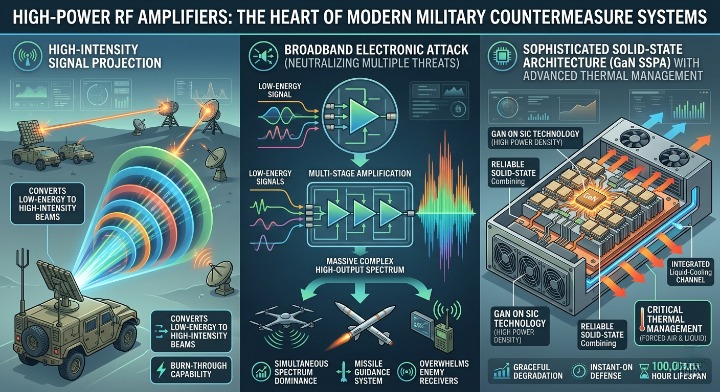
High-Power RF Amplifiers are the hardware components that generate the signal intensity needed to disrupt adversarial radar and communication links. Modern battlefields are saturated with sophisticated electronic threats that can blind surveillance systems or intercept tactical data. If a defense system fails to provide sufficient jamming power, military personnel and high-value assets face catastrophic risks from guided munitions. High-Power RF Amplifiers provide the necessary electromagnetic muscle to overwhelm these threats and ensure mission success.
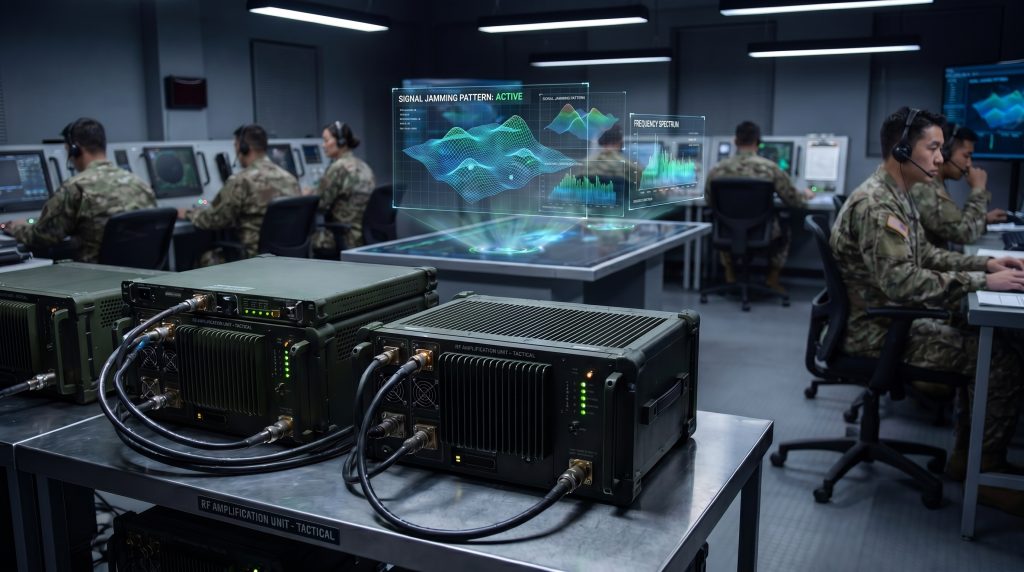
What are RF amplifiers in military systems?
These units act as the core power stage for electronic warfare suites, converting low-energy signals into high-intensity beams. In every defense application, High-Power RF Amplifiers serve as the primary engine for signal projection across the spectrum.
Why is signal strength critical for defense?
Signal strength determines the effective range and “burn-through” capability of a countermeasure system against enemy sensors. Without massive power output, your jamming signals will simply be filtered out by advanced adversarial algorithms.
Here is the bottom line:
- Increased range for standoff jamming.
- Higher probability of neutralizing multiple targets.
- Enhanced signal-to-noise ratios in contested zones.
How do amplifiers secure modern airspace?
Amplifiers provide the continuous-wave or pulsed energy required to create “no-go” zones for enemy drones and missiles. This hardware ensures that protective bubbles remain impenetrable during active sorties.
Think about it this way:
- They mask the signature of friendly aircraft.
- They disrupt the uplink of loitering munitions.
- They provide the reliability needed for 24/7 protection.
Key Takeaway: High-performance amplification is the difference between a functional defense shield and a vulnerable target in high-intensity combat zones.
The following table compares the primary roles of amplification in modern airspace security:
| Security Role | Amplification Requirement | Operational Benefit |
|---|---|---|
| Area Denial | High Duty Cycle | Continuous protection against UAVs |
| Target Masking | Precision Gain Flatness | Hides friendly radar signatures |
| Seeker Spoofing | Rapid Pulse Response | Deflects incoming missile guidance |
This data highlights how specific amplification traits directly support different tactical objectives in the field.
How do they support electronic warfare?
Amplifiers provide the raw energy required for electronic attack, protection, and support missions by saturating the electromagnetic environment. High-Power RF Amplifiers enable the three pillars of electronic warfare (EW) to function effectively in real-time.
What are the three pillars of electronic warfare?
Electronic warfare is divided into attack, protection, and support, each requiring unique power profiles. The success of an electronic attack depends entirely on the amplifier’s ability to exceed the enemy’s receiver threshold.
The best part?
- Electronic Attack (EA) uses power to disrupt.
- Electronic Protection (EP) uses power to harden systems.
- Electronic Support (ES) uses amplification to detect faint signals.
How is signal integrity maintained in combat?
Maintaining signal integrity requires amplifiers with low harmonic distortion and high linearity to prevent interference with friendly comms. Sophisticated engineering ensures that while you jam the enemy, your own links remain crystal clear.
It gets even better:
- Linear amplification reduces spectral regrowth.
- Low noise figures improve detection sensitivity.
- Ruggedized housing prevents environmental signal degredation.
Key Takeaway: Integrating robust amplification into EW suites allows commanders to dominate the spectrum and deny the enemy any informational advantage.
Review this summary of EW pillar requirements and their dependence on high-output hardware:
| EW Pillar | Core Power Need | Hardware Priority |
|---|---|---|
| Electronic Attack | Peak Wattage | Overwhelming adversarial sensors |
| Electronic Protection | High Linearity | Preventing self-jamming of links |
| Electronic Support | Low Noise Floor | Long-range threat detection |
The relationship between raw power and signal precision defines the effectiveness of any modern electronic warfare platform.
Can they effectively neutralize radar?
Yes, high-power amplification allows systems to overwhelm adversarial receivers with noise or deceptive signals to hide friendly assets. Utilizing High-Power RF Amplifiers ensures that your jamming signal arrives at the target with more energy than the radar’s own return echo.
Noise vs deceptive jamming: what is the difference?
Noise jamming floods the radar screen with “snow” while deceptive jamming creates false target returns to confuse the operator. Both techniques rely on an amplifier’s ability to mimic or exceed the radar’s frequency parameters.
But there is a catch:
- Noise jamming requires massive, broad-spectrum power.
- Deceptive jamming requires high-speed pulse modulation.
- Effectiveness depends on the jammer’s power-to-distance ratio.
Why is massive power needed to mask targets?
Radars are designed to pick up tiny reflections, so your jammer must be significantly louder than those reflections to be effective. This “power on target” is the only way to successfully hide large physical assets like naval vessels or transport planes.
Here is the bottom line:
- Radars use advanced processing to “see” through weak jamming.
- High wattage is required to overcome the inverse-square law of physics.
- Multi-kilowatt systems are standard for naval and ground defense.
Key Takeaway: Dominating the radar spectrum requires a calculated balance of high raw wattage and sophisticated modulation to render enemy sensors useless.
This comparison outlines the technical demands of various radar neutralization strategies:
| Technique | Power Requirement | Hardware Characteristic |
|---|---|---|
| Barrage Jamming | Very High | Broadband spectrum coverage |
| Spot Jamming | High | Precision frequency targeting |
| DRFM Deception | Medium-High | Ultra-fast switching speeds |
Analysis shows that while deceptive techniques use less power, they require much higher hardware complexity and signal speed.
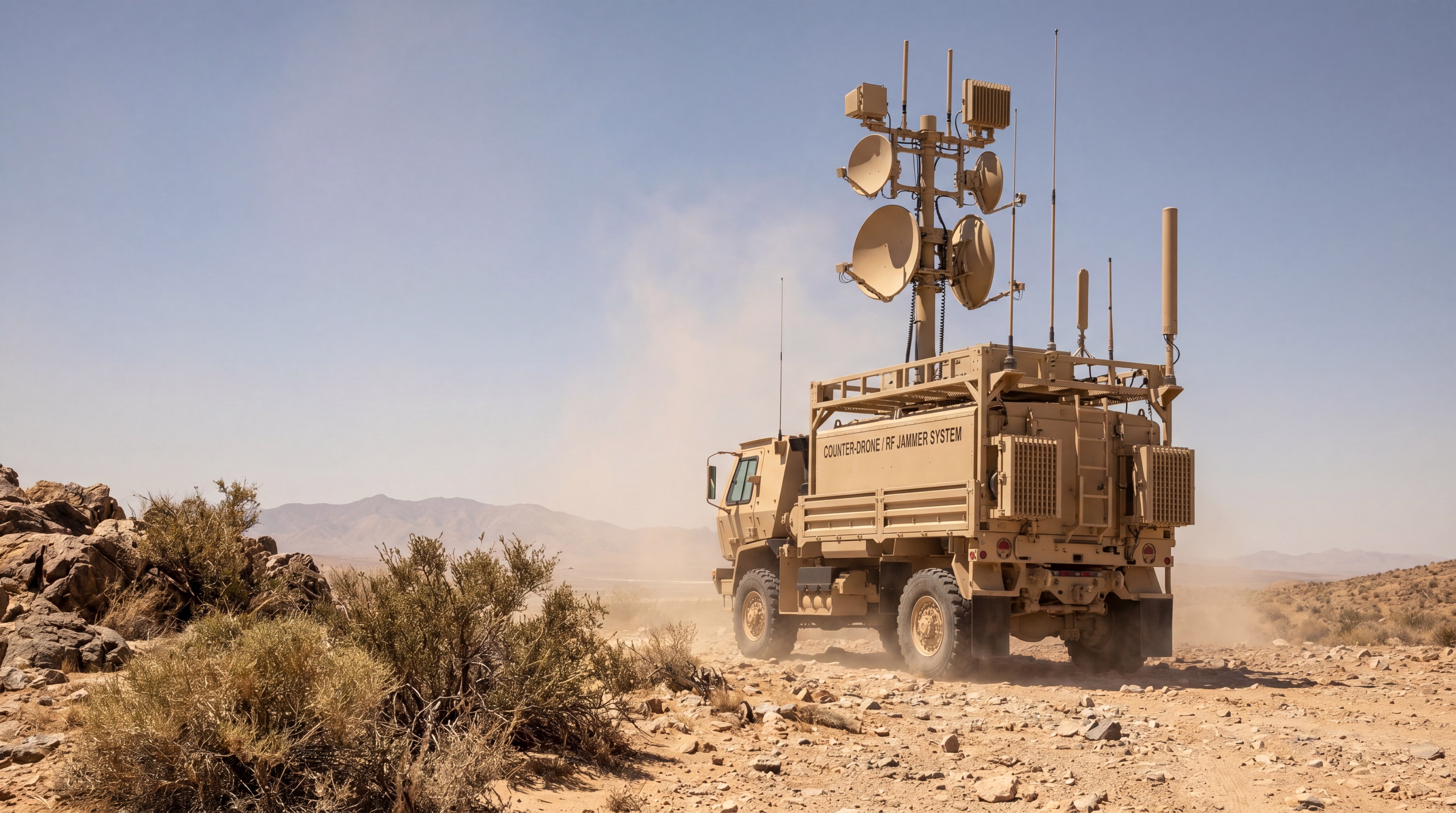
Why is communication jamming critical for defense?
Disrupting the enemy’s ability to coordinate forces directly degrades their operational effectiveness and prevents synchronized attacks. High-Power RF Amplifiers are the tools used to sever the radio links between command centers and frontline units.
How do amplifiers disrupt adversary radio links?
By transmitting a higher-power signal on the same frequency as the enemy radio, the amplifier prevents the receiver from hearing the intended message. This creates a “denial of service” in the electromagnetic spectrum for the adversary.
Think about it this way:
- It’s like shouting over a whisper to prevent a conversation.
- High-gain antennas focus this “noise” directly at enemy positions.
- Digital signals are particularly vulnerable to high-intensity pulses.
What role does frequency agility play?
Adversaries often use frequency-hopping radios to avoid jamming, so amplifiers must be able to switch frequencies instantly. Modern systems use wideband technology to cover entire communication bands without needing to retune.
The best part?
- Wideband GaN technology supports instant frequency shifts.
- It prevents the enemy from finding a “clear” channel.
- A single amplifier can jam multiple frequencies simultaneously.
Key Takeaway: Cutting off enemy communications through high-power disruption creates a tactical vacuum that forces the adversary into disorganized retreats.
Observe the impact of communication disruption on various tactical radio platforms:
| Link Type | Jamming Difficulty | Required Amplifier Feature |
|---|---|---|
| VHF/UHF Voice | Low | Continuous wave (CW) power |
| Data Links (Tactical) | High | Fast frequency agility |
| Satellite Uplinks | Very High | Microwave band support (Ka/Ku) |
Effective communication denial is a tiered strategy that scales in complexity based on the adversary’s technological level.
Do amplifiers improve missile defense?
They enable seekers to be spoofed or blinded by generating high-intensity interference across specific bands to divert incoming threats. Utilizing High-Power RF Amplifiers is the standard method for defeating modern radar-guided anti-ship and air-to-air missiles.
Can RF signals defeat infrared and radar seekers?
While infrared seekers use heat, radar seekers use RF, and both can be confused by high-power electronic countermeasures. Amplifiers generate the “false targets” that lead a missile away from the actual aircraft or ship.
It gets even better:
- Counter-battery systems use RF to detonate fuses prematurely.
- Spoofing signals mimic the expected return of the seeker.
- High power can physically “dazzle” sensitive radar receivers.
Why is broadband frequency support necessary?
Missiles operate across many different bands, so a defense system must be ready to respond to any frequency at a moment’s notice. Only broadband amplifiers can provide this multi-threat protection without bulky hardware swaps.
But there is a catch:
- Narrowband systems leave you blind to certain missile types.
- Broadband units must maintain gain flatness across the range.
- GaN-on-SiC technology is the industry standard for this need.
Key Takeaway: High-power broadband amplification provides an invisible shield that redirects terminal threats away from personnel and critical infrastructure.
The following table details how amplification interferes with terminal guidance systems:
| Seeker Type | Interference Method | Required Signal Mode |
|---|---|---|
| Active Radar | Range Gate Stealing | High-Speed Pulsed RF |
| Semi-Active | Illumination Spoofing | Phase-coherent CW |
| Proximity Fuse | Pre-detonation | High-Intensity Wideband Burst |
These interference methods illustrate the necessity of versatile power stages in every modern missile defense architecture.
Are directed energy weapons the future?
High-intensity microwave pulses generated by amplifiers can disable electronics without kinetic impact, offering a cost-effective alternative to traditional missiles. High-Power RF Amplifiers are being scaled to produce “non-kinetic” effects that can drop entire drone swarms instantly.
How are high-intensity microwave pulses generated?
These pulses are created by combining the output of many high-power solid-state modules into a single, focused beam. This beam carries enough energy to induce high voltages in enemy circuits, causing them to burn out.
Here is the bottom line:
- Solid-state combining is more reliable than vacuum tubes.
- Focus is achieved through phased-array antenna technology.
- The pulse lasts only microseconds but delivers massive energy.
What is the impact on enemy electronic components?
The microwave energy enters through antennas or seams in the equipment’s casing, frying microchips and sensory equipment. This renders the enemy vehicle or drone completely inert without a single shot being fired.
Think about it this way:
- It’s like a lightning strike delivered through the air.
- It bypasses traditional physical armor and shielding.
- The cost per “shot” is significantly lower than a missile.
Key Takeaway: Directed energy weapons represent a paradigm shift in defense, providing a limitless “magazine” to counter massed robotic threats.
Compare the differences between traditional kinetic defense and directed energy systems:
| Defense Type | Cost Per Engagement | Logistics Requirement |
|---|---|---|
| Kinetic (Missiles) | $100k – $2M | Physical reload/transport |
| Directed Energy | < $1.00 | Fuel/Power source only |
| Electronic Jamming | Negligible | Continuous power supply |
Analysis confirms that directed energy offers the highest long-term efficiency for defending against high-volume, low-cost threats like UAV swarms.
What design challenges impact performance?
Engineers must balance thermal efficiency with peak power output to ensure mission success in harsh, unpredictable military environments. Selecting High-Power RF Amplifiers requires an understanding of how size, weight, and power (SWaP) constraints limit your tactical options.
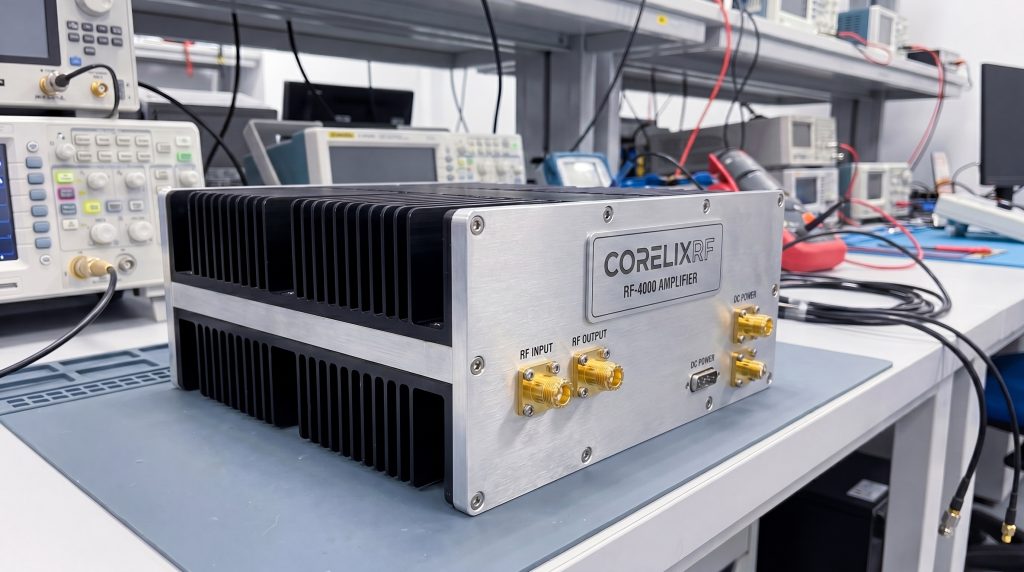
Is there a trade-off between efficiency and power?
Yes, as you push for higher power, the amount of waste heat generated increases significantly, which can damage the amplifier. Modern GaN technology has improved efficiency, but thermal management remains a primary design hurdle.
The best part?
- Higher efficiency means smaller battery or fuel requirements.
- GaN modules run hotter but offer much higher power density.
- Advanced matching circuits reduce power reflected back to the unit.
How can engineers minimize signal distortion?
Minimizing distortion involves careful bias control and using high-linearity components within the amplifier’s internal stages. This ensures that the jamming signal is accurate and doesn’t bleed into frequencies used by friendly forces.
It gets even better:
- Digital pre-distortion (DPD) corrects signals in real-time.
- Precision CNC-machined housings reduce internal RF leakage.
- Unit-level testing ensures every module meets the spec.
Key Takeaway: Overcoming these design hurdles ensures that your electronic defense system is both powerful enough to jam and light enough to deploy.
Review the primary design constraints facing RF engineers in the defense sector:
| Design Challenge | Primary Impact | Engineering Solution |
|---|---|---|
| Heat Generation | System Lifespan | Liquid or Forced Air Cooling |
| Harmonic Content | Signal Purity | Low-Pass Filtering Stages |
| Input VSWR | Power Stability | High-Isolation Circulators |
These challenges must be addressed during the initial design phase to prevent field failures during critical combat missions.
How does thermal management affect reliability?
Proper heat dissipation is essential to prevent thermal runaway and component failure during high-duty cycles in the field. High-Power RF Amplifiers generate immense heat that must be moved away from sensitive semiconductor junctions to maintain stable performance.
Why is air cooling vs liquid cooling a major choice?
Air cooling is simpler and lighter but liquid cooling is far more effective for multi-kilowatt systems that operate continuously. The choice depends entirely on the platform, whether it’s a small ground vehicle or a large naval ship.
But there is a catch:
- Air cooling requires large, heavy heat sinks and fans.
- Liquid systems introduce the risk of leaks in the electronics.
- Conduction cooling is best for vacuum-sealed airborne pods.
How do heat-resistant materials prevent failure?
Using materials like copper-tungsten or advanced ceramics helps draw heat away from the GaN die much faster than standard materials. This allows the amplifier to run at peak power for longer durations without degrading the microelectronics.
Here is the bottom line:
- Better materials lead to a higher Mean Time Between Failure (MTBF).
- They prevent the “power droop” that occurs as units get hot.
- Ruggedized materials withstand the vibration of tactical vehicles.
Key Takeaway: Investing in superior thermal management ensures your countermeasures remain active throughout the longest engagements without losing signal strength.
This table compares cooling methods based on their impact on system size and weight:
| Cooling Method | Heat Removal Capacity | SWaP-C Impact |
|---|---|---|
| Forced Air | Moderate | High Volume / Low Weight |
| Liquid Cooling | Very High | High Weight / High Complexity |
| Conduction | Low-Moderate | Low Volume / Robust |
Thermal strategy is a critical factor that dictates the maximum possible power output of any tactical RF platform.
Why choose wideband for multi-threat sites?
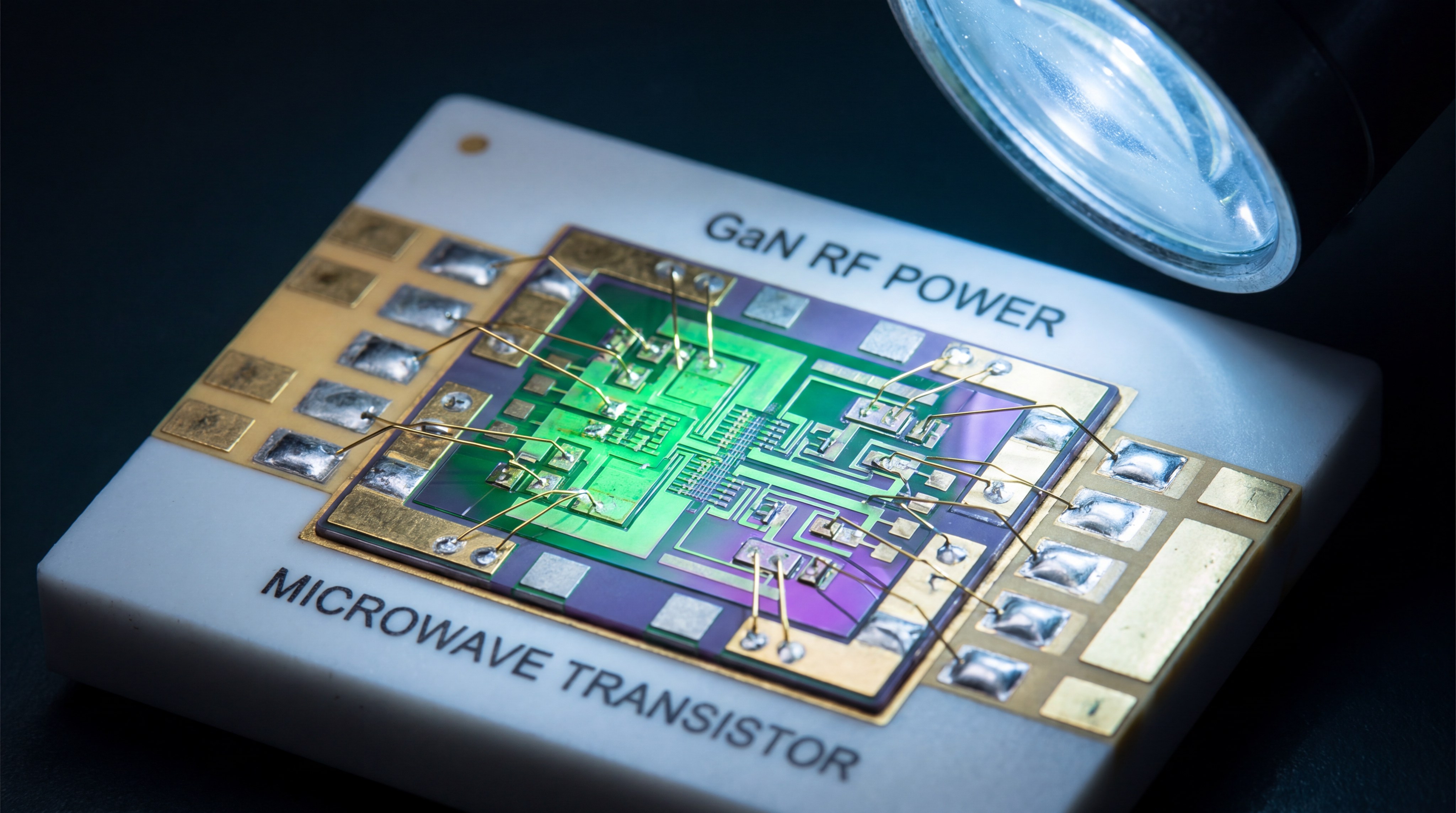
Wideband coverage ensures a single system can counter a variety of threats across the spectrum simultaneously without needing manual reconfiguration. Utilizing High-Power RF Amplifiers with wideband capability allows a tactical unit to stay protected against evolving threats.
Single-band or multi-band: which is safer?
Multi-band systems are inherently safer because they protect against “frequency jumping” threats that a single-band unit would simply miss. In a modern conflict, an adversary will try to find any gap in your spectrum coverage to strike.
Think about it this way:
- Single-band is like a lock on one door; multi-band locks the whole house.
- It reduces the number of separate boxes required on a vehicle.
- It simplifies the logistics and spare parts chain for the unit.
What are the durability advantages of SSPA?
Solid-State Power Amplifiers (SSPA) have no moving parts and don’t require the high-voltage power supplies used by older tube technology. This makes them significantly more durable in the high-vibration environment of military transport.
The best part?
- SSPSs have an operational lifespan of 100,000+ hours.
- They offer “graceful degradation” rather than instant failure.
- There is zero warm-up time required for instant defense.
Key Takeaway: Wideband solid-state systems provide the most reliable and versatile defense against the diverse electronic threats of the 21st century.
Summarizing the advantages of wideband solid-state technology over legacy systems:
| System Trait | SSPA (Solid State) | Legacy (TWTA/Tube) |
|---|---|---|
| Reliability | High (No filaments) | Low (Wear-out parts) |
| Frequency Range | Multi-Octave Wideband | Narrowband focus |
| Startup Speed | Instant-On | Required warm-up time |
Moving to modern wideband SSPA platforms is the most effective way to future-proof military countermeasure capabilities.
High-Power RF FAQ
Can I integrate these amplifiers into existing UAV platforms?
Yes. Most modern amplifiers are designed with standard interfaces like Ethernet or RS485 and mounting holes that match common airborne racks. However, you must carefully calculate the payload weight and power draw from the UAV’s battery to ensure flight stability is not compromised.
What’s the best way to protect an amplifier from lightning strikes?
The best method is utilizing high-quality external surge suppressors and ensuring a robust ground path. Military-spec amplifiers often include internal protection, but an external gas-discharge tube on the antenna line is essential for preventing high-voltage transients from reaching the sensitive GaN transistors.
How do I know if an amplifier is truly “military grade”?
Check for MIL-STD-810 and MIL-STD-461 certifications. These ratings prove the unit has been tested against extreme temperatures, high humidity, intense vibration, and electromagnetic interference. Documentation of these tests should be available from any reputable factory-direct manufacturer.
Can I customize the frequency range for a specific local threat?
Yes. Many manufacturers offer custom tuning or “frequency subsets” where a standard platform is optimized for a specific 100MHz or 500MHz window. This typically results in better gain flatness and higher efficiency for that specific tactical requirement.
How do I know if I need liquid cooling or forced air?
This depends on your duty cycle and total output power. If you are running 500W or more at a 100% duty cycle in a hot climate, liquid cooling is likely necessary. For pulsed applications or lower power levels, forced air with high-efficiency heat sinks is usually sufficient and easier to maintain.
Conclusion
The evolution of modern warfare has shifted the front lines into the electromagnetic spectrum, where signal dominance is the ultimate strategic advantage. We have explored how high-output hardware disrupts radar, severs enemy communications, and provides a critical shield against terminal missile threats. By balancing raw power with frequency agility and sophisticated thermal management, today’s countermeasure systems ensure that adversarial electronic systems are rendered inert before they can cause harm.
As global threats become more automated and robotic, the demand for reliable, high-density RF power will only continue to rise. To ensure your systems are equipped with the most advanced solid-state technology and factory-direct engineering support, contact us today for a comprehensive project review. We are committed to delivering the ruggedized, wideband performance required to secure the skies and protect those in the field.