
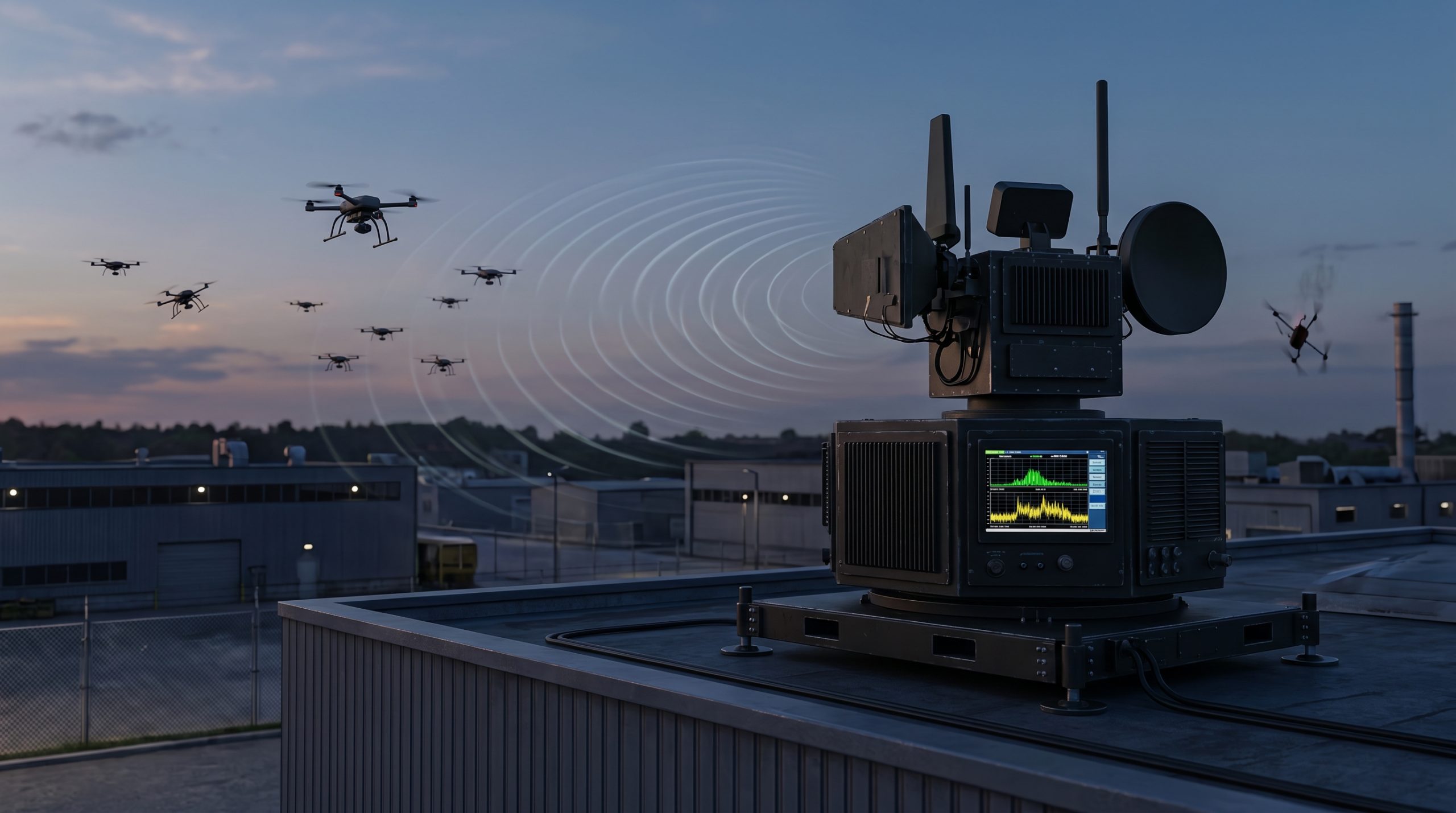
Counter-UAS systems actively detect and neutralize unauthorized drones entering restricted airspace by utilizing specialized technology. Facilities face escalating security threats from commercial quadcopters bypassing traditional perimeter fences daily. You might notice security teams scrambling without proper detection hardware during these unexpected incursions. Deploying a military-grade RF Amplifier resolves this vulnerability by delivering consistent power for continuous frequency monitoring. CorelixRF engineers manufacture these high-power modules for seamless integration into modern electronic warfare platforms.
What Exactly Is a Counter-UAS System?
A Counter-UAS system represents a specialized defense architecture designed strictly for identifying and mitigating unauthorized aerial vehicles. Every functional detection network requires a robust RF Amplifier to project strong signals across wide environments. Facility managers often struggle against small drones that slip past standard optical cameras unnoticed. Implementing a dedicated radio frequency platform creates an invisible shield around critical infrastructure.
Why are drone threats escalating?
Commercial off-the-shelf quadcopters now feature extended battery life alongside encrypted communication protocols. These advancements allow malicious operators massive flexibility when planning incursions over secured government sites. Security personnel frequently lack adequate hardware required for tracking such agile airborne targets accurately. You need better tools because legacy radar simply cannot track small plastic objects effectively.
But here’s the kicker… new rogue drones utilize frequency hopping techniques making them exceptionally difficult targets. Your defense network must adapt quickly or risk complete operational failure during a critical breach.
How do core components work together?
Modern defensive platforms combine several distinct sensor types into one unified command interface. Operators rely upon synchronized data streams flowing from radio receivers directly into central processing units.
- High-gain directional antennas capture faint telemetry signals emitted by rogue controllers.
- Digital signal processors filter background noise from legitimate civilian transmissions rapidly.
- Power amplification modules boost defensive broadcast strength across multiple active channels simultaneously.
- Thermal cameras provide visual confirmation after initial radio contact occurs.
Key Takeaway: Integrating diverse sensors through a centralized control hub gives you a definitive tactical advantage against unauthorized incursions.
| Component Type | Primary Function | Operational Range |
| | | |
| Sensor Node | Signal Capture | Up to 10 kilometers |
| Processor Unit | Data Filtering | N/A |
| Transmission Module | Signal Broadcast | 5 to 15 kilometers |
| Optical Camera | Visual Tracking | 2 to 5 kilometers |
This hardware breakdown illustrates exactly how layered defenses create overlapping zones of absolute security.
How Do RF Amplifiers Power C-UAS Technology?
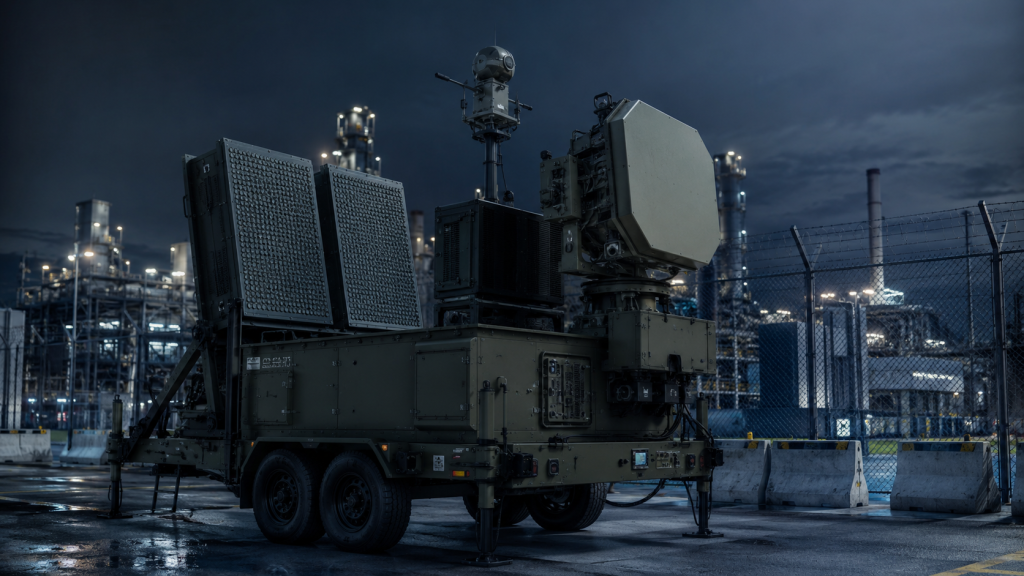
These amplification units take low-level control signals and multiply their strength for long-range defensive broadcasting. A highly efficient RF Amplifier forms the absolute foundation of any active electronic mitigation strategy. Without sufficient power output, your defensive signals will fade before reaching an incoming threat. CorelixRF builds these modules specifically for maintaining sustained high-wattage transmission under extreme environmental stress.
What role does power output play?
Signal dominance dictates success during any active electronic confrontation with a rogue aerial vehicle. The defensive transmission must overpower original control instructions sent by a malicious human operator. If your hardware lacks sufficient wattage then incoming drones will simply ignore mitigation attempts. You must deploy equipment capable of delivering massive energy spikes instantly upon command.
What’s the real story? Raw wattage means nothing without strict engineering control maintaining precise signal clarity. Clean transmission prevents your system from accidentally disabling nearby friendly communication networks.
How do frequency bands affect coverage?
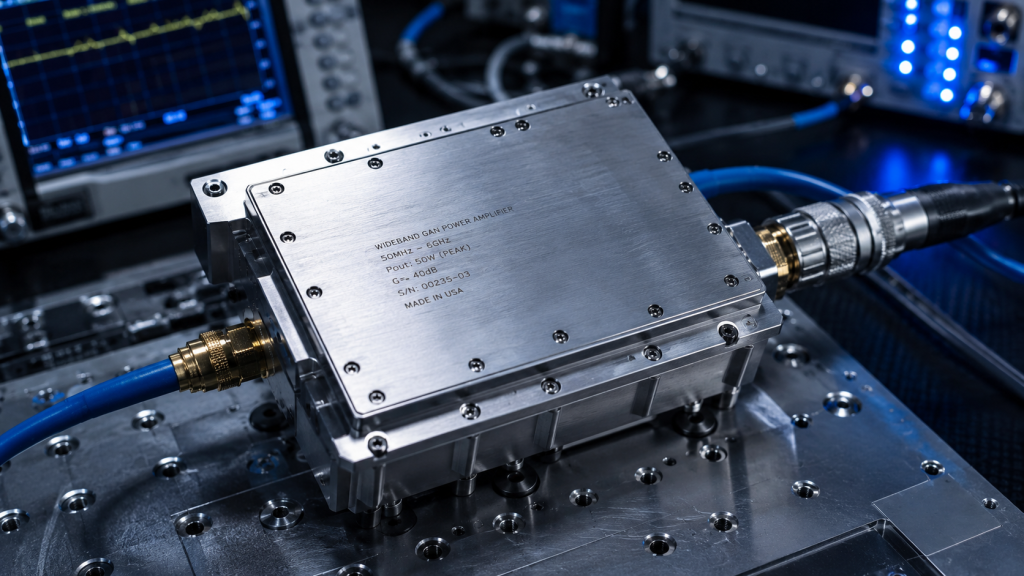
Different commercial quadcopters operate across a wide variety of unlicensed civilian radio spectrums globally. Your hardware needs continuous coverage spanning from 30MHz all the way up through 6GHz.
- Narrowband systems only protect against very specific older drone models.
- Wideband architecture allows defenders ultimate flexibility against unknown future threats.
- Continuous frequency sweeps guarantee no hidden control channels remain undetected.
Key Takeaway: Broad spectrum dominance ensures your security team can neutralize any commercial threat entering protected airspace.
| Frequency Band | Common Application | Threat Level |
| | | |
| 433 MHz | Long-range telemetry | High |
| 2.4 GHz | Standard video feeds | Extreme |
| 5.8 GHz | High-speed data links | Extreme |
| 1.2 GHz | Custom navigation | Moderate |
Analyzing these specific spectrum ranges helps operators allocate defensive resources much more efficiently.
Who Can Legally Deploy C-UAS Equipment?
Deployment regulations strictly limit active electronic mitigation hardware access for authorized military or federal agencies. Commercial entities cannot legally operate a jamming RF Amplifier without explicit governmental permission. Federal laws protect navigable airspace from unauthorized civilian interference heavily. You must consult legal counsel before purchasing any active transmission hardware for private security applications.
What are the regulatory limits?
The Federal Communications Commission regulates all radio transmissions strictly across domestic territorial borders. Private corporations risk massive fines if they activate unlicensed broadcasting equipment near public areas. Passive detection platforms remain completely legal for civilian usage because they do not emit signals. You can monitor local airspace freely but cannot intervene electronically without proper federal authority.
Ready for the good part? Recent legislative updates have expanded limited mitigation powers toward critical infrastructure operators under strict supervision. This shifting legal framework provides new opportunities for protecting vulnerable civilian assets safely.
Who gets authorization for active systems?
Military bases require absolute airspace control for protecting sensitive national security assets daily. State law enforcement agencies can sometimes request temporary waivers during massive public gathering events.
- Department of Defense installations operate under entirely separate legal frameworks.
- Federal prisons utilize specialized authorization protocols preventing contraband deliveries.
- Airport authorities collaborate closely with federal regulators managing local defensive zones.
- Nuclear power facilities receive special dispensations protecting radioactive material actively.
Key Takeaway: Navigating complex legal frameworks remains absolutely necessary before initiating any active electronic defense protocol.
| Authorized Entity | Permitted Action | Restriction Level |
| | | |
| Military Forces | Full mitigation | None |
| Federal Prisons | Localized jamming | Moderate |
| Private Airports | Passive monitoring | High |
| Corporate Campuses | Detection only | Extreme |
Understanding these jurisdictional boundaries prevents costly legal complications following hardware procurement.
What Are the Core Components of RF-Based Detection?
Radio frequency detection platforms rely on synchronized hardware parsing invisible electromagnetic waves into actionable intelligence. Every receiving station requires a specialized RF Amplifier pulling faint signals out from dense background noise. CorelixRF designs low-noise receiver modules specifically for identifying distant quadcopter telemetry accurately. These sensitive instruments form a critical early warning perimeter around your valuable facilities.
How do antennas capture signals?
Omnidirectional receivers constantly scan a massive 360-degree radius searching for anomalous communication bursts. Once a suspicious transmission appears, directional arrays rotate immediately locking onto that exact origin point. These physical metal structures resonate perfectly when struck by specific invisible electromagnetic waves. You need meticulously calibrated hardware maximizing reception sensitivity across all possible attack vectors.
This is where it gets interesting… advanced phased array setups steer their reception beams electronically without moving parts. This instantaneous targeting capability reduces tracking latency down into mere milliseconds.
Why is real-time processing needed?
Modern urban environments generate massive amounts of completely harmless civilian radio interference constantly. Your system must separate a malicious control signal from thousands of normal cellular conversations instantly.
- High-speed field-programmable gate arrays execute complex mathematical algorithms instantly.
- Custom silicon chips identify known drone communication signatures accurately.
- Cloud-connected databases update local threat libraries dynamically.
Key Takeaway: Rapid computational power transforms raw radio static into precise target coordinates seamlessly.
| Component Feature | Benefit | Latency |
| | | |
| Phased Array | Electronic steering | < 1 ms |
| FPGA Processor | Instant filtering | < 5 ms |
| Cloud Database | Threat updates | Continuous |
| Low Noise Receiver | Signal clarity | N/A |
Evaluating processing speeds directly correlates with your ability to stop fast-moving aerial threats.
Why Is High-Power GaN Critical for C-UAS?
Gallium Nitride semiconductor technology delivers unprecedented power density within a remarkably compact physical footprint. An older silicon-based RF Amplifier simply cannot match GaN performance during sustained continuous operation. CorelixRF transitioned exclusively toward Gallium Nitride architecture maximizing reliability under harsh military conditions. You get higher wattage output while generating significantly less internal thermal waste.
How does GaN handle extreme heat?
Traditional silicon transistors suffer severe performance degradation whenever internal temperatures exceed safe operating limits. Gallium Nitride molecular structures remain incredibly stable even while processing massive amounts of electrical current. This superior thermal resilience means your defensive hardware will never shut down unexpectedly during an attack. You avoid catastrophic failure scenarios by selecting equipment built utilizing modern materials.
It gets better… superior efficiency allows engineers to design much smaller heatsinks reducing overall system weight drastically. Lighter equipment enables rapid deployment across remote tactical environments seamlessly.
What makes wideband operation possible?
Legacy transistors struggle maintaining consistent output power across a massive range of different frequencies. Gallium Nitride devices feature exceptional electron mobility allowing rapid switching speeds without losing signal integrity.
- Wideband coverage eliminates dangerous blind spots within your defensive spectrum.
- Single module designs replace complicated multi-amplifier arrays easily.
- Consistent gain flatness ensures predictable performance across all active channels.
Key Takeaway: Investing in modern semiconductor materials guarantees your hardware remains relevant against future technological threats.
| Material Type | Power Density | Thermal Limit | Bandwidth Capability |
| | | | |
| Silicon (LDMOS) | Low | 150°C | Narrow |
| Gallium Arsenide | Medium | 175°C | Moderate |
| Gallium Nitride | High | 225°C | Wide |
Comparing semiconductor characteristics reveals exactly why GaN dominates modern military manufacturing.
How Does C-UAS Neutralize Drone Threats?
Active mitigation platforms utilize directed electromagnetic energy disrupting normal communication pathways between operators and drones. A highly calibrated RF Amplifier generates a targeted noise envelope overwhelming the original telemetry link. CorelixRF engineers optimize these disruption signals preventing collateral damage impacting nearby civilian networks. You take total control away from malicious actors instantly forcing their quadcopters into fail-safe modes.
What is RF signal jamming?
Jamming operations broadcast high-intensity static across specific frequencies matching an incoming threat exactly. This brute-force technique saturates a target receiver completely until it can no longer understand legitimate commands. Most commercial drones respond by initiating an automatic landing sequence or returning toward their launch point. You effectively create an invisible wall preventing further forward movement into restricted areas.
You might be wondering… how directional antennas prevent this intense noise from blinding friendly communications. Precision engineering focuses that raw energy into a tight beam minimizing lateral signal spillage entirely.
How do spoofing techniques operate?
More sophisticated systems impersonate legitimate GPS satellites feeding false location data directly into drone navigation processors. The rogue vehicle believes it has suddenly teleported miles away from its actual physical location.
- Controlled descent commands replace original operator inputs seamlessly.
- Virtual geo-fences push targets away from sensitive buildings automatically.
- Customized software-defined radios generate these complex deceptive waveforms precisely.
Key Takeaway: Deploying intelligent spoofing tactics allows operators a safer alternative than using raw destructive energy.
| Mitigation Tactic | Mechanism | Resulting Action |
| | | |
| Protocol Jamming | Noise saturation | Auto-land |
| GPS Spoofing | False coordinates | Controlled takeover |
| Kinetic Strike | Physical impact | Destruction |
| Net Capture | Entanglement | Safe recovery |
Selecting an appropriate mitigation strategy depends entirely upon your specific operational environment.
What Challenges Exist in Drone Frequency Jamming?
Urban environments present massive obstacles regarding successful signal disruption due to extreme physical clutter. The most powerful RF Amplifier still cannot transmit radio waves straight through solid concrete structures effectively. CorelixRF advises clients about proper antenna placement strategies maximizing line-of-sight dominance across difficult terrain. You must carefully map local interference sources before deploying any active countermeasure hardware.
How do frequency-hopping drones evade detection?
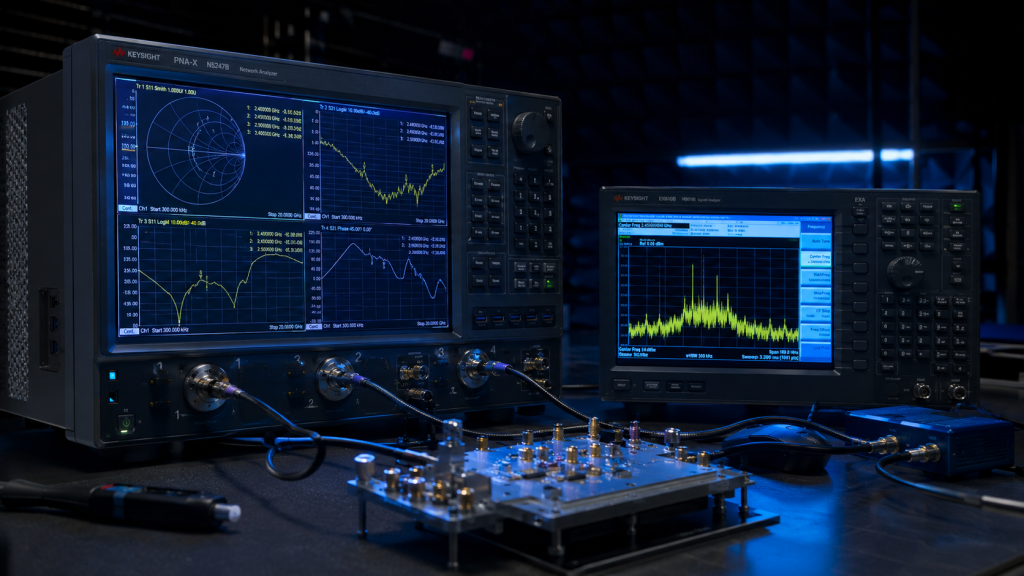
Advanced custom-built quadcopters change their communication channels thousands of times per second randomly. Older defensive systems simply cannot switch frequencies fast enough to maintain a reliable lock. Modern software-defined radios track these chaotic patterns predicting the next jump accurately. You need agile hardware capable of following evasive maneuvers without losing power output.
Here is the deal… defeating a frequency-hopping target requires massive computational power paired with instant transmission capabilities. Only elite military-grade equipment provides sufficient speed required for handling these sophisticated attacks.
Why is urban interference a problem?
Cities broadcast an overwhelming amount of electromagnetic noise from Wi-Fi routers alongside cellular towers continuously. This background static raises a general noise floor making faint drone signals harder to isolate.
- Multipath propagation causes signals to bounce off glass skyscrapers unpredictably.
- Dense concrete absorbs higher frequency transmissions reducing effective range severely.
- High ambient temperatures inside industrial zones affect sensitive receiver calibration negatively.
Key Takeaway: Environmental analysis remains a mandatory prerequisite before installing any permanent defensive infrastructure.
| Environmental Challenge | Impact on System | Required Solution |
| | | |
| Concrete Buildings | Signal absorption | Distributed nodes |
| Heavy Wi-Fi Traffic | False positives | Advanced filtering |
| Dynamic Weather | Range reduction | Power redundancy |
| High Heat | Hardware stress | Better cooling |
Strategic planning mitigates these physical barriers ensuring consistent operational readiness daily.
How Do You Choose the Right RF Amplifier for C-UAS?
Selecting optimal hardware requires matching specific technical parameters directly against your unique security requirements. A mismatched RF Amplifier will underperform drastically leaving glaring holes within your protective perimeter. CorelixRF provides detailed engineering consultations helping system integrators configure their platforms perfectly. You must demand strict factual transparency regarding all published technical specifications from potential suppliers.
What specs matter most?
Gain flatness determines how evenly power gets distributed across a designated operating frequency spectrum. Voltage Standing Wave Ratio indicates how much energy reflects backward potentially damaging sensitive internal components. High power added efficiency ensures you consume minimal electricity while generating maximum defensive output. You must analyze these raw numbers carefully avoiding generic marketing brochures lacking real laboratory data.
What’s the real story? Many cheap imported modules fail instantly under sustained continuous wave transmission testing. You cannot risk relying upon unverified hardware when protecting critical national infrastructure facilities.
How do you evaluate manufacturer capabilities?
True manufacturing partners control their entire production chain from bare circuit boards up through final casing. Genuine factories welcome rigorous technical audits proving their engineering truth confidently.
- Direct access to senior design engineers solves complex integration issues quickly.
- In-house environmental testing chambers guarantee survival under harsh conditions.
- Documented quality control protocols trace every single soldered component backward accurately.
- Thirty years of industry history proves long-term financial stability.
Key Takeaway: Partnering directly with an established manufacturer eliminates hidden risks associated with middleman traders completely.
| Evaluation Metric | Trader Capability | Manufacturer Capability |
| | | |
| Custom Design | None | Full support |
| Quality Control | Basic visual | 46-Step protocol |
| Technical Data | Copied specs | Lab verified |
| Delivery Speed | Slow | Fast track |
This comparison highlights exactly why serious defense contractors choose direct factory relationships constantly.
What Are the Key Testing Protocols for Military-Grade RF?
Rigorous validation procedures separate genuine defense hardware from unreliable commercial grade electronics definitively. Every single RF Amplifier must survive brutal environmental stress before leaving a certified factory floor. CorelixRF utilizes a comprehensive 46-step quality control protocol ensuring zero defects upon delivery. You receive hardware proven capable of operating continuously regardless of external weather conditions.
Why is thermal cycling necessary?
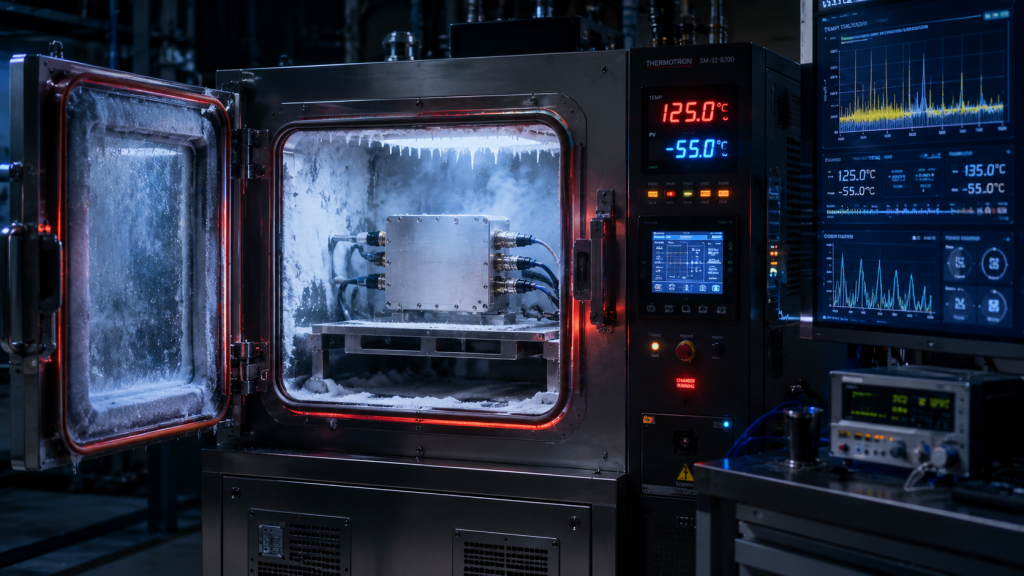
Equipment deployed outside faces extreme temperature fluctuations shifting from freezing nights into scorching afternoons rapidly. Repeated expansion cycles stress delicate solder joints causing cheap connections to snap unexpectedly. Advanced thermal chambers simulate years of harsh weather exposure within mere days. You guarantee long-term survival by forcing components through these punishing artificial environments proactively.
Ready for the good part? Thorough conformal coating processes protect delicate microchips against corrosive salt fog near coastal installations. This extra layer of chemical armor prevents microscopic moisture droplets from creating catastrophic short circuits.
How does VSWR testing protect equipment?
Antenna damage often causes transmitted energy to bounce backward directly into fragile amplification circuits violently. Robust hardware features built-in isolators absorbing these dangerous reflections harmlessly.
- Real-time monitoring circuits shut down power instantly if mismatched impedance occurs.
- Continuous full-power burn-in tests expose hidden manufacturing flaws before shipment.
- Vibration tables simulate rough transport conditions ensuring mechanical integrity remains intact.
Key Takeaway: Extensive laboratory verification prevents embarrassing hardware failures during critical active deployments.
| Testing Phase | Purpose | Expected Outcome |
| | | |
| Thermal Cycle | Stress joints | Zero fractures |
| VSWR Mismatch | Protect circuits | Safe shutdown |
| Vibration Test | Mechanical check | Intact casing |
| Burn-in Aging | Prove stability | Consistent output |
Documented test results provide absolute confidence when installing critical security infrastructure worldwide.
What Is the Future of C-UAS and RF Technology?
Emerging technological paradigms demand constant innovation regarding how we detect and neutralize autonomous threats. The next generation RF Amplifier will feature deeper integration alongside intelligent software-defined networks dynamically. CorelixRF currently develops ultra-high-frequency modules targeting advanced millimeter-wave aerospace markets proactively. You must prepare your security architecture for entirely autonomous drone swarms operating without human pilots.
How will AI change drone detection?
Machine learning algorithms process massive amounts of radio static faster than any human operator ever could. These intelligent programs teach themselves how to recognize brand new communication protocols autonomously. Adaptive filtering removes urban background noise almost perfectly revealing hidden threats instantly. You gain precious seconds of reaction time leveraging these advanced computational models actively.
But here’s the kicker… artificial intelligence also empowers malicious actors creating highly evasive attack patterns automatically. Defenders must deploy superior algorithms ensuring their mitigation hardware stays ahead of evolving threats constantly.
What are the next steps for hardware integration?
Future defense systems will combine radar optics and radio sensors into single miniaturized tactical pods seamlessly. Engineers focus heavily upon reducing size weight and power requirements for portable deployments.
- Gallium Nitride efficiency continues pushing maximum wattage limits higher annually.
- Integrated digital pre-distortion circuits clean up messy transmission signals automatically.
- Modular designs allow field technicians rapid repair capabilities under fire.
Key Takeaway: Continuous engineering research guarantees that defense systems maintain superiority against rapidly advancing commercial technology.
| Future Trend | Technology Driver | Security Benefit |
| | | |
| Autonomous Swarms | AI Navigation | Scalable response |
| Miniaturization | GaN Advancements | Portability |
| Smart Filtering | Machine Learning | Accuracy |
| Higher Frequencies | Millimeter Wave | Uncongested tracking |
Staying informed about these developmental trajectories helps organizations plan their long-term security budgets accurately.
Final Thoughts
Deploying an effective defense against unauthorized aerial vehicles requires robust hardware engineered for extreme reliability. We solved the problem of weak signal transmission by developing wideband GaN modules operating continuously without thermal degradation. CorelixRF manufactures the exact high-power components necessary for system integrators demanding absolute military-grade performance. If you need a reliable manufacturing partner capable of customizing precise specifications, contact us today. Engineering Truth remains our core principle, ensuring every module we build protects critical assets flawlessly across the globe.
FAQ
Q1: Can I legally operate a jamming system at my private corporate facility?
No, private entities cannot legally operate active jamming hardware in civilian airspace. The Federal Communications Commission strictly prohibits unauthorized interference with radio communications, reserving those powers exclusively for specific federal and military agencies.
Q2: What’s the best way to detect small commercial drones quickly?
A synchronized combination of radio frequency scanners and radar provides optimal detection capabilities. RF sensors identify the communication link instantly, while radar tracks the physical object, giving your security team complete situational awareness.
Q3: How do I know if an amplifier can handle continuous operation?
You must verify the manufacturer’s thermal testing data and confirm they use Gallium Nitride (GaN) technology. GaN components handle extreme heat significantly better than older silicon models, ensuring the hardware won’t fail during sustained defensive broadcasting.
Q4: Will a wideband system interfere with my local Wi-Fi networks?
It will not cause issues if you utilize precise directional antennas and smart software filtering. Proper engineering ensures that defensive energy focuses entirely on the threat frequency, minimizing any lateral spillage into civilian communication channels.
Q5: Can I customize the frequency range for my specific security project?
Yes, working directly with a dedicated manufacturer allows for complete hardware customization. Experienced RF engineers can adjust frequency bands, power levels, and interface protocols to match your exact system architecture requirements perfectly.
Counter UAS amplifiers for authorized RF platforms
Searches for counter UAS amplifiers or counter-uas amplifier should be handled as authorized RF platform and hardware-integration requirements. CorelixRF can review amplifier chains, RF front-end matching, thermal design, VSWR protection, delivery evidence and RFQ preparation. Local spectrum authorization, operational approval and end-use compliance must be handled by the buyer or program owner.
| Selection item | RFQ detail |
|---|---|
| Band and output power | Define authorized operating band, rated power, duty cycle and waveform condition. |
| RF front-end chain | Review signal source, driver, high-power amplifier, switch/filter path, antenna/load and control interface together. |
| Protection and evidence | Request VSWR behavior, thermal margin, FAT curves, delivery documentation and case evidence. |
Related paths: RF front-end platforms, RF power amplifiers, RF antennas, solid state power amplifier guide, delivery documentation and engineering contact.
What is a counter-UAS RF amplifier?
In an authorized platform context, it is an RF power stage used inside a larger RF front-end chain. It must be specified with frequency, power, waveform, protection, cooling and compliance boundary.
Can CorelixRF advise on C-UAS operation?
No. CorelixRF focuses on hardware review, test evidence and procurement documentation. Operational authorization and legal compliance are the buyer’s responsibility.