
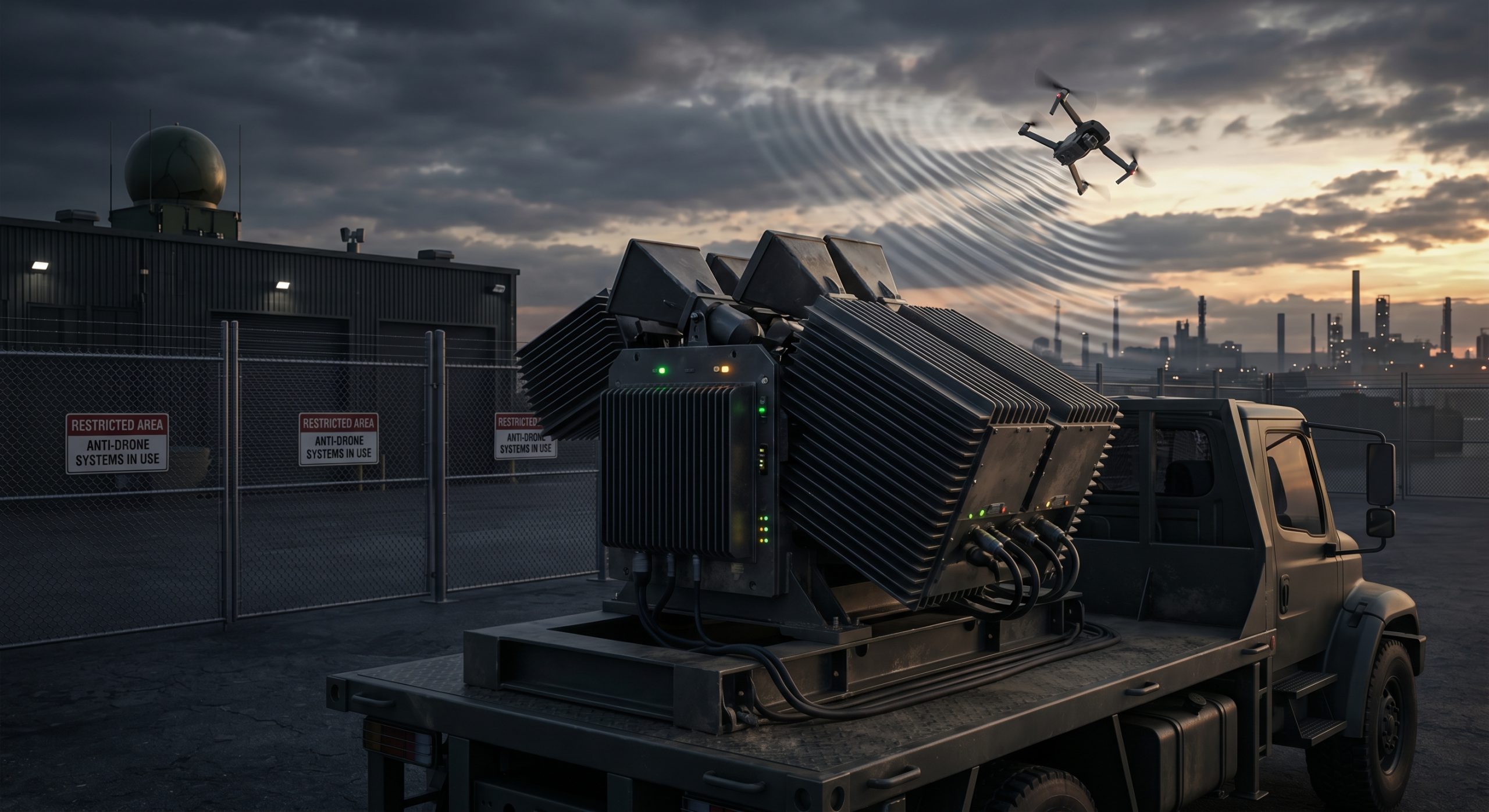
Drone jammers are specialized RF devices that disrupt signals between a UAV and its operator. Daily, unauthorized aircraft breach restricted zones, creating severe security vulnerabilities. You spot a rogue drone near your facility, yet standard security protocols cannot stop it safely. The required remedy lies in deploying military-grade RF suppression technology. By integrating high-power Drone Jammers into your defense architecture, you instantly regain control over compromised airspace. We rely on engineering truth rather than marketing fluff. Our 30 years of manufacturing experience guarantees reliable RF performance.
What Are Drone Jammers and How Do They Work?
Drone jammers are electronic countermeasure systems that broadcast powerful interference signals across specific frequency bands. You need precise 30MHz-6GHz continuous coverage, which Drone Jammers seamlessly provide, neutralizing modern airborne threats. These robust devices saturate receiver front-ends, forcing a target UAV into failsafe return protocols. We build resilient RF systems emphasizing rugged metal textures and raw engineering truth.
How Do RF Signals Disrupt UAV Communications?
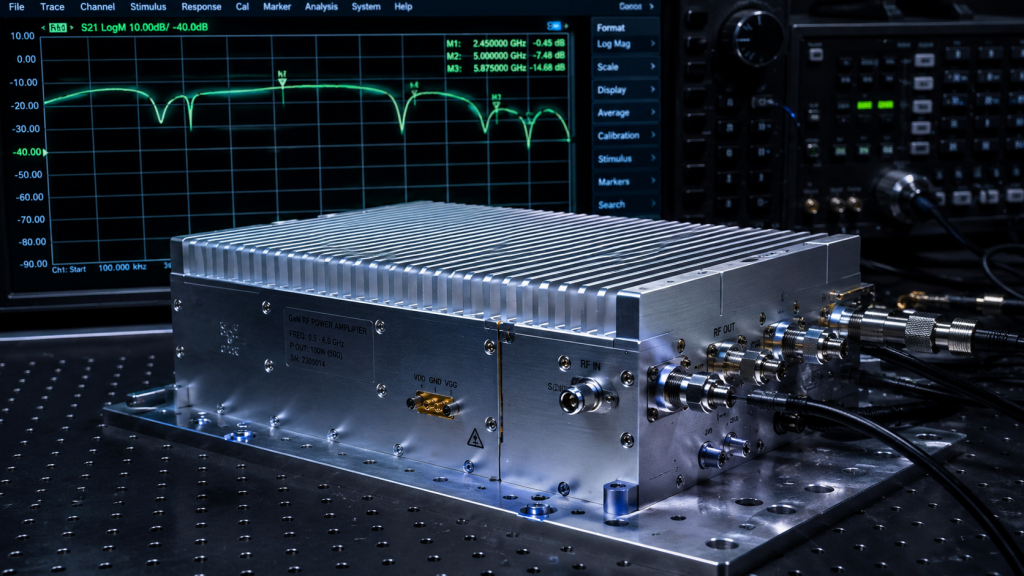
But here’s the kicker… effective disruption relies entirely upon raw RF chain quality. High-efficiency GaN power amplifiers deliver sustained output without thermal degradation. Our 400 skilled employees rigorously test every module following strict military-grade quality protocols.
- You require stable impedance matching for continuous operation.
- High-power SDR digital signal sources enable intelligent frequency hopping.
- Aluminum heat-sink integrated designs prevent catastrophic power drops.
Key Takeaway: Understanding fundamental RF components allows you to deploy highly resilient anti-drone architectures.
| Feature | Specification | Operational Impact |
| Frequency Range | 30MHz – 6000MHz | Covers all commercial UAV bands. |
| Output Power | 30W – 200W Configurable | Ensures effective signal saturation. |
| Core Technology | GaN Amplifiers | Maintains high efficiency under load. |
This baseline technical data demonstrates exactly why military-grade RF hardware outperforms generic commercial alternatives.
Who Can Legally Use Drone Jammers Today?
Federal agencies and specific military branches hold exclusive legal authorization regarding active signal interference operations within domestic airspace. State police departments and private citizens face strict federal prohibitions against operating these disruptive devices. The Federal Communications Commission heavily regulates radio frequency transmission, protecting civilian infrastructure from unauthorized interference.
Are There Exceptions for Critical Infrastructure?
Truth be told… local security teams cannot independently deploy active countermeasures. Only authorized federal personnel possess the jurisdiction required for operating high-power RF disruption technology. Our engineering teams regularly supply compliant modules directly targeting authorized defense contractors.
- Department of Defense personnel manage military airspace defense.
- Homeland Security handles specialized national security events.
- Justice Department officials operate during critical tactical situations.
Key Takeaway: Always verify your legal standing before initiating any high-power RF countermeasure procurement process.
| User Group | Legal Status | Typical Application |
| Military | Authorized | Combat zone airspace defense. |
| Federal Agencies | Authorized | National security event protection. |
| Private Citizens | Prohibited | None permitted under current law. |
Understanding these strict legal boundaries prevents severe operational liabilities during security system planning.
Are Drone Jammers Legal for Civilians?
Federal law strictly prohibits private citizens from purchasing, operating, or marketing active signal disruption equipment. Any attempt at deploying Drone Jammers by unauthorized individuals constitutes a severe federal offense. The Communications Act of 1934 forms the legal foundation preventing civilian interference with regulated radio bands.
What Does the FCC Say About Private Use?
Let’s dive deeper… the FCC maintains zero tolerance regarding unauthorized RF transmission. You cannot legally defend your private property using active jamming technology. We design our industrial-grade components exclusively for authorized government and military integrators.
- The FCC actively pursues individuals selling unauthorized jamming equipment.
- Civil forfeiture often accompanies criminal prosecution in these cases.
- Private security firms must utilize passive detection methods instead.
Key Takeaway: Civilian entities must rely on passive radar or optical tracking rather than active RF disruption.
| Legal Violation | Regulatory Body | Enforcement Action |
| Equipment Marketing | FCC | Product confiscation and fines. |
| Signal Interference | FCC / FAA | Criminal prosecution. |
| Private Operation | Local / Federal | Immediate arrest and asset seizure. |
This regulatory framework guarantees that critical emergency communication channels remain clear from civilian interference.
What Are the Penalties for Illegal Use?
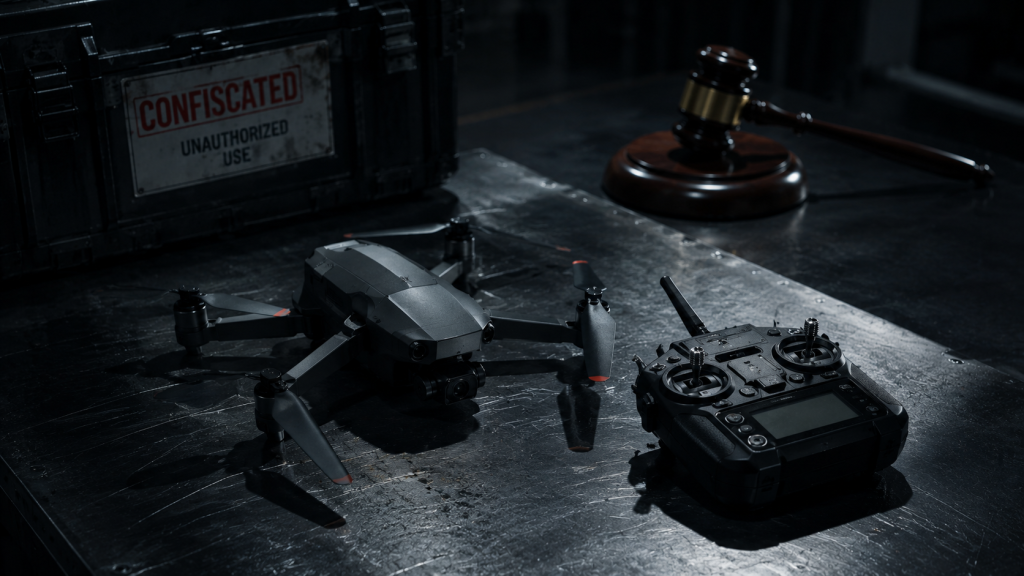
Operating an unauthorized RF interference device carries devastating financial penalties and potential federal prison sentences. The government treats deliberate signal jamming as a direct threat against national infrastructure. You could face hundreds of thousands of dollars in fines for a single violation.
Could You Face Jail Time for Jamming?
Here’s the deal… federal prosecutors routinely seek maximum sentences for intentional communication disruption. Fines can exceed $100,000 per violation, crippling businesses and ruining lives. Our company strictly validates all buyer credentials to maintain absolute legal compliance.
- Individuals face up to ten years imprisonment for endangering aircraft.
- Corporate entities suffer massive monetary penalties for marketing illegal tech.
- Equipment confiscation occurs immediately upon detection.
Key Takeaway: The severe legal consequences far outweigh any perceived benefits of unauthorized airspace defense.
| Offense Type | Potential Fine | Maximum Prison Term |
| First Offense Operation | Up to $112,500 | 1 Year |
| Endangering Aviation | Variable | 10 Years |
| Illegal Marketing | Corporate Scale | Variable |
These aggressive penalties reflect how seriously authorities treat unregulated electromagnetic interference.
How Do Drone Jammers Affect Public Safety?
Unregulated signal disruption creates massive blind spots for emergency responders and commercial aviation. When you activate poorly calibrated Drone Jammers, the resulting signal bleed can disable nearby medical communication networks. We engineer our modules with precise <1.5dB gain flatness to prevent unintentional spectrum pollution.
Do They Interfere with Emergency Comms?
You might be wondering… how a localized jammer affects city-wide safety. Broad-spectrum interference easily neutralizes police radios and fire department dispatch systems. Engineering truth demands that we build surgical RF tools, not reckless broadband noise generators.
- Inaccurate jamming signals disrupt critical GPS navigation systems.
- Wi-Fi blockades prevent citizens from reaching emergency services.
- Uncontrolled RF power can damage sensitive medical equipment nearby.
Key Takeaway: Precision engineering separates safe tactical tools from dangerous public hazards.
| Affected System | RF Band | Safety Consequence |
| Police Radio | VHF / UHF | Delayed emergency response times. |
| Aviation GPS | L-Band | Aircraft navigation failure. |
| Civilian Mobile | Cellular | Inability to dial 911. |
This chart illustrates why precision RF calibration remains a mandatory requirement for authorized deployments.
Can Local Police Use Drone Jammers?
State and local law enforcement agencies currently lack the federal authority needed to operate active jamming technology. Municipal police departments must coordinate with federal partners during active airborne threat scenarios. Legislative efforts continue attempting to grant local authorities more tactical RF capabilities.
Why Are State Police Restricted?
What’s the real story? The federal government maintains exclusive control over national airspace regulations. Local officers cannot simply switch on a jammer without explicit federal oversight. We monitor these evolving legal frameworks to prepare our manufacturing lines for future municipal demand.
- Local police lack the required RF training for safe deployment.
- Fragmented local regulations could cause chaotic airspace management.
- Federal agencies prefer centralized control over electromagnetic warfare tools.
Key Takeaway: Municipal security planning must integrate federal partnerships for active counter-UAV measures.
| Agency Level | Authority Status | Required Action |
| Municipal Police | Restricted | Call federal partners. |
| State Patrol | Restricted | Secure area, observe. |
| Federal Task Force | Authorized | Deploy countermeasures. |
This jurisdictional division ensures only highly trained operators handle sensitive electromagnetic warfare equipment.
What Federal Agencies Are Authorized?
Specific federal departments operate under special exemptions granted by national security legislation. Only these designated groups can legally procure and deploy high-power Drone Jammers within US borders. The Preventing Emerging Threats Act explicitly outlined these federal operational boundaries.
Which Departments Lead Anti-Drone Operations?
It all boils down to this… authorization requires a direct mandate for national defense or public safety. The Department of Defense utilizes these systems to protect domestic military installations. Our 30-year track record makes us a trusted supplier for these elite government programs.
- The Secret Service deploys jammers for executive protection details.
- The Coast Guard neutralizes maritime drone threats near ports.
- The Department of Energy protects critical nuclear infrastructure.
Key Takeaway: Federal authorization requires rigorous training and strict adherence to operational protocols.
| Federal Agency | Primary Responsibility | Deployment Scenario |
| Secret Service | Executive Protection | VIP motorcades. |
| Coast Guard | Maritime Security | Port surveillance. |
| Dept. of Energy | Infrastructure | Nuclear plant defense. |
These specialized agencies rely on verified engineering data to execute their critical security missions.
How Do Counter-Drone Systems Differ?
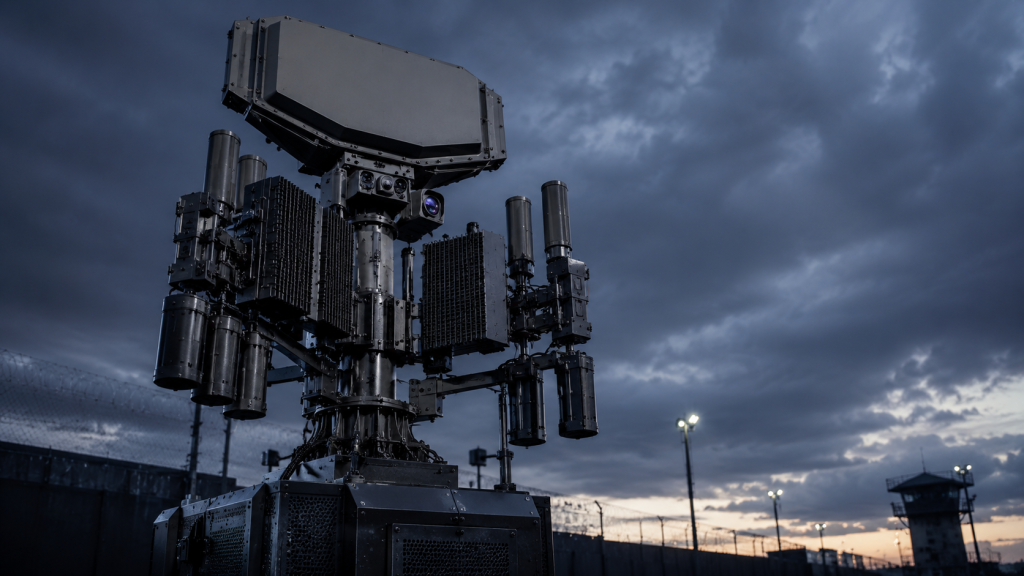
Modern airspace defense requires a layered approach combining passive detection with active mitigation. While jamming represents the final tactical step, preliminary radar and optical tracking remain fully legal for civilians. You need an integrated system architecture to achieve comprehensive situational awareness.
What Is the Difference Between Detection and Mitigation?
The best part? Passive detection systems carry zero regulatory restrictions for private enterprises. You can legally install RF scanners to identify incoming threats before they breach your perimeter. We engineer our signal sources for seamless integration with these advanced detection grids.
- Radar systems provide early warning capabilities over long distances.
- Optical cameras visually confirm the target payload and type.
- RF mitigation severs the control link only when legally authorized.
Key Takeaway: A robust security posture prioritizes legal detection methods before considering active mitigation.
| System Type | Legal Status | Core Function |
| RF Scanner | Fully Legal | Detects controller signals. |
| Radar | Fully Legal | Tracks physical movement. |
| Jammer Module | Restricted | Neutralizes the threat. |
Layering these technologies creates a comprehensive defense network capable of handling complex airborne incursions.
Why Choose GaN Modules for Drone Jammers?
Gallium Nitride technology revolutionized the high-power RF manufacturing industry. When building Drone Jammers, GaN amplifiers provide superior thermal management and exceptional power density. You gain significant operational advantages by upgrading from legacy silicon-based amplifier architectures.
How Does GaN Improve RF Output?
This is where it gets interesting… GaN components maintain stable output power across extreme temperature variations. A typical amplifier loses efficiency as heat builds, but GaN sustains a ≥15% power headroom. Our dark industrial manufacturing process specifically optimizes these modules for harsh battlefield environments.
- GaN allows for wider bandwidth coverage within a single module.
- Higher breakdown voltages translate directly into increased output power.
- Reduced cooling requirements lead to lighter, more portable systems.
Key Takeaway: Investing in GaN technology guarantees maximum reliability during critical sustained jamming operations.
| Material | Efficiency | Bandwidth Capability |
| LDMOS | Moderate | Narrow |
| GaAs | Low | Moderate |
| GaN | High | Ultra-Wide |
Selecting the correct semiconductor material directly determines the ultimate success of your counter-drone platform.
How to Procure Legal Drone Jammer Tech?
Authorized integrators must navigate a complex supply chain to secure reliable RF components. You need a manufacturing partner who understands both the technical specifications and legal compliance requirements. Working directly with a core RF chain supplier eliminates third-party markups and miscommunications.
What Should You Look for in a Manufacturer?
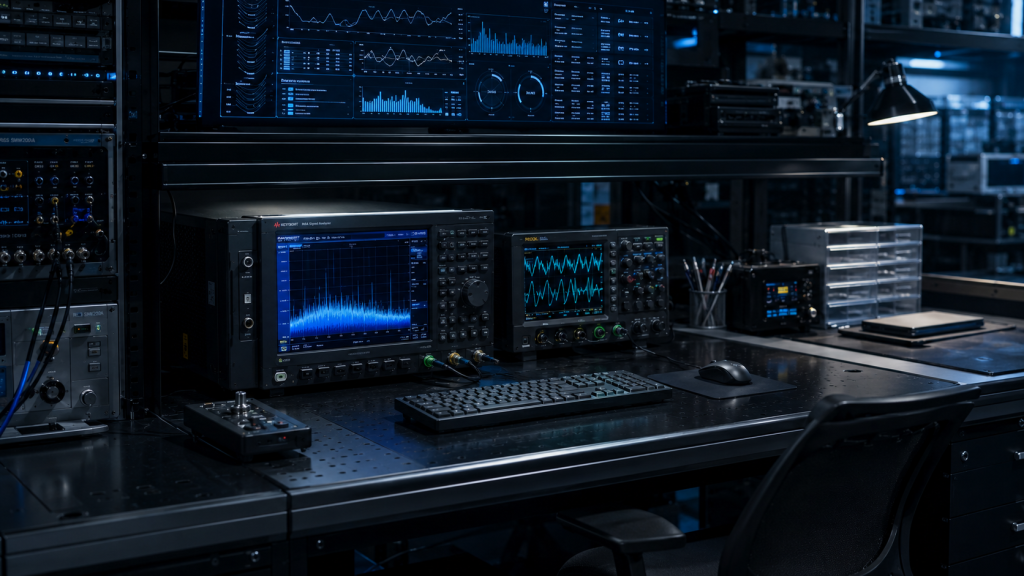
The real secret? Transparency in the engineering process separates true manufacturers from mere traders. You should demand access to rigorous testing data and detailed component schematics. We proudly display our 46-step quality control protocol to guarantee absolute engineering truth.
- Verify the supplier operates an advanced RF testing laboratory.
- Ensure they offer custom frequency and power level modifications.
- Confirm they hold relevant military-grade quality certifications.
Key Takeaway: Partnering with a proven RF factory ensures your final system meets all performance expectations.
| Evaluation Criteria | Red Flag | Indicator of Excellence |
| Testing Data | Hidden or vague | Full VNA lab reports provided |
| Customization | Fixed catalog only | Full engineering support |
| Facility | Unknown location | 3000㎡ R&D Center |
Careful vendor selection remains the most critical step in deploying a successful and compliant RF system.
Final Thoughts
Navigating the technical and legal complexities of RF disruption requires precise knowledge and reliable hardware. We solved the challenge of unstable RF output by engineering our wideband GaN platform. Whether you build defense systems or manage critical infrastructure, our team delivers the foundational technology you require. Please contact us today to discuss your specific engineering needs. CorelixRF stands as your definitive partner for military-grade RF chain solutions, driving the future of electromagnetic security.
FAQ
Q1: Can I legally buy a jammer for my private business?
No, you cannot. Federal law explicitly prohibits private entities from purchasing or operating active RF disruption equipment.
Q2: How do I know if a counter-drone system is legal?
Check if the system is purely passive. Passive radar, optical cameras, and RF scanners are legal, while active signal disruptors are not.
Q3: What’s the best alternative to jamming for civilians?
Deploying an advanced early warning detection network. These legal systems track rogue UAVs, allowing you to alert local authorities immediately.
Q4: Can I use a jammer if a drone is spying on me?
No, you cannot take active RF measures into your own hands. You must document the intrusion and contact local law enforcement.
Q5: How do I procure these systems if I am an authorized federal contractor?
You must submit valid government credentials and project authorization forms. We strictly verify all documents before releasing technical proposals or hardware.
Authorized RF engineering and compliance review
For regulated RF systems, this page should be used as an engineering and compliance review path, not as a public deployment checklist. CorelixRF starts with authorization status, operating region, frequency plan, output limit, antenna interface, safety controls, thermal limits and acceptance documents.
- RFQ checklist – send the data buyers usually forget, including band, power, duty cycle, interface and test standard
- delivery documentation – check what documents can support incoming inspection, FAT review and long-term maintenance
- quality and certification review – review the quality and compliance evidence before the project moves into procurement
- RF front-end platform – compare the RF chain as a system instead of selecting one isolated module
- RF configurator – turn frequency, power, thermal and interface requirements into a first configuration brief
- case studies – review similar engineering paths before sending an RFQ
- engineering contact – send the application notes, block diagram or target specification to engineering sales
This keeps the discussion inside lawful, authorized RF programs while still giving procurement teams a clear way to request amplifier, antenna, SDR source, documentation and factory review.
GaN RF Module Reliability Review Path
For authorized extreme-environment RF modules, review GaN RF power amplifier platforms with RF front-end integration planning and antenna/load requirements. Send temperature range, duty cycle, output power, protection logic, cooling and test evidence through the RF inquiry form for CorelixRF engineering review.