
Effective defense mechanisms protecting airspace require layered sensors paired directly with targeted radio frequency mitigation capabilities. Facility managers routinely struggle protecting physical airspace against evolving unauthorized aerial intrusions. A single rogue device causes massive operational downtime alongside severe physical security risks. Implementing a structured Anti-Drone architecture provides highly reliable security protecting critical infrastructure continuously. CorelixRF delivers military-grade RF chains guaranteeing your skies remain securely protected against all airborne threats.
1. What Are Core Detection Technologies For Anti-Drone Systems?
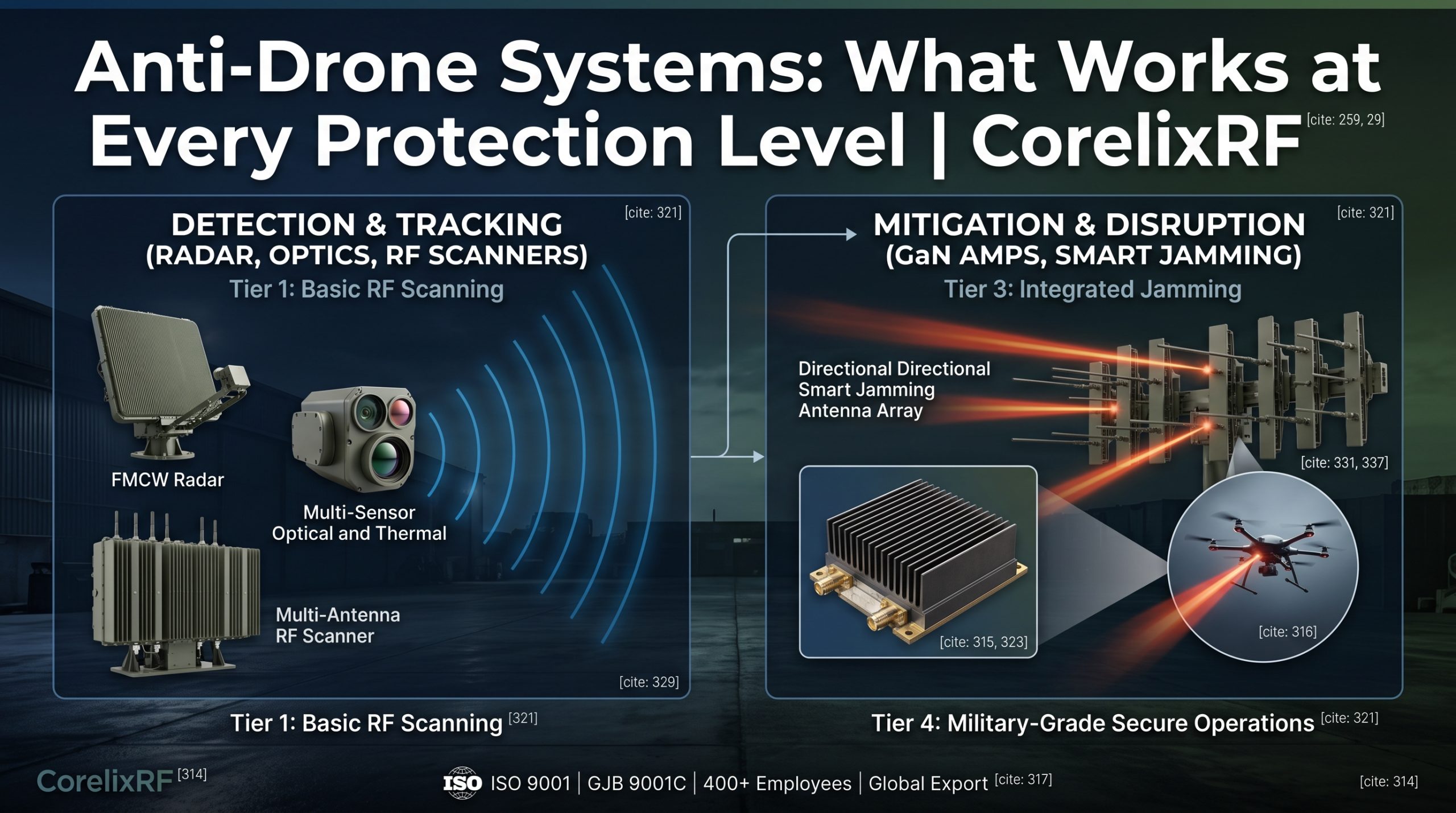
Core detection components for any Anti-Drone system always involve advanced radar modules, sophisticated radio frequency analyzers, and high-resolution optical cameras. These incredibly complex layered tools identify unauthorized airborne targets extremely effectively during active operational monitoring phases. Professional security teams consistently rely upon this highly integrated combined data for immediate tactical decision making.
How Do Radar And RF Sensors Compare?
Here’s the deal, each individual detection technology brings completely unique tactical advantages for continuous professional airspace monitoring. Advanced FMCW radar continuously bounces directed energy off physical objects, tracking aerial movement incredibly accurately. Sophisticated radio scanners quietly listen for encrypted communication signals passing between rogue operators and hostile aircraft.
Why Is Multi-Sensor Integration Necessary?
What’s the real story? Relying upon one singular method creates incredibly dangerous security gaps across your entire facility perimeter. Combining different technologies guarantees incredibly thorough protection capabilities against diverse threat profiles:
- Active radar continuously detects completely silent autonomous flights.
- High-resolution optical cameras deliver immediate visual threat confirmation accurately.
- Passive radio frequency scanners locate ground-based controllers quickly.
Key Takeaway: Layered detection strategies guarantee incredibly robust airspace security across varying environmental conditions preventing dangerous operational blind spots.
Sensor Technologies Overview
| Sensor | Primary Function | Night Operation |
| Radar | Physical Tracking | Excellent |
| RF | Signal Detection | Excellent |
| Optics | Visual Confirmation | Poor |
Analyzing this specific capability comparison highlights precisely why fully integrated arrays always outperform basic standalone sensors during field deployments.
2. How Do RF Mitigation Methods Work In Anti-Drone Systems?
Radio frequency mitigation techniques within an Anti-Drone architecture disrupt command links by transmitting precise high-power electromagnetic signals. This overwhelming interference violently forces unauthorized aerial vehicles into mandatory fail-safe landing protocols immediately. Tactical operators utilize these high-power modules for neutralizing hostile threats safely without risking physical kinetic damage.
What Makes Smart Jamming Effective?
This is where it gets interesting, modern amplifier modules target specific operational bands incredibly precisely. Omnidirectional broadcasting wastes valuable electrical energy while causing unnecessary collateral interference across local communications. Smart directional antennas focus intense disruption power directly toward positively identified threats with pinpoint surgical accuracy.
Why Do We Need Broad Spectrum Coverage?
Ready for the good part? Advanced solid-state amplifiers cover massive frequencies spanning 30MHz through 6GHz continuously without noticeable power drops. You must actively neutralize advanced threats across incredibly diverse communication protocols during any hostile engagement:
- Standard commercial 2.4GHz consumer bands.
- Custom 433MHz low-frequency telemetry links.
- Global satellite navigation timing frequencies.
Key Takeaway: Precise directional radio frequency disruption provides surgical threat neutralization without impacting local friendly communications accidentally.
Mitigation Strategy Comparison
| Method | Power Efficiency | Collateral Impact |
| Omnidirectional | Low | High |
| Directional | High | Low |
| Smart Protocol | Very High | Minimal |
Targeted directional jamming preserves surrounding communications while maximizing defensive impact against hostile aerial platforms efficiently.
3. What Is Tier 1 Basic Protection For Anti-Drone Security?
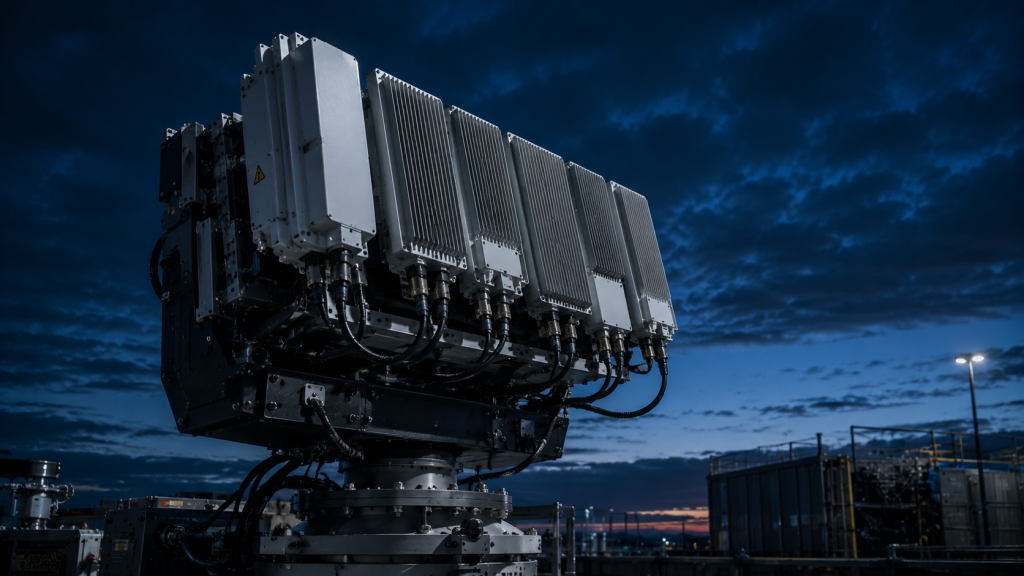
Tier 1 protection for an Anti-Drone deployment focuses primarily on portable radio frequency scanning equipment. These affordable baseline setups suit commercial facilities requiring rudimentary situational awareness regarding local airspace traffic.
Who Benefits From Basic Threat Detection?
You might be wondering, when does a simple scanning setup actually suffice for professional security? Corporate campuses face mostly accidental civilian intrusions originating from careless hobbyist pilots flying casually. Basic RF scanners provide highly sufficient early warning alerts for these specific low-risk environments.
What Are The Limitations Here?
But here’s the kicker, Tier 1 hardware struggles immensely against autonomous pre-programmed stealth flights. You cannot physically mitigate incoming hostile threats without active high-power disruption capabilities:
- System lacks physical radar tracking functions completely.
- Equipment cannot stop silent autonomous GPS flights.
- Defensive mitigation requires slow manual human intervention.
Key Takeaway: Baseline radio scanning offers affordable situational awareness but completely lacks advanced physical tracking capabilities for serious threats.
Tier 1 Security Features
| Capability | Effectiveness | Cost Level |
| RF Scanning | High | Low |
| Radar Tracking | None | N/A |
| Mitigation | Manual | N/A |
Implementing basic scanning provides foundational awareness before scaling toward advanced defense architectures requiring heavier capital investments.
4. How Does Tier 2 Advanced Detection Upgrade Anti-Drone Defense?
Tier 2 Advanced Detection upgrades Anti-Drone networks by introducing localized FMCW radar systems alongside active optical verification cameras. This highly capable multi-sensor approach reliably tracks completely dark targets lacking standard radio emission signatures.
Why Add Radar Tracking Capabilities?
Truth be told, radio silence represents an incredibly severe tactical vulnerability for any security perimeter. Pre-programmed autonomous flights bypass standard radio frequency monitoring arrays completely unnoticed. High-frequency radar tracks these silent physical objects with extreme precision regardless of their internal communication status.
How Do Optics Improve Verification?
Let’s dig deeper, high-resolution cameras confirm whether that distant radar blip represents a harmless bird or dangerous machine. Visual confirmation drastically prevents frustrating false alarms during critical facility operations:
- High-resolution daylight tracking cameras follow targets automatically.
- Thermal imaging lenses provide crystal clear night detection.
- Automated software AI keeps optical tracking locked flawlessly.
Key Takeaway: Adding radar tracking alongside optics guarantees incredibly reliable detection regardless of target communication status or time.
Tier 2 Sensor Additions
| Upgrade | Primary Target | Reliability |
| FMCW Radar | Silent Flights | High |
| Thermal Optics | Night Threats | High |
| Software AI | False Alarms | Excellent |
Upgrading sensor arrays dramatically reduces false positive alerts during active monitoring phases across critical civilian infrastructure.
5. What Defines Tier 3 Integrated Mitigation In Anti-Drone Tech?
Tier 3 Integrated Mitigation equips Anti-Drone setups with automated smart jamming hardware cued directly by advanced sensors. These highly responsive architectures defend sensitive border locations alongside critical government infrastructure incredibly efficiently.
How Does Sensor Cueing Work?
Here’s the deal, slow manual human intervention proves entirely useless against fast-moving aerial threats. Smart detection platforms communicate directly with high-power mitigation hardware instantly. This perfect digital synchronization enables lightning-fast surgical disruption upon confirmed threat identification without human hesitation.
Why Emphasize Smart Interdiction?
What’s the real story? Spraying radio frequency energy everywhere disrupts friendly operational communications indiscriminately causing operational chaos. Precision smart jamming targets specific hostile control links exclusively:
- Software selects precise frequency bands automatically.
- Antenna arrays focus directional energy efficiently.
- Digital controllers minimize collateral electromagnetic interference drastically.
Key Takeaway: Automated sensor-driven mitigation provides rapid response times while preserving clean localized spectrums for friendly operational communications safely.
Tier 3 Capabilities
| Function | Speed | Accuracy |
| Auto-Detection | Milliseconds | High |
| Smart Cueing | Instantaneous | Pinpoint |
| RF Disruption | Rapid | Targeted |
Automated hardware coordination dramatically shrinks physical reaction times during hostile airspace incursions preventing successful enemy penetrations entirely.
6. How Does Tier 4 Military Grade Secure Anti-Drone Operations?
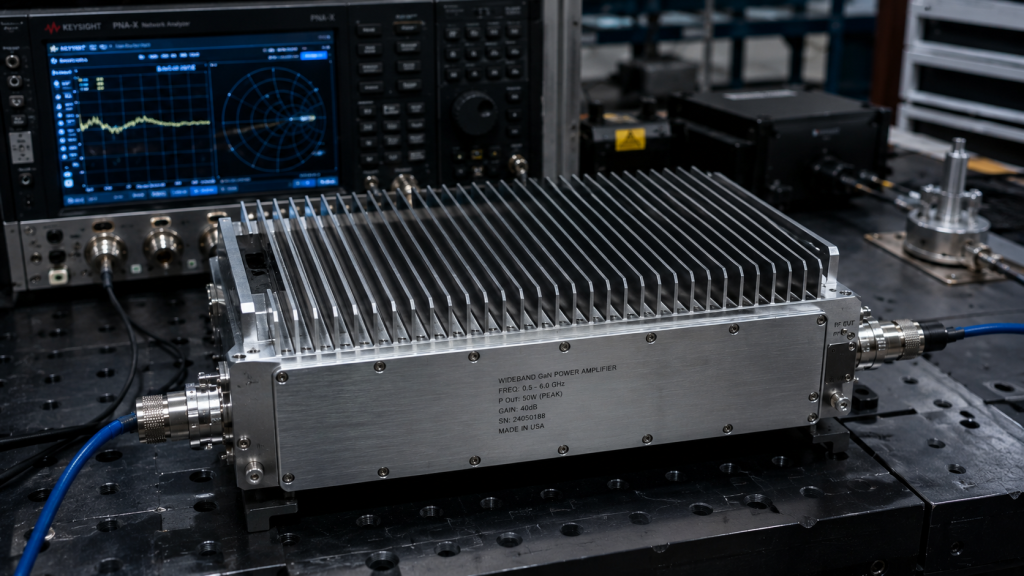
Tier 4 Military Grade secures Anti-Drone perimeters using ultra-high-power CRF-PA series amplifiers and comprehensive full-band jamming platforms. Extreme tactical environments strictly demand continuous operational stability under massive continuous thermal stress.
What Makes Hardware Military Grade?
This is where it gets interesting, tactical battlefield survival requires immense structural engineering resilience. Standard commercial hardware degrades rapidly under sustained high-power output demands. Custom military components feature heavy aluminum heatsinks guaranteeing continuous peak performance even under direct sunlight exposure.
How Necessary Is Full-Band Coverage?
Ready for the good part? Advanced warfare utilizes totally unconventional frequency spectrums continually changing patterns unexpectedly. Elite defense architectures must aggressively cover every single conceivable communication channel simultaneously:
- Custom wideband frequency hopping protocols.
- Encrypted military telemetry signals.
- Multiple concurrent target engagement scenarios.
Key Takeaway: Military-grade platforms deliver sustained uncompromising disruption power across all conceivable frequencies blocking sophisticated state-level adversaries completely.
Tier 4 System Specifications
| Parameter | Commercial | Military Grade |
| Output Stability | Variable | Continuous |
| Thermal Design | Standard | Heavy Duty |
| Band Coverage | Specific | Full Spectrum |
Robust thermal management allows these heavy-duty systems unparalleled sustained operational longevity during intense continuous battlefield engagements.
7. What Role Do GaN Amplifiers Play In Anti-Drone Systems?
Gallium Nitride amplifiers provide Anti-Drone platforms with unparalleled high-efficiency power output across massive bandwidth ranges effortlessly. This advanced semiconductor technology revolutionized solid-state radio frequency component manufacturing completely over recent years.
Why Replace Older Amplifier Tech?
You might be wondering, what exactly made legacy silicon components totally obsolete for modern defense? Older LDMOS transistors physically struggle maintaining electrical efficiency across extremely wide frequency ranges. Modern GaN circuitry delivers incredible power density within extremely compact physical dimensions.
How Does GaN Handle Heat?
But here’s the kicker, pushing continuous watts generates massive dangerous thermal loads inside amplifier housings. Gallium Nitride substrates aggressively conduct extreme heat away from delicate electrical junctions brilliantly:
- Operates safely at much higher internal temperatures.
- Requires significantly smaller external cooling assemblies.
- Maintains incredibly strict power gain flatness.
Key Takeaway: Implementing advanced GaN technology guarantees maximum disruption power while massively reducing overall system weight and footprint.
GaN vs LDMOS Technology
| Material | Power Density | Thermal Conductivity |
| LDMOS | Low | Average |
| GaN | High | Exceptional |
Adopting advanced semiconductor materials guarantees modern mitigation platforms remain both extremely powerful and highly portable simultaneously.
8. How Do Directional Antennas Improve Anti-Drone Range?
High-gain directional antennas improve Anti-Drone effective operational ranges by concentrating radio energy into tight focused transmission beams. This highly concentrated projection multiplies disruption distance exponentially without requiring heavier power amplifiers.
What Is The Gain Advantage?
Truth be told, spreading mitigation energy spherically wastes incredibly valuable disruption power pointlessly. High-gain geometric designs aggressively funnel electromagnetic waves forward exactly like a tight flashlight beam. This intensely focused energy completely overwhelms hostile receiver links from several miles away effortlessly.
How Do Operators Aim Effectively?
Let’s dig deeper, hitting a fast moving target requires extreme mechanical aiming precision continuously. Automated mechanical pan-tilt units steer these focused beams perfectly following live radar tracking data:
- Instantaneous mechanical target acquisition.
- Continuous active physical following.
- Highly stable signal saturation.
Key Takeaway: Concentrating transmission energy mathematically maximizes operational range while perfectly conserving baseline amplifier output limits efficiently.
Antenna Performance Metrics
| Type | Range | Beam Width |
| Omnidirectional | Short | 360 Degrees |
| Directional | Long | Narrow Focus |
Focusing transmission output extends defensive mitigation perimeters significantly without increasing baseline electrical consumption requirements pointlessly.
9. Why Is Quality Control Mandatory For Anti-Drone Manufacturing?
Rigorous quality control absolutely protects Anti-Drone reliability through extreme stress testing alongside meticulous manufacturing validation protocols. Unpredictable hardware failures during active hostile airspace incursions quickly create totally unacceptable security catastrophes.

What Testing Environments Are Necessary?
Here’s the deal, pristine laboratory conditions rarely match harsh unpredictable field realities. Sensitive internal components must survive brutal thermal cycling alongside severe mechanical vibration exposure continuously. Advanced verification procedures include placing fully running modules inside extreme vacuum thermal chambers routinely.
How Does The 46-Step Protocol Work?
What’s the real story? Superior tactical manufacturing always requires obsessive procedural adherence without any shortcuts. CorelixRF proudly utilizes a brutally comprehensive 46-step quality validation journey meticulously:
- Microscopic high-frequency interface inspection.
- Chemical conformal coating verification.
- Brutal final dynamic aging tests.
Key Takeaway: Uncompromising testing protocols guarantee defensive hardware always functions perfectly under extreme tactical stress saving lives reliably.
Quality Validation Stages
| Stage | Focus Area | Goal |
| Incoming | Raw Materials | Defect Prevention |
| Assembly | PCBA Function | Connection Integrity |
| Stress | Environmental | Field Reliability |
Implementing rigorous staged inspections strictly eliminates premature component failure risks during highly critical defense deployments globally.
10. How To Choose The Best Protection Level For Anti-Drone Needs?
Choosing an appropriate protection level for Anti-Drone requirements actively demands evaluating specific local threats against available capital budgets. Complex facility architecture completely dictates which sensor combinations yield optimal airspace awareness perfectly.
Should You Start With Tier 1?
This is where it gets interesting, reckless overspending hurts corporate security budgets unnecessarily. Standard commercial warehouses facing occasional harmless hobbyist threats merely require simple portable RF monitoring. Starting small comfortably allows operators gathering real baseline airspace data effortlessly before upgrading hardware.
When Is Full Mitigation Mandatory?
Ready for the good part? Critical infrastructure requires absolutely guaranteed active threat elimination capabilities constantly. Major international airports cannot simply watch hostile vehicles approach active passenger runways helplessly:
- Requires instant reliable radar tracking.
- Demands automated high-power jamming response.
- Necessitates uncompromising military-grade hardware resilience.
Key Takeaway: Aligning defensive investments directly with actual site vulnerability guarantees extremely cost-effective yet totally impenetrable airspace security.
Tier Selection Matrix
| Site Type | Recommended Tier | Primary Sensor |
| Corporate | Tier 1-2 | RF Scanner |
| Airport | Tier 3 | Radar + RF |
| Military | Tier 4 | Full Array |
Evaluating structural vulnerability accurately guarantees organizations deploy perfectly scaled defensive technological solutions avoiding unnecessary hardware bloat.
Final Thoughts On Airspace Security
Securing sensitive physical airspace actively demands perfectly layered sensor arrays paired directly with formidable RF mitigation hardware. Progressing intelligently through structured protection tiers guarantees absolutely optimal defensive scalability matching genuine threat profiles. CorelixRF proudly champions engineering truth by delivering relentlessly tested RF components designed exclusively for extreme tactical environments. Safeguard your facility perimeter completely with uncompromising military-grade reliability and precision. Please contact us today for highly specialized technical integration support regarding your specific defense requirements.
Frequently Asked Questions
Q1: Can I rely solely on RF scanners for security?
You absolutely cannot rely entirely upon basic scanners. While scanners identify standard remote links effectively, they completely miss pre-programmed autonomous flights lacking radio signatures.
Q2: How do I know if my facility needs radar?
You strictly need active radar tracking if nighttime operations matter for your perimeter security. Optical cameras physically struggle during complete darkness making radar strictly required for continuous twenty-four-hour tracking.
Q3: What’s the best way to stop unauthorized flights?
Smart directional jamming provides an incredibly secure mitigation method for professional operations. This focused technique severely disrupts hostile control frequencies while preserving local communication integrity safely.
Q4: Will weather affect my detection system performance?
Yes, heavy precipitation impacts certain sensors heavily reducing their operational effectiveness. Heavy rain severely obscures optical cameras whereas advanced radar maintains consistent tracking regardless of atmospheric visibility.
Q5: Can I integrate new modules into older platforms?
Yes, technical integration remains entirely possible utilizing modern communication standards. Modern software-defined radios allow completely seamless connectivity alongside existing legacy security architecture networks easily.
Authorized RF engineering and compliance review
For regulated RF systems, this page should be used as an engineering and compliance review path, not as a public deployment checklist. CorelixRF starts with authorization status, operating region, frequency plan, output limit, antenna interface, safety controls, thermal limits and acceptance documents.
- RFQ checklist – send the data buyers usually forget, including band, power, duty cycle, interface and test standard
- delivery documentation – check what documents can support incoming inspection, FAT review and long-term maintenance
- quality and certification review – review the quality and compliance evidence before the project moves into procurement
- RF front-end platform – compare the RF chain as a system instead of selecting one isolated module
- RF configurator – turn frequency, power, thermal and interface requirements into a first configuration brief
- case studies – review similar engineering paths before sending an RFQ
- engineering contact – send the application notes, block diagram or target specification to engineering sales
This keeps the discussion inside lawful, authorized RF programs while still giving procurement teams a clear way to request amplifier, antenna, SDR source, documentation and factory review.
Critical Infrastructure RF Review Path
For authorized critical-infrastructure C-UAS programs, connect security requirements to RF front-end integration, RF power amplifier platform choices and antenna/load planning. Share bands of interest, output targets, duty cycle, cooling, enclosure limits, control interface and factory validation evidence needs through the RF inquiry form.