
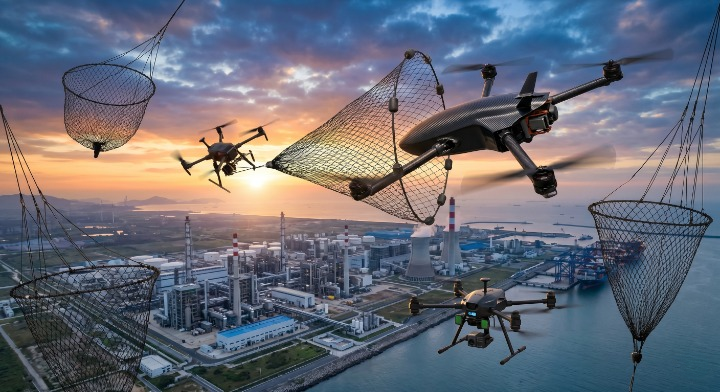
Air-to-air counter drones and net guns are specialized kinetic interception systems designed to physically neutralize unauthorized unmanned aerial vehicles (UAVs) mid-flight. You likely face significant security risks when unauthorized drones infiltrate your sensitive airspace or critical infrastructure. If you fail to act within the small response window, you risk surveillance breaches or physical attacks that jeopardize your entire operation. Integrating robust Anti-drone kinetic measures ensures that threats are physically removed from the sky with precision.
What are air-to-air anti-drone technologies?
Kinetic counter-UAS measures are physical intervention methods used to disable or capture an intruding aircraft. You can utilize these Anti-drone strategies when electronic jamming is insufficient or legally restricted in your jurisdiction. These systems rely on direct contact or entanglement rather than radio frequency interference to stop a target.
Definition of kinetic hard-kill methods
You define kinetic hard-kill as any method that physically disrupts the flight of a target drone.
- Ramming systems for high-speed impact.
- Net projectile launchers for entanglement.
- Ballistic interceptors for direct destruction.
Why is physical neutralization necessary?
Look: electronic measures are not always effective against autonomous threats that do not rely on a command link. You need a physical solution to ensure the threat is completely removed from the airspace regardless of its software or shielding.
Key Takeaway: Kinetic methods provide a definitive end to a drone flight, though they require careful planning regarding where the debris will land.
| Technology Type | Neutralization Method | Success Probability |
|---|---|---|
| Interceptor Drone | Physical Collision | High |
| Net Gun | Rotor Entanglement | Medium-High |
| Projectile System | Structural Damage | Medium |
How do kinetic counter-drone methods work?
These systems work by physically impacting the target drone or launching a payload that disables its propulsion system. You can deploy a secondary drone as an anti-drone asset to intercept the intruder at a distance. By using a standard platform for your security fleet, you ensure compatibility and ease of deployment across various environments.
The mechanics of drone-on-drone ramming
Ramming involves your interceptor drone flying directly into the target at high speeds.
- High-velocity impact.
- Structural failure of the target.
- Loss of rotor function.
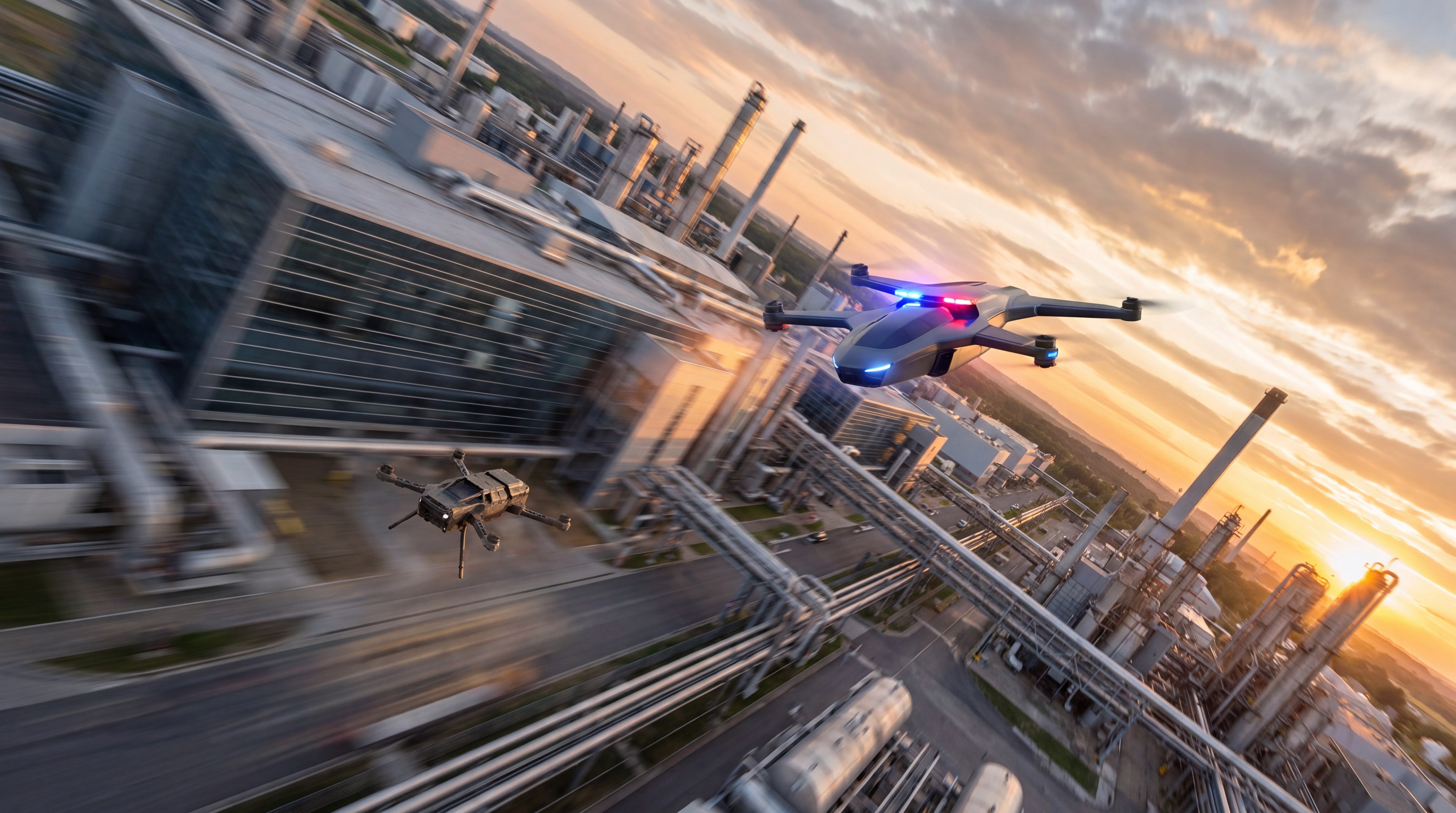
How machine vision aids target identification
Here is the kicker: machine vision allows your interceptor to lock onto a target without human guidance. This technology processes visual data in milliseconds to calculate the optimal intercept trajectory even if the target is maneuvering.
Key Takeaway: Modern kinetic systems rely heavily on autonomous vision to ensure high-speed targets cannot evade the defensive unit.
| Mechanism | Deployment Speed | Environmental Impact |
|---|---|---|
| Impact Ramming | Very High | High (Debris) |
| Net Launch | Medium | Low (Controlled fall) |
| Tethered Capture | Low | Very Low |
You must evaluate the trade-off between the high speed of ramming and the controlled recovery offered by net systems.
Can a drone really take down another drone?
Yes, purpose-built interceptor drones are engineered with high-speed propulsion and tracking systems to engage and neutralize hostile UAVs. Your Anti-drone interceptors utilize specialized amplifier and antenna systems to maintain a stable command link while performing extreme aerial maneuvers. This stability is vital when you are pursuing a target through complex or congested environments.
Dynamics of high-speed interceptor drones
You require high thrust-to-weight ratios to catch up to modern racing or military-grade drones.
- Rapid acceleration capabilities.
- Advanced gimbal stabilization.
- Carbon fiber reinforced frames.
Maintaining signal stability during pursuit
Think about it: a loss of control for even a second can cause your interceptor to miss its target or crash. You must ensure your RF frontend is optimized for low-latency communication during high-G turns and rapid altitude changes.
Key Takeaway: Successful air-to-air interception is a game of speed and signal integrity where precision is the only path to victory.
| Pursuit Feature | Requirement | Impact on Success |
|---|---|---|
| Acceleration | > 5G | Critical for intercept |
| Latency | < 20ms | Necessary for control |
| Frame Durability | High | Vital for reuse |
What are the benefits of using net guns?
Net guns provide a non-destructive way to capture drones, allowing for the recovery of hardware and forensic data. This anti-drone method is particularly useful when you need to identify the owner of the trespassing aircraft or analyze its payload. By entangling the rotors, the net forces the drone to the ground in a relatively controlled manner.
How net entanglement disables rotors
The net creates a physical barrier that stops the rotation of the drone’s propellers instantly.
- Rapid loss of lift.
- Immediate motor stalling.
- Controlled descent with parachute options.
Why net guns are legally accessible tools
The truth is: net guns are often classified as non-firearm devices in many jurisdictions. This allows your private security teams to carry and deploy them without the extensive licensing required for ballistic or electronic warfare equipment.
Key Takeaway: Net guns offer a legal and forensic advantage by capturing the threat intact for later investigation.
| Benefit | Impact | Ideal Application |
|---|---|---|
| Forensic Recovery | High | Law Enforcement |
| Legal Compliance | High | Private Security |
| Collateral Safety | Medium | Urban Areas |
Are there different net delivery methods?
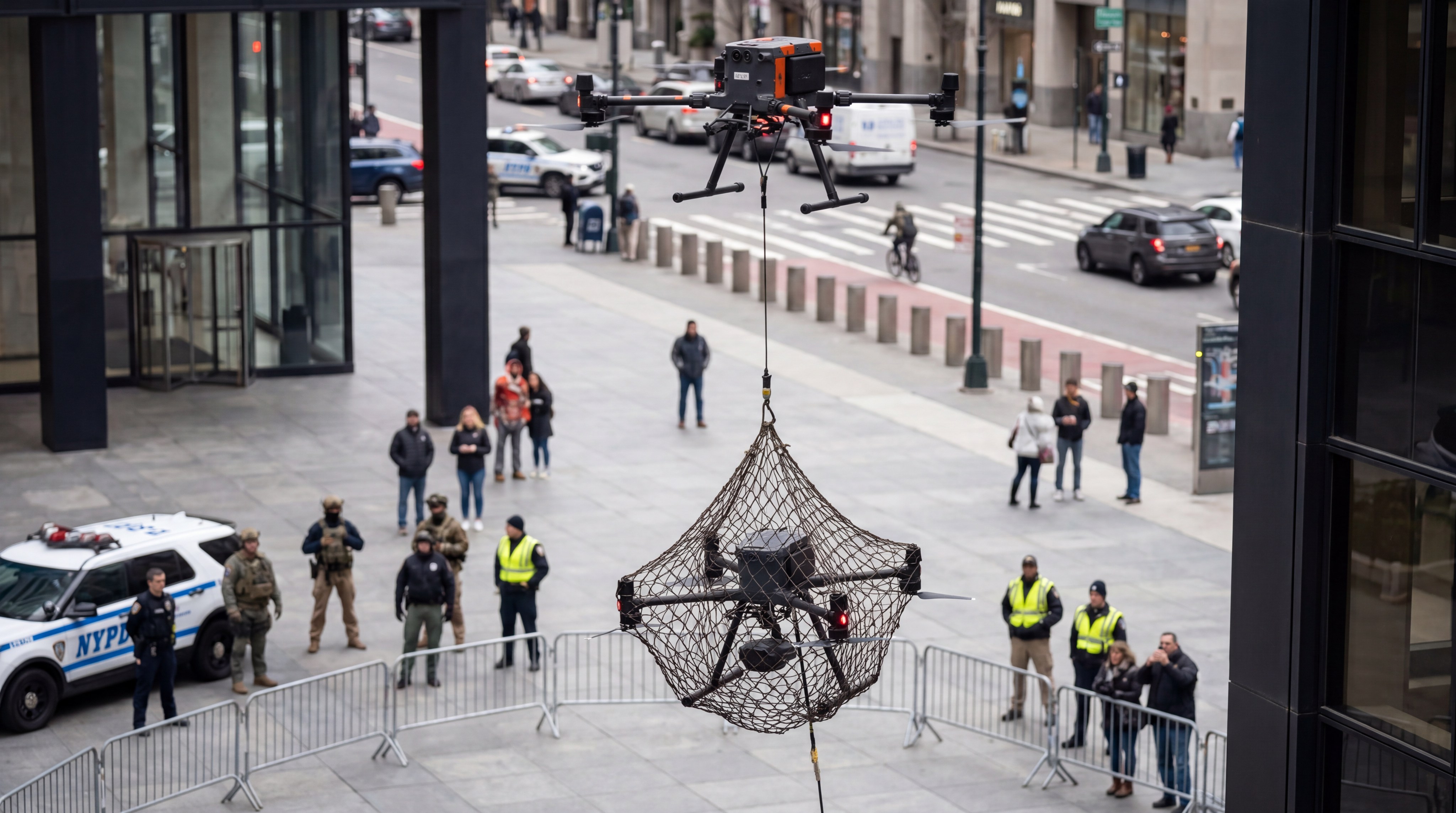
Net deployment varies from handheld launchers to autonomous drone-mounted canisters and tethered recovery systems. You can choose a delivery method based on the range and altitude of the Anti-drone mission you are conducting. Integrating these tools with custom amplifiers in the control units ensures that your remote deployment is always reliable.
Handheld net gun launchers for ground security
You can equip your ground-based personnel with handheld net guns for close-range protection.
- Portable and easy to use.
- Effective for low-altitude threats.
- Minimal training required.
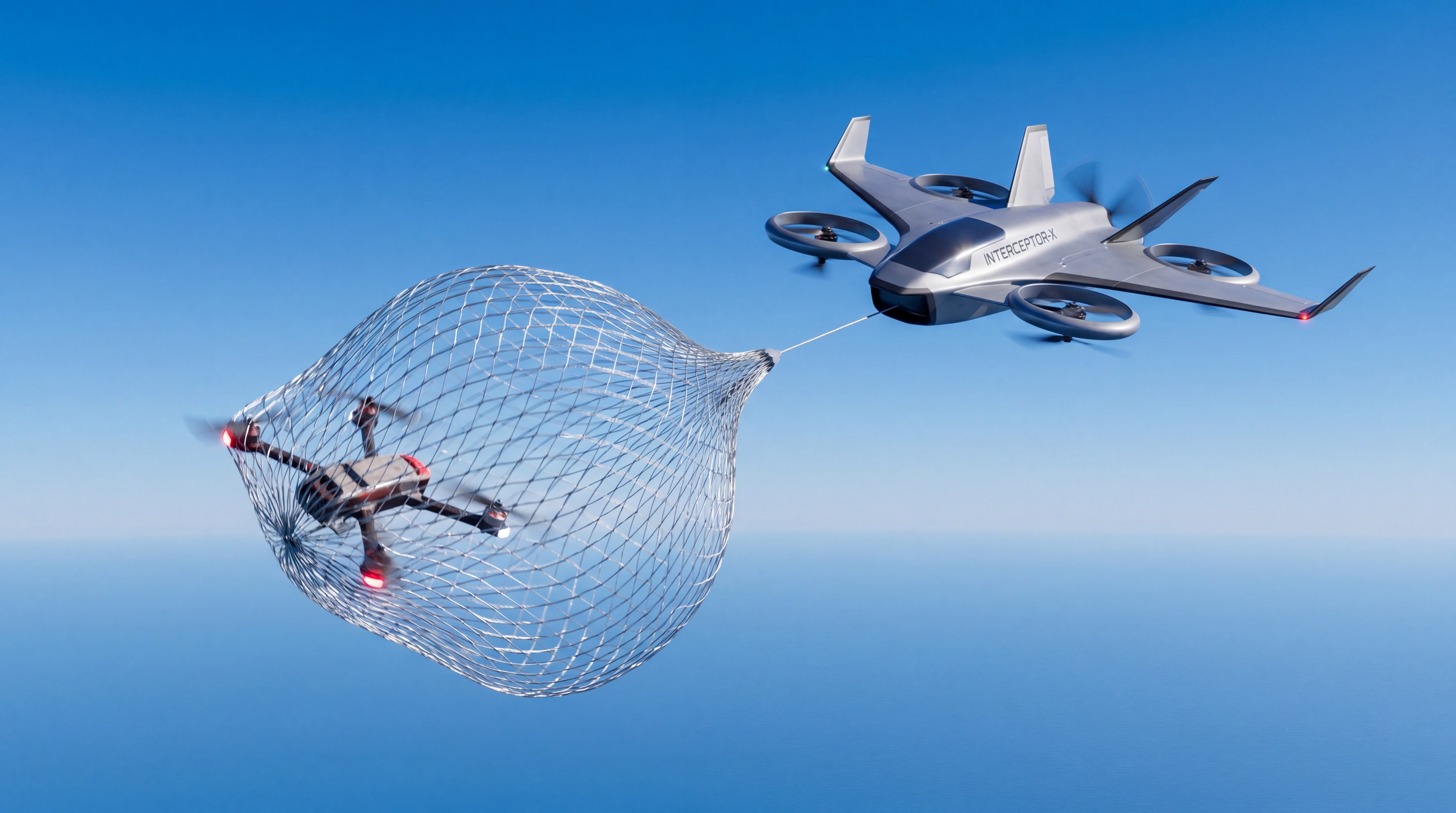
Drone-mounted net projectile systems
But wait, there’s more: mounting a net launcher on a drone extends your reach significantly. This allows you to intercept threats at higher altitudes or further distances from your perimeter, providing a proactive defense layer.
Key Takeaway: Selecting the right delivery method depends on whether you are protecting a stationary point or a wide perimeter.
| Delivery Method | Max Range | Mobility |
|---|---|---|
| Handheld | 30 Meters | High (Personnel) |
| Drone-Mounted | 50 Meters | Very High (Aerial) |
| Tethered | 20 Meters | Low (Fixed) |
You should match the delivery system to the anticipated flight profile of the threats most likely to enter your airspace.
What are the risks of kinetic interception?
The primary risk involves collateral damage from falling debris when a drone is neutralized over populated or sensitive areas. You must consider that any anti-drone action resulting in a crash creates a secondary hazard on the ground. Managing this risk requires careful calculation of the interception point and the potential fall zone.
Managing falling debris and ground safety
You need to establish clear engagement zones where kinetic takedowns are permitted.
- Clear zones for debris.
- Avoidance of crowded areas.
- Automated safety geofencing.
Mitigating risks with tethered capture
Best of all: tethered net systems keep the captured drone attached to your interceptor. This prevents the target from falling onto people or equipment, allowing you to carry the neutralized threat to a safe disposal location.
Key Takeaway: Kinetic responses must be weighed against the risk of secondary damage caused by the falling drone.
| Risk Factor | Level | Mitigation Strategy |
|---|---|---|
| Falling Debris | High | Tethered systems |
| Collateral Damage | High | Geofenced engagement |
| Hardware Loss | Medium | Ruggedized interceptors |
Do intercept drones offer full protection?
No, interceptor drones are only one layer of a defense strategy and must be paired with comprehensive detection sensors. You cannot launch an Anti-drone interceptor if you do not know the exact location and heading of the threat. A successful defense requires a seamless handover from long-range RF detection to short-range kinetic engagement.
The necessity of drone detection hardware
Detection hardware identifies the presence of a drone long before it reaches your restricted area.
- RF spectrum monitoring.
- Radar target tracking.
- Acoustic and optical sensors.
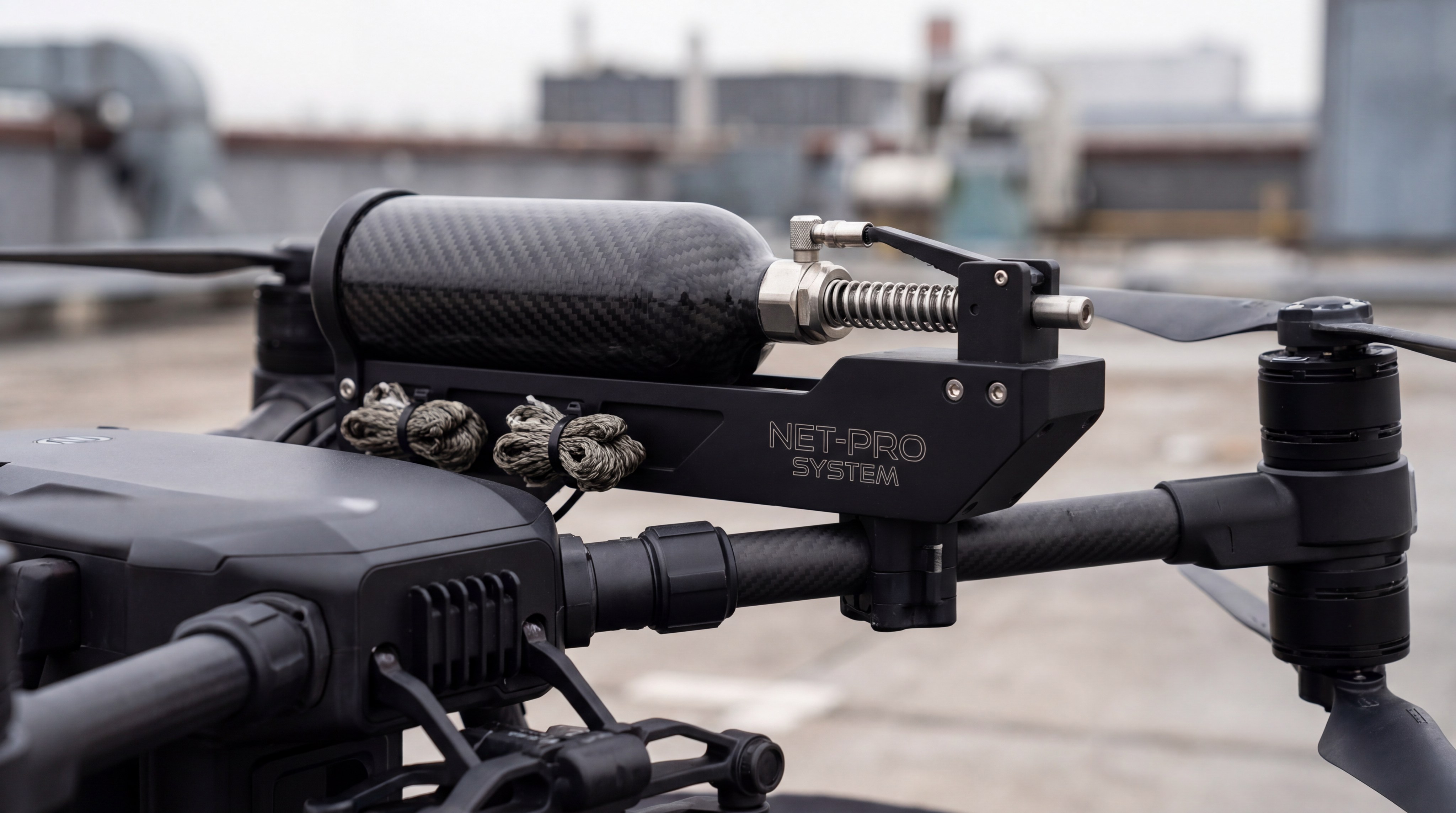
Integrating RF sensors with kinetic response
Look: without real-time data, your interceptor is flying blind. You must ensure your detection and interception systems communicate instantly to guide the drone-on-drone engagement with the highest possible accuracy and speed.
Key Takeaway: Kinetic interceptors are effective only when integrated into a larger ecosystem of sensors and tracking hardware.
| Defense Layer | Function | Timing |
|---|---|---|
| RF Detection | Early Warning | T-Minus 5 Minutes |
| Optical Tracking | Identification | T-Minus 2 Minutes |
| Kinetic Intercept | Neutralization | T-Zero |
The synchronization of these layers ensures that no intruder goes unnoticed or unaddressed.
What limits the reach of net gun systems?
Range is the most significant limitation, as most net projectiles are only effective within a 30-to-50-meter radius. You must fly your anti-drone interceptor very close to the target to ensure a successful entanglement. This proximity requirement makes the maneuverability and speed of your interceptor the most critical factors in the mission.
Understanding proximity and range constraints
You face a high risk of missing the target if the net is fired from too far away.
- Projectile drag and drop.
- Wind interference issues.
- Target evasion maneuvers.
Can a drone pilot evade a net projectile?
Think about it: a skilled pilot can see a net being launched and may attempt to dive or roll away. You need an interceptor that can predict these movements or a net gun that fires with enough velocity to close the gap instantly.
Key Takeaway: Successful net deployment requires getting your interceptor within a tight “kill-box” where the target cannot escape.
| Factor | Limit | Operational Impact |
|---|---|---|
| Effective Range | 50m | Requires close approach |
| Wind Sensitivity | High | Reduces accuracy |
| Reload Time | Slow | Single-shot reliance |
How do sensors improve anti-drone accuracy?
Integrated sensors use real-time data to distinguish targets and guide the interceptor with pinpoint precision. Your Anti-drone platform relies on high-quality amplifier and antenna modules to process incoming signals and maintain a lock on the target. This ensures that the interceptor does not accidentally target a bird or a friendly aircraft during the heat of an engagement.
Role of RF front-ends in target tracking
RF front-ends allow your system to filter out background noise and focus on the specific frequencies used by the target.
- Signal noise reduction.
- Frequency hopping tracking.
- Directional signal finding.
Visual vs. RF data integration for accuracy
The truth is: combining RF data with visual confirmation creates a “fused” tracking model. This redundancy ensures that even if the target stops transmitting a signal, your interceptor can still follow it using its onboard cameras and machine vision.
Key Takeaway: Sensor fusion is the secret to maintaining a lock on agile threats in cluttered or signal-heavy environments.
| Sensor Type | Benefit | Limitation |
|---|---|---|
| RF Scanning | Long-range detection | Vulnerable to silence |
| Optical (EO/IR) | Visual confirmation | Limited by weather |
| LiDAR | Precise distance | High power consumption |
Multi-modal sensor arrays are the backbone of any reliable autonomous interception operation.
Is this a sustainable long-term strategy?
While effective for immediate threat removal, kinetic methods face challenges regarding battery life and the potential for hardware loss. You must view anti-drone kinetic units as high-intensity assets that require regular maintenance and replenishment. The cost of losing an interceptor during a collision must be weighed against the potential cost of allowing a threat to complete its mission.
Battery life constraints of interceptor UAS
High-speed pursuit drains batteries at an accelerated rate compared to standard flight.
- Limited loiter time.
- Rapid power depletion.
- Need for quick-swap stations.
Reusable hardware vs. single-use interceptors
Look: some missions might require a “kamikaze” style interceptor that is not intended to survive the collision. You need to decide if your budget allows for high-end reusable drones or if a fleet of lower-cost expendable units is more sustainable for your security needs.
Key Takeaway: Kinetic C-UAS is best utilized as the final layer of a “defense-in-depth” strategy, triggered only when electronic measures are insufficient.
| Strategy Component | Sustainability | Cost Factor |
|---|---|---|
| Reusable Units | Medium | High Initial Capex |
| Expendable Units | High | Ongoing Opex |
| Maintenance | Continuous | Personnel Costs |
Conclusion
Air-to-air counter drones and net guns represent a critical, physical line of defense in modern airspace security. While these hard-kill methods are highly effective at neutralizing threats, their success depends on a robust infrastructure of detection and high-performance RF components. By layering kinetic responses with sophisticated tracking and signal amplification, facilities can ensure comprehensive protection against unauthorized UAS.
As leaders in RF innovation, we envision a future where autonomous aerial security is the standard for global infrastructure protection. For organizations looking to build or enhance their anti-drone capabilities, CorelixRF provides the foundational RF technology needed for reliable system integration. Contact us today to discuss your project requirements with an expert engineer.
FAQ
Can I use net guns in a city?
Yes, but you must be extremely cautious about where the captured drone and the net will land. In urban environments, tethered systems are preferred to prevent drones from falling into traffic or onto pedestrians.
How do I start a drone interception?
Generally, you begin by detecting the threat through RF or radar sensors before launching your interceptor. Once the target is identified, the interceptor is dispatched to a specific coordinate to begin its pursuit.
Can a drone survive a net?
No, a drone cannot stay airborne once its rotors are entangled by a net projectile. While the physical structure might survive the landing, the flight is terminated immediately upon impact with the mesh.
Do I need a pilot for the interceptor?
Not necessarily, as many modern systems are fully autonomous and use machine vision to track targets. However, having a human-in-the-loop is often required for the final decision to engage a target.
Is this tech expensive?
Yes, kinetic interceptors are high-performance machines that require significant investment compared to standard consumer drones. However, the cost is usually justified by the high value of the assets you are protecting from aerial threats.