
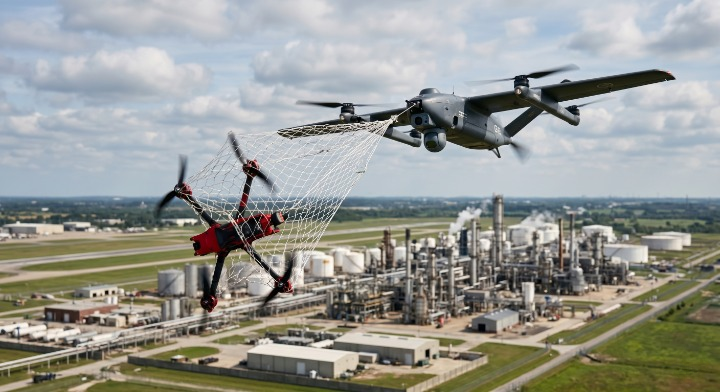
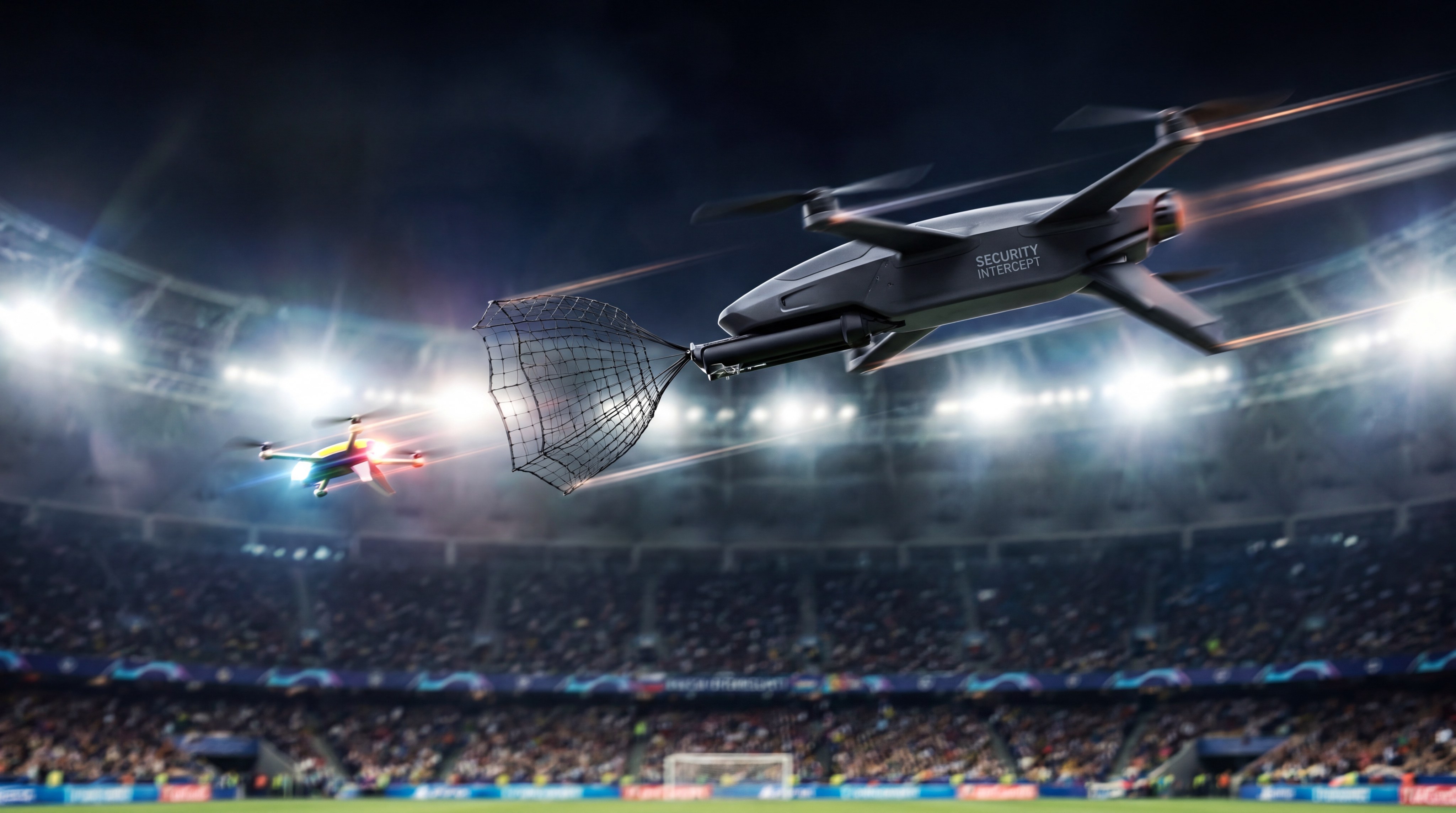
Air to air counter drones and net guns provide the most effective physical solution for neutralizing rogue aerial threats in restricted airspace. Imagine a rogue sUAV hovering over a sensitive chemical refinery, where a single collision could trigger a catastrophic fire or explosion. While ground security is helpless against high-altitude intrusions, the risk of a security breach remains critical for your operations. Implementing a kinetic Anti-drone interception strategy allows you to physically remove threats before they reach their intended target.
How Do Kinetic Interceptors Neutralize Targets?
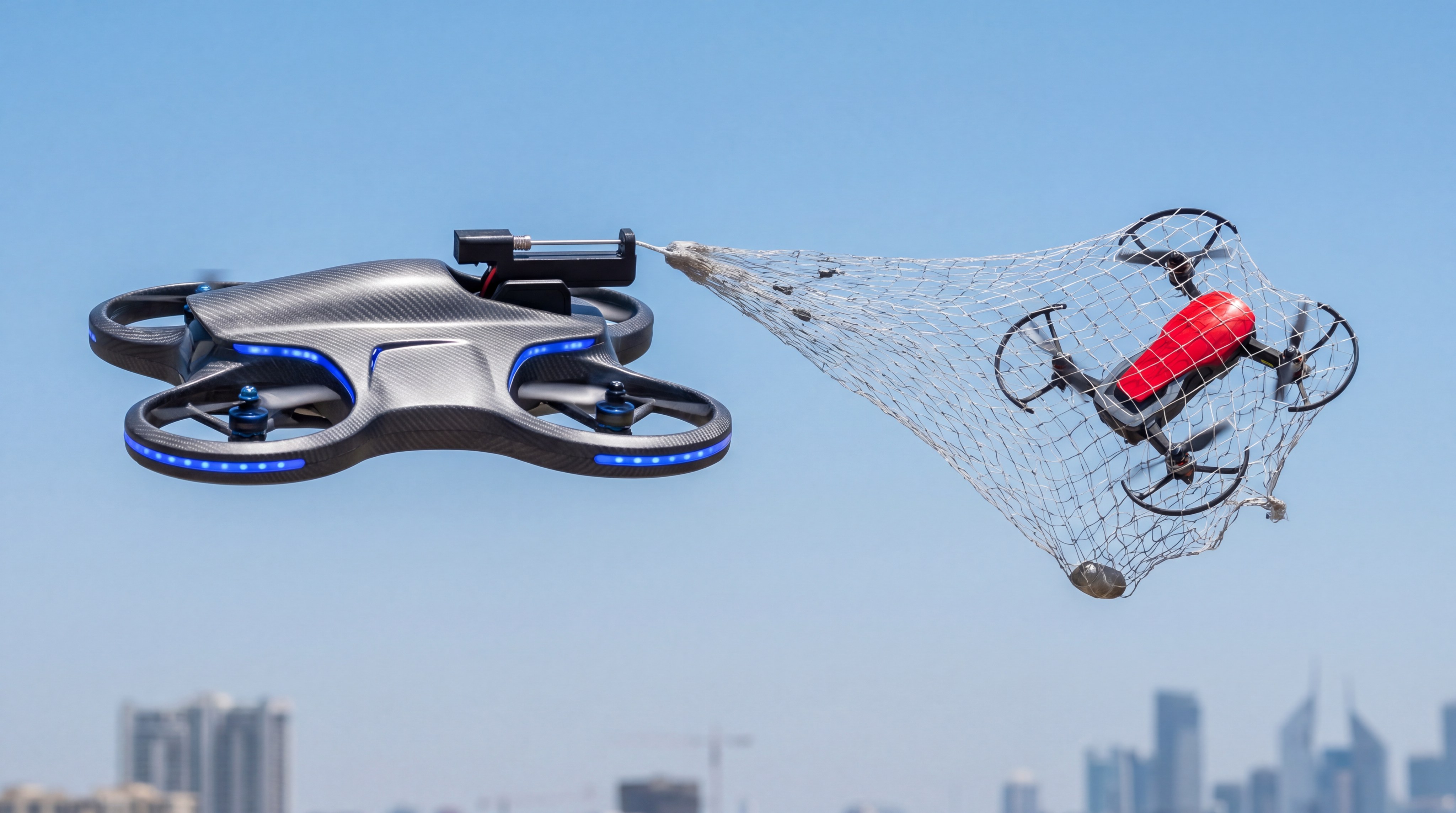
Kinetic interceptors neutralize targets by using physical force to disrupt the flight mechanics of an unauthorized drone. These “hard-kill” systems rely on high-speed impact or mechanical entanglement to ensure the target is immediately grounded. Using an Anti-drone interceptor provides a permanent solution when electronic countermeasures are not feasible.
What defines a hard-kill mechanism?
The best part? Hard-kill mechanisms provide visual confirmation of threat neutralization. Unlike jamming, which might only trigger a “return to home” function, kinetic force stops the aircraft entirely.
- Physical ramming for high-speed destruction.
- Net deployment for propeller entanglement.
- Tethered capture for controlled removal.
Summary of Neutralization Methods
| Method | Mechanism | Primary Result |
|---|---|---|
| Ramming | High-speed impact | Structural destruction |
| Netting | Rotor entanglement | Immediate motor stall |
This table illustrates the mechanical differences between destructive and non-destructive kinetic responses.
Key Takeaway: You gain a reliable physical layer of defense that ensures a rogue drone is mechanically incapable of completing its mission.
Can Interceptor Drones Operate Autonomously?
Yes, modern interceptor drones can utilize machine vision and AI to track and engage unauthorized targets with minimal human intervention. Integrating these autonomous Anti-drone units allows for a much faster response time during critical security breaches. Think about it.
How does autonomous tracking work?
Autonomous systems use onboard sensors to distinguish between moving objects and static obstacles. This reduces the cognitive load on your security personnel during high-stress incidents.
- Real-time target identification.
- Automated flight path optimization.
- Collision avoidance for safety.
Autonomous Capabilities Comparison
| Feature | Manual Interception | Autonomous Interception |
|---|---|---|
| Reaction Time | Dependent on pilot | Near-instantaneous |
| Precision | Variable skill-based | Consistently high |
The transition toward automation significantly lowers the risk of human error during high-speed aerial pursuits.
Key Takeaway: You benefit from a self-sufficient security layer that can react to threats faster than any human operator.
Why Are Net Guns Preferred for Physical Capture?
Net guns are preferred because they entangle the propellers of a drone, causing an immediate loss of lift without necessarily destroying the aircraft’s internal data. This specific Anti-drone method is ideal for forensics and intelligence gathering after an incident. Look:
How do nets disable motors?
The lightweight mesh wraps around the spinning rotors, causing the motors to seize. This mechanical failure is impossible for the rogue pilot to override remotely.
- Propeller entanglement stops flight.
- Nets can be released or tethered.
- Minimal damage to the surrounding area.
Effectiveness of Net Capture
| Aspect | Net Gun System | Performance |
|---|---|---|
| Success Rate | High at close range | ~90% within 30m |
| Evidence Recovery | Excellent | Drone remains intact |
Mechanical entanglement provides a distinct advantage when you need to investigate the origin of a rogue flight.
Key Takeaway: You can safely bring down a threat while preserving the physical evidence needed for law enforcement investigations.
How Do Drone-Mounted Launchers Increase Range?
Drone-mounted launchers increase engagement range by carrying the projectile system directly to the threat’s location in three-dimensional space. By using a mobile Anti-drone platform, you bypass the 30-meter limitation of handheld ground systems. Here is the kicker:
Can these systems track fast targets?
Mobile launchers can match the speed and altitude of the target before firing the net. This ensures a much higher probability of a successful hit during a pursuit.
- Extended engagement radius.
- Vertical interception capability.
- Remote deployment from safe zones.
Range and Deployment Metrics
| Launcher Type | Max Range | Mobility Level |
|---|---|---|
| Handheld Gun | 30 Meters | Static/Ground |
| Drone-Mounted | Flight range + 30m | Full 3D Mobility |
Aerial platforms remove the geographic constraints that often hamper traditional ground-based security teams.
Key Takeaway: You extend your security perimeter into the sky, allowing you to neutralize threats long before they reach your facility.
Where Are Air-to-Air Systems Most Effective?
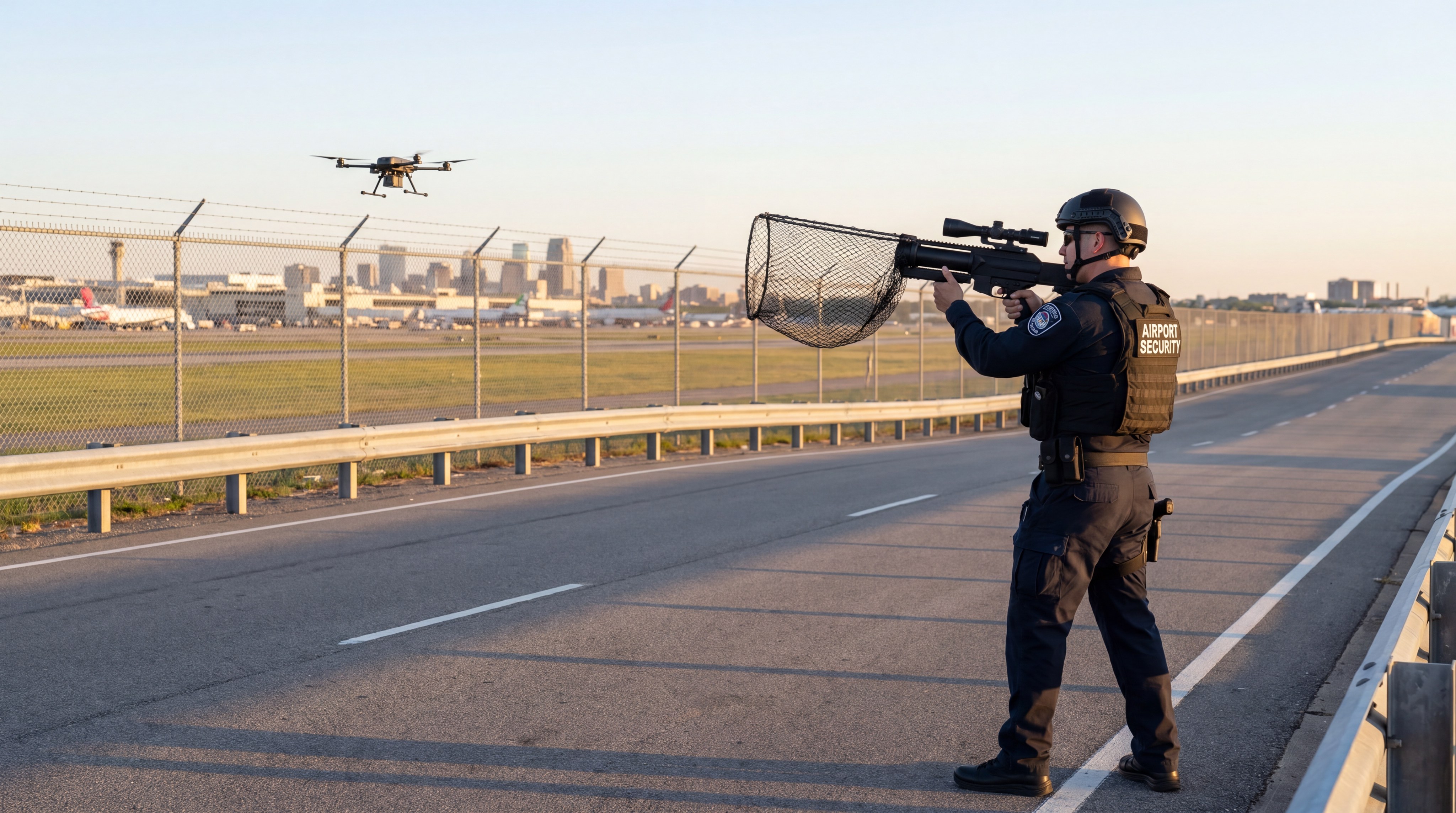
Air-to-air systems are most effective in open areas like airport perimeters, stadiums, or industrial complexes where falling debris poses a manageable risk. These kinetic Anti-drone solutions are specifically designed for environments where radio frequency interference is restricted. Let’s face it:
Is debris a concern for stadiums?
The bottom line? While debris is a risk, a tethered net system can actually carry the neutralized threat away from the crowd to a safe zone.
- Airport runway protection.
- Industrial perimeter security.
- Public event airspace control.
Site Effectiveness Table
| Environment | Suitability | Risk Factor |
|---|---|---|
| Airport | Very High | Flight path safety |
| Stadium | High (with tether) | Crowd safety |
Strategic deployment ensures that kinetic methods are used only where the benefits of neutralization outweigh the risks of falling parts.
Key Takeaway: You provide your facility with a robust defense that works in sensitive areas where jammers might interfere with critical communications.
What Role Does RF Detection Play in Interception?
RF detection provides the telemetry data required to guide an interceptor to the target’s precise coordinates. Without a high-gain Anti-drone antenna array, your interceptor would be flying blind in a vast airspace. In short:
Why is telemetry data essential?
Detection sensors identify the drone’s signature and flight path before the interceptor is even launched. This data ensures the defense drone is positioned for the most efficient capture.
- Early warning of intrusions.
- Accurate target localization.
- Interceptor guidance updates.
Detection Integration Benefits
| Sensor Type | Role in Interception | System Impact |
|---|---|---|
| RF Sensors | Signal identification | Early launch trigger |
| Radar | Position tracking | High engagement accuracy |
Detection hardware acts as the “eyes” of your kinetic system, ensuring every launch is calculated and effective.
Key Takeaway: You maximize your success rate by integrating interception hardware with advanced RF detection for full situational awareness.
Can Net Systems Prevent Damage to Property?
Net systems can prevent damage to property by using parachutes or tethered cables to slow the descent of a captured drone. This Anti-drone approach minimizes the impact force when the neutralized aircraft finally reaches the ground. But there is a catch:
How do tethered systems work?
The best part? After the net fires, a cable remains attached to the interceptor, allowing it to “tow” the target to a pre-defined disposal area.
- Controlled descent of targets.
- Avoidance of sensitive equipment.
- Secondary safety chutes for nets.
Safety Feature Comparison
| Safety Mechanism | Function | Primary Benefit |
|---|---|---|
| Tether | Controlled towing | Precise landing control |
| Parachute | Slowed descent | Reduced impact force |
Property protection is enhanced when kinetic systems incorporate measures to manage the post-interception phase.
Key Takeaway: You reduce the liability risks associated with kinetic countermeasures by controlling exactly where and how a drone lands.
How Does Signal Stability Impact Mission Success?
Signal stability is critical for maintaining a reliable command link between the ground station and the interceptor during high-speed maneuvers. Using a custom Anti-drone RF front-end ensures that telemetry and video feeds remain crystal clear. It gets better:
Why is power amplification needed?
High-power amplifiers prevent signal dropouts when the interceptor moves behind obstacles or reaches its maximum range. This is the only way to ensure the pilot or AI remains in control during the strike.
- Consistent command and control.
- High-definition video for targeting.
- Resistance to environmental noise.
Signal Performance Metrics
| RF Component | Impact on Mission | Failure Risk |
|---|---|---|
| Power Amp | Long-range link stability | Loss of drone control |
| SDR Source | Waveform flexibility | Signal interference |
A robust signal chain is the backbone of any successful aerial interception, providing the reliability needed for mission-critical tasks.
Key Takeaway: You ensure your security team never loses control of the interceptor at the most critical moment of engagement.
Is Machine Vision Necessary for Target Tracking?
Machine vision is necessary because it allows the interceptor to distinguish a rogue drone from a bird or other natural objects in the sky. Integrating vision into your Anti-drone strategy prevents accidental attacks on wildlife and reduces false alarms. Think about it.
How does AI filter targets?
Onboard processors analyze flight patterns and shapes in real-time. Birds flap their wings, while drones maintain a rigid structure and specific heat signature.
- Reduces false positive strikes.
- Improves tracking in low light.
- Enables precision net firing.
Vision System Comparison
| Technology | Benefit | Use Case |
|---|---|---|
| Optical Camera | Visual verification | Daytime operations |
| Thermal Imaging | Heat signature tracking | Nighttime security |
Advanced vision systems provide the intelligence required to make split-second decisions in a crowded airspace.
Key Takeaway: You improve the accuracy of your security response while protecting the local ecosystem from unnecessary interference.
Why Is a Layered Defense Architecture Essential?
A layered defense is essential because no single countermeasure is 100% effective against every type of drone threat. Combining detection, electronic jamming, and kinetic Anti-drone systems creates a comprehensive shield for your facility. What does this mean for you?
How do layers interact?
The first layer detects the threat, the second attempts a non-kinetic jam, and the third uses a net gun for final neutralization if the drone persists.
- Detection for early warning.
- Electronic mitigation for soft-kill.
- Kinetic interception for hard-kill.
Layered Defense Structure
| Security Layer | Technology Used | Goal |
|---|---|---|
| Outer Perimeter | RF Sensors/Radar | Identification |
| Middle Perimeter | Jammers/Spoofers | Signal disruption |
| Inner Perimeter | Interceptors/Nets | Physical removal |
A multi-tiered approach ensures that even the most advanced or autonomous drones are stopped before they breach your core zone.
Key Takeaway: You achieve maximum security by utilizing a tiered response that handles everything from simple hobbyist drones to advanced threats.
*
Air-to-air counter drones and net guns offer a decisive, physical end-point for any airspace security strategy. By addressing the limitations of ground-based measures and electronic jamming, these kinetic solutions solve the problem of unauthorized surveillance, property damage, and safety risks. Our vision is to provide the critical infrastructure and high-value sites with the physical tools necessary to reclaim their airspace. To secure your facility and implement a world-class kinetic defense system, contact us today to discuss your specific RF and interception requirements.
*
Frequently Asked Questions
- Can I use a net gun for any unauthorized drone?
Yes, provided the drone is within the system’s effective range and you follow local airspace regulations. Kinetic force is often a final option after detection and warning. - What’s the best way to handle falling debris after an interception?
Use a tethered net system or a drone equipped with a parachute. This ensures the disabled aircraft is either carried to a safe landing zone or its fall is significantly slowed. - Can I deploy an interceptor drone without a detection system?
It is not recommended because the interceptor needs telemetry data to locate the target. Without detection, your security team will lack the lead time to respond effectively. - How do I know if kinetic countermeasures are legal for my site?
You must check your local and federal laws regarding aircraft interference. Many private facilities use net guns because they are generally classified as non-firearms. - Can I integrate these systems with my current security software?
Yes, most professional interceptor platforms are designed with open APIs. This allows them to receive data directly from your existing RF sensors and command centers.