
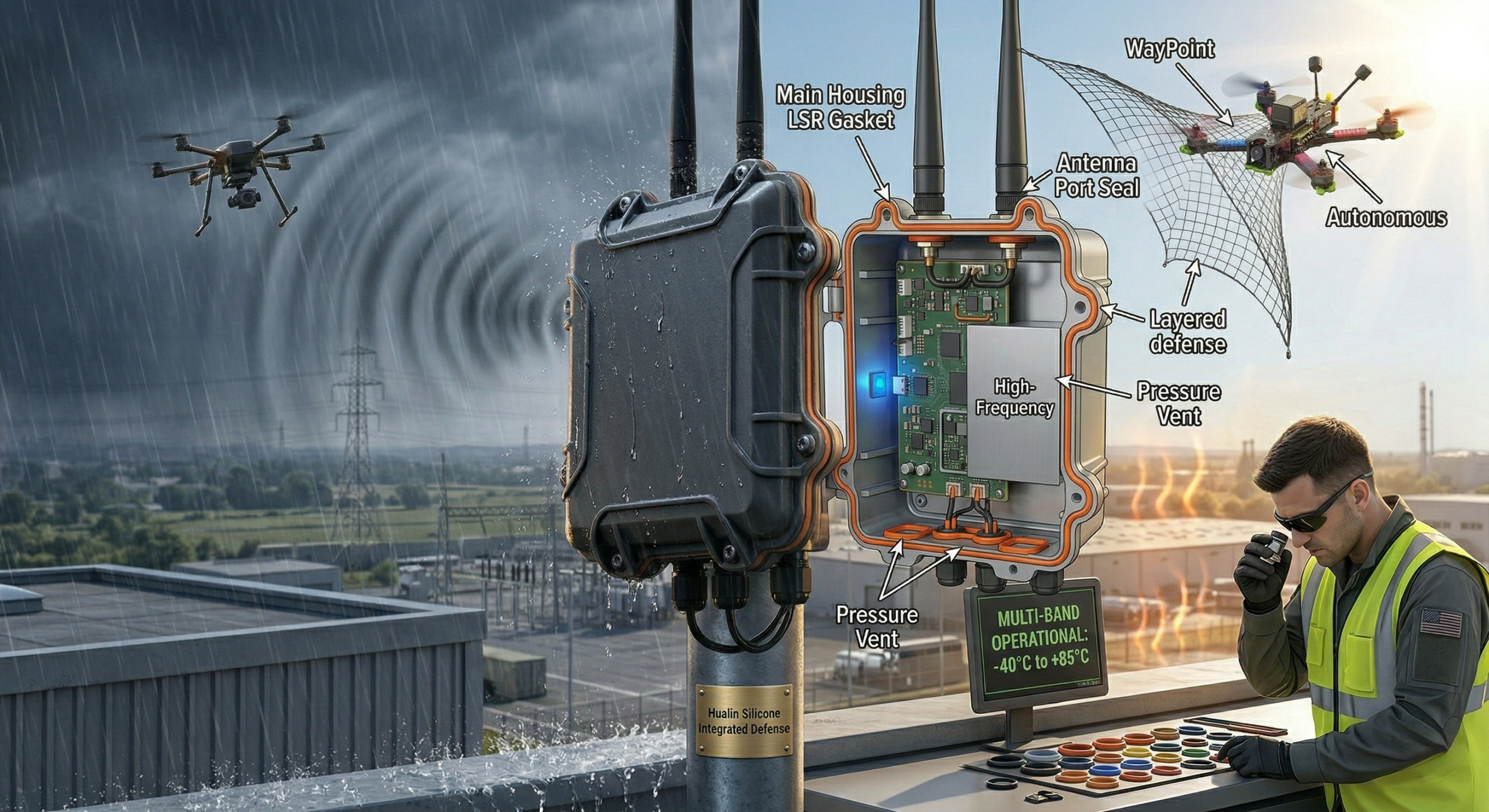
A waterproof outdoor anti drone jammer is a specialized electronic countermeasure device designed to disrupt unauthorized unmanned aerial vehicle (UAV) signals while operating reliably in harsh environmental conditions like rain, humidity, or extreme dust. Protecting your airspace from prying eyes or physical threats becomes a nightmare when the weather turns sour. Standard equipment often fails the moment a storm hits, leaving your facility vulnerable during the most critical times. Here is the deal: our advanced anti drone jammer systems utilize high-grade silicone sealing technology to ensure 24/7 operational readiness regardless of the climate. By integrating precision-engineered waterproof components, these systems provide a robust shield that maintains signal integrity and hardware longevity even in the most demanding outdoor deployments.
1. Why do you need a waterproof outdoor anti drone jammer?
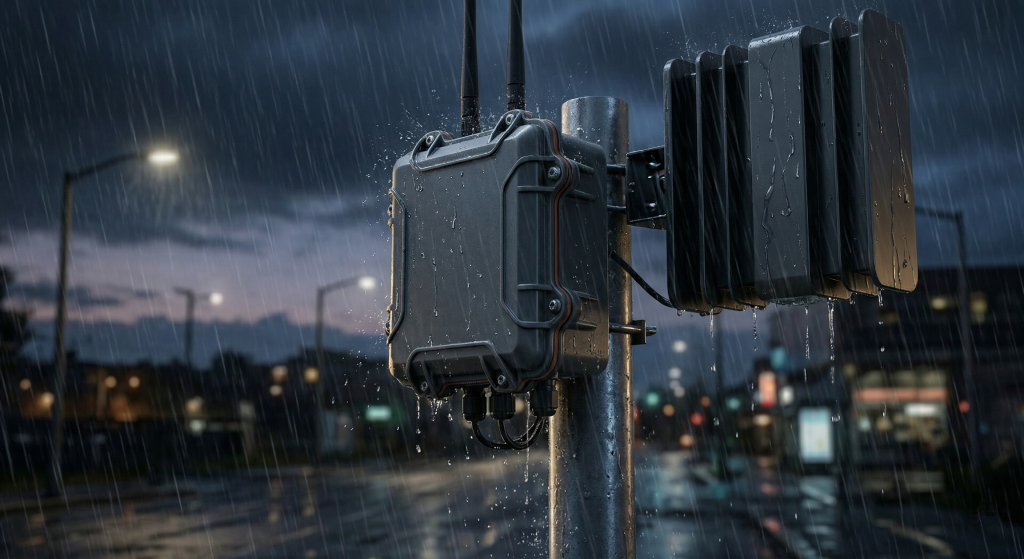
An anti drone jammer is essential because modern security threats do not wait for clear skies, and moisture is the leading cause of electronic failure in outdoor defense systems. Standard jammers often lack the specialized ingress protection required to survive heavy downpours or coastal salt spray.
● Environmental Resilience
● Continuous Airspace Protection
● Long-term Hardware Reliability
How does moisture affect signal stability?
Does water interfere with the frequency output of your defense grid? Believe it or not, unprotected circuits can experience impedance shifts when humidity levels rise, leading to signal drift or total short circuits.
- Corrosion of internal copper traces
- Thermal expansion issues in sealed units
- Seal degradation from UV and rain
What’s the real story? Without proper silicone gaskets and high-performance seals, your expensive tech becomes a paperweight after the first rainy season.
Key Takeaway: Investing in waterproofed units ensures that your security perimeter remains impenetrable during weather events that would normally ground or disable inferior electronic countermeasures.
| Feature | Standard Jammer | Waterproof Anti Drone Jammer |
| Ingress Protection | IP54 or lower | IP66 to IP68 |
| Seal Material | Generic Rubber | High-grade Silicone / LSR |
| Operating Temp | 0°C to 40°C | -40°C to +85°C |
2. How does the waterproof technology in an anti drone jammer work?
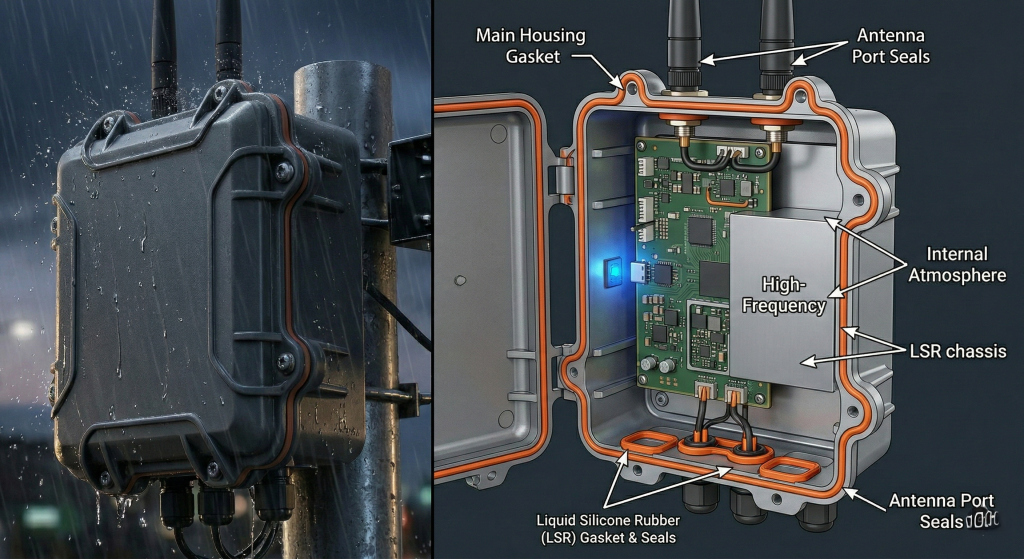
The primary mechanism involves using Liquid Silicone Rubber (LSR) and precision-engineered gaskets to create an airtight vacuum within the anti drone jammer chassis. This prevents any water molecules from reaching the sensitive high-frequency PCB assemblies and power modules.
● LSR Injection Molding Seals
● Overmolded Connectors
● Hydrophobic Mesh Vents
What role does silicone play in waterproofing?
Why is silicone the gold standard for outdoor electronic protection? This is where it gets interesting: silicone maintains its elasticity and sealing properties across extreme temperature fluctuations, unlike standard plastic.
- Excellent UV resistance for outdoor use
- Superior compression set for long-term seals
- Biocompatible and chemically inert properties
You might be wondering if these seals require frequent replacement. Because we use advanced , the durability of the seal often outlasts the electronics themselves.
Key Takeaway: Multi-layered sealing strategies using silicone ensure that the internal atmosphere of the jammer remains dry and cool, preventing catastrophic failure.
| Component | Material Used | Purpose |
| Main Housing Gasket | Liquid Silicone Rubber | Primary water barrier |
| Antenna Ports | Overmolded TPU/Silicone | Prevents leaks at cable junctions |
| Pressure Vent | PTFE Membrane | Equalizes pressure without letting water in |
3. What are the key features of an effective anti drone jammer?
An effective anti drone jammer must possess multi-band disruption capabilities, high power output for extended range, and a ruggedized exterior that facilitates heat dissipation while remaining fully waterproof. High-performance anti drone jammer units balance these competing needs through clever mechanical design.
● Multi-Frequency Coverage (GNSS, 2.4G, 5.8G)
● Directional vs. Omnidirectional Antennas
● Active Thermal Management Systems
Why is frequency range so critical?
Can a jammer stop all drones with just one button? Ready for the good part? Modern drones use frequency-hopping technology, requiring a jammer that can cover a wide spectrum simultaneously to be effective.
- GPS/GLONASS/Beidou satellite disruption
- Commercial 2.4GHz and 5.8GHz control links
- Custom FPV and industrial drone frequencies
But here’s the kicker: if the device overheats because the waterproof casing blocks airflow, the signal strength will drop. We solve this by using thermally conductive silicone pads to pull heat away from the chips.
Key Takeaway: A truly professional jammer provides wide-spectrum coverage without sacrificing the physical integrity of its waterproof housing during peak operation.
| Feature | Importance | Benefit for B2B Users |
| Smart Cooling | High | Prevents hardware throttling |
| Modular Design | Medium | Easy repairs and upgrades |
| Remote Monitoring | High | Control the system from a secure HQ |
4. Where should you install an anti drone jammer for maximum efficiency?
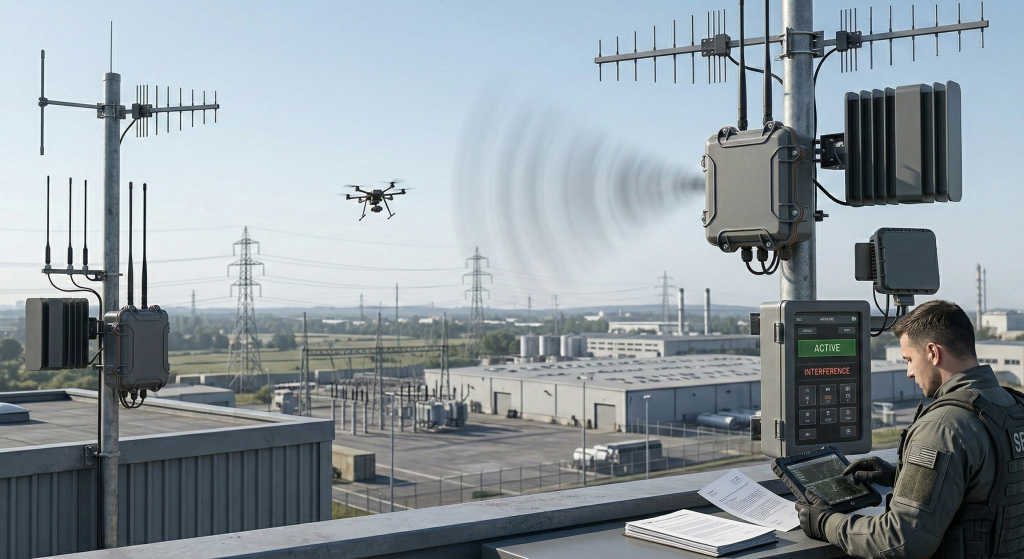
You should install an anti drone jammer at high-elevation points with a clear line of sight to the horizon to ensure that signal disruption occurs before a drone reaches your restricted perimeter. Placement is just as vital as the technology itself.
● Critical Infrastructure Rooftops
● Military and Correctional Facility Borders
● Public Event Stadium Perimeters
How do obstacles affect jammer performance?
Will a concrete wall block your signal? The deal is, RF signals behave much like light; they can be reflected or absorbed by dense materials, creating “dead zones” in your security.
- Avoid placement behind metallic structures
- Utilize multiple units for 360-degree coverage
- Mount jammers above the height of local foliage
You might be wondering how to protect the unit from lightning or wind. Our mounting solutions include vibration-dampening silicone mounts that keep the equipment stable during high-wind storms.
Key Takeaway: Strategic elevation and uninhibited line-of-sight are the two most important factors for ensuring your jammer provides the advertised protective radius.
| Installation Site | Recommended Height | Coverage Goal |
| Industrial Plant | 15 – 20 meters | Full facility perimeter |
| Government Building | Rooftop edge | Restricted airspace entry points |
| Open Field/Border | 10 meter mast | Early detection and long-range jamming |
5. Can an anti drone jammer operate in extreme temperatures?
Yes, a high-quality anti drone jammer can operate in temperatures ranging from -40°C to +85°C, provided it uses industrial-grade internal components and specialized silicone thermal interfaces. This allows for deployment in both Arctic and Desert environments.
● Industrial Thermal Management
● Extreme Cold Start Capability
● UV-Stabilized External Components
What happens to electronics in extreme heat?
Will your jammer melt in the desert sun? The truth is, without proper heat dissipation, internal temperatures can exceed 100°C, causing the frequency oscillators to fail or the motherboard to warp.
- High-efficiency aluminum heat sinks
- Silicone-based thermal grease for heat transfer
- Ventilation systems with waterproof filters
This is where it gets interesting: the same silicone that keeps water out can also be engineered to conduct heat out of the device. This dual-purpose design is a hallmark of corelixrf precision engineering.
Key Takeaway: Proper thermal engineering ensures that your drone defense remains active even when the sun is beating down or the frost is setting in.
| Temperature Range | Potential Issue | Mitigation Strategy |
| -40°C to 0°C | Component brittleness | Low-temp silicone & heaters |
| 40°C to 85°C | Thermal throttling | Advanced heat sinks & LSR seals |
| Rapid Fluctuations | Seal expansion/contraction | High-elasticity silicone gaskets |
6. Is it legal to use an anti drone jammer for your business?
The legality of an anti drone jammer depends entirely on your local jurisdiction and the specific licensing you hold as a private or government entity. In many regions, unauthorized use of jamming equipment is strictly regulated by telecommunications authorities.
● Local Radio Frequency Regulations
● Government vs. Private Sector Permissions
● Signal Interference Liabilities
Who can legally operate drone jammers?
Are you allowed to protect your own backyard? Here’s the deal: while the technology is readily available, many countries restrict its use to military, police, or critical infrastructure operators to prevent interference with civilian communications.
- FCC (USA) and CE (Europe) compliance
- Specialized permits for prison security
- Emergency use cases for public safety
You might be wondering how to stay compliant while still being protected. Many organizations opt for “detection-first” systems that only activate the jammer when a verified threat is identified.
Key Takeaway: Always consult with legal counsel and local radio frequency regulators before deploying active jamming technology to avoid heavy fines or legal action.
| User Type | Typical Legal Status | Requirements |
| Military/Police | Fully Authorized | Standard operational procedure |
| Critical Infrastructure | Restricted/Permitted | Government-issued license |
| Private Business | Highly Restricted | Case-by-case authorizatio |
7. How do you maintain an outdoor anti drone jammer?
To maintain an anti drone jammer, you must conduct regular inspections of the external seals, clear any debris from the antenna ports, and perform software updates to ensure the device recognizes the latest drone communication protocols. Consistent care extends the lifespan of your investment.
● Quarterly Seal Integrity Checks
● Firmware and Protocol Updates
● Hardware Physical Cleaning
How do you check if the waterproofing is still intact?
Does the seal last forever? Ready for the good part? While silicone is incredibly durable, environmental pollutants and salt can eventually build up on the surface, potentially compromising the “breathability” of pressure vents.
- Visual inspection for cracks in gaskets
- Cleaning salt spray from connectors
- Checking the status of internal humidity sensors
What’s the real story? A tiny crack in a low-quality rubber seal can lead to total system failure within weeks. This is why our LSR technology is so vital for long-term peace of mind.
Key Takeaway: A proactive maintenance schedule prevents small environmental issues from turning into expensive hardware replacements.
| Task | Frequency | Objective |
| Visual Seal Inspection | Every 3 Months | Identify UV damage or cracks |
| Signal Range Test | Monthly | Ensure power output is optimal |
| Connector Cleaning | Bi-Annually | Prevent corrosion at port sit |
8. What is the difference between portable and fixed anti drone jammers?
The main difference lies in the power output and the environmental protection level; fixed anti drone jammer units are typically much more powerful and feature superior waterproofing for permanent outdoor installation. Portable units favor weight reduction over extreme ruggedness.
● Fixed Installation Power (24/7)
● Portable Deployment Speed
● Battery Life vs. Grid Connection
When should you choose a fixed system?
Is portability always better? But here’s the kicker: if you need to protect a large industrial site, a portable “gun-style” jammer is impractical for constant coverage and will likely fail if left out in the rain.
- Fixed units offer higher wattage and range
- Portable units are best for VIP protection
- Fixed systems integrate into larger security grids
You might be wondering if you can combine both. Many high-security sites use fixed jammers for perimeter defense and portable units for localized “chase” scenarios.
Key Takeaway: Assess your needs—choose fixed for permanent perimeter defense and portable for reactive, on-the-go security tasks.
| Feature | Fixed System | Portable Jammer |
| Range | 2km – 5km+ | 500m – 1.5km |
| Power Source | AC Mains / Solar | Rechargeable Battery |
| Weatherproofing | Extreme (IP67) | Moderate (IP54) |
9. Can modern drones bypass an anti drone jammer?
While basic drones are easily stopped, some advanced military-grade or high-end industrial drones use autonomous flight paths (dead reckoning) that do not rely on GPS or remote control signals, making a standard anti drone jammer less effective against them.
● Autonomous Waypoint Navigation
● Frequency Hopping Technology
● Optical and AI Guidance
How do you counter autonomous drones?
What if the drone doesn’t need a signal to fly? This is where it gets interesting: you need a “layered” defense that includes physical net catchers or high-energy lasers for drones that ignore RF interference.
- GPS spoofing vs. standard jamming
- Detection systems like Radar and LIDAR
- AI-based visual tracking for target lock
Ready for the good part? Even autonomous drones often need a signal for “return to home” functions, meaning a jammer can still create significant confusion for the aircraft’s logic.
Key Takeaway: Stay ahead of drone tech by using multi-layered defense systems that combine RF jamming with optical detection and physical countermeasures.
| Drone Type | Vulnerability | Best Countermeasure |
| Commercial (DJI, etc.) | Very High | Standard RF Jamming |
| FPV Racing Drones | Moderate | Wideband Analog Jamming |
| Autonomous / Waypoint | Low | GPS Spoofing / Physical Net |
10. Why is silicone the best material for jammer enclosures?
Silicone is the superior material for anti drone jammer enclosures because it provides a perfect balance of environmental sealing, vibration dampening, and extreme temperature resistance that traditional rubber or plastic cannot match. It is the invisible hero of high-tech defense.
● Superior Compression Set
● UV and Ozone Resistance
● High Dielectric Strength
How does silicone improve the lifespan of your device?
Does the material really make that much of a difference? Believe it or not, standard rubber gaskets will dry out and crack within 12 months of direct sun exposure, whereas silicone remains pliable for a decade.
- Prevents dust ingress in desert zones
- Absorbs mechanical shocks from nearby equipment
- Resists mold and bacteria in tropical climates
You might be wondering if silicone adds a lot of cost. While the material is premium, the reduction in maintenance and replacement costs makes it a much smarter financial choice for B2B operations.
Key Takeaway: Choosing silicone-sealed equipment is the single most effective way to ensure your drone defense system survives the rigors of outdoor deployment.
| Property | Silicone | Standard Rubber |
| UV Stability | Excellent | Poor (Cracks easily) |
| Temp Range | -60 to 230°C | -20 to 80°C |
| Water Resistance | Hydrophobic | Absorptive over time |
Protecting your airspace is a multi-faceted challenge that requires the right blend of electronic sophistication and physical ruggedness. We have explored how waterproof outdoor jammers provide the reliability needed for 24/7 security, the critical role of silicone in maintaining system integrity, and the strategic importance of placement and legality. By choosing a solution that prioritizes material science alongside signal power, you ensure your facility remains a “no-fly zone” regardless of the weather. If you are ready to secure your perimeter with the most durable tech on the market, contact us today to find the perfect fit for your needs. We are committed to pioneering the future of silicone-integrated defense solutions to keep your assets safe.
FAQs
Q1: Can I install these systems myself?
Certainly, but it is not recommended for high-security environments. While the hardware is straightforward, professional calibration ensures you don’t have gaps in your signal coverage or legal issues with local frequency laws.
Q2: What’s the best way to clean a jammer?
Always use a damp cloth with mild soap for the exterior. Never use high-pressure water jets directly on seals or vents, as this could force moisture past the protective membranes and damage the internal circuits.
Q3: How do I know if the jammer is actually working?
Check your monitoring software for power output levels. Most professional units include internal sensors that alert you if the signal strength drops or if an internal seal has been breached by moisture.
Q4: Can I use it to stop neighbor’s drones?
No, using jamming equipment in residential areas is typically illegal and highly dangerous. Jamming can interfere with emergency services, Wi-Fi, and legitimate aircraft communications in your neighborhood.
Q5: How do I know if my unit needs new seals?
Perform a visual inspection every six months. If you see any cracking, hardening, or discoloration in the silicone gaskets, it is time to replace them to maintain the IP-rated waterproof integrity.
Outdoor C-UAS reliability review
Treat outdoor C-UAS reliability as an RF system and enclosure review
Outdoor C-UAS RF systems need more than weatherproof wording. Buyers should review sealing, cooling, connector protection, antenna/load matching, thermal behavior, maintenance records and delivery documentation.
Authorization scope, operating environment, documentation owner, procurement policy and review limits.
RF front-end platform, amplifier band/power class, antenna/load matching, thermal design and protection behavior.
RFQ checklist, FAT records, delivery documentation, case profiles and engineering review notes for approval.