
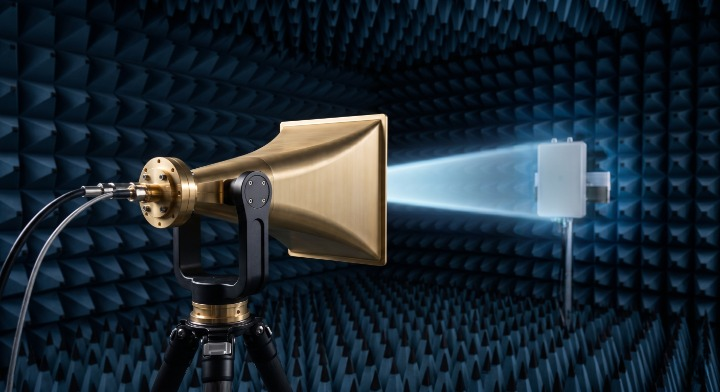
Standard Gain Horn Antennas are precision RF components designed to provide a predictable and constant level of gain across specific microwave and millimeter-wave frequency bands.
You are likely facing a major headache in your microwave lab right now. Inconsistent signal measurements and high return loss are stalling your 5G or aerospace validation phases. Relying on uncalibrated components risks data accuracy and increases the potential for total system failure during integration. Standard Gain Horn Antennas offer the high-efficiency reference you need for reliable directional signal testing.
What Exactly Are Standard Gain Horn Antennas?
Standard Gain Horn Antennas are specialized tools used as measurement standards to calibrate other antennas and provide precision gain data. Unlike general-purpose models, these platforms are precision-machined to serve as a measurement standard in laboratory and field environments.
How are they built for precision?
The engineering behind these antennas focuses on mathematical optimization of the horn’s geometry. This ensures that the gain remains stable, typically within a very tight tolerance of ±0.1 dB across the band.
Why is their shape important?
The “horn” shape transitions energy from a waveguide to free space with minimal reflection. Look at this: the smooth transition is what allows for efficiencies often exceeding 95% in high-end models.
- Stable Gain: Typically ±0.1 dB tolerance.
- High Efficiency: Often greater than 95%.
- Rugged Build: Usually made from Aluminum or Brass.
Key Takeaway: The physical shape and material quality of an SGHA define its ability to serve as a reliable gold standard for RF measurements.
| Feature | Specification | Impact |
|---|---|---|
| Gain Stability | ±0.1 dB | Consistent calibration |
| Design Geometry | Mathematical Horn | Impedance matching |
| Manufacturing | Precision Machining | Reduced errors |
This data highlights how the intrinsic stability of the horn’s physical design translates directly into the reliability of your test results.
How Do Standard Gain Horn Antennas Function?
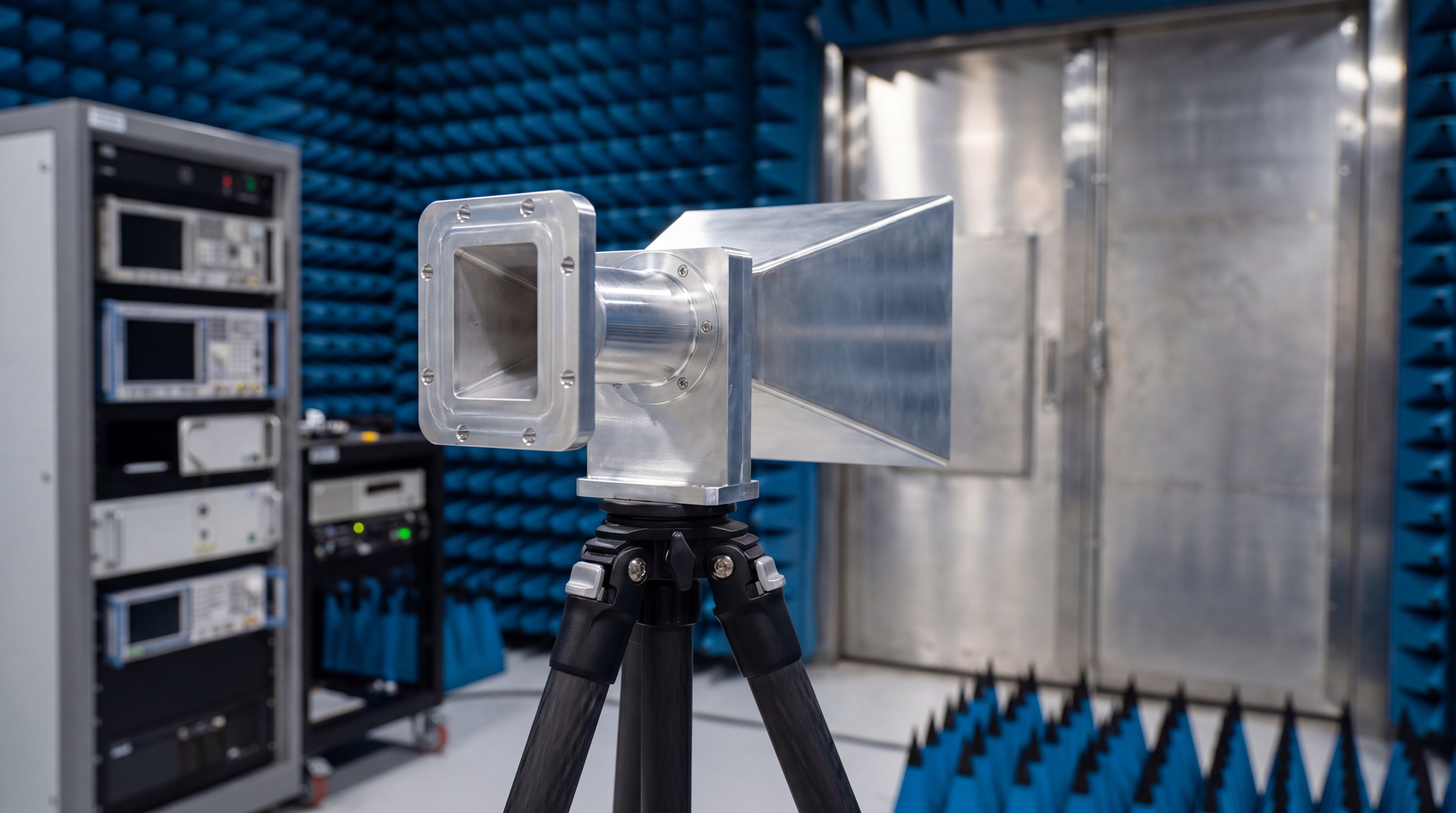
Standard Gain Horn Antennas work by flaring a waveguide to match its impedance to free space, allowing for efficient signal radiation. This flaring action reduces the mismatch that typically causes signal bounce-back in a standard open waveguide.
What is the role of flare geometry?
The angle and length of the flare determine the antenna’s beamwidth and directivity. Think about it: a longer, more gradual flare results in a narrower beam, which is perfect for targeting specific points in a test range.
Does it improve signal focus?
Yes, the flaring provides the high directivity needed for radar and point-to-point communication. It allows you to concentrate RF energy into a tight beam, minimizing interference from surrounding objects.
- Focused Energy: High directivity for precision.
- Impedance Matching: Smooth waveguide-to-air transition.
- Minimal Loss: Low internal signal dissipation.
Key Takeaway: Flare geometry is the primary mechanism that converts guided waves into focused, radiated energy with minimal reflection.
| Mechanism | Purpose | Outcome |
|---|---|---|
| Waveguide Flaring | Impedance Matching | Low Reflection |
| Flare Length | Beam Sharpening | High Directivity |
| Aperture Size | Wavefront Control | Gain Stability |
The relationship between the physical flare and the radiated beamwidth is the most critical factor in achieving repeatable gain metrics.
Which Frequencies Do These Antennas Cover?
Standard Gain Horn Antennas cover a massive spectrum ranging from 1 GHz to well over 110 GHz to suit various RF testing needs. They are categorized by standard waveguide sizes, ensuring they integrate perfectly into existing systems.
Can they handle 5G millimeter-wave?
They are the primary tools for modern 5G validation and satellite communication in the Ka and W-bands. You will find models specifically designed for the 26.5 GHz to 110 GHz range to meet high-frequency research demands.
Are they used for low-frequency radar?
In the 1 GHz to 18 GHz range, these antennas are standard for traditional radar testing and electronic warfare simulations. Here is the deal: while they are larger at these frequencies, their accuracy remains unmatched for long-range calibration.
- S-Band: 2.2 to 3.3 GHz for radar.
- Ka-Band: 26.5 to 40 GHz for 5G.
- W-Band: 75 to 110 GHz for mmWave.
Key Takeaway: Wide frequency coverage allows these antennas to serve across diverse sectors, from legacy radar to next-generation satellite links.
| Frequency Band | Range | Common Industry |
|---|---|---|
| Low Frequency | 1 – 18 GHz | Aerospace/Defense |
| Mid Frequency | 18 – 40 GHz | 5G/SATCOM |
| High Frequency | 40 – 110+ GHz | mmWave Research |
Frequency segmentation ensures that each antenna is optimized for the specific physical constraints of its operating wavelength.
What Are Key Features of Standard Gain Horn Antennas?
Standard Gain Horn Antennas are characterized by low VSWR, high efficiency, and extremely stable gain tolerances. These features ensure that the antenna itself does not introduce variables into your measurement environment.
Why does VSWR matter for testing?
A low Voltage Standing Wave Ratio (VSWR), usually under 1.5:1, indicates that very little signal is reflected back to the source. Why does this matter? It protects your sensitive directional antenna equipment and ensures maximum power delivery.
What materials provide the best durability?
Lightweight aluminum is standard for most lab environments because it is easy to handle and mount. However, brass is often preferred for high-power applications due to its thermal stability and structural rigidity.
- Low VSWR: Typically < 1.5:1.
- Linear Polarization: Standard for most SGHAs.
- Environmental Coating: Protection for outdoor use.
Key Takeaway: High efficiency and low reflection are the hallmarks of a quality antenna that provides reliable, error-free data.
| Metric | Threshold | Benefit |
|---|---|---|
| VSWR | < 1.5:1 | System health |
| Efficiency | > 90% | Signal integrity |
| Gain Range | 10 – 25 dBi | Scalable testing |
Maintaining a low VSWR is the most effective way to ensure that your measured data reflects the performance of the device under test.
How to Select the Right Horn Antenna?
Selecting Standard Gain Horn Antennas requires matching the specific frequency band, desired gain level, and waveguide interface to your system requirements. You should always consider both current project needs and potential future expansions.
Should you choose a custom antenna?
In some cases, a custom antenna solution is necessary if off-the-shelf models do not meet your specific gain or mounting constraints. Custom designs can optimize the aperture size for unique anechoic chamber layouts.
How does gain affect your choice?
Higher gain antennas have narrower beamwidths, which require more precise alignment but offer longer range. Lower gain models provide a wider “view,” making them more forgiving during initial setup and alignment phases.
- Frequency Match: Must align with system bandwidth.
- Gain Requirement: 10, 15, 20, or 25 dBi typical.
- Interface Type: Waveguide, N-Type, or SMA.
Key Takeaway: Successful selection hinges on balancing the required signal focus with the physical interface of your existing RF hardware.
| Factor | Detail | Importance |
|---|---|---|
| Gain Level | 10 to 25 dBi | Defines beamwidth |
| Connector | Waveguide/SMA | Interface compatibility |
| Customization | Aperture/Flare | Project-specific needs |
Evaluating these factors early in the procurement process prevents integration delays and ensures the antenna meets all performance benchmarks.
What Waveguide Accessories Are Required?
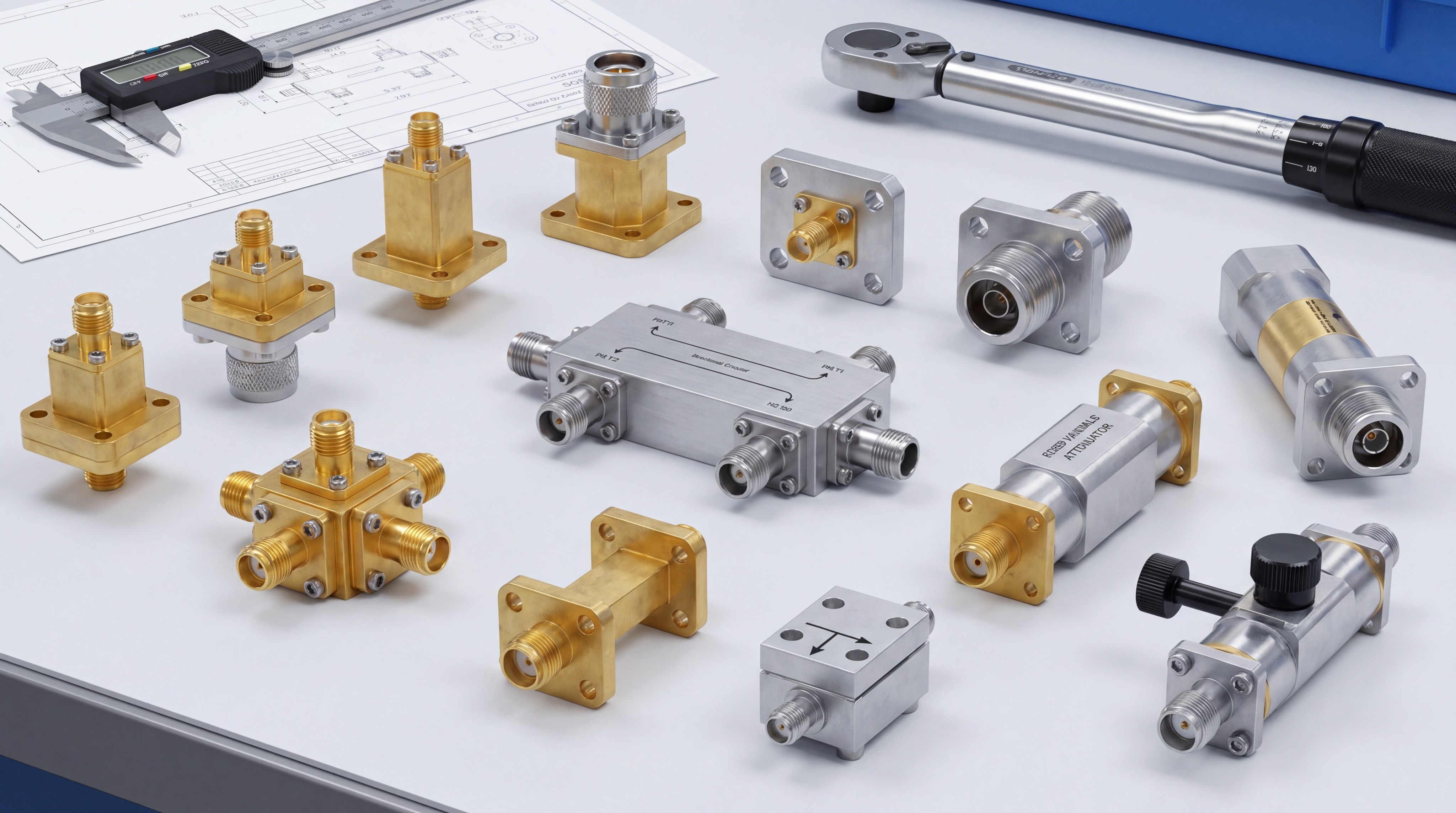
Essential accessories for Standard Gain Horn Antennas include waveguide-to-coaxial adapters and precision-machined flanges for secure connections. These components bridge the gap between different types of RF hardware.
How do adapters help integration?
Waveguide-to-coaxial adapters allow you to connect your horn antenna to standard cables like SMA or N-type. This is the best part: you can easily link your antenna to modern spectrum analyzers and signal generators.
Are polarization converters useful?
In satellite and advanced 5G testing, you may need to switch between linear and circular polarization. Polarization converters allow your standard antenna to adapt to these complex signal modes without a complete hardware overhaul.
- Coax Adapters: WR-size to SMA/N-Type.
- Flange Gaskets: For leak-proof RF seals.
- Terminations: For system calibration and safety.
Key Takeaway: Accessories extend the utility of your horn antenna, allowing it to interface with a wider variety of test equipment.
| Accessory | Function | Criticality |
|---|---|---|
| Coax Adapter | Connector Conversion | High |
| Flange Seal | Prevents RF Leakage | Medium |
| Polarizer | Mode Conversion | Application Specific |
Investing in high-quality adapters is essential to prevent insertion loss from degrading the precision of your calibrated horn antenna.
Which Mounting Solutions Ensure Precision?
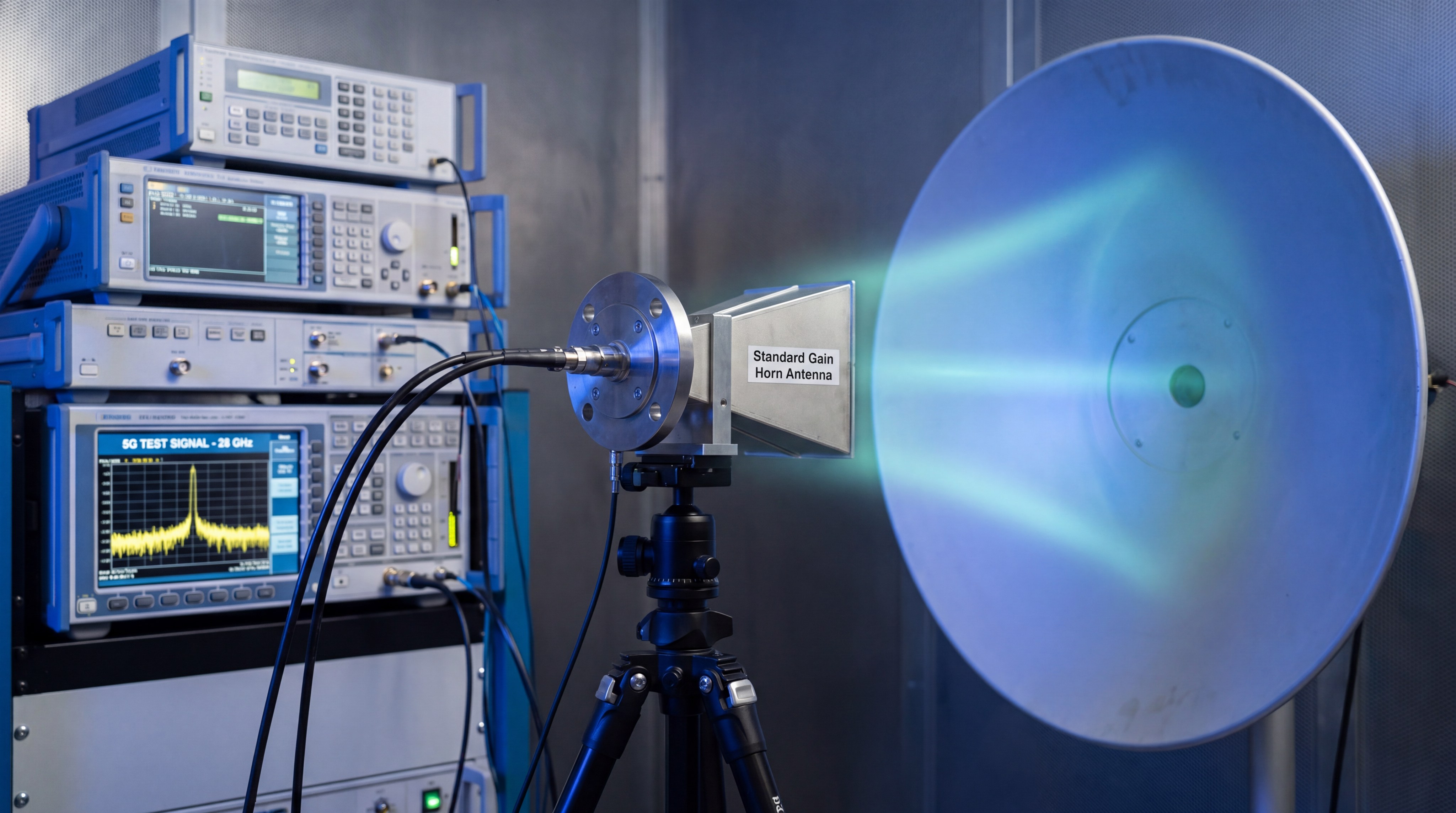
Mounting solutions for Standard Gain Horn Antennas range from non-metallic tripods to precision gimbals that allow for sub-degree alignment accuracy. Proper support is vital because even a slight tilt can throw off high-frequency measurements.
Are gimbals necessary for high gain?
A gimbal head allows you to adjust azimuth and elevation with extreme precision. This is crucial when you are working with high-gain antennas that have very narrow beamwidths and small margins for error.
Why use non-metallic tripods?
Standard metal tripods can reflect signals and distort your test results. Non-metallic supports ensure that the environment remains “clean,” allowing the antenna to perform as intended without interference.
- Adjustability: Azimuth and elevation control.
- Stability: Vibration-resistant platforms.
- Signal Integrity: Non-reflective materials.
Key Takeaway: Precision mounting hardware is just as important as the antenna itself for achieving repeatable and accurate RF data.
| Mount Type | Primary Benefit | Environment |
|---|---|---|
| Gimbal Head | Precise Alignment | Lab Research |
| RF Tripod | Low Reflection | Anechoic Chamber |
| Bench Mount | Stability | Fixed Setup |
The choice of mounting directly impacts the repeatability of your tests, especially in high-frequency millimeter-wave applications.
How to Protect Your Horn Antenna Equipment?
You can protect Standard Gain Horn Antennas by using RF-transparent radomes for outdoor use and protective caps for storage. Proper care ensures that the internal waveguide surfaces remain free of debris and corrosion.
What is the benefit of radomes?
A radome shields the aperture from rain, dust, and insects while remaining transparent to the signal. This is essential if you are deploying your antennas in harsh field environments or on range towers.
Do RF absorbers help with protection?
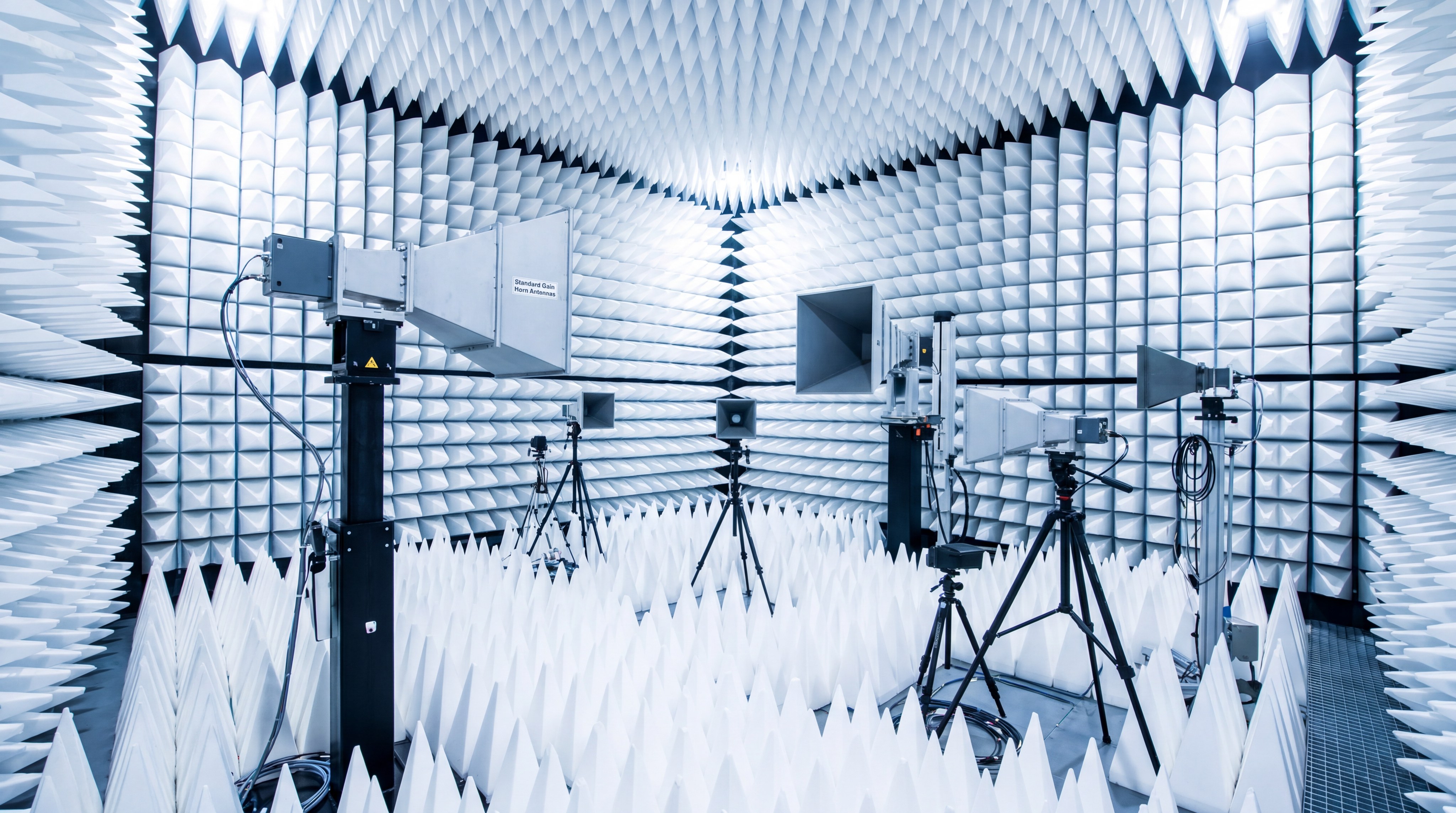
While not a physical shield, placing RF absorbers around your mounting structure protects the integrity of your data. It cuts down on multipath interference, ensuring your antenna only “sees” the intended signal path.
- Radomes: Weather and dust protection.
- Protective Caps: Essential for waveguide storage.
- Chemical Coating: Corrosion resistance for aluminum.
Key Takeaway: Environmental protection is a long-term investment that maintains the calibration accuracy of your precision RF instruments.
| Protection | Threat | Solution |
|---|---|---|
| Aperture Cover | Dust/Debris | Protective Cap |
| Signal Shielding | Interference | RF Absorber |
| Weatherproofing | Rain/Humidity | RF-Transparent Radome |
Simple maintenance and protective hardware prevent physical degradation that could lead to costly recalibration or equipment replacement.
Why Use Amplifiers with These Antennas?
High-power emc amplifiers are often paired with Standard Gain Horn Antennas to generate the intense field strengths required for immunity testing. Without an amplifier, the signal from your source might be too weak to overcome cable losses.
How does power affect performance?
Combining a power amplifier with a high-gain horn creates a potent RF environment for testing device resilience. Why does this matter? It allows you to simulate real-world interference scenarios with controlled, high-amplitude signals.
Is system integration important?
Yes, modern platforms often integrate the source, amplifier, and antenna into a single calibrated chain. This ensures that the power delivered to the antenna aperture is monitored and precise throughout the test.
- Signal Boost: Overcomes long cable runs.
- Field Intensity: Required for EMC/EMI tests.
- System Control: Integrated RF power monitoring.
Key Takeaway: Amplifiers provide the raw power needed to transform a standard signal into a high-intensity field for rigorous testing.
| Component | Role | Necessity |
|---|---|---|
| Power Amp | Signal Amplification | High (EMC) |
| SGHA | Signal Focusing | Required |
| Monitoring | Power Verification | Essential |
Pairing the right amplifier with your horn antenna is the most effective way to reach the field strength levels required by international standards.
Where Are These Antennas Usually Deployed?
You will find Standard Gain Horn Antennas deployed in satellite communication, 5G validation, and directional antenna research labs worldwide. Their reliability makes them the preferred choice for mission-critical RF validation.
Are they used in aerospace?
In the aerospace sector, these antennas are vital for testing radar cross-sections and calibrating onboard communication systems. Here is the deal: their durability allows them to be used on range towers and in flight-line testing environments.
What about laboratory research?
Universities and private labs use them to characterize new materials and validate wireless protocols. They serve as the baseline measurement against which all other experimental antenna designs are compared.
- Telecommunications: 5G base station testing.
- Defense: Electronic warfare simulations.
- Automotive: Radar sensor calibration.
Key Takeaway: From the laboratory to the battlefield, these antennas provide the consistent performance required for high-stakes RF engineering.
| Industry | Typical Use | Precision Level |
|---|---|---|
| Aerospace | Radar Calibration | Extreme |
| Telecom | 5G OTA Testing | High |
| Automotive | Collision Sensors | Medium-High |
The widespread adoption of SGHAs across multiple industries is a testament to their status as the ultimate reference for directional measurements.
Frequently Asked Questions
Can I customize the frequency range of a horn antenna?
Yes, while standard models follow waveguide bands, custom engineering can optimize the flare for specific frequencies. This allows you to target narrow bands with much higher gain than standard models.
What’s the best material for outdoor horn antennas?
Aluminum is usually best due to its weight and cost, provided it has a conversion coating. For extreme corrosion resistance, brass or stainless steel components are the superior choice despite the added weight.
How do I know if I need a waveguide-to-coax adapter?
If your test equipment uses standard cables (SMA, N, K) instead of raw waveguide plumbing, an adapter is mandatory. It is the only way to bridge the physical gap between the antenna and your analyzer.
Can I use these antennas for 5G millimeter-wave testing?
Absolutely, SGHAs are the primary tools used for “Over-the-Air” (OTA) testing in the 24 GHz to 52 GHz bands. They provide the stable gain needed to accurately characterize 5G base station performance.
What’s the best way to prevent signal reflections in my lab?
You should use non-metallic tripods and place RF absorbers around your test setup. This ensures the antenna only receives the direct signal path, preventing multipath errors from distorting your data.
*
Precision RF engineering demands tools that offer both stability and accuracy. As microwave and millimeter-wave technologies continue to evolve, the role of calibrated reference antennas remains vital. If you are ready to enhance your testing capabilities or require a custom solution for your next project, contact us today to discuss your specific RF requirements.